TFF PressInfo # 325 - Breaking the promise to Russia

By Jonathan Power

The Russian European dreamers have included Pushkin, Lenin, Gorbachev and, until relatively recently, President Vladimir Putin. They have all seen their country’s future as part of the “European house”. But history and events have not been kind to Russia. Napoleon’s invasion, revolution, two world wars, Stalin’s communism and, most recently, the expansion of NATO, have shattered the dream again and again.

At the end of the Cold War and with agreement on the NATO-Russia Founding Act it seemed that big steps towards that goal were being taken. First, Russia would have a seat at NATO’s table. Later it would join NATO. Later still, the European Union. Some said this would happen over ten years, others 20.

Then, smash, the dream came to an end as President Bill Clinton, bucking America’s academic foreign policy elite, decided to expand NATO’s membership to former members of the Soviet Union’s Warsaw Pact. George Kennan, America’s elder statesman on Russian issues, commented, “It shows so little understanding of Russian and Soviet history. Of course there is going to be a bad reaction from Russia, and then the NATO expanders will say that we always told you that is how the Russians are – but this is just wrong.” He characterized it as the most dangerous foreign policy decision that the US had made since the end of the Second World War.

Defending Clinton and, later, George W. Bush and Barack Obama who continued the NATO expansion policy, their supporters have said that in expanding NATO eastward the West did not break its promise to Moscow not to.

But it did. As ex-Soviet President Mikhail Gorbachev has said on many occasions there was a promise not to expand NATO “as much as a thumb’s width further to the East.” This is an echo of the US secretary of state, James Baker, when he spoke in St Catherine’s Hall in the Kremlin on February 9th 1990, saying, there would be “no extension of NATO’s jurisdiction for forces of NATO one inch to the east”.

Some re-writing of history has gone on. Now Baker has ambiguously denied there was any such agreement.

There has even been an effort to show that Gorbachev himself denies that there was an agreement. And it is true that in the last few years he has said one thing and then another. This is perhaps because he is embarrassed that he never asked for the US/German commitments in writing. He has defended that decision arguing, “The Warsaw Pact still existed at the beginning of 1990. Merely the notion that NATO might expand to include countries in the alliance sounded completely absurd at the time”.

Nevertheless, the evidence that a commitment was made not to expand is strong. Rodrick Braithwaite who was the UK’s ambassador to the Soviet Union and then the new Russia, has written, “After Germany reunited, Václav Havel, the Czech president, called for Czechoslovakia, Poland and Hungary to enter NATO. The British prime minister and foreign secretary assured Soviet ministers that there was no such intention. NATO’s secretary general added that enlargement would damage relations with the Soviet Union.”

Jack Matlock, who was ambassador to Moscow for both Ronald Reagan and George Bush Senior, has said on a number of occasions that Moscow was given “a clear commitment” not to expand NATO.

Der Spiegel, the German political weekly, has been through the German and British archives. It found a minute of a conversation on February 10, 1990 when foreign minister Hans-Dietrich Genscher spoke with Soviet foreign minister Eduard Shevardnadze. Genscher said, “For us one thing is certain: NATO will not expand to the east.” Because the conversation revolved mainly around the future of East Germany Genscher added explicitly, “As far as the non-expansion of NATO is concerned this also applies in general.”

In a major speech on January 31 1990 in Tutzing, Genscher said there would not be “an expansion of NATO territory to the east, in other words, closer to the borders of the Soviet Union”.

The British foreign secretary, Douglas Hurd, when meeting Genscher on February 6th 1990 to discuss Hungary’s forthcoming free elections, was told that the Soviet Union needed “the certainty that Hungary will not become part of the Western alliance.” The Kremlin, Genscher said, would have to be given assurances to that effect. Hurd agreed.

In April 2009 Gorbachev told the German newspaper “Bild”, “the West have probably rubbed their hands, rejoicing at having played a trick on the Russians.” It very much looks like it.

Moreover, the US gratuitously abrogated the Anti-Ballistic Missile treaty and decided also to employ missile defences in central Europe, thus undermining the so-called “nuclear balance”.

The West has taken advantage of a weakened Russian when instead it should have been paving the way for Russia to enter the “European House”. History will not smile kindly on the dangerous and counterproductive expansion of NATO.

Copyright: Jonathan Power

Foreign affairs columnist, film-maker and author

Share

Leave a Reply

Your email address will not be published. Required fields are marked *

Related Posts

A donors’ conference, co-sponsered by the Burundian government, the Belgian government and UNDP will be held in Brussels January 12-13, 2004. This PressInfo offers a perspective on its urgency. See also TFF’s new Burundi Forum. Imagine for a moment that politics is about goodness and generosity. Where could a few million dollars of government aid and a few civil society organisations – guaranteed – win the hearts of extremely poor millions who want peace and already work hard to achieve it after 10 years of war and genocide? The answer is Burundi, the heart-shaped country in the heart of Africa. Burundi makes a good story from Africa. But what does the world know about Burundi, its problems and struggles? Burundi’s tough reality Here are the basic facts. Burundi’s population is about 7 million and it is number 171 out of the 175 countries on the UNDP’s human development index. Their life...
Peace is promoted by constructive proposals and dialogue Four preceding PressInfos have expressed concern over — and criticised — the ongoing, militarisation of the EU. Some will say: but there are no alternatives. We believe that there are always alternatives, that democracies are characterised by alternatives and choice, and that openly discussed alternatives will improve the quality and legitimacy of society’s decision–making. In addition, it is an intellectual and moral challenge to not only criticise but also be constructive. If we only tell people that we think they are wrong, they are not likely to listen. However, if we say: what are your views on this set of ideas and steps? — we may sometimes engage them in dialogue and sow a seed. Most people in power circles live their daily lives in in a time frame and a social space where certain ideas, viewpoints and concepts are just not...
Photos © TFF 2000 Read PressInfo 90 “Lift the Sanctions and Bring More Aid to Yugoslavia” See Pictures from Belgrade © TFF 2000 Please reprint, copy, archive, quote or re-post this item, but please retain the source.

Recent Articles

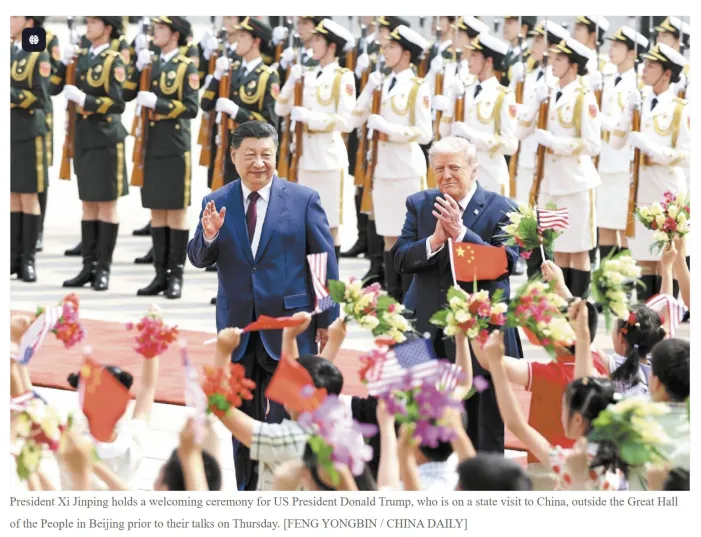
Jan Oberg May 15, 2026 Go to this Fox News page and scroll the whole way down: President Donald Trump tells the world that his meeting with President Xi Jinping yielded a lot of very concrete political and economic results – of course, only where the Chinese side, according to him, agreed with him. He does not mention the Taiwan issue, but Secretary of State, Marco Rubio, says that it did not feature prominently in their talks and that the US policy on Taiwan has not changed. Then go to China Daily – or Global Times – and you will see that for the Chinese it is framework, principles, structure of cooperation etc. that matters – all embedded in the overall idea of “constructive bilateral relationship of strategic stability.” Nowhere is any concrete agreement or deal – all that Trump refers to – mentioned. At the general level, this gives you insights into the very different social...
Lena Petrova of “World Affairs In Context” with more than half a million subscribers on YouTube wanted to explore what a peace researcher like me has to say about, among other things, the First and the Second Cold War and why eethics has disappeared from politics. I am particularly happy about this conversation that also yielded an amazing number of very appreciative comments on YouTube. No doubt, people are longing for alternatives, including peace perspectives.
The MIMAC – Military-Industrial-Media-Academic Complex – drives the world’s rampant militarism and wars without end. Here is a short reflection of how it works against all interests of humanity. #5 deals with why there is no real enemy or threat images/analysis. It’s all ex-post constructions. And, btw, theTFF Peace Pulse is now on Rumble.

TFF on Substack

Discover more from TFF Transnational Foundation & Jan Oberg.

Most Popular

Jan Oberg May 15, 2026 Go to this Fox News page and scroll the whole way down: President Donald Trump tells the world that his meeting with President Xi Jinping yielded a lot of very concrete political and economic results – of course, only where the Chinese side, according to him, agreed with him. He does not mention the Taiwan issue, but Secretary of State, Marco Rubio, says that it did not feature prominently in their talks and that the US policy on Taiwan has not changed. Then go to China Daily – or Global Times – and you will see that for the Chinese it is framework, principles, structure of cooperation etc. that matters – all embedded in the overall idea of “constructive bilateral relationship of strategic stability.” Nowhere is any concrete agreement or deal – all that Trump refers to – mentioned. At the general level, this gives you insights into the very different social...
Lena Petrova of “World Affairs In Context” with more than half a million subscribers on YouTube wanted to explore what a peace researcher like me has to say about, among other things, the First and the Second Cold War and why eethics has disappeared from politics. I am particularly happy about this conversation that also yielded an amazing number of very appreciative comments on YouTube. No doubt, people are longing for alternatives, including peace perspectives.
The MIMAC – Military-Industrial-Media-Academic Complex – drives the world’s rampant militarism and wars without end. Here is a short reflection of how it works against all interests of humanity. #5 deals with why there is no real enemy or threat images/analysis. It’s all ex-post constructions. And, btw, theTFF Peace Pulse is now on Rumble.
Read More
Screenshot-2026-05-15-103534
Jan Oberg May 15, 2026 Go to this Fox News page and scroll the whole way down: President Donald Trump tells the world that his meeting with President Xi Jinping yielded a lot of very concrete political and economic results – of course, only where the Chinese side, according to him, agreed with him. He does not mention the Taiwan issue, but Secretary of State, Marco Rubio, says that it did not feature prominently in their talks and that the US policy on Taiwan has not changed. Then go to China Daily – or Global Times – and you will see that for the Chinese it is framework, principles, structure of cooperation etc. that matters – all embedded in the overall idea of “constructive bilateral relationship of strategic stability.” Nowhere is any concrete agreement or deal – all that Trump refers to – mentioned. At the general level, this gives you insights into the very different social...
Screenshot-2026-05-12-104023
Lena Petrova of “World Affairs In Context” with more than half a million subscribers on YouTube wanted to explore what a peace researcher like me has to say about, among other things, the First and the Second Cold War and why eethics has disappeared from politics. I am particularly happy about this conversation that also yielded an amazing number of very appreciative comments on YouTube. No doubt, people are longing for alternatives, including peace perspectives.
Screenshot-2026-04-13-154551 (2)
The MIMAC – Military-Industrial-Media-Academic Complex – drives the world’s rampant militarism and wars without end. Here is a short reflection of how it works against all interests of humanity. #5 deals with why there is no real enemy or threat images/analysis. It’s all ex-post constructions. And, btw, theTFF Peace Pulse is now on Rumble.
Screenshot-2026-04-13-154551 (1)
Jan Oberg, TFF director April 28, 2026 In this third TFF Peace Pulse, I make the important distinction between the violence and the conflict that violence is a symptom of. If you want peace, focus on the underlying conflict because that is the key to resolution, peacemaking, and a better future for the parties. The West is obsessed with violence, just look around you – and 90+ per cent of the public debate is about military issues and other violence – totally wasted for peace. These Peace Pulses will only be published here a few times. You will also not find them on YouTube and Vimeo because both platforms have blocked TFF and me; you know, peace is dangerous these days. Most TFF’s videos since 2007 are now on Rumble.
Screenshot-2026-04-13-154551
In contrast to most, we’ll bring alternatives, solutions, hope and strategies for a better future. Times are dangerous, yes, but that only intensifies the need for constructive thinking and action! Jan Oberg, TFF director April 13, 2026 The new TFF Peace Pulse uses video messages in a new way: Max 3-5-minute-long comments, ideas or perhaps mini-lectures, all about peace – positive peace. We launch them today on April 13, 2026 with a carefully crafted visual aesthetic fitting the content. We hope to publish them regularly from now on. We launch Peace Pulse (PP) – for a number of reasons. The world is in chaos, and there are countless reasons to feel concerned, frustrated, even angry. The atmosphere is saturated with doom and gloom, with negative energy and rear‑mirror thinking, while vision, imagination, alternatives, strategies and genuine future‑mindedness remain in short supply. And without them, we simply can’t save the world. Looking at problems from a hundred angles will...
IMG_5165 (1)
PART II — Publishing Peace in a System That Prioritises Militarism Jan Oberg, TFF director April 10, 2026 How TFF Maintains a Daily Voice in a Digital World Built for Noise This article is part of the series “TFF at 40″ and it invites you to learn about Four Decades of Publishing Peace. It takes a look at how a small, people‑financed peace foundation has communicated across four generations of technology — from wax stencils and fax machines to mass email and Substack — and why TFF continues to publish every single day in a system that rewards noise, conflict, and militarism. ◆ What it means to publish peace every single day in a digital system built for 24/7 news and other noise, confrontation, and militarism. How TFF’s independence, continuity, and global readership defy algorithms, donor cycles, and Western media censorhip — and why the Majority World keeps listening. When the...