School History: Operation Mockingbird

School History

November 13, 2021

Originally posted on School History

Key Facts & Summary

  • Operation Mockingbird indicates the CIA’s involvement in the manipulation of the news published in the United States and across the world. Today, one can identify such manipulation with fake news
  • Operation Mockingbird commonly refers to the CIA’s involvement in journalism during the 1970s
  • The CIA bribed students as well as established journalists and reporters to write a CIA version of the events
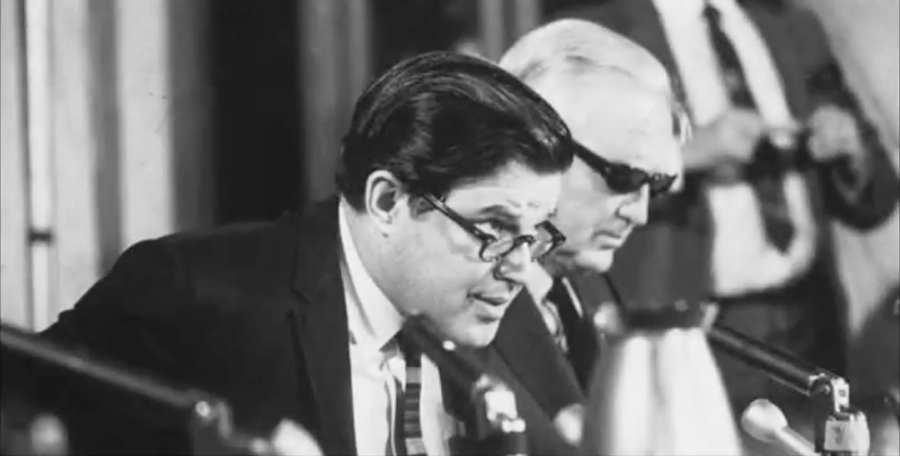
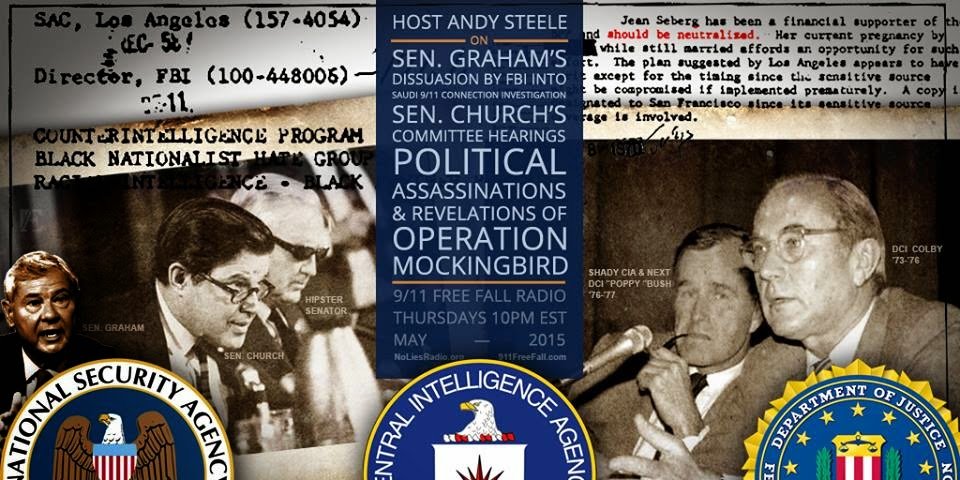
  • Senator Frank Church established the Church Committee in order to investigate ‘government operations and potential abuses’
  • The CIA admitted their manipulation of mainstream media in order to change the American people’s mind and published the Family Jewels.

Overview

The idea of a large organisation controlling the minds and thoughts of individuals, pushing them towards a specific ideology and certain life choices, may seem as science fiction, or as an absurd conspiracy that can be found in books and movies. However, for some, it is certainly not a new surprising discovery that corporations, organisations and politicians, manipulate public opinion in order to fit certain agendas. These, are in their turn manipulated by even bigger and more powerful organisations, such as the government itself.

The CIA controlling and manipulating civilians’ minds is not fiction: it is a conspiracy turned out to be true during the 1970s in the USA.

Following the Second World War, the Central Intelligence Agency (CIA) was able to gain control over what was being published not only in the USA but more in general across the globe. It exerted much influence over what the public should be allowed to see, and what should be concealed. In essence, it ruled what ‘the public saw, heard and read on a regular basis’ (Tracy 2018).

Operation Mockingbird is a United States CIA campaign that aimed not only to influence the media but also infiltrate it.

Since the 1950s, the CIA started recruiting journalists, editors, and students in order to write and promulgate false stories. The CIA’s stories were entirely propaganda and their employees were paid huge salaries in order to promote such fake news. Essentially, the CIA managed to control both national and international newspapers through a bribe.

During the ‘50s, Cord Meyer and Allen W. Dulles devised and organised a propaganda outreach program. They recruited leading American journalists into a network in order to promulgate the CIA’s views.

The CIA went to the extremes of funding students, cultural organisations, and magazines that would spread the CIA’s views of events.

However, the suspicion that the CIA could manipulate public opinion arose between 1972-1974 due to the Watergate Scandal, which exposed President Nixon’s involvement in the war in Vietnam.

In fact, Nixon had adopted two strategies: whereas on the one side he was employing aggressive strategies in order to try and appease North Vietnam, on the other, he was trying to appease the protests in the U.S. by demonstrating through the press and the news that he was aiming to achieve a peace agreement and bring home the American troops. When the truth about Nixon’s Vietnamization was revealed, many started to question up to which point was the CIA enmeshed in the publishing of news and information (Slate 2018).

Moreover, during the Cold War, the CIA supported many prominent writers and artists such as Arthur Schlesinger and Jackson Pollock in their ‘propaganda war against the Soviet Union’ (Washington 2017).

In 1977, Carl Bernstein published The CIA and the Media in Rolling Stone. The article exposed much of the CIA’s attitude towards the spreading of fake news and it’s tacit’ as well as ‘explicit’ collaboration with journalists. Bernstein explains how journalists did not limit themselves to write what the CIA suggested: their relationship was much more complicated and intimate. In fact, reporters ‘shared their notebooks with the CIA’, some of the journalists were also award-winning writers, and others became spies in Communist countries (Bernstein 1977).

According to Dice (2016), more than a billion dollars were being invested each year in such propaganda programs. The CIA’s writers were generously retributed, and there were no limits on how much they could receive: sometimes they were paid more than half a million dollars to spread the information required by the CIA.

When the CIA was caught out in their wrongdoings, they did not reveal the newspapers and the names of the journalists with whom they had collaborated in the past (Harrock 1976).

However, in 1973, the Washington Star published the names of around three dozens of American journalists. According to the CIA, revealing the names of those who had worked with them, meant ‘endangering’ the writers’ and reporters’ lives, as well as making them appear in a ‘ridicule’ light (Harrock 1976).

Church Committee and actions to prevent the CIA’s involvement in the news

During the 1970s, the Church Committee was created by Senator Frank Church in order to investigate any ‘government operations and potential abuses’ carried out by the CIA, the NSA, the FBI, and the IRS (Goldfarb 2018). During an interview, Senator Church publicly claimed: ‘we have quite a lot of detailed information and we will evaluate it and we will include any evidence of wrongdoing or any evidence of impropriety in our final report, and we will make recommendation’.

In 1973, the CIA published Family Jewels, a book which exposes all the information that had been hidden and/or manipulated through the years. The book is around seven-hundred pages long.
Moreover, in the same year the Director of the CIA, William E. Colby stated that ‘CIA will undertake no activity in which there is a risk of influencing domestic public opinion, either directly or indirectly. The Agency will continue its prohibition against the placement of material in the American media. In certain instances, usually, where the initiative is on the part of the media, CIA will occasionally provide factual non-attributable briefings to various elements of the media, but only in cases where we are sure that the senior editorial staff is aware of the source of the information provided’ (Slate 2018; citing Colby).

In 1975, the CIA admitted their manipulation of mainstream media in order to forge and redirect the opinions of American citizens. They admitted that information was distorted in order to fit specific agendas. Following a report published by the U.S. Congress in 1976: ‘The CIA currently maintains a network of several hundred foreign individuals around the world who provide intelligence for the CIA and at times attempt to influence opinion through the use of covert propaganda. These individuals provide the CIA with direct access to a large number of newspapers and periodicals, scores of press services and news agencies, radio and television stations, commercial book publishers, and other foreign media outlets’.

Although in 1975 George H.W. Bush publicly ended the CIA relations with the U.S. media, the CIA is still actively involved with foreign news organisations, which in turn, feed the United States media with information.

Bush established that ‘the CIA will not enter into any paid or contractual relationships with any full-time or part-time news correspondent accredited by any United States news service, newspaper, periodical, radio or television network or station’ (Slate 2018).

Although in 1976, Colby claimed that Central Intelligence had broken all relations and ties with journalists in 1973, this is hard to believe (Harrock 1976). Moreover, he also stated that he did not see any harm in purchasing information from ‘part-time correspondents who sell their information to news organisations in the country’ (Harrock 1976).

However, a general suspicion took over the Capitol City: all conservative journalists and former CIA employees that had rapidly achieved recognition within the news world were now regarded with mistrust (Harrock 1976).

The same year, Senator Church published in his report that the CIA had a strong network composed of ‘several hundred foreign individuals around the world’ that were dedicated to providing the Central Intelligence with misleading news (Slate 2018).

In fact, American journalist Scott Shane gives an account of his experience with the CIA: in 1979, he received their recruitment letter in which they ‘expressed “tentative interest” in [his] qualifications’ (Shane 2018). Shane declined the offer of collaborating with the CIA, and his file was placed in the ‘inactive section’ (Shane 201).

According to Bernstein (1977), the people that worked undercover for the CIA often were employed by the ‘CBS, Time, the New York Times, the Louisville Courier-Journal, the Copley News Service, ABC, NBC, Reuters’, and so on. Moreover, throughout the 1950s, the CIA invested much money in training their agents as journalists: according to members of the CIA, they ‘were taught to make noises like reporters’ before being placed in powerful organisations (Bernstein 1977).

In essence, mass media is able to implement manipulative strategies in order to alter ‘global perception’ about events, people, and situations (Washington 2017; citing Davis 2008). Certainly, it would be naive to believe that the government has stopped paying journalists ‘to spread disinformation’ (Washington 2017). The United States are often the first to spread information in order to serve their own objectives: as Washington (2017) points out, ‘the government plants disinformation in American media in order to mislead foreigners’.

Bibliography

[1.] Bernstein, C. (1977).The CIA and the Media. Rolling Stone. [online]

[2.] Dice, M. (2016). Operation Mockingbird: CIA Control of Mainstream Media. The Full Story. [Youtube]

[3.] Goldfarb, K. (2018). Inside Operation Mockingbird – The CIA’s Plan to Infiltrate the Media. ATI. [online]

[4.] Harrock, M. N. (1976). CIA ties to Journalists. The New York Times. [online]

[5.] Shane, S. (2018). The time the CIA tried to recruit me: our National Security Reporter on Covering Spies. The New York Times. [online]

[6.] Slate, J. (2018). What was Operation Mockingbird? Medium. [online]

[7.] Tracy, J. F. (2018). The CIA and the Media: 50 Facts the World Needs to know. Global Research. [online]

[8.] Washington, G. (2017). Newly Declassified documents show that CIA worked closely with owners and Journalists with many of the largest media outlets. Arrêt sur Info. [online]

Image sources

[1.] http://www.theblackvault.com/documentarchive/wp-content/uploads/2015/02/maxresdefault1.jpg

[2.] https://fortunedotcom.files.wordpress.com/2014/12/94959359.jpg

[3.] https://allthatsinteresting.com/wordpress/wp-content/uploads/2018/03/operation-mockingbird-church-comittee.png

[4.] https://wsbaws-websitefs-prod.s3.amazonaws.com/2018/11/09/17/12/19/5d4c461b-f653-4f41-8e64-11752864813d/Bernstein_Carl_HS.jpg

School History is the largest library of history teaching and study resources on the internet. We provide high-quality teaching and revision materials for UK and international history curriculum. More about it here.


Share

Leave a Reply

Your email address will not be published. Required fields are marked *

Related Posts

PART 2 — Diplomacy, Law and Nonviolent Power By Jan ObergTFF co-founder and director January 26, 2026 This is the second of four TFF-created idea portfolios designed to curb the global reach of the United States and, in both the short and long term, help catalyse a worldwide nonviolent resistance to what many observers describe as the Trump administration’s uniquely confrontational, destructive and world-threatening policies. These portfolios outline what governments and citizens across the world can do through dynamic diplomacy, creative initiatives, and strictly nonviolent means. They are typical TFF works in that we do not only tell what the problem is and how bad it will go – as 90+% of all commentators, experts and scholars do – we tell what we think can be done, inviting you to think of what you think you can do. It seems painfully clear to me that the current political dynamics in Washington increasingly resemble the most dangerous...
PART 1 — Media, Culture and Information Sovereignty By Jan ObergTFF co-founder and director January 20, 2026 This is the first of four TFF-created idea portfolios designed to curb the global reach of the United States and, in both the short and long term, help catalyse a worldwide nonviolent resistance to what many observers describe as the Trump administration’s uniquely confrontational, destructive and world-threatening policies. These portfolios outline what governments and citizens across the world can do through dynamic diplomacy, creative initiatives, and strictly nonviolent means. They are typical TFF works in that we do not only tell what the problem is and how bad it will go – as 90+% of all commentators, experts and scholars do – we tell what we think can be done, inviting you to think of what you think you can do. It seems painfully clear to me that the current political dynamics in Washington increasingly resemble the most...
Introduction to TFF’s forthcoming four Idea Portfolios of Diplomatic and Nonviolent Resistance By TFF’s Board & FoundersPascal Lottaz, Biljana Vankovska, Annette Schiffmann, Christina Spannar & Jan Oberg January 19, 2026 “America, you are too arrogant.” — Martin Luther King Jr. Over the course of Trump’s first term and now a year into his second, the world has witnessed a consistent pattern of actions that challenge the basic long-standing norms of international cooperation, weaken multilateral institutions, and ignore the global norms and legal frameworks established by the UN Charter. During these years, we have witnessed military operations in Iran, Syria and Ukraine without UN authorisation; the killing of Iranian General Qassem Soleimani; repeated strikes across the Middle East; and the launch of tariff wars against allies and competitors alike. We have seen a renewed emphasis on nuclearism and zero interest in arms control and disarmament negotiations. Pentagon is now The Department...

Recent Articles

Jan Oberg May 15, 2026 Go to this Fox News page and scroll the whole way down: President Donald Trump tells the world that his meeting with President Xi Jinping yielded a lot of very concrete political and economic results – of course, only where the Chinese side, according to him, agreed with him. He does not mention the Taiwan issue, but Secretary of State, Marco Rubio, says that it did not feature prominently in their talks and that the US policy on Taiwan has not changed. Then go to China Daily – or Global Times – and you will see that for the Chinese it is framework, principles, structure of cooperation etc. that matters – all embedded in the overall idea of “constructive bilateral relationship of strategic stability.” Nowhere is any concrete agreement or deal – all that Trump refers to – mentioned. At the general level, this gives you insights into the very different social...
Lena Petrova of “World Affairs In Context” with more than half a million subscribers on YouTube wanted to explore what a peace researcher like me has to say about, among other things, the First and the Second Cold War and why eethics has disappeared from politics. I am particularly happy about this conversation that also yielded an amazing number of very appreciative comments on YouTube. No doubt, people are longing for alternatives, including peace perspectives.
The MIMAC – Military-Industrial-Media-Academic Complex – drives the world’s rampant militarism and wars without end. Here is a short reflection of how it works against all interests of humanity. #5 deals with why there is no real enemy or threat images/analysis. It’s all ex-post constructions. And, btw, theTFF Peace Pulse is now on Rumble.

TFF on Substack

Discover more from TFF Transnational Foundation & Jan Oberg.

Most Popular

Jan Oberg May 15, 2026 Go to this Fox News page and scroll the whole way down: President Donald Trump tells the world that his meeting with President Xi Jinping yielded a lot of very concrete political and economic results – of course, only where the Chinese side, according to him, agreed with him. He does not mention the Taiwan issue, but Secretary of State, Marco Rubio, says that it did not feature prominently in their talks and that the US policy on Taiwan has not changed. Then go to China Daily – or Global Times – and you will see that for the Chinese it is framework, principles, structure of cooperation etc. that matters – all embedded in the overall idea of “constructive bilateral relationship of strategic stability.” Nowhere is any concrete agreement or deal – all that Trump refers to – mentioned. At the general level, this gives you insights into the very different social...
Lena Petrova of “World Affairs In Context” with more than half a million subscribers on YouTube wanted to explore what a peace researcher like me has to say about, among other things, the First and the Second Cold War and why eethics has disappeared from politics. I am particularly happy about this conversation that also yielded an amazing number of very appreciative comments on YouTube. No doubt, people are longing for alternatives, including peace perspectives.
The MIMAC – Military-Industrial-Media-Academic Complex – drives the world’s rampant militarism and wars without end. Here is a short reflection of how it works against all interests of humanity. #5 deals with why there is no real enemy or threat images/analysis. It’s all ex-post constructions. And, btw, theTFF Peace Pulse is now on Rumble.
Read More
Screenshot-2026-05-15-103534
Jan Oberg May 15, 2026 Go to this Fox News page and scroll the whole way down: President Donald Trump tells the world that his meeting with President Xi Jinping yielded a lot of very concrete political and economic results – of course, only where the Chinese side, according to him, agreed with him. He does not mention the Taiwan issue, but Secretary of State, Marco Rubio, says that it did not feature prominently in their talks and that the US policy on Taiwan has not changed. Then go to China Daily – or Global Times – and you will see that for the Chinese it is framework, principles, structure of cooperation etc. that matters – all embedded in the overall idea of “constructive bilateral relationship of strategic stability.” Nowhere is any concrete agreement or deal – all that Trump refers to – mentioned. At the general level, this gives you insights into the very different social...
Screenshot-2026-05-12-104023
Lena Petrova of “World Affairs In Context” with more than half a million subscribers on YouTube wanted to explore what a peace researcher like me has to say about, among other things, the First and the Second Cold War and why eethics has disappeared from politics. I am particularly happy about this conversation that also yielded an amazing number of very appreciative comments on YouTube. No doubt, people are longing for alternatives, including peace perspectives.
Screenshot-2026-04-13-154551 (2)
The MIMAC – Military-Industrial-Media-Academic Complex – drives the world’s rampant militarism and wars without end. Here is a short reflection of how it works against all interests of humanity. #5 deals with why there is no real enemy or threat images/analysis. It’s all ex-post constructions. And, btw, theTFF Peace Pulse is now on Rumble.
Screenshot-2026-04-13-154551 (1)
Jan Oberg, TFF director April 28, 2026 In this third TFF Peace Pulse, I make the important distinction between the violence and the conflict that violence is a symptom of. If you want peace, focus on the underlying conflict because that is the key to resolution, peacemaking, and a better future for the parties. The West is obsessed with violence, just look around you – and 90+ per cent of the public debate is about military issues and other violence – totally wasted for peace. These Peace Pulses will only be published here a few times. You will also not find them on YouTube and Vimeo because both platforms have blocked TFF and me; you know, peace is dangerous these days. Most TFF’s videos since 2007 are now on Rumble.
Screenshot-2026-04-13-154551
In contrast to most, we’ll bring alternatives, solutions, hope and strategies for a better future. Times are dangerous, yes, but that only intensifies the need for constructive thinking and action! Jan Oberg, TFF director April 13, 2026 The new TFF Peace Pulse uses video messages in a new way: Max 3-5-minute-long comments, ideas or perhaps mini-lectures, all about peace – positive peace. We launch them today on April 13, 2026 with a carefully crafted visual aesthetic fitting the content. We hope to publish them regularly from now on. We launch Peace Pulse (PP) – for a number of reasons. The world is in chaos, and there are countless reasons to feel concerned, frustrated, even angry. The atmosphere is saturated with doom and gloom, with negative energy and rear‑mirror thinking, while vision, imagination, alternatives, strategies and genuine future‑mindedness remain in short supply. And without them, we simply can’t save the world. Looking at problems from a hundred angles will...
IMG_5165 (1)
PART II — Publishing Peace in a System That Prioritises Militarism Jan Oberg, TFF director April 10, 2026 How TFF Maintains a Daily Voice in a Digital World Built for Noise This article is part of the series “TFF at 40″ and it invites you to learn about Four Decades of Publishing Peace. It takes a look at how a small, people‑financed peace foundation has communicated across four generations of technology — from wax stencils and fax machines to mass email and Substack — and why TFF continues to publish every single day in a system that rewards noise, conflict, and militarism. ◆ What it means to publish peace every single day in a digital system built for 24/7 news and other noise, confrontation, and militarism. How TFF’s independence, continuity, and global readership defy algorithms, donor cycles, and Western media censorhip — and why the Majority World keeps listening. When the...