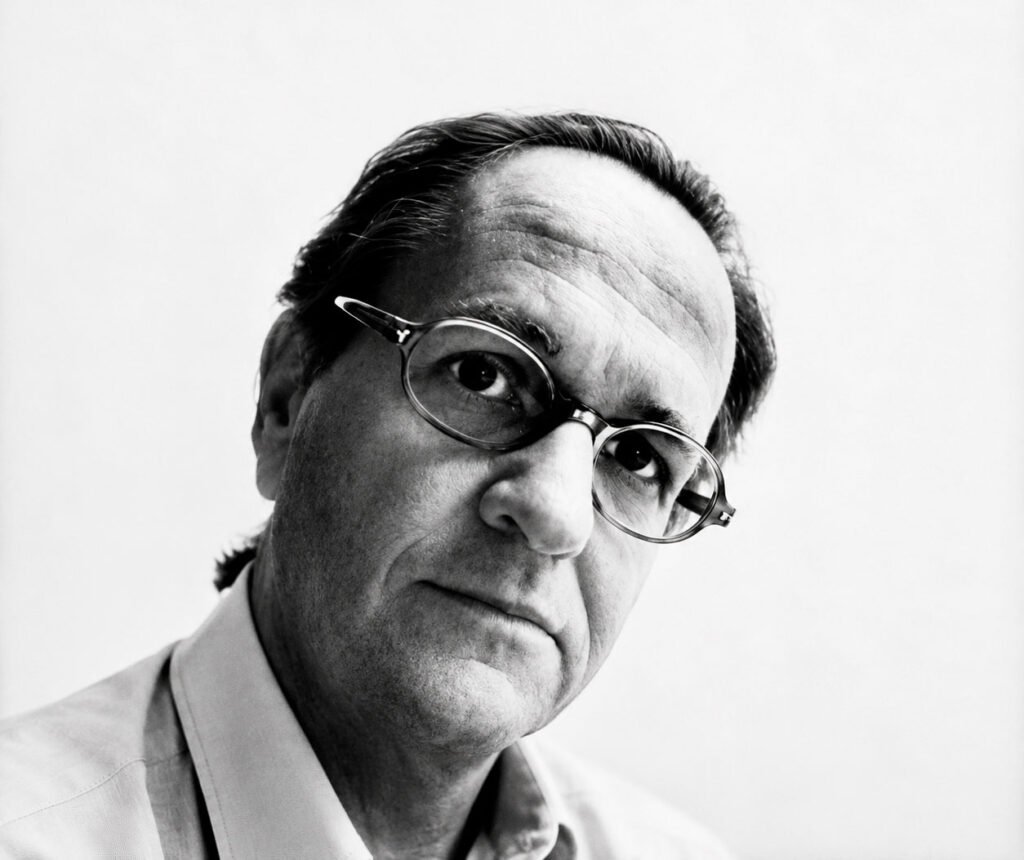
“What on earth would be the POLITICAL AIM of bombing
Serbia now? Violence has been used by both parties for
almost a year. Some 250.000 people may already be displaced,
homes and towns torched and destroyed. KLA is defeated and
Serbia’s government has declared that the war is over,
provided KLA’s military struggle does not resume. Before the
UN Security Council, NATO or other actors in the
international ‘community’ decides to carry out air strikes
throughout Serbia, it would be wise to ponder a few
questions, problems and risks and come up with some answers.
I offer some of both in what follows,” says Jan Oberg who,
with his TFF colleagues, has conducted analyses and served
as a citizen diplomat in the region since 1992.
• IF WE BELIEVE NATO MILITARY INTERVENTIONS WOULD
STOP THE KILLING, ETHNIC CLEANSING AND MASSACRES, WHY HAS IT
NOT HAPPENED LONG AGO?
POSSIBLE ANSWERS: 1) The international “community” is
not a community when it comes to managing conflicts. There
are too many solid national interests and the EU is divided
internally with Germany and the UK being more
interventionist than the rest. And they cannot act without
the United States. 2) Bombings of Serb facilities will
unavoidably be interpreted as a support to (violent)
secessionism. Thus, Kurds, Palestinians, Turk Cypriots,
people in the Basque province and in Chechenya, to mention
some, may be encouraged – and the West doesn’t exactly want
that. 3) It can’t be done without ignoring the Russians
– but they are on their heels anyhow. 4) Perhaps no bombings
is really contemplated; it’s all a game. But then there is a
public relation problem vis-a-vis citizens: why do statesmen
solemnly declare their moral outrage, threaten tough
measures and thereby create expectations worldwide about
resolute action – fully well knowing that they won’t do
anything? 5) Powerful actors may see it fit to wait and
“fail” with preventive diplomacy in order to present
military options as “necessary.”
• IS THIS COMPATIBLE WITH INTERNATIONAL LAW?
POSSIBLE ANSWERS: 1) It is probably the first time NATO
bombs a sovereign, recognised state in support of a movement
whose stated aims are complete independence and integration
with a neighbouring state. 2) Bombings would destroy (parts
of) Yugoslavia’s self-defence capacity (capacity on its own
territory) which it has a right to have according to Article
51 of the UN Charter. 3) Yugoslavia has not invaded
another country. 4) Ironically, the United States
recently conducted bombings with some 70 cruise missiles
against three countries thousands of kilometres beyond it
own borders and justified it with reference to the same
Article 51. No international organisation has taken steps to
investigate the legality of this unilateral action. Thus,
the international “community” seems to judge that this is
acceptable behaviour, although the only appropriate term for
it would be ‘state terrorism’ – terrorism defined as violent
action involving or targeting people who are innocent or
otherwise not party to a conflict. 5) No NATO country is
threatened, so there is no justification for a NATO
response. The involvement of peaceful countries with no
international power ambitions, such as Norway and Denmark,
ought to be ruled out. Alas, they have already made fighter
planes available! 6) Whether legal or not, bombings would
contrast the international community’s policies elsewhere:
when in 1995 Croatia drove out 250.000-300.000 legitimate
Croatian citizens of Serb origin who lived in the
self-proclaimed state of Republika Srpska Krajina, it was
HELPED by the international community, especially the United
States, to do so. Such lack of principled policies
undermines any attempts to develop a universal normativity
towards global governance.
• WHAT COULD HAPPEN IN SERBIA?
POSSIBLE ANSWERS: 1) Increased sense of once again
being treated in an unfair manner by the world, leading to
increased support for Yugoslav President Milosevic, no
matter how destructive his Kosovo policies have been to the
country as a whole. This means strengthening of a hardline,
self-isolationist policy and a further weakening of every
decent opposition. 2) Milosevic may decide to say: “Fellow
Serbs, the whole world is against us, I can do no more in
the face of NATO bombs. We have to divide or give away parts
of the Kosovo province.” Remember, Milosevic is not a
nationalist; he has given up major national issues and the
welfare of Serbs both in the Croatian Krajina conflict and
in Dayton. 3) As he is the only politician the West and
Russia deals with for real, he will be offered a good deal
for throwing in the glove concerning (parts of) Kosovo,
perhaps even lifting of the present sanctions and
re-integration into the international community – and a
guarantee that he himself will never be indicted for war
crimes.
• WHAT COULD HAPPEN IN KOSOVO?
POSSIBLE ANSWERS: 1) Psychologically, every
Kosovo-Albanian will see bombings of Serb installations as
the long-awaited support for their struggle from the West.
2) Militarily, with Serbian defence installations destroyed,
the Kosovo-Albanian military wing(s) is likely to
contemplate re-starting the military activity, alternatively
switch to more systematic hit-and-run terror actions. In
such a situation, what will NATO/UN do? Deploy troops on the
ground? Ask for UN peacekeepers? Permit Serbia/FRY to
counteract it again? 3) Dr. Rugova will remain the leader
chosen by the West, at least until some other figure turns
up. It is difficult to know whether the defeat of the KLA
will place him in the centre again, among the elites as well
as the Kosovars in general. Be this as it may, bombings can
only serve a purpose as part of a long-term strategy. So
far, Kosovar politicians have shown little interest in
Western proposals that offer less than total independence.
Has the US or the EU a secret guarantee that they will be
more flexible after NATO air strikes? Do they have a
Kosovo-Albanian politician to install who can both negotiate
without preconditions AND have the loyalty of the majority
of Albanians? And who will represent the Serb minority in
Kosovo?
• WHAT COULD HAPPEN IN BOSNIA?
POSSIBLE ANSWERS: 1) That depends somewhat on what
happens in Serbia/FRY and the position of president
Milosevic after bombings; he is still needed to some extent
for the Dayton implementation process. 2) The flow of
refugees into Bosnia could increase dramatically, and they
are not welcome anywhere. 3) The Serbs in Republika Srpska
will see even less reason to co-operate with the
international community if that same community bombs Serbia.
With the new Radical Party president of Republika Srpska,
Nikola Poplasen, who has replaced Western-backed Biljana
Plavsic, the international community – even though trying to
deny it – is likely to face even more problems ahead.
Poplasen’s party colleague in Serbia, deputy prime minister
Seselj has mentioned the option of taking UN personnel
hostage in Bosnia. 4) Serbs in Bosnia will ask themselves
why they were bombed because they wanted an independent
state while now the Albanians are rewarded for having the
same wish.
• WHAT COULD HAPPEN IN MACEDONIA?
POSSIBLE ANSWERS: 1) The divided Albanian community will
come closer to each other and interpret NATO intervention in
Kosovo as a support for their long-term goal of living in
one Albanian state. 2) This means new problems for Macedonia
whose stability is vastly exaggerated by the West. 3) In the
event of bombings, Macedonia’s willingness to place its
territory and airspace at the disposal of NATO will be
tested. De facto it has no choice. President Kiro Gligorov
will face a very difficult dilemma, as it is not in his
country’s interest to participate in something that is bound
to antagonise Serbia and look like a support to Albanian
separatism through violence. But Macedonia still wants
weapons, military training, NATO membership and EU
integration, so it won’t protest too loudly. 4) Having very
limited capacity to accommodate more than 20 000 refugees,
the country may collapse if refugee flows increase because
of a) the approaching winter, or b) the Kosovo-Albanian
military struggle and/or terror resumes under the (presumed)
protection of NATO; or c) Kosovars run away from NATO bombs
and Serb retaliation. 5) Serbian military or paramilitary
units could strike against American soldiers in
Macedonia.
• WHAT COULD HAVE BEEN DONE IN ORDER TO PREVENT
LOCAL VOILENCE AS WELL AS INTERNATIONAL VIOLENCE?
POSSIBLE ANSWERS: 1) I am positive that different
policies could have prevented the war in the first place.
Imagine that the West had supported Serb prime minister
Milan Panic and his excellent ministers in 1992-93; they
wanted a peaceful settlement. Imagine that the West had
established a comprehensive negotiation process just five
years ago. Imagine that the international community had not
suspended Yugoslavia from the OSCE but kept it there (and
scolded it); then the comprehensive OSCE missions in
Voivodina, Sandzak and Kosovo could have remained – and the
war would have been impossible. Imagine that the US and
Europe had dissociated themselves earlier from the
Kosovo-Albanian idea of complete independence (they didn’t
because the Kosovo problem served as a leverage on
Milosevic). Imagine that the international community had
facilitated a process of learning and reconciliation on the
ground among ordinary Serb and Albanian citizens by
introducing peace and human rights education, empowerment of
mixed NGOs, support to multiethnic media etc. Imagine it had
offered economic incentives for peaceful co-existence
instead of introducing sanctions that have only impoverished
Serbs and Albanian citizens and enriched the Mafia. That
would have supported Dr. Rugova’s non-violent line AND
helped the Serbs, too. Now the West ends up supporting
Albanian secessionism and violent behaviour on that side –
and supporting Rugova when that violent strategy has
weakened him tremendously.
•WHAT CAN STILL BE DONE INSTEAD OF BOMBINGS?
POSSIBLE ANSWERS: 1) The excellent UN mission in
Macedonia could be expanded to do monitoring in Kosovo;
Belgrade might have a direct interest in that. 2) A robust
civil-military UN peacekeeping mission could be established
in Kosovo, to provide order and security during a period of
negotiations. 3) The parties could be offered positive
incentives – economic aid, various international
memberships, more intensive exchange with the international
community, assistance to the schools, health and cultural
system etc etc. – instead of threats and condescending
words. 4) Yugoslavia could be brought back into the OSCE and
the UN; but we know the US does not want that – and thus it
does not happen. 5) Most effectively, establish a strong
international presence in Albania, along the borders, and
prevent arms, ammunition and soliders from entering Serbia;
in short, help Albania’s government to control its own
territory instead of serving as a base for what comes close
to international aggression.
• DO WE KNOW ENOUGH ABOUT THE SITUATION TO TAKE
SUCH TOUGH MEASURES?
POSSIBLE ANSWERS: 1) Hardly! Facts are difficult to
come by both concerning the number of refugees, their
conditions and who exactly did what when it comes to
massacres and alleged mass graves. 2) The biased
international media coverage has repeated itself; the Serb
side (also independent sources such as human rights
institutes, independent media and the NGO Serb Media
Centre in Pristina) has been largely ignored by leading
media such as CNN, New York Times and even BBC. How much
have you heard about massacres on Serbs or about KLA attacks
on Albanians who would not participate in the violent
struggle? 3) It does take time to find out who has committed
what crimes against whom. To hastily base a decision to bomb
one party on international media who think they know who the
“alleged” perpetrators are a few hours after the dead bodies
have been found, would be highly irresponsible. These are
tricky issues in this political culture, as should be should
have learnt from similar event in Bosnia as well as Croatia.
4) Serbian Democratic Party leader Dr. Zoran Djindjic
has advanced the plausible hypothesis that that those who
committed these atrocities at this particular moment are
likely to be interested in provoking bombings. This could
mean uncontrolled, extremist, fascist Serb or Albanian
groupings.
• CAN PEOPLE BE BOMBED TO THE NEGOTIATION
TABLE?
POSSIBLE ANSWERS: 1) It should be reasonably clear to
any observer on the ground over the last years and months
that the Kosovo-Albanian side is even more reluctant to
engage in talks or negotiations than the Serb side. They’ve
said ‘no’ to every single appeal from the international
community or said ‘yes’ with conditions that add up to a
‘no.’ 2) Unless there is a deal already made with the
Albanians that they WILL engage seriously after bombings of
Serbs facilities, it would be utterly naive to believe that
bombings in this case brings either party closer to a
negotiation table. 3) In addition, a minimum of trust must
be built BEFORE negotiations. Trust can lead to
negotiations, head-on negotiations are not likely to lead to
trust.
• IS THE INTERIM AGREEMENT BROKERED BY US ENVOY
TO KOSOVO AND AMBASSADOR TO MACEDONIA, MR. CHRISTOPHER HILL,
SOLID ENOUGH TO PROVIDE A FRAMEWORK FOR POST-VIOLENCE
NEGOTIATIONS?
POSSIBLE ANSWERS: 1) I don’t think so. The
Kosovo-Albanians have already de facto said ‘no thanks’ to
it and the recently elected political spokesperson for the
KLA, Mr. Adem Demaqi, has resigned because of health
problems (which he also had before accepting the offer to
become spokesman) So, there is no one to talk politics with
in the KLA and its three fractions. 2) The interim agreement
may have many useful elements but it lacks two which are
essential: a) a concept of civil society and peace ‘from
below’ that invites ordinary citizens in the province to
build trust, confidence and reach reconciliation either
together or as good neighbours. Without such elements, no
legal provisions or ‘agreements’ are likely to succeed in a
conflict with such deep psychological mistrust. And b) a
framework in which Kosovo is seen as part of the
Balkans.
• WHAT WILL OTHER SECESSIONIST MOVEMENTS
THINK?
POSSIBLE ANSWERS: 1) There is no way NATO countries can
bomb Serbia – while for years tacitly letting Albania, which
it backs in many other ways, serve as a base for the
Kosovo-Albanian arms build-up and military training – and
avoid being interpreted as a clear support for the Albanian
side in the conflict, albeit not necessarily the KLA. 2) It
may sound cynical but the number of dead and displaced human
beings in this conflict is smaller than in many other
conflicts – where the international community (the West/NATO
etc) has done nothing, such as Chechenya, Algeria or Eastern
Timor. This type of ‘selective’ humanitarian and human
rights concerns is detrimental for the longterm development
of a genuine global ethics and responsibility for human
suffering.
• SHOULD THE U.N. LEND ITS GOOD NAME TO SUCH
ACTIVITY?
POSSIBLE ANSWERS: 1) No! According to its preamble, the
UN shall seek to solve international disputes and face
threats to world peace with peaceful means; only when
everything else has been tried and proven in vain – which is
not the case as is argued above – can the UN take military
action (or ask somebody to do so). 2) Those who want to
conduct military action that can be interpreted as violating
international norms and laws should do it on their own and
not be provided with the legitimacy of the UN.
“In summary,” says Jan Oberg, “I fear we shall soon see
high-tech, ‘quick fix’ military action legitimised as
‘necessary’ and ‘moral’ because of three factors: a) the
international community’s general lack of competence in
professional conflict management, b) it’s complete failure
for almost a decade in terms of preventing the predictable
outbreak of violence in Kosovo, and c) the creation of a
world public opinion in favour of military intervention
based on a biased WAR REPORTING instead of fair,
research-based CONFLICT JOURNALISM.” Oberg concludes:
“I am convinced that bombings at this point will have
more negative than positive consequences with respect to the
parties’ willingness to engage seriously in negotiations as
well as with respect to alleviating the humanitarian
catastrophe. Just think of the ‘opportunity costs’ – of how
much humanitarian aid we could bring for the sheer costs of
such a military operation. Are we really to believe that
bombings is the most appropriate tool for
conflict-management? That it is legitimate when SO MANY
other initiatives could either have prevented the war in the
first place or helped stop it months ago?
In short, bombing Serbia will be a moral as well as
intellectual defeat. It shows that the self-appointed
international ‘conflict managers’ have failed miserably long
ago. I think they know it deep inside. It’s not acceptable
to compensate for that weakness – or conceal it – by playing
tough now.