
PressInfo #27 - The World According to Power


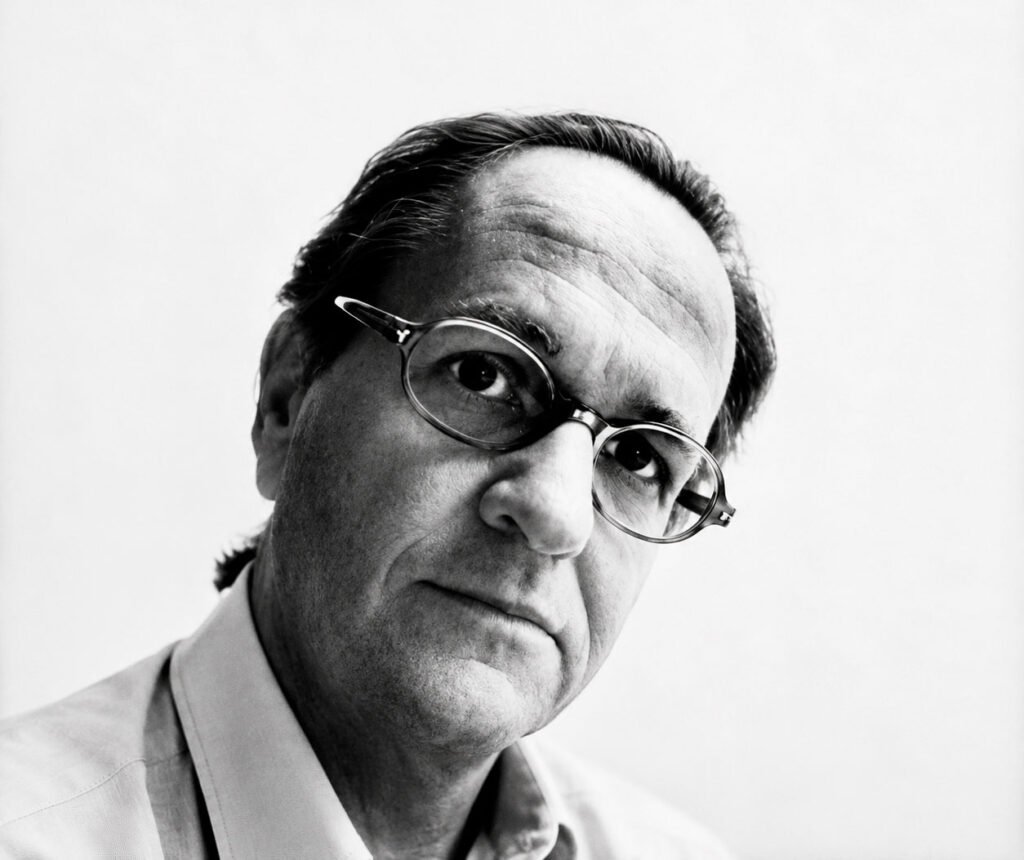
Over the last few months, JONATHAN POWER has devoted his thought-provoking weekly columns to
issues such as American policies towards Israel, Hong Kong’s fate, Mexico’s elections, and the chances of economic
take-off in the Congo. He has argued that it is time to take Turkey into Europe and highlighted the fact that the world’s income distribution is worsening, thanks to globalisation and liberalization.

He syndicates his articles with more than 50 newspapers around the world. For 30 years a journalist, of which 17 as columnist for the International Herald Tribune 1974-1991.

The value of these critically constructive analyses extend way beyond your transient daily newspaper.

Catch up and read them on TFF’s website at http://www.transnational.org.

They are also frequently featured on the leading alternative news service, OneWorld http://www.oneworld.org/news/.

Here are some excerpts reflecting his grip of world affairs:

ON GLOBALISATION
“The U.S. President, Bill Clinton and British prime minister, Tony Blair are a source of danger. They are riding high. They look good. They smile a lot and they owe much of their success to the remarkably prolonged era of economic expansion and renewed sense of prosperity they preside over. And, since they dominate the ubiquitous Anglo-Saxon press, they are spreading their globalisation message with enormous effect.”

ON THE ILLUSION OF TRICKLE-DOWN GROWTH
“…Students of economics have been taught for decades that the rich getting richer is usually a prelude to rapid growth and the trickling down of income gains to the poor. This theory holds less water by the year. The evidence is accumulating that concentrating national income in the hands of the few does not lead to higher investment and faster growth.”

ON THE MANIPULATION OF FINANCIAL MARKETS
“The slambang attack on this situation by Malaysian prime minister Mahathir Mohamad, speaking at the joint World Bank/IMF meeting in Hong Kong this week, was right on the mark.”

ON DIANA AND LANDMINES – BEFORE THE NOBEL PEACE PRIZE
“The anti-landmine movement is her immediate legacy, the campaign she was most engaged in when she died. It was both important in itself and important in that it is chipping away at mankind’s long tolerance of the evils of war. War, the systematic and organized use of violence, is peculiar to the most advanced of animals, man. To quote Erasmus: ‘Whoever heard of 100,000 animals rushing together to butcher each other, as men do everywhere?’ Diana was lobbying us, pushing us, to take a small but significant step towards the outlawing of war and the improvement of peace. If the time when kings and dukes fought wars and knights duels over nothing more than their reputations now seems part of a distant past, it is time overdue, as the millennium approaches, to progress even further. With the abolition and removal of landmines it will be a small step for the generals but a very important one for mankind.”

ON THE BANANA CRISIS
“The facts of the case are straightforward. The U.S. fruit multinationals, Chiquita and Del Monte, already dominate the world banana trade, even in Europe. Grown on their highly mechanized Latin American estates bananas can be harvested for $150 a ton, compared with $500 a ton in the Caribbean. In a perfectly competitive world there would be no case to answer—the Caribbean islands should be left to go under. But in the world we inhabit right now where agricultural protectionism is rife, particularly in Europe and Japan, why pick on the small fry (who supply only 7% of the European market) as an important target?”

ON AID AS A FOREIGN POLICY TOOL
“What on earth is America doing poking around in African civil wars? Were the old-time Marxist analysts right after all—the capitalist countries will slit each other’s throats in order to win favored access to African minerals? This policy was discredited by the killing fields of Angola where east and west competed for the prize of its post-colonial government and its diamond fields. The murderous consequences of Africa’s worst war still linger on. Surely Washington doesn’t believe it should compete with capitalist Paris as it did for so long with communist Moscow? (And vice versa.)”

ON NEGOTIATIONS AND WARFARE
“What we do know, alas, is that negotiated settlements have led to renewed warfare within five years in about 50% of cases. Most civil wars in history have ended with the outright military victory of one side over another. And the most stable peace settlements in civil wars have been those achieved by military victory, rather than by negotiations. If it weren’t for the fact that these military victories usually come with widespread human rights abuses, atrocities, genocide and environmental degradation, then we should probably just let nature run its course. Indeed, this was effectively the outside world’s attitude during the recent crisis in Zaire, as it was not so long ago in Uganda and, more recently, in Ethiopia, both now, as it happens, very successful economic recovery stories. Nevertheless, in eight out of ten cases the results of military victory are not as in Uganda or Ethiopia. It is on-going murder and mayhem, as it is right now in Zaire, Rwanda and Afghanistan and, as it shows all the signs of being, in Cambodia. If peacemaking is an infant industry, all the more reason to try and fashion some new tools…”

ON WARS IN THE POST-COLD WORLD
“Since 1988 major civil wars in Namibia, El Salvador, Nicaragua, Mozambique, Guatemala and South Africa have been wound up, all, apart from South Africa, because of direct outside assistance. The actual number of hot wars—both inter-state and intra-state—has decreased considerably since 1989. Without a shadow of doubt the new environment of international cooperation has produced a more benign world than existed in the dark days of the Cold War. No superpower is there to stir things up in order to throw mud in its rival’s eyes. According to a 1996 U.S. government report the number of persons threatened by on-going wars is now down to 42 million. Despite Rwanda, Zaire, Afghanistan, Liberia, Bosnia and Cambodia, and all the other places that grabbed the headlines, only around 0.7% of humanity is being hurt by war at the present time, the lowest figure in its recorded history.”

ON INDIA’S GROWTH AND VISION
“Four states—Andhra Pradesh, Maryana, Kerala and Punjab—in recent years have reduced their income poverty by an astonishing 50%. If all of India had Kerala’s birth and child death rates there would be 1.5 million fewer infant deaths each year and a quite dramatic reduction in population growth. India, tomorrow’s could-be giant, has to decide its future. Wise decisions could insure a stunning success that would leave China envious and America open-mouthed. But a lack of confidence in the political arena, leading to botched economic and social decisions and to increased tension, war with Pakistan, would throw this promise to the wind.”

ON NATO EXPANSION AND MISSED OPPORTUNITIES FOR PEACE
“The western nations are making a mistake of far-reaching consequences, one they stand a more than even chance of living to rue. They missed one historic chance to change for the better the face of Europe in 1991–93, when the radical democrats held the strings of power in Moscow, by refusing to provide Russia with the economic wherewithal to make its transition to capitalism a less debilitating and wrenching experience. And now they are missing another, to insure that the majority of Russians feel that the hatchet between East and West is truly buried and that Russia’s place, to use Mikhail Gorbachev’s phrase, is in a ‘common European home.'”

ON ‘ROGUE STATES’ AND HYSTERIA
“Attempts to isolate so-called ‘rogue-regimes’ can, if allowed to fester unresolved for too long, curdle all sense of proportion, by both perpetrator and object alike… the U.S. and its western allies are also at fault for seeing Libya and other rogue states—Iran, Cuba, North Korea and Iraq—as irredeemably outcast, not as manageable problems but as all-consuming threats. This is really to overdo it. All are basket-case economies. All are diplomatically isolated. All are bordered by states possessing great military potential. Endless confrontation is endlessly counterproductive (what Washington, paradoxically, has decided with what is arguably the greatest ‘rogue’ state of them all, Syria). There is no evidence that isolating or cornering a state succeeds in moderating its behavior. Engagement is the only way, short of war, to produce results that move nations out of their entrenched positions…”

ON JIMMY CARTER AND NORTH KOREA
“This was ex-President Jimmy Carter’s great contribution to the North Korean nuclear stand-off three years ago: Just when President Clinton was about to launch a full-scale confrontation with Pyongyang over its apparent nuclear bomb program, egged on by the likes of former National Security Adviser Brent Scowcroft and ex-CIA Director Robert Gates telling him to hurry up and bomb the North Korean reprocessing plant, Carter went to North Korea, engaged the leadership in negotiations and won a deal to freeze all nuclear developments, a deal still satisfactorily being implemented.”

ON THE SITUATION OF THE UN
“With the end of the Cold War and with the number of smaller wars declining dramatically each year, this should be the time for great UN activism in pursuit of helping the world peace process along. Instead, this quite unique historical opportunity for a great peace and the advancement of universal human rights is being wasted and frittered away.”

JONATHAN POWER
— is a columnist, film-maker and writer. M.Sc in economics, trained as a geographer and agricultural economist. For the first ten years after graduate school he did community work in slum neighborhoods in Chicago and London. Worked for Martin Luther King 1966–1967. He has been a regular guest columnist in New York Times and Encounter. Author of several books on economic development, world hunger and on Amnesty International and human rights issues. Co-edited the UN 50th Anniversary book, Visions of Hope. Consultant to numerous international organizations and editorial adviser on the Independent Commission on Disarmament and Security chaired by Olof Palme.

Go to TFF News and read Jonathan Power’s two latest columns! In one he maintains that we continue to have an inadequate response to the real nuclear danger: not rogue states but nuclear terrorists—which the West could have prevented through a wiser policy vis-à-vis Russia. In the newest he challenges us to ponder: “How could the UN just decide to buckle and pull out its human rights investigators when the (fairly) new strongman of the Congo, Laurent Kabile, told them to?”

Peace & future researcher + ‌Art Photographer

Share

Related Posts

“En dag som berättigar till fest”, utropade den London-baserade al-Quds al-Arabi efter FN:s eldupphörresolution, “eftersom detta är första gången som Israel accepterar ett FN-beslut från en position som besegrad och inte som segrare”. Att ett arabisk-israeliskt krig för en gångs skull slutat med arabisk seger, är en helt dominerade åsikt i arabiska medier. Al-Quds al-Arabi tillåter sig att drömma om att det israeliska nederlaget skall leda till massflykt från Israel. Men i nästa andetag påminner tidningen om att Israel aldrig brukar genomföra sina internationella åtaganden och varnar för att förlorarna, liksom tidigare, kan hämnas genom att provocera fram inbördeskrig i Libanon. Med tanke på de otaliga massmediala vittnesmålen om det libanesiska folkets eniga motståndskraft förefaller risken för inre stridigheter i det sargade landet just nu liten. Men visst kan man urskilja nyansskillnader i libanesiska tidningar. Vänsterorganet al-Safir uppfattar FN-resolutionen som en komplott i syfte att rädda Israel från ännu större...
A friendly quarrel while we agree that the US sanctions are a weapon of mass destruction and kill more people than wars do. And that we must talk much more about sanctions than we have so far. Jan Oberg, TFF director March 16, 2026 John Mearsheimer recently stated that U.S. sanctions murdered around 38 million people between 1971 and 2021 – see the video below. It is a dramatic figure, and it has spread quickly because it captures, in one sentence, the enormous human cost of modern sanctions. I share his concern about the destructive effects of economic coercion. But the specific number he cites — and the way he attributes it — deserves a friendly academic clarification. The figure comes from a 2023 Lancet Global Health article estimating the mortality effects of unilateral U.S. and EU sanctions over the past half‑century. This is the first point where Mearsheimer’s shorthand diverges from the text: the study...
Jan Oberg May 15, 2026 Go to this Fox News page and scroll the whole way down: President Donald Trump tells the world that his meeting with President Xi Jinping yielded a lot of very concrete political and economic results – of course, only where the Chinese side, according to him, agreed with him. He does not mention the Taiwan issue, but Secretary of State, Marco Rubio, says that it did not feature prominently in their talks and that the US policy on Taiwan has not changed. Then go to China Daily – or Global Times – and you will see that for the Chinese it is framework, principles, structure of cooperation etc. that matters – all embedded in the overall idea of “constructive bilateral relationship of strategic stability.” Nowhere is any concrete agreement or deal – all that Trump refers to – mentioned. At the general level, this gives you insights into the very different social...

Recent Articles

“En dag som berättigar till fest”, utropade den London-baserade al-Quds al-Arabi efter FN:s eldupphörresolution, “eftersom detta är första gången som Israel accepterar ett FN-beslut från en position som besegrad och inte som segrare”. Att ett arabisk-israeliskt krig för en gångs skull slutat med arabisk seger, är en helt dominerade åsikt i arabiska medier. Al-Quds al-Arabi tillåter sig att drömma om att det israeliska nederlaget skall leda till massflykt från Israel. Men i nästa andetag påminner tidningen om att Israel aldrig brukar genomföra sina internationella åtaganden och varnar för att förlorarna, liksom tidigare, kan hämnas genom att provocera fram inbördeskrig i Libanon. Med tanke på de otaliga massmediala vittnesmålen om det libanesiska folkets eniga motståndskraft förefaller risken för inre stridigheter i det sargade landet just nu liten. Men visst kan man urskilja nyansskillnader i libanesiska tidningar. Vänsterorganet al-Safir uppfattar FN-resolutionen som en komplott i syfte att rädda Israel från ännu större...
Greenland – the world’s largest island, a continent of its own with only 57.000 inhabitants. I visited it for the first time in May 2005. I flew across the inland ice to Nuuk, the tiny capital with some 14.000 inhabitants. I was overwhelmed by the pride and kindness of everyone I met as well as by the unique natural beauty. Unfortunately, due to weather conditions during my ten-day stay I could get nowhere else but Nuuk. Fortunately, however, among those I met was Gitte Arvegaard, a Danish lawyer and negotiator employed by the local government, Greenland Home Rule. She turned out to be an enthusiastic photographer with a lot of pictures taken during various trips around Greenland. So this Greeland series is the result of our cooperative effort. We both hope you enjoy it and are stimulated to visit Greenland – about which you may read more here. Finally, if you want to...
 Jan Oberg’s storyof how he met Sir Paul Liverpool – where else to meet Paul McCartney? Paul’s old class mate and TFF Associate, Jonathan Power introduced me to Paul McCartney in Liverpool at an informal reception. It was held at what used to be their school, now the Liverpool Institute for Performing Arts and we were there to celebrate that Jonathan had written Amnesty International’s 40th Anniversary book. This happy event for “righting wrongs and writing songs” gave me an opportunity to meet Paul and tell him about TFF and get straight to the matter: would he consider making a donation in support of our work for peace? While I was probably the only one with such a wish that day, I was certainly not the only one who wanted to shake hands and talk with him. In the last minutes before Paul was to leave, Jonathan brought us together and we got about three...

TFF on Substack

Discover more from TFF Transnational Foundation & Jan Oberg.

Most Popular

“En dag som berättigar till fest”, utropade den London-baserade al-Quds al-Arabi efter FN:s eldupphörresolution, “eftersom detta är första gången som Israel accepterar ett FN-beslut från en position som besegrad och inte som segrare”. Att ett arabisk-israeliskt krig för en gångs skull slutat med arabisk seger, är en helt dominerade åsikt i arabiska medier. Al-Quds al-Arabi tillåter sig att drömma om att det israeliska nederlaget skall leda till massflykt från Israel. Men i nästa andetag påminner tidningen om att Israel aldrig brukar genomföra sina internationella åtaganden och varnar för att förlorarna, liksom tidigare, kan hämnas genom att provocera fram inbördeskrig i Libanon. Med tanke på de otaliga massmediala vittnesmålen om det libanesiska folkets eniga motståndskraft förefaller risken för inre stridigheter i det sargade landet just nu liten. Men visst kan man urskilja nyansskillnader i libanesiska tidningar. Vänsterorganet al-Safir uppfattar FN-resolutionen som en komplott i syfte att rädda Israel från ännu större...
Greenland – the world’s largest island, a continent of its own with only 57.000 inhabitants. I visited it for the first time in May 2005. I flew across the inland ice to Nuuk, the tiny capital with some 14.000 inhabitants. I was overwhelmed by the pride and kindness of everyone I met as well as by the unique natural beauty. Unfortunately, due to weather conditions during my ten-day stay I could get nowhere else but Nuuk. Fortunately, however, among those I met was Gitte Arvegaard, a Danish lawyer and negotiator employed by the local government, Greenland Home Rule. She turned out to be an enthusiastic photographer with a lot of pictures taken during various trips around Greenland. So this Greeland series is the result of our cooperative effort. We both hope you enjoy it and are stimulated to visit Greenland – about which you may read more here. Finally, if you want to...
 Jan Oberg’s storyof how he met Sir Paul Liverpool – where else to meet Paul McCartney? Paul’s old class mate and TFF Associate, Jonathan Power introduced me to Paul McCartney in Liverpool at an informal reception. It was held at what used to be their school, now the Liverpool Institute for Performing Arts and we were there to celebrate that Jonathan had written Amnesty International’s 40th Anniversary book. This happy event for “righting wrongs and writing songs” gave me an opportunity to meet Paul and tell him about TFF and get straight to the matter: would he consider making a donation in support of our work for peace? While I was probably the only one with such a wish that day, I was certainly not the only one who wanted to shake hands and talk with him. In the last minutes before Paul was to leave, Jonathan brought us together and we got about three...
Read More
Imagen-thumbnail-The-Transnational-1
“En dag som berättigar till fest”, utropade den London-baserade al-Quds al-Arabi efter FN:s eldupphörresolution, “eftersom detta är första gången som Israel accepterar ett FN-beslut från en position som besegrad och inte som segrare”. Att ett arabisk-israeliskt krig för en gångs skull slutat med arabisk seger, är en helt dominerade åsikt i arabiska medier. Al-Quds al-Arabi tillåter sig att drömma om att det israeliska nederlaget skall leda till massflykt från Israel. Men i nästa andetag påminner tidningen om att Israel aldrig brukar genomföra sina internationella åtaganden och varnar för att förlorarna, liksom tidigare, kan hämnas genom att provocera fram inbördeskrig i Libanon. Med tanke på de otaliga massmediala vittnesmålen om det libanesiska folkets eniga motståndskraft förefaller risken för inre stridigheter i det sargade landet just nu liten. Men visst kan man urskilja nyansskillnader i libanesiska tidningar. Vänsterorganet al-Safir uppfattar FN-resolutionen som en komplott i syfte att rädda Israel från ännu större...
Greenland – the world’s largest island, a continent of its own with only 57.000 inhabitants. I visited it for the first time in May 2005. I flew across the inland ice to Nuuk, the tiny capital with some 14.000 inhabitants. I was overwhelmed by the pride and kindness of everyone I met as well as by the unique natural beauty. Unfortunately, due to weather conditions during my ten-day stay I could get nowhere else but Nuuk. Fortunately, however, among those I met was Gitte Arvegaard, a Danish lawyer and negotiator employed by the local government, Greenland Home Rule. She turned out to be an enthusiastic photographer with a lot of pictures taken during various trips around Greenland. So this Greeland series is the result of our cooperative effort. We both hope you enjoy it and are stimulated to visit Greenland – about which you may read more here. Finally, if you want to...
p_mccartney_poem
 Jan Oberg’s storyof how he met Sir Paul Liverpool – where else to meet Paul McCartney? Paul’s old class mate and TFF Associate, Jonathan Power introduced me to Paul McCartney in Liverpool at an informal reception. It was held at what used to be their school, now the Liverpool Institute for Performing Arts and we were there to celebrate that Jonathan had written Amnesty International’s 40th Anniversary book. This happy event for “righting wrongs and writing songs” gave me an opportunity to meet Paul and tell him about TFF and get straight to the matter: would he consider making a donation in support of our work for peace? While I was probably the only one with such a wish that day, I was certainly not the only one who wanted to shake hands and talk with him. In the last minutes before Paul was to leave, Jonathan brought us together and we got about three...
Logo-Transnational
1942James Paul McCartney is born in Liverpool on June 18th. 1956Paul writes his first song, I Lost My Little Girl. 1957Paul meets John Lennon at St. Peter’s Church Fete, Woolton, Liverpool. He joins his first group, The Quarrymen and performs in his first gig at The New Clubmoor Hall, Liverpool, on October 18th. 1960Formation of The Beatles, who play residencies in Hamburg and at The Cavern in Liverpool. 1961First Beatles recordings issued in Germany, as the backing group for Tony Sheridan. 1962The first Beatles Parlophone recording, Love Me Do, reaches number 17 in the British charts. 1963The birth of Beatlemania. Please Please Me gives the group their first British Number 1. She Loves You cements their success. Please Please Me and With The Beatles albums released. 1964First triumphant American tour. The Beatles perform at the Royal Command Performance and release their first film, A Hard Day’s Night. Their single I...
Logo-Transnational
  Back to the series “Bujumbura, Burundi”
By JONATHAN POWER August 16, 2000 LONDON – Remember the summer of ’98? In the sweltering, torpid heat of a Roman august, charged with exhaust fumes, the international community gave its overwhelming approval to the establishment of an International Criminal Court that will enable those accused of “crimes against humanity” to be tried and, if convicted, sentenced. Only seven nations opposed or abstained from the motion, including Israel, China, India and the U.S.A. where the Pentagon had successfully waged bureaucratic guerrilla war to undermine the initially sympathetic stance of President Bill Clinton. Two years on we can now see what an epochal event that was. In a the stroke of 120 pens it changed the climate on political thuggery. After numerous half-starts and false starts ever since the Nuremberg and Tokyo trials that convicted the war criminals of the Second World War, the world at last had agreed en masse a common...

