ObergComment: How the West lost Iran to China and others – and why

📌 We know that many of our readers would like to see some short, pointed posts here. So, in contrast to the longer, more analytical articles we usually publish – normal for an academic institution – an Oberg Comment is a short text by the editor of The Transnational, Jan Oberg, which alerts you to one or two main points, offers some informative links for self-study or is simply a recommendation or “MustRead/Watch” with lasting educative value. Since they will be maximum 600 words, they are also easier to use for the media. We hope you will like the format too.

July 21, 2020

Some may remember way back when US President Obama said that the US had now isolated Iran. The only problem was that on the very same day, some 130 leaders from the Non-Aligned Movement, NAM, were meeting in Tehran.

The more the US withdraws from international treaties, imposes sanctions, threatens wars and otherwise antagonizes the rest of the world, the more that rest will search – and find – new partners and create a future world order that is not Western- or US-dominated.

That’s what Iran is now doing.

After sanctions since 1979, verbal harassment, a broken JCPOA (nuclear deal), accusations of being the world’s leading supporter of terrorism, maximal pressure policies, threat of massive war, bombings, liquidation of a top government representative, infiltrations and much else – why on earth should the leaders in Tehran (no matter what you may think about them and their policies) continue to seek cooperation with the US and the EU – the latter, spinelessly, for all practical purposes violating the JCPOA and UN SC resolutions by submitting to US secondary sanctions being implemented in EU countries and thus suffocating Iran’s 85 million inhabitants?

Iran’s leaders would be fools if they kept on seeking co-operation with the West and only that. But they are not fools and they understand the West much better than the West understands Iran.

The Western press has hardly told you about it, but Iran and China have concluded a comprehensive civilian and military 25-year cooperation plan to the tune of no less than US$ 400 billion.

It’s a significant example of how a new world order is emerging. And how your mainstream “free” media omits important news that doesn’t fit the Western narrative and dominance.

The US/Western world that is now sliding into a Cold War with China for no good reasons – both countries and the world have everything to win from cooperation – will tell you that China is expanding and wants to dominate the world.

But that’s nonsense.

Much closer to the truth is that one fruit after the other is falling – ripe from disappointments and anger about unfair treatment and harassment – from the Western tree to the Chinese ground, e.g. to the Belt and Road Initiative (BRI).

Had the EU had any action capacity to speak with one voice, it would today be the de facto leader of the West, the partner the rest of the world, including Iran, felt it could talk sensibly with. But it doesn’t have such a capacity – indeed perhaps less so than before.

It may also never get there if you think of the failure to act as a union (that is, unified) when facing challenges such as refugees coming in 2015, the Brexit, failure to develop a cohesive common policy vis-a-vis Iran and other Middle East issues, a common security with Russia and, now, the nationalist response to the Corona where it could not even help a fellow member like the particularly hard-hit Italy.

It is easier to blame China than to take a look at oneself and one’s own miserable policy failures and problem-denials.

And, to conclude, do not forget that the US/Western treatment of Iran since the CIA-led coup d’etat in 1953 against Iran’s democratically elected Mossadegh government has been hurtful to the West itself. This sanctions are hard on Iran, yes, but to not have economic transactions with Iran also cost tremendous sums.

Enigmatically, the US isn’t declining and falling because anybody threatens its survival. It happens as a consequence of US policies, because of a counterproductive mixture of paranoia, militarism, exceptionalism, hubris and blowbacks from a serial interventionist/war policies over decades. And combine those features with a lack of leadership and a longterm vision…

Here are some links for the reader’s own study of the new Iran-China developments and their background:

Simon Watkins, OilPrice.com
China inks military deal with Iran under secretive 25-year plan.

Patrick Lawrence in Consortium News
Cold War escapades in the Pacific

Juan Cole, Informed Comment
How Trump lost Iran to China: 25-Year ‘Lion-Dragon Deal’ makes Iran part of One Belt, One Road

Marjorie Cohn, Transcend
Trump’s harsh sanctions lead to Iran-China partnership

James Dorsey, National University of Singapore
Turning Gulf security upside down

Suzi Taherian, Forbes
US continues retreat from global stage as China-Iran forge a 25-year deal

Aljazeera
Iran’s Zarif says ending arms embargo ‘inseparable’ from nuclear deal

Javad Zarif, Iran’s foreign minister, at the UN, June 30, 2020
Before the United Nations Security Council
“Non-Proliferation: implementation of Security Council resolution 2231 (2015)”

Some 300 articles about Iran on The Transnational.

And here some examples of what can be done – and should never have been done:

Paul R. Pillar, Andrew Bacevich, Annelle Sheline and Trita Parsi at The Quincy Institute for Responsible Statecraft
A New U.S. Paradigm for the Middle East: Ending America’s Misguided Policy of Domination

•

If you found this relevant and informative, please reward TFF with the equivalent of a cup of coffee…
4 Responses

  1. The West or the United States did not lose Iran to China. It did not belong to the West to begin with. Like any other independent country, Iran is entitled to make economic deals with any country that are mutually beneficial. After the signing of the nuclear deal, Iran opened its market to the West with orders for hundreds of billions worth of aircraft and other equipment and many oil deals. Trump’s violation of the deal and imposing illegal extraterritorial sanctions on Iran, and Europe’s blind surrender to the current ultra-rightwing US administration have forced Iran to look elsewhere for its economic development. Not a great deal is known yet about the details of the deal, but the Iranians are shrewd businessmen and are good at making deals, and I am sure they will make deals with China that will benefit both countries. It’s time for Europe to stop behaving like a US colony and obey any US order, as UK has done in the case of Huawei reversing an earlier agreement to involve Huawei in its G5 network. The time when the United States could act as a global hegemon is over, and it’s time they and the Europeans woke up to this fact. The rest of the world knows it already.

  2. Dear Farhang – many thanks! You are, of course, absolutely right in saying that Iran does not belong to anyone but Iran. And I agree about 110% with the rest of your comment above. What I have in mind in using the word “lose” is equivalent to losing a friend or partner or admirer, actual or potential. I believe, as I am also saying, that it is very understandable if/that Iran feels it has had enough of Western arrogance, threats, sanctions etc. and lack of respect for agreements and international law, including the UN Charter’s provisions. I guess that is the way Juan Cole is using “lost” too. Concerning what is known about this hugely important Iran-China deal, Simon Watkins article above in particular gives us more than a hint. I am sure you and I will follow closely whatever more will be revealed in the future. My best – Jan

  3. Dear Jan, I agree 100% with the points that you made in your excellent article. My point was not about what you said there but about the arrogant remarks by some US pundits and politicians who have argued that the United States should prevent Iran’s rapprochement with China because it seems to them that Iran belongs to the United States as a matter of right. My point was that the era when some powerful countries could owe smaller ones and could exploit them to the full in the way that the United States uses the current Saudi regime is over. Sovereign states take decisions that suit them, and others should get used to it. If the United States and the West as a whole wish to have access to Iran’s lucrative market they should befriend Iran not demonise and sanction it and expect that it would crawl back to them begging. In the face of the xenophobic and dangerous attitude that has developed in the West under Trump, and the Cold War that they are initiating against both China and Russia, it is necessary for other countries to get together in order to prevent the current slide to war. I believe that Europe could facilitate a new detente between Russia & the West because, after all, historically & culturally Russia is part of the West. Many people in Europe feel greater affinity with Russian literature, ballet, music and way of life than they do with an isolationist and supremacist United States. However, in order to achieve that goal, European countries should regain their independence and should learn to act as sovereign states, rather than as US colonies.

  4. Dear Farhang – thanks a lot for coming back with more clarifications, all of which I agree on. Had the US played completely different cards the past almost 70 years with Iran, it could have been a mutually beneficial, cooperative and peaceful relationship today. But, the US is unable not to “missionise” and master and threaten whomever it pleases – and the boomerang is now coming back: The rest of the world won’t accept it any longer and the US meets resistance to which it has no intelligent politico-diplomatic response. For those of us who always admired a lot of features about the US society and culture, it is truly tragic. Our little conversation here illustrates another very important point – and one we want to promote here in The Transnational: How delightful and effective dialogue is in contrast to quarrels and “debates” that the world and the media are so full of. My best, Jan

Related Posts

It’s a matter of principles, courage, vision and pulling together – while the militarist world is falling apart… Peter Langille October 3, 2026 “Here, then, is the problem which we present to you, stark and dreadful and inescapable: Shall we put an end to the human race; or shall mankind renounce war?”The Bertrand Russell—Albert Einstein Manifesto, July 9, 1955 ⁕ The forecast for what’s ahead is worrisome. The sharp rise in armed conflicts over the past three years is adding to what was already the highest level in over seventy years. Genocides, which should be prevented are supported. A shared climate emergency that jeopardises survival is ignored. Diverse polls now suggest that people are war-weary, worried and interested in a more effective United Nations. And, there are viable policy options for a more secure world! Yet governments are doubling-down, betting on more war and investing heavily. If current trends persist,...
Johan Galtung 1930-2024October 2015 Published here on October 3, 2026 Let us focus on Civilization for conflict analysis and remedies. Major forms of disorder use violence; war is state organized violence. The most belligerent states are the United States of America and Israel, both with civilization roots. National Evangelism, the US Protestant Christian civilization– more national than evangelical–justifies US warfare as exceptionalism of a people chosen by God, with a manifest destiny to run the world. Orthodox Judaism justifies Israeli warfare to conquer and expand from Nile to Euphrates as a religious right and duty to the Eternal One. The third most belligerent country, the UK, no longer believes it is God-chosen but chosen by the USA; not quite the same but something. But the root cause of global disorder lies in the Occident–with Islam–seeing itself as the single, universal civilization valid for all at all times, all others being...
How Oxford University Press allowed a personality‑driven narrative to masquerade as scholarship. Jan Oberg, dr hc, TFF director This article has also been published on TFF Substack where more readers react and withdraw their interviews from the project. A Special Issue in a scholarly journal is not an ordinary publication. It is a collective, curated […]

Recent Articles

Tony Robinson October 4, 2026 Violence is easy to recognise when someone is being beaten, shot or killed. It becomes more difficult when nobody is holding a weapon. Poverty, discrimination, exploitation and repression can restrict a human life just as effectively, although they do so in very different ways and with very different consequences. Simply adding more categories to an ever-growing list of forms of violence does not really solve the problem. The more interesting question is what all these different situations have in common and why it makes sense to describe them using the same word. Human beings do not simply react to what happens around them. They remember the past, imagine things that do not yet exist, make plans and undertake projects. Workers organise because they imagine different working conditions; people migrate because they imagine another life somewhere else; social movements emerge because people refuse to accept the...
It’s a matter of principles, courage, vision and pulling together – while the militarist world is falling apart… Peter Langille October 3, 2026 “Here, then, is the problem which we present to you, stark and dreadful and inescapable: Shall we put an end to the human race; or shall mankind renounce war?”The Bertrand Russell—Albert Einstein Manifesto, July 9, 1955 ⁕ The forecast for what’s ahead is worrisome. The sharp rise in armed conflicts over the past three years is adding to what was already the highest level in over seventy years. Genocides, which should be prevented are supported. A shared climate emergency that jeopardises survival is ignored. Diverse polls now suggest that people are war-weary, worried and interested in a more effective United Nations. And, there are viable policy options for a more secure world! Yet governments are doubling-down, betting on more war and investing heavily. If current trends persist,...
Johan Galtung 1930-2024October 2015 Published here on October 3, 2026 Let us focus on Civilization for conflict analysis and remedies. Major forms of disorder use violence; war is state organized violence. The most belligerent states are the United States of America and Israel, both with civilization roots. National Evangelism, the US Protestant Christian civilization– more national than evangelical–justifies US warfare as exceptionalism of a people chosen by God, with a manifest destiny to run the world. Orthodox Judaism justifies Israeli warfare to conquer and expand from Nile to Euphrates as a religious right and duty to the Eternal One. The third most belligerent country, the UK, no longer believes it is God-chosen but chosen by the USA; not quite the same but something. But the root cause of global disorder lies in the Occident–with Islam–seeing itself as the single, universal civilization valid for all at all times, all others being...

TFF on Substack

Discover and subscribe to more peace materials on TFF Substack

Most Popular

Tony Robinson October 4, 2026 Violence is easy to recognise when someone is being beaten, shot or killed. It becomes more difficult when nobody is holding a weapon. Poverty, discrimination, exploitation and repression can restrict a human life just as effectively, although they do so in very different ways and with very different consequences. Simply adding more categories to an ever-growing list of forms of violence does not really solve the problem. The more interesting question is what all these different situations have in common and why it makes sense to describe them using the same word. Human beings do not simply react to what happens around them. They remember the past, imagine things that do not yet exist, make plans and undertake projects. Workers organise because they imagine different working conditions; people migrate because they imagine another life somewhere else; social movements emerge because people refuse to accept the...
It’s a matter of principles, courage, vision and pulling together – while the militarist world is falling apart… Peter Langille October 3, 2026 “Here, then, is the problem which we present to you, stark and dreadful and inescapable: Shall we put an end to the human race; or shall mankind renounce war?”The Bertrand Russell—Albert Einstein Manifesto, July 9, 1955 ⁕ The forecast for what’s ahead is worrisome. The sharp rise in armed conflicts over the past three years is adding to what was already the highest level in over seventy years. Genocides, which should be prevented are supported. A shared climate emergency that jeopardises survival is ignored. Diverse polls now suggest that people are war-weary, worried and interested in a more effective United Nations. And, there are viable policy options for a more secure world! Yet governments are doubling-down, betting on more war and investing heavily. If current trends persist,...
Johan Galtung 1930-2024October 2015 Published here on October 3, 2026 Let us focus on Civilization for conflict analysis and remedies. Major forms of disorder use violence; war is state organized violence. The most belligerent states are the United States of America and Israel, both with civilization roots. National Evangelism, the US Protestant Christian civilization– more national than evangelical–justifies US warfare as exceptionalism of a people chosen by God, with a manifest destiny to run the world. Orthodox Judaism justifies Israeli warfare to conquer and expand from Nile to Euphrates as a religious right and duty to the Eternal One. The third most belligerent country, the UK, no longer believes it is God-chosen but chosen by the USA; not quite the same but something. But the root cause of global disorder lies in the Occident–with Islam–seeing itself as the single, universal civilization valid for all at all times, all others being...
Read More
Living-Peace-Sign-Budapest-copy
Tony Robinson October 4, 2026 Violence is easy to recognise when someone is being beaten, shot or killed. It becomes more difficult when nobody is holding a weapon. Poverty, discrimination, exploitation and repression can restrict a human life just as effectively, although they do so in very different ways and with very different consequences. Simply adding more categories to an ever-growing list of forms of violence does not really solve the problem. The more interesting question is what all these different situations have in common and why it makes sense to describe them using the same word. Human beings do not simply react to what happens around them. They remember the past, imagine things that do not yet exist, make plans and undertake projects. Workers organise because they imagine different working conditions; people migrate because they imagine another life somewhere else; social movements emerge because people refuse to accept the...
b54a1f10-8c65-4f0b-9dd5-4abc0a7d04cc_2659x2659
It’s a matter of principles, courage, vision and pulling together – while the militarist world is falling apart… Peter Langille October 3, 2026 “Here, then, is the problem which we present to you, stark and dreadful and inescapable: Shall we put an end to the human race; or shall mankind renounce war?”The Bertrand Russell—Albert Einstein Manifesto, July 9, 1955 ⁕ The forecast for what’s ahead is worrisome. The sharp rise in armed conflicts over the past three years is adding to what was already the highest level in over seventy years. Genocides, which should be prevented are supported. A shared climate emergency that jeopardises survival is ignored. Diverse polls now suggest that people are war-weary, worried and interested in a more effective United Nations. And, there are viable policy options for a more secure world! Yet governments are doubling-down, betting on more war and investing heavily. If current trends persist,...
010
Johan Galtung 1930-2024October 2015 Published here on October 3, 2026 Let us focus on Civilization for conflict analysis and remedies. Major forms of disorder use violence; war is state organized violence. The most belligerent states are the United States of America and Israel, both with civilization roots. National Evangelism, the US Protestant Christian civilization– more national than evangelical–justifies US warfare as exceptionalism of a people chosen by God, with a manifest destiny to run the world. Orthodox Judaism justifies Israeli warfare to conquer and expand from Nile to Euphrates as a religious right and duty to the Eternal One. The third most belligerent country, the UK, no longer believes it is God-chosen but chosen by the USA; not quite the same but something. But the root cause of global disorder lies in the Occident–with Islam–seeing itself as the single, universal civilization valid for all at all times, all others being...
Screenshot 2026-10-02 011738
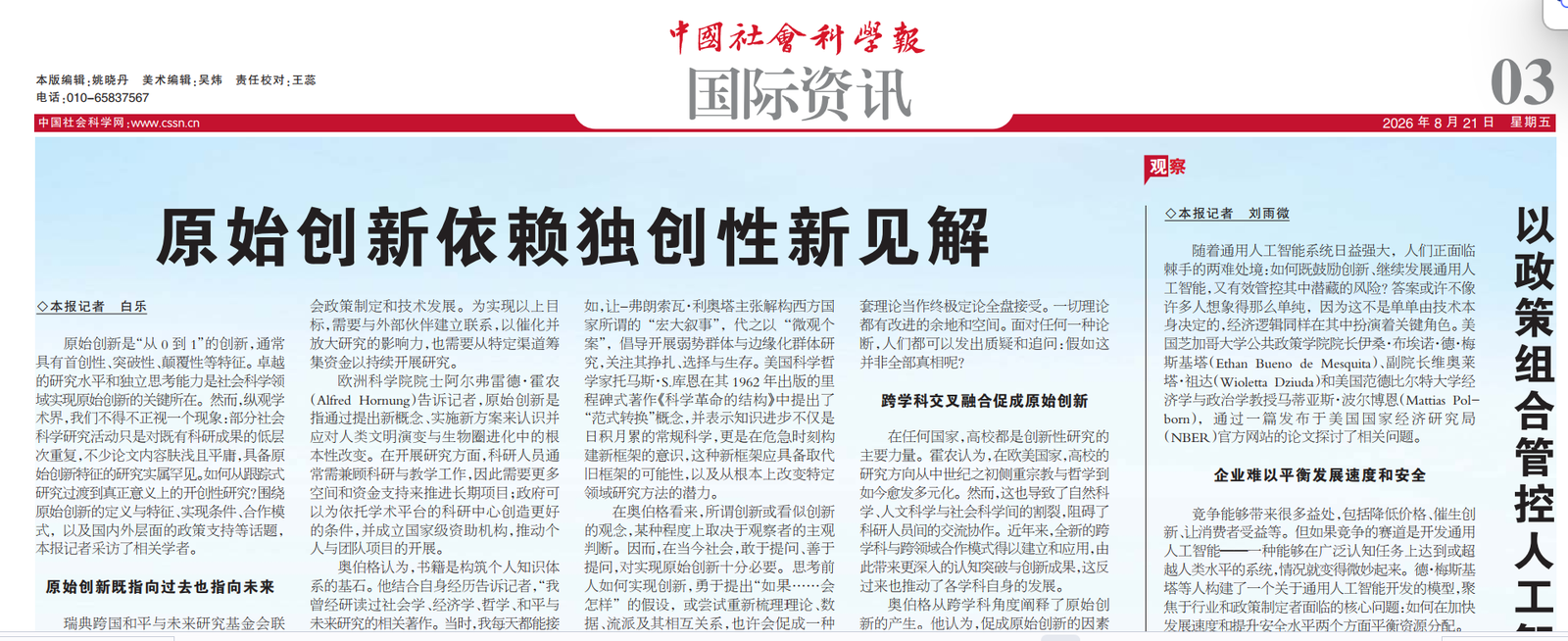
Jan ObergPhD, director, The Transnational Foundation for Peace and Future Research, TFFLund, Sweden October 2, 2026 This is my full original manuscript. The Chinese Academy of Social Science, CASS, makes two publications out if it. 1. China’s Five-year plan emphasized the capabilities of basic research and original innovation. It is regarded as the goal of the future social development, which, as required, should be significantly enhanced. Can you comment on the importance of original innovation in research and academic study? I believe it is easier to define “original innovation” in the natural sciences than in social sciences. The breaking points of what constitutes something new, or innovative, are not quite as sharp in the latter. But in both fields it is about opening up something that was closed, unseen, unexplored before – making manifest what was earlier latent. Innovations come in many forms and shapes – naming something that was not...
arctic-circle-map
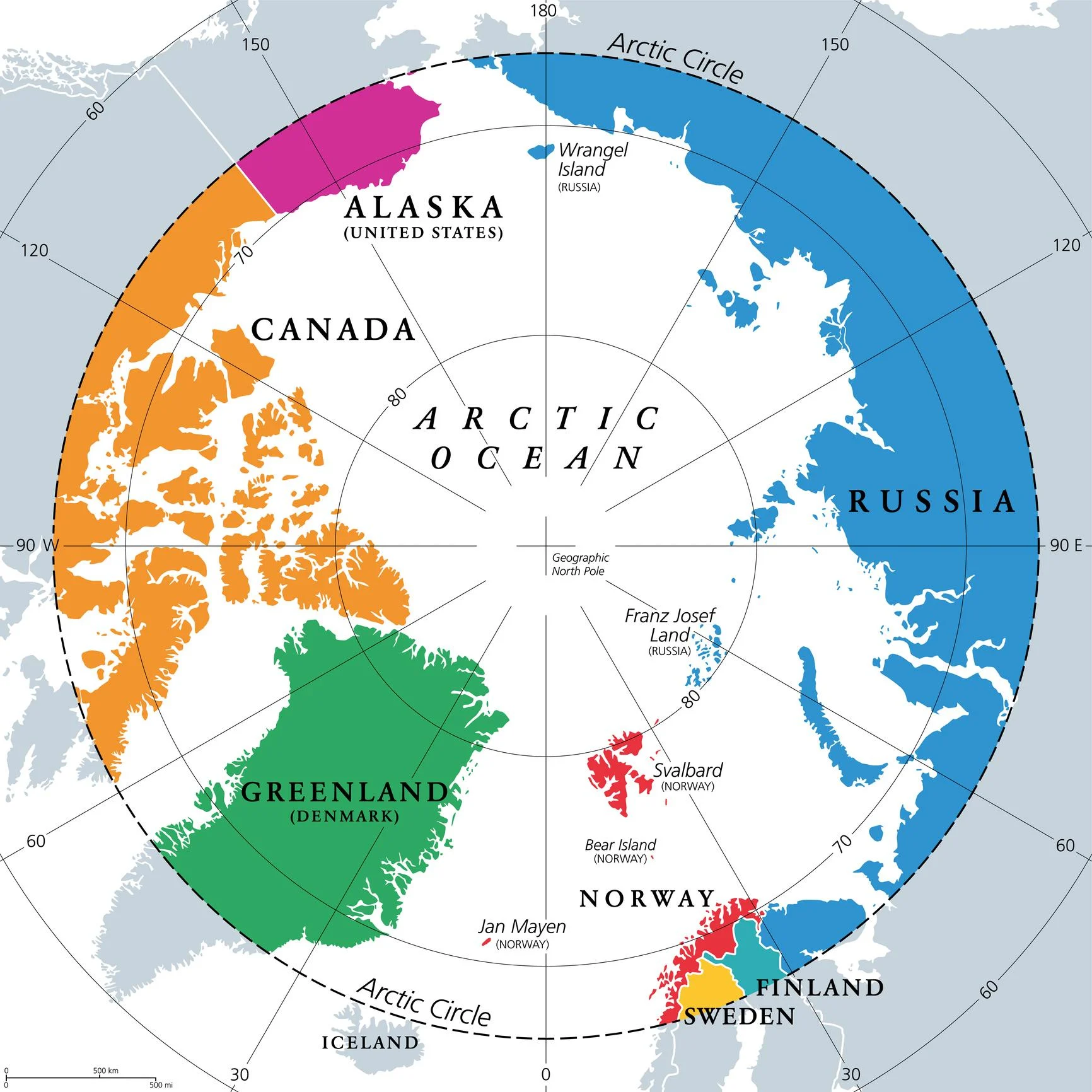
The agreement is catastrophic both because of what it says and what it doesn’t mention. It reduces further the major asset of security policies: Freedom of action. Jan Oberg TFF director September 25, 2026 A couple of hours before the agreement was signed on September 22, 2026, I published the following 13 hypotheses about what it would most likely contain on TFF Substack (in English). I was wrong on only the first point. Contrary to what Trump had written on his Truth Social platform, it does not appear to come into force immediately. In fact, it turned out to be worse than even I had anticipated. After these hypotheses now come a number of reflections in light of what the agreement actually contains, and does not contain, as well as the way in which it has generally been presented by major media outlets and by the public-service broadcaster DR. My...
girl-5894831_1280
Below are TFF-related media mentions, comments, videos and social media posts published elsewhere but not on this homepage. We happen to catch and list only a fraction. Regarding video comments and debates, we recommend that you go to the TFF Video Channel on Substack where many of them are reproduced. Jan Oberg is a contributor to China Daily – 52 million daily clicks – and Global Times, CGTN and CCTV (the national television), China Investment, Xinhua News Agency and several others. Articles and videos on these media very often multiply into countless Chinese (and Western media) that re-post them from these main media. Thanks to The China Academy, his analyses, interviews and comments are frequently posted on YouTube channels such as Thinkers Forum and Wave Media. These videos are often re-posted on Bilibili (China’s YouTube), the China Content Center on TikTok, and on the Chinese edition of TikTok, Douyin.com. This means reaching hundreds of millions of viewers worldwide over a year. While there are too many to catch on all these...