NATO Expects Separate Kosovo, Without Yugoslav Police or Taxes

By JANE PERLEZ
The New York Times
June 11, 1999

COLOGNE, Germany — Although the political future of Kosovo is left vague in the settlement that ended the war, American and NATO officials say they envision an international protectorate that will in theory be part of Yugoslavia but that may well, after a few years, become independent.

As refugees return and society is rebuilt, a senior NATO official said Thursday, Kosovo will become virtually “walled off” from Yugoslavia. People living in Kosovo would not serve in the Yugoslav Army or pay taxes to Yugoslavia; a new police force and judiciary would have to be created without Serbian influence; the currency would probably be either the German mark or the American dollar, and trade would turn south and west toward Albania, Macedonia and Montenegro instead of north toward Serbia.

None of these points are spelled out in the settlement that President Slobodan Milosevic signed. Indeed, in framing a political solution to the war, the NATO allies had been careful to state that Kosovo would remain within Yugoslavia.

The emphasis on keeping the territorial integrity of Yugoslavia and not allowing Kosovo to break away immediately was an essential ingredient for winning the agreement of Milosevic and the Russians to a peace accord. And West Europeans are generally wary of the possible consequences of a breakaway Kosovo.

But the resolution passed by the United Nations Security Council today includes the phrase “taking full account of the Rambouillet accords,” a signal that can be interpreted to infer that down the road independence is a probability, Administration officials said.

Under the Rambouillet accords — which Milosevic refused to sign, a move that led directly to the air strikes — the future status of Kosovo was to be decided by calling an international conference in about three years. The views of the conference, as well as the “will of the people” of Kosovo and views of Serbians, would determine the final status of the province, according to those accords.

The accords offered a detailed blueprint for an autonomous Kosovo, including a 120-member parliament, election rules, an independent judiciary, local government structures, a police force and border security.

Under the plan approved this week, Kosovo will become increasingly separated from Serbia, the dominant republic in what is left of Yugoslavia, and the likelihood of Serbs having a significant say in the status of Kosovo will diminish, officials said.

The physical reconstruction of Kosovo was addressed briefly today at a meeting here by the foreign ministers of the Group of Seven industrial countries and Russia, who said that they would soon organize a conference of potential donors to start raising the billions of dollars needed for the task.

The foreign ministers also announced a stability pact for southeastern Europe that is intended to help already poor economies made poorer by the war. The World Bank and the International Monetary Fund will be called on to provide assistance, the ministers said.

President Clinton said Thursday that because the United States carried most of the cost of the military campaign, the bill for rebuilding the burned homes, damaged roads and torched schools would be paid mostly by the European Union.

The Clinton Administration has requested $100 million in a supplemental appropriations bill for Kosovo and the redevelopment of the region, but Congress is expected to approve only a portion of this.

The United Nations Secretary General, Kofi Annan, is expected to announce soon his choice to become the world body’s Special Representative for Kosovo, a job that will probably resemble that of a Governor General.

A spokeswoman for the French Foreign Ministry, Anne Gazeau-Secret, said today that her Government had requested that Annan appoint a European to the post. This would be appropriate, she said, because most of the money for reconstruction would come from the European Union. Clinton Administration officials have said that, despite doubts about the efficiency of United Nations programs, they were resigned to the United Nations taking overall responsibility for Kosovo, with the European Union playing a major role as financier.

The United Nations was a preferred choice as the dominant player, the officials said, because the United States has influence there but not in the European Union.

Another organization, the Organization for Security and Cooperation in Europe, a 54-member trans-Atlantic body based in Vienna, would also play a central role in rebuilding Kosovo, officials said. In particular, the group would organize elections for a time yet to be set and could assist in forming a police force.

In recent months, Clinton Administration officials have been careful not to rule out independence for Kosovo, even though European countries are more apprehensive about the idea; the possibility of independence is considered important as an inducement for rebels of the Kosovo Liberation Army to disarm.

As a moral question, the possibility of independence is important to the Kosovo Albanians, who before the war made up more than 90 percent of the province’s population. Balkans experts say it is very likely that many Serbs still left in Kosovo will move to Serbia proper, leaving almost only Kosovo Albanian.

For Western Europe, an independent Kosovo, or a Kosovo adjoined to Albania, is less conceivable than for the United States, European diplomats said.

First, they say, a breakaway Kosovo would set a precedent for other separatist groups in Europe. A second and less openly expressed factor is the fear of Kosovo, whose Albanian population is mostly Muslim, becoming an Islamic island within Europe.

As preparations get under way for Kosovo’s reconstruction, comparisons were being made Thursday to the efforts made in Bosnia after the 1995 peace accord. By most accounts, the reconstruction in Bosnia has been hampered by poor management, competition among international agencies and slow funding from the European Union.

© The New York Times 1999
Related Posts

Photos © TFF 2000 Read PressInfo 90 “Lift the Sanctions and Bring More Aid to Yugoslavia” See Pictures from Belgrade © TFF 2000 Please reprint, copy, archive, quote or re-post this item, but please retain the source.
The MSC’s closed groupthink militarism offers only one prescription — more weapons — even as record military expenditures, squeezed from taxpayers in economic crisis, destroy diplomacy and drive escalation to the highest war risks in decades. Jan Oberg TFF director February 13, 2026 From Dialogue Forum to Militarised Ritual For decades, the Munich Security Conference (MSC) – which opened today and runs till Sunday – was one of the few places where adversaries could meet without theatrics. Founded in 1963 as the Wehrkundetagung, it served as a discreet Cold War dialogue forum between NATO and the Warsaw Pact. Even at moments of high tension, Soviet and later Russian representatives were present, and Munich allowed uncomfortable messages to be delivered directly rather than through press releases or military manoeuvres. That era has vanished. The MSC has become something entirely different: a €13–20 million annual gathering of a closed Western security elite, a polished meeting...
PART 2 — Diplomacy, Law and Nonviolent Power By Jan ObergTFF co-founder and director January 26, 2026 This is the second of four TFF-created idea portfolios designed to curb the global reach of the United States and, in both the short and long term, help catalyse a worldwide nonviolent resistance to what many observers describe as the Trump administration’s uniquely confrontational, destructive and world-threatening policies. These portfolios outline what governments and citizens across the world can do through dynamic diplomacy, creative initiatives, and strictly nonviolent means. They are typical TFF works in that we do not only tell what the problem is and how bad it will go – as 90+% of all commentators, experts and scholars do – we tell what we think can be done, inviting you to think of what you think you can do. It seems painfully clear to me that the current political dynamics in Washington increasingly resemble the most dangerous...

Recent Articles

Tony Robinson October 4, 2026 Violence is easy to recognise when someone is being beaten, shot or killed. It becomes more difficult when nobody is holding a weapon. Poverty, discrimination, exploitation and repression can restrict a human life just as effectively, although they do so in very different ways and with very different consequences. Simply adding more categories to an ever-growing list of forms of violence does not really solve the problem. The more interesting question is what all these different situations have in common and why it makes sense to describe them using the same word. Human beings do not simply react to what happens around them. They remember the past, imagine things that do not yet exist, make plans and undertake projects. Workers organise because they imagine different working conditions; people migrate because they imagine another life somewhere else; social movements emerge because people refuse to accept the...
It’s a matter of principles, courage, vision and pulling together – while the militarist world is falling apart… Peter Langille October 3, 2026 “Here, then, is the problem which we present to you, stark and dreadful and inescapable: Shall we put an end to the human race; or shall mankind renounce war?”The Bertrand Russell—Albert Einstein Manifesto, July 9, 1955 ⁕ The forecast for what’s ahead is worrisome. The sharp rise in armed conflicts over the past three years is adding to what was already the highest level in over seventy years. Genocides, which should be prevented are supported. A shared climate emergency that jeopardises survival is ignored. Diverse polls now suggest that people are war-weary, worried and interested in a more effective United Nations. And, there are viable policy options for a more secure world! Yet governments are doubling-down, betting on more war and investing heavily. If current trends persist,...
Johan Galtung 1930-2024October 2015 Published here on October 3, 2026 Let us focus on Civilization for conflict analysis and remedies. Major forms of disorder use violence; war is state organized violence. The most belligerent states are the United States of America and Israel, both with civilization roots. National Evangelism, the US Protestant Christian civilization– more national than evangelical–justifies US warfare as exceptionalism of a people chosen by God, with a manifest destiny to run the world. Orthodox Judaism justifies Israeli warfare to conquer and expand from Nile to Euphrates as a religious right and duty to the Eternal One. The third most belligerent country, the UK, no longer believes it is God-chosen but chosen by the USA; not quite the same but something. But the root cause of global disorder lies in the Occident–with Islam–seeing itself as the single, universal civilization valid for all at all times, all others being...

TFF on Substack

Discover and subscribe to more peace materials on TFF Substack

Most Popular

Tony Robinson October 4, 2026 Violence is easy to recognise when someone is being beaten, shot or killed. It becomes more difficult when nobody is holding a weapon. Poverty, discrimination, exploitation and repression can restrict a human life just as effectively, although they do so in very different ways and with very different consequences. Simply adding more categories to an ever-growing list of forms of violence does not really solve the problem. The more interesting question is what all these different situations have in common and why it makes sense to describe them using the same word. Human beings do not simply react to what happens around them. They remember the past, imagine things that do not yet exist, make plans and undertake projects. Workers organise because they imagine different working conditions; people migrate because they imagine another life somewhere else; social movements emerge because people refuse to accept the...
It’s a matter of principles, courage, vision and pulling together – while the militarist world is falling apart… Peter Langille October 3, 2026 “Here, then, is the problem which we present to you, stark and dreadful and inescapable: Shall we put an end to the human race; or shall mankind renounce war?”The Bertrand Russell—Albert Einstein Manifesto, July 9, 1955 ⁕ The forecast for what’s ahead is worrisome. The sharp rise in armed conflicts over the past three years is adding to what was already the highest level in over seventy years. Genocides, which should be prevented are supported. A shared climate emergency that jeopardises survival is ignored. Diverse polls now suggest that people are war-weary, worried and interested in a more effective United Nations. And, there are viable policy options for a more secure world! Yet governments are doubling-down, betting on more war and investing heavily. If current trends persist,...
Johan Galtung 1930-2024October 2015 Published here on October 3, 2026 Let us focus on Civilization for conflict analysis and remedies. Major forms of disorder use violence; war is state organized violence. The most belligerent states are the United States of America and Israel, both with civilization roots. National Evangelism, the US Protestant Christian civilization– more national than evangelical–justifies US warfare as exceptionalism of a people chosen by God, with a manifest destiny to run the world. Orthodox Judaism justifies Israeli warfare to conquer and expand from Nile to Euphrates as a religious right and duty to the Eternal One. The third most belligerent country, the UK, no longer believes it is God-chosen but chosen by the USA; not quite the same but something. But the root cause of global disorder lies in the Occident–with Islam–seeing itself as the single, universal civilization valid for all at all times, all others being...
Read More
Living-Peace-Sign-Budapest-copy
Tony Robinson October 4, 2026 Violence is easy to recognise when someone is being beaten, shot or killed. It becomes more difficult when nobody is holding a weapon. Poverty, discrimination, exploitation and repression can restrict a human life just as effectively, although they do so in very different ways and with very different consequences. Simply adding more categories to an ever-growing list of forms of violence does not really solve the problem. The more interesting question is what all these different situations have in common and why it makes sense to describe them using the same word. Human beings do not simply react to what happens around them. They remember the past, imagine things that do not yet exist, make plans and undertake projects. Workers organise because they imagine different working conditions; people migrate because they imagine another life somewhere else; social movements emerge because people refuse to accept the...
b54a1f10-8c65-4f0b-9dd5-4abc0a7d04cc_2659x2659
It’s a matter of principles, courage, vision and pulling together – while the militarist world is falling apart… Peter Langille October 3, 2026 “Here, then, is the problem which we present to you, stark and dreadful and inescapable: Shall we put an end to the human race; or shall mankind renounce war?”The Bertrand Russell—Albert Einstein Manifesto, July 9, 1955 ⁕ The forecast for what’s ahead is worrisome. The sharp rise in armed conflicts over the past three years is adding to what was already the highest level in over seventy years. Genocides, which should be prevented are supported. A shared climate emergency that jeopardises survival is ignored. Diverse polls now suggest that people are war-weary, worried and interested in a more effective United Nations. And, there are viable policy options for a more secure world! Yet governments are doubling-down, betting on more war and investing heavily. If current trends persist,...
010
Johan Galtung 1930-2024October 2015 Published here on October 3, 2026 Let us focus on Civilization for conflict analysis and remedies. Major forms of disorder use violence; war is state organized violence. The most belligerent states are the United States of America and Israel, both with civilization roots. National Evangelism, the US Protestant Christian civilization– more national than evangelical–justifies US warfare as exceptionalism of a people chosen by God, with a manifest destiny to run the world. Orthodox Judaism justifies Israeli warfare to conquer and expand from Nile to Euphrates as a religious right and duty to the Eternal One. The third most belligerent country, the UK, no longer believes it is God-chosen but chosen by the USA; not quite the same but something. But the root cause of global disorder lies in the Occident–with Islam–seeing itself as the single, universal civilization valid for all at all times, all others being...
Screenshot 2026-10-02 011738
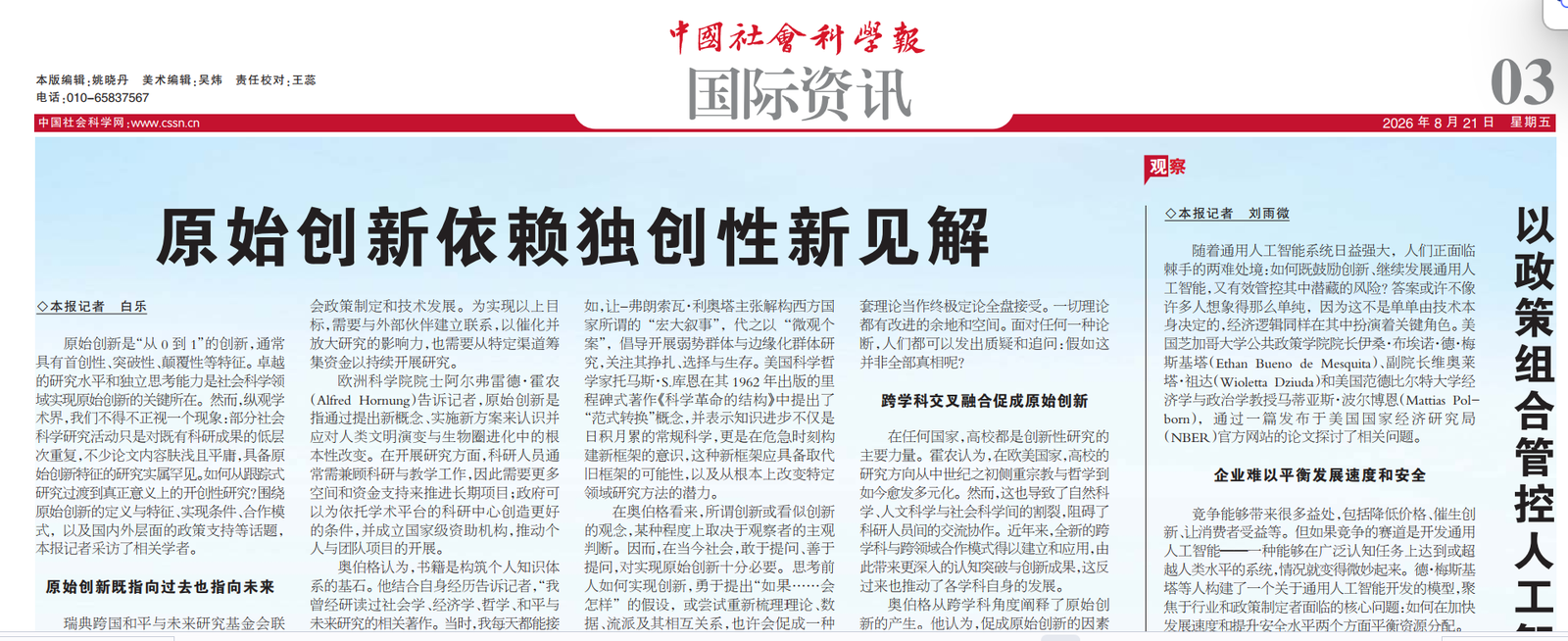
Jan ObergPhD, director, The Transnational Foundation for Peace and Future Research, TFFLund, Sweden October 2, 2026 This is my full original manuscript. The Chinese Academy of Social Science, CASS, makes two publications out if it. 1. China’s Five-year plan emphasized the capabilities of basic research and original innovation. It is regarded as the goal of the future social development, which, as required, should be significantly enhanced. Can you comment on the importance of original innovation in research and academic study? I believe it is easier to define “original innovation” in the natural sciences than in social sciences. The breaking points of what constitutes something new, or innovative, are not quite as sharp in the latter. But in both fields it is about opening up something that was closed, unseen, unexplored before – making manifest what was earlier latent. Innovations come in many forms and shapes – naming something that was not...
arctic-circle-map
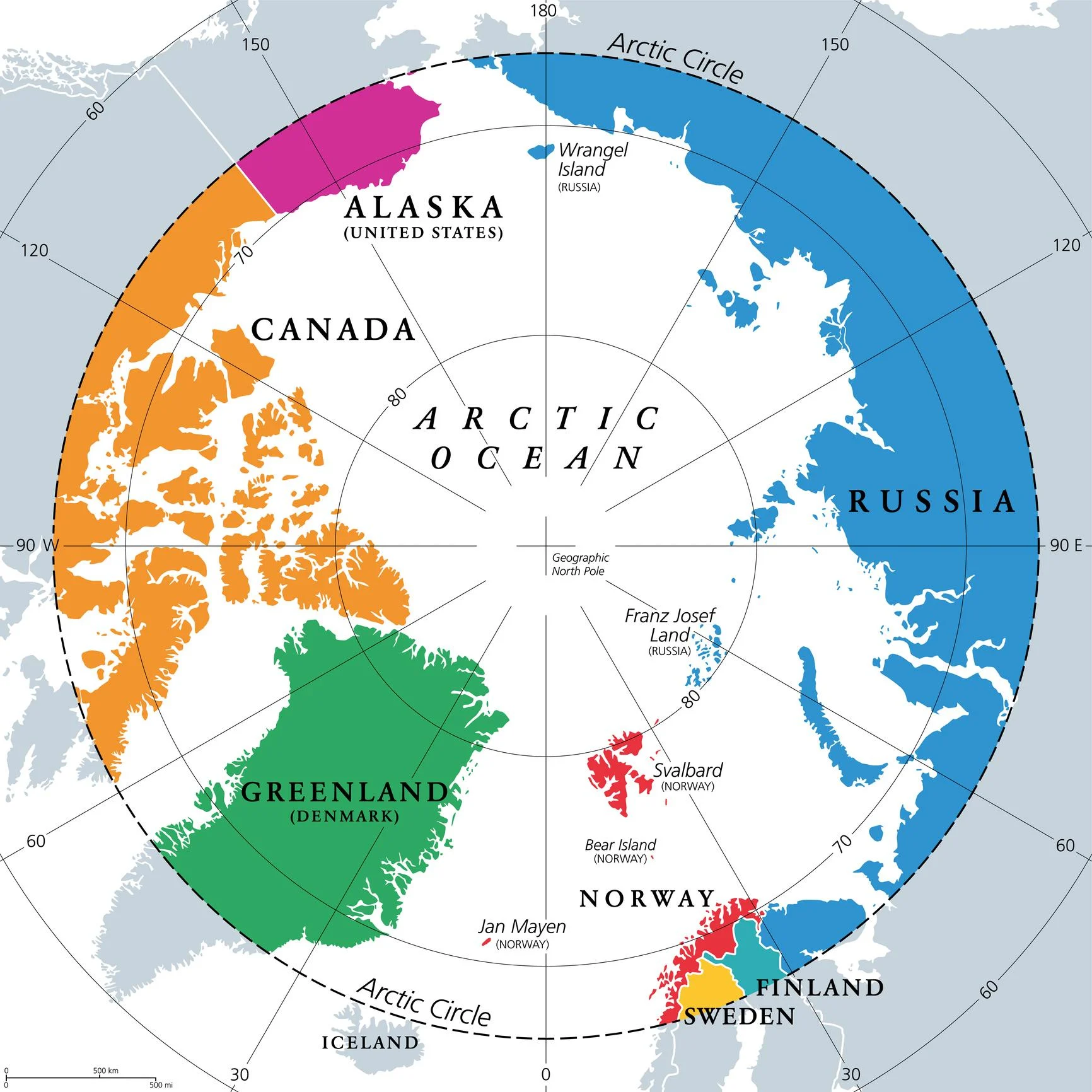
The agreement is catastrophic both because of what it says and what it doesn’t mention. It reduces further the major asset of security policies: Freedom of action. Jan Oberg TFF director September 25, 2026 A couple of hours before the agreement was signed on September 22, 2026, I published the following 13 hypotheses about what it would most likely contain on TFF Substack (in English). I was wrong on only the first point. Contrary to what Trump had written on his Truth Social platform, it does not appear to come into force immediately. In fact, it turned out to be worse than even I had anticipated. After these hypotheses now come a number of reflections in light of what the agreement actually contains, and does not contain, as well as the way in which it has generally been presented by major media outlets and by the public-service broadcaster DR. My...
girl-5894831_1280
Below are TFF-related media mentions, comments, videos and social media posts published elsewhere but not on this homepage. We happen to catch and list only a fraction. Regarding video comments and debates, we recommend that you go to the TFF Video Channel on Substack where many of them are reproduced. Jan Oberg is a contributor to China Daily – 52 million daily clicks – and Global Times, CGTN and CCTV (the national television), China Investment, Xinhua News Agency and several others. Articles and videos on these media very often multiply into countless Chinese (and Western media) that re-post them from these main media. Thanks to The China Academy, his analyses, interviews and comments are frequently posted on YouTube channels such as Thinkers Forum and Wave Media. These videos are often re-posted on Bilibili (China’s YouTube), the China Content Center on TikTok, and on the Chinese edition of TikTok, Douyin.com. This means reaching hundreds of millions of viewers worldwide over a year. While there are too many to catch on all these...