
Jan Oberg: The Iraq War 20 years ago – No shame. No lessons learned. No arrest order on NATO state leaders.

Writing this, I must admit that my rage and pain build up inside, still twenty years later. Below, see what TFF and I wrote back then and why we were, simply put, making better predictions on a shoestring budget than the US and other NATO decision-makers on multi-billion-dollar budgets.
Like other wars and interventions, this was no “mistake”. It was an unavoidable consequence of Western MIRE – Militarism, Imperialism, Racism and Exceptionalism.
The West has learned nothing. Militarism is now its main cohesive force into its manifest destiny: Decline and fall.

President George W. Bush announcing that he has just started the war on Iraq.
Listen carefully! All the arguments and aims he presents were either false, mistaken or outright lies. And sanctimonious.

TFF’s fact-finding missions and scattered memories

Permit me start out with a quotation from the British Stop The War Coalition’s newsletter:

“A report released this week by the Costs of War Project estimates that between 550,000-580,000 people have been killed since March 2003 in Iraq and Syria and “several times as many may have died due to indirect causes such as preventable diseases.”

It goes on to say that “more than 7 million people from Iraq and Syria are currently refugees, and nearly 8 million people are internally displaced in the two countries.” These devastating statistics tell us more of what we already know: the Iraq War was an utter disaster, and the perpetrators should be brought to justice.

This coming week marks 20 years since the invasion led by George Bush and Tony Blair.”

You should be aware also that the US is still on the ground (the US Embassy in Baghdad is the largest anywhere in the world) – it has a series of military bases in Syria and steals its oil on a daily basis.

More people died in Iraq because of 13 years of sanctions than because of the military death and destruction.

And the costs of this war alone have been close to US$ 2 trillion. And here the estimated costs up to 2050.

And – I predict – the Western mainstream media will do very little about these crimes, the mass killing, this utterly failed war – morally, in terms of international law and in terms of winning the hearts and minds of the Iraqi people.

And they will keep on focusing on the European war in Ukraine and the suffering of those who are white, Christian and victims of Russia’s comparatively small – but yes, inexcusable – war there.

Why? Because it suits NATO, the EU and the declining West in general. And because, by focusing on Ukraine, NATO countries’ war crimes fall into the darkness. Harold Pinter would probably say about it – it didn’t happen; nothing ever happened there.

Is anybody in the political, military and media wars of the West having second thoughts today? Does anybody have the civil moral courage to apologise?

No – those same Military-Industrial-Media-Academic Complex (MIMAC) elites continue to destroy our world, incapable of learning any lessons. And there should be plenty to learn.

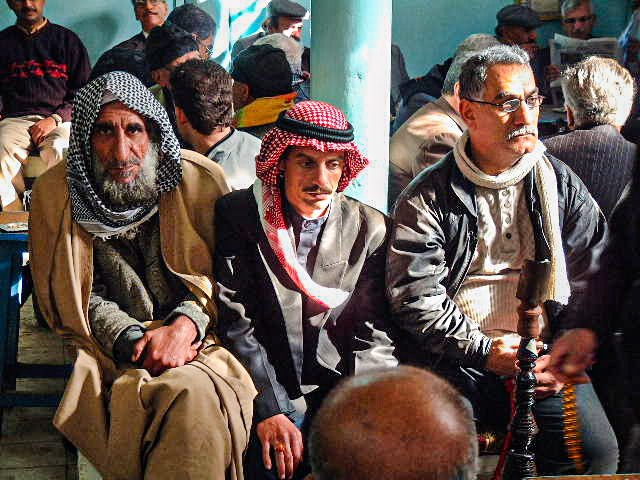
I did fact-finding in Iraq twice, the second time shortly before the US-misled coalition of the willing did its ‘shock and awe.’ My dear colleague, friend and former UN peacekeeper, retired lieutenant colonel Christian Hårleman – who at the time was also the chairman of the TFF Board – and I did 160 interviews with people at all levels, from the #3 man in the system, Tariq Aziz, Baath party member, military, UN staff – over scholars, diplomats, NGO/women’s organisations to the proverbial taxi driver and people in tea houses – in Baghdad, Babylon, Basra and the UN mission at the border with Kuwait. We gave a lecture for high-level militaries and diplomats at the House of Wisdom, Bayt al-Ḥikmah, also known as the Grand Library of Baghdad.

Although everyone we met felt misunderstood, demonised and tense at the prospect of Bush’s and Blair’s bombs soon falling, we – Westerners – were treated everywhere with respect and kindness. For instance, a lady in the reception of our hotel had found that both our birthdays were in January, so we found a beautiful bouquet of flowers in our room that day.

In the spring of 2004, I published my book (in Danish) “Predictable Fiasco. The Conflict With Iraq and Denmark As An Occupation Power” (Tiderne Skifter, Copenhagen, 296 pages). Being in Baghdad for just 24 hours, any fool – such as I – would predict that the US/West would never win the hearts and minds of the Iraqis. No way!

This is not the place to go through all that again.

At writing this, my rage and pain build up inside still twenty years later.

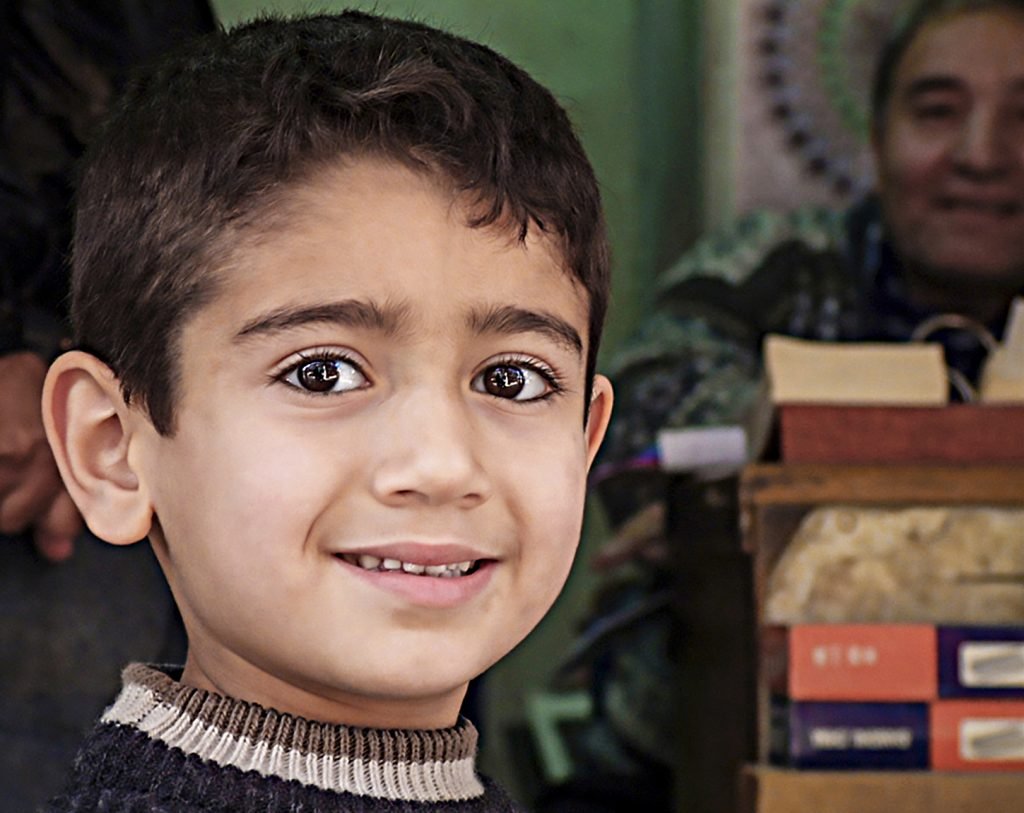
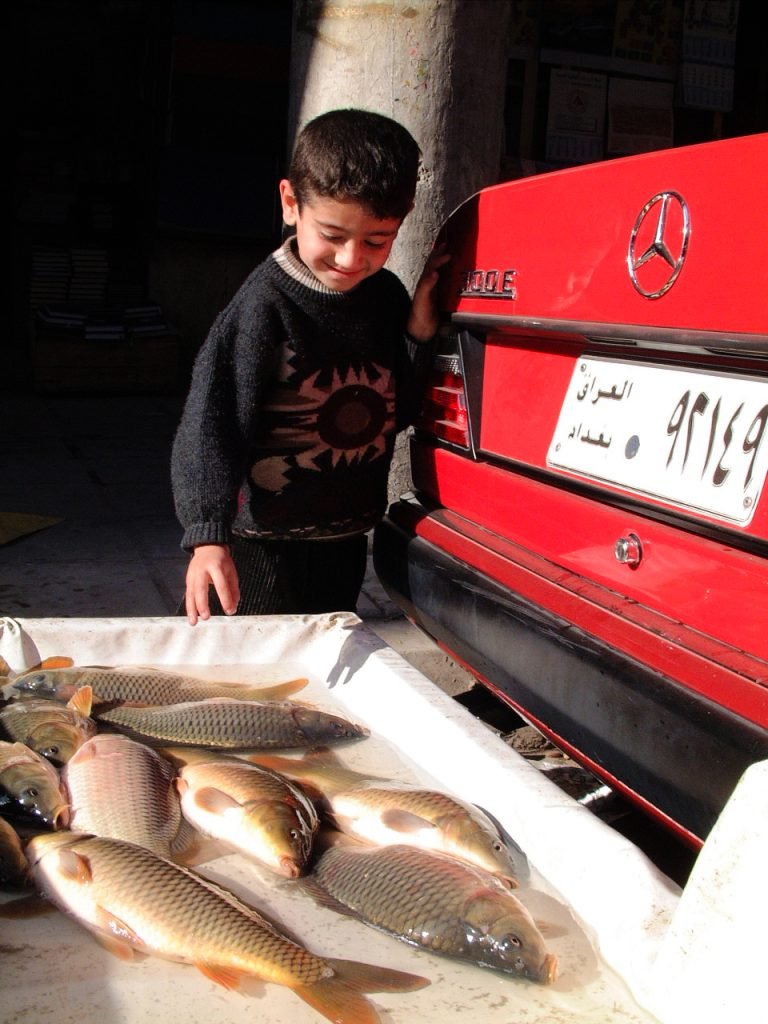
I wonder where this boy is today. If he is. I took these photos of him in the old town’s book bazaar – he would be about 25-16 today. If he is, what is his and his family’s life like today? How did this criminal war shape his childhood? What has it done to his well-being – innocent as he was?
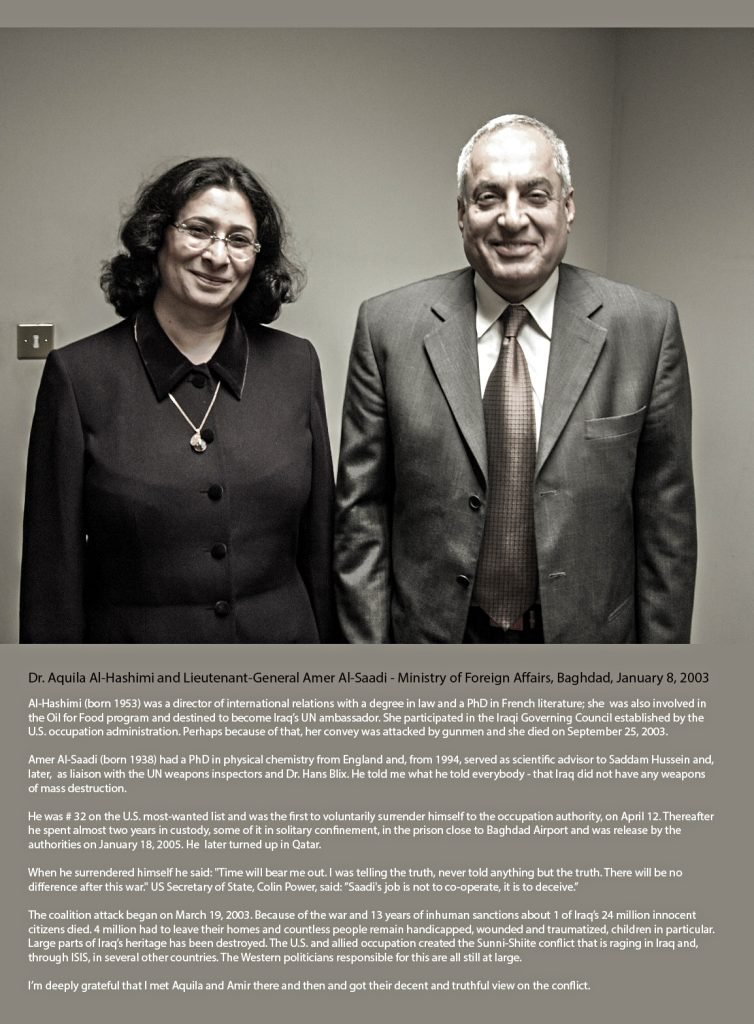
And there were these two extraordinarily decent, competent and kind people with whom we spent hours – Saddam’s weapons expert and liaison with the West on the issue of weapons of mass destruction, Amir al-Saadi and Aquila al-Hashimi who was shortly after killed – as was the legendary CARE worker, Margaret Hassan, who was abducted and murdered, and whom we also interviewed.
A selection of what TFF and the author published twenty years ago

These materials – twenty years back – are found at old homepages and archives. Here most of them are made available at your fingertips:

The 30 photo series: Iraqi faces and surfaces 2002-2003
“With these pictures, I want you to get a sense of the simple fact that Iraq is not only Saddam Hussein, weapons and wars. Iraq is 24 million fellow human beings. It has been a civilisation for some 7,000 years. It has a distinct, rich culture; it has norms, and – above all – it has pride. I have never visited a country with so much kindness and hospitality – a genuine welcoming of the stranger.”

It was obvious from the first weeks that the world was fed by totally one-sided opinion-forming journalism and that the US people who came to Iraq did not have the faintest idea about how to govern it.

TFF Collection Iraq 1, 2, 3 and 4 – December 2002 – January 2005
Some 130 articles by TFF Associates alone – and more by other authors.

TFF from February 2006 – January 2012
About 40 articles between February 2006 and January 2012 (search yourself for “Iraq”)

TFF from 2012 – 2017
Almost 600 articles focused on the Middle East, of which 101 with the hashtag “Iraq”.

Jan Oberg (in Danish) “Predictable Fiasco. The Conflict With Iraq and Denmark As An Occupation Power” (Tiderne Skifter, Copenhagen, 296 pages, only available in secondhand bookshops as the publisher went out of business).

Diagnosis – Prognosis – Solutions

So much about TFF’s Diagnoses and Prognoses. We did not continue the work in Iraq and have not visited Iraq since 2003.

But we did bring forward a series of peace proposals – Treatment/Solution – before the war. It was a 14-point program developed by Hans von Sponeck – who had resigned from the UN after more than 30 years of service, including as UN Assistant Secretary-General and UN Humanitarian Coordinator for Iraq because, as he said, he would not preside over a genocide on the Iraqi people – and myself.

We sent it to what was considered one of the finest and most trustworthy media in the world, International Herald Tribune. That was in December 2002, and it was accepted. Then it was delayed and then rejected. Read it here with an introduction to this bizarre and disgraceful example of the mainstream media manipulations then – and even worse now:

A Road to Peace With Iraq – Europe’s Choice.

In summary, the US/NATO/EU world has learned no lessons from Yugoslavia, Kuwait, Somalia, Afghanistan, Iraq, Libya, and Syria. NATO’s provocative expansion over 30 years right up to the border of Russia indicates the same – while not meant as an endorsement of the Russian invasion of Ukraine.

They’ve all been examples of the MIRE mentioned above – Militarism + Imperialism + Racism + Exceptionalism.

And the media play the same role now as back then – just more uniform, more ignorant of the basic criteria of quality media work – knowledge-based, diversity in perspectives, solid check of sources, independent investigation, aiming at objectivity to the extent humanly possible, serving public education and being critical of power as well as revealing its abuse.

In the field of global affairs, this type of journalism is no longer to be found in the Western mainstream, influential media – something I have dealt with at length in a 50-year perspective here. These media have, compared with 2003, become even more tightly integrated into the MIMAC – the Military-Industrial Media Academic Complex – the elites networking in a murky, criminal society far away from democracy with its checks and balances.

“It is enough that a lie is believed for three days – it has then served its purpose.


Marie de Medici, 1573-1642, queen consort and queen regent of France

Unlike our mainstream adversaries, warmongering propagandists and other destructive forces, TFF has no source of state, corporate or institutional finance whatsoever. Such are the conditions for truly independent peace research in these times. Everything peace has been cancelled. But we are still here – and will be. Thanks to you

TFF and this homepage operate entirely on voluntary support from its readers, and we who produce it are all volunteers. To support TFF, you do not have to agree with every argument or article, only welcome alternative voices, research-based knowledge and dialogue about important matters.

[paypal-donation]

Who said Freudian slip?
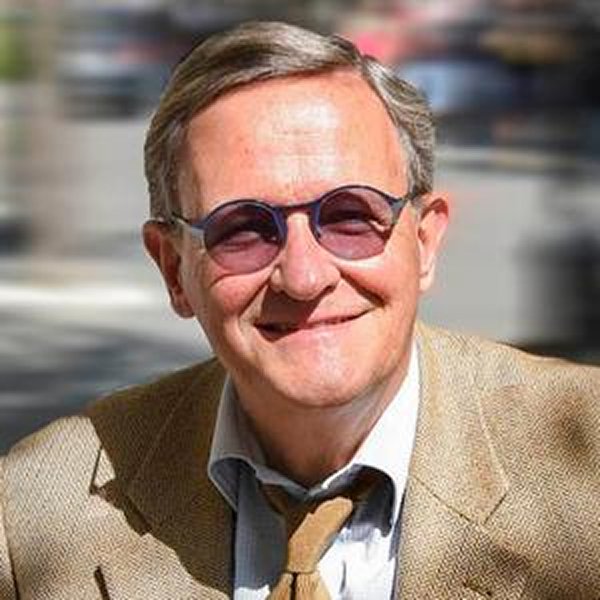
Peace & future researcher + ‌Art Photographer

Share

Leave a Reply

Your email address will not be published. Required fields are marked *

Related Posts

Lena Petrova of “World Affairs In Context” with more than half a million subscribers on YouTube wanted to explore what a peace researcher like me has to say about, among other things, the First and the Second Cold War and why eethics has disappeared from politics. I am particularly happy about this conversation that also yielded an amazing number of very appreciative comments on YouTube. No doubt, people are longing for alternatives, including peace perspectives.
The MIMAC – Military-Industrial-Media-Academic Complex – drives the world’s rampant militarism and wars without end. Here is a short reflection of how it works against all interests of humanity. #5 deals with why there is no real enemy or threat images/analysis. It’s all ex-post constructions. And, btw, theTFF Peace Pulse is now on Rumble.
Jan Oberg, TFF director April 28, 2026 In this third TFF Peace Pulse, I make the important distinction between the violence and the conflict that violence is a symptom of. If you want peace, focus on the underlying conflict because that is the key to resolution, peacemaking, and a better future for the parties. The West is obsessed with violence, just look around you – and 90+ per cent of the public debate is about military issues and other violence – totally wasted for peace. These Peace Pulses will only be published here a few times. You will also not find them on YouTube and Vimeo because both platforms have blocked TFF and me; you know, peace is dangerous these days. Most TFF’s videos since 2007 are now on Rumble.

Recent Articles

The most recent on top Farhang Jahanpour, January 7, 2012 As US and Iran confront each other, where is the diplomacy? Farhang Jahanpour, August 3, 2011 Iran can’t reform itself – the power struggle bewtween Ahmadinejad and Khamenei Farhang Jahanpour, May 17, 2011 Is Iran next? The Supreme Leader versus Ahmadinejad Farhang Jahanpour, March 4, 2011 The revolutions in the Arab world: The need for long-term thinking and humility Farhang Jahanpour, December 15, 2010 The Wikileak files: The banality of politics Farhang Jahanpour, November 18, 2010 This is what ought to be the U.S.’s interests in the Middle East! Farhang Jahanpour – Video on Vimeo, October 6, 2010 Towards a solution in the Middle East Farhang Jahanpour and Susanne Sklar, July 28, 2010 Dialogue on nuclear weapons and culture of peace by TFF Associate and a TFF friend Farhang Jahanpour, July 28, 2010 Iran, Turkey and Israel – New Global...
Lidt om bogen Bogens indhold Bestil bogen her Anmeldelser Siden den kolde krigs afslutning har dansk udenrigs- og sikkerhedspolitik bevæget sig langt ind i en politisk og moralsk blindgyde. Men det tjener hverken os eller verden at Danmark er blevet en krigs- og besættelsesmagt, viser den internationalt respekterede danske freds- og fremtidsforsker, Jan Øberg i denne bog. Tværtimod mindsker det vores og andres sikkerhed og bidrager til at øge, snarere end at mindske, terrortruslen. Forudsigelig fiasko – der udkommer 4. juni 2004 – sætter fokus på det irakiske samfund og Vestens måde at betragte og behandle Irak på. Jan Øberg kombinerer konkret konfliktanalyse med et personligt engagement, og underbygger overbevisende og konsekvent det synspunkt, at Vestens mangelfulde konfliktforståelse og ukyndige konflikthåndtering måtte ende med den ulykkelige krig. Det er en krig, som efter forfatterens opfattelse hverken kan fremme ædle motiver – etablere et demokratisk Irak – eller økonomisk-kulturelle interesser, men...
Burundi – hopp om fred Burundi, var är det nu det ligger? Det är nånting med Hutsier och Tutuer – eller vad de nu heter – som mördar varandra med machete-knivar, nånting med fattigdom, korruption, militärdiktatur, nöd och elände? Det hopplösa, mörka Afrika i ett bananskal, eller hur? Tja. Jag har precis varit där. Det ligger naturligtvis någonting i det. Och det finns en del orsaker till att vi inte ser mycket om landet i massmedia. En av dem är att det inte försiggår något folkmord just nu, ingen naturkatastrofer, ingen kupp. Det finns ingen misslyckad FN-mission, USA och EU har få intressen, Madeleine Halfbright har inte sagt något om det nyss, NATO:s Solana ser inte bombningar i Burundi som viktiga för firandet av alliansens 50-årsdag i april. För en tid sedan då 50 människor mördades strömmade hundratals journalister med CNN i spetsen till Burundi…men för att snabbt försvinna till Kongo...

TFF on Substack

Discover more from TFF Transnational Foundation & Jan Oberg.

Most Popular

The most recent on top Farhang Jahanpour, January 7, 2012 As US and Iran confront each other, where is the diplomacy? Farhang Jahanpour, August 3, 2011 Iran can’t reform itself – the power struggle bewtween Ahmadinejad and Khamenei Farhang Jahanpour, May 17, 2011 Is Iran next? The Supreme Leader versus Ahmadinejad Farhang Jahanpour, March 4, 2011 The revolutions in the Arab world: The need for long-term thinking and humility Farhang Jahanpour, December 15, 2010 The Wikileak files: The banality of politics Farhang Jahanpour, November 18, 2010 This is what ought to be the U.S.’s interests in the Middle East! Farhang Jahanpour – Video on Vimeo, October 6, 2010 Towards a solution in the Middle East Farhang Jahanpour and Susanne Sklar, July 28, 2010 Dialogue on nuclear weapons and culture of peace by TFF Associate and a TFF friend Farhang Jahanpour, July 28, 2010 Iran, Turkey and Israel – New Global...
Lidt om bogen Bogens indhold Bestil bogen her Anmeldelser Siden den kolde krigs afslutning har dansk udenrigs- og sikkerhedspolitik bevæget sig langt ind i en politisk og moralsk blindgyde. Men det tjener hverken os eller verden at Danmark er blevet en krigs- og besættelsesmagt, viser den internationalt respekterede danske freds- og fremtidsforsker, Jan Øberg i denne bog. Tværtimod mindsker det vores og andres sikkerhed og bidrager til at øge, snarere end at mindske, terrortruslen. Forudsigelig fiasko – der udkommer 4. juni 2004 – sætter fokus på det irakiske samfund og Vestens måde at betragte og behandle Irak på. Jan Øberg kombinerer konkret konfliktanalyse med et personligt engagement, og underbygger overbevisende og konsekvent det synspunkt, at Vestens mangelfulde konfliktforståelse og ukyndige konflikthåndtering måtte ende med den ulykkelige krig. Det er en krig, som efter forfatterens opfattelse hverken kan fremme ædle motiver – etablere et demokratisk Irak – eller økonomisk-kulturelle interesser, men...
Burundi – hopp om fred Burundi, var är det nu det ligger? Det är nånting med Hutsier och Tutuer – eller vad de nu heter – som mördar varandra med machete-knivar, nånting med fattigdom, korruption, militärdiktatur, nöd och elände? Det hopplösa, mörka Afrika i ett bananskal, eller hur? Tja. Jag har precis varit där. Det ligger naturligtvis någonting i det. Och det finns en del orsaker till att vi inte ser mycket om landet i massmedia. En av dem är att det inte försiggår något folkmord just nu, ingen naturkatastrofer, ingen kupp. Det finns ingen misslyckad FN-mission, USA och EU har få intressen, Madeleine Halfbright har inte sagt något om det nyss, NATO:s Solana ser inte bombningar i Burundi som viktiga för firandet av alliansens 50-årsdag i april. För en tid sedan då 50 människor mördades strömmade hundratals journalister med CNN i spetsen till Burundi…men för att snabbt försvinna till Kongo...
Read More
The most recent on top Farhang Jahanpour, January 7, 2012 As US and Iran confront each other, where is the diplomacy? Farhang Jahanpour, August 3, 2011 Iran can’t reform itself – the power struggle bewtween Ahmadinejad and Khamenei Farhang Jahanpour, May 17, 2011 Is Iran next? The Supreme Leader versus Ahmadinejad Farhang Jahanpour, March 4, 2011 The revolutions in the Arab world: The need for long-term thinking and humility Farhang Jahanpour, December 15, 2010 The Wikileak files: The banality of politics Farhang Jahanpour, November 18, 2010 This is what ought to be the U.S.’s interests in the Middle East! Farhang Jahanpour – Video on Vimeo, October 6, 2010 Towards a solution in the Middle East Farhang Jahanpour and Susanne Sklar, July 28, 2010 Dialogue on nuclear weapons and culture of peace by TFF Associate and a TFF friend Farhang Jahanpour, July 28, 2010 Iran, Turkey and Israel – New Global...
Lidt om bogen Bogens indhold Bestil bogen her Anmeldelser Siden den kolde krigs afslutning har dansk udenrigs- og sikkerhedspolitik bevæget sig langt ind i en politisk og moralsk blindgyde. Men det tjener hverken os eller verden at Danmark er blevet en krigs- og besættelsesmagt, viser den internationalt respekterede danske freds- og fremtidsforsker, Jan Øberg i denne bog. Tværtimod mindsker det vores og andres sikkerhed og bidrager til at øge, snarere end at mindske, terrortruslen. Forudsigelig fiasko – der udkommer 4. juni 2004 – sætter fokus på det irakiske samfund og Vestens måde at betragte og behandle Irak på. Jan Øberg kombinerer konkret konfliktanalyse med et personligt engagement, og underbygger overbevisende og konsekvent det synspunkt, at Vestens mangelfulde konfliktforståelse og ukyndige konflikthåndtering måtte ende med den ulykkelige krig. Det er en krig, som efter forfatterens opfattelse hverken kan fremme ædle motiver – etablere et demokratisk Irak – eller økonomisk-kulturelle interesser, men...
Burundi – hopp om fred Burundi, var är det nu det ligger? Det är nånting med Hutsier och Tutuer – eller vad de nu heter – som mördar varandra med machete-knivar, nånting med fattigdom, korruption, militärdiktatur, nöd och elände? Det hopplösa, mörka Afrika i ett bananskal, eller hur? Tja. Jag har precis varit där. Det ligger naturligtvis någonting i det. Och det finns en del orsaker till att vi inte ser mycket om landet i massmedia. En av dem är att det inte försiggår något folkmord just nu, ingen naturkatastrofer, ingen kupp. Det finns ingen misslyckad FN-mission, USA och EU har få intressen, Madeleine Halfbright har inte sagt något om det nyss, NATO:s Solana ser inte bombningar i Burundi som viktiga för firandet av alliansens 50-årsdag i april. För en tid sedan då 50 människor mördades strömmade hundratals journalister med CNN i spetsen till Burundi…men för att snabbt försvinna till Kongo...
Mr President ! President Bill Clinton gjorde i tisdags en blixtvisit i Kosovo. I ett tal manade han albanerna att sluta hämnas på den krympande serbiska minoriteten. Han besökte också de amerikanska soldaterna på den nya Bondsteelbasen. Det finns viktiga frågor som borde ha ställts still honom om Balkan och Kosovo och om USA:s ledande roll i bombningarna av Jugoslavien. Det borde vara en självklarhet att oberoende medier i demokratiska länder låter politiska ledare svara på viktiga frågor. Men ställdes verkligen de viktiga frågorna? Här är några frågor som jag skulle ha ställt ˆ om jag vore journalist och hade fått tillfälle att göra en intervju i tisdags. (1) Mr President! Amerikanska plan bombade i våras Jugoslavien och Kosovo med er som överbefälhavare. Aktionen rättfärdigades av uppgifter om ett folkmord planerat av Belgrad. Dessa uppgifter har nu visat sig vara grovt missvisande eller falska. Hur ställer Ni er till detta?...
Burundi – håb forude Burundi, hvor er det nu det ligger? Det er noget med Hutsier og Tutuer – eller hvad de nu hedder – der laver folkemord med machete-knive på hinanden, noget med fattigdom, korruption, militærdiktatur, nød og elendighed? Det håbløse, mørke Afrika i en bananskal, ikke? Tjah. Jeg har lige været der. Der er selvfølgelig noget om snakken. Der er en del årsager til at man ikke hører særligt meget om livet i dette lille land. En af dem er at der ikke foregår noget folkemord for tiden, ingen naturkatastrofer, intet kup. Der er ingen mislykket FN-mission, USA og EU har ingen interesser, Madeleine Halfbright har ikke sagt noget om det, NATO’s Solana ser ikke bombinger i Burundi som afgørende forud for alliancens 50årsdag. For nogen tid siden da et halvt hundrede mennesker var blevet dræbt valfartede hundreder af journalister med CNN i spidsen dertil . . . men...
Rambouillet (Rambo-Yeah) og Rashid Vi skriver fredag den 19. januar. For få dage siden kom jeg hjem fra små tre uger i Skopje, Beograd og Kosovo. Min analyse og min intuition siger mig dét, jeg ikke vil høre: bombningerne nærmer sig. Det var 34. besøg siden 1991. Jeg er delvist uddannet i Dubrovnik, fra 1974. Jeg kan ikke slippe det. Det er altså også mit land, der atter trues af den kulturkreds, jeg tilhører. Radmila og Peca i Beograd, venner siden 1974, intellektuelle der har valgt ikke at forlade landet og netop har sagt nej til et ophold i udlandet. Datteren Anja på 9 skal vokse op hér. "Jeg rejste ned nu," siger jeg, "fordi der enten ville falde bomber eller blive en eller anden slags ‘forhandling’ og jeg vil være hér hvis I blir bombet, for jeg skammer mig over hvad Danmark og andre lande gør." Hun får tårer...