Is Brexit coming or going?

Brexit grabs the attention of much of the world, not least because Britain once had an Empire and ruled a great part of the world’s peoples. And it’s the caretaker of the English language, the Empire’s most important legacy.

Add to that the BBC, the world’s favourite and most trusted radio and TV station, its top universities, its production of pop music, its numerous top-flight classical orchestras, its permanent membership of the UN Security Council, it being the world’s fifth largest economy and, alas, its possession of nuclear weapons.

In terms of its soft non-military power, depending on which measurement is used, Britain is first or second in the world.

It remains partly a mystery why something around half the electorate want Britain to leave the European Union. It’s mainly older people who voted that way in the referendum of three years ago. The very old who lived through World War 2 and younger people voted to remain.

The very old did not need persuading that after a millennium of almost continuous war in Europe culminating in World War 2, the genocide against the Jews and being citizens of, historically, the most war-inclined country in the world that an organization that tied European nations together non-violently was both a clever and wonderfully visionary idea.

The young, for their part, enjoy a Europe where there is a grand mix of peoples, much more intermarriage, where low-cost airlines make travel to each others’ cities easy and that they can get jobs or go to universities, schools and hospitals wherever they choose. This is liberating compared with what older generations had. They have also been taught in school the reasons for the creation of the EU.

It’s becoming clear where the battle lines for a second referendum are drawn. The results from Sunday’s elections for the European Parliament make clear that the tide of opinion is going the “Remain” way.

The scale of the Conservative meltdown is almost unbelievable. It’s the party’s worst ever result in a national election, with a vote share of a measly 9%. They were beaten into fifth place by the Greens. Labour’s result is also bad. It was thrashed in London which is the heartland of Remainers and usually Labour, and beaten into third place nationally. 

Its leader, Jeremy Corbyn, ignoring the groundswell within the Labour Party for remaining in the EU, paid the price for trying to face both ways on Brexit. In Remain areas its vote all but disappeared. Corbyn failed to vindicate his strategy of riding two horses.

It came as no surprise that after the results came in he made clear that Labour could only now support two options – a general election in which the government’s savage austerity policies and Brexit would be the main issues or a second referendum.

Last week Prime Minister Theresa May announced she was going to step down. The contenders to replace her mainly come from hard right Brexiteers. Fortunately, it’s a poisoned chalice. The overwhelming majority of MPs that voted- by an unheard 230 votes- against a unilateral decision to leave without an agreement with the EU and also voted by a large margin against Ms. May’s compromise agreement – will not change their opinion.

If, which is most unlikely, the new prime minister could force some version of Brexit through parliament the United Kingdom would probably lose pro-Remain Scotland and even Pro-Remain Northern Ireland. Both have, in terms of their economic and political future, a vested interest in staying in the EU.

The new prime minister will find that he or she is boxed in by the history of the last few months of parliamentary debate. The big question is the exact timing of a general election or a new referendum.

Will it be before or after October 31st, the official supposed leaving date or after, having secured another delay from the EU? I would guess before. The new prime minister will sit on the throne for only a few months.

On the other hand if the new prime minister uses his/her time well to prepare the country for a new referendum he/she might well have a chance of winning the next election.

Professor Andrew Hindmoor in his new book, “12 Days That Made Modern Britain”, records how Winston Churchill in a speech in 1948 spoke of “three great circles among the free nations and democracies”. The first of these was Britain, the Commonwealth and the now deceased Empire.

The second was the English-speaking world dominated by the US and the third was Europe. Churchill suggested that it was Britain’s global destiny to play a leading role in all three of these worlds.

“Now if you think of these three inter-linked circles you will see that we are the only country which has a great part in everyone of them”. He would vote Remain today.

Foreign affairs columnist, film-maker and author

Share

Leave a Reply

Your email address will not be published. Required fields are marked *

Related Posts

The MIMAC – Military-Industrial-Media-Academic Complex – drives the world’s rampant militarism and wars without end. Here is a short reflection of how it works against all interests of humanity. #5 deals with why there is no real enemy or threat images/analysis. It’s all ex-post constructions. And, btw, theTFF Peace Pulse is now on Rumble.
Jan Oberg, TFF director April 28, 2026 In this third TFF Peace Pulse, I make the important distinction between the violence and the conflict that violence is a symptom of. If you want peace, focus on the underlying conflict because that is the key to resolution, peacemaking, and a better future for the parties. The West is obsessed with violence, just look around you – and 90+ per cent of the public debate is about military issues and other violence – totally wasted for peace. These Peace Pulses will only be published here a few times. You will also not find them on YouTube and Vimeo because both platforms have blocked TFF and me; you know, peace is dangerous these days. Most TFF’s videos since 2007 are now on Rumble.
In contrast to most, we’ll bring alternatives, solutions, hope and strategies for a better future. Times are dangerous, yes, but that only intensifies the need for constructive thinking and action! Jan Oberg, TFF director April 13, 2026 The new TFF Peace Pulse uses video messages in a new way: Max 3-5-minute-long comments, ideas or perhaps mini-lectures, all about peace – positive peace. We launch them today on April 13, 2026 with a carefully crafted visual aesthetic fitting the content. We hope to publish them regularly from now on. We launch Peace Pulse (PP) – for a number of reasons. The world is in chaos, and there are countless reasons to feel concerned, frustrated, even angry. The atmosphere is saturated with doom and gloom, with negative energy and rear‑mirror thinking, while vision, imagination, alternatives, strategies and genuine future‑mindedness remain in short supply. And without them, we simply can’t save the world. Looking at problems from a hundred angles will...

Recent Articles

Jan ObergTFF director ☮️ When this morning – August 19, 2026 – I saw the above new US Trump map, I came to think of Frank Zappa, The Mothers of Invention, who said that politics is the entertainment division of the Military-Industrial Complex. That formulation beats many academic analyses – as you will have understood […]
A Civilizational Interpretation of the West’s Body Politic Pascal Lottaz Associate professor at Ritsumeikan University in Kyoto and TFF Board member August 25, 2026 “How do we explain the self-defeating and self-harming policies of Western states? Europe seems to be happily deindustrializing, the US proxy war in Ukraine is killing hundreds of thousands (if not millions) […]
LONDON – Many of the great and the good have dismissed the utility of nuclear weapons as well as finding the idea of their use morally indefensible but still they exist in enormous numbers in the arsenals of the great powers. Secretary of Defence Robert McNamara and Secretary of State Dean Rusk both came to be convinced during their tenure in the Kennedy administration that their use was “unthinkable”. President George H.W. Bush has written that in private he ruled out a nuclear response during the 1991 Gulf War although in public his Administration did not. General Colin Powell, then the chairman of the Joint Chiefs of Staff, in his autobiography recalls chiding his boss, Dick Cheney, for even considering it. Paul Nitze, one of the principal architects of containing the Soviet Union by nuclear deterrence, went even further. He argued in a Washington Post article in 1994 that it...

TFF on Substack

Discover more from TFF Transnational Foundation & Jan Oberg.

Most Popular

Jan ObergTFF director ☮️ When this morning – August 19, 2026 – I saw the above new US Trump map, I came to think of Frank Zappa, The Mothers of Invention, who said that politics is the entertainment division of the Military-Industrial Complex. That formulation beats many academic analyses – as you will have understood […]
A Civilizational Interpretation of the West’s Body Politic Pascal Lottaz Associate professor at Ritsumeikan University in Kyoto and TFF Board member August 25, 2026 “How do we explain the self-defeating and self-harming policies of Western states? Europe seems to be happily deindustrializing, the US proxy war in Ukraine is killing hundreds of thousands (if not millions) […]
LONDON – Many of the great and the good have dismissed the utility of nuclear weapons as well as finding the idea of their use morally indefensible but still they exist in enormous numbers in the arsenals of the great powers. Secretary of Defence Robert McNamara and Secretary of State Dean Rusk both came to be convinced during their tenure in the Kennedy administration that their use was “unthinkable”. President George H.W. Bush has written that in private he ruled out a nuclear response during the 1991 Gulf War although in public his Administration did not. General Colin Powell, then the chairman of the Joint Chiefs of Staff, in his autobiography recalls chiding his boss, Dick Cheney, for even considering it. Paul Nitze, one of the principal architects of containing the Soviet Union by nuclear deterrence, went even further. He argued in a Washington Post article in 1994 that it...
Read More
HQAB7NMWUAA1gSk
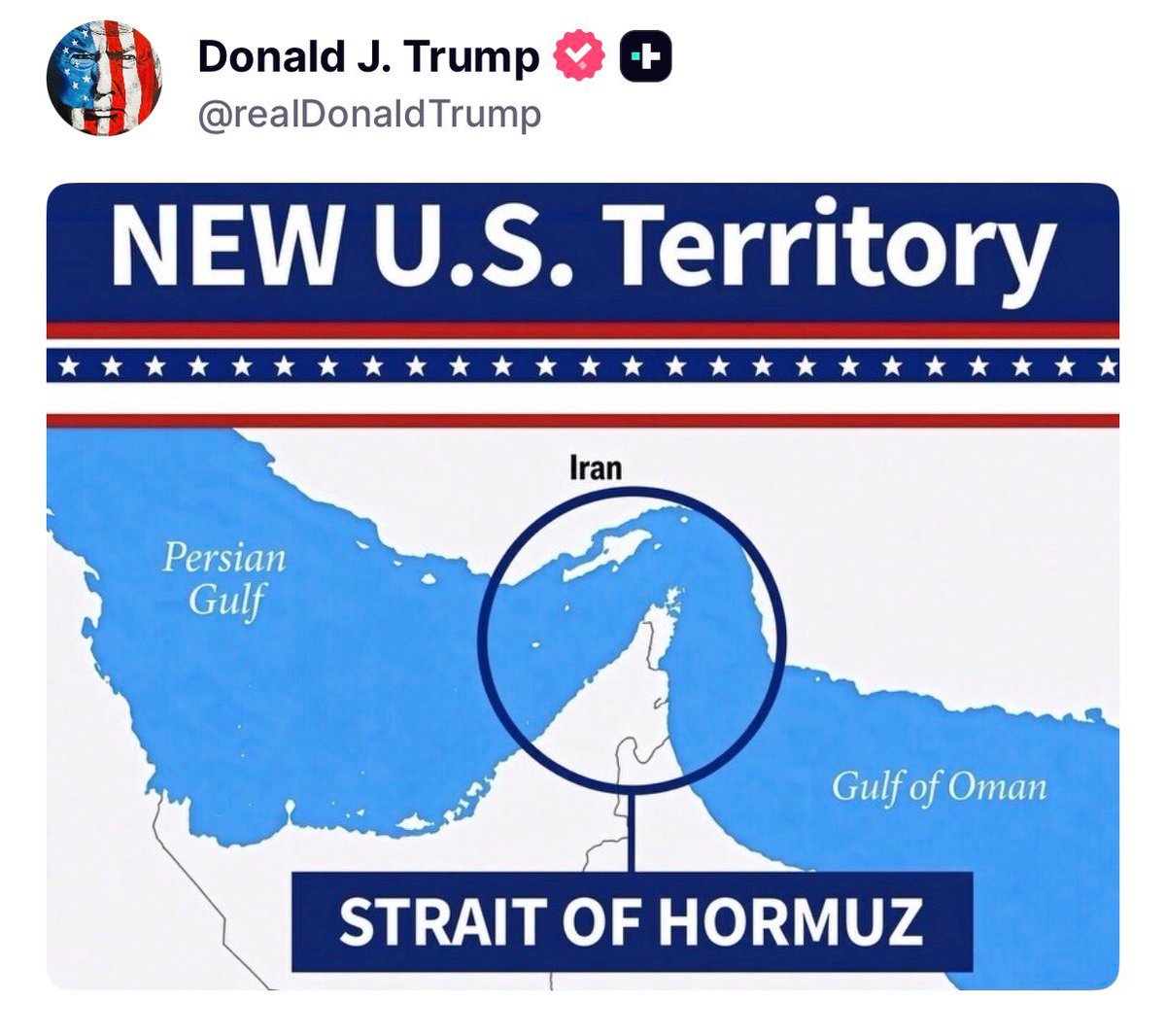
Jan ObergTFF director ☮️ When this morning – August 19, 2026 – I saw the above new US Trump map, I came to think of Frank Zappa, The Mothers of Invention, who said that politics is the entertainment division of the Military-Industrial Complex. That formulation beats many academic analyses – as you will have understood […]
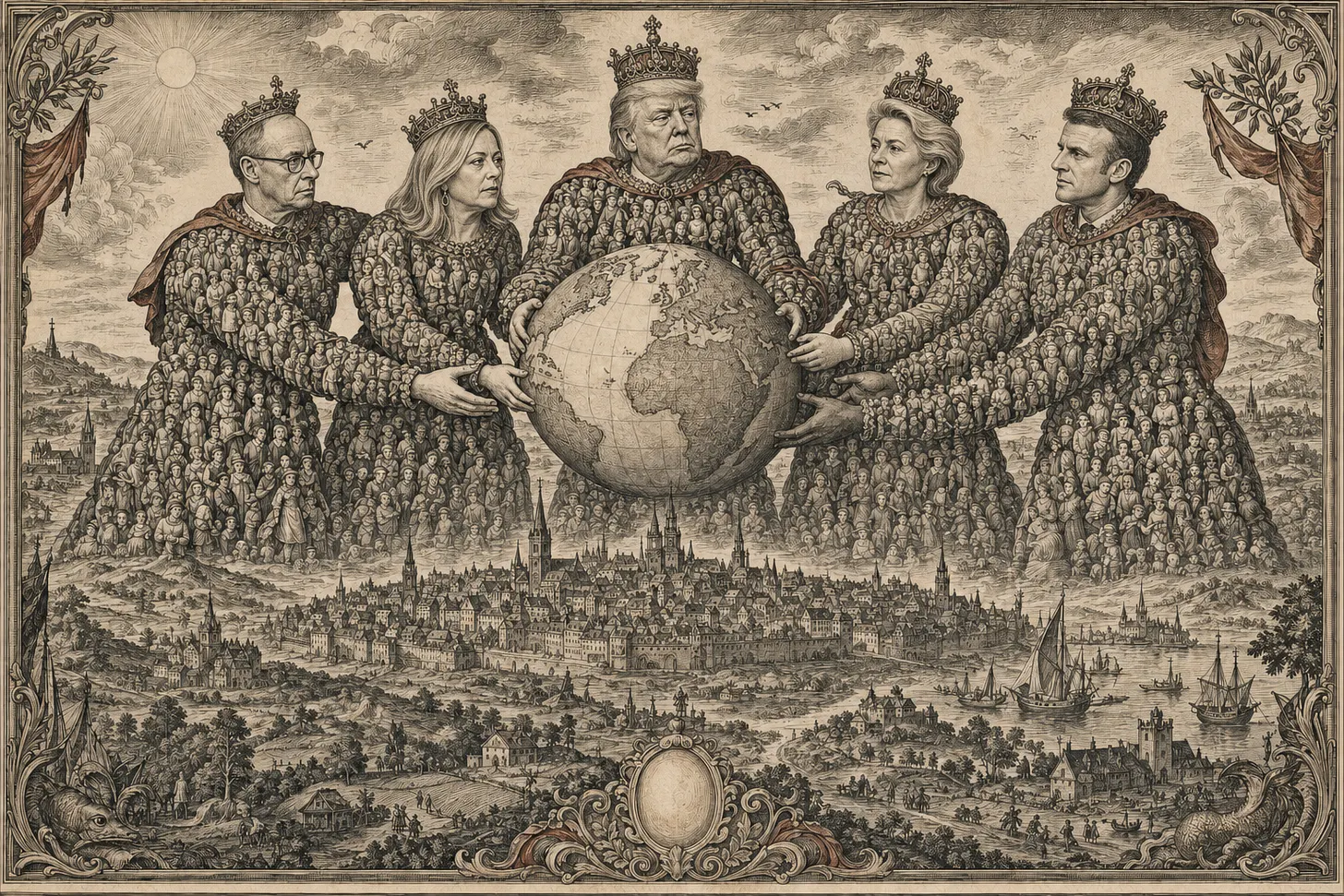
21b7244b-c83e-46c1-ba23-556b21b9a0a8_1536x1024
A Civilizational Interpretation of the West’s Body Politic Pascal Lottaz Associate professor at Ritsumeikan University in Kyoto and TFF Board member August 25, 2026 “How do we explain the self-defeating and self-harming policies of Western states? Europe seems to be happily deindustrializing, the US proxy war in Ukraine is killing hundreds of thousands (if not millions) […]
Imagen-thumbnail-The-Transnational-1
LONDON – Many of the great and the good have dismissed the utility of nuclear weapons as well as finding the idea of their use morally indefensible but still they exist in enormous numbers in the arsenals of the great powers. Secretary of Defence Robert McNamara and Secretary of State Dean Rusk both came to be convinced during their tenure in the Kennedy administration that their use was “unthinkable”. President George H.W. Bush has written that in private he ruled out a nuclear response during the 1991 Gulf War although in public his Administration did not. General Colin Powell, then the chairman of the Joint Chiefs of Staff, in his autobiography recalls chiding his boss, Dick Cheney, for even considering it. Paul Nitze, one of the principal architects of containing the Soviet Union by nuclear deterrence, went even further. He argued in a Washington Post article in 1994 that it...
Screenshot-2026-08-22-011310
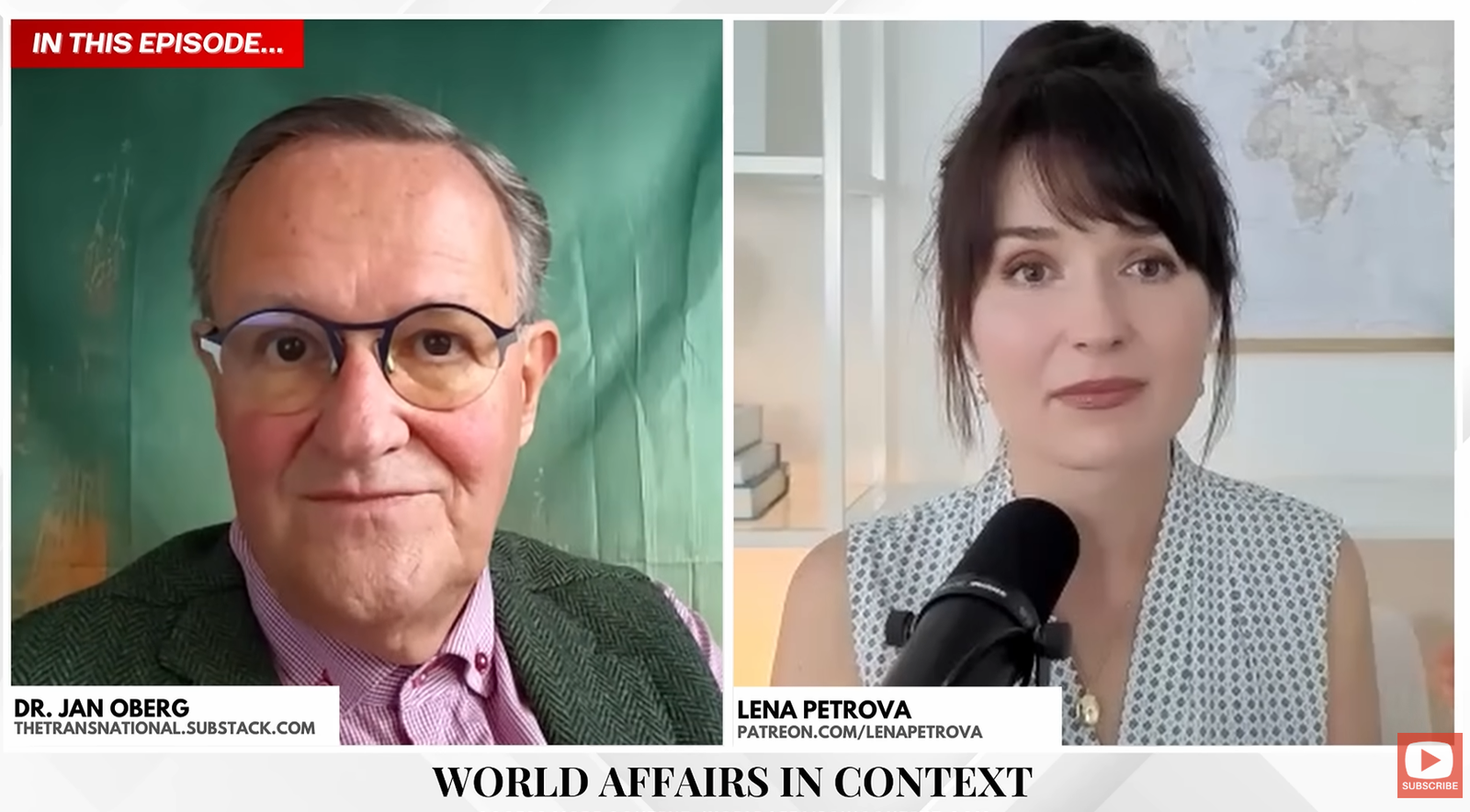
August 24, 2026 Lena Petrova & Jan Oberg I am truly happy and honoured to have been invited by Lena to her unique channel, World Affairs In Context where she has over 600,000 subscribers. She covers a very wide range of global themes, based not least on her own deep and broad knowledge of economics. I want […]
Logo-Transnational
Greenland – the world’s largest island, a continent of its own with only 57.000 inhabitants. I visited it for the first time in May 2005. I flew across the inland ice to Nuuk, the tiny capital with some 14.000 inhabitants. I was overwhelmed by the pride and kindness of everyone I met as well as by the unique natural beauty. Unfortunately, due to weather conditions during my ten-day stay I could get nowhere else but Nuuk. Fortunately, however, among those I met was Gitte Arvegaard, a Danish lawyer and negotiator employed by the local government, Greenland Home Rule. She turned out to be an enthusiastic photographer with a lot of pictures taken during various trips around Greenland. So this Greeland series is the result of our cooperative effort. We both hope you enjoy it and are stimulated to visit Greenland – about which you may read more here. Finally, if you want to...
p_mccartney_poem
 Jan Oberg’s storyof how he met Sir Paul Liverpool – where else to meet Paul McCartney? Paul’s old class mate and TFF Associate, Jonathan Power introduced me to Paul McCartney in Liverpool at an informal reception. It was held at what used to be their school, now the Liverpool Institute for Performing Arts and we were there to celebrate that Jonathan had written Amnesty International’s 40th Anniversary book. This happy event for “righting wrongs and writing songs” gave me an opportunity to meet Paul and tell him about TFF and get straight to the matter: would he consider making a donation in support of our work for peace? While I was probably the only one with such a wish that day, I was certainly not the only one who wanted to shake hands and talk with him. In the last minutes before Paul was to leave, Jonathan brought us together and we got about three...