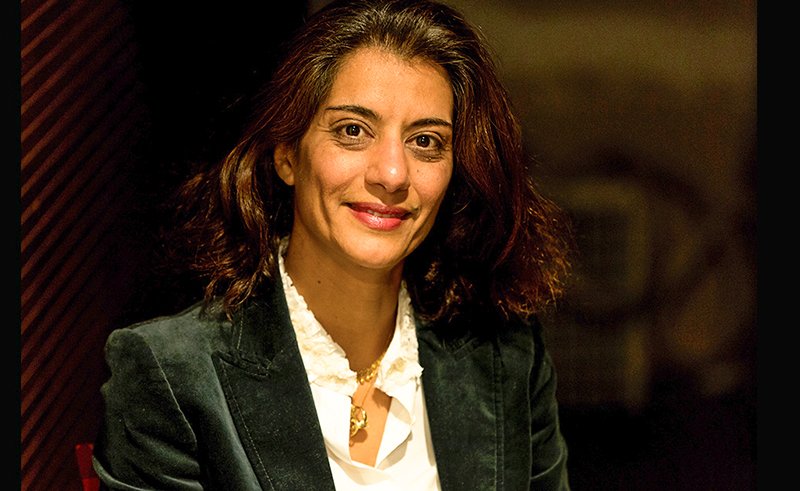
By Sanam Naraghi-Anderlini 

In Iran today, over 20 people have been killed in the streets and two young men are dead from unknown causes after being detained in prison. An estimated 3,700 others have been arrested across the country, most of them under the age of 25. In Tehran the families of detainees are camping outside Evin prison awaiting news of their children. With such news in the headlines, it is hard not to be pessimistic about the protests that for a week rocked the country and riveted the world. But perspective matters.

Originally published at LobeLog
January 10, 2018

As usual, media commentary veered between those who believed or wished that Iran was on the brink of a major change and those who put a damper on the enthusiasm by reflecting on the strength of the Iranian state and warning against the potential negative outcomes of any regime downfall. Now that the latter has won out, the assumption is that the status quo of an inflexible regime will remain.

But in Iran nothing is ever black and white, either/or. The society and its politics is more akin to the intricate traditional mirror art works that are fragile yet resilient. Although there is a unified structure created by the artist, it looks different from every angle depending the reflections of light. More significantly, as observers look into the mosaic of mirror shards, they find different reflections of themselves, thus changing the very essence of the piece.

The dust hasn’t settled yet on the outcomes of these protests, and emotions are still running high. Yet if past events are any predictor of the present, it would be erroneous to assume that they will result in either the status quo remaining or the hardline reasserting control. In other words to appreciate and understand the impact of such generational protests, it is important to take the long view.


A History of Protest

Iran’s history of public protests date back well over 100 years. But since the 1979 revolution, and particularly since 1999, each generation that has come of age has also let out a visceral cry against the oppressive weight of a state that seeks to control not only the public space and politics, but private thought and social norms. In the absence of inclusive governance or a sustainable civic space, public presence in protest or other forms is the language by which society prompts the state.

In 1999, the student dorm protests in Tehran quickly spread. It was in the early days of the Khatami administration, and the clampdown that came fast and furious tainted him. Although it’s impossible to know how many lives were destroyed by imprisonment, torture and exile, the protests did prompt change.

Despite every attempt by hardline forces to discredit and undermine the president, the Khatami presidency laid the foundations for civic reform: from opening space for the press and fostering non-governmental organizations to instigating a large-scale decentralization program to give more voice and power to local provinces. In every instance ordinary people—youth, women, and minorities—grasped at the opportunities to widen the space as much as possible and assert their voices. There is still far to go, especially given the uptick in recent pre-protest attacks on the Bahai and a Jewish synagogue. Those eight years did not bring democracy as form of governance to Iran but they did reform society. The legacy was the blossoming of a democratic and civic mindset among a critical mass of the population. Once known and experienced it cannot become unknown or erased.

Conservative forces, wary of the tidal wave of demand for social and political liberties, took advantage of the economic woes to surge forward in the Ahmadinejad years. They shut down much of the press and civil society. They sought to limit access to the Internet and social media. But try as they might, they could not completely suppress the ever-younger population’s demands for greater social and political freedoms and economic opportunities. The 2009 demonstrations that came in the wake of the disputed elections were dignified, peaceful, and insistent on a simple basic demand of “where is my vote?” But as the state wielded its weapons, the call on the streets also took a sharper tone against the Supreme Leader and the foundations of the regime.

Again the clampdown came hard, with lives destroyed and yet another outflowing of talented youth into exile. But those protests were also a profound wake-up call to the regime leadership. Their instinct for self-survival, coupled with the late Ayatollah Rafsanjani’s significant clout, forced an immovable leadership to move. So, in 2013, Hassan Rouhani appeared as the candidate of choice, with credentials among conservatives but enough credibility to represent moderation in the absence of Khatami.

The public also took a different tack. Instead of confronting the state head-on, the post 2009 generation opted to live their lives as freely as they could. A “life style” movement with women at its fore was born that became so mainstream that it could not be rolled back. In towns and cities this movement strikes at the very core of the Islamic Republic’s identity, because social control, especially pertaining to women and youth, has been a critical pillar of the regime, along with its anti-American stance.


Challenging Taboos

That’s why Rouhani’s December 2017 announcement that security forces would no longer harass women with “improper hijab” was so significant. Between this move and the nuclear agreement, which led to Iranian officials negotiating and shaking hands with the erstwhile “Great Satan,” the architects of the regime and the revolution are remodeling two of the most defining pillars of the system.

Meanwhile, the political elite played their own games of tug of war—between moderate and hardline, reformist and principlist—in the media and on the national stage. So much so that the televised debates in the 2016 presidential elections tackled many of the most sensitive and taboo subjects of the regime. It is also widely reported that the protests in Mashhad were sparked by conservatives, who took offence at Rouhani’s statements on the budget and his accusations leveled at key opaque institutions led by hardliners that have acquired and managed billions of dollars in assets. But those who lit the spark miscalculated how fast the fire of protest and anger would spread—fueled in large part by the penetration of smartphones and communications apps— particularly among the young and the urban and rural poor. In the past, conservative forces relied on this swath of society to become their foot soldiers. But aspirations for a better life, which fueled revolutionary fervor in the past, are pushing people toward a different kind of change.

The recent protests encompassed economic grievances—specific to each town and locality—as well as frustration with the corruption and hypocrisy of the system itself. It is always easier to rally around grievances, but any vision of an alternative system, and more importantly any path toward achieving a new ideal, were either absent or muted in the reports that came through. Either way, the urbanites and intellectuals as well as the moneyed classes and the reformist movement’s political leaders were wary of joining the fray for fear of unleashing uncontrollable chaos.


Looking Ahead

With the protests quashed again, some argue that these events have strengthened the hand of the revolutionary guard. But the regime’s resilience in these past decades has not been simply due to the security forces. It is also because of its willingness to adapt to the changing currents of society. Rouhani’s statements insisting on attention to the economic and political grievances are indicative of this tack. He also acknowledged that shutting down social media is no longer feasible since thousands of people rely on the apps for their income and jobs. So, so something else had to give.

As in the past, the current crackdowns may appear to suppress demands for change and strengthen the status quo. But evolution is essential for survival, and the system will evolve. Since the protesters come from the segments of the population that hardliners have long taken for granted, these forces may find themselves on the defensive and thus forced to heed the call of reining in the shadow state. If foreign investment flows in with greater requirements of transparency, the stranglehold of corruption on the economy could also be loosened, allowing more independent businesses to flourish again.

This is a far cry from a true and inclusive democracy that many Iranians dream of. It doesn’t reflect the demands for citizen protection and adherence to the most basic standards of human rights. It also doesn’t yet answer the call for accountability that victims of this state deserve. But it is a step in that direction. Perhaps as importantly, it also avoids the greatest fear that most Iranians harbor: a sudden descent into chaos and civil strife. It is metamorphosis and evolution, not stagnation and sudden revolution.

As the trajectory of the past 38 years suggests, the change that comes will likely be positive. The riot gear and the security forces notwithstanding, the demands for more freedoms and economic dignity constitute the most powerful force in Iran today.

In the years to come, just as with the shape of the intricate mirror works, the façade of the state may remain, but what we see when we peer in will likely be inherently different to its present and its past.

Originally published at LobeLog


Sanam Naraghi-Anderlini
– is the Co-founder and Executive Director of ICAN –  International Civil Society Action Network. For over two decades she has been a leading international peace strategist. In 2000, she was among the civil society drafters of UN Security Council Resolution 1325 on women, peace and security.

In 2011, Ms. Naraghi-Anderlini was the first Senior Expert on Gender and Inclusion on the UN’s Mediation Standby Team. She provides guidance and training to senior personnel in UN agencies, governments and NGOs worldwide, and has worked in conflict affected countries globally, including leading assessments in Maoist cantonments in Nepal.

Between 2002 and 2005, as Director of the Women Waging Peace Policy Commission, Sanam led ground breaking field research on women’s contributions to conflict prevention, security and peacemaking in 12 countries. Between 2008-2010 she led UNDP’s 10-country action research on men in crisis settings. She has served on the Advisory Board of the UN Democracy Fund (UNDEF), and was appointed to the Civil Society Advisory Group (CSAG) on Resolution 1325, chaired by Mary Robinson in 2010.

Since 2013, she has served in the Working Group on Gender and Inclusion of the Sustainable Development Network.

Ms. Naraghi-Anderlini is an adjunct professor at Georgetown University, and between 2004-15 she was Research Associate and Senior Fellow at the MIT Center for International Studies. She has published extensively on peace and security issues, including Women building peace: What they do, why it matters (Lynne Rienner Publishers, 2007).

She was the 2014 recipient of the UN Association of the National Capital Area Perdita Huston Award for human rights and the 2016 Greeley Peace Scholar at the University of Massachusetts. Ms. Naraghi-Anderlini holds an M.Phil in Social Anthropology from Cambridge University. Iranian by birth, she is a UK citizen, and has twin daughters.
3 Responses

  1. A process replicated in nearly every society across the globe. Change is always the result of opposing forces and the pace of change the differential between them. No society is static nor do changes need a victor. I find the article, though no doubt well intentioned and researched, banal and indicative of how ineffective the voices for change really are.

  2. I am sure that USA and their allied will help Iran with democracy, just like they did in Iraq, Afghanistan, and Libya, and as we attempted in Syria !!!

  3. This is a well-informed and balanced account of recent protests in Iran and where they might lead. The neocons in the United States and the Trump Administration are not Iran’s friends and would only like to do to Iran what they have done to Iraq, Yemen, Libya and Syria. Evolutionary change may be slower but it will last and will change the society fundamentally. There are many well-meaning opponents of the clerical regime in Iran who would like to see greater democracy, but they should think about what is a realistic outcome. The alternative that would be brought about as the result of violent change brought about from outside would not be a democratic government, but chaos, violence and bloodshed. This is not what most patriotic Iranians want for their country.

Related Posts

Professor Zhang Weiwei is a highly respected Chinese intellectual and professor at Fudan University in Shanghai. He is the director of its China Institute and also runs a series of conversations with many different people around the world. Here is what came out of their meetings there and in Skopje, Macedonia in October 2024: & As you can see, also at the end of the second one, we both enjoy win-win exchanges like these about world order issues. Zhang Weiwei is known for using videos and social media to reach a large audience in China and worldwide. We suggest you see many more of Zhang Weiwei’s conversations – like recently with Professor Jeffrey Sachs – on the Thinkers’ Forum on YouTube. PSTFF posts hundreds of videos, its own and those of others, in our Video Collections on TFF Substack – including those that appear on YouTube. However, TFF has been cancelled by Google-owned...
Photo Jan Oberg China has recently garnered significant attention due to its advancements in various technological fields, such as quantum physics and artificial intelligence. In media discussions and my lectures on China, it is common to encounter objections asserting that the West, particularly the United States, is certainly ahead of China. These assertions appear to be more emotional than factual. However, a more fundamental consideration is whether this question holds any significance. Cultural Perspective One aspect that Westerners often overlook is the cultural variation in understanding the relationship between abstract academic insights and practical applications of those insights. To comprehend the origin and significance of discussions on technological superiority, it is essential to acknowledge cultural and social differences between China and the West. I have explored this topic before in some of my previous articles published on the TFF website. Particularism On the cultural dimension universalist – particularist, China exhibits...
On the invisible codes of culture that shape our worldviews long before memory or reason. This analysis was initially published on the author’s “China21 Journal” which contains several analyses of related issues, China-Western relations and how to increase knowledge and mutual understanding. Last week, we picked up our 5-year-old son from his public kindergarten in Beijing. On the way home, he proudly recited a Tang Dynasty poem by heart — 春望 (Chūnwàng, or Spring View, 757 AD), one of the most famous and widely recited works from that vibrant dynastic era over a thousand years ago, written by the renowned poet 杜甫 (Dù Fǔ, 712–770). The poem reflects on wartime and exile — hardly light or child-friendly themes. But that’s not the point. Children (and adults) recite ancient poems not just for their content, but for their rhythm, rhyme, tone, and the cultural feeling embedded in them. This is how cultural programming begins: not through rules or explanations,...

Recent Articles

Tony Robinson October 4, 2026 Violence is easy to recognise when someone is being beaten, shot or killed. It becomes more difficult when nobody is holding a weapon. Poverty, discrimination, exploitation and repression can restrict a human life just as effectively, although they do so in very different ways and with very different consequences. Simply adding more categories to an ever-growing list of forms of violence does not really solve the problem. The more interesting question is what all these different situations have in common and why it makes sense to describe them using the same word. Human beings do not simply react to what happens around them. They remember the past, imagine things that do not yet exist, make plans and undertake projects. Workers organise because they imagine different working conditions; people migrate because they imagine another life somewhere else; social movements emerge because people refuse to accept the...
It’s a matter of principles, courage, vision and pulling together – while the militarist world is falling apart… Peter Langille October 3, 2026 “Here, then, is the problem which we present to you, stark and dreadful and inescapable: Shall we put an end to the human race; or shall mankind renounce war?”The Bertrand Russell—Albert Einstein Manifesto, July 9, 1955 ⁕ The forecast for what’s ahead is worrisome. The sharp rise in armed conflicts over the past three years is adding to what was already the highest level in over seventy years. Genocides, which should be prevented are supported. A shared climate emergency that jeopardises survival is ignored. Diverse polls now suggest that people are war-weary, worried and interested in a more effective United Nations. And, there are viable policy options for a more secure world! Yet governments are doubling-down, betting on more war and investing heavily. If current trends persist,...
Johan Galtung 1930-2024October 2015 Published here on October 3, 2026 Let us focus on Civilization for conflict analysis and remedies. Major forms of disorder use violence; war is state organized violence. The most belligerent states are the United States of America and Israel, both with civilization roots. National Evangelism, the US Protestant Christian civilization– more national than evangelical–justifies US warfare as exceptionalism of a people chosen by God, with a manifest destiny to run the world. Orthodox Judaism justifies Israeli warfare to conquer and expand from Nile to Euphrates as a religious right and duty to the Eternal One. The third most belligerent country, the UK, no longer believes it is God-chosen but chosen by the USA; not quite the same but something. But the root cause of global disorder lies in the Occident–with Islam–seeing itself as the single, universal civilization valid for all at all times, all others being...

TFF on Substack

Discover and subscribe to more peace materials on TFF Substack

Most Popular

Tony Robinson October 4, 2026 Violence is easy to recognise when someone is being beaten, shot or killed. It becomes more difficult when nobody is holding a weapon. Poverty, discrimination, exploitation and repression can restrict a human life just as effectively, although they do so in very different ways and with very different consequences. Simply adding more categories to an ever-growing list of forms of violence does not really solve the problem. The more interesting question is what all these different situations have in common and why it makes sense to describe them using the same word. Human beings do not simply react to what happens around them. They remember the past, imagine things that do not yet exist, make plans and undertake projects. Workers organise because they imagine different working conditions; people migrate because they imagine another life somewhere else; social movements emerge because people refuse to accept the...
It’s a matter of principles, courage, vision and pulling together – while the militarist world is falling apart… Peter Langille October 3, 2026 “Here, then, is the problem which we present to you, stark and dreadful and inescapable: Shall we put an end to the human race; or shall mankind renounce war?”The Bertrand Russell—Albert Einstein Manifesto, July 9, 1955 ⁕ The forecast for what’s ahead is worrisome. The sharp rise in armed conflicts over the past three years is adding to what was already the highest level in over seventy years. Genocides, which should be prevented are supported. A shared climate emergency that jeopardises survival is ignored. Diverse polls now suggest that people are war-weary, worried and interested in a more effective United Nations. And, there are viable policy options for a more secure world! Yet governments are doubling-down, betting on more war and investing heavily. If current trends persist,...
Johan Galtung 1930-2024October 2015 Published here on October 3, 2026 Let us focus on Civilization for conflict analysis and remedies. Major forms of disorder use violence; war is state organized violence. The most belligerent states are the United States of America and Israel, both with civilization roots. National Evangelism, the US Protestant Christian civilization– more national than evangelical–justifies US warfare as exceptionalism of a people chosen by God, with a manifest destiny to run the world. Orthodox Judaism justifies Israeli warfare to conquer and expand from Nile to Euphrates as a religious right and duty to the Eternal One. The third most belligerent country, the UK, no longer believes it is God-chosen but chosen by the USA; not quite the same but something. But the root cause of global disorder lies in the Occident–with Islam–seeing itself as the single, universal civilization valid for all at all times, all others being...
Read More
Living-Peace-Sign-Budapest-copy
Tony Robinson October 4, 2026 Violence is easy to recognise when someone is being beaten, shot or killed. It becomes more difficult when nobody is holding a weapon. Poverty, discrimination, exploitation and repression can restrict a human life just as effectively, although they do so in very different ways and with very different consequences. Simply adding more categories to an ever-growing list of forms of violence does not really solve the problem. The more interesting question is what all these different situations have in common and why it makes sense to describe them using the same word. Human beings do not simply react to what happens around them. They remember the past, imagine things that do not yet exist, make plans and undertake projects. Workers organise because they imagine different working conditions; people migrate because they imagine another life somewhere else; social movements emerge because people refuse to accept the...
b54a1f10-8c65-4f0b-9dd5-4abc0a7d04cc_2659x2659
It’s a matter of principles, courage, vision and pulling together – while the militarist world is falling apart… Peter Langille October 3, 2026 “Here, then, is the problem which we present to you, stark and dreadful and inescapable: Shall we put an end to the human race; or shall mankind renounce war?”The Bertrand Russell—Albert Einstein Manifesto, July 9, 1955 ⁕ The forecast for what’s ahead is worrisome. The sharp rise in armed conflicts over the past three years is adding to what was already the highest level in over seventy years. Genocides, which should be prevented are supported. A shared climate emergency that jeopardises survival is ignored. Diverse polls now suggest that people are war-weary, worried and interested in a more effective United Nations. And, there are viable policy options for a more secure world! Yet governments are doubling-down, betting on more war and investing heavily. If current trends persist,...
010
Johan Galtung 1930-2024October 2015 Published here on October 3, 2026 Let us focus on Civilization for conflict analysis and remedies. Major forms of disorder use violence; war is state organized violence. The most belligerent states are the United States of America and Israel, both with civilization roots. National Evangelism, the US Protestant Christian civilization– more national than evangelical–justifies US warfare as exceptionalism of a people chosen by God, with a manifest destiny to run the world. Orthodox Judaism justifies Israeli warfare to conquer and expand from Nile to Euphrates as a religious right and duty to the Eternal One. The third most belligerent country, the UK, no longer believes it is God-chosen but chosen by the USA; not quite the same but something. But the root cause of global disorder lies in the Occident–with Islam–seeing itself as the single, universal civilization valid for all at all times, all others being...
Screenshot 2026-10-02 011738
Jan ObergPhD, director, The Transnational Foundation for Peace and Future Research, TFFLund, Sweden October 2, 2026 This is my full original manuscript. The Chinese Academy of Social Science, CASS, makes two publications out if it. 1. China’s Five-year plan emphasized the capabilities of basic research and original innovation. It is regarded as the goal of the future social development, which, as required, should be significantly enhanced. Can you comment on the importance of original innovation in research and academic study? I believe it is easier to define “original innovation” in the natural sciences than in social sciences. The breaking points of what constitutes something new, or innovative, are not quite as sharp in the latter. But in both fields it is about opening up something that was closed, unseen, unexplored before – making manifest what was earlier latent. Innovations come in many forms and shapes – naming something that was not...
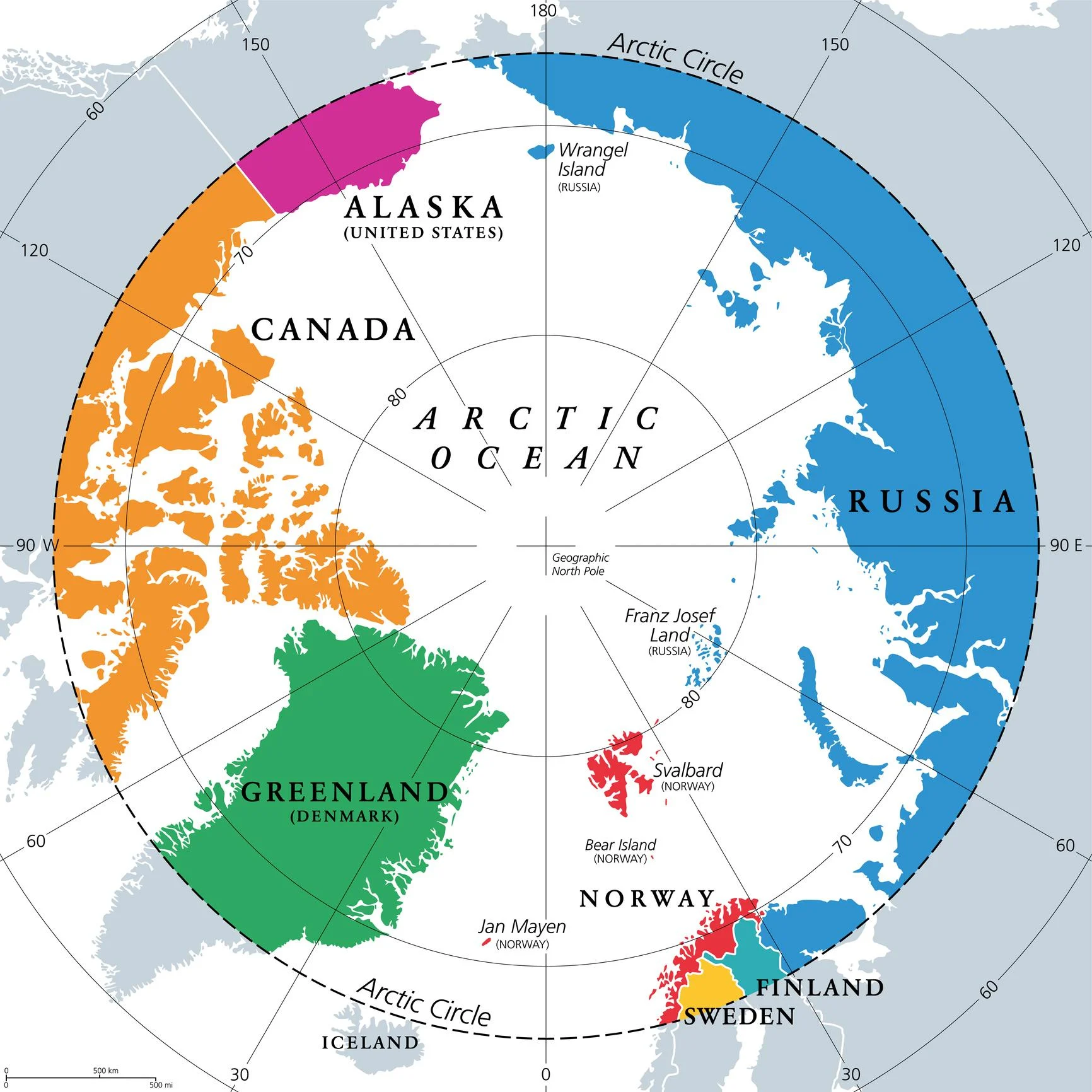
arctic-circle-map
The agreement is catastrophic both because of what it says and what it doesn’t mention. It reduces further the major asset of security policies: Freedom of action. Jan Oberg TFF director September 25, 2026 A couple of hours before the agreement was signed on September 22, 2026, I published the following 13 hypotheses about what it would most likely contain on TFF Substack (in English). I was wrong on only the first point. Contrary to what Trump had written on his Truth Social platform, it does not appear to come into force immediately. In fact, it turned out to be worse than even I had anticipated. After these hypotheses now come a number of reflections in light of what the agreement actually contains, and does not contain, as well as the way in which it has generally been presented by major media outlets and by the public-service broadcaster DR. My...
girl-5894831_1280
Below are TFF-related media mentions, comments, videos and social media posts published elsewhere but not on this homepage. We happen to catch and list only a fraction. Regarding video comments and debates, we recommend that you go to the TFF Video Channel on Substack where many of them are reproduced. Jan Oberg is a contributor to China Daily – 52 million daily clicks – and Global Times, CGTN and CCTV (the national television), China Investment, Xinhua News Agency and several others. Articles and videos on these media very often multiply into countless Chinese (and Western media) that re-post them from these main media. Thanks to The China Academy, his analyses, interviews and comments are frequently posted on YouTube channels such as Thinkers Forum and Wave Media. These videos are often re-posted on Bilibili (China’s YouTube), the China Content Center on TikTok, and on the Chinese edition of TikTok, Douyin.com. This means reaching hundreds of millions of viewers worldwide over a year. While there are too many to catch on all these...