Edward Curtin: There Is No Escape From Telling

Edward Curtin

May 30, 2023

By the lake’s lapping shore above the town and the railroad tracks, my wife and I stopped and marveled, struck stone silent by two dazzling Baltimore Orioles, clawed together as they tumbled, wrestling in the green morning breeze above our heads. They perched upon a branch and sang a morning hymn, an ode to joy and the spring’s morning glory. Their black and orange throats vibrated amid the green quaking aspen’s leaves as the lake’s low lapping sounds lent counterpoint. They were sublime.

Originally published at Off Guardian on May 14, 2023

I too felt a quake, a shiver down my spine as associations tumbled through my mind. Poems, songs, memories of other early morning walks in spring. Intoxication, elation, the horripilation that accompanies spring’s rising, the sexual excitement. Hope, and the loose feeling of being forever young. No solution to anything, just reverence for existence. Nothing changed, except a few years.

In quickly putting into words what I felt a half-hour ago, I drew on a vast store of personal and cultural memories that came to me with little thought as I was walking home. Words strung together without thinking. You have just read them. I felt impelled to tell them.

Now as I sit and contemplate, I think about culture and what it might mean. In my case, I was gifted by my parents and schools with the love of poetry and art from a young age. I know well that everyone is not so lucky and that, in any case, culture has many meanings. “Culture,” writes Raymond Williams, “is one of the two or three most complicated words in the English language.” From its original verbal meaning to cultivate the land to high, low, and middlebrow culture onto so many other meanings and conflicts that are often tied up with social class issues. There are cultures and culture.

When I say cultural memories, I mean my memories, no one else’s.

I learned early on that the music of verse, the sound of birds in the trees, the rush of a creek murmuring over rocks, the lilt of words spoken passionately, the placement of a certain blue paint on a canvas, a singer’s voice flying with a tune of joy or sadness, and a instrument’s vibrations were all connected to the reverence I felt as an altar boy tolling the bells and repeating Latin responses, whose full meaning I couldn’t grasp amid the incense and candle smoke: Et introibo ad altare Dei: ad Deum qui laetificat juventutem mea – “And I go to the altar of God, to God who gives joy to my youth.”

It was the sound of the bells that entranced me, and that I was allowed to ring them. To sound in, to participate in the ancient ritual that created a musical enclave from the beyond. I knew then, as I know now, that God has many altars, and that reverence before them and their mysteries is the right refrain.   Bob Dylan singing “Ring Those Bells” comes to mind:

Ring them bells, ye heathen
From the city that dreams
Ring them bells from the sanctuaries
’Cross the valleys and streams
For they’re deep and they’re wide
And the world’s on its side
And time is running backwards
And so is the bride

So while it is not necessary to draw on stored cultural memories to appreciate the birds in the trees on nature’s altar on a beautiful spring morning, for me it enriched the experience. You may have heard echoes of Yeats, Van Morrison, and others in my words, but the reality of the world I described would be the same for those who never heard of these artists, who find their inspiration in the terrible beauty of nature and have other associations.

Are we really at home in our interpreted world, a poet once asked? It is a good question. This poet was Rilke, who wrote in the Duino Elegies :

For beauty is nothing/but the beginning of terror/which we are still just able to endure/and we are so awed because it serenely/disdains to annihilate us/Every angel is terrifying/And so I hold myself back and swallow the call note of my dark sobbing/Ah, whom can we ever turn to in our need?

Whom can we ever turn to in our need?

Everyone carries different associations that come to us when we are not thinking but are only immersed in our experiences.  Snatches of trace memories, images, words, sounds, smells, the look of light, etc. that usually occur slightly after the first encounter with natural phenomena. One doesn’t have to know Shakespeare or William Wordsworth to experience nature’s beauty. Nor it’s terrors. Yet I must admit I am partial to words like these from Wordsworth:

Though nothing can bring back the hour
Of splendour in the grass, of glory in the flower;
We will grieve not, rather find
Strength in what remains behind;
In the primal sympathy
Which having been must ever be;
In the soothing thoughts that spring
Out of human suffering;
In the faith that looks through death,
In years that bring the philosophic min
d.

But whatever our backgrounds, we are all interpreters of our world and words are our fundamental way of doing so. Words and metaphors that lead us to myth and art, even when its expression is wordless sound or pictures. Words that are often unacknowledged prayers to an unknown God.

For many years I taught what are called the liberal arts. This was an extension of my own education in the classics, philosophy, theology, and sociology, disciplines divided in name only but married in reality to science, literature, history, languages, etc. It is all one study when rightly understood. But our schools and  universities have been abandoning this approach for the sterility of numbers and the cold dead hand of technology and digital dementia. For specialization, where professors know nothing outside their limited disciplines. For the study of the parts without any sense of the whole.

A new Dark Age is closing upon us, as Max Weber noted more than a century ago when he described the people who run our societies and educational institutions as specialists without spirit, sensualists without heart; this nullity imagines it has attained a level of civilization never before achieved.”

Students are being denied the rich heritage of words, images, and music that form the basis of Western culture. Without such a repository of cultural wisdom, they are left to draw only on popular cultural sources to interpret the world and their lives. More and more of these sources are anemic, if not degrading. 

It is not that some are not extraordinarily rich and meaningful, as is evident from those I link to in this essay, but a quick look around should convince any fair-minded person that the pickings are quite slim. 

We are drowning in cultural garbage that is being pumped out through digital media, primarily so-called smart phones, into young people’s minds and souls. It is poison. And the schools have devolved into protection rackets where students are protected from their own thoughts and ideas that might allow them to think and be thought.

To think, question, and debate have been replaced with censorship and the coddling of young minds.  Such censorship, of course, has its counterpart in society at large. Call it propaganda, which is exactly what it is.

If Rilke is right, we will never be at home on this earth, our interpreted world. As a poet and a man of words, he no doubt knew that there is no alternative to interpretation, to ask why, to use words to describe our experiences and to seek meaning as we travel through the mystery of time and existence.

I know, however, for those minutes I stood by the lake in rapt silence as the birds sang and the water lapped, I felt at home.

Home, of course, is a complicated word, for we are time-bound creatures always moving on, travelers who are home one minute and gone the next. Even the word culture derives from an Indo-European root meaning to revolve, tied as it is, as are we, to the idea of a natural cycle, the turning of the seasons.  Doesn’t a contemporary artist, Joni Mitchell, tell this beautifully with The Circle Game.

To say we are wayfarers is accurate, always on the way, as my recently departed dear friend Graeme MacQueen, a Buddhist and 9/11 scholar told me, when he laughingly said to me right before he recently died, that the old folk and Christian gospel song, Wayfaring Stranger, was his story too. He was a man of many talents who established the Centre for Peace Studies at McMaster University in Canada, wrote the important book, The 2001 Anthrax Deception, and much more, even a children’s book.

Graeme did all his work with the awareness that we are temporary sojourners on this earth, and that it is through stories and myths and their associations that come to us unbidden that we can connect life with death, the material and spiritual sides of our natures, in the search for peace. He died at home. I imagine him singing along with the words of the song: “I am a poor wayfaring stranger…I’m goin’ home to see my father/I’m goin’ home, no more to roam/I am just goin’ over Jordan/I am just goin’ over home”

And then laughing so hard he couldn’t breathe, just as he did earlier when he told me his doctor’s name was Dr. Sender, as he prepared to hit the road.

There is no escape from telling. Life is sublime.

From his album, On the Road, Van Morrison takes us out with “The Beauty of the Days Gone By”

Originally published at Off Guardian on May 14, 2023
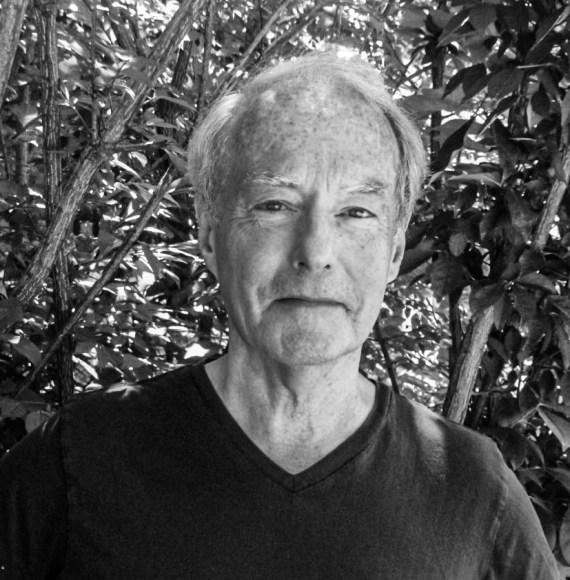
Edward Curtin is an independent writer whose work has appeared widely over many years. His website is edwardcurtin.com and his new book is Seeking Truth in a Country of Lies.

Please help TFF remain truly independent if you liked this article
Click here now!

Share

Leave a Reply

Your email address will not be published. Required fields are marked *

Related Posts

Jan Oberg February 19, 2026 What a thrill to be interviewed by former British diplomat Ian Proud! Don’t waste a minute: acquaint yourself with him here on his homepage, which he elegantly calls “Proud Diplomat.” Notice also his book, A Misfit In Moscow. Ian is, of course, also on Substack, where he calls himself The Peace Monger, and recently he set up his own PeaceMonger Channel on YouTube. For once, I was not interviewed as if I were a military geopolitical expert, where I normally have to twist the whole thing in the direction of peace. No, we both had a focus on peace – why it has been disappeared by research, politics and the media, but also what can be done to shape a more peaceful future for us all. One idea we came up with was that of connecting people through citizens diplomacy – in an era where more or less authoritarian leaders meet frequently and confirm each other as members...
By Jan ObergTFF co-founder and director February 11, 2026 PART 3 — ECONOMICS, TRADE & FINANCIAL SOVEREIGNTY A. Trade Measures & Market Signaling Economic pressure can be applied instantly and scaled without violence. Immediate Measures (within a week) Government boycott US goods and services  A very powerful signal which over time will be felt. Targeted tariffs on selected U.S. goods Symbolic but high-visibility sectors send a clear message. Suspend trade facilitation talks A peaceful pause that signals deep concern. Freeze U.S. participation in public procurement – military procurement in particular A nonviolent way to reduce influence. Competition law review of U.S. corporations A legal tool to scrutinise market dominance. Longer-Term Measures EU–Asia–Africa trade corridors Reducing reliance on U.S. markets. European supply chains for critical minerals Strategic autonomy in resource access. European Strategic Trade Authority Monitoring coercive practices globally. Euro-denominated commodity markets Weakening the dollar’s pricing monopoly. The EU must resume contacts and negotiations with Russia, focusing on energy cooperation To...
America’s Strategic Assault on Art, Academia, and the Imagination That Sustains Peace The United States once stood as a beacon of cultural audacity—a place where dissent could be beautiful, and beauty and innovation could challenge the present order of things. Its museums, universities, and artists helped inspire a worldwide imagination rooted in creative freedom and innovation. But today, under the Trump regime’s second term, those dynamic qualities are being systematically dismantled. Just read this. As Trump goes after the arts, many museums remain silent | CNN As CNN reports, the administration has launched an aggressive campaign to “eradicate improper ideology” from federally funded museums. Exhibitions involving race, gender, and identity are being censored or cancelled. Amy Sherald’s reimagining of the Statue of Liberty as a Black, trans woman was pulled from the Smithsonian after curators objected to its symbolism. Sherald warned that “history shows us what happens when governments demand loyalty...

Recent Articles

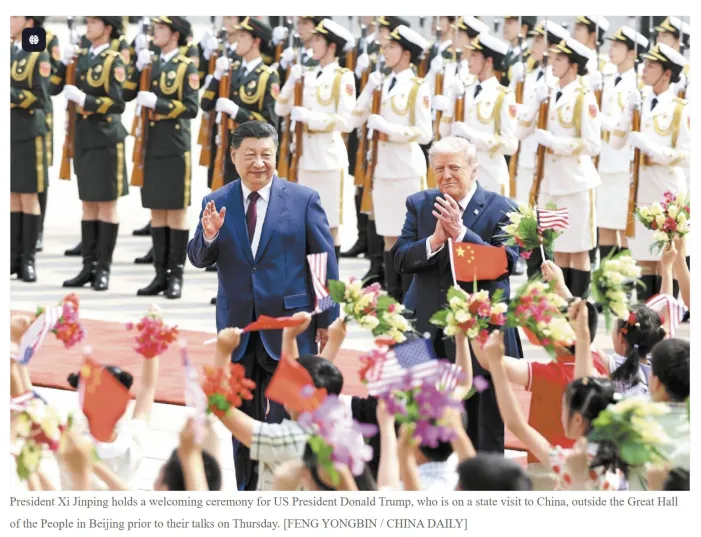
Jan Oberg May 15, 2026 Go to this Fox News page and scroll the whole way down: President Donald Trump tells the world that his meeting with President Xi Jinping yielded a lot of very concrete political and economic results – of course, only where the Chinese side, according to him, agreed with him. He does not mention the Taiwan issue, but Secretary of State, Marco Rubio, says that it did not feature prominently in their talks and that the US policy on Taiwan has not changed. Then go to China Daily – or Global Times – and you will see that for the Chinese it is framework, principles, structure of cooperation etc. that matters – all embedded in the overall idea of “constructive bilateral relationship of strategic stability.” Nowhere is any concrete agreement or deal – all that Trump refers to – mentioned. At the general level, this gives you insights into the very different social...
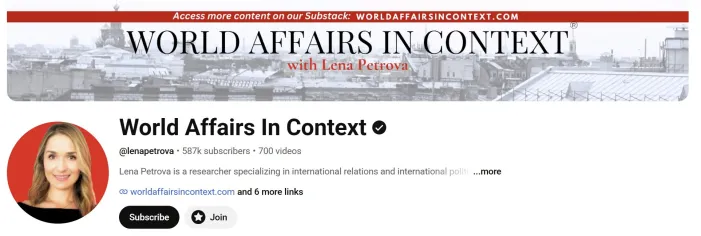
Lena Petrova of “World Affairs In Context” with more than half a million subscribers on YouTube wanted to explore what a peace researcher like me has to say about, among other things, the First and the Second Cold War and why eethics has disappeared from politics. I am particularly happy about this conversation that also yielded an amazing number of very appreciative comments on YouTube. No doubt, people are longing for alternatives, including peace perspectives.
The MIMAC – Military-Industrial-Media-Academic Complex – drives the world’s rampant militarism and wars without end. Here is a short reflection of how it works against all interests of humanity. #5 deals with why there is no real enemy or threat images/analysis. It’s all ex-post constructions. And, btw, theTFF Peace Pulse is now on Rumble.

TFF on Substack

Discover more from TFF Transnational Foundation & Jan Oberg.

Most Popular

Jan Oberg May 15, 2026 Go to this Fox News page and scroll the whole way down: President Donald Trump tells the world that his meeting with President Xi Jinping yielded a lot of very concrete political and economic results – of course, only where the Chinese side, according to him, agreed with him. He does not mention the Taiwan issue, but Secretary of State, Marco Rubio, says that it did not feature prominently in their talks and that the US policy on Taiwan has not changed. Then go to China Daily – or Global Times – and you will see that for the Chinese it is framework, principles, structure of cooperation etc. that matters – all embedded in the overall idea of “constructive bilateral relationship of strategic stability.” Nowhere is any concrete agreement or deal – all that Trump refers to – mentioned. At the general level, this gives you insights into the very different social...
Lena Petrova of “World Affairs In Context” with more than half a million subscribers on YouTube wanted to explore what a peace researcher like me has to say about, among other things, the First and the Second Cold War and why eethics has disappeared from politics. I am particularly happy about this conversation that also yielded an amazing number of very appreciative comments on YouTube. No doubt, people are longing for alternatives, including peace perspectives.
The MIMAC – Military-Industrial-Media-Academic Complex – drives the world’s rampant militarism and wars without end. Here is a short reflection of how it works against all interests of humanity. #5 deals with why there is no real enemy or threat images/analysis. It’s all ex-post constructions. And, btw, theTFF Peace Pulse is now on Rumble.
Read More
Screenshot-2026-05-15-103534
Jan Oberg May 15, 2026 Go to this Fox News page and scroll the whole way down: President Donald Trump tells the world that his meeting with President Xi Jinping yielded a lot of very concrete political and economic results – of course, only where the Chinese side, according to him, agreed with him. He does not mention the Taiwan issue, but Secretary of State, Marco Rubio, says that it did not feature prominently in their talks and that the US policy on Taiwan has not changed. Then go to China Daily – or Global Times – and you will see that for the Chinese it is framework, principles, structure of cooperation etc. that matters – all embedded in the overall idea of “constructive bilateral relationship of strategic stability.” Nowhere is any concrete agreement or deal – all that Trump refers to – mentioned. At the general level, this gives you insights into the very different social...
Screenshot-2026-05-12-104023
Lena Petrova of “World Affairs In Context” with more than half a million subscribers on YouTube wanted to explore what a peace researcher like me has to say about, among other things, the First and the Second Cold War and why eethics has disappeared from politics. I am particularly happy about this conversation that also yielded an amazing number of very appreciative comments on YouTube. No doubt, people are longing for alternatives, including peace perspectives.
Screenshot-2026-04-13-154551 (2)
The MIMAC – Military-Industrial-Media-Academic Complex – drives the world’s rampant militarism and wars without end. Here is a short reflection of how it works against all interests of humanity. #5 deals with why there is no real enemy or threat images/analysis. It’s all ex-post constructions. And, btw, theTFF Peace Pulse is now on Rumble.
Screenshot-2026-04-13-154551 (1)
Jan Oberg, TFF director April 28, 2026 In this third TFF Peace Pulse, I make the important distinction between the violence and the conflict that violence is a symptom of. If you want peace, focus on the underlying conflict because that is the key to resolution, peacemaking, and a better future for the parties. The West is obsessed with violence, just look around you – and 90+ per cent of the public debate is about military issues and other violence – totally wasted for peace. These Peace Pulses will only be published here a few times. You will also not find them on YouTube and Vimeo because both platforms have blocked TFF and me; you know, peace is dangerous these days. Most TFF’s videos since 2007 are now on Rumble.
Screenshot-2026-04-13-154551
In contrast to most, we’ll bring alternatives, solutions, hope and strategies for a better future. Times are dangerous, yes, but that only intensifies the need for constructive thinking and action! Jan Oberg, TFF director April 13, 2026 The new TFF Peace Pulse uses video messages in a new way: Max 3-5-minute-long comments, ideas or perhaps mini-lectures, all about peace – positive peace. We launch them today on April 13, 2026 with a carefully crafted visual aesthetic fitting the content. We hope to publish them regularly from now on. We launch Peace Pulse (PP) – for a number of reasons. The world is in chaos, and there are countless reasons to feel concerned, frustrated, even angry. The atmosphere is saturated with doom and gloom, with negative energy and rear‑mirror thinking, while vision, imagination, alternatives, strategies and genuine future‑mindedness remain in short supply. And without them, we simply can’t save the world. Looking at problems from a hundred angles will...
IMG_5165 (1)
PART II — Publishing Peace in a System That Prioritises Militarism Jan Oberg, TFF director April 10, 2026 How TFF Maintains a Daily Voice in a Digital World Built for Noise This article is part of the series “TFF at 40″ and it invites you to learn about Four Decades of Publishing Peace. It takes a look at how a small, people‑financed peace foundation has communicated across four generations of technology — from wax stencils and fax machines to mass email and Substack — and why TFF continues to publish every single day in a system that rewards noise, conflict, and militarism. ◆ What it means to publish peace every single day in a digital system built for 24/7 news and other noise, confrontation, and militarism. How TFF’s independence, continuity, and global readership defy algorithms, donor cycles, and Western media censorhip — and why the Majority World keeps listening. When the...