Dmitry Trenin: Six months into the conflict, what exactly does Russia hope to achieve in Ukraine?

Putin’s latest comments reveal that Moscow’s thinking has shifted and compromise is no longer on the agenda

Dmitry Trenin is a Research Professor at the Higher School of Economics and a Lead Research Fellow at the Institute of World Economy and International Relations. He is also a member of the Russian International Affairs Council.   

This very insightful and balanced article was published by RT – Russia Today (that you cannot read in most of the West unless you have a VPN, or proxy server) on September 8, 2022, a couple of weeks before President Putin’s announcement of a partial mobilisation of Russia’s military forces.  

Last week, Russian President Vladimir Putin referred to Ukraine as an “anti-Russian enclave” which has to be removed. He also said that the Russian soldiers taking part in the military operation there were fighting for their “own country.” These statements carry important implications.

Over the last six-plus months, the mantra of the Russian officialdom has been that all aims of the offensive will be reached. On purpose, however, the specific objectives, such as how far Moscow’s forces plan move into Ukraine, have never been spelled out. This cannot but raise speculation about what the Kremlin is actually hoping to achieve.

The only person who can authoritatively answer that question, however, is the president, and second-guessing him makes no sense. Yet, two things cannot escape close attention. One is the radicalization of Moscow’s position on Ukraine as a result of both Western policies and Kiev’s actions; two is the widening gap between the minimum result of the military campaign that Russia can be satisfied with, and the maximum amount of what the US and its allies can accept.

For about six years after the second Minsk Agreement was signed in 2015, the Kremlin tried hard to get that accord implemented. It would have ensured the autonomous status of Donbass within Ukraine and given the region influence on national politics and policies, including in the issue of the country’s geopolitical and geo-economic orientation. From the very start, however, Kiev was unwilling to cooperate on the deal’s implementation, seeing it as a win for Moscow. Washington, in pursuit of a policy to contain Russia, encouraged such an obstructionist stance, while Berlin and Paris, formally the guarantors of the agreement (alongside Russia), had no leverage in Kiev and ended up embracing the Ukrainian position. 

Vladimir Zelensky’s election to Ukraine’s presidency in 2019 initially appeared to be an opening for peace, and President Putin made a serious effort to get the Minsk agreement off the ground. Kiev, however, soon backtracked and took an even more hardline position than before. Nevertheless, until mid-2021 the Kremlin continued to see as its goals in Ukraine a resolution of the Donbass issue essentially on the basis of Minsk, and the eventual de facto recognition of Crimea’s Russian status. In June of last year, Vladimir Putin, however, published a long article on Russian-Ukrainian relations which made it clear that he viewed the current situation as a major security, political, and identity issue for his country; recognized his personal responsibility; and was resolved to do something to strategically correct it. The article did not give away Putin’s game plan, but it laid out his basic thinking on Ukraine.

Last December, Moscow passed on to Washington a package of proposals, which amounted to a list of security guarantees for Russia. These included Ukraine’s formal neutrality between Russia and NATO (“no Ukraine in NATO”); and no deployment of US and other NATO weapons and military bases in Ukraine, as well as a ban on military exercises on Ukrainian territory (“no NATO in Ukraine”). While the US agreed to discuss some military technical issues dealt with in the Russian paper it rejected Moscow’s key demands related to Ukraine and NATO. Putin had to take no for an answer.

Just before the launch of its military operation, Moscow recognized the two Donbass republics and told Kiev to vacate the parts of Donetsk and Lugansk then under Ukrainian control – or face the consequences. Kiev refused, and hostilities began. Russia’s official reason for unleashing force was defending the two newly recognized republics which had asked for military assistance. 

Shortly after the start of hostilities Russia and Ukraine began peace talks. In late March 2022 at a meeting in Istanbul, Moscow demanded that Zelensky’s government recognize the sovereignty of the two Donbass republics within their constitutional borders, as well as Russia’s own sovereignty over Crimea, which was formally incorporated into the Russian Federation in 2014, plus accept a neutral and demilitarized status for territory controlled by Kiev. At that point, Moscow still recognized the current Ukrainian authorities and was prepared to deal with them directly. For its part, Kiev initially appeared ready to accept Moscow’s demands (which were criticized by many within Russia as overly concessionary to Ukraine), but then quickly reverted to a hardline stance. Moscow has always suspected that this U-turn, as on previous occasions, was the result of US behind-the-scenes influence, often aided by the British and other allies.   

From the spring of 2022, as the fighting continued, Moscow expanded its aims. These now included the “de-Nazification” of Ukraine, meaning not only the removal of ultra-nationalist and anti-Russian elements from the Ukrainian government (increasingly characterized by Russian officials now as the “Kiev regime”), but the extirpation of their underlying ideology (based around the World War Two Nazi collaborator Stepan Bandera) and its influence in society, including in education, the media, culture and other spheres.

Next to this, Moscow added something that Putin called, in his trademark caustic way, the “de-Communization” of Ukraine, meaning ridding that country, whose leadership was rejecting its Soviet past, of the Russian-populated or Russian-speaking territories that had been awarded to the Soviet Ukrainian republic of the USSR by the Communist leaders in Moscow, Vladimir Lenin, Joseph Stalin and Nikita Khrushchev. These include, besides Donbass, the entire southeast of Ukraine, from Kharkov to Odessa.

This change of policy led to dropping the early signals about Russia honoring Ukraine’s statehood outside Donbass, and to establishing Russian military government bodies in the territory seized by the Russian forces. Immediately following that, a drive started to de facto integrate these territories with Moscow. By the early fall of 2022, all of Kherson, much of Zaporozhye and part of Kharkov oblasts were being drawn into the Russian economic system; started to use the Russian ruble; adopted the Russian education system; and their population was offered a fast-track way to Russian citizenship.

As the fighting in Ukraine quickly became a proxy war between Russia and the US-led West, Russia’s views on Ukraine’s future radicalized further. While a quick cessation of hostilities and a peace settlement on Russian terms in the spring would have left Ukraine, minus Donbass, demilitarized and outside NATO, but otherwise under the present leadership with its virulently anti-Russian ideology and reliance on the West, the new thinking, as Putin’s remarks in Kaliningrad suggest, tends to regard any Ukrainian state that is not fully and securely cleansed of ultranationalist ideology and its agents as a clear and present danger; in fact, a ticking bomb right on Russia’s borders not far from its capital.  

Under these circumstances, in view of all the losses and hardships sustained, it would not suffice that Russia wins control of what was once known as Novorossiya, the northern coast of the Black Sea all the way to Transnistria. This would mean that Ukraine would be completely cut off from the sea, and Russia would gain – via referenda, it is assumed – a large swath of territory and millions of new citizens. To reach that objective, of course, the Russian forces still need to seize Nikolaev and Odessa in the south, as well as Kharkov in the east. A logical next step would be to expand Russian control to all of Ukraine east of the Dnieper River, as well as the city of Kiev that lies mostly on the right bank. If this were to happen, the Ukrainian state would shrink to the central and western regions of the country.

Read more

Dmitri Trenin: Russia cannot afford to lose in Ukraine, but neither can the US – is there a non-nuclear way out of the deadlock?

Neither of these outcomes, however, deals with the fundamental problem that Putin has highlighted, that is to say, of Russia having to live side-by-side with a state that will constantly seek revenge and will be used by the United States, which arms and directs it, in its effort to threaten and weaken Russia. This is the main reason behind the argument for taking over the entire territory of Ukraine to the Polish border. However, integrating central and western Ukraine into Russia would be exceedingly difficult, while trying to build a Ukrainian buffer state controlled by Russia would be a major drain on resources, as well as a constant headache. No wonder that some in Moscow would not mind if Poland were to absorb western Ukraine within some form of a common political entity which, Russia’s foreign intelligence claims, is being surreptitiously created.

Ukraine’s future will not be dictated, of course, by someone’s wishes, but by the actual developments on the battlefield. Fighting there will continue for some time, and the final outcome is not in sight. Even when the active phase of the conflict comes to an end, it is unlikely to be followed up by a peace settlement. For different reasons, each side regards the conflict as existential – and much wider than Ukraine. This means that what Russia aims for has to be won and then held firmly.

Please support TFF’s work for peace through research and public education. We are all-volunteer, people-financed and do not accept money from governments or corporations. In other words, one of the very last free research think tanks in this world – and for a noble purpose: Peace by peaceful – intelligent – means. It is fast, easy and secure. Click here. Thanks!
Share

Leave a Reply

Your email address will not be published. Required fields are marked *

Related Posts

TFF’s comprehensive proposal for dialogue about true peace in Ukraine is due in a day or two Jan Oberg November 20, 2025 What is being whispered through diplomatic corridors today is not peace, but quackery. The alleged 28‑point plan drafted in Washington and Moscow is mentioned as a solution to the Ukraine war. It is being negotiated by US businessman, real estate developer and Trump ally, Steve Witkoff, and by Kirill Dmitriev, who is CEO of the Russian Direct Investment Fund and a close ally of Putin, according to India’s Economic Times. For presumably good reasons, their education, qualifications and experience in international conflict analysis and peace-making remain untold. They look like surgeons who have never opened a medical textbook. It is nothing more than a mirage: a framework of concessions imposed on Ukraine’s citizens, negotiated without Kyiv, and excluding Europe. Like Gaza, it promises “peace” while institutionalising injustice. If half of what is available about...
John J. Mearsheimer Aug 05, 2024 The question of who is responsible for causing the Ukraine war has been a deeply contentious issue since Russia invaded Ukraine on 24 February 2022. The answer to this question matters enormously because the war has been a disaster for a variety of reasons, the most important of which is that Ukraine has effectively been wrecked. It has lost a substantial amount of its territory and is likely to lose more, its economy is in tatters, huge numbers of Ukrainians are internally displaced or have fled the country, and it has suffered hundreds of thousands of casualties. Of course, Russia has paid a significant blood price as well. On the strategic level, relations between Russia and Europe, not to mention Russia and Ukraine, have been poisoned for the foreseeable future, which means that the threat of a major war in Europe will be with...
Given their lack of information about the Ukraine-Russia deal scuttled by Boris Johnson early in the war, many Americans will be inclined to believe Biden’s evidence-free claims in last week’s CNN debate. Ray McGovernSpecial to Consortium News, July 2, 2024 July 5, 2024 At Thursday’s debate with Donald Trump, President Joe Biden, calling Russian President Vladimir Putin a “war criminal,” claimed that he “wants all of Ukraine. … Do you think he’ll stop? … What do you think happens to Poland and other places?” Spoiler Alert: Official Ukrainian sources confirm that Putin did stop in March 2022, after Ukrainian President Volodomyr Zelensky agreed to forswear membership in NATO. This was the key provision in the Ukraine-Russia deal initialed by Davyd Arakhamia, who at the time was Zelensky’s chief negotiator (and his party’s faction leader in the Rada) at the talks in Istanbul at the end of March, hardly a month...

Recent Articles

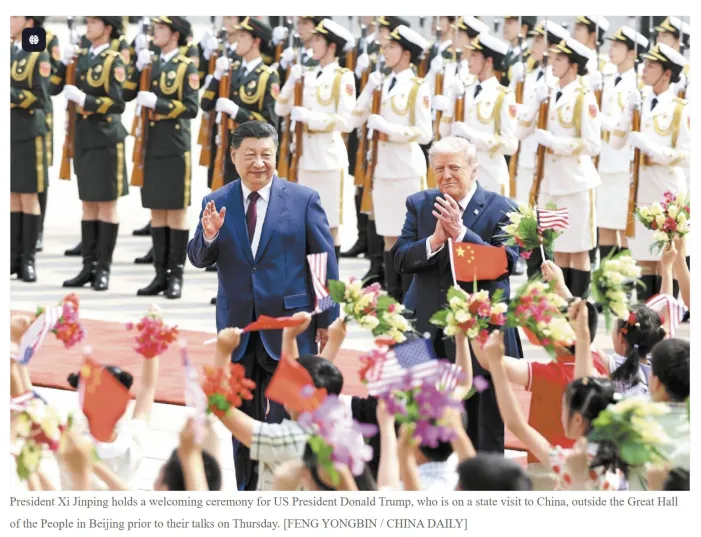
Jan Oberg May 15, 2026 Go to this Fox News page and scroll the whole way down: President Donald Trump tells the world that his meeting with President Xi Jinping yielded a lot of very concrete political and economic results – of course, only where the Chinese side, according to him, agreed with him. He does not mention the Taiwan issue, but Secretary of State, Marco Rubio, says that it did not feature prominently in their talks and that the US policy on Taiwan has not changed. Then go to China Daily – or Global Times – and you will see that for the Chinese it is framework, principles, structure of cooperation etc. that matters – all embedded in the overall idea of “constructive bilateral relationship of strategic stability.” Nowhere is any concrete agreement or deal – all that Trump refers to – mentioned. At the general level, this gives you insights into the very different social...
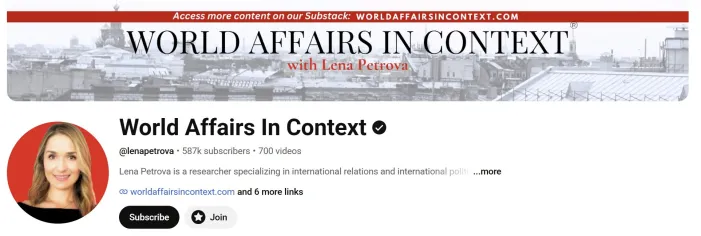
Lena Petrova of “World Affairs In Context” with more than half a million subscribers on YouTube wanted to explore what a peace researcher like me has to say about, among other things, the First and the Second Cold War and why eethics has disappeared from politics. I am particularly happy about this conversation that also yielded an amazing number of very appreciative comments on YouTube. No doubt, people are longing for alternatives, including peace perspectives.
The MIMAC – Military-Industrial-Media-Academic Complex – drives the world’s rampant militarism and wars without end. Here is a short reflection of how it works against all interests of humanity. #5 deals with why there is no real enemy or threat images/analysis. It’s all ex-post constructions. And, btw, theTFF Peace Pulse is now on Rumble.

TFF on Substack

Discover more from TFF Transnational Foundation & Jan Oberg.

Most Popular

Jan Oberg May 15, 2026 Go to this Fox News page and scroll the whole way down: President Donald Trump tells the world that his meeting with President Xi Jinping yielded a lot of very concrete political and economic results – of course, only where the Chinese side, according to him, agreed with him. He does not mention the Taiwan issue, but Secretary of State, Marco Rubio, says that it did not feature prominently in their talks and that the US policy on Taiwan has not changed. Then go to China Daily – or Global Times – and you will see that for the Chinese it is framework, principles, structure of cooperation etc. that matters – all embedded in the overall idea of “constructive bilateral relationship of strategic stability.” Nowhere is any concrete agreement or deal – all that Trump refers to – mentioned. At the general level, this gives you insights into the very different social...
Lena Petrova of “World Affairs In Context” with more than half a million subscribers on YouTube wanted to explore what a peace researcher like me has to say about, among other things, the First and the Second Cold War and why eethics has disappeared from politics. I am particularly happy about this conversation that also yielded an amazing number of very appreciative comments on YouTube. No doubt, people are longing for alternatives, including peace perspectives.
The MIMAC – Military-Industrial-Media-Academic Complex – drives the world’s rampant militarism and wars without end. Here is a short reflection of how it works against all interests of humanity. #5 deals with why there is no real enemy or threat images/analysis. It’s all ex-post constructions. And, btw, theTFF Peace Pulse is now on Rumble.
Read More
Screenshot-2026-05-15-103534
Jan Oberg May 15, 2026 Go to this Fox News page and scroll the whole way down: President Donald Trump tells the world that his meeting with President Xi Jinping yielded a lot of very concrete political and economic results – of course, only where the Chinese side, according to him, agreed with him. He does not mention the Taiwan issue, but Secretary of State, Marco Rubio, says that it did not feature prominently in their talks and that the US policy on Taiwan has not changed. Then go to China Daily – or Global Times – and you will see that for the Chinese it is framework, principles, structure of cooperation etc. that matters – all embedded in the overall idea of “constructive bilateral relationship of strategic stability.” Nowhere is any concrete agreement or deal – all that Trump refers to – mentioned. At the general level, this gives you insights into the very different social...
Screenshot-2026-05-12-104023
Lena Petrova of “World Affairs In Context” with more than half a million subscribers on YouTube wanted to explore what a peace researcher like me has to say about, among other things, the First and the Second Cold War and why eethics has disappeared from politics. I am particularly happy about this conversation that also yielded an amazing number of very appreciative comments on YouTube. No doubt, people are longing for alternatives, including peace perspectives.
Screenshot-2026-04-13-154551 (2)
The MIMAC – Military-Industrial-Media-Academic Complex – drives the world’s rampant militarism and wars without end. Here is a short reflection of how it works against all interests of humanity. #5 deals with why there is no real enemy or threat images/analysis. It’s all ex-post constructions. And, btw, theTFF Peace Pulse is now on Rumble.
Screenshot-2026-04-13-154551 (1)
Jan Oberg, TFF director April 28, 2026 In this third TFF Peace Pulse, I make the important distinction between the violence and the conflict that violence is a symptom of. If you want peace, focus on the underlying conflict because that is the key to resolution, peacemaking, and a better future for the parties. The West is obsessed with violence, just look around you – and 90+ per cent of the public debate is about military issues and other violence – totally wasted for peace. These Peace Pulses will only be published here a few times. You will also not find them on YouTube and Vimeo because both platforms have blocked TFF and me; you know, peace is dangerous these days. Most TFF’s videos since 2007 are now on Rumble.
Screenshot-2026-04-13-154551
In contrast to most, we’ll bring alternatives, solutions, hope and strategies for a better future. Times are dangerous, yes, but that only intensifies the need for constructive thinking and action! Jan Oberg, TFF director April 13, 2026 The new TFF Peace Pulse uses video messages in a new way: Max 3-5-minute-long comments, ideas or perhaps mini-lectures, all about peace – positive peace. We launch them today on April 13, 2026 with a carefully crafted visual aesthetic fitting the content. We hope to publish them regularly from now on. We launch Peace Pulse (PP) – for a number of reasons. The world is in chaos, and there are countless reasons to feel concerned, frustrated, even angry. The atmosphere is saturated with doom and gloom, with negative energy and rear‑mirror thinking, while vision, imagination, alternatives, strategies and genuine future‑mindedness remain in short supply. And without them, we simply can’t save the world. Looking at problems from a hundred angles will...
IMG_5165 (1)
PART II — Publishing Peace in a System That Prioritises Militarism Jan Oberg, TFF director April 10, 2026 How TFF Maintains a Daily Voice in a Digital World Built for Noise This article is part of the series “TFF at 40″ and it invites you to learn about Four Decades of Publishing Peace. It takes a look at how a small, people‑financed peace foundation has communicated across four generations of technology — from wax stencils and fax machines to mass email and Substack — and why TFF continues to publish every single day in a system that rewards noise, conflict, and militarism. ◆ What it means to publish peace every single day in a digital system built for 24/7 news and other noise, confrontation, and militarism. How TFF’s independence, continuity, and global readership defy algorithms, donor cycles, and Western media censorhip — and why the Majority World keeps listening. When the...