Cambodia leaves the darkness behind

/10/jonathanpower2.jpg”>

Dateline: Phnom Penh, Cambodia, March 5th 2013

Cambodia has lain for too long under the black umbrella of its past. But Cambodia is waking up, has looked the evil one in its eye and, re-born, found its strength.

Cambodia has been to hell and back – 2 million of its people killed out of population of 8 million, with 500,000 of them executed, the consequence of a fanatical communist movement, the Khmer Rouge, led by Pol Pot and a group of henchmen now being tried in the UN War Crimes Court. (Pol Pot himself is dead.)

The Khmer Rouge violently took power in 1975 and fell in 1979. They wanted a classless society. They abolished money, property and religious practices. Family relationships were criticised and people were forbidden from even showing the slightest affection. The work day in the fields was 12 hours long without pause. Torture and the bullet were the instant punishment for deviance. Anybody educated was singled out for death.

In the late 1970s, the neighbouring Vietnamese, despite having in the early 1970s supported the Khmer Rouge, fought their way into Cambodia and in January 1979 overthrew the Khmer Rouge, capturing Phnom Penh.

The Khmer Rouge fled westward, establishing themselves on the Thai border. Many of them were hungry and ill and UNICEF and NGOs fed and nurtured them. They lived to fight another day.

In an appalling move the US, still scarred by losing its war with Vietnam, persuaded its Western allies to vote to allow the Khmer Rouge to take Cambodia’s seat in the UN. From 1979 to 1990 the Khmer Rouge ruled the diplomatic roost. Western countries gave their political support to a regime that had perpetrated the second worst genocide of the twentieth century. In this they were opposed by the Soviet Union. The Chinese were more in a quandary having been the Khmer Rouge’s main supplier of military hardware.

A handful of US diplomats would like to see the US making an apology, as President Bill Clinton did over CIA activity in supporting a murderous government in Guatemala. But in the words of one Cambodian-based diplomat “Washington won’t let us talk about it.”

In Cambodia the Vietnamese established a government that ruled for a decade. In 1991 the UN negotiated a peace agreement between the de facto Cambodian government and the Khmer Rouge. A UN organised election was agreed to, but in the end the Khmer Rouge baulked.

Hun Sen, now Cambodia’s autocratic prime minister, lost the 1993 election but then muscled his way into a power-sharing deal. In 1997 he staged a coup. He is now Asia’s longest serving leader.

Diplomatic and local media observers say that Hun Sen is popular and could win an election without the limits on press freedom and the arbitrary arrests and occasional murder of dissidents that he allows or encourages.

Capitalism is the tool of economic progress. (But one long street is named the Kim Il Sung Boulevard.) On the economic front Hun Sen has delivered. A country that lost a a quarter of its population now has a new generation which in the last handful of years has matured into workers and professionals. Good economic policies have given them their head.

The press, albeit gradually becoming freer, is controlled. Although three independent human rights-orientated radio stations are allowed the head of one is in jail . The media have had to be restrained on such issues as covering the government’s land grabs on behalf of industry and large scale farming.

Economic growth, says the local IMF representative, was above 6% last year and will be 7% -8% this year, one of the world’s highest. There is little inflation and no big debt. In 2012 foreign investment went up by 44%, mainly from China, Vietnam and Taiwan. The US welcomes Chinese investment in the absence of its own. Last year exports to the European Union went up sharply.

Tourism climbed by 20% last year, garment exports by 14%, rice production by 8% and, rare for a developing country, agriculture increased by nearly 5%.

In the 1980s ninety percent of the people lived in poverty. Today it is only 20%, a remarkable achievement. It is one of the largest poverty reductions in the world, says the World Bank representative- far better than its neighbour, Thailand. Nutrition rates are up. So are hygiene and the availability of clean water. Most children are now inoculated and infant mortality has fallen fast. Unemployment is very low. Cambodia is fifth in the world in terms of attaining the Millennium Development Goals (that measure social progress).

But educational improvement goes too slowly. Corruption is pervasive. Manufacturing is only just getting under way.

In July there will be a general election. Hun Sen will win. He has the organisation and the money. Perhaps then he will loosen up a bit more. A prosperous democracy could be, if he willed it, not too far away.

© 2013 Jonathan Power
jonatpower@aol.com

Foreign affairs columnist, film-maker and author

Share

Leave a Reply

Your email address will not be published. Required fields are marked *

Related Posts

This is not another geopolitical commentary on the Arctic. It is a visionary peace proposal that can save the region from militarised rivalry and ecological ruin. A blueprint for shared security, sustainable development, and human dignity — benefitting Greenland, the Arctic, and the rest of us. Jan Oberg TFF director Lund, Sweden, February 17, 2026 I. Four Principles for a New Arctic Vision The Arctic is often framed as a cold arena of rivalry — a place where great powers test each other’s resolve. But this worldview is outdated, unimaginative, and ultimately self‑defeating. The Arctic is not a vacuum waiting to be militarised; it is a living region, a climate stabiliser, and a cultural homeland whose future will shape the future of humanity. If we begin from that understanding, a far more rational Arctic order becomes possible — one that is peaceful, cooperative, and centred on the people who actually live there. This vision rests...
Peace is promoted by constructive proposals and dialogue Four preceding PressInfos have expressed concern over — and criticised — the ongoing, militarisation of the EU. Some will say: but there are no alternatives. We believe that there are always alternatives, that democracies are characterised by alternatives and choice, and that openly discussed alternatives will improve the quality and legitimacy of society’s decision–making. In addition, it is an intellectual and moral challenge to not only criticise but also be constructive. If we only tell people that we think they are wrong, they are not likely to listen. However, if we say: what are your views on this set of ideas and steps? — we may sometimes engage them in dialogue and sow a seed. Most people in power circles live their daily lives in in a time frame and a social space where certain ideas, viewpoints and concepts are just not...
Photos © TFF 2000 Read PressInfo 90 “Lift the Sanctions and Bring More Aid to Yugoslavia” See Pictures from Belgrade © TFF 2000 Please reprint, copy, archive, quote or re-post this item, but please retain the source.

Recent Articles

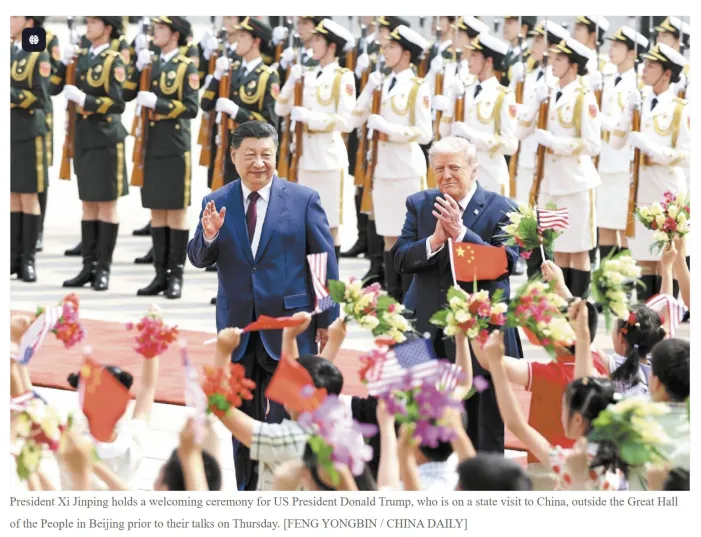
Jan Oberg May 15, 2026 Go to this Fox News page and scroll the whole way down: President Donald Trump tells the world that his meeting with President Xi Jinping yielded a lot of very concrete political and economic results – of course, only where the Chinese side, according to him, agreed with him. He does not mention the Taiwan issue, but Secretary of State, Marco Rubio, says that it did not feature prominently in their talks and that the US policy on Taiwan has not changed. Then go to China Daily – or Global Times – and you will see that for the Chinese it is framework, principles, structure of cooperation etc. that matters – all embedded in the overall idea of “constructive bilateral relationship of strategic stability.” Nowhere is any concrete agreement or deal – all that Trump refers to – mentioned. At the general level, this gives you insights into the very different social...
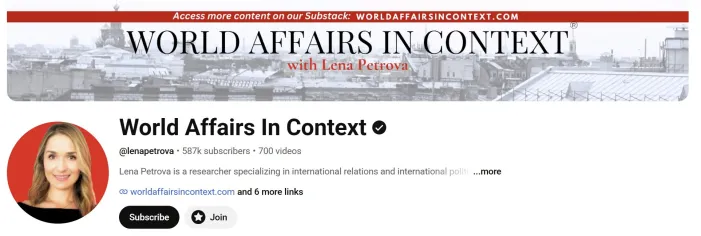
Lena Petrova of “World Affairs In Context” with more than half a million subscribers on YouTube wanted to explore what a peace researcher like me has to say about, among other things, the First and the Second Cold War and why eethics has disappeared from politics. I am particularly happy about this conversation that also yielded an amazing number of very appreciative comments on YouTube. No doubt, people are longing for alternatives, including peace perspectives.
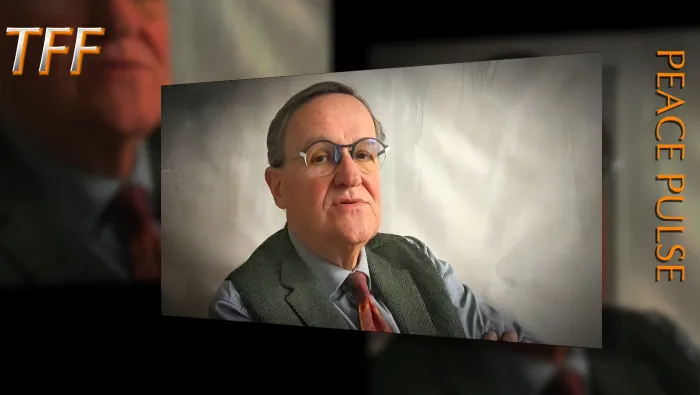
The MIMAC – Military-Industrial-Media-Academic Complex – drives the world’s rampant militarism and wars without end. Here is a short reflection of how it works against all interests of humanity. #5 deals with why there is no real enemy or threat images/analysis. It’s all ex-post constructions. And, btw, theTFF Peace Pulse is now on Rumble.

TFF on Substack

Discover more from TFF Transnational Foundation & Jan Oberg.

Most Popular

Jan Oberg May 15, 2026 Go to this Fox News page and scroll the whole way down: President Donald Trump tells the world that his meeting with President Xi Jinping yielded a lot of very concrete political and economic results – of course, only where the Chinese side, according to him, agreed with him. He does not mention the Taiwan issue, but Secretary of State, Marco Rubio, says that it did not feature prominently in their talks and that the US policy on Taiwan has not changed. Then go to China Daily – or Global Times – and you will see that for the Chinese it is framework, principles, structure of cooperation etc. that matters – all embedded in the overall idea of “constructive bilateral relationship of strategic stability.” Nowhere is any concrete agreement or deal – all that Trump refers to – mentioned. At the general level, this gives you insights into the very different social...
Lena Petrova of “World Affairs In Context” with more than half a million subscribers on YouTube wanted to explore what a peace researcher like me has to say about, among other things, the First and the Second Cold War and why eethics has disappeared from politics. I am particularly happy about this conversation that also yielded an amazing number of very appreciative comments on YouTube. No doubt, people are longing for alternatives, including peace perspectives.
The MIMAC – Military-Industrial-Media-Academic Complex – drives the world’s rampant militarism and wars without end. Here is a short reflection of how it works against all interests of humanity. #5 deals with why there is no real enemy or threat images/analysis. It’s all ex-post constructions. And, btw, theTFF Peace Pulse is now on Rumble.
Read More
Screenshot-2026-05-15-103534
Jan Oberg May 15, 2026 Go to this Fox News page and scroll the whole way down: President Donald Trump tells the world that his meeting with President Xi Jinping yielded a lot of very concrete political and economic results – of course, only where the Chinese side, according to him, agreed with him. He does not mention the Taiwan issue, but Secretary of State, Marco Rubio, says that it did not feature prominently in their talks and that the US policy on Taiwan has not changed. Then go to China Daily – or Global Times – and you will see that for the Chinese it is framework, principles, structure of cooperation etc. that matters – all embedded in the overall idea of “constructive bilateral relationship of strategic stability.” Nowhere is any concrete agreement or deal – all that Trump refers to – mentioned. At the general level, this gives you insights into the very different social...
Screenshot-2026-05-12-104023
Lena Petrova of “World Affairs In Context” with more than half a million subscribers on YouTube wanted to explore what a peace researcher like me has to say about, among other things, the First and the Second Cold War and why eethics has disappeared from politics. I am particularly happy about this conversation that also yielded an amazing number of very appreciative comments on YouTube. No doubt, people are longing for alternatives, including peace perspectives.
Screenshot-2026-04-13-154551 (2)
The MIMAC – Military-Industrial-Media-Academic Complex – drives the world’s rampant militarism and wars without end. Here is a short reflection of how it works against all interests of humanity. #5 deals with why there is no real enemy or threat images/analysis. It’s all ex-post constructions. And, btw, theTFF Peace Pulse is now on Rumble.
Screenshot-2026-04-13-154551 (1)
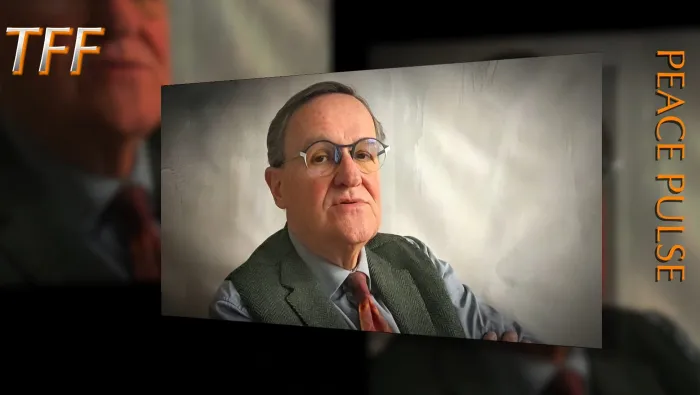
Jan Oberg, TFF director April 28, 2026 In this third TFF Peace Pulse, I make the important distinction between the violence and the conflict that violence is a symptom of. If you want peace, focus on the underlying conflict because that is the key to resolution, peacemaking, and a better future for the parties. The West is obsessed with violence, just look around you – and 90+ per cent of the public debate is about military issues and other violence – totally wasted for peace. These Peace Pulses will only be published here a few times. You will also not find them on YouTube and Vimeo because both platforms have blocked TFF and me; you know, peace is dangerous these days. Most TFF’s videos since 2007 are now on Rumble.
Screenshot-2026-04-13-154551
In contrast to most, we’ll bring alternatives, solutions, hope and strategies for a better future. Times are dangerous, yes, but that only intensifies the need for constructive thinking and action! Jan Oberg, TFF director April 13, 2026 The new TFF Peace Pulse uses video messages in a new way: Max 3-5-minute-long comments, ideas or perhaps mini-lectures, all about peace – positive peace. We launch them today on April 13, 2026 with a carefully crafted visual aesthetic fitting the content. We hope to publish them regularly from now on. We launch Peace Pulse (PP) – for a number of reasons. The world is in chaos, and there are countless reasons to feel concerned, frustrated, even angry. The atmosphere is saturated with doom and gloom, with negative energy and rear‑mirror thinking, while vision, imagination, alternatives, strategies and genuine future‑mindedness remain in short supply. And without them, we simply can’t save the world. Looking at problems from a hundred angles will...
IMG_5165 (1)
PART II — Publishing Peace in a System That Prioritises Militarism Jan Oberg, TFF director April 10, 2026 How TFF Maintains a Daily Voice in a Digital World Built for Noise This article is part of the series “TFF at 40″ and it invites you to learn about Four Decades of Publishing Peace. It takes a look at how a small, people‑financed peace foundation has communicated across four generations of technology — from wax stencils and fax machines to mass email and Substack — and why TFF continues to publish every single day in a system that rewards noise, conflict, and militarism. ◆ What it means to publish peace every single day in a digital system built for 24/7 news and other noise, confrontation, and militarism. How TFF’s independence, continuity, and global readership defy algorithms, donor cycles, and Western media censorhip — and why the Majority World keeps listening. When the...