In his State of Union, President Trump focused his comments about the Middle East on Iran, the fight against the Islamic State (ISIS or IS), and the U.S. troop withdrawal from Syria. Despite his negative rhetoric about Iran, Trump did identify some potential common ground with the government in Tehran.
The challenge for the next two years is to focus on that common ground, avoid a war between the United States and Iran, and prepare for an eventual U.S. return to the nuclear agreement with Tehran.
While Iraqi President Barham Salih hailed Iran for supporting the Iraqi nation in the fight against IS, Donald Trump singled out Iran as the world’s leading state sponsor of terror.
Moreover the Iraqi president rejected a plan floated by President Trump that calls for keeping U.S. forces in Iraq to “watch” neighboring Iran, saying that the United States should not burden Iraq with its own “policy priorities.” He reiterated that Iraq and Iran play an important role in upholding peace and stability in the region.
Israeli Prime Minister Benjamin Netanyahu spoke with Trump once and Pompeo twice before Trump’s December 19 announcement of a U.S. troop withdrawal from Syria. Netanyahu lobbied very hard to keep America’s military presence in Syria to support an Israeli campaign of airstrikes aimed at threatening war with Iran.
“We struck thousands of targets (in Syria) without claiming responsibility,”said Gadi Eisenkot, chief of staff of the Israel Defense Forces about Israel’s undeclared military campaign against Iran. The deputy commander of the Islamic Revolution Guards Corps (IRGC), Hossein Salami, declared that Israel will be eliminated and the entire occupied Palestinian territories will be retaken if it embarks on a new war. “The U.S. aircraft carriers would be destroyed, its air bases in the region burned, and the skies set ablaze…we have built our strength for the purpose of long, extended wars”, he said.
According to a Brown University study, U.S. wars in Afghanistan, Iraq, Yemen, Syria, and Libya have cost the U.S. $8 trillion. In addition, 480,000 people have died due to direct war violence, 244,000 civilians were killed in direct violence by other parties, and many times more have died indirectly. Over 6,950 U.S. soldiers have died and at least 7,800 US contractors killed. Last but not least, 21 million people became refugees or were displaced within their own countries.
In the State of Union, President Trump criticized long drawn-out wars. “As a candidate for president, I pledged a new approach. Great nations do not fight endless wars,” he said.
Trump’s strategy is to avoid entering new wars coupled with a gradual withdrawal of U.S. forces from the Middle East. This strategy is on par with what Hillary Clinton envisioned in her 2011 Foreign Policy article, where she proposed refocusing on East Asian powers critical to U.S. national interests.
America seems to realized that the current crises in the Middle East cannot be resolved any time soon, instability and terrorism will engulf the region for the years to come, and substantial financial resources, perhaps in the trillions of dollars, are required for long-term peace, stability, and reconstruction of the region.
Meanwhile, Iran since the Islamic Revolution of 1979 has always emphasized the need for U.S. troops to withdraw from the region. In this sense, Iran and the United States now share common views despite different interests.
Nevertheless, this is only feasible through a safe and gradual withdrawal that could take some years to accomplish. Furthermore, it is in the interests of not only Iran and the United States, but also the entire region and the world, that a U.S. withdrawal from the region not lead to further instability and chaos in the region.
This commonality, which is also pivotal to international peace and security, has the potential to break the deadlock in the recurring confrontation between Iran and the United States. In 2001, under General Suleimani’s leadership, Iranian Quds Force played a decisive role defeating the Taliban and al-Qaeda in the war in Afghanistan.
“His shrewd pragmatism has transformed the unit into a major influencer in intelligence, financial, and political spheres beyond Iran’s borders,” said Gen. Stanley McChrystal, former chief of the U.S. Joint Special Operations Command. Today, Tehran can facilitate a face-saving, safe, and reliable exit of U.S. forces from the region. Such cooperation would deescalate tensions between the two countries’ security and military forces, eliminating the possibility of another unnecessary military conflict in the region and setting the stage for a U.S. return to the nuclear deal.
Bring in the United Nations
However, concerns may remain about Iran’s regional influence. Therefore, it would be more prudent if the UN secretary general oversees the vacuum left behind. Moreover, UN Security Council resolution 598 (from 1987) requests the secretary general to examine, in consultation with Iran and Iraq and other Arab States in the Persian Gulf, measures to enhance the security and stability of the region.
Based on this resolution, the UNSC can take practical steps to create a regional security and cooperation system in the Persian Gulf where Iran, Saudi Arabia, Iraq, and five other states around the Persian Gulf would take collective responsibility in the absence of U.S. forces, transforming current regional rivalries into partnerships.
Fortunately, a majority of Congress, U.S. public opinion, and even Trump himself are against a potential war with Iran. In Iran also, the majority of people and Iranian officials are againstany military conflict.
Nevertheless, there are influential players in key decision-making positions who view America’s current domestic turmoil as an opportunity to drag the United States into a war with Iran, and to dismember the country. Some of the heads of states of America’s regional allies, too, are working hard to realize this scenario before Trump leaves office.
The U.S. withdrawal from the Iran nuclear deal, a critical international agreement achieved only after directionnegotiations between Washington and Tehran, has eliminatedany chances of resolving other outstanding issues.
Despite fundamental disagreements, Iran and the United States also have some mutual interests. The art of diplomacy is to find a way to set the stage for a dignified U.S. return to the nuclear deal by paving the way for the U.S.-Iranian cooperation on mutual interests.
Seyed Hossein Mousavian is
Middle East Security and Nuclear Policy Specialist at Princeton
University and a former Iranian diplomat. His latest book, Iran and the
United States: An Insider’s view on the Failed Past and the Road to
Peace, was released in May 2014.
A friendly quarrel while we agree that the US sanctions are a weapon of mass destruction and kill more people than wars do. And that we must talk much more about sanctions than we have so far. Jan Oberg, TFF director March 16, 2026 John Mearsheimer recently stated that U.S. sanctions murdered around 38 million people between 1971 and 2021 – see the video below. It is a dramatic figure, and it has spread quickly because it captures, in one sentence, the enormous human cost of modern sanctions. I share his concern about the destructive effects of economic coercion. But the specific number he cites — and the way he attributes it — deserves a friendly academic clarification. The figure comes from a 2023 Lancet Global Health article estimating the mortality effects of unilateral U.S. and EU sanctions over the past half‑century. This is the first point where Mearsheimer’s shorthand diverges from the text: the study...
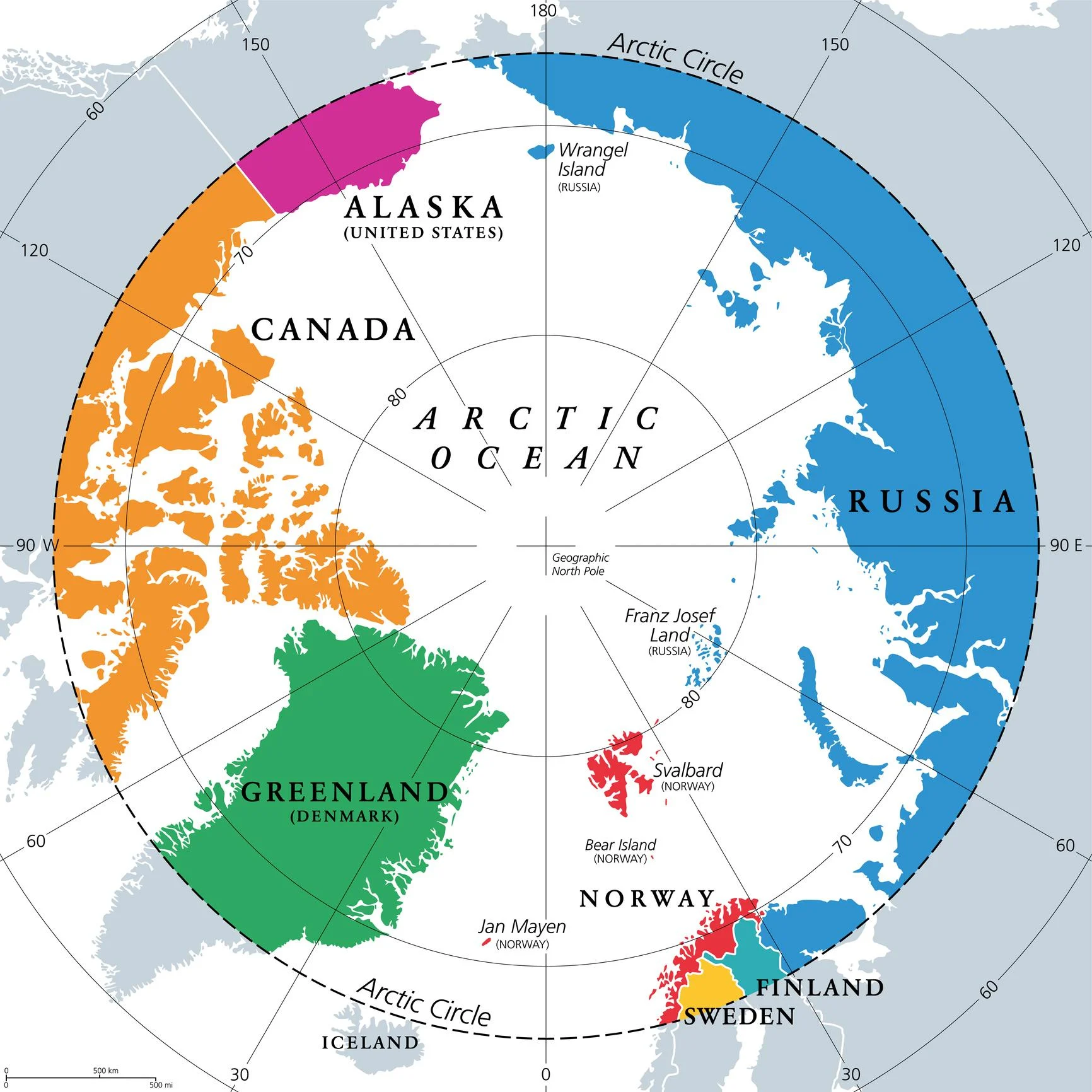
This is not another geopolitical commentary on the Arctic. It is a visionary peace proposal that can save the region from militarised rivalry and ecological ruin. A blueprint for shared security, sustainable development, and human dignity — benefitting Greenland, the Arctic, and the rest of us. Jan Oberg TFF director Lund, Sweden, February 17, 2026 I. Four Principles for a New Arctic Vision The Arctic is often framed as a cold arena of rivalry — a place where great powers test each other’s resolve. But this worldview is outdated, unimaginative, and ultimately self‑defeating. The Arctic is not a vacuum waiting to be militarised; it is a living region, a climate stabiliser, and a cultural homeland whose future will shape the future of humanity. If we begin from that understanding, a far more rational Arctic order becomes possible — one that is peaceful, cooperative, and centred on the people who actually live there. This vision rests...
PART 2 — Diplomacy, Law and Nonviolent Power By Jan ObergTFF co-founder and director January 26, 2026 This is the second of four TFF-created idea portfolios designed to curb the global reach of the United States and, in both the short and long term, help catalyse a worldwide nonviolent resistance to what many observers describe as the Trump administration’s uniquely confrontational, destructive and world-threatening policies. These portfolios outline what governments and citizens across the world can do through dynamic diplomacy, creative initiatives, and strictly nonviolent means. They are typical TFF works in that we do not only tell what the problem is and how bad it will go – as 90+% of all commentators, experts and scholars do – we tell what we think can be done, inviting you to think of what you think you can do. It seems painfully clear to me that the current political dynamics in Washington increasingly resemble the most dangerous...
Tony Robinson October 4, 2026 Violence is easy to recognise when someone is being beaten, shot or killed. It becomes more difficult when nobody is holding a weapon. Poverty, discrimination, exploitation and repression can restrict a human life just as effectively, although they do so in very different ways and with very different consequences. Simply adding more categories to an ever-growing list of forms of violence does not really solve the problem. The more interesting question is what all these different situations have in common and why it makes sense to describe them using the same word. Human beings do not simply react to what happens around them. They remember the past, imagine things that do not yet exist, make plans and undertake projects. Workers organise because they imagine different working conditions; people migrate because they imagine another life somewhere else; social movements emerge because people refuse to accept the...
It’s a matter of principles, courage, vision and pulling together – while the militarist world is falling apart… Peter Langille October 3, 2026 “Here, then, is the problem which we present to you, stark and dreadful and inescapable: Shall we put an end to the human race; or shall mankind renounce war?”The Bertrand Russell—Albert Einstein Manifesto, July 9, 1955 ⁕ The forecast for what’s ahead is worrisome. The sharp rise in armed conflicts over the past three years is adding to what was already the highest level in over seventy years. Genocides, which should be prevented are supported. A shared climate emergency that jeopardises survival is ignored. Diverse polls now suggest that people are war-weary, worried and interested in a more effective United Nations. And, there are viable policy options for a more secure world! Yet governments are doubling-down, betting on more war and investing heavily. If current trends persist,...
Johan Galtung 1930-2024October 2015 Published here on October 3, 2026 Let us focus on Civilization for conflict analysis and remedies. Major forms of disorder use violence; war is state organized violence. The most belligerent states are the United States of America and Israel, both with civilization roots. National Evangelism, the US Protestant Christian civilization– more national than evangelical–justifies US warfare as exceptionalism of a people chosen by God, with a manifest destiny to run the world. Orthodox Judaism justifies Israeli warfare to conquer and expand from Nile to Euphrates as a religious right and duty to the Eternal One. The third most belligerent country, the UK, no longer believes it is God-chosen but chosen by the USA; not quite the same but something. But the root cause of global disorder lies in the Occident–with Islam–seeing itself as the single, universal civilization valid for all at all times, all others being...
TFF on Substack
Discover and subscribe to more peace materials on TFF Substack
Tony Robinson October 4, 2026 Violence is easy to recognise when someone is being beaten, shot or killed. It becomes more difficult when nobody is holding a weapon. Poverty, discrimination, exploitation and repression can restrict a human life just as effectively, although they do so in very different ways and with very different consequences. Simply adding more categories to an ever-growing list of forms of violence does not really solve the problem. The more interesting question is what all these different situations have in common and why it makes sense to describe them using the same word. Human beings do not simply react to what happens around them. They remember the past, imagine things that do not yet exist, make plans and undertake projects. Workers organise because they imagine different working conditions; people migrate because they imagine another life somewhere else; social movements emerge because people refuse to accept the...
It’s a matter of principles, courage, vision and pulling together – while the militarist world is falling apart… Peter Langille October 3, 2026 “Here, then, is the problem which we present to you, stark and dreadful and inescapable: Shall we put an end to the human race; or shall mankind renounce war?”The Bertrand Russell—Albert Einstein Manifesto, July 9, 1955 ⁕ The forecast for what’s ahead is worrisome. The sharp rise in armed conflicts over the past three years is adding to what was already the highest level in over seventy years. Genocides, which should be prevented are supported. A shared climate emergency that jeopardises survival is ignored. Diverse polls now suggest that people are war-weary, worried and interested in a more effective United Nations. And, there are viable policy options for a more secure world! Yet governments are doubling-down, betting on more war and investing heavily. If current trends persist,...
Johan Galtung 1930-2024October 2015 Published here on October 3, 2026 Let us focus on Civilization for conflict analysis and remedies. Major forms of disorder use violence; war is state organized violence. The most belligerent states are the United States of America and Israel, both with civilization roots. National Evangelism, the US Protestant Christian civilization– more national than evangelical–justifies US warfare as exceptionalism of a people chosen by God, with a manifest destiny to run the world. Orthodox Judaism justifies Israeli warfare to conquer and expand from Nile to Euphrates as a religious right and duty to the Eternal One. The third most belligerent country, the UK, no longer believes it is God-chosen but chosen by the USA; not quite the same but something. But the root cause of global disorder lies in the Occident–with Islam–seeing itself as the single, universal civilization valid for all at all times, all others being...
Tony Robinson October 4, 2026 Violence is easy to recognise when someone is being beaten, shot or killed. It becomes more difficult when nobody is holding a weapon. Poverty, discrimination, exploitation and repression can restrict a human life just as effectively, although they do so in very different ways and with very different consequences. Simply adding more categories to an ever-growing list of forms of violence does not really solve the problem. The more interesting question is what all these different situations have in common and why it makes sense to describe them using the same word. Human beings do not simply react to what happens around them. They remember the past, imagine things that do not yet exist, make plans and undertake projects. Workers organise because they imagine different working conditions; people migrate because they imagine another life somewhere else; social movements emerge because people refuse to accept the...
It’s a matter of principles, courage, vision and pulling together – while the militarist world is falling apart… Peter Langille October 3, 2026 “Here, then, is the problem which we present to you, stark and dreadful and inescapable: Shall we put an end to the human race; or shall mankind renounce war?”The Bertrand Russell—Albert Einstein Manifesto, July 9, 1955 ⁕ The forecast for what’s ahead is worrisome. The sharp rise in armed conflicts over the past three years is adding to what was already the highest level in over seventy years. Genocides, which should be prevented are supported. A shared climate emergency that jeopardises survival is ignored. Diverse polls now suggest that people are war-weary, worried and interested in a more effective United Nations. And, there are viable policy options for a more secure world! Yet governments are doubling-down, betting on more war and investing heavily. If current trends persist,...
Johan Galtung 1930-2024October 2015 Published here on October 3, 2026 Let us focus on Civilization for conflict analysis and remedies. Major forms of disorder use violence; war is state organized violence. The most belligerent states are the United States of America and Israel, both with civilization roots. National Evangelism, the US Protestant Christian civilization– more national than evangelical–justifies US warfare as exceptionalism of a people chosen by God, with a manifest destiny to run the world. Orthodox Judaism justifies Israeli warfare to conquer and expand from Nile to Euphrates as a religious right and duty to the Eternal One. The third most belligerent country, the UK, no longer believes it is God-chosen but chosen by the USA; not quite the same but something. But the root cause of global disorder lies in the Occident–with Islam–seeing itself as the single, universal civilization valid for all at all times, all others being...
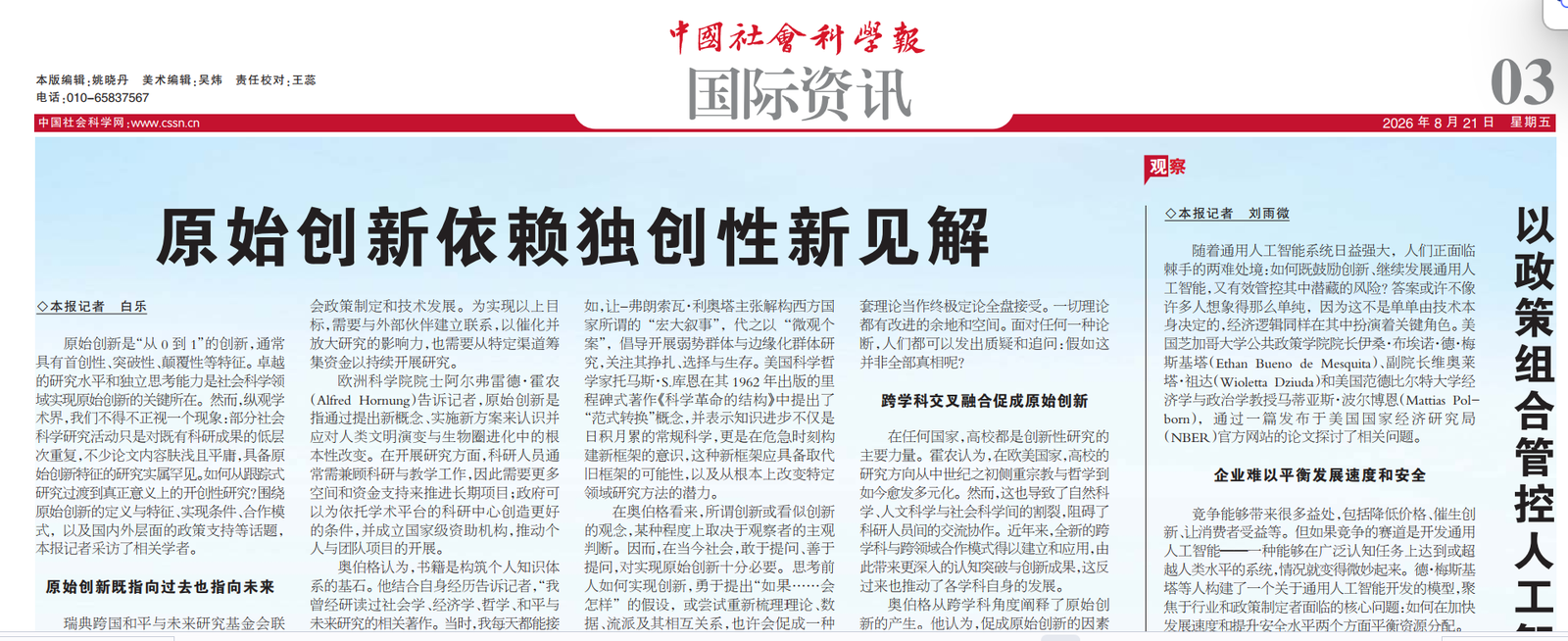
Jan ObergPhD, director, The Transnational Foundation for Peace and Future Research, TFFLund, Sweden October 2, 2026 This is my full original manuscript. The Chinese Academy of Social Science, CASS, makes two publications out if it. 1. China’s Five-year plan emphasized the capabilities of basic research and original innovation. It is regarded as the goal of the future social development, which, as required, should be significantly enhanced. Can you comment on the importance of original innovation in research and academic study? I believe it is easier to define “original innovation” in the natural sciences than in social sciences. The breaking points of what constitutes something new, or innovative, are not quite as sharp in the latter. But in both fields it is about opening up something that was closed, unseen, unexplored before – making manifest what was earlier latent. Innovations come in many forms and shapes – naming something that was not...
The agreement is catastrophic both because of what it says and what it doesn’t mention. It reduces further the major asset of security policies: Freedom of action. Jan Oberg TFF director September 25, 2026 A couple of hours before the agreement was signed on September 22, 2026, I published the following 13 hypotheses about what it would most likely contain on TFF Substack (in English). I was wrong on only the first point. Contrary to what Trump had written on his Truth Social platform, it does not appear to come into force immediately. In fact, it turned out to be worse than even I had anticipated. After these hypotheses now come a number of reflections in light of what the agreement actually contains, and does not contain, as well as the way in which it has generally been presented by major media outlets and by the public-service broadcaster DR. My...
Below are TFF-related media mentions, comments, videos and social media posts published elsewhere but not on this homepage. We happen to catch and list only a fraction. Regarding video comments and debates, we recommend that you go to the TFF Video Channel on Substack where many of them are reproduced. Jan Oberg is a contributor to China Daily – 52 million daily clicks – and Global Times, CGTN and CCTV (the national television), China Investment, Xinhua News Agency and several others. Articles and videos on these media very often multiply into countless Chinese (and Western media) that re-post them from these main media. Thanks to The China Academy, his analyses, interviews and comments are frequently posted on YouTube channels such as Thinkers Forum and Wave Media. These videos are often re-posted on Bilibili (China’s YouTube), the China Content Center on TikTok, and on the Chinese edition of TikTok, Douyin.com. This means reaching hundreds of millions of viewers worldwide over a year. While there are too many to catch on all these...