More than earlier crises of my lifetime, including the Great Depression, World War II, 9/11, the COVID-19 pandemic illuminates as never before, how precarious and uncertain is the future wellbeing, and possibly survival, of the human species. The concreteness, immediacy, and haunting uncertainties of the pandemic is quite terrifying on its own, but its heuristic pedagogy seems applicable to a range of potentially catastrophic threats of global scope, most obviously climate change, biodiversity, nuclear weaponry.
Originally posted on Richard Falk’s blog on May 3, 2020
What we should now be able to realize even while asleep is that when the under-preparedness of governance and political leadership is based on ignoring a scientific consensus is combined with radical uncertainty and myopic nationalism the stage is set for planetary and species disaster, and not only personal grief and national emergency.
These signature traits of the 21st century heighten our fears and feelings of utter helplessness that gives way to a dizzying disorientation of beliefs and expectations, a fertile breeding ground for political extremism, scapegoating, and the darkest flights of fancy.
As much as the horrifying spectacle of hospitals without beds for critically ill patients and too many dead bodies to find room in city morgues or funeral homes is this sense that the lethality of COVID-19 could have been significantly mitigated if political leaders of important countries had heeded two types of advance warnings from reliable sources.
There was a foreboding prediction during the past five years by epidemiologists and other health experts that conditions existed around the world that made a viral pandemic a near certainty in the coming years. It was just a matter of time. For governments of affluent countries to ignore such warnings from respected experts, and in a few cases even reduce the funding of their national health systems in recent years, as the U.S. and UK are reported to have done, should be regarded as a Crime Against Humanity, malign behaviour worse than gross negligence or administrative incompetence.
In addition, there were a series of authoritative disclosures of the actual COVID-19 outbreak weeks before many governments undertook suitable preparations with regard to testing kits, masks, and personal protective equipment (PPE). Instead of rational and prudent preparations, the views of qualified experts either never reached the ears of leaders and their advisors or were thrown by leaders into the nearest waste basket as alarmist rubbish, at best distractions from the only real job of peacetime government – promoting markets and pro-rich growth.
Politicians like Trump, Bolsonaro, Modi, Johnson, and others did even worse, actively denying, denigrating, and dismissing concerns until the spread of the disease became undeniable with several national health systems in leading countries reacting in emergency modes on the brink of been overwhelmed. If prudent and rational, this grave peril would never have happened, especially in countries with adequate health infrastructures.
The Precautionary Principle
The most elementary lesson from the pandemic so far is that adoption of the Precautionary Principle should become mandatory for organs of government and political officials at every level of social organization from the municipality to the UN, and especially at the level of governments of sovereign states. The wellbeing, security, and defence of national populations is widely assumed to be the prime duty of political leaders in a still state-centric system of world order. Such vigilance by leaders should be treated as more important than living up to the oath of office, and the failure to do so regarded as a flagrant violation of public trust, warranting a punitive removal from office.
Basically, the Precautionary Principle decrees that expert warnings about impending public dangers should shape governance policies, even when available evidence does not produce conclusive results as to the extent and imminence of the risk.
The precautionary approach insists on paying the costs of anticipatory prudence as over against reliance on reactive crisis management, especially under circumstances that pose substantial risks of severe future harm. The Precautionary Principle, informally long practiced and advocated with respect to health, was first internationally articulated and proposed with respect to expert warning about potentially catastrophic future environmental damage if corrective steps are not taken.
The recent focus of precautionary thought and advocacy has been seeking that proper account be taken of the dire warnings derived from global warning projections. An influential formulation of the Precautionary Principle is set forth in Principle 15 of the Final Declaration of the Rio Earth Summit of 1992: “In order to protect the environment, the precautionary approach shall be widely applied by States according to their capabilities. Where there are threats of serious or irreversible damage, lack of full scientific certainty shall not be used as a reason for postponing cost-effective measures to prevent environmental degradation.”
COVID-19 & climate change
The concreteness of COVID-19 disease, as immediate, life-threatening, personal, planetary, and undeniable contrasts with other threats that are presently less visible, often more distant, and not as vividly or convincingly intruding on the security of everyday life. Yet the pattern is the same: prudent anticipation is cheaper, safer, more effective, and humane than are reactive measures, especially in view of the disproportionate vulnerability of marginalized ethnic minorities, prisons and retirement homes, and impoverished communities and crowded urban settings.
In this sense, a difficult part of the post-pandemic challenge is not only to renovate the health system so as to be adequately prepared, but to transfer this elementary knowledge about dealing with global health threats to other policy domains while acknowledging the diversity of risks and distinctive types of likely harm. An existing scientific consensus projects with reasonable assurance the high probability of increasingly more dangerous levels of future global warming and of diminishing biodiversity if the dissemination of greenhouse gasses is not drastically reduced.
Society lacks comparable capabilities to make such high confidence predictions with respect to the advent of nuclear war or the danger of a large meteor striking the earth.
In other words, fidelity to the Precautionary Principle depends on intelligent calibration to particularities of risk that pertain to each issue of concern, but with a similar resolve to apply prudently the anticipatory knowledge available.
In this fundamental sense, what is true for COVID-19 is also true for climate change and biodiversity, and likely even more so. Current levels of information suggest that even a dysfunctional delayed response will in due course contain the pandemic although with a needlessly large number of fatalities, as well as high degrees of economic and social dislocation. Yet despite the massive scale of disruption, a pandemic is expected to subside, although accompanied by some new risks of recurrence, permitting at least a prudently regulated return to normalcy.
In contrast, once global warming crosses unknowable thresholds or biodiversity declines beyond a certain point, there may be no turning back, the ecological balance could become beyond the reach of alteration by human action or could only be achieved by very austere or expensive downward adjustments in standards of living and life style. This would incur much human suffering and political unrest along the way, especially if the adjustment process favors the rich and powerful, and victimizes the poor and vulnerable, which seems inevitable at this point given the way policy is formed and life circumstances structured.
The global challenge: Sanctions as a crime against humanity
The second obvious ‘teaching moment’ that has emerged during the health crisis is the globality of the challenge as contrasted with the statist fragmentation of the divisive response structures. Imposing geopolitically motivated sanctions on a state that weakens its societal capability to contain the spread and treatment of the virus virtually ensures that contagion will cross borders in greater numbers, and give rise to prolonging the pandemic and increasing the number of infections elsewhere, including quite possibly in the sanctioning countries.
The sanctions currently weakening the coping capabilities of such countries such as Iran and Venezuela create a lose/lose series of antagonistic relationships between the targeted states and the rest of the world, and should be also considered as ‘geopolitical crimes’ or Crimes Against Humanity rather than as discretionary aspects of normal diplomacy.
As well, maintaining such sanctions during the pandemic works against operationalizing the insight of global solidarity – ‘we are all in this together’ – rather than thinking of a riven world in neo-fascist terms of ‘friends and enemies.’
The Trump presidency, oblivious to the pragmatic argument of mutuality against maintaining sanctions during the COVID-19 pandemic is even more tone-deaf when it comes to humanitarian normative arguments based on law and morality resting on the unacceptability and unlawfulness of international uses of force that have a primary impact on civilian populations.
It is helpful to recall the notorious remark of Madeleine Albright, then U.S. Secretary of State, when asked by Leslie Stahl in the course of a ’60 Minutes’ interview whether an estimated 500,000 deaths of children attributed to the punitive sanctions imposed on Iraq after the First Gulf War five years earlier in 1991 were worth such a high human cost of innocent young lives. Stahl’s question to Albright, “We have heard that half a million children have died. I mean, that is more children than died in Hiroshima. And, you know, is the price worth it?” And Albright’s memorable response: “I think that is a very hard choice, but the price, we think, the price is worth it.”
Although Albright later expressed remorse about her own phraseology, suggesting that she should have put the blame on Iraq’s leader Saddam Hussein for withholding food from civilians rather than admitting that the deaths resulted from the sanctions. Actually, her spontaneous response was more truthful than her later attempt to shift blame for their inhumane impacts. Why would sanctions be maintained if not felt to be worthwhile from a geopolitical perspective? Beyond this, evidence shows that the Iraqi government behaved responsibly, establishing a food rationing arrangement that made every effort to protect Iraqi civilians from starvation.
Trump, and his lead foreign policy spokesperson, Mike Pompeo, seem to go further than Albright’s insensitive remark, by intensifying sanctions during the pandemic, grotesquely seeking to exploit the added vulnerability of these targeted societies while meeting the demands of the health crisis.
Trump defies globality in a further scandalous manner by blaming China for the COVID-19 outbreak, again opting for antagonistic tensions rather than affirming human solidarity and mutually beneficial cooperation. Trump also chose the time of this pandemic to defame and defund the WHO because of its supposed complicity with China’s failure to disclose sooner the COVID-19 outbreak in Wuhan.
There is no reasonable evidence supporting such inflammatory charges against China or the WHO, and even if the allegations were to some extent accurate, it would not justify antagonizing China or weakening the WHO capabilities at a time when it is playing a crucial role in providing information and guidance to the many countries in the global South that do not have sufficient national health capabilities to depend on national or even regional capabilities.
It should be beyond argument that a pandemic threat of this magnitude and lethality needs to be addressed by counseling maximum cooperation among states and through bolstering the resources and capabilities of global coordinating mechanisms. Instead of defaming and defunding the WHO at this time, the responsible approach would be to express gratitude for its existence by pledges of greater funding support.
To repeat, such a litany that is true for COVID-19 is as true or truer for other serious present and impending problems of global scope and potentially severe magnitude. The so-called retreat from globalization that partly results from some negative structural consequences of neoliberalism, which has given rise to resurgent nationalisms, seems understandable with respect to the relation of states to the world economy. Nevertheless, it is a disaster if this enhanced statism is extended, as seems to be the case, to ecological and ethical contexts that give substance to nationalist standpoints.
Interconnectedness and widely diverse material circumstances are manageable under contemporary conditions only if the behaviour of sovereign states accord far greater weight than now to policy coordination and collaboration by way of internationalism, as well as exhibit concrete appreciation of the practical and principled benefits of honouring the imperatives of empathy, hospitality, and human solidarity.
Revelations of Covid-19
Decades ago, the American poet, Robert Frost, put his prophetic gift to work on what has now become a planetary truism for those who ponder the future of the human experience. In a poem, ‘One Step Backward Taken’ these words of Frost shine:
“I felt my standpoint shaken
In the universal crisis.”
Although I was conscious of the degree to which modern history featured a series of surprises that eluded experts, I was nevertheless surprised by the ferocity and rapid planetization of the Coronavirus assault on human health, and lifechanging, and likely permanent, ramifications for economic and social normalcy. It was not only a revelation of the precariousness of our individual and collective existence, but a stark reminder of the relevance of a sphere of life not previously given the societal and global attention and resources that were warranted.
One question that will not be answered for some years is whether the aftermath of the pandemic will generate ‘a new world order,’ and if so, will it be an improvement on what existed before COVID-19.
From past experiences, there is little reason to be hopeful unless a revolutionary movement from below unexpectedly, effectively, and creatively challenges the established order.
The rhetoric of new world order was initially fashionable as a call for global reform at the dawn of the post-colonial age with its calls in the 1970s for ‘a new international economic order’ and ‘a new international information order,’ emanating from expectations that fairness was attainable if sufficient pressure from what was then known as ‘the Third World’ was mounted.
These hopes were crushed by the political and economic forces aligned with capitalist geopolitics in the North dominating the existing world order at the time.
Almost twenty years later came George H. W. Bush’s mobilization of a response to Iraq’s conquest, occupation, and annexation of Kuwait in 1990 by suggesting that ‘a new world order’ was in the making by which he meant that the UN could function to prevent ‘aggression’ in the post-Cold War atmosphere as was originally intended when the UN was established in 1945. After Kuwaiti sovereignty was restored in the First Gulf War, the U.S. Government rushed to shrink expectations about a UN-centric world security system, fearing the responsibilities of being designated as the global peacekeeper.
In the words of a leading Washington official at the time, this idea of a new world order reliant on the UN ‘was put back on the shelf,’ that is, it was an idea that had served its purpose with respect to Kuwait but should not be counted upon to provide guidance for the future, especially tying American foreign policy and geopolitical discretion to a prior UN authorizations.
In an unpublicized talk at Princeton James Baker, the influential U.S. Secretary of State at the time, gave a different spin. In essence Baker said, “Bush was wrong to associate the new world order with the centrality of the UN with regard to peace and security. He should have identified the new world order with the triumph of the American way of life in the Cold War, accompanied by glowing references to market economies and constitutionalism, which provided the contours of what became known during the 1990s as ‘the Washington consensus’ or ‘neoliberal globalization.’
We now can ask whether today’s politicians will think differently about the prospects for a new world order after the pandemic comes under control, and the crisis mood dissipates even if doesn’t fully disappear? It seems more likely that two clashing tendencies will dominate the pandemic aftermath.
The first tendency will seek to restore the pre-pandemic dynamic of economic and political order, with modifications limited to augmenting the health sector and taking advantage of the earlier dislocations to replace workers with machines.
The second worrisome tendency is for political leaders to take advantage of the emergency prerogatives of government during the pandemic to institutionalize technologies of surveillance and control while hardening their borders against immigrants and asylum seekers.
If actualized, neither of these two tendencies will give greater weight to global cooperation, human solidarity, UN authority, empathy, hospitality, and adherence to the Precautionary Principles in dealing with menacing threats clearly visible on the horizon of near future expectations. This further intensification of an already overly politically fragmented world order may be dramatic enough to lead critics to call attention to its defects by again applying the label of ‘new world order.’
If a benign new order built on the principles of stability and justice mentioned above should emerge, it will depend on pressures from a transnational movement rooted in civil society, and probably first arising in the Asian context, where several regional governments displayed their superior problem-solving skills in the course of containing the COVID-19 challenge.
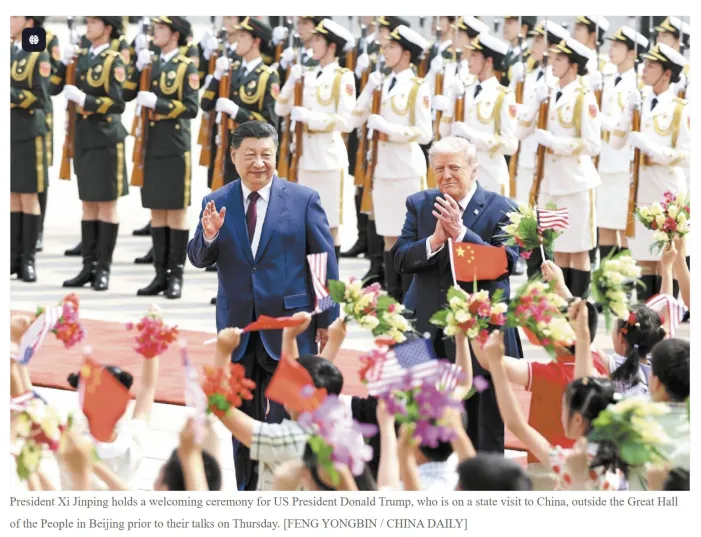
Such a scenario could be endorsed, and even led, by China, the country more than any other with the stature and political imagination to take over global leadership from the United States, which has by its own will and dysfunctional behavior forfeited its prior role, at least temporarily.
Of course, it is possible that a post-Trump America will heed Kissinger’s plea for a resumption of U.S. global leadership in ways that take inspiration from its successful restoration of a generally peaceful phase of world order after World War II.
Or alternatively, possibly join with China in establishing a collaborative geopolitical framework to address more holistically and cooperatively the currently unsatisfactory responses to ecological, social, and economic global challenges.
If this scenario emerges in either form, the label of new world order may yet come to be regarded as a sign of progress and hope, yet its realization will not happen without transnational activism of unprecedented depth and perseverance.
Only then can we recover a standpoint that upholds expectations for a humane and functional response to the universal crisis, which then would allow us to speak hopefully and responsibly about a new world order.