A Relevant Nobel Candidate: China’s Xi Jinping and the Silk Road Initiative

By Jan Oberg

Western mainstream media and politics disseminate so many negative aspects of China and consider it a serious threat to Western hegemony to such an extent that it is difficult to see any other – more relevant – perspectives.

The China-initiated Silk Road and Belt Initiative (BRI), described in links like these, has drawn far less attention in the West than it deserves. It involves about 100 countries; it will connect the world horizontally after centuries of the Western-dominated vertical world order; it’s emphasis is on infrastructure, trade, education and culture, not military relations; and – if implemented – it could well become humankind’s most fascinating peace and development project.

An article in China Today from May 2017 carries the main catchwords from a peace and security viewpoint:

• win-win
• inclusiveness
• vision-based
• anti-war
• pro-peace (constructive)
• respect for sovereignty of states
• cooperative structures
• common security
• interconnectedness
• benefits to all
• respect for each other’s development path (diversity)
• sharing

And here some excerpts also from China Today in 2017:

“As some western countries move backwards by erecting “walls,” China is contriving to build bridges, both literal and metaphorical. These bridges are China’s important offering to the world, and a key route to improving global governance. Proposed by China, the Belt and Road is for all to enjoy.”

“China is not willing or able to replace or replicate the vast web of political and economic tendrils maintained by the United States, but China is trying to take the current structure and build from it a more just and balanced world.»

Covering over 60 percent of the world’s population and nearly one third of global economic output, the Belt and Road has the support of more than 100 countries and institutions.

That China takes the Silk Belt and Road Initiative (BRI) very seriously can be seen in the fact that it has been written into the Communist Party’s Constitution. It isn’t just a smart idea for some immediate political purpose; it’s a huge, long-term commitment of the country.

As an aside, it is highly interesting that these principles are new in today’s world but date back to the 1954 Panchsheel Treaty of Non interference in others internal affairs and respect for each other’s territorial unity integrity and sovereignty.

The Panch (Five) Sheel (Virtues) Treaty was signed by China and India in 1954 and its principles became the foundation of the Non-Alligned Movement (NAM, today abut 120 members) which was established in Yugoslavia in 1956 by Yugoslavia’s Tito, India’s Nehru, Egypt’s Nasser, Indonesia’s Sukharno and Ghana’s Nkrumah – the five gathering around five principles of peaceful coexistence.

None of the above-mentioned foreign policies of China make mention of the UN norm of general and complete disarmament, the nuclear Non-Proliferation Treaty, nuclear abolition, arms control or confidence-building measures. Further, China is a nuclear weapons power and the 4th or 5th largest military spender on earth (however small in per capita terms).

However, it is remarkable that China’s official representative, veteran diplomat and chairperson of the Foreign Affairs Committee of the National People’s Congress (NPC), China’s top legislature, Mme Fu Ying, stated at the February 2018 Munich Security Conference that China will not/never:

– be the first to use nuclear weapons
– threaten anyone with nuclear war
– use nuclear weapons against a conventional attack
– use nuclear weapons against countries that a members of Nuclear Weapons-Free zones

Finally and very important, Mme Fu Ying states that China believes in minimum deterrence and self-defence.

Being a large military power and possessing nuclear weapons is, undoubtedly, problematic from the point of view of Alfred Nobel’s will and his wish to see a world with much less warfare, armies and destruction. However, in contrast to the dominant, hegemonic policy paradigm China’s international engagement is projected neither by sword (wars, occupation and bases) nor by a Bible. They don’t try to make/force their partners to become Buddhists, Taoists or Confuscianists.

However – and much more important – the Silk BRI paves the way to what Nobel aimed to support, namely the “champions of peace”, peace congresses and the development of  fraternity of nations. That is, for sure, what Xi jinping’s initiative is also about.

Remarkable is also that all the Chinese peace and security principles contrast the principles pursued vigorously by the members of the NATO alliance as well as – and in particular – the recent US Nuclear Posture Review and National Defence Strategy.

•

The Silk Road and Belt Initiative has come a long way in just 5 years. Give it another 5 or 20 years and we may – why not be hopeful? – see a new world of much more cooperation and much less warfare.

The BRI hold the potential of classical conflict-resolution and peace-building/reconciliation philosophy: Give people some common projects that they all benefit from – win-win and as equally as possible – and they will see the benefits in that and a common interest in not destroying such a cooperative structure.

One may even say that the BRI turns the Western thinking on its head.

In the West they say: First arms, then some kind of military balance, then military security, then stability and then peace. Peace at the very end! But if you start in the opposite end with a peaceful cooperation and mutual benefits, you reduce the risk/motivation for the use of violence. Then the need for arms is reduced and you achieve stability and sustain peace at a much lower military level.

This way of thinking is much more in line with what is stated in the UN Charter – that we should establish peace by peaceful means (Article 1) and then secure the peace by everybody’s right to self-defence (Art 51).

That is, potentially and philosophically at least, exactly what the Silk Road Initiative is also about.

If the Silk BRI’s above principles are implemented and become the reality on the ground over the next decades, involving more and more countries, we will see a world where the propensity to start wars is sharply reduced or disappear and then the weapons, and certainly the nukes, will become irrelevant.

They’ll also be impossible to legitimate and morally even more repugnant because the new world structure will become a peace-promoting civilization based with a regional and global ethics that replace narrow-minded national policies. Dominant threat images will outdated, intelligent conflicts-resolution methods and dialogues will be a main way to solve conflicts. And conflicts there will always be on the road – even in peace. But the violence will be reduced.

It’s indeed difficult to find anything more constructive in its conceptualization and philosophy than the BRI in today’s world.

These thoughts deserve to be welcomed and followed up by leaders in the Western world, and it is the Nobel Peace Committee´s responsibility to cultivate such opportunities for renewal and change in international relations.
About the author

4 Responses

  1. Am I too pessimistic if I say that the US neocons … 1. see the BRI as a threat 2. know that their window of opportunity is closing and 3. that they are planning for war before it is too late (ie before the PLA is too strong).

  2. Dear Tom – neither you nor I know whether that, as you say, is to be too pessimistic. But I think it is important, no matter what, to point to constructive ideas a processes that happen, not the least helping people who are kept in the dark about such things by our media and politicians to see it and, thereby, create a little hope for the future. We can’t change the world for the better unless we have a vision. Doom and gloom is not help – not even if justified.

  3. Absolutely. The more people know about the BRI the harder it is to demonize the Chinese, and start war. Xi is a shrewd politician. BRI is also a brilliant answer to Obama’s pivot to Asia, an obvious attempt to contain China. But that backfired, China opened the back door, to Russia and Europe. About which the generals in the White House now have informed Trump, obviously. Nevertheless, as important it is to create hope for the future, it is also important to be aware of the fact that every step in that direction will make the wounded tiger in the corner even more desperate. I think that future US domestic events will, and must, play an important role.

  4. China and Russia are proving to the whole world that their behavior is very far better than american one. They fight for peace and freedom while americans are backed from zionist evil imperialist way of life. Americans “interests” are so full of deceit and duplicity to reach unspeakable and unpresentable purposes so much to use the mainstream media as a sword to have the people’s favor, telling lies everyday, never telling people what they want to achieve.

Related Posts

It’s a matter of principles, courage, vision and pulling together – while the militarist world is falling apart… Peter Langille October 3, 2026 “Here, then, is the problem which we present to you, stark and dreadful and inescapable: Shall we put an end to the human race; or shall mankind renounce war?”The Bertrand Russell—Albert Einstein Manifesto, July 9, 1955 ⁕ The forecast for what’s ahead is worrisome. The sharp rise in armed conflicts over the past three years is adding to what was already the highest level in over seventy years. Genocides, which should be prevented are supported. A shared climate emergency that jeopardises survival is ignored. Diverse polls now suggest that people are war-weary, worried and interested in a more effective United Nations. And, there are viable policy options for a more secure world! Yet governments are doubling-down, betting on more war and investing heavily. If current trends persist,...
Johan Galtung 1930-2024October 2015 Published here on October 3, 2026 Let us focus on Civilization for conflict analysis and remedies. Major forms of disorder use violence; war is state organized violence. The most belligerent states are the United States of America and Israel, both with civilization roots. National Evangelism, the US Protestant Christian civilization– more national than evangelical–justifies US warfare as exceptionalism of a people chosen by God, with a manifest destiny to run the world. Orthodox Judaism justifies Israeli warfare to conquer and expand from Nile to Euphrates as a religious right and duty to the Eternal One. The third most belligerent country, the UK, no longer believes it is God-chosen but chosen by the USA; not quite the same but something. But the root cause of global disorder lies in the Occident–with Islam–seeing itself as the single, universal civilization valid for all at all times, all others being...
How Oxford University Press allowed a personality‑driven narrative to masquerade as scholarship. Jan Oberg, dr hc, TFF director This article has also been published on TFF Substack where more readers react and withdraw their interviews from the project. A Special Issue in a scholarly journal is not an ordinary publication. It is a collective, curated […]

Recent Articles

Tony Robinson October 4, 2026 Violence is easy to recognise when someone is being beaten, shot or killed. It becomes more difficult when nobody is holding a weapon. Poverty, discrimination, exploitation and repression can restrict a human life just as effectively, although they do so in very different ways and with very different consequences. Simply adding more categories to an ever-growing list of forms of violence does not really solve the problem. The more interesting question is what all these different situations have in common and why it makes sense to describe them using the same word. Human beings do not simply react to what happens around them. They remember the past, imagine things that do not yet exist, make plans and undertake projects. Workers organise because they imagine different working conditions; people migrate because they imagine another life somewhere else; social movements emerge because people refuse to accept the...
It’s a matter of principles, courage, vision and pulling together – while the militarist world is falling apart… Peter Langille October 3, 2026 “Here, then, is the problem which we present to you, stark and dreadful and inescapable: Shall we put an end to the human race; or shall mankind renounce war?”The Bertrand Russell—Albert Einstein Manifesto, July 9, 1955 ⁕ The forecast for what’s ahead is worrisome. The sharp rise in armed conflicts over the past three years is adding to what was already the highest level in over seventy years. Genocides, which should be prevented are supported. A shared climate emergency that jeopardises survival is ignored. Diverse polls now suggest that people are war-weary, worried and interested in a more effective United Nations. And, there are viable policy options for a more secure world! Yet governments are doubling-down, betting on more war and investing heavily. If current trends persist,...
Johan Galtung 1930-2024October 2015 Published here on October 3, 2026 Let us focus on Civilization for conflict analysis and remedies. Major forms of disorder use violence; war is state organized violence. The most belligerent states are the United States of America and Israel, both with civilization roots. National Evangelism, the US Protestant Christian civilization– more national than evangelical–justifies US warfare as exceptionalism of a people chosen by God, with a manifest destiny to run the world. Orthodox Judaism justifies Israeli warfare to conquer and expand from Nile to Euphrates as a religious right and duty to the Eternal One. The third most belligerent country, the UK, no longer believes it is God-chosen but chosen by the USA; not quite the same but something. But the root cause of global disorder lies in the Occident–with Islam–seeing itself as the single, universal civilization valid for all at all times, all others being...

TFF on Substack

Discover and subscribe to more peace materials on TFF Substack

Most Popular

Tony Robinson October 4, 2026 Violence is easy to recognise when someone is being beaten, shot or killed. It becomes more difficult when nobody is holding a weapon. Poverty, discrimination, exploitation and repression can restrict a human life just as effectively, although they do so in very different ways and with very different consequences. Simply adding more categories to an ever-growing list of forms of violence does not really solve the problem. The more interesting question is what all these different situations have in common and why it makes sense to describe them using the same word. Human beings do not simply react to what happens around them. They remember the past, imagine things that do not yet exist, make plans and undertake projects. Workers organise because they imagine different working conditions; people migrate because they imagine another life somewhere else; social movements emerge because people refuse to accept the...
It’s a matter of principles, courage, vision and pulling together – while the militarist world is falling apart… Peter Langille October 3, 2026 “Here, then, is the problem which we present to you, stark and dreadful and inescapable: Shall we put an end to the human race; or shall mankind renounce war?”The Bertrand Russell—Albert Einstein Manifesto, July 9, 1955 ⁕ The forecast for what’s ahead is worrisome. The sharp rise in armed conflicts over the past three years is adding to what was already the highest level in over seventy years. Genocides, which should be prevented are supported. A shared climate emergency that jeopardises survival is ignored. Diverse polls now suggest that people are war-weary, worried and interested in a more effective United Nations. And, there are viable policy options for a more secure world! Yet governments are doubling-down, betting on more war and investing heavily. If current trends persist,...
Johan Galtung 1930-2024October 2015 Published here on October 3, 2026 Let us focus on Civilization for conflict analysis and remedies. Major forms of disorder use violence; war is state organized violence. The most belligerent states are the United States of America and Israel, both with civilization roots. National Evangelism, the US Protestant Christian civilization– more national than evangelical–justifies US warfare as exceptionalism of a people chosen by God, with a manifest destiny to run the world. Orthodox Judaism justifies Israeli warfare to conquer and expand from Nile to Euphrates as a religious right and duty to the Eternal One. The third most belligerent country, the UK, no longer believes it is God-chosen but chosen by the USA; not quite the same but something. But the root cause of global disorder lies in the Occident–with Islam–seeing itself as the single, universal civilization valid for all at all times, all others being...
Read More
Living-Peace-Sign-Budapest-copy
Tony Robinson October 4, 2026 Violence is easy to recognise when someone is being beaten, shot or killed. It becomes more difficult when nobody is holding a weapon. Poverty, discrimination, exploitation and repression can restrict a human life just as effectively, although they do so in very different ways and with very different consequences. Simply adding more categories to an ever-growing list of forms of violence does not really solve the problem. The more interesting question is what all these different situations have in common and why it makes sense to describe them using the same word. Human beings do not simply react to what happens around them. They remember the past, imagine things that do not yet exist, make plans and undertake projects. Workers organise because they imagine different working conditions; people migrate because they imagine another life somewhere else; social movements emerge because people refuse to accept the...
b54a1f10-8c65-4f0b-9dd5-4abc0a7d04cc_2659x2659
It’s a matter of principles, courage, vision and pulling together – while the militarist world is falling apart… Peter Langille October 3, 2026 “Here, then, is the problem which we present to you, stark and dreadful and inescapable: Shall we put an end to the human race; or shall mankind renounce war?”The Bertrand Russell—Albert Einstein Manifesto, July 9, 1955 ⁕ The forecast for what’s ahead is worrisome. The sharp rise in armed conflicts over the past three years is adding to what was already the highest level in over seventy years. Genocides, which should be prevented are supported. A shared climate emergency that jeopardises survival is ignored. Diverse polls now suggest that people are war-weary, worried and interested in a more effective United Nations. And, there are viable policy options for a more secure world! Yet governments are doubling-down, betting on more war and investing heavily. If current trends persist,...
010
Johan Galtung 1930-2024October 2015 Published here on October 3, 2026 Let us focus on Civilization for conflict analysis and remedies. Major forms of disorder use violence; war is state organized violence. The most belligerent states are the United States of America and Israel, both with civilization roots. National Evangelism, the US Protestant Christian civilization– more national than evangelical–justifies US warfare as exceptionalism of a people chosen by God, with a manifest destiny to run the world. Orthodox Judaism justifies Israeli warfare to conquer and expand from Nile to Euphrates as a religious right and duty to the Eternal One. The third most belligerent country, the UK, no longer believes it is God-chosen but chosen by the USA; not quite the same but something. But the root cause of global disorder lies in the Occident–with Islam–seeing itself as the single, universal civilization valid for all at all times, all others being...
Screenshot 2026-10-02 011738
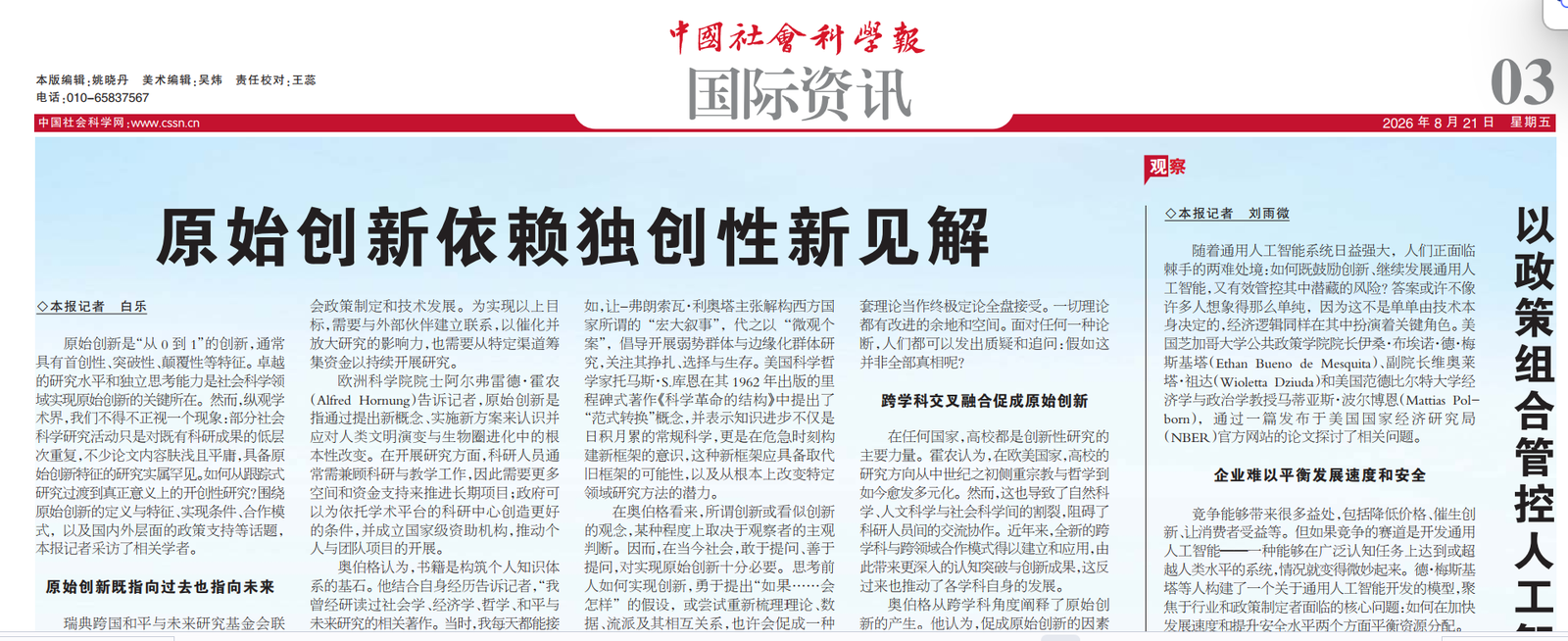
Jan ObergPhD, director, The Transnational Foundation for Peace and Future Research, TFFLund, Sweden October 2, 2026 This is my full original manuscript. The Chinese Academy of Social Science, CASS, makes two publications out if it. 1. China’s Five-year plan emphasized the capabilities of basic research and original innovation. It is regarded as the goal of the future social development, which, as required, should be significantly enhanced. Can you comment on the importance of original innovation in research and academic study? I believe it is easier to define “original innovation” in the natural sciences than in social sciences. The breaking points of what constitutes something new, or innovative, are not quite as sharp in the latter. But in both fields it is about opening up something that was closed, unseen, unexplored before – making manifest what was earlier latent. Innovations come in many forms and shapes – naming something that was not...
arctic-circle-map
The agreement is catastrophic both because of what it says and what it doesn’t mention. It reduces further the major asset of security policies: Freedom of action. Jan Oberg TFF director September 25, 2026 A couple of hours before the agreement was signed on September 22, 2026, I published the following 13 hypotheses about what it would most likely contain on TFF Substack (in English). I was wrong on only the first point. Contrary to what Trump had written on his Truth Social platform, it does not appear to come into force immediately. In fact, it turned out to be worse than even I had anticipated. After these hypotheses now come a number of reflections in light of what the agreement actually contains, and does not contain, as well as the way in which it has generally been presented by major media outlets and by the public-service broadcaster DR. My...
girl-5894831_1280
Below are TFF-related media mentions, comments, videos and social media posts published elsewhere but not on this homepage. We happen to catch and list only a fraction. Regarding video comments and debates, we recommend that you go to the TFF Video Channel on Substack where many of them are reproduced. Jan Oberg is a contributor to China Daily – 52 million daily clicks – and Global Times, CGTN and CCTV (the national television), China Investment, Xinhua News Agency and several others. Articles and videos on these media very often multiply into countless Chinese (and Western media) that re-post them from these main media. Thanks to The China Academy, his analyses, interviews and comments are frequently posted on YouTube channels such as Thinkers Forum and Wave Media. These videos are often re-posted on Bilibili (China’s YouTube), the China Content Center on TikTok, and on the Chinese edition of TikTok, Douyin.com. This means reaching hundreds of millions of viewers worldwide over a year. While there are too many to catch on all these...