
True or false US-Russian peace in Ukraine?
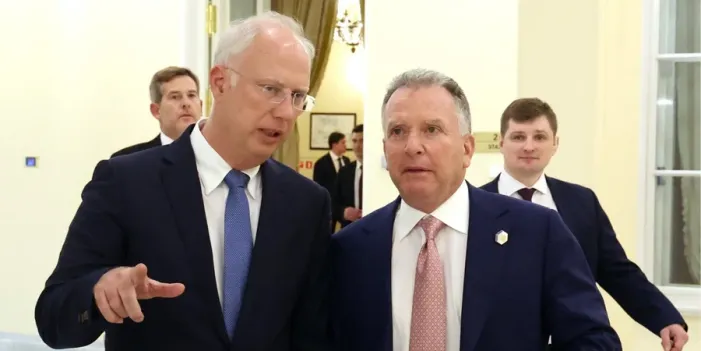
Kirill Dmitriev and Steve Witkoff (Photo: Sputnik/Vyacheslav Prokofyev/Pool via REUTERS), here reposted from The New Voice of Ukraine.

TFF’s comprehensive proposal for dialogue about true peace in Ukraine is due in a day or two

Jan Oberg

November 20, 2025

What is being whispered through diplomatic corridors today is not peace, but quackery. The alleged 28‑point plan drafted in Washington and Moscow is mentioned as a solution to the Ukraine war. It is being negotiated by US businessman, real estate developer and Trump ally, Steve Witkoff, and by Kirill Dmitriev, who is CEO of the Russian Direct Investment Fund and a close ally of Putin, according to India’s Economic Times. For presumably good reasons, their education, qualifications and experience in international conflict analysis and peace-making remain untold.

They look like surgeons who have never opened a medical textbook.

It is nothing more than a mirage: a framework of concessions imposed on Ukraine’s citizens, negotiated without Kyiv, and excluding Europe. Like Gaza, it promises “peace” while institutionalising injustice. If half of what is available about it is true, it will never lead to security, trust or cooperation, not to speak of peace.

What we know

  • Framework: The plan reportedly covers four broad areas—security guarantees, territorial arrangements, military restrictions, and diplomatic/economic measures.
  • Security Guarantees: A ceasefire and mechanisms to monitor compliance are said to be central, possibly involving international oversight or peacekeeping forces.
  • Territorial Concessions: Ukraine may be asked to cede the Donbas region entirely, with some drafts even suggesting a “lease” arrangement where Russia pays for de facto control. Crimea’s status is likely addressed, though details remain unclear.
  • Military Limits: Ukraine could face restrictions on its armed forces, including surrendering advanced weapons and limiting future NATO integration.
  • Diplomatic Channels: The plan appears to have been drafted in consultation with Russian intermediaries, while Ukraine itself has not been fully involved.

What we do not know

  • Official Status: The US government has not confirmed the existence of the plan, and Russia has publicly denied receiving it.
  • Exact Content: Beyond rumors of concessions and guarantees, the specific 28 points remain undisclosed.
  • Implementation Mechanisms: It is unclear how compliance would be enforced, who would oversee peacekeeping, or how sanctions would be adjusted.
  • European Role: The plan’s drafting process seems to have excluded EU and NATO allies, leaving their involvement uncertain.

And from that we can already conclude…

This is not diplomacy or peace-making. It is theatre. It is the repetition of a failed script in which great powers redraw borders and dictate futures, while those most affected are silenced. And those most affected are Ukraine’s innocent, non-fighting ordinary citizens living in a society that will take decades to heal, if at all possible.

The EU, despite its billions in mostly military aid and endless declarations of misguided solidarity, is once again a spectator in its own security theatre. In a way, that is well-deserved, because it has never done any diplomacy but insisted that the EU and NATO should win over Russia through arming Ukraine – fighting, in other words, Russia to the last Ukrainian without any EU or NATO member soldiers taking any risks.

NATO, claiming to be a peace organisation, is revealed as outdated and militaristic, having made its largest blunder thanks to hubris. The 2014 regime change in Kiev under Obama sowed the seeds of the very war it now pretends to resolve. NATO simply tells lies when it denies that its expansion broke the very clear promises given to Mikhael Gorbachev about not expanding NATO “one inch.”

To call NATO a “peacekeeper” or defensive alliance today is to ignore its role in provoking conflict and war and covering it up with more militarism than ever seen in Europe since 1945, even stealing 5% of GDP to enable it to do so.

The alleged 28‑point Trump/Witkoff plan, if it exists in the form described above, is not a peace or mediation plan but a settlement diktat imposed from above that has not even consulted all conflict parties, not to mention the people who are going to live – and suffer – with it.

Like in the shameful, international law-breaking UN SC Resolution 2803, the US plays the self-appointed role as “mediator” despite it being a/the main instigator of the wars, genocide and unspeakable human suffering in both conflicts. And like in the case of Gaza, it would freeze conflict rather than resolve it, institutionalise injustice rather than heal it. We are only waiting for the US modalities that will set up the US and perhaps Trump himself as a peacemaker in Ukraine too – after having virtually stolen the resources in the Ukrainian deep soil.

True peace can never be built on exclusion, coercion, and great‑power bargaining. But peace and conflict illiterate politicians, media and geopolitical experts will likely applaud this coming “peace” plan for Ukraine – if not perfect, then the best in town.

Tell you what? In a world where Trump is perceived as a major peacemaker is a peace and conflict illiterate – and doomed – world.

The EU has failed to assert itself as a foreign policy actor because it dropped diplomacy and went for primitive blunder-covering Russophobia. And no! – everything was not the fault of Russia and President Putin, who had warned over two decades that Russia could not accept this expansion and instead wanted common security with NATO but was ignored.

NATO has revealed itself as outdated in its claim to be a peacekeeper and has violated its own – truly defensive – Treaty text since it bombed Yugoslavia. And thus, it is neither a legal nor legitimate institution.

If the 28‑point plan proceeds without Europe’s voice, it will not bring peace to Ukraine. It will bring a new era of insecurity to the continent, a reminder that when peace is negotiated without those most affected, it is no peace at all. Here is a diplomatic prediction: The long-term consequences of the Trump/Witkoff/Dmitriev plan could well spell the end of the EU and NATO as we know them – like the Trump fake peace plan for Gaza may well spell the end of the United Nations.

Let’s dialogue about true peace now: TFF will publish a comprehensive framework

For quite some time, TFF has worked on a genuine, innovative and heuristic framework plan for peace in Ukraine.

It serves to illustrate what true peace could be and invites anyone concerned to dialogue creatively about a future for all the parties that they can live and thrive with – although no plan will give everybody everything they want.

Unlike the quackery of Trump’s 28 points, our plan is designed to heal, not freeze; to empower, not silence; to invite dialogue and more ideas, to build a future where Europe is not sidelined but engaged and, not the least, where the innocent Ukrainians do get a better future.

It addresses the causes underlying the violence, whereas the Trump/Witkoff/Dmitriev plan focuses only on battlefield issues, ceasefire, future military security, territories, money, etc. – symptoms.

TFF insists that peace must be much more than a ceasefire, horse-trading and military security arrangements. It must be a transformation of perspectives, relationships, institutions, and security structures. And contain a vision of a better future for all. It must involve all parties to the conflict in a complex and often long process. And mediation must be done by educated people – like surgery is done by people who have studied medicine.

TFF has not yet published this heuristic framework plan. But this article may serve as an introduction and makes clear why we will within the next few days. The world must look beyond the false promises of imposed settlements. The time has come to replace theatre with substance, coercion with dialogue, exclusion with inclusion, and militarist geopolitics with professional peace-making. Fake illiterate peace with true, educated peace.

The war in Ukraine was predictable and should never have happened. NATO calls itself a defensive alliance and a peace alliance, yet its reckless, war-fighting and promise-breaking expansion planted the seeds of war. We now need a true peace plan worthy of the name and open to debate.

When peace is crafted by conflict‑driven, peace‑illiterate, militarist powers, it becomes a theatrical tragedy — borne most heavily in this case by the innocent citizens of Ukraine, who have paid the largest price of all.

Both the Palestinians and the Ukrainians deserve true peace and nothing but true peace.
Peace & future researcher + ‌Art Photographer

Share

Leave a Reply

Your email address will not be published. Required fields are marked *

Related Posts

PART II — Publishing Peace in a System That Prioritises Militarism Jan Oberg, TFF director April 10, 2026 How TFF Maintains a Daily Voice in a Digital World Built for Noise This article is part of the series “TFF at 40″ and it invites you to learn about Four Decades of Publishing Peace. It takes a look at how a small, people‑financed peace foundation has communicated across four generations of technology — from wax stencils and fax machines to mass email and Substack — and why TFF continues to publish every single day in a system that rewards noise, conflict, and militarism. ◆ What it means to publish peace every single day in a digital system built for 24/7 news and other noise, confrontation, and militarism. How TFF’s independence, continuity, and global readership defy algorithms, donor cycles, and Western media censorhip — and why the Majority World keeps listening. When the...
Jan Oberg, TFF director April 10, 2026 How TFF Sent Peace Into the World Before the Internet Existed This article is part of the series “TFF at 40″ and it invites you to learn about Four Decades of Publishing Peace. It takes a look at how a small, people‑financed peace foundation has communicated across four generations of technology — from wax stencils and fax machines to mass email and Substack — and why TFF continues to publish every single day in a system that rewards noise, conflict, and militarism. ◆ Follow me on a journey through forty years of peace publishing — from wax stencils and hand‑cranked duplicators to the fax machine that never slept, and finally to the global reach of online publishing. This is the story of how TFF carried ideas across borders long before the internet made it easy, and why we chose independence over academic profit-making and...
A donors’ conference, co-sponsered by the Burundian government, the Belgian government and UNDP will be held in Brussels January 12-13, 2004. This PressInfo offers a perspective on its urgency. See also TFF’s new Burundi Forum. Imagine for a moment that politics is about goodness and generosity. Where could a few million dollars of government aid and a few civil society organisations – guaranteed – win the hearts of extremely poor millions who want peace and already work hard to achieve it after 10 years of war and genocide? The answer is Burundi, the heart-shaped country in the heart of Africa. Burundi makes a good story from Africa. But what does the world know about Burundi, its problems and struggles? Burundi’s tough reality Here are the basic facts. Burundi’s population is about 7 million and it is number 171 out of the 175 countries on the UNDP’s human development index. Their life...

Recent Articles

PART II — Publishing Peace in a System That Prioritises Militarism Jan Oberg, TFF director April 10, 2026 How TFF Maintains a Daily Voice in a Digital World Built for Noise This article is part of the series “TFF at 40″ and it invites you to learn about Four Decades of Publishing Peace. It takes a look at how a small, people‑financed peace foundation has communicated across four generations of technology — from wax stencils and fax machines to mass email and Substack — and why TFF continues to publish every single day in a system that rewards noise, conflict, and militarism. ◆ What it means to publish peace every single day in a digital system built for 24/7 news and other noise, confrontation, and militarism. How TFF’s independence, continuity, and global readership defy algorithms, donor cycles, and Western media censorhip — and why the Majority World keeps listening. When the...
Jan Oberg, TFF director April 10, 2026 How TFF Sent Peace Into the World Before the Internet Existed This article is part of the series “TFF at 40″ and it invites you to learn about Four Decades of Publishing Peace. It takes a look at how a small, people‑financed peace foundation has communicated across four generations of technology — from wax stencils and fax machines to mass email and Substack — and why TFF continues to publish every single day in a system that rewards noise, conflict, and militarism. ◆ Follow me on a journey through forty years of peace publishing — from wax stencils and hand‑cranked duplicators to the fax machine that never slept, and finally to the global reach of online publishing. This is the story of how TFF carried ideas across borders long before the internet made it easy, and why we chose independence over academic profit-making and...
A donors’ conference, co-sponsered by the Burundian government, the Belgian government and UNDP will be held in Brussels January 12-13, 2004. This PressInfo offers a perspective on its urgency. See also TFF’s new Burundi Forum. Imagine for a moment that politics is about goodness and generosity. Where could a few million dollars of government aid and a few civil society organisations – guaranteed – win the hearts of extremely poor millions who want peace and already work hard to achieve it after 10 years of war and genocide? The answer is Burundi, the heart-shaped country in the heart of Africa. Burundi makes a good story from Africa. But what does the world know about Burundi, its problems and struggles? Burundi’s tough reality Here are the basic facts. Burundi’s population is about 7 million and it is number 171 out of the 175 countries on the UNDP’s human development index. Their life...

TFF on Substack

Discover more from TFF Transnational Foundation & Jan Oberg.

Most Popular

PART II — Publishing Peace in a System That Prioritises Militarism Jan Oberg, TFF director April 10, 2026 How TFF Maintains a Daily Voice in a Digital World Built for Noise This article is part of the series “TFF at 40″ and it invites you to learn about Four Decades of Publishing Peace. It takes a look at how a small, people‑financed peace foundation has communicated across four generations of technology — from wax stencils and fax machines to mass email and Substack — and why TFF continues to publish every single day in a system that rewards noise, conflict, and militarism. ◆ What it means to publish peace every single day in a digital system built for 24/7 news and other noise, confrontation, and militarism. How TFF’s independence, continuity, and global readership defy algorithms, donor cycles, and Western media censorhip — and why the Majority World keeps listening. When the...
Jan Oberg, TFF director April 10, 2026 How TFF Sent Peace Into the World Before the Internet Existed This article is part of the series “TFF at 40″ and it invites you to learn about Four Decades of Publishing Peace. It takes a look at how a small, people‑financed peace foundation has communicated across four generations of technology — from wax stencils and fax machines to mass email and Substack — and why TFF continues to publish every single day in a system that rewards noise, conflict, and militarism. ◆ Follow me on a journey through forty years of peace publishing — from wax stencils and hand‑cranked duplicators to the fax machine that never slept, and finally to the global reach of online publishing. This is the story of how TFF carried ideas across borders long before the internet made it easy, and why we chose independence over academic profit-making and...
A donors’ conference, co-sponsered by the Burundian government, the Belgian government and UNDP will be held in Brussels January 12-13, 2004. This PressInfo offers a perspective on its urgency. See also TFF’s new Burundi Forum. Imagine for a moment that politics is about goodness and generosity. Where could a few million dollars of government aid and a few civil society organisations – guaranteed – win the hearts of extremely poor millions who want peace and already work hard to achieve it after 10 years of war and genocide? The answer is Burundi, the heart-shaped country in the heart of Africa. Burundi makes a good story from Africa. But what does the world know about Burundi, its problems and struggles? Burundi’s tough reality Here are the basic facts. Burundi’s population is about 7 million and it is number 171 out of the 175 countries on the UNDP’s human development index. Their life...
Read More
IMG_5165 (1)
PART II — Publishing Peace in a System That Prioritises Militarism Jan Oberg, TFF director April 10, 2026 How TFF Maintains a Daily Voice in a Digital World Built for Noise This article is part of the series “TFF at 40″ and it invites you to learn about Four Decades of Publishing Peace. It takes a look at how a small, people‑financed peace foundation has communicated across four generations of technology — from wax stencils and fax machines to mass email and Substack — and why TFF continues to publish every single day in a system that rewards noise, conflict, and militarism. ◆ What it means to publish peace every single day in a digital system built for 24/7 news and other noise, confrontation, and militarism. How TFF’s independence, continuity, and global readership defy algorithms, donor cycles, and Western media censorhip — and why the Majority World keeps listening. When the...
IMG_5165 (1)
Jan Oberg, TFF director April 10, 2026 How TFF Sent Peace Into the World Before the Internet Existed This article is part of the series “TFF at 40″ and it invites you to learn about Four Decades of Publishing Peace. It takes a look at how a small, people‑financed peace foundation has communicated across four generations of technology — from wax stencils and fax machines to mass email and Substack — and why TFF continues to publish every single day in a system that rewards noise, conflict, and militarism. ◆ Follow me on a journey through forty years of peace publishing — from wax stencils and hand‑cranked duplicators to the fax machine that never slept, and finally to the global reach of online publishing. This is the story of how TFF carried ideas across borders long before the internet made it easy, and why we chose independence over academic profit-making and...
Imagen-thumbnail-The-Transnational-1
A donors’ conference, co-sponsered by the Burundian government, the Belgian government and UNDP will be held in Brussels January 12-13, 2004. This PressInfo offers a perspective on its urgency. See also TFF’s new Burundi Forum. Imagine for a moment that politics is about goodness and generosity. Where could a few million dollars of government aid and a few civil society organisations – guaranteed – win the hearts of extremely poor millions who want peace and already work hard to achieve it after 10 years of war and genocide? The answer is Burundi, the heart-shaped country in the heart of Africa. Burundi makes a good story from Africa. But what does the world know about Burundi, its problems and struggles? Burundi’s tough reality Here are the basic facts. Burundi’s population is about 7 million and it is number 171 out of the 175 countries on the UNDP’s human development index. Their life...
Jan Oberg February 19, 2026 What a thrill to be interviewed by former British diplomat Ian Proud! Don’t waste a minute: acquaint yourself with him here on his homepage, which he elegantly calls “Proud Diplomat.” Notice also his book, A Misfit In Moscow. Ian is, of course, also on Substack, where he calls himself The Peace Monger, and recently he set up his own PeaceMonger Channel on YouTube. For once, I was not interviewed as if I were a military geopolitical expert, where I normally have to twist the whole thing in the direction of peace. No, we both had a focus on peace – why it has been disappeared by research, politics and the media, but also what can be done to shape a more peaceful future for us all. One idea we came up with was that of connecting people through citizens diplomacy – in an era where more or less authoritarian leaders meet frequently and confirm each other as members...
Arctic_North_Pole_Map
This is not another geopolitical commentary on the Arctic. It is a visionary peace proposal that can save the region from militarised rivalry and ecological ruin. A blueprint for shared security, sustainable development, and human dignity — benefitting Greenland, the Arctic, and the rest of us. Jan Oberg TFF director Lund, Sweden, February 17, 2026 I. Four Principles for a New Arctic Vision The Arctic is often framed as a cold arena of rivalry — a place where great powers test each other’s resolve. But this worldview is outdated, unimaginative, and ultimately self‑defeating. The Arctic is not a vacuum waiting to be militarised; it is a living region, a climate stabiliser, and a cultural homeland whose future will shape the future of humanity. If we begin from that understanding, a far more rational Arctic order becomes possible — one that is peaceful, cooperative, and centred on the people who actually live there. This vision rests...
Imagen-thumbnail-The-Transnational-1
PressInfo # 141, December 21, 2001It’s time to prepare reconciliation between Albanians and Serbs PressInfo # 140, December 14, 2001Ibrahim Rugova’s decade-long leadership in Kosovo/a PressInfo # 139, 11. december, 2001En god nyhet: Jugoslaviens Sannings- och försoningskommission PressInfo # 139, 11. december, 2001Gode nyheder: Jugoslaviens Sandheds- og Forsoningskommission PressInfo # 139, December 11, 2001Good news: Yugoslavia’s Truth and Reconciliation Commission PressInfo # 138, November 8, 2001TFF co-founder PhD with thesis about young people with roots in other cultures PressInfo # 138, November 8, 2001TFF:s medstiftare doktor på avhandling om unga med ursprung i andra kulturer PressInfo # 137, October 17, 2001A new Marshall Plan: Advancing human security and controlling terrorism PressInfo # 136, October 15, 2001The UN and Annan really deserve it PressInfo # 135, October 10, 2001Preventing a terrorist mushroom cloud PressInfo # 134, 17 oktober, 2001Sverige og 11. september PressInfo # 134, October 9, 2001Sweden and September 11...


