
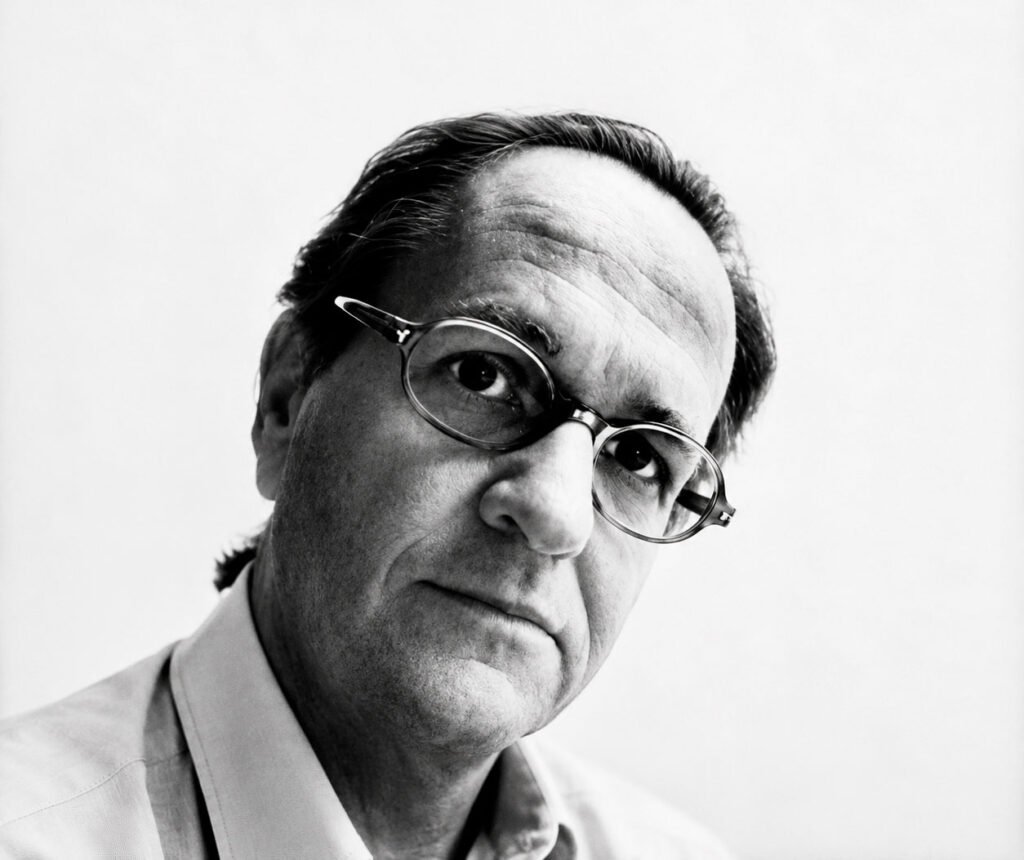
PressInfo #205 - From patriarchal use of power to human security and democracy

Prior to the 2003 International Day for the Elimination of Violence Against Women, UN Secretary-General Kofi Annan stated that “Gender-based violence is perhaps the most shameful human rights violation. As long as it continues, we cannot claim to be making real progress towards equality, development and peace.”

In this article we seek to relate the gender-based violence to the issue of human security and ideas about a new type of defence policy. (When this was written in Swedish at the time of the debate about the future of Sweden’s official defence policy, it was refused by a series of leading newspapers, right, middle and left).

The Swedish edition of this article here

From patriarchal exertion of power toward human security and democracy

We know of no one, neither men nor women, who want war and death. 99 per cent of people on earth do not want violence in their lives or in politics. They want non-violence. They want peace. They want a safe future for their children and a dignified life for their parents. They value a life free from the fear that violence breeds.

The assumption that men are supposed to protect (and “liberate”) women and children with military means, seems to be basic to the traditional, mainstream paradigm of defence and security. In every society and at every social level, there are (power) structures that accept and legitimate violence. From the bedrooms and kitchens – the traditional spheres of gender-based violence of which 80 per cent takes place in the homes – to the brutality of the world’s battle fields, violence acquires its strength and is nurtured by the global patriarchal order of power.

Women’s bodies have become the new battle fields, as stated in the UN Report “Women, War and Peace” coordinated by Elisabeth Rehn and Ellen Johnson Sirleaf.

“Women’s bodies have become a battleground over which opposing forces struggle,” the Experts write. “Women are raped as a way to humiliate male relatives, who are often forced to watch the assault. In societies where ethnicity is inherited through the male line, ‘enemy’ women are raped and forced to bear children. Women who are already pregnant are forced to miscarry through violent attacks. Women are kidnapped and used as sexual slaves to service troops, as well as to cook for them and carry their loads from camp to camp. They are purposefully infected with HIV/AIDS, a slow, painful murder.”

In the national, male-dominated, military defence system, the State serves as a father figure. The country – such as Mother Russia or Mother Svea in Sweden – is a woman. The civil population, women and children, is the imagined social body that must be protected. “The family” is the chosen institution serving to protect the child-bearing and -rearing mothers. But the sad truth is that this very same “family” has become the main stage on which a violent drama is acted out that few want or dare to talk about.

To put it in perspective, the violence of men against women victimises many times more women worldwide than do all acts of terror against men and women and children together.

At least in the Western world, whatever has to do with gender and sex no longer belongs to the private sphere. The exploitation of women’s bodies and the sexualisation of the public space – and the proliferation of pornography in it – has increased dramatically. It’s a commercialised activity that is quite often marketed as a “message of freedom” and “liberation” and, unfortunately, it makes it possible for male politicians to opportunistically argue that they are “liberating” the women of, say, Afghanistan and Iraq. But their notion of freedom and liberalism happens to be quite different and incompatible with external enforcement.

Power is very plain in its gender identity. Gender is an integral part of the powers that be – or of the feeling of powerlessness. Women and children are the first victims of the patriarchal wars and militarism, of the macho and disciplining of soldiers to act cruelly. (Which does not mean that we ignore that young boys may also be exploited and suffer from the consequences of obeying orders in the killing fields). Generally, women now participate more frequently in the spheres of conflict, security, and defence and simultaneously women now also appear as killers, suicide bombers and torturers.

Wrong question: Should women join the Army?

Presumably in the name of equality, women join professional armies and get engaged in interventions and occupations. War fighting has become a paid profession, no longer a duty or a call to heroism, patriotism or higher values. We have seen it recently in Iraq, in the ugly torture chambers of the Abu Ghraib prison. Women choose to become suicide bombers and guerrilla fighters and they fall – as we have witnessed in the tragic case of Margaret Hassan – victim to the satanic violence of terror.

Many women asked themselves whether, in the name of gender equality, they ought to join the military and step into the traditionally male-dominated world of mainstream military security affairs – some, of course, with the motive that they want to try to change it from the inside. This could be seen as an increasingly meaningful choice given that the military in numerous countries is being marketed as ever more civil, as helpers in humanitarian catastrophes and as actors for “humanitarian” interventions. But is it?

We believe that the question is not whether to join and compete inside the patriarchal order or stay outside it. In spite of all nice words, the military is – at the end of the day – an organisation that prepares and trains people to kill, if… We would rather raise the question this way: In which new ways could we imagine that conflicts should be handled in the future world that would seem morally acceptable and meaningful to women and men alike to participate in? Remember, there is nothing wrong in wanting to defend what one loves, including one’s family, town, country and the values we have agreed are important to us. Likewise, there is nothing bad about wanting to help others, to try to save lives and help people not feeling threatened as do peacekeepers. The question for all of us alike is: how do we do it in less gender-biased and less violent ways in the future?

Human security – a concept that must challenge the existing security thinking

The answer to the above question could well be: human security. In the report to the UN by the Human Security Commission headed by Madam Sadako Ogata and Nobel laureate in economics, Amatya Sen, that was published last year there is much deliberation about how to protect people in war, helping people fleeing, empowering the victims after hurt and harm and rebuilding communities after war. There is much talk about knowledge, education and training, about the role of media and about fair trade and the possibility of a market economy that will benefit the weakest, the disadvantaged – and there is a lot about diversity and freedom.

What is being said is both right and beautiful. But – unfortunately – it is presumably without the slightest effect on day-to-day decision-making. There is no reason to believe that the administrations of, say, George W. Bush or Tony Blair even think about these concepts when they decide their strategies for Iraq. The Ogata/Sen Report is rather useful as a platform for discussion in academic and NGO circles; but it also serves as a reservoir of formulations that cynical politicians may safely integrate in their speeches at ceremonious occasions without any commitment to implementation.

Ogata and Sen evidently chose not to challenge the existing order, neither the level of security (the nation-state) nor the monopolising means of the traditional paradigm (the weapons and the so-called balance of power that is always very subjective). They did not challenge the patriarchal order and the violence that underpins it. Their report could well end up serving as a beautifying face-lift or make-up for the ugliness of war, any war. If in wars we also think of and care about human beings, those wars become more acceptable and the masters of war appear more legitimate than they otherwise would.

It’s now about more than 25 years ago peace researcher and TFF Associate Johan Galtung together with young researchers – among them one of the authors of this article – coined the term and developed the theory of human security. See for example Jan Oberg, “The New International Military Order. The Real Threat to Human Security” (The Chair of Conflict and Peace Research, Oslo University, Papers No. 65, 98 pages, 1978). As far as we know, this was the first time ever the idea of human security was developed with any coherency. So, it took about 30 years for it to travel from academia to politics.

The point of departure of this project was that human beings have basic needs and that there were basically four categories of them: survival/security, welfare, identity and freedom. Closely related was the idea that peace could be secured by peaceful means, a means-goal logics that was borrowed from the UN Charter and, thus, went counter to the traditional security policy paradigm that advocates si vis pacem para pacem – if you wasn’t peace, prepare for war. Security policies, thus, were taken out of the national framework and from the monopoly of the state on the means, i.e. the weapons. Why? For the pretty simple reason that the doctrine of national security – in contrast to human and global security – has resulted in an arms race dynamics and resource waste that defy human imagination as well as control; because the world desperately needs resources to satisfy the other human needs, because wars have not been prevented by the balance of power and because this security paradigm has led to the loss of around 30 million human beings, predominantly women and children, in more than 100 wars since 1945.

The present situation in Iraq summarizes well the two malaises of the modern high-tech civilisation: militarism and imperialism. This is not the disease of communism; that is dead. No, it is the intrinsic disease of capitalism, of liberal society – at least when it considers itself superior and co-exists with no competitors. Militarism as well as imperialism and cultural contempt are macro – if not meta – expressions of the patriarchal power and world (dis)order.

New visions and ways of thinking are possible. All it takes is an open debate about state versus the individual (micro) on the one hand and the common security and survival of the globe as a whole (macro); all it takes is that we dare challenge those who lead in the perverse prioritising of weapons and violence; all it takes is that we give priority, instead, to intelligent, violence-prevention and genuine conflict management. In addition, four more years with George W. Bush makes it imperative that we develop and discuss alternative security, defence and foreign policies – in Sweden, in the EU and worldwide.

Much more debate and a new type of people’s movement for human security is needed now

We need new angles and ideas in the debate. It’s not enough to say “no to war” and argue for “disarmament and arms control.” For the sake of security, we need a new debate – because in this field nothing has worked since the so-called end of the cold war. There is nothing one can seriously call peace in, say, Bosnia, Macedonia, Kosovo/Serbia, Somalia, Afghanistan or Iraq. In the best of these cases, there is just no open violence.

Thus, we are not advocating the narrow-minded and empirically wrong hypothesis that men = war and women = peace. It’s not predominantly a matter of gender; the issue is power!

We strongly feel that the world situation is such that the women’s movement, the peace movement and the democracy movements must now come together and join force. To realise the dream of global democracy, inter-cultural trust and conviviality worldwide, we need more non-violence, not more violence. We need to prepare peace to achieve peace – rather than prepare the war, fall into its trap and then repair the damage by peacekeeping, reconstruction and the implanting of one-recipe market economy, etc.

Human security is about putting human beings first in every equation, it’s means war-prevention and conflict-resolution in the first place – it does not mean that we continue to give the outdated national, militarist security concept priority and use human security to clean up the mess afterwards.

If we liberate ourselves from the patriarchal power structures, we shall have taken a huge step in the much-needed direction of human security and overall, worldwide violence-reduction.

© TFF and the author 2004
Share

Leave a Reply

Your email address will not be published. Required fields are marked *

Related Posts

“En dag som berättigar till fest”, utropade den London-baserade al-Quds al-Arabi efter FN:s eldupphörresolution, “eftersom detta är första gången som Israel accepterar ett FN-beslut från en position som besegrad och inte som segrare”. Att ett arabisk-israeliskt krig för en gångs skull slutat med arabisk seger, är en helt dominerade åsikt i arabiska medier. Al-Quds al-Arabi tillåter sig att drömma om att det israeliska nederlaget skall leda till massflykt från Israel. Men i nästa andetag påminner tidningen om att Israel aldrig brukar genomföra sina internationella åtaganden och varnar för att förlorarna, liksom tidigare, kan hämnas genom att provocera fram inbördeskrig i Libanon. Med tanke på de otaliga massmediala vittnesmålen om det libanesiska folkets eniga motståndskraft förefaller risken för inre stridigheter i det sargade landet just nu liten. Men visst kan man urskilja nyansskillnader i libanesiska tidningar. Vänsterorganet al-Safir uppfattar FN-resolutionen som en komplott i syfte att rädda Israel från ännu större...
A friendly quarrel while we agree that the US sanctions are a weapon of mass destruction and kill more people than wars do. And that we must talk much more about sanctions than we have so far. Jan Oberg, TFF director March 16, 2026 John Mearsheimer recently stated that U.S. sanctions murdered around 38 million people between 1971 and 2021 – see the video below. It is a dramatic figure, and it has spread quickly because it captures, in one sentence, the enormous human cost of modern sanctions. I share his concern about the destructive effects of economic coercion. But the specific number he cites — and the way he attributes it — deserves a friendly academic clarification. The figure comes from a 2023 Lancet Global Health article estimating the mortality effects of unilateral U.S. and EU sanctions over the past half‑century. This is the first point where Mearsheimer’s shorthand diverges from the text: the study...
Jan Oberg May 15, 2026 Go to this Fox News page and scroll the whole way down: President Donald Trump tells the world that his meeting with President Xi Jinping yielded a lot of very concrete political and economic results – of course, only where the Chinese side, according to him, agreed with him. He does not mention the Taiwan issue, but Secretary of State, Marco Rubio, says that it did not feature prominently in their talks and that the US policy on Taiwan has not changed. Then go to China Daily – or Global Times – and you will see that for the Chinese it is framework, principles, structure of cooperation etc. that matters – all embedded in the overall idea of “constructive bilateral relationship of strategic stability.” Nowhere is any concrete agreement or deal – all that Trump refers to – mentioned. At the general level, this gives you insights into the very different social...

Recent Articles

“En dag som berättigar till fest”, utropade den London-baserade al-Quds al-Arabi efter FN:s eldupphörresolution, “eftersom detta är första gången som Israel accepterar ett FN-beslut från en position som besegrad och inte som segrare”. Att ett arabisk-israeliskt krig för en gångs skull slutat med arabisk seger, är en helt dominerade åsikt i arabiska medier. Al-Quds al-Arabi tillåter sig att drömma om att det israeliska nederlaget skall leda till massflykt från Israel. Men i nästa andetag påminner tidningen om att Israel aldrig brukar genomföra sina internationella åtaganden och varnar för att förlorarna, liksom tidigare, kan hämnas genom att provocera fram inbördeskrig i Libanon. Med tanke på de otaliga massmediala vittnesmålen om det libanesiska folkets eniga motståndskraft förefaller risken för inre stridigheter i det sargade landet just nu liten. Men visst kan man urskilja nyansskillnader i libanesiska tidningar. Vänsterorganet al-Safir uppfattar FN-resolutionen som en komplott i syfte att rädda Israel från ännu större...
Greenland – the world’s largest island, a continent of its own with only 57.000 inhabitants. I visited it for the first time in May 2005. I flew across the inland ice to Nuuk, the tiny capital with some 14.000 inhabitants. I was overwhelmed by the pride and kindness of everyone I met as well as by the unique natural beauty. Unfortunately, due to weather conditions during my ten-day stay I could get nowhere else but Nuuk. Fortunately, however, among those I met was Gitte Arvegaard, a Danish lawyer and negotiator employed by the local government, Greenland Home Rule. She turned out to be an enthusiastic photographer with a lot of pictures taken during various trips around Greenland. So this Greeland series is the result of our cooperative effort. We both hope you enjoy it and are stimulated to visit Greenland – about which you may read more here. Finally, if you want to...
 Jan Oberg’s storyof how he met Sir Paul Liverpool – where else to meet Paul McCartney? Paul’s old class mate and TFF Associate, Jonathan Power introduced me to Paul McCartney in Liverpool at an informal reception. It was held at what used to be their school, now the Liverpool Institute for Performing Arts and we were there to celebrate that Jonathan had written Amnesty International’s 40th Anniversary book. This happy event for “righting wrongs and writing songs” gave me an opportunity to meet Paul and tell him about TFF and get straight to the matter: would he consider making a donation in support of our work for peace? While I was probably the only one with such a wish that day, I was certainly not the only one who wanted to shake hands and talk with him. In the last minutes before Paul was to leave, Jonathan brought us together and we got about three...

TFF on Substack

Discover more from TFF Transnational Foundation & Jan Oberg.

Most Popular

“En dag som berättigar till fest”, utropade den London-baserade al-Quds al-Arabi efter FN:s eldupphörresolution, “eftersom detta är första gången som Israel accepterar ett FN-beslut från en position som besegrad och inte som segrare”. Att ett arabisk-israeliskt krig för en gångs skull slutat med arabisk seger, är en helt dominerade åsikt i arabiska medier. Al-Quds al-Arabi tillåter sig att drömma om att det israeliska nederlaget skall leda till massflykt från Israel. Men i nästa andetag påminner tidningen om att Israel aldrig brukar genomföra sina internationella åtaganden och varnar för att förlorarna, liksom tidigare, kan hämnas genom att provocera fram inbördeskrig i Libanon. Med tanke på de otaliga massmediala vittnesmålen om det libanesiska folkets eniga motståndskraft förefaller risken för inre stridigheter i det sargade landet just nu liten. Men visst kan man urskilja nyansskillnader i libanesiska tidningar. Vänsterorganet al-Safir uppfattar FN-resolutionen som en komplott i syfte att rädda Israel från ännu större...
Greenland – the world’s largest island, a continent of its own with only 57.000 inhabitants. I visited it for the first time in May 2005. I flew across the inland ice to Nuuk, the tiny capital with some 14.000 inhabitants. I was overwhelmed by the pride and kindness of everyone I met as well as by the unique natural beauty. Unfortunately, due to weather conditions during my ten-day stay I could get nowhere else but Nuuk. Fortunately, however, among those I met was Gitte Arvegaard, a Danish lawyer and negotiator employed by the local government, Greenland Home Rule. She turned out to be an enthusiastic photographer with a lot of pictures taken during various trips around Greenland. So this Greeland series is the result of our cooperative effort. We both hope you enjoy it and are stimulated to visit Greenland – about which you may read more here. Finally, if you want to...
 Jan Oberg’s storyof how he met Sir Paul Liverpool – where else to meet Paul McCartney? Paul’s old class mate and TFF Associate, Jonathan Power introduced me to Paul McCartney in Liverpool at an informal reception. It was held at what used to be their school, now the Liverpool Institute for Performing Arts and we were there to celebrate that Jonathan had written Amnesty International’s 40th Anniversary book. This happy event for “righting wrongs and writing songs” gave me an opportunity to meet Paul and tell him about TFF and get straight to the matter: would he consider making a donation in support of our work for peace? While I was probably the only one with such a wish that day, I was certainly not the only one who wanted to shake hands and talk with him. In the last minutes before Paul was to leave, Jonathan brought us together and we got about three...
Read More
Imagen-thumbnail-The-Transnational-1
“En dag som berättigar till fest”, utropade den London-baserade al-Quds al-Arabi efter FN:s eldupphörresolution, “eftersom detta är första gången som Israel accepterar ett FN-beslut från en position som besegrad och inte som segrare”. Att ett arabisk-israeliskt krig för en gångs skull slutat med arabisk seger, är en helt dominerade åsikt i arabiska medier. Al-Quds al-Arabi tillåter sig att drömma om att det israeliska nederlaget skall leda till massflykt från Israel. Men i nästa andetag påminner tidningen om att Israel aldrig brukar genomföra sina internationella åtaganden och varnar för att förlorarna, liksom tidigare, kan hämnas genom att provocera fram inbördeskrig i Libanon. Med tanke på de otaliga massmediala vittnesmålen om det libanesiska folkets eniga motståndskraft förefaller risken för inre stridigheter i det sargade landet just nu liten. Men visst kan man urskilja nyansskillnader i libanesiska tidningar. Vänsterorganet al-Safir uppfattar FN-resolutionen som en komplott i syfte att rädda Israel från ännu större...
Greenland – the world’s largest island, a continent of its own with only 57.000 inhabitants. I visited it for the first time in May 2005. I flew across the inland ice to Nuuk, the tiny capital with some 14.000 inhabitants. I was overwhelmed by the pride and kindness of everyone I met as well as by the unique natural beauty. Unfortunately, due to weather conditions during my ten-day stay I could get nowhere else but Nuuk. Fortunately, however, among those I met was Gitte Arvegaard, a Danish lawyer and negotiator employed by the local government, Greenland Home Rule. She turned out to be an enthusiastic photographer with a lot of pictures taken during various trips around Greenland. So this Greeland series is the result of our cooperative effort. We both hope you enjoy it and are stimulated to visit Greenland – about which you may read more here. Finally, if you want to...
p_mccartney_poem
 Jan Oberg’s storyof how he met Sir Paul Liverpool – where else to meet Paul McCartney? Paul’s old class mate and TFF Associate, Jonathan Power introduced me to Paul McCartney in Liverpool at an informal reception. It was held at what used to be their school, now the Liverpool Institute for Performing Arts and we were there to celebrate that Jonathan had written Amnesty International’s 40th Anniversary book. This happy event for “righting wrongs and writing songs” gave me an opportunity to meet Paul and tell him about TFF and get straight to the matter: would he consider making a donation in support of our work for peace? While I was probably the only one with such a wish that day, I was certainly not the only one who wanted to shake hands and talk with him. In the last minutes before Paul was to leave, Jonathan brought us together and we got about three...
Logo-Transnational
1942James Paul McCartney is born in Liverpool on June 18th. 1956Paul writes his first song, I Lost My Little Girl. 1957Paul meets John Lennon at St. Peter’s Church Fete, Woolton, Liverpool. He joins his first group, The Quarrymen and performs in his first gig at The New Clubmoor Hall, Liverpool, on October 18th. 1960Formation of The Beatles, who play residencies in Hamburg and at The Cavern in Liverpool. 1961First Beatles recordings issued in Germany, as the backing group for Tony Sheridan. 1962The first Beatles Parlophone recording, Love Me Do, reaches number 17 in the British charts. 1963The birth of Beatlemania. Please Please Me gives the group their first British Number 1. She Loves You cements their success. Please Please Me and With The Beatles albums released. 1964First triumphant American tour. The Beatles perform at the Royal Command Performance and release their first film, A Hard Day’s Night. Their single I...
Logo-Transnational
  Back to the series “Bujumbura, Burundi”
By JONATHAN POWER August 16, 2000 LONDON – Remember the summer of ’98? In the sweltering, torpid heat of a Roman august, charged with exhaust fumes, the international community gave its overwhelming approval to the establishment of an International Criminal Court that will enable those accused of “crimes against humanity” to be tried and, if convicted, sentenced. Only seven nations opposed or abstained from the motion, including Israel, China, India and the U.S.A. where the Pentagon had successfully waged bureaucratic guerrilla war to undermine the initially sympathetic stance of President Bill Clinton. Two years on we can now see what an epochal event that was. In a the stroke of 120 pens it changed the climate on political thuggery. After numerous half-starts and false starts ever since the Nuremberg and Tokyo trials that convicted the war criminals of the Second World War, the world at last had agreed en masse a common...


