On 8th May the Iranian government’s spokesman revealed that the Iranian president had sent a letter [translation here] to President George Bush suggesting new ways of resolving the differences between the two countries. The 18-page long letter does not contain any new suggestions on Iran’s nuclear file, but has criticised some of the United States recent policies in the Middle East. US officials have summarily dismissed it as ‘rambling’ and not addressing the nuclear standoff. They have also indicated that they do not intend to respond to the letter.
Ahmadinezhad’s letter is most significant
However, the very fact that the hard-line Iranian president who had declared only a short time ago that there was no need to talk to the United States has decided to take this unusual step is of enormous significance, at least as a reflection of Iran’s internal politics. This is the first time in more than a quarter century since the Islamic revolution that the Iranians have broken the taboo of directly communicating to US officials. If the wiser heads in Washington decide to take the letter more seriously and use it as an opening shot in more detailed and substantial communications between the two countries, it could usher in a new era in Iran-US relations.
Prior to this communication, the relationship between the United States and Iran had hit a new low. Both President George Bush and Secretary of State Condoleezza Rice have indicated that ‘all options’ are on the table in order to prevent Iran’s alleged nuclear weapons program. There have been many authoritative reports that some hawkish members of the US Administration are even contemplating the use of tactical nuclear weapons to destroy Iran’s underground nuclear facilities.
For its part, Iran has denied that it has a weapons program and has also intensified its rhetoric, vowing that any attack on her nuclear sites would receive a firm response. Iran’s envoy at the United Nations Mohammad Javad Zarif in a letter to the UN Secretary General Kofi Annan has condemned American officials “for their illegitimate and open threats to use force against the Islamic republic of Iran”.
After many years of efforts by the United States and Israel to refer Iran’s nuclear file to the Security Council, and two and a half years of efforts by the EU-3 (Britain, France and Germany) to find a diplomatic solution to the problem through negotiations, the board of governors of the International Atomic Energy Agency reported Iran’s file to the Security Council on 8th March 2006. However, that was the easy part.
The real difficulty is to decide what to do now that the Security Council is in charge of Iran’s file. Iran was given a further one month to put an end to her uranium enrichment, but Iran intensified her efforts and enriched uranium to 3.6 percent, sufficient for fuel to produce energy. In its latest report, the Managing Director of the IAEA Muhammad ElBradei has confirmed that Iran’s claim to have enriched uranium was not an empty boast. Meanwhile, the representatives of the five permanent members of the Security Council plus Germany meeting in Paris on 1st May failed to reach agreement, and the draft resolution tabled by the United States, Britain and France has been rejected by Russia and China. The talks on 6th May on a draft resolution under Chapter VII of the UN Charter also ended without agreement, as did the meeting of the foreign ministers of the five permanent members of the Security Council in New York on 8th May.
While the United States, Britain, France and Germany are calling for sanctions to be imposed on Iran, Russia and China have argued that there is no sign that Iran is pursuing a nuclear weapons program and, therefore, sanctions would be inappropriate. They have advocated returning Iran’s file to the IAEA to ensure that inspections continue and that there will be no diversion from a peaceful program. The US envoy at the United Nations has pointed out that if the Security Council cannot reach agreement about imposing sanctions on Iran America and her allies would act outside the United Nations framework. Even the vague possibility of such measures has already sent the oil price to above $74.00 a barrel and it would definitely go through the roof if any sanctions or an attack on Iran materialised.
War must be avoided
Before jumping to yet another disastrous war in the volatile Persian Gulf region, it is necessary to weigh all the options and to see if there is a more realistic way of resolving the dispute. Given the American preoccupation in Iraq and Afghanistan a full-scale invasion of Iran, which would require hundreds of thousands of troops and hundreds of billions of dollars of expenditure, is beyond the realm of possibility. However, it is argued that the US could launch an aerial and naval attack on Iran’s suspected nuclear sites and delay Iran’s program by a number of years. The best case scenario for such an attack would be that thousands – most probably tens of thousands – of Iranians would be killed, US’s image in the Islamic world and beyond would be further damaged and the outcome of the raid would be uncertain.
The worst case scenario is too horrible to contemplate. It is absolutely certain that the Iranians – even the opponents of the present regime who could be counted on as the West’s best friends – would fall behind the regime and any prospect of democratic reform in Iran would be put back by many years. Worse still, the Iranian regime is bound to retaliate not only in Iraq and Afghanistan but also against Israel and against American interests in the Persian Gulf. More than three years after the invasion of Iraq when it was alleged that Iraq’s abundant oil would pay for her reconstruction and the price of oil would plummet, Iraq’s oil output is still less than the pre-invasion level and oil price has not gone below $60.00 a barrel. It is difficult to remember that only a few years ago the price of oil was a quarter of what it is now.
Oil installations are very easy to sabotage and massive installations on the southern shores of the Persian Gulf provide very rich pickings. Nearly two-fifths of the world’s oil exports pass through the narrow Strait of Hormuz, which is dominated by Iran. It does not require powerful missiles or sophisticated means to make shipping through that narrow Strait very risky indeed. Saddam Hussein ruled by brute force and did not enjoy any deep support among the Iraqis. Nevertheless, three years after the war, the insurgency shows no sign of abating.
Whether we like it or not, at least 10-20 percent of Iran’s 70 million population fanatically supports the regime of the mullahs. In case of an attack they will wreak such havoc in the Persian Gulf and beyond that would make the Iraqi insurgency look like child’s play. This is even if an attack on Iran would not drag in other powers and would not spread to the rest of the Middle East. The chaos that would ensue as the result of such an eventuality would be unimaginable. It could prove the last straw that would break the camel’s back and would force the United States permanently out of the Middle East.
Given these horrendous alternatives, it is essential to look for more peaceful ways of resolving the dispute.
The history of mutual feelings of hostility
The mutual feeling of hostility between the United States and Iran runs deep, but is not something that could not be overcome with some farsighted diplomacy. After all, Iran was America’s chief ally in the Middle East under the shah. With American assistance Iran had become the gendarme of the Persian Gulf and the Indian Ocean and the shah’s arsenals were brimming with the most advanced American weapons.
It is often forgotten that the American Administration was helping and indeed encouraging the shah’s regime to build more than 20 nuclear reactors. The Bushehr reactor, which is at the centre of dispute, was nearly completed by 1978. Iranian students constituted the largest number of foreign students in American universities for many years and there were more than 100,000 US military advisors and civilian contractors working in Iran.
The Islamic revolution put an end to all that and replaced the strongest pro-American regime in the Middle East with an intensely anti-American theocracy. The images of US diplomats taken hostage by militant Iranian students have been etched on American memory and are difficult to erase. Yet it is often forgotten that the hostage crisis did not come out of the blue. The Iranians who had the memory of US backing for the CIA-led coup that toppled Dr Mohammad Mosaddeq’s nationalist government in 1953 were suspicious of the repetition of the same scenario when the shah was admitted to the United States for medical treatment. It should also be remembered that during the first year of the Islamic regime there were three unsuccessful military coups against the regime organised by the shah’s former generals and his last prime minister Dr Shapur Bakhtiar, and the mullahs suspected US backing or acquiescence for those attempted coups.
While the Americans were rightly outraged by the hostage-taking episode, Iran lost a great deal as the result of that foolish act. There is some evidence that some in the United States encouraged Saddam Hussein to attack Iran to weaken the regime of the mullahs. However, even without that encouragement, in the course of the eight-year war that killed and wounded nearly a million Iranians and inflicted hundreds of billions of dollars in material loss on Iran, the United States provided a great deal of military, intelligence and financial support to the Iraqi regime. Later on, as the result of attacks on shipping in the Persian Gulf (mainly by Iraq) the United States got involved in the hostilities, which resulted in the destruction of a good part of the Iranian navy and offshore oil facilities. The United States has imposed sanctions on Iran and has studiously prevented the transfer of oil and gas resources from Central Asia and the Caucasus through Iran.
Iran’s friendly gestures ignored
Nevertheless, there were short periods of co-operation between the United States and Iran. Shortly after Ayatollah Ruhollah Khomeini’s death in 1989 and Saddam Hussein’s invasion of Kuwait, not only Iran remained neutral in that conflict, but quietly provided a great deal of the assistance to the US-led Coalition forces, for which Iran was publicly thanked by President Bush senior. Later on, Iran sent many signals that she was ready to talk to the United States to patch up their differences. President Hashemi-Rafsanjani offered a one billion-dollar contract to an American Oil Company for oil exploration in Iran, as a friendly gesture.
However, while all other countries that provided assistance to the anti-Saddam coalition were rewarded, the US response to Iran’s friendly overtures was the ‘dual containment policy’, followed by Iran-Libya Sanctions Act which is still in force. Under President Mohammad Khatami’s reformist government, Iran continued its friendly signals to remove ‘the wall of mistrust’ that had been created between the two countries.
With his proposal of ‘dialogue of civilisations’ and ‘détente’ in relations with the West he tried very hard to initiate a new chapter of relationship with the United States. After the 9/11 terrorist acts there were spontaneous candlelight vigils by thousands of Iranians, and President Khatami expressed his condolences to the “great American nation.”
Once again, these initiatives were responded to with the ‘Axis of Evil’ speech, designating Iran as a member of the improbable axis with her long-time enemy Iraq and North Korea with which she had very little contact.
U.S. concerns – and new demands
For her part, the United States has a number of major concerns regarding Iran. She accuses Iran of terrorism, due to Iran’s support for militant Lebanese and Palestinian groups that are hostile to Israel. She rightly criticises the human rights record of the Iranian regime, and she is also opposed to Iran’s nuclear program that she suspects is aimed at acquiring nuclear weapons. The United States also has some concern with Iran’s role in Iraq.
On the one hand, she criticises Iran for having undue influence in the Iraqi government. On the other hand, she accuses Iran of assisting the insurgents. The two assertions are contradictory. The truth is that both Iran and the United States have common interests in Iraq and Afghanistan. Both of them know that stability in those countries would serve their long-term interests.
At the time when the United States was supporting the Taliban through Pakistan, Iran was supporting the Northern Alliance, many of whose leaders had to take refuge in Iran. Yet after the terrorist attacks on 9/11 the United States had to rely on the help of the same Northern Alliance fighters to topple the Taliban. Yet no sooner had America established her position in Afghanistan that she demanded that Iran should cut off all relations with her former allies who were now members of the new US-installed government.
When the United States was supporting Saddam Hussein during his long war with Iran, Iran had given refuge to the Iraqi opposition figures in the Supreme Council for the Islamic Revolution in Iraq [SCIRI] and Badr Brigade; the same forces that the United States used to topple Saddam Hussein. However, now she is calling on the same leaders to cut off their links with Iran and is accusing Iran of meddling in Iraqi affairs. For a number of years Iran has been supporting the Hizbullah in Lebanon that has now become a part of the political structure in that country, and HAMAS that has formed the new government in Palestine.
No doubt when America finds it convenient to establish links with those two groups to bring them into the political process, she will call on Iran to cut off her links with them.
Why dialog and negotiations must be stepped up and broadened
Although it is easy to engage in mutual demonisation, the issues involved in Iran-US relations are far too complex to be easily dismissed. The only way to resolve those differences is through meaningful dialog and negotiation. For two years the United States relied on the EU-3 to act as a proxy to continue negotiations with Iran. In her talks with the EU3 Iran agreed voluntarily to suspend uranium enrichment in return for meaningful concessions from the West. The three European countries made a number of minor concessions, including the sale of aircraft spare parts and facilitating Iran’s membership in the World Trade Organisation that had been regularly vetoed by the United States.
But throughout those talks the absent United States was the proverbial elephant in the room. The EU3 had the desire but lacked the means of providing substantial concessions that Iran demanded, while the United States that possessed the means lacked the desire to do so.
Iran was hoping to get the sanctions imposed by the United States over the past quarter century lifted, having her frozen assets released and above all receive security guarantees. The EU3 could not provide any of the above, while the US Administration and Congress continued with threats of regime change and invasion.
| Would you be reading this now if it were not useful to you? Get more quality articles in the future |
After over two years of stalemate in the talks, Iran decided to resume limited enrichment activities that she had voluntarily suspended, after informing the IAEA. This provided the United States with the excuse to push for the referral of Iran to the Security Council. In his report to the IAEA in March 2006, ElBaradei stated:
“As our report earlier this month made clear, Iran continues to fulfil its obligations under the Safeguards Agreement and Additional Protocol by providing timely access to nuclear material, facilities and other locations.”
After Iran’s file was referred to the Security Council, ElBaradei urged caution and a return to negotiations. “Everybody is looking forward to a political settlement,” Mohamed ElBaradei, the agency’s director general and the most recent recipient of the Nobel Peace Prize, told reporters in Vienna at the end of the meeting on Iran. He added: “What we need at this stage is cool-headed approaches. We need for people to lower the rhetoric.” He also urged that once security issues began to be discussed with Iran, “the U.S. should be engaged into a dialogue.”
What ElBaradei said makes eminent sense. Given the alternatives to talks, the only sane solution to the dispute is for Iran and the United States to leave the past behind and to get engaged in substantive talks about a whole host of issues. The United States should expand the scope of the proposed talks on Iraq and should discuss the Arab-Israeli conflict, Iran’s support for Hizbullah and HAMAS, the situation in Iraq and Afghanistan, the security in the Persian Gulf, the issue of sanctions and Iran’s frozen assets. It is only as a part of these comprehensive talks that both sides would be willing to make substantial concessions in return for receiving meaningful compromises.
America is going to remain in the Persian Gulf for the foreseeable future. Iran understands that reality. At the same time, Iran is the largest and the most influential country in the region. This is a fact that the United States should also understand and acknowledge. It is ironic that despite the hostile rhetoric of Iranian leaders, the Iranian people are overwhelmingly pro-American, while in most other Middle Eastern countries with pro-American leaders the majority of the population is hostile to America.
The present Iranian regime is deeply unpopular with a large majority of educated and young Iranians who constitute 70 percent of the population. A military attack on Iran is the surest way to unite all the Iranians behind the regime.
Israel’s security, meanwhile, would best be served by an Iranian government that is more engaged with the West than one that is isolated, or by inflicting yet one more disastrous conflict on the region.
The policy of sanctions, followed by military action and regime change has failed and is bound to fail again. The time has come for a bold initiative that would stabilise the region and would also help Iran towards greater democracy.
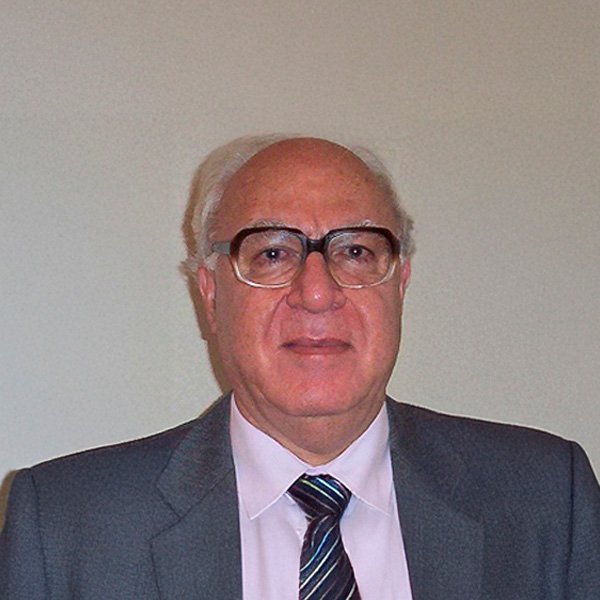
* Farhang Jahanpour is a British national of Iranian origins. He is a former professor and dean of the Faculty of Languages at the University of Isfahan, a former Senior Fulbright Research Scholar at Harvard, and a part-time tutor on Middle Eastern Studies at the Department of Continuing Education at the University of Oxford.