
PressInfo #236 - Iran, International Lawand Nuclear Disarmament

See also Associate Richard Falk’s TFF PressInfo 237 – a different angle on the same issues.

Iran has been accused of secretly pursuing a nuclear weapons program. Although Iranian leaders claim to be enriching uranium only for peaceful nuclear energy purposes, these claims have been treated with derision by the West. Despite the fact that most experts believe that Iran is still years away from developing a nuclear weapon, there are media reports suggesting that Israel and the US are making plans to attack Iran’s nuclear facilities, should Iran not give up its uranium enrichment program.  Given this possible military scenario, and the recent vote by the Board of the International Atomic Energy Agency to report Iran to the United Nations Security Council, what is Iran likely to do?  

First, Iran will continue to assert its right under Article IV the Non-Proliferation Treaty (NPT) to pursue a peaceful nuclear energy program. Article IV refers to the “inalienable right” of states to nuclear energy. The parties to the treaty are promised assistance from more technologically advanced countries in pursuing this right. While this may be considered an untenable stipulation in the treaty, it is, nonetheless, the way the law stands. In accord with the treaty, in exchange for pursuing this right, Iran must agree to inspections of its nuclear facilities to assure that there has been no diversion of nuclear materials for making weapons. In fairness, if this aspect of the Non-Proliferation Treaty is to be altered, it must be done for all states, not singling out Iran for special punitive treatment.

Currently, uranium enrichment plants are operating in China, France, Germany, India, Japan, Netherlands, Pakistan, Russia, United Kingdom and United States. Of these, Germany and Japan are non-nuclear weapons states that are parties to the Non-Proliferation Treaty, and thus have a similar relationship to the treaty as does Iran. Brazil, another party to the NPT, is reported to be close to starting up a uranium enrichment plant.

Second, Iran will assert that under Article VI of the Non-Proliferation Treaty, the United States and the other nuclear weapons states have not fulfilled their obligations for “good faith” negotiations for nuclear disarmament. It will point to the 1996 International Court of Justice advisory opinion that states: “There exists an obligation to pursue in good faith and bring to a conclusion negotiations leading to nuclear disarmament in all its aspects under strict and effective international control.” And it will point out the blatant refusal by the nuclear weapons states to carry out their Article VI commitments, including the plans by the United States to develop the Reliable Replacement Warhead, a new type of nuclear warhead to extend the viability of the US nuclear arsenal.

Third, Iran will question the unequal treatment that it is receiving as compared to another Middle Eastern country, Israel, which is thought to possess some 200 nuclear weapons. Iran will note that there is not only a double standard between nuclear “haves” and “have-nots,” but also a double standard between Israel and other countries in the Middle East. It will rightly point out that there have long been calls for a Middle East Nuclear Weapons-Free Zone, including at the 1995 Non-Proliferation Treaty Review and Extension Conference, which have been largely ignored by Israel and the Western countries.

Article X of the Non-Proliferation Treaty allows for a party to withdraw after giving three months notice if it decides that “the supreme interests of its country” are being jeopardized by the treaty. With threats of an attack against Iran if it does not cease its uranium enrichment, and the example of Israel developing a nuclear arsenal outside the NPT, it would not be unreasonable for Iran’s leaders to conclude that Iranian interests were better served by withdrawing from the treaty. Should they reach this conclusion, they may also point to the precedent of the Bush administration’s withdrawal from the Anti-Ballistic Missile (ABM) Treaty in 2002 on grounds that US national interests were being jeopardized by that treaty. 

The Non-Proliferation Treaty is the most widely adhered to treaty in the area of arms control and disarmament. Only four countries are not parties to this treaty – India, Pakistan, Israel, and North Korea – and all have developed nuclear arsenals. 

To effectively preclude Iran from leaving the treaty and possibly developing a nuclear arsenal, and avoid risking the significant dangers involved in preventive military strikes, larger problems must be solved. First, the Non-Proliferation Treaty regime must be made universal, applicable to all states, bringing in the four states currently outside the treaty. Second, the nuclear weapons states, both within the treaty and those currently outside of it, must begin the good faith negotiations for nuclear disarmament required by the treaty. These negotiations must be aimed at a Nuclear Weapons Convention that provides for the phased and internationally verifiable elimination of all nuclear weapons from all national arsenals. Third, all enrichment of uranium and reprocessing of plutonium, fissile materials that can be used to make nuclear weapons, must be brought under strict and effective international control.

If this sounds utopian, it is surely no more so than believing that the current set of double standards, those that allow some states to continue to possess nuclear weapons while seeking to prevent others from having them, will be maintainable indefinitely. It is also certainly no more utopian than believing that preventive war, such as that waged illegally against Iraq, is a reasonable answer to every suspicion of nuclear weapons proliferation.

The only safe number of nuclear weapons in the world is zero. The only way to reach this number is for the nuclear weapons states to become serious about the “unequivocal undertaking” to eliminate their nuclear arsenals that they made at the 2000 Non-Proliferation Treaty Review Conference.

Until they do so, the prospects are high of countries like Iran following North Korea’s example of withdrawing from the Non-Proliferation Treaty and pursuing nuclear weapons programs. 

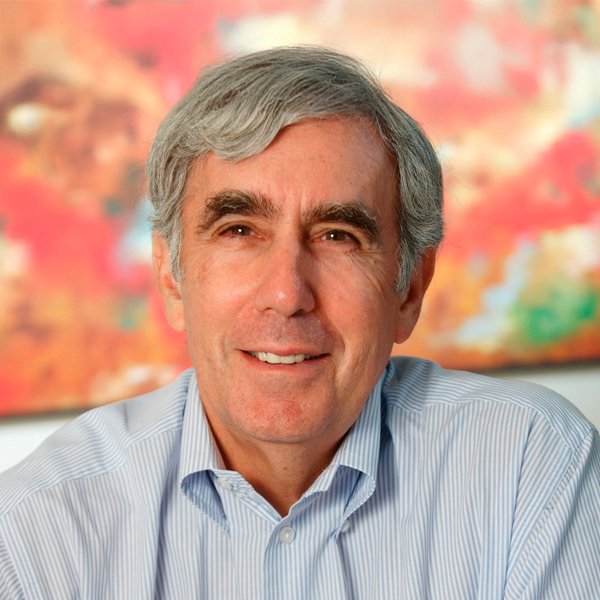
*) David Krieger is president of the Nuclear Age Peace Foundation. He is the author of many studies of peace in the Nuclear Age, including Nuclear Weapons and the World Court.

Share

Leave a Reply

Your email address will not be published. Required fields are marked *

Related Posts

Jan Oberg May 15, 2026 Go to this Fox News page and scroll the whole way down: President Donald Trump tells the world that his meeting with President Xi Jinping yielded a lot of very concrete political and economic results – of course, only where the Chinese side, according to him, agreed with him. He does not mention the Taiwan issue, but Secretary of State, Marco Rubio, says that it did not feature prominently in their talks and that the US policy on Taiwan has not changed. Then go to China Daily – or Global Times – and you will see that for the Chinese it is framework, principles, structure of cooperation etc. that matters – all embedded in the overall idea of “constructive bilateral relationship of strategic stability.” Nowhere is any concrete agreement or deal – all that Trump refers to – mentioned. At the general level, this gives you insights into the very different social...
The MIMAC – Military-Industrial-Media-Academic Complex – drives the world’s rampant militarism and wars without end. Here is a short reflection of how it works against all interests of humanity. #5 deals with why there is no real enemy or threat images/analysis. It’s all ex-post constructions. And, btw, theTFF Peace Pulse is now on Rumble.
Jan Oberg, TFF director April 28, 2026 In this third TFF Peace Pulse, I make the important distinction between the violence and the conflict that violence is a symptom of. If you want peace, focus on the underlying conflict because that is the key to resolution, peacemaking, and a better future for the parties. The West is obsessed with violence, just look around you – and 90+ per cent of the public debate is about military issues and other violence – totally wasted for peace. These Peace Pulses will only be published here a few times. You will also not find them on YouTube and Vimeo because both platforms have blocked TFF and me; you know, peace is dangerous these days. Most TFF’s videos since 2007 are now on Rumble.

Recent Articles

Jan Oberg May 15, 2026 Go to this Fox News page and scroll the whole way down: President Donald Trump tells the world that his meeting with President Xi Jinping yielded a lot of very concrete political and economic results – of course, only where the Chinese side, according to him, agreed with him. He does not mention the Taiwan issue, but Secretary of State, Marco Rubio, says that it did not feature prominently in their talks and that the US policy on Taiwan has not changed. Then go to China Daily – or Global Times – and you will see that for the Chinese it is framework, principles, structure of cooperation etc. that matters – all embedded in the overall idea of “constructive bilateral relationship of strategic stability.” Nowhere is any concrete agreement or deal – all that Trump refers to – mentioned. At the general level, this gives you insights into the very different social...
Lena Petrova of “World Affairs In Context” with more than half a million subscribers on YouTube wanted to explore what a peace researcher like me has to say about, among other things, the First and the Second Cold War and why eethics has disappeared from politics. I am particularly happy about this conversation that also yielded an amazing number of very appreciative comments on YouTube. No doubt, people are longing for alternatives, including peace perspectives.
The MIMAC – Military-Industrial-Media-Academic Complex – drives the world’s rampant militarism and wars without end. Here is a short reflection of how it works against all interests of humanity. #5 deals with why there is no real enemy or threat images/analysis. It’s all ex-post constructions. And, btw, theTFF Peace Pulse is now on Rumble.

TFF on Substack

Discover more from TFF Transnational Foundation & Jan Oberg.

Most Popular

Jan Oberg May 15, 2026 Go to this Fox News page and scroll the whole way down: President Donald Trump tells the world that his meeting with President Xi Jinping yielded a lot of very concrete political and economic results – of course, only where the Chinese side, according to him, agreed with him. He does not mention the Taiwan issue, but Secretary of State, Marco Rubio, says that it did not feature prominently in their talks and that the US policy on Taiwan has not changed. Then go to China Daily – or Global Times – and you will see that for the Chinese it is framework, principles, structure of cooperation etc. that matters – all embedded in the overall idea of “constructive bilateral relationship of strategic stability.” Nowhere is any concrete agreement or deal – all that Trump refers to – mentioned. At the general level, this gives you insights into the very different social...
Lena Petrova of “World Affairs In Context” with more than half a million subscribers on YouTube wanted to explore what a peace researcher like me has to say about, among other things, the First and the Second Cold War and why eethics has disappeared from politics. I am particularly happy about this conversation that also yielded an amazing number of very appreciative comments on YouTube. No doubt, people are longing for alternatives, including peace perspectives.
The MIMAC – Military-Industrial-Media-Academic Complex – drives the world’s rampant militarism and wars without end. Here is a short reflection of how it works against all interests of humanity. #5 deals with why there is no real enemy or threat images/analysis. It’s all ex-post constructions. And, btw, theTFF Peace Pulse is now on Rumble.
Read More
Screenshot-2026-05-15-103534
Jan Oberg May 15, 2026 Go to this Fox News page and scroll the whole way down: President Donald Trump tells the world that his meeting with President Xi Jinping yielded a lot of very concrete political and economic results – of course, only where the Chinese side, according to him, agreed with him. He does not mention the Taiwan issue, but Secretary of State, Marco Rubio, says that it did not feature prominently in their talks and that the US policy on Taiwan has not changed. Then go to China Daily – or Global Times – and you will see that for the Chinese it is framework, principles, structure of cooperation etc. that matters – all embedded in the overall idea of “constructive bilateral relationship of strategic stability.” Nowhere is any concrete agreement or deal – all that Trump refers to – mentioned. At the general level, this gives you insights into the very different social...
Screenshot-2026-05-12-104023
Lena Petrova of “World Affairs In Context” with more than half a million subscribers on YouTube wanted to explore what a peace researcher like me has to say about, among other things, the First and the Second Cold War and why eethics has disappeared from politics. I am particularly happy about this conversation that also yielded an amazing number of very appreciative comments on YouTube. No doubt, people are longing for alternatives, including peace perspectives.
Screenshot-2026-04-13-154551 (2)
The MIMAC – Military-Industrial-Media-Academic Complex – drives the world’s rampant militarism and wars without end. Here is a short reflection of how it works against all interests of humanity. #5 deals with why there is no real enemy or threat images/analysis. It’s all ex-post constructions. And, btw, theTFF Peace Pulse is now on Rumble.
Screenshot-2026-04-13-154551 (1)
Jan Oberg, TFF director April 28, 2026 In this third TFF Peace Pulse, I make the important distinction between the violence and the conflict that violence is a symptom of. If you want peace, focus on the underlying conflict because that is the key to resolution, peacemaking, and a better future for the parties. The West is obsessed with violence, just look around you – and 90+ per cent of the public debate is about military issues and other violence – totally wasted for peace. These Peace Pulses will only be published here a few times. You will also not find them on YouTube and Vimeo because both platforms have blocked TFF and me; you know, peace is dangerous these days. Most TFF’s videos since 2007 are now on Rumble.
Screenshot-2026-04-13-154551
In contrast to most, we’ll bring alternatives, solutions, hope and strategies for a better future. Times are dangerous, yes, but that only intensifies the need for constructive thinking and action! Jan Oberg, TFF director April 13, 2026 The new TFF Peace Pulse uses video messages in a new way: Max 3-5-minute-long comments, ideas or perhaps mini-lectures, all about peace – positive peace. We launch them today on April 13, 2026 with a carefully crafted visual aesthetic fitting the content. We hope to publish them regularly from now on. We launch Peace Pulse (PP) – for a number of reasons. The world is in chaos, and there are countless reasons to feel concerned, frustrated, even angry. The atmosphere is saturated with doom and gloom, with negative energy and rear‑mirror thinking, while vision, imagination, alternatives, strategies and genuine future‑mindedness remain in short supply. And without them, we simply can’t save the world. Looking at problems from a hundred angles will...
IMG_5165 (1)
PART II — Publishing Peace in a System That Prioritises Militarism Jan Oberg, TFF director April 10, 2026 How TFF Maintains a Daily Voice in a Digital World Built for Noise This article is part of the series “TFF at 40″ and it invites you to learn about Four Decades of Publishing Peace. It takes a look at how a small, people‑financed peace foundation has communicated across four generations of technology — from wax stencils and fax machines to mass email and Substack — and why TFF continues to publish every single day in a system that rewards noise, conflict, and militarism. ◆ What it means to publish peace every single day in a digital system built for 24/7 news and other noise, confrontation, and militarism. How TFF’s independence, continuity, and global readership defy algorithms, donor cycles, and Western media censorhip — and why the Majority World keeps listening. When the...

