
PressInfo #165 - Subverting the UN
Generic thumbnail

As a healthy response to the Bush Administration’s war policies, the number of people taking to the streets in protest is increasing with each step toward war. These protesters realize that they do not want the United States to initiate a pre-emptive and illegal war, but perhaps they do not yet realize that they are also fighting to retain an international order based on multilateralism, the rule of law and the United Nations itself.

To save the UN from the Administration’s destructive and radical unilateralism, other key nations will have to stand up to its bullying. France, Russia and China, because of their veto power in the Security Council, could withhold legal authority for America to proceed to war. Whether they will exercise this power, given the pressure they’re under from the Administration, remains to be seen. But if one or more of them does so, the Administration would be faced with acting in direct contravention of the Security Council, with a probable serious erosion of Congressional and public support. If it were to go ahead with war, it could deliver a death knell not only to Iraq but also to the UN itself. It is emblematic of US global waywardness that it is necessary to hope for a veto to uphold the legitimacy and effectiveness of the UN as a force for peace but to also be concerned that Administration threats of unilateral military action could render the veto ineffective and thereby the role of the Security Council largely meaningless.

The United States was instrumental in forming the UN and was a strong supporter of the organization until the Reagan presidency, when that Administration’s hostility toward the UN became pronounced. Reagan’s indictment of it as dominated by Third World concerns was largely rhetorical and symbolic but included calls for budgetary downsizing and withdrawal from UNESCO because of its alleged corruption and anti-American bias. In the Bush I presidency this antipathy was connected with US global economic interests; the Administration used American muscle to close down the Center on Transnational Corporations as a favor to multinationals. This confrontational approach was briefly reversed by Bush Senior’s use of the UN to mandate war against Iraq in 1991 to oust it from Kuwait. At the time, Bush surprised the world by sounding briefly like a second coming of Woodrow Wilson with his call for “a new world order” centered upon reliance on the collective security mechanisms of the UN Security Council to meet the challenges of aggression. When the dust settled at the end of the Gulf War, however, the White House realized that it did not want such global responsibilities or to build such expectations about an enhanced UN role. The language of a new world order was deliberately, as one high-level official then expressed it, “put back on the shelf.”

Bill Clinton’s 1992 presidential campaign seemed to offer prospects for enhanced recourse to the UN to address humanitarian challenges of the sort that were arising in the Balkans and sub-Saharan Africa. But as President, Clinton contributed to the post-cold war decline of the UN by abruptly reversing course on Somalia in 1993 after eighteen Americans were killed in the Black Hawk Down incident. Rather than accept responsibility for that debacle, the Clinton Administration blamed the UN. That Administration also turned its back on UN pleas for a commitment to stop genocide in Rwanda a year later, when a small contingent of UN troops could have prevented the mass murders there. The Clinton security team further sabotaged a Rwanda intervention by threatening to halt US funding for UN peacekeeping operations if the UN took on new peacekeeping commitments.

The Clinton White House expressed only lukewarm support for the UN role in Bosnia, while undermining support for UN action by providing arms to the Croats and Muslims. In Iraq, the Administration undermined and corrupted the UN inspection process by using US inspectors to conduct espionage. Clinton disappointingly celebrated the fiftieth anniversary of the UN by delivering an uninspired speech notable for its Wall Street calls for “downsizing” and “doing more with less,” and by turning increasingly to NATO to carry out what it deemed humanitarian interventions, culminating in the NATO war in Kosovo and Serbia in 1999. This war on behalf of the Kosovars was notable for the absence of any UN authorization for the use of force and a deliberate US decision to circumvent the UN in anticipation of Russian and Chinese vetoes.

But while the Clinton Administration did serious damage to the UN, the Bush presidency-with its repudiation of even minimal multilateralism, its hostility to existing arms control treaties, its rejection of the Kyoto Protocol on global warming and its efforts to undermine the International Criminal Court-created a pattern of anti-UN diplomacy never before seen in Washington. It represents a view that American power and resources should serve exclusively national strategic interests.

Since September 11, the Bush team has selectively used the UN to build a united front against global terrorism, specifically against Al Qaeda. Such an initiative led to a degree of formal multilateralism in the war in Afghanistan but has run into resistance since. In the months after Bush’s 2002 State of the Union address-which first outlined the “axis of evil” approach to the post-Afghanistan challenge and which made no reference whatsoever to the UN-Bush, in speech after speech, gave the impression that “regime change” in Baghdad was a matter of White House discretion. It was then that establishment realists, most prominently Brent Scowcroft and James Baker, sounded the alarm. The Bush war planners seemed quickly to realize that this time they had pushed unilateralism too far even for their Republican constituency, let alone their overseas allies. Congress and the UN were brought into the act, with obvious ambivalence, and the Administration shifted its overt call from “regime change” to “disarmament” via “coercive inspection.” Both Congress and the UN Security Council are being asked to underwrite this approach, and Congress has already capitulated.

There are two main ways to ruin the UN: to ignore its relevance in war/peace situations, or to turn it into a rubber stamp for geopolitical operations of dubious status under international law or the UN Charter. Before September 11, Bush pursued the former approach; since then-by calling on the UN to provide the world’s remaining superpower with its blessings for an unwarranted war-the latter.

Also damaging are the evident double standards and hypocrisy of the US call for enforcement of UN resolutions against Iraq, given consistent US unwillingness to do anything to implement the stream of Security Council resolutions directing Israel to withdraw from occupied Palestinian territories, to dismantle illegal settlements and to apply the Geneva Conventions governing military occupation. Ironically, Security Council Resolution 687, cited by Bush in his justification for war against Iraq, also recalls the objective of establishing a nuclear weapons-free zone in the Middle East and of working toward making the region free of all weapons of mass destruction. While these are clearly worthwhile objectives, no mention is made by the Bush Administration of Israel’s longstanding possession of nuclear weapons.

While the United States engages in such hypocrisy, it is attempting to use UN resolutions improperly to justify an illegal pre-emptive war against Iraq. Resolution 687, which welcomed the restoration of Kuwaiti sovereignty and set forth peace terms after the Gulf War, says nothing about the conditions under which additional force could be used against Iraq. Rather, it concludes by stating that the Security Council “decides to remain seized of the matter and to take such further steps as may be required for the implementation of the present resolution and to secure peace and security in the region.” Thus, any unilateral US enforcement action without Security Council approval would be illegal. If the Bush Administration pushes a resolution authorizing force through the UN Security Council, it will demonstrate only that it has succeeded in bending the organization to its will-in effect subverting the UN the same way it subverted the integrity of the US Congress. It is doubly ruining the UN by its domineering posture and through its repeated assertion that if the UN resists, it will act unilaterally. The worst aspect of the Bush II legacy may be its vicious undermining of multilateralism and international law in general, and of the United Nations in particular.

Published in The Nation, November 4, 2002
© TFF 2002

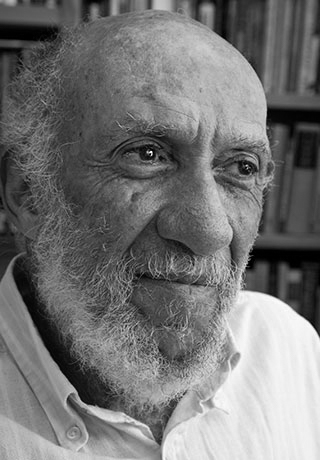
Professor Falk became an adviser to TFF when it was established in 1985.

Share

Related Posts

PressInfo # 141, December 21, 2001It’s time to prepare reconciliation between Albanians and Serbs PressInfo # 140, December 14, 2001Ibrahim Rugova’s decade-long leadership in Kosovo/a PressInfo # 139, 11. december, 2001En god nyhet: Jugoslaviens Sannings- och försoningskommission PressInfo # 139, 11. december, 2001Gode nyheder: Jugoslaviens Sandheds- og Forsoningskommission PressInfo # 139, December 11, 2001Good news: Yugoslavia’s Truth and Reconciliation Commission PressInfo # 138, November 8, 2001TFF co-founder PhD with thesis about young people with roots in other cultures PressInfo # 138, November 8, 2001TFF:s medstiftare doktor på avhandling om unga med ursprung i andra kulturer PressInfo # 137, October 17, 2001A new Marshall Plan: Advancing human security and controlling terrorism PressInfo # 136, October 15, 2001The UN and Annan really deserve it PressInfo # 135, October 10, 2001Preventing a terrorist mushroom cloud PressInfo # 134, 17 oktober, 2001Sverige og 11. september PressInfo # 134, October 9, 2001Sweden and September 11...
Peace is promoted by constructive proposals and dialogue Four preceding PressInfos have expressed concern over — and criticised — the ongoing, militarisation of the EU. Some will say: but there are no alternatives. We believe that there are always alternatives, that democracies are characterised by alternatives and choice, and that openly discussed alternatives will improve the quality and legitimacy of society’s decision–making. In addition, it is an intellectual and moral challenge to not only criticise but also be constructive. If we only tell people that we think they are wrong, they are not likely to listen. However, if we say: what are your views on this set of ideas and steps? — we may sometimes engage them in dialogue and sow a seed. Most people in power circles live their daily lives in in a time frame and a social space where certain ideas, viewpoints and concepts are just not...
Photos © TFF 2000 Read PressInfo 90 “Lift the Sanctions and Bring More Aid to Yugoslavia” See Pictures from Belgrade © TFF 2000 Please reprint, copy, archive, quote or re-post this item, but please retain the source.

Recent Articles

PressInfo # 141, December 21, 2001It’s time to prepare reconciliation between Albanians and Serbs PressInfo # 140, December 14, 2001Ibrahim Rugova’s decade-long leadership in Kosovo/a PressInfo # 139, 11. december, 2001En god nyhet: Jugoslaviens Sannings- och försoningskommission PressInfo # 139, 11. december, 2001Gode nyheder: Jugoslaviens Sandheds- og Forsoningskommission PressInfo # 139, December 11, 2001Good news: Yugoslavia’s Truth and Reconciliation Commission PressInfo # 138, November 8, 2001TFF co-founder PhD with thesis about young people with roots in other cultures PressInfo # 138, November 8, 2001TFF:s medstiftare doktor på avhandling om unga med ursprung i andra kulturer PressInfo # 137, October 17, 2001A new Marshall Plan: Advancing human security and controlling terrorism PressInfo # 136, October 15, 2001The UN and Annan really deserve it PressInfo # 135, October 10, 2001Preventing a terrorist mushroom cloud PressInfo # 134, 17 oktober, 2001Sverige og 11. september PressInfo # 134, October 9, 2001Sweden and September 11...
Peace is promoted by constructive proposals and dialogue Four preceding PressInfos have expressed concern over — and criticised — the ongoing, militarisation of the EU. Some will say: but there are no alternatives. We believe that there are always alternatives, that democracies are characterised by alternatives and choice, and that openly discussed alternatives will improve the quality and legitimacy of society’s decision–making. In addition, it is an intellectual and moral challenge to not only criticise but also be constructive. If we only tell people that we think they are wrong, they are not likely to listen. However, if we say: what are your views on this set of ideas and steps? — we may sometimes engage them in dialogue and sow a seed. Most people in power circles live their daily lives in in a time frame and a social space where certain ideas, viewpoints and concepts are just not...
Photos © TFF 2000 Read PressInfo 90 “Lift the Sanctions and Bring More Aid to Yugoslavia” See Pictures from Belgrade © TFF 2000 Please reprint, copy, archive, quote or re-post this item, but please retain the source.

TFF on Substack

Discover more from TFF Transnational Foundation & Jan Oberg.

Most Popular

PressInfo # 141, December 21, 2001It’s time to prepare reconciliation between Albanians and Serbs PressInfo # 140, December 14, 2001Ibrahim Rugova’s decade-long leadership in Kosovo/a PressInfo # 139, 11. december, 2001En god nyhet: Jugoslaviens Sannings- och försoningskommission PressInfo # 139, 11. december, 2001Gode nyheder: Jugoslaviens Sandheds- og Forsoningskommission PressInfo # 139, December 11, 2001Good news: Yugoslavia’s Truth and Reconciliation Commission PressInfo # 138, November 8, 2001TFF co-founder PhD with thesis about young people with roots in other cultures PressInfo # 138, November 8, 2001TFF:s medstiftare doktor på avhandling om unga med ursprung i andra kulturer PressInfo # 137, October 17, 2001A new Marshall Plan: Advancing human security and controlling terrorism PressInfo # 136, October 15, 2001The UN and Annan really deserve it PressInfo # 135, October 10, 2001Preventing a terrorist mushroom cloud PressInfo # 134, 17 oktober, 2001Sverige og 11. september PressInfo # 134, October 9, 2001Sweden and September 11...
Peace is promoted by constructive proposals and dialogue Four preceding PressInfos have expressed concern over — and criticised — the ongoing, militarisation of the EU. Some will say: but there are no alternatives. We believe that there are always alternatives, that democracies are characterised by alternatives and choice, and that openly discussed alternatives will improve the quality and legitimacy of society’s decision–making. In addition, it is an intellectual and moral challenge to not only criticise but also be constructive. If we only tell people that we think they are wrong, they are not likely to listen. However, if we say: what are your views on this set of ideas and steps? — we may sometimes engage them in dialogue and sow a seed. Most people in power circles live their daily lives in in a time frame and a social space where certain ideas, viewpoints and concepts are just not...
Photos © TFF 2000 Read PressInfo 90 “Lift the Sanctions and Bring More Aid to Yugoslavia” See Pictures from Belgrade © TFF 2000 Please reprint, copy, archive, quote or re-post this item, but please retain the source.
Read More
Imagen-thumbnail-The-Transnational-1
PressInfo # 141, December 21, 2001It’s time to prepare reconciliation between Albanians and Serbs PressInfo # 140, December 14, 2001Ibrahim Rugova’s decade-long leadership in Kosovo/a PressInfo # 139, 11. december, 2001En god nyhet: Jugoslaviens Sannings- och försoningskommission PressInfo # 139, 11. december, 2001Gode nyheder: Jugoslaviens Sandheds- og Forsoningskommission PressInfo # 139, December 11, 2001Good news: Yugoslavia’s Truth and Reconciliation Commission PressInfo # 138, November 8, 2001TFF co-founder PhD with thesis about young people with roots in other cultures PressInfo # 138, November 8, 2001TFF:s medstiftare doktor på avhandling om unga med ursprung i andra kulturer PressInfo # 137, October 17, 2001A new Marshall Plan: Advancing human security and controlling terrorism PressInfo # 136, October 15, 2001The UN and Annan really deserve it PressInfo # 135, October 10, 2001Preventing a terrorist mushroom cloud PressInfo # 134, 17 oktober, 2001Sverige og 11. september PressInfo # 134, October 9, 2001Sweden and September 11...
Imagen-thumbnail-The-Transnational-1
Peace is promoted by constructive proposals and dialogue Four preceding PressInfos have expressed concern over — and criticised — the ongoing, militarisation of the EU. Some will say: but there are no alternatives. We believe that there are always alternatives, that democracies are characterised by alternatives and choice, and that openly discussed alternatives will improve the quality and legitimacy of society’s decision–making. In addition, it is an intellectual and moral challenge to not only criticise but also be constructive. If we only tell people that we think they are wrong, they are not likely to listen. However, if we say: what are your views on this set of ideas and steps? — we may sometimes engage them in dialogue and sow a seed. Most people in power circles live their daily lives in in a time frame and a social space where certain ideas, viewpoints and concepts are just not...
Imagen-thumbnail-The-Transnational-1
Photos © TFF 2000 Read PressInfo 90 “Lift the Sanctions and Bring More Aid to Yugoslavia” See Pictures from Belgrade © TFF 2000 Please reprint, copy, archive, quote or re-post this item, but please retain the source.
Imagen-thumbnail-The-Transnational-1
Av FRANK SØHOLM GREVIL 16 augusti 2004  Vi er nu nået til tredje akt i det absurde teaterstykke, der i analogi med de store skueprocesser i Moskva 1936-38 er blevet døbt ‘Grevil-sagen’. Første akt bestod i min anonyme fremlæggelse af egenhændigt nedklassificerede rapporter i Berlingske Tidende i februar og marts. Andet akt udgjordes af min fremtræden med navn og billede i Information i april samt den efterfølgende mediestorm, som uden min direkte medvirken kostede en forsvarsminister taburetten samt en sigtelse for brud på tavshedspligten. Tredje akt bliver en retssag, hvor jeg står tiltalt for at have overtrådt straffelovens bestemmelser om uberettiget videregivelse eller udnyttelse af fortrolige oplysninger. Statsanklageren har ovenikøbet valgt at påberåbe sig særligt skærpende omstændigheder. Da jeg aldrig har modtaget betaling for at stille rapporterne til rådighed eller lade mig interviewe, må det skærpende bestå i, at “videregivelsen eller udnyttelsen er sket under sådanne omstændigheder, at det påfører...
Imagen-thumbnail-The-Transnational-1
Af Svenska Irakkommittén mot de Ekonomiska Sanktionerna (SIES) 13 september 2002 FN:s ekonomiska sanktioner mot Irak har nu pågått i tolv år och drabbat det irakiska folket med svåra lidanden. Enligt FN:s egna siffror har mer än 1,5 miljoner människor, varav ca 600 000 barn, dött som en direkt följd av sanktionerna. Dessutom har ett lågintensivt bombkrig mot landet pågått under dessa år. Av all denna förödelse- orsakad huvudsakligen av amerikansk och brittisk politik- har Saddam Husseins brutala och diktatoriska regim snarast stärkts än försvagats. Nu förbereder USA under president Bushs ledning ett storskaligt bombkrig mot Irak som kommer att innebära ett ännu större lidande för civilbefolkningen. Ett sådant krig kommer dessutom att ytterligare undergräva freden och säkerheten i världen. Att upprätta en demokratisk regim i Irak är det irakiska folkets angelägenhet och får enligt folkrätten inte ske med krigshandlingar utifrån. Folkrätten och FN:s stadgar måste respekteras. Vi vädjar till...


