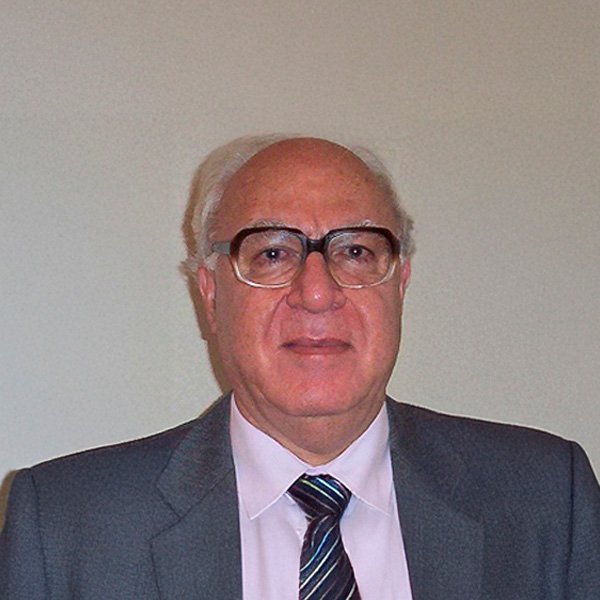
By Farhang Jahanpour
After four weeks of savage bombing of their impoverished neighbor, Yemen, the Saudis declared “Mission Accomplished”, and promised to halt their aerial bombardment at midnight on 22 April 2015. Yet only three hours later, they resumed their attacks with greater intensity from the sea and the air.
Although the conflict in Yemen has been going on for four years, it was the new 79-year old Saudi King Salman and his young son Muhammad bin Salman (believed to be between 27 and 33 years old) who has been appointed defense minister as well as running the royal court and the newly formed Economic and Development Affairs Council, in addition to being a member of the Political and Security Affairs Council, another key decision-making body, who decided to start the aerial bombing of Yemen.
The Saudis turning Yemen into another Libya or Syria
After having helped the attacks on Libya that resulted in the ouster of Mu’ammar Qadhafi and the mayhem that has followed, after supporting the Sunni insurgents to fight against the Iraqi Shi’a-led government causing tens of thousands of casualties as the result of suicide bombings, organizing and supporting terrorists to oust President Bashar Asad in Syria that have morphed into the terrorist group ISIS that has destabilized both Syria and Iraq and the entire region, and after sending forces to Bahrain to put down the pro-democracy movement in that country, it seems now it is Yemen’s turn to be turned into a failed state.
During the first four weeks of air strikes the Saudis have pummelled 18 of Yemen’s 22 provinces, striking schools, homes, refugee camps, crowded residential areas, power and water infrastructure, dairy factories and humanitarian aid supply, as well as blowing up a large part of Sanaa which is a world heritage site.
According to World Health Organization, at least 944 people were killed and 3,500 wounded in the first four weeks of the air strikes (some put the figures much higher). Hospitals are short of electricity and there is acute shortage of medicine to take care of thousands of wounded Yemenis who are in urgent need of treatment.
Furthermore, the entire country is without power, at least 150,000 Yemenis have been displaced and 12 million are in urgent need of food and are on the verge of starvation. In the best of times, Yemen relies for 90 per cent of her food on imports, and due to the US, Saudi and Egyptian blockade of Yemeni ports, no food has been imported to the country during the past few weeks. According to World Health Organization, the situation is reaching crisis point.
U.N. spokesman Stephane Dujarric told reporters: “Obviously, in order for humanitarian aid to get in safely, we need a pause and we need an end to the violence.” (1) The UN has warned that Yemen is “on the verge of total collapse”.
A brief look at Yemen’s recent history
In order to understand what lies behind the latest conflict, it is important to take a brief look at Yemen’s recent history. Yemen is an important country from a geopolitical point of view as it borders the Arabian Sea, the Gulf of Aden and the Red Sea, and dominates Bab el-Mandab, which acts as a strategic link between the Indian Ocean and the Mediterranean Sea via the Red Sea and the Suez Canal, through which a great deal of world trade, including at least 3.3 million barrels of oil a day, flows.
Yemen has a population of just over 26 million, with about 60% Sunnis and about 40% Zaydis, which is a Shia denomination different from the Twelver Shi’is of Iran, and traditionally the Zaydi beliefs and practices have been closer to moderate Sunnis of Yemen than to Iranian Shi’is. Sectarianism had seldom played a big role in Yemen. The Houthis who call themselves Ansar Allah are a branch of the Zaydis operating in Yemen.
The history of Yemen’s relationship with its Arab neighbors is long and complicated. Both Egyptian and Saudi involvement in Yemen goes back a long way.
The Ottomans absorbed some parts of Yemen into their empire in 1500s. Initially, the Egyptians were in charge of implementing the Ottoman control of Yemen against the ambitions of the rulers in the Arabian Peninsula. With the collapse of the Ottoman Empire in 1918 North Yemen gained its independence and was ruled by Imam Yahya who was the leader of the Zaydis. Meanwhile, the British had set up a protectorate in Aden in the 19th century. The British withdrew in 1967 from what became South Yemen.
During the 1960s, Yemen became a battleground for a proxy war between Saudi Arabia and Gamal Abdel Nasser’s Egypt. When Gamal Abdel Nasser was preaching his doctrine of Arab nationalism he signed an agreement with the communist-leaning government in South Yemen in April 1956.
Ironically, at that time, the conservative Saudis went to the support of the Zaydis in the North who were fighting against the South. Eventually, Egyptian troops withdrew in 1967 after having suffered more than 20,000 casualties in Yemen, which partly contributed to Egypt’s humiliating defeat in the 1967 war with Israel.
The People’s Republic of Yemen, comprising Aden and former Protectorate of South Arabia was formed in 1967. The Marxists took power in the south in 1969 and renamed the state People’s Democratic Republic of Yemen and reoriented their state and its foreign policy towards the Soviet bloc.
The North and South Yemen were formally unified as the Republic of Yemen in May 1990 with Ali Abdullah Saleh as president. However, fighting between the Yemeni government and the Houthis began in 2004 and ended in early 2010 with a cease-fire.
Meanwhile, Al Qaeda found a base in Yemen and in October 2000 an Al Qaeda suicide attack in Aden against US naval vessel ISS Cole damaged the ship and killed 17 US personnel. Since then, Al Qaeda has continued its presence and operations in Yemen, which is believed to have become the main base of its operations after the defeat of the Taliban in Afghanistan.
In August 2009, the Yemeni army launched an offensive against the Houthis and tens of thousands of people were displaced by fighting. In October 2009 clashes broke out between the northern rebels and Saudi security forces along the two countries’ common border. The Houthis accused Saudi Arabia of supporting the Yemeni government in attacks against them, and of also spreading its strict Wahhabi ideology in Yemen.
The Arab Spring reached Yemen
The “Arab Spring” that had started in Tunisia and Egypt also reached Yemen in January 2011. Initially, as in Tunisia and Egypt, the revolution was peaceful and brought together millions of Yemenis, both Sunni and Shi’a, in massive nonviolent protests against the Saudi and US-backed government of Ali Abdullah Saleh who had ruled Yemen for over 20 years.
However, government crackdown of pro-reform demonstrations in March 2011 killed more than 50 and hundreds of wounded. After continued clashes and civilian casualties, senior military figures including key general, Ali Mohsen al-Ahmar, declared their backing for protest movement. Several ministers and other senior regime figures also defect to protesters.
Eventually in June 2011, President Ali Abdullah Saleh who had been injured in a rocket attack fled to Saudi Arabia and was replaced by his deputy Abd Rabbu Mansur Hadi, mainly as the result of Saudi and US pressure in order to quell the revolution. However, Hadi’s appointment as new president did not end the uprising. Government security forces fired into the crowds during a massive pro-democracy protest in the capital Sanaa, killing dozens of protestor and wounding hundreds more.
In order to gain some legitimacy, Hadi took part in a one-man presidential election in February 2012 as the sole candidate for a two-year term. His term of office came to an end over a year ago, so although the Saudis refer to him as Yemen’s legitimate ruler, technically he is no longer Yemen’s president. Meanwhile, Saleh returned to Yemen and the parliament gave him immunity from any form of prosecution.
Hadi’s government remained unpopular, as people believed that it had been imposed on them from outside, and it was also widely viewed to be corrupt and inept. President Hadi had promised a new constitution and had announced a plan for a federal system of government. A National Dialogue Conference was formed and it ended on 21 January 2014. However, the Houthis have accused President Hadi of not implementing the points agreed at the National Dialogue Conference and of discriminating against them.
The Houthis claim that they continue the revolution
Opposition forces, including the Houthis, claim that they derive their legitimacy above all from the revolutionary demands of the people. They argue that no transitional justice system has been put in place and that none of the politicians and military personnel accused of human rights violations during the revolution have been brought to justice, nor have any of those people who plundered public and private wealth been held accountable.
So the Houthis as the armed wing of the nationwide opposition attacked the city of Amran on July 10 and entered Sanaa in August 2014 in the name of implementing the goals of the revolution. They rejected the draft of a new constitution proposed by the government. President Hadi and his government resigned in protest at the takeover of the capital by Houthi rebels, but Hadi later rescinded his resignation. Later on, the Houthis put Hadi under house arrest, and a transitional five-member presidential council replaced President Hadi. The UN Security Council denounced the Houthi move, and demanded that they negotiate a power-sharing agreement under GCC aegis.
While the armed action of the Houthis is to be condemned as a coup, nevertheless, the Houthis enjoyed and continue to enjoy the support of probably the majority of the Yemenis, including many Sunnis.
The opposition to them is concentrated in a few pockets of resistance in the South of the country. Mass demonstrations in the capital Sanaa and Amran and other parts of Yemen show that the Houthi coalition still enjoys widespread support. The recent Saudi bombings of Yemen resulting in mass casualties has probably angered many more Yemenis, intensifying their suspicion of Saudi intentions and getting them closer to the Houthi coalition.
The Saudis turn to the Arab League for help
After Hadi fled to Aden and began operating against the opposition from the South, the Houthis attacked the South and occupied the airport in Aden. Hadi then fled to Saudi Arabia on Thursday 26 March 2015, and from there he went straight to attend the Arab League summit meeting that was hurriedly held on Saturday 28 March 2015 in Sharm El Sheikh in Egypt in order to form a coalition against the Houthis.
After that meeting, the Saudis, supported by most members of the GCC, as well as Jordan and Egypt, launched attacks on Sanaa to defeat the Houthis and to restore Hadi to power.
So far, despite their claim of “Mission Accomplished” none of the Saudi goals has been achieved.
Hadi is still living as a refugee in Saudi Arabia. Far from retreating from the areas that they had occupied, the Houthis have pushed further South, and only small pockets of Aden are under the control of fighters loyal to Hadi. Meanwhile, the Saudi attempt to broaden the conflict and get other major countries such as Pakistan, Turkey and Egypt involved in a ground operation against Yemen has failed.
Egypt, Turkey and Pakistan refuse to get involved
Although following the military coup in Egypt, the GCC countries had collectively provided more than $23 billion of help and a further pledge of $12 billion in 2015 to keep the Egyptian regime afloat, Egyptian response has been lukewarm. Although in public President el-Sisi praises the Persian Gulf leaders, in secret recordings he has dismissed them as oil bumpkins. (2)
It is clear that despite providing diplomatic and some military support for the Saudi-led coalition, el-Sisi is reluctant to provide overt military assistance, and he will think long and hard before providing a large number of troops. In view of many domestic problems, he does not want to get bogged down in Yemen as President Naser did, and he has called for the resolution of the conflict through talks.
Turkey too has been reluctant to fan the flames of the conflict. During President Recep Tayyip Erdogan’s visit to Iran on 7 April 2015, Iranian and Turkish presidents called for an end to the conflict in Yemen. (3) President Hassan Rouhani presented a four-step plan during a joint press conference with his Turkish counterpart. Rouhani called for an end to bombings in Yemen, preparation on the ground for humanitarian help, “Yemeni-Yemeni negotiations”, and talks between the various Yemeni groups and parties in a neutral country. The Turkish president also approved those stances.
The stance adopted by Pakistan is even more interesting.
Despite the fact that Pakistani government is very close to the Saudis, it has refused any involvement in the Yemen war. A joint session of Pakistan’s parliament debated the issue for a whole week, but then unanimously passed a resolution affirming the country’s “neutrality” in the Yemen conflict. The resolution expressed the “desire that Pakistan should maintain neutrality in the Yemen conflict”, while reaffirming Pakistan’s “unequivocal support of the Kingdom of Saudi Arabia”.
Following the Saudi attacks on Yemen, Iranian Foreign Minister Mohammad Javad Zarif travelled to Pakistan where he met with Prime Minister Nawaz Sharif and Foreign Minister Sartaj Aziz. In a joint press conference with Aziz, Zarif said, “This is a domestic Yemeni issue and the path to a solution is also a Yemeni one.” In his remarks, Sartaj Aziz said: “Pakistan is grappling with the crises caused by the Taliban, Al Qaeda and DA’ISH [the Arabic acronym for ISIS]. Unfortunately, we are engaged in fighting extremism and all of us should cooperate in order to overcome it.” He added: “In our view, internal dialog is the only way to resolve the crisis in Yemen and we too should cooperate in order to resolve the conflict.” (4) Both the Saudis and the Emiratis have expressed their annoyance at the Turkish and Pakistani decisions.
Positive results of Turkish and Pakistani stances
Nevertheless, the stances of Turkey and Pakistan have been most encouraging. Instead of turning the domestic conflict in Yemen into a sectarian war that could have devastating consequences for the peace and security of the entire region, Iran, Turkey and Pakistan have called for dialog and the resolution of the conflict through peaceful means. The three countries, two of them majority Sunnis and Iran a majority Shi’a country, can provide a powerful counterbalance to the sectarianism advocated by the Saudis and some other GCC countries.
Oman has also refused to join the GCC coalition and is trying to mediate between the warring factions and between the Saudis and the Iranians.
This development can provide not only a solution to the conflict in Yemen, but can also usher in a period of greater regional cooperation and an end to sectarianism. Clearly Iran has played a major role in trying to negotiate a settlement of the crisis. Speaking only a day before the unexpected Saudi announcement about its short-lived end to bombings, Iran’s Deputy Foreign Minister Hossein Amir Abdollahian said: “”We are optimistic that in the coming hours, after many efforts, we will see a halt to military attacks in Yemen.” (5) So clearly Iran has been working hard behind the scenes to bring the different factions together.
The US stance puzzling
The US stance towards the conflict has been unfortunate, although understandable from a cynical point of view. GCC countries are the best customers of US weapons, and most of them also provide bases for American military forces.
Last year alone Saudi Arabia spent more than $80 billion and the Emirates spent nearly $23 billion. Qatar signed an $11 billion deal with the Pentagon to purchase Apache attack helicopters and Patriot and Javelin air-defense systems, and is also planning to purchase a large number of Boeing F-15 fighters. Boeing opened an office in Doha in 2011, and Lockheed Martin set up an office there this year. In fact, Saudi Arabia and UAE have been using their F-16 aircraft to bomb both Yemen and Syria. (6) Therefore, in order to keep the Military-Industrial Complex in business, it is quite understandable that the United States would like to keep these wealthy customers happy.
However, the United States regards Al Qaeda in Yemen as a deadly foe and has been using drone attacks on their fighters for years. It is believed that there are between 2,000-3,000 Al Qaeda members, mainly in the East but also in the South of Yemen. During the past few years, the Houthis have been the most serious enemies of Al Qaeda, while the governments of both Saleh and Hadi have shown little resolve to fight that terrorist group.
Since the attacks on Yemen, Al Qaeda has made startling gains amid the turmoil, including the seizure of the southern port city of al-Mukalla. The Al Qaeda is bound to exploit any sign of political or military instability in Yemen. Al Qaeda in Yemen has plotted attacks on commercial aircraft, and has taken credit for the Charlie Hebdo massacre in Paris, and has recently declared its allegiance to ISIS or the Islamic State. Just a few weeks ago, the Islamic State launched its first attack in the country, bombing two mosques in the capital Sana’a.
Some analysts say that the U.S. is supporting the Saudi effort despite those concerns, in part to signal to America’s Arab allies that it intends to check Iranian influence in the Middle East after any nuclear deal. “Our involvement in Yemen is a direct function of the talks, and it’s a decision by the administration to try to reassure our Arab partners,” says Ilan Goldenberg, a former Obama State Department and Pentagon official specializing in the Middle East. “I’m not sure what we’re doing in Yemen is good Yemen policy. In fact I would probably venture that it’s bad Yemen policy. But I would say that it’s good U.S.-Saudi relationship policy.” (7)
Accusations against Iran unfounded
In order to divert attention from their interference in Yemen, the Saudis have accused Iran of supporting the Houthis. Ties between Iran and the Houthis certainly exist, partly because of shared religious beliefs, but also because of Iranian distrust of Saudi Arabia and her actions in Yemen and other parts of the Middle East.
However, the historian and investigative journalist (and TFF Associate) Gareth Porter claims that the arms that allegedly were sent to the Houthis by Iran were in fact a part of $500-million US arms delivered to Yemeni military and given to the Houthis by former president Saleh. (8)
“Historically, as opposed to Saudi Arabia, Iran has had little contacts with various Yemeni groups including the Houthis. US State Department cables published by WikiLeaks have expressed skepticism of the Houthis’ alleged connections to Iran. (9)
In fact, the same cables reveal that as early as 2009, the United States became especially alarmed by Saudi and Emirati support for Saleh, which it feared would expand “regional and sectarian dimensions” of the Houthi conflict. Only a few days ago, American officials revealed that far from being behind the Houthi push for power, Iran had warned the Houthis against Yemen takeover. (10)
The conflict in Yemen is a homegrown conflict that has its roots in the desire for greater autonomy by the Zaydis in the North, some separatist groups in the South, and lately the activities of Al Qaeda in various parts of Yemen.
Ever since the start of Arab uprisings, the Saudis have tried to portray them as sectarian conflicts. This is what they have alleged in the case of Bahrain and Syria, and now in the case of Yemen, although the same could not be said about Tunisia, Egypt or Libya by any stretch of the imagination.
A group of 18 Yemen scholars and experts based in the United States and Britain published an open letter condemning the month-long Saudi bombing campaign in the country. The letter, whose signatories include academics at Harvard, Oxford and Columbia universities, argued the Saudi-led war “is illegal under international law”, and urged American and British officials to push for a U.N. Security Council resolution “demanding an immediate, unconditional ceasefire.” (11)
The conflict in Yemen should be resolved by Yemenis
The solution to the Yemeni conflict should also come from within, without interference from the Saudis and other GCC countries. Although it would be desirable to maintain Yemen’s territorial integrity, it may be necessary to give greater autonomy to the Zaydis in the North, as well as to Aden in the South, while a unity government holds the country together from Sanaa. The last thing that needs to be done is to turn the Yemeni civil war into a regional sectarian issue tearing the whole region apart.
Meanwhile, as has already been shown, the involvement of major countries in the region, namely Egypt, Iran, Turkey and Pakistan with some help from GCC countries, can not only resolve the conflict in Yemen, but can also bring about a measure of peace and stability in the entire region.
It would be most helpful if, instead of providing blind support for the Saudis, the United States would back a regional solution, which would also include a serious campaign against the terrorists in Syria, Libya, Iraq, Pakistan, Afghanistan and Yemen and would usher in a new order in the Middle East.
At the same time, the only way that Saudi Arabia and other GCC countries can ensure their security in the face of the Arab Uprising is by introducing reform and democracy in their countries and try to join with other regional countries in fighting terrorism.
Farhang Jahanpour, a TFF Associate and Fellow of The Royal Asiatic Society, is a former professor and dean of the Faculty of Foreign Languages at the University of Isfahan and a former Senior Research Fellow at Harvard University. He is a tutor in the Department of Continuing Education and a member of Kellogg College, University of Oxford.
Footnotes
1. See Daily Press Briefing by the Office of the Spokesperson for the Secretary-General.
2. “Egypt’s Sisi reassures Gulf leaders after alleged derisive audio leaks”, Reuters, 9 February 2015,
3. See “Together in Tehran, Erdogan and Rouhani call end to bloodshed in Yemen”, The Jerusalem Post, 7 April 2015.
4. Joint press conference by Iranian and Pakistani foreign ministers.
5. Quoted by Iranian news agencies.
6. See “Sale of US Arms Fuels Wars of Arab States”, New York Times, 18 April 2015.
7. See Michael Crowley, “Iran talks face complication: Yemen”, Politico.com, 21 April 2015.
8. Gareth Porter, “Houthis arms bonanza came from Saleh, not Iran”, Middle East Eye, 23 April 2015.
9. See “Yemen, the US and the Houthis: What the WikiLeaks cables reveal”
10. See “Iran Warned Houthis Against Yemen Takeover”, Huffington Post, 20 April 2015,
11. See “Top Yemen Scholars in the West Condemn Saudi Arabia’s War”, The Washington Post, 18 April 2015.