
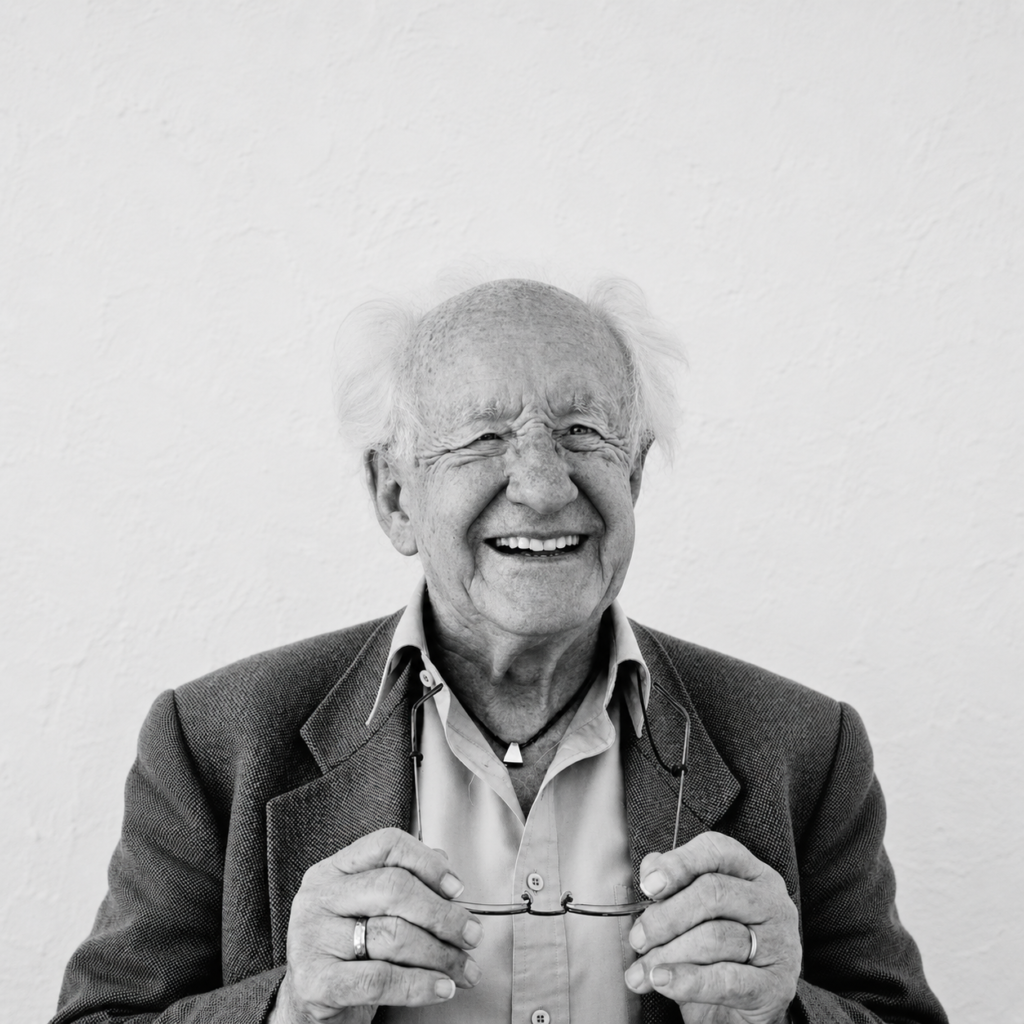
The Von Weizsäckers, Germany's Kennedys

President Richard von Weizsäcker passed away 31 January and was very much celebrated in Germany for his brilliant presidency to normalize a Germany with a troubled past, even divided on top of that. But, by and large leaving out his global perspectives mentioned below.

His brother Car Friedrich was a nuclear physicist turned peace activist with a wonderful peace program, in one word: Weltinnenpolitik, world domestic policy (well, it depends on the country, some domestic policies are better than others; I would go for a Swiss coalition governance, federalism, direct democracy).

The president’s nephew Ernst Ulrich is an energy-environment leader, in Germany and through the UN in the world.

I have/had the privilege of knowing them all, and my tribute to Carl Friedrich when he passed away is an editorial dated 2 July 2012. Richard kindly sent greetings to the symposium on “Peace Studies and World Domestic Policy” on the occasion of my 80th birthday.

President John F. Kennedy also had a brother, Robert F. Kennedy; both murdered in (by?) the USA. The president’s nephew, Robert F. Jr., recently published three articles at Other News. Information That Markets Eliminate where, in a position to know, he tells the story of the USA-Cuba past: “JFK’s secret negotiations with Fidel”, “Sabotaging U.S.-Cuban detente in the Kennedy Era” and the future: “We have so much to learn from Cuba”. The titles say it all: efforts, thwarted by CIA; time to catch up.

There is a difference: the Kennedys, on top of an empire falling already at JFK’s time, and today maybe on a road heading for nowhere. The von Weizsäckers have that behind them–their father, Robert Jr’s grandfather–played a major role in Nazi Germany’s foreign policy.

Today’s Germany is headed for somewhere, restored by many, indeed by the Weizsäckers, Jürgen Habermas, and so many others. And that somewhere is not only in domestic German but in Germany’s global role.

Richard’s basic point, charting that road–in one sentence from a key speech in the Hamburg city hall 2 December 1993–adding, with his nephew, to his brother’s mantra: “Today foreign policy must be Earth policy”, Earth standing for Planet Earth.

Development, environment, human rights, United Nations, international ethics and national interests do not contradict each other. “The foreign policy of nations and regions develop into world domestic policy, with the United Nations as their forum”. But how about his own country in particular?

After some disparaging words about the term “interest”–not German, coming from Latin via France–he presents a theory of Germany’s role in the world. “Germany is too small to do anything alone, but too big to be overlooked and bypassed; foreign affairs cannot develop further without our agreement and participation”. Germany is not leading the game alone, nor a ball for others to play. The two together protect Germany against lack of political will and gives Germany enough weight and responsibility for Earth politics.

He worked actively for a better UN and UN reform–Kofi Annan’s efforts in 2005–but predicted, correctly, that not much, “nichts“, would come out of it. On the other hand he praised UN peacekeeping, noting that the number of “blue helmets” before 1985 was less than 10,000–then growing to 80,000; referring to it as “solving conflict”, but adding that the growth is quantitative more than qualitative.

He worked for intercultural dialogue–like his brother a product of German education knowledgeable far beyond his own culture–for a world ethics guiding world domestic policy and earth policy.

In the speech he deplores, like many others, increasing pressure on decreasing environment resources, by ever more humans and cattle; but unlike many others blames his own country, the German furniture industry and meat consumption, for adding to the misery.

He points out how the massive migration into big cities adds to the misery, and in the same breath goes in for climate control, not waiting for more precise scientific predictions. The world community must get humanity out of the devil’s cycle of misery, low education, population growth, starvation, dying forests, environment damage, migration, insults to human rights. “The less we succeed in attacking misery at the roots, the more will we suffer the consequences”.

This is not a question of development assistance as appendix to foreign policy, he adds, but of changing foreign policies to a shared, global, sustainable development, fusing them into a totality.

Very important for a world ethos are the 1948 human rights, the universal declaration, also going regional by 1950 in Europe, 1969 in America, 1981 in Africa. Disagreements, debates should be seen as challenges, making us work for change and understanding, for regional cooperation, and for a change in Western individualistic thought and action, in the direction of Earth politics.

Thus spoke not only the German president he was, but a World president. Seeing Planet Earth from above, picking up levers to be pressed and buttons to be pushed for world, earth politics. So, why so little interest in German media for his global perspectives?

Because he was far ahead of them, not light years, but a decade or two. When a president passes away the older generation of media people, including moguls, pundits, will be in command, with domestic perspectives. But the younger generation in Germany lives more in the world, few nations have such a deep concern for their region and the whole world. It is too easy to write it off as bad conscience even if, may, as a start at the end of the 1960s. But it was also a search for a new identity, starting in the West, then spreading to the world.

Occupying Norway, the German army sang “Morgen die ganze Welt”–tomorrow the whole world. Richard gave that a deep, positive meaning.

This article was first published at Transcend Media Service here.
Share

Leave a Reply

Your email address will not be published. Required fields are marked *

Related Posts

Peace is promoted by constructive proposals and dialogue Four preceding PressInfos have expressed concern over — and criticised — the ongoing, militarisation of the EU. Some will say: but there are no alternatives. We believe that there are always alternatives, that democracies are characterised by alternatives and choice, and that openly discussed alternatives will improve the quality and legitimacy of society’s decision–making. In addition, it is an intellectual and moral challenge to not only criticise but also be constructive. If we only tell people that we think they are wrong, they are not likely to listen. However, if we say: what are your views on this set of ideas and steps? — we may sometimes engage them in dialogue and sow a seed. Most people in power circles live their daily lives in in a time frame and a social space where certain ideas, viewpoints and concepts are just not...
Photos © TFF 2000 Read PressInfo 90 “Lift the Sanctions and Bring More Aid to Yugoslavia” See Pictures from Belgrade © TFF 2000 Please reprint, copy, archive, quote or re-post this item, but please retain the source.
Av FRANK SØHOLM GREVIL 16 augusti 2004  Vi er nu nået til tredje akt i det absurde teaterstykke, der i analogi med de store skueprocesser i Moskva 1936-38 er blevet døbt ‘Grevil-sagen’. Første akt bestod i min anonyme fremlæggelse af egenhændigt nedklassificerede rapporter i Berlingske Tidende i februar og marts. Andet akt udgjordes af min fremtræden med navn og billede i Information i april samt den efterfølgende mediestorm, som uden min direkte medvirken kostede en forsvarsminister taburetten samt en sigtelse for brud på tavshedspligten. Tredje akt bliver en retssag, hvor jeg står tiltalt for at have overtrådt straffelovens bestemmelser om uberettiget videregivelse eller udnyttelse af fortrolige oplysninger. Statsanklageren har ovenikøbet valgt at påberåbe sig særligt skærpende omstændigheder. Da jeg aldrig har modtaget betaling for at stille rapporterne til rådighed eller lade mig interviewe, må det skærpende bestå i, at “videregivelsen eller udnyttelsen er sket under sådanne omstændigheder, at det påfører...

Recent Articles

PressInfo # 141, December 21, 2001It’s time to prepare reconciliation between Albanians and Serbs PressInfo # 140, December 14, 2001Ibrahim Rugova’s decade-long leadership in Kosovo/a PressInfo # 139, 11. december, 2001En god nyhet: Jugoslaviens Sannings- och försoningskommission PressInfo # 139, 11. december, 2001Gode nyheder: Jugoslaviens Sandheds- og Forsoningskommission PressInfo # 139, December 11, 2001Good news: Yugoslavia’s Truth and Reconciliation Commission PressInfo # 138, November 8, 2001TFF co-founder PhD with thesis about young people with roots in other cultures PressInfo # 138, November 8, 2001TFF:s medstiftare doktor på avhandling om unga med ursprung i andra kulturer PressInfo # 137, October 17, 2001A new Marshall Plan: Advancing human security and controlling terrorism PressInfo # 136, October 15, 2001The UN and Annan really deserve it PressInfo # 135, October 10, 2001Preventing a terrorist mushroom cloud PressInfo # 134, 17 oktober, 2001Sverige og 11. september PressInfo # 134, October 9, 2001Sweden and September 11...
Peace is promoted by constructive proposals and dialogue Four preceding PressInfos have expressed concern over — and criticised — the ongoing, militarisation of the EU. Some will say: but there are no alternatives. We believe that there are always alternatives, that democracies are characterised by alternatives and choice, and that openly discussed alternatives will improve the quality and legitimacy of society’s decision–making. In addition, it is an intellectual and moral challenge to not only criticise but also be constructive. If we only tell people that we think they are wrong, they are not likely to listen. However, if we say: what are your views on this set of ideas and steps? — we may sometimes engage them in dialogue and sow a seed. Most people in power circles live their daily lives in in a time frame and a social space where certain ideas, viewpoints and concepts are just not...
Photos © TFF 2000 Read PressInfo 90 “Lift the Sanctions and Bring More Aid to Yugoslavia” See Pictures from Belgrade © TFF 2000 Please reprint, copy, archive, quote or re-post this item, but please retain the source.

TFF on Substack

Discover more from TFF Transnational Foundation & Jan Oberg.

Most Popular

PressInfo # 141, December 21, 2001It’s time to prepare reconciliation between Albanians and Serbs PressInfo # 140, December 14, 2001Ibrahim Rugova’s decade-long leadership in Kosovo/a PressInfo # 139, 11. december, 2001En god nyhet: Jugoslaviens Sannings- och försoningskommission PressInfo # 139, 11. december, 2001Gode nyheder: Jugoslaviens Sandheds- og Forsoningskommission PressInfo # 139, December 11, 2001Good news: Yugoslavia’s Truth and Reconciliation Commission PressInfo # 138, November 8, 2001TFF co-founder PhD with thesis about young people with roots in other cultures PressInfo # 138, November 8, 2001TFF:s medstiftare doktor på avhandling om unga med ursprung i andra kulturer PressInfo # 137, October 17, 2001A new Marshall Plan: Advancing human security and controlling terrorism PressInfo # 136, October 15, 2001The UN and Annan really deserve it PressInfo # 135, October 10, 2001Preventing a terrorist mushroom cloud PressInfo # 134, 17 oktober, 2001Sverige og 11. september PressInfo # 134, October 9, 2001Sweden and September 11...
Peace is promoted by constructive proposals and dialogue Four preceding PressInfos have expressed concern over — and criticised — the ongoing, militarisation of the EU. Some will say: but there are no alternatives. We believe that there are always alternatives, that democracies are characterised by alternatives and choice, and that openly discussed alternatives will improve the quality and legitimacy of society’s decision–making. In addition, it is an intellectual and moral challenge to not only criticise but also be constructive. If we only tell people that we think they are wrong, they are not likely to listen. However, if we say: what are your views on this set of ideas and steps? — we may sometimes engage them in dialogue and sow a seed. Most people in power circles live their daily lives in in a time frame and a social space where certain ideas, viewpoints and concepts are just not...
Photos © TFF 2000 Read PressInfo 90 “Lift the Sanctions and Bring More Aid to Yugoslavia” See Pictures from Belgrade © TFF 2000 Please reprint, copy, archive, quote or re-post this item, but please retain the source.
Read More
Imagen-thumbnail-The-Transnational-1
PressInfo # 141, December 21, 2001It’s time to prepare reconciliation between Albanians and Serbs PressInfo # 140, December 14, 2001Ibrahim Rugova’s decade-long leadership in Kosovo/a PressInfo # 139, 11. december, 2001En god nyhet: Jugoslaviens Sannings- och försoningskommission PressInfo # 139, 11. december, 2001Gode nyheder: Jugoslaviens Sandheds- og Forsoningskommission PressInfo # 139, December 11, 2001Good news: Yugoslavia’s Truth and Reconciliation Commission PressInfo # 138, November 8, 2001TFF co-founder PhD with thesis about young people with roots in other cultures PressInfo # 138, November 8, 2001TFF:s medstiftare doktor på avhandling om unga med ursprung i andra kulturer PressInfo # 137, October 17, 2001A new Marshall Plan: Advancing human security and controlling terrorism PressInfo # 136, October 15, 2001The UN and Annan really deserve it PressInfo # 135, October 10, 2001Preventing a terrorist mushroom cloud PressInfo # 134, 17 oktober, 2001Sverige og 11. september PressInfo # 134, October 9, 2001Sweden and September 11...
Imagen-thumbnail-The-Transnational-1
Peace is promoted by constructive proposals and dialogue Four preceding PressInfos have expressed concern over — and criticised — the ongoing, militarisation of the EU. Some will say: but there are no alternatives. We believe that there are always alternatives, that democracies are characterised by alternatives and choice, and that openly discussed alternatives will improve the quality and legitimacy of society’s decision–making. In addition, it is an intellectual and moral challenge to not only criticise but also be constructive. If we only tell people that we think they are wrong, they are not likely to listen. However, if we say: what are your views on this set of ideas and steps? — we may sometimes engage them in dialogue and sow a seed. Most people in power circles live their daily lives in in a time frame and a social space where certain ideas, viewpoints and concepts are just not...
Imagen-thumbnail-The-Transnational-1
Photos © TFF 2000 Read PressInfo 90 “Lift the Sanctions and Bring More Aid to Yugoslavia” See Pictures from Belgrade © TFF 2000 Please reprint, copy, archive, quote or re-post this item, but please retain the source.
Imagen-thumbnail-The-Transnational-1
Av FRANK SØHOLM GREVIL 16 augusti 2004  Vi er nu nået til tredje akt i det absurde teaterstykke, der i analogi med de store skueprocesser i Moskva 1936-38 er blevet døbt ‘Grevil-sagen’. Første akt bestod i min anonyme fremlæggelse af egenhændigt nedklassificerede rapporter i Berlingske Tidende i februar og marts. Andet akt udgjordes af min fremtræden med navn og billede i Information i april samt den efterfølgende mediestorm, som uden min direkte medvirken kostede en forsvarsminister taburetten samt en sigtelse for brud på tavshedspligten. Tredje akt bliver en retssag, hvor jeg står tiltalt for at have overtrådt straffelovens bestemmelser om uberettiget videregivelse eller udnyttelse af fortrolige oplysninger. Statsanklageren har ovenikøbet valgt at påberåbe sig særligt skærpende omstændigheder. Da jeg aldrig har modtaget betaling for at stille rapporterne til rådighed eller lade mig interviewe, må det skærpende bestå i, at “videregivelsen eller udnyttelsen er sket under sådanne omstændigheder, at det påfører...
Imagen-thumbnail-The-Transnational-1
Af Svenska Irakkommittén mot de Ekonomiska Sanktionerna (SIES) 13 september 2002 FN:s ekonomiska sanktioner mot Irak har nu pågått i tolv år och drabbat det irakiska folket med svåra lidanden. Enligt FN:s egna siffror har mer än 1,5 miljoner människor, varav ca 600 000 barn, dött som en direkt följd av sanktionerna. Dessutom har ett lågintensivt bombkrig mot landet pågått under dessa år. Av all denna förödelse- orsakad huvudsakligen av amerikansk och brittisk politik- har Saddam Husseins brutala och diktatoriska regim snarast stärkts än försvagats. Nu förbereder USA under president Bushs ledning ett storskaligt bombkrig mot Irak som kommer att innebära ett ännu större lidande för civilbefolkningen. Ett sådant krig kommer dessutom att ytterligare undergräva freden och säkerheten i världen. Att upprätta en demokratisk regim i Irak är det irakiska folkets angelägenhet och får enligt folkrätten inte ske med krigshandlingar utifrån. Folkrätten och FN:s stadgar måste respekteras. Vi vädjar till...


