
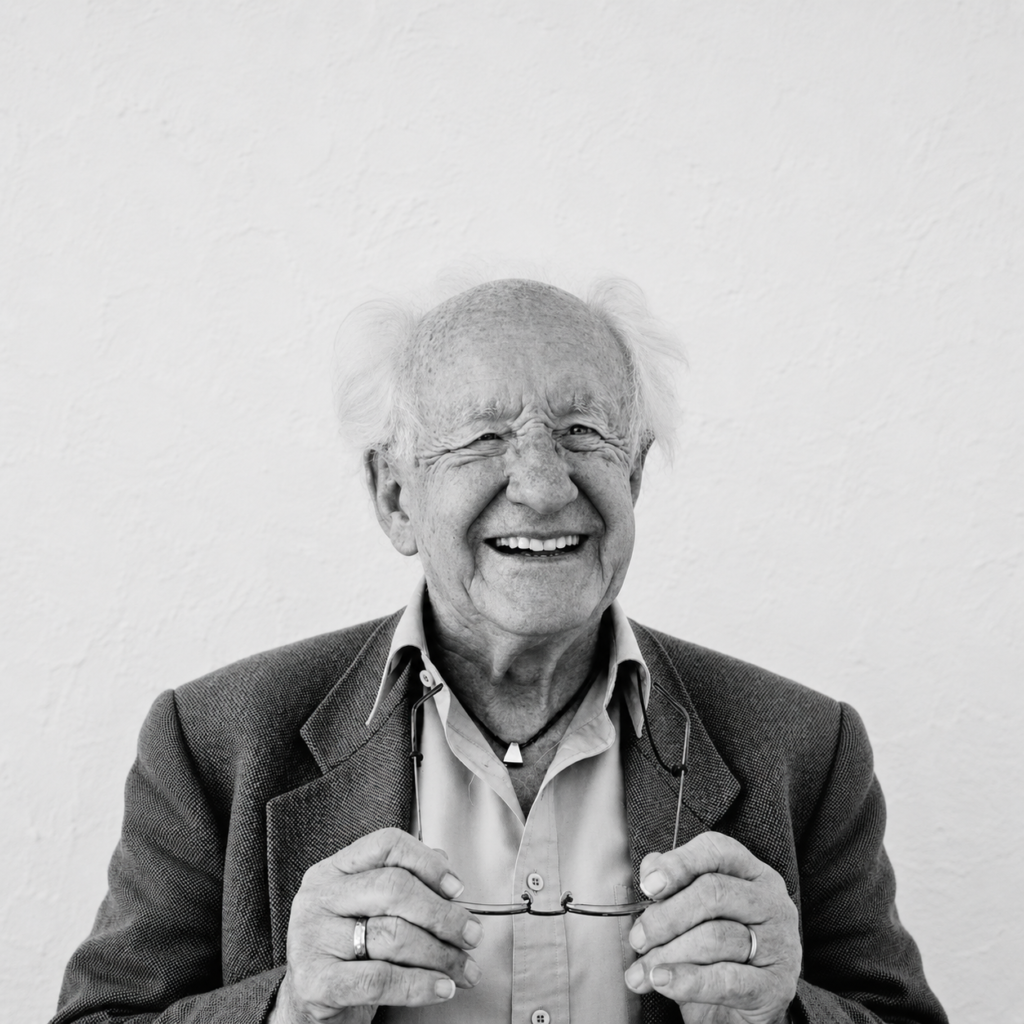
University cooperation for equity and empathy

China Three Gorges University, Yichang, 

A great honor to open the 11th university cooperation conference of N.E.W.S–North-East-West-South—founded in 1993 at the Freie Universität, Berlin by S.P. Park.

Classical university cooperation across borders has professors teaching in one country students from other countries. Thus, when Copenhagen ruled Denmark-Norway 1397-1814 Norwegians studied at the University of Copenhagen, founded in 1479. The University in Oslo came in 1811, but the asymmetry continued; some of it necessary and useful, but not ideal. Missing was equity, “I learn from you, you from me”; missing was empathy, “You learn about me, I about you”. The teaching country is superior in power, shaping the minds in the learning country. But the learning country learns about the deeper features of the teaching country, not vice versa.

A colonial relation. The colonialist leader, England – also in Scotland-Wales-Ireland – imports raw students for processing at huge fees, and exports English as patented commodity with no processing rights. Major industries both; but learning nothing about the world. Of course old knowledge must flow from those with more to those with less, even if professors often exaggerate their own importance: students may learn more together and by self-study–maybe 10%-40%-50%. But professors monopolize exams and diplomas, so better absorb well.

And new knowledge must be produced by searching and re-searching. But that easily leads to a gap between producer and consumer countries coinciding with that between teaching and learning countries. Producer countries monopolize the criteria for valid knowledge: theirs.

International university cooperation risks reinforcing a doubly asymmetric world with minds being shaped and knowledge distributed one way, and deep insights the other. Basic question: how can we organize university cooperation more equitably with empathy in both directions?

Another inter-university center, IUC, was started in 1973 in Dubrovnik Yugoslavia, now Croatia, by the University of Zagreb. Yugoslavia, non-aligned in the Cold War, was between East and West, (leaning toward West), and between North and South, developed in North–Slovenia-Croatia– developing in South–Montenegro-Macedonia (leaning toward North). And ideal meeting ground at the time.

This author was the first Director-General 1973-77, with freedom to develop the IUC, and to think and rethink structure and function. Universities from all over the world–in practice mostly Northwest–joined as members, and were encouraged to participate actively.

The basic unit was the course, typically four weeks. The field could be traditional or new–at that time woman-peace-development-environment studies. Professors, called “resource persons” and student “participants” were drawn from member universities covering salaries for the former and often stipends for the latter. However, the IUC became quickly so popular that both paid for themselves, combining with vacation. IUC benefitted from the huge and cheap hotel capacity in a major tourist resort outside the tourist season.

There were “classes”, two hours before and two after lunch, with rooms available for dialogue groups after that; six hours. Resource persons and member universities donated some books to the library for self-study. Then they all disappeared into countless coffee-houses and pubs–and the dialogues continued. Very different perspectives across the resource person-participant divide met for dialogue and mutual learning. They were all shaken out of daily routines and forced to question mindsets uncontested at home. Countless testimonies carried the same message: the most exciting academic experience in their lives. And not only academic: also marriages.

The third week was problematic: participants at high level, but new resource persons not. Dialogues Sunday night proved useful.

This multilateral, equitable format is strongly recommended and is found in many places in many variations. But rather than across the outmoded East-West and North-South divides the focus might be on the civilization divides. One such divide is between the West–Northwest, Judeo-Christian-secular to be more precise–and the Rest, a mix of the Islamic, Hindu, Buddhist, Chinese, Japanese, indigenous. The topic for a course could be anything, but the resource persons should be encouraged to try to make explicit their angle, discourse.

Furthermore, that brings up a major problem: the West may say, we have no angle, no Western discourse, we are simply scientific, objective, and even have a message to the world: do likewise. And they may be echoed by academics who have absorbed the Western message all over the world; from the horses’ own mouths, at Western universities, or indirectly from countless textbooks.

To leave the illusion of universal objective science multilateral dialogical courses on international relations, focused on patriarchy vs parity, security vs peace, growth vs development, humans vs nature might be useful. The joint search for common ground is fascinating.

And that leads us to a deeper field for university cooperation: joint exploration of epistemology, the criteria for valid knowledge. The West is unwilling-unable to see the limitations of the cartesian-aristotelian focus on atomism and deductivism, giving the past the final word on truth through empiricism. And China is unwilling-unable to recognize its own indebtedness to the daoist focus on holism and yin/yang dialectics pointing beyond the past, trying to look Western.

Imagine a four-week cooperative seminar with many universities about how to think (re-search), speak (also teach) and act (praxis) in the fields of international relations and epistemology; great NEWS!

Inspired by the beauty and strength of the Yangtze River and the Three Gorges–for a smooth, pacific, both-and, come-together.

Originally published at Transcend Media Service here.
Share

Leave a Reply

Your email address will not be published. Required fields are marked *

Related Posts

Jan Oberg, TFF director April 28, 2026 In this third TFF Peace Pulse, I make the important distinction between the violence and the conflict that violence is a symptom of. If you want peace, focus on the underlying conflict because that is the key to resolution, peacemaking, and a better future for the parties. The West is obsessed with violence, just look around you – and 90+ per cent of the public debate is about military issues and other violence – totally wasted for peace. These Peace Pulses will only be published here a few times. You will also not find them on YouTube and Vimeo because both platforms have blocked TFF and me; you know, peace is dangerous these days. Most TFF’s videos since 2007 are now on Rumble.
A donors’ conference, co-sponsered by the Burundian government, the Belgian government and UNDP will be held in Brussels January 12-13, 2004. This PressInfo offers a perspective on its urgency. See also TFF’s new Burundi Forum. Imagine for a moment that politics is about goodness and generosity. Where could a few million dollars of government aid and a few civil society organisations – guaranteed – win the hearts of extremely poor millions who want peace and already work hard to achieve it after 10 years of war and genocide? The answer is Burundi, the heart-shaped country in the heart of Africa. Burundi makes a good story from Africa. But what does the world know about Burundi, its problems and struggles? Burundi’s tough reality Here are the basic facts. Burundi’s population is about 7 million and it is number 171 out of the 175 countries on the UNDP’s human development index. Their life...
Peace is promoted by constructive proposals and dialogue Four preceding PressInfos have expressed concern over — and criticised — the ongoing, militarisation of the EU. Some will say: but there are no alternatives. We believe that there are always alternatives, that democracies are characterised by alternatives and choice, and that openly discussed alternatives will improve the quality and legitimacy of society’s decision–making. In addition, it is an intellectual and moral challenge to not only criticise but also be constructive. If we only tell people that we think they are wrong, they are not likely to listen. However, if we say: what are your views on this set of ideas and steps? — we may sometimes engage them in dialogue and sow a seed. Most people in power circles live their daily lives in in a time frame and a social space where certain ideas, viewpoints and concepts are just not...

Recent Articles

Jan Oberg May 15, 2026 Go to this Fox News page and scroll the whole way down: President Donald Trump tells the world that his meeting with President Xi Jinping yielded a lot of very concrete political and economic results – of course, only where the Chinese side, according to him, agreed with him. He does not mention the Taiwan issue, but Secretary of State, Marco Rubio, says that it did not feature prominently in their talks and that the US policy on Taiwan has not changed. Then go to China Daily – or Global Times – and you will see that for the Chinese it is framework, principles, structure of cooperation etc. that matters – all embedded in the overall idea of “constructive bilateral relationship of strategic stability.” Nowhere is any concrete agreement or deal – all that Trump refers to – mentioned. At the general level, this gives you insights into the very different social...
Lena Petrova of “World Affairs In Context” with more than half a million subscribers on YouTube wanted to explore what a peace researcher like me has to say about, among other things, the First and the Second Cold War and why eethics has disappeared from politics. I am particularly happy about this conversation that also yielded an amazing number of very appreciative comments on YouTube. No doubt, people are longing for alternatives, including peace perspectives.
The MIMAC – Military-Industrial-Media-Academic Complex – drives the world’s rampant militarism and wars without end. Here is a short reflection of how it works against all interests of humanity. #5 deals with why there is no real enemy or threat images/analysis. It’s all ex-post constructions. And, btw, theTFF Peace Pulse is now on Rumble.

TFF on Substack

Discover more from TFF Transnational Foundation & Jan Oberg.

Most Popular

Jan Oberg May 15, 2026 Go to this Fox News page and scroll the whole way down: President Donald Trump tells the world that his meeting with President Xi Jinping yielded a lot of very concrete political and economic results – of course, only where the Chinese side, according to him, agreed with him. He does not mention the Taiwan issue, but Secretary of State, Marco Rubio, says that it did not feature prominently in their talks and that the US policy on Taiwan has not changed. Then go to China Daily – or Global Times – and you will see that for the Chinese it is framework, principles, structure of cooperation etc. that matters – all embedded in the overall idea of “constructive bilateral relationship of strategic stability.” Nowhere is any concrete agreement or deal – all that Trump refers to – mentioned. At the general level, this gives you insights into the very different social...
Lena Petrova of “World Affairs In Context” with more than half a million subscribers on YouTube wanted to explore what a peace researcher like me has to say about, among other things, the First and the Second Cold War and why eethics has disappeared from politics. I am particularly happy about this conversation that also yielded an amazing number of very appreciative comments on YouTube. No doubt, people are longing for alternatives, including peace perspectives.
The MIMAC – Military-Industrial-Media-Academic Complex – drives the world’s rampant militarism and wars without end. Here is a short reflection of how it works against all interests of humanity. #5 deals with why there is no real enemy or threat images/analysis. It’s all ex-post constructions. And, btw, theTFF Peace Pulse is now on Rumble.
Read More
Screenshot-2026-05-15-103534
Jan Oberg May 15, 2026 Go to this Fox News page and scroll the whole way down: President Donald Trump tells the world that his meeting with President Xi Jinping yielded a lot of very concrete political and economic results – of course, only where the Chinese side, according to him, agreed with him. He does not mention the Taiwan issue, but Secretary of State, Marco Rubio, says that it did not feature prominently in their talks and that the US policy on Taiwan has not changed. Then go to China Daily – or Global Times – and you will see that for the Chinese it is framework, principles, structure of cooperation etc. that matters – all embedded in the overall idea of “constructive bilateral relationship of strategic stability.” Nowhere is any concrete agreement or deal – all that Trump refers to – mentioned. At the general level, this gives you insights into the very different social...
Screenshot-2026-05-12-104023
Lena Petrova of “World Affairs In Context” with more than half a million subscribers on YouTube wanted to explore what a peace researcher like me has to say about, among other things, the First and the Second Cold War and why eethics has disappeared from politics. I am particularly happy about this conversation that also yielded an amazing number of very appreciative comments on YouTube. No doubt, people are longing for alternatives, including peace perspectives.
Screenshot-2026-04-13-154551 (2)
The MIMAC – Military-Industrial-Media-Academic Complex – drives the world’s rampant militarism and wars without end. Here is a short reflection of how it works against all interests of humanity. #5 deals with why there is no real enemy or threat images/analysis. It’s all ex-post constructions. And, btw, theTFF Peace Pulse is now on Rumble.
Screenshot-2026-04-13-154551 (1)
Jan Oberg, TFF director April 28, 2026 In this third TFF Peace Pulse, I make the important distinction between the violence and the conflict that violence is a symptom of. If you want peace, focus on the underlying conflict because that is the key to resolution, peacemaking, and a better future for the parties. The West is obsessed with violence, just look around you – and 90+ per cent of the public debate is about military issues and other violence – totally wasted for peace. These Peace Pulses will only be published here a few times. You will also not find them on YouTube and Vimeo because both platforms have blocked TFF and me; you know, peace is dangerous these days. Most TFF’s videos since 2007 are now on Rumble.
Screenshot-2026-04-13-154551
In contrast to most, we’ll bring alternatives, solutions, hope and strategies for a better future. Times are dangerous, yes, but that only intensifies the need for constructive thinking and action! Jan Oberg, TFF director April 13, 2026 The new TFF Peace Pulse uses video messages in a new way: Max 3-5-minute-long comments, ideas or perhaps mini-lectures, all about peace – positive peace. We launch them today on April 13, 2026 with a carefully crafted visual aesthetic fitting the content. We hope to publish them regularly from now on. We launch Peace Pulse (PP) – for a number of reasons. The world is in chaos, and there are countless reasons to feel concerned, frustrated, even angry. The atmosphere is saturated with doom and gloom, with negative energy and rear‑mirror thinking, while vision, imagination, alternatives, strategies and genuine future‑mindedness remain in short supply. And without them, we simply can’t save the world. Looking at problems from a hundred angles will...
IMG_5165 (1)
PART II — Publishing Peace in a System That Prioritises Militarism Jan Oberg, TFF director April 10, 2026 How TFF Maintains a Daily Voice in a Digital World Built for Noise This article is part of the series “TFF at 40″ and it invites you to learn about Four Decades of Publishing Peace. It takes a look at how a small, people‑financed peace foundation has communicated across four generations of technology — from wax stencils and fax machines to mass email and Substack — and why TFF continues to publish every single day in a system that rewards noise, conflict, and militarism. ◆ What it means to publish peace every single day in a digital system built for 24/7 news and other noise, confrontation, and militarism. How TFF’s independence, continuity, and global readership defy algorithms, donor cycles, and Western media censorhip — and why the Majority World keeps listening. When the...


