
TFF PressInfo: Dangerous reductionism about Ukraine

“We don’t see things as they are but as we are” – Anais Nin

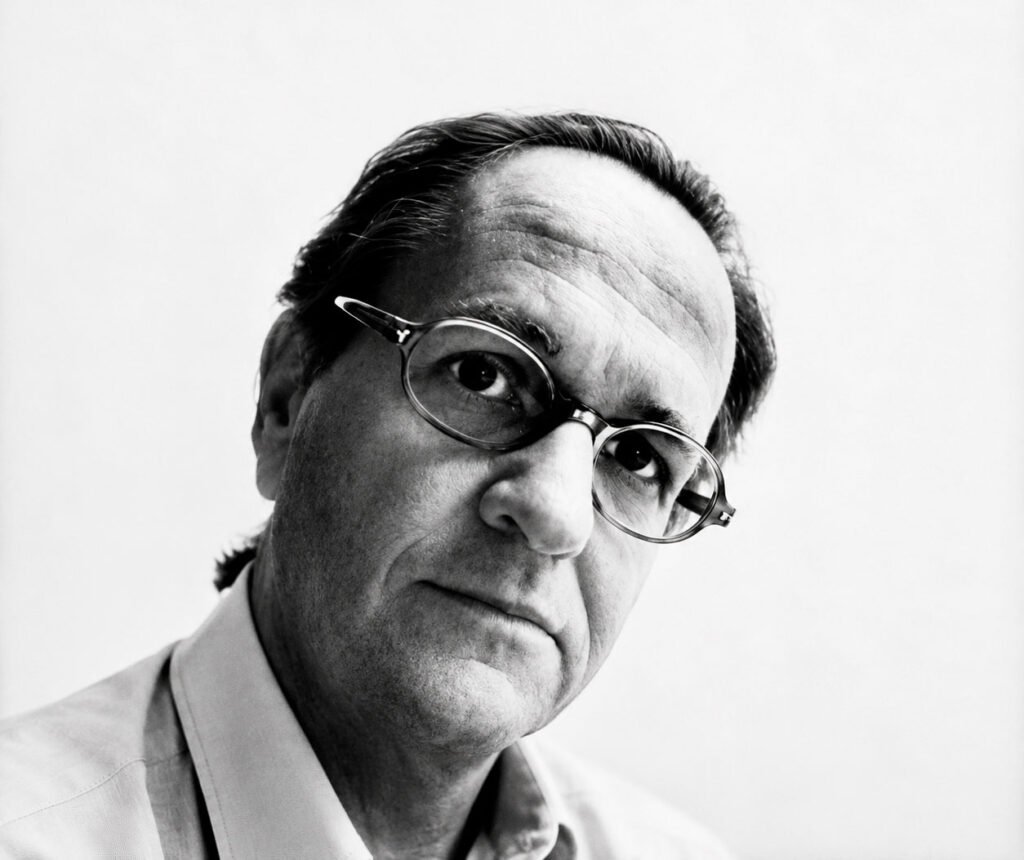
/10/janoberg.jpg”>

Lund, Sweden – March 5, 2014

How can we begin to understand the events in Ukraine? Who are the conflict parties and elements?

Here is a quick checklist of 13, just a selection:

1. Ukraine – government (earlier/present), opposition (split), people (19 ethnic groups + Ukrainians abroad). Crimea with its diversity and Ukraine’s relations to neighbours – enough for a doctoral dissertation.

2. Russia – the Commonwealth of Independent States, the Customs Union of Belarus, Kazakhstan and Russia and Russia’s more or less strong partners such as Syria.

3. Europe – the EU and European non-EU countries such as e.g. Turkey

4. The United States – the world’s only empire, with a foreign policy establishment in Washington deeply split in neo-conservatives on the one hand and Obama and the rest on the other.

5. China – with an increasing influence worldwide, including conspicuously in Ukraine

6. BRICS – Brasil, Russia, India, China and South Africa

7. World financial organisations such as the International Monetary Fund, IMF, finance institutions, banksters and those others who influence and can ”pay the bills” (and get to own the property) in Ukraine

8. Inter-governmental organisations – the UN, NATO, OSCE and others

9. Non-governmental organisations – civil society, protesters etc in Ukraine and CIA-related organisations like National Endowment for Democracy that run foreign policy of their own, to mention some.

10. International law – what applies in a case such as Ukraine? What is aggression, what is the right to self-defence, the role of threats, etc – and how can they be applied in this case?

11. General history – all the above have a history. There is their own history + the history of their relations with each other.

12. Conflict history – What happened the last few years or months that led to the situation we know how.

13. Structures and strength – among all the above: For instance, who has what attitudes to whom (positive/negative)? Who trades what and how much with whom? Who is dependent on whom? How do all the actors relate to all others when the focus is on Ukraine?

Who has what weapons and soldiers, strategies and overall security policies. Where do they have interests – hard interests – and not only noble motives (such as talk about democracy, freedom and justice).

In short – hundreds if not thousands – of interesting components and dynamics inside the complex thing called the Ukraine crisis – or conflict formation. Enough for decades of PhD productions!

From Somalia, Afghanistan, Iraq, Libya, Egypt, Syria etc we should have learned this double truth:

1. Things are more complex than what they seem to be and the geo-political nation-state perspective (in media and politics) is obsolete – and

2. Everything is related to everything else. It’s a bit like in the game of mikado – touch one stick and many, if not all, the others may move while the players think or hope they won’t. It’s also called multi-causality or global interdependence.

Questions and chosen drama

Given these checkpoints: What – grosso modo – do politicians and media in symbiosis make out of it all? What headlines do you see?

What does (mis)leading politicians say? What studio debates? What are the interviewers asking? And what are their chosen perspective and chosen bad cop-good cop investigation tactic?

It’s now all boiled down to this:

1. Russia has invaded a part of sovereign Ukraine!
Russia is now the ‘independent variable’ – the cause; the West is now the ‘dependent’ variable – the reacting party, the victim. The West has to react to the aggressive steps – as if nothing preceded Putin’s move. Goodbye to the conflict’s history!

2. Military perspectives and threats are basic!
Most pictures on the media is of weapons, soldiers – nobody talks about economy, the role of the IMF, trade or dependence (none of the elements above). Threats all over, translating into a demand for tough countermoves and armament against the old Cold War enemy.

3. Tragi-comic rhetorical extremism
Instead of prudence and measured statements: Full blast at accusations, derogations, intimidations, provocations, threats, warnings, perfidies, blatantly false comparisons (such as Swedish foreign minister Carl Bildt’s calling Yanukovich ”Quisling” implying Russia = Nazi Germany), self-justifications and series of tragi-comic double standards, paternalisms, humiliations and what not. Oh boys with their toys!

Conflict illiterate reductionism

They used to say that truth is the first casualty in conflicts and war. It isn’t. The first casualty is complexity – balance, multi-causal perspectives and cool analysis.

And the first children born in war is hysteria and brother self-righteousness.

This is dangerous reductionism. It is irresponsible and could in itself lead to war.

Mikado, by the way, is also a comic opera and title of the Japanese emperor. In the present Ukraine crisis most of the wannabe emperors seem pretty naked.

[ 776 words ]
Peace & future researcher + ‌Art Photographer

Share

Leave a Reply

Your email address will not be published. Required fields are marked *

Related Posts

Jan Oberg, TFF director April 28, 2026 In this third TFF Peace Pulse, I make the important distinction between the violence and the conflict that violence is a symptom of. If you want peace, focus on the underlying conflict because that is the key to resolution, peacemaking, and a better future for the parties. The West is obsessed with violence, just look around you – and 90+ per cent of the public debate is about military issues and other violence – totally wasted for peace. These Peace Pulses will only be published here a few times. You will also not find them on YouTube and Vimeo because both platforms have blocked TFF and me; you know, peace is dangerous these days. Most TFF’s videos since 2007 are now on Rumble.
In contrast to most, we’ll bring alternatives, solutions, hope and strategies for a better future. Times are dangerous, yes, but that only intensifies the need for constructive thinking and action! Jan Oberg, TFF director April 13, 2026 The new TFF Peace Pulse uses video messages in a new way: Max 3-5-minute-long comments, ideas or perhaps mini-lectures, all about peace – positive peace. We launch them today on April 13, 2026 with a carefully crafted visual aesthetic fitting the content. We hope to publish them regularly from now on. We launch Peace Pulse (PP) – for a number of reasons. The world is in chaos, and there are countless reasons to feel concerned, frustrated, even angry. The atmosphere is saturated with doom and gloom, with negative energy and rear‑mirror thinking, while vision, imagination, alternatives, strategies and genuine future‑mindedness remain in short supply. And without them, we simply can’t save the world. Looking at problems from a hundred angles will...
PART II — Publishing Peace in a System That Prioritises Militarism Jan Oberg, TFF director April 10, 2026 How TFF Maintains a Daily Voice in a Digital World Built for Noise This article is part of the series “TFF at 40″ and it invites you to learn about Four Decades of Publishing Peace. It takes a look at how a small, people‑financed peace foundation has communicated across four generations of technology — from wax stencils and fax machines to mass email and Substack — and why TFF continues to publish every single day in a system that rewards noise, conflict, and militarism. ◆ What it means to publish peace every single day in a digital system built for 24/7 news and other noise, confrontation, and militarism. How TFF’s independence, continuity, and global readership defy algorithms, donor cycles, and Western media censorhip — and why the Majority World keeps listening. When the...

Recent Articles

Jan Oberg May 15, 2026 Go to this Fox News page and scroll the whole way down: President Donald Trump tells the world that his meeting with President Xi Jinping yielded a lot of very concrete political and economic results – of course, only where the Chinese side, according to him, agreed with him. He does not mention the Taiwan issue, but Secretary of State, Marco Rubio, says that it did not feature prominently in their talks and that the US policy on Taiwan has not changed. Then go to China Daily – or Global Times – and you will see that for the Chinese it is framework, principles, structure of cooperation etc. that matters – all embedded in the overall idea of “constructive bilateral relationship of strategic stability.” Nowhere is any concrete agreement or deal – all that Trump refers to – mentioned. At the general level, this gives you insights into the very different social...
Lena Petrova of “World Affairs In Context” with more than half a million subscribers on YouTube wanted to explore what a peace researcher like me has to say about, among other things, the First and the Second Cold War and why eethics has disappeared from politics. I am particularly happy about this conversation that also yielded an amazing number of very appreciative comments on YouTube. No doubt, people are longing for alternatives, including peace perspectives.
The MIMAC – Military-Industrial-Media-Academic Complex – drives the world’s rampant militarism and wars without end. Here is a short reflection of how it works against all interests of humanity. #5 deals with why there is no real enemy or threat images/analysis. It’s all ex-post constructions. And, btw, theTFF Peace Pulse is now on Rumble.

TFF on Substack

Discover more from TFF Transnational Foundation & Jan Oberg.

Most Popular

Jan Oberg May 15, 2026 Go to this Fox News page and scroll the whole way down: President Donald Trump tells the world that his meeting with President Xi Jinping yielded a lot of very concrete political and economic results – of course, only where the Chinese side, according to him, agreed with him. He does not mention the Taiwan issue, but Secretary of State, Marco Rubio, says that it did not feature prominently in their talks and that the US policy on Taiwan has not changed. Then go to China Daily – or Global Times – and you will see that for the Chinese it is framework, principles, structure of cooperation etc. that matters – all embedded in the overall idea of “constructive bilateral relationship of strategic stability.” Nowhere is any concrete agreement or deal – all that Trump refers to – mentioned. At the general level, this gives you insights into the very different social...
Lena Petrova of “World Affairs In Context” with more than half a million subscribers on YouTube wanted to explore what a peace researcher like me has to say about, among other things, the First and the Second Cold War and why eethics has disappeared from politics. I am particularly happy about this conversation that also yielded an amazing number of very appreciative comments on YouTube. No doubt, people are longing for alternatives, including peace perspectives.
The MIMAC – Military-Industrial-Media-Academic Complex – drives the world’s rampant militarism and wars without end. Here is a short reflection of how it works against all interests of humanity. #5 deals with why there is no real enemy or threat images/analysis. It’s all ex-post constructions. And, btw, theTFF Peace Pulse is now on Rumble.
Read More
Screenshot-2026-05-15-103534
Jan Oberg May 15, 2026 Go to this Fox News page and scroll the whole way down: President Donald Trump tells the world that his meeting with President Xi Jinping yielded a lot of very concrete political and economic results – of course, only where the Chinese side, according to him, agreed with him. He does not mention the Taiwan issue, but Secretary of State, Marco Rubio, says that it did not feature prominently in their talks and that the US policy on Taiwan has not changed. Then go to China Daily – or Global Times – and you will see that for the Chinese it is framework, principles, structure of cooperation etc. that matters – all embedded in the overall idea of “constructive bilateral relationship of strategic stability.” Nowhere is any concrete agreement or deal – all that Trump refers to – mentioned. At the general level, this gives you insights into the very different social...
Screenshot-2026-05-12-104023
Lena Petrova of “World Affairs In Context” with more than half a million subscribers on YouTube wanted to explore what a peace researcher like me has to say about, among other things, the First and the Second Cold War and why eethics has disappeared from politics. I am particularly happy about this conversation that also yielded an amazing number of very appreciative comments on YouTube. No doubt, people are longing for alternatives, including peace perspectives.
Screenshot-2026-04-13-154551 (2)
The MIMAC – Military-Industrial-Media-Academic Complex – drives the world’s rampant militarism and wars without end. Here is a short reflection of how it works against all interests of humanity. #5 deals with why there is no real enemy or threat images/analysis. It’s all ex-post constructions. And, btw, theTFF Peace Pulse is now on Rumble.
Screenshot-2026-04-13-154551 (1)
Jan Oberg, TFF director April 28, 2026 In this third TFF Peace Pulse, I make the important distinction between the violence and the conflict that violence is a symptom of. If you want peace, focus on the underlying conflict because that is the key to resolution, peacemaking, and a better future for the parties. The West is obsessed with violence, just look around you – and 90+ per cent of the public debate is about military issues and other violence – totally wasted for peace. These Peace Pulses will only be published here a few times. You will also not find them on YouTube and Vimeo because both platforms have blocked TFF and me; you know, peace is dangerous these days. Most TFF’s videos since 2007 are now on Rumble.
Screenshot-2026-04-13-154551
In contrast to most, we’ll bring alternatives, solutions, hope and strategies for a better future. Times are dangerous, yes, but that only intensifies the need for constructive thinking and action! Jan Oberg, TFF director April 13, 2026 The new TFF Peace Pulse uses video messages in a new way: Max 3-5-minute-long comments, ideas or perhaps mini-lectures, all about peace – positive peace. We launch them today on April 13, 2026 with a carefully crafted visual aesthetic fitting the content. We hope to publish them regularly from now on. We launch Peace Pulse (PP) – for a number of reasons. The world is in chaos, and there are countless reasons to feel concerned, frustrated, even angry. The atmosphere is saturated with doom and gloom, with negative energy and rear‑mirror thinking, while vision, imagination, alternatives, strategies and genuine future‑mindedness remain in short supply. And without them, we simply can’t save the world. Looking at problems from a hundred angles will...
IMG_5165 (1)
PART II — Publishing Peace in a System That Prioritises Militarism Jan Oberg, TFF director April 10, 2026 How TFF Maintains a Daily Voice in a Digital World Built for Noise This article is part of the series “TFF at 40″ and it invites you to learn about Four Decades of Publishing Peace. It takes a look at how a small, people‑financed peace foundation has communicated across four generations of technology — from wax stencils and fax machines to mass email and Substack — and why TFF continues to publish every single day in a system that rewards noise, conflict, and militarism. ◆ What it means to publish peace every single day in a digital system built for 24/7 news and other noise, confrontation, and militarism. How TFF’s independence, continuity, and global readership defy algorithms, donor cycles, and Western media censorhip — and why the Majority World keeps listening. When the...


