
The violence of Psalm 21

There is some difficulty in reconciling humanistic ethics with biblical scripture that has disturbed me recently. If a religious text nurtures morally unacceptable impulses that are acted upon either consciously or sub-consciously in political domains, how can these adverse influences be repudiated without purporting to claim a hegemonic status for a secular reader?

Even a religiously oriented person such as myself, who rejects deference to whatever is contained in the most holy of books if it conflicts with conscience, is troubled by this tension between what we believe to be right and what can be found in the holiest of books. In the West, where the specific religious roots of political authority are rarely acknowledged directly, the problem persists, especially in claims by the state to deal with its enemies at home and abroad.

Even if we leave to one side the problems that the modern mind has with the metaphysical and miraculous claims made on behalf of religious authority, and take refuge in how Paul Tillich handled these issues by way of identifying God with the human experience of ‘ultimate depth’ regardless of the form assumed, provided only that it did not serve to vindicate ethically unacceptable behavior. In effect, the post-theistic core of religious devotion in this reworking of tradition becomes almost synonymous with spirituality and awe as experiential realities, having more in common with the thought of Alfred North Whitehead than with the institutional religions.

My concern here is far more modest and limited, and can be expressed in a very particular manner. Its main concern is how to read Psalm 21 in ways that are neither designed to avoid the awkwardness of its apparent endorsement of genocidal violence nor to repudiate the spirituality that is bound up with the sentiments that led the psalmist, reputedly King David, to intone sentiments that seem too extreme. After exalting the Lord for his support of the earthly ruler, the psalmist removes any doubt about an affirmation of unquestioning faith: “For the king trusts in the Lord, and through the mercy of the Most High he shall not be moved.”

What particularly impresses the psalmist is the strength of God, and his power and will to subjugate all that is found to be evil, or in practical terms, posing a threat to an earthly ruler or society: “You shall make them as a fiery oven in the time of Your anger; the Lord shall swallow them up in His wrath, and the fire shall devour them.”

Even beyond exterminating those who are enemies of the favored ruler and designated as evil, this wrath attributed to God shall know no bounds: “Their offspring You shall devour from the earth, and their descendants among the sons of men.” Continuing in this vein, “[f]or they intended evil against You; they devised a plot which they are able to perform.” With a military flourish such enemies will be made to “turn their back” while the arrows of the Lord are strung so as to carry out their lethal mission. The psalm ends glorifying this sacred violence: “Be exalted, O Lord, in your own strength! We will sing and praise Your power.”

Psalm 21 is not an aberration in the Bible, but neither is it a summary of the biblical worldview. The Book of Esther is another tale of God’s wrath unleashed on behalf of Jews living in the vast kingdom of King Ahasueres. Saving these Jews of the kingdom from a plot to destroy them, the king heeding Queen Esther, is merciless and shows no respect for innocence: “Thus the Jews defeated all their enemies with the stroke of the sword, with slaughter and destruction, and did what they pleased with them.” (Esther 9:5)

It is this absence of limits if the cause is righteous that prepares the way for the commission of what today are called ‘crimes against humanity.’

There are many biblical expressions of God’s wrath mobilized against the enemies of the Israelites in ways that offend those strands of contemporary morality that rejects ideas about the absolute evil of the enemy or the unconditional goodness of the nation and its friends, and is sensitive to the innocence of those who are not themselves perpetrators of wrongful acts. The ethical and legal rejection of genocidal vengeance became supported by an almost universal secular consensus after the Holocaust, but unfortunately genocidal politics and sentiments remain embedded in human experience of ethnic and religious conflict, and everywhere lye dormant just below the surface in virtually every society.

Religious websites do not condemn or contextualize such genocidal language, but insist that the intention of the psalmist is to underscore the degree to which evil will be punished and the degree of protection given to those who put their trust in God.

In most institutionalized religious circles there is little willingness to consider such sentiments as problematic or exerting dangerous cultural influences. What seems required is a repudiation of the plain meaning of the language used as well as an explanation that such sentiments was never meant to be taken as guides to action and justifications for limitless violence against enemies. It might also be observed that the distinction between friends and enemies was somewhat more polarized in ancient times.

Of course, I am far from the first to raise some doubts about literal deference biblical ethics, although it should be noted that the two later monotheistic religions incorporate without reservation the Old Testament, including Psalm 21, although in various ways they move beyond it, exhibiting a moral evolution. Thomas Jefferson, among many others, in the Deist tradition, prepared his own biblical text, removing passages that he found ethically offensive or contrary to reason. Such an undertaking would seem to be clearly heretical from most institutional perspectives, privileging individual human judgment over a sacred text endorsed by religious authority over the course of many centuries.

Yet is this display of reverence for revealed truth really different than subtle moves in the opposite direction, such as giving a sanitizing reading to the text so as to avoid the ethically offensive content of its clear meaning as interpreted on the basis of common sense?

Have we in the modern world truly rejected these absolutist attitudes toward ‘the enemy’? The Nazi death camps and the atomic bombings of Hiroshima and Nagasaki suggest that the hatred of the other and the uncritical celebration of the self continue to produce the most hideous crimes against humanity.

These shameful undertakings are usually accompanied by rationalizations and erasures that result in widespread denial in the relevant national communities and manage to suppress critical reactions by ‘good Germans’ and ‘good Americans’ who insist that they know not often in apparent good faith.

The anti-terrorist rhetoric of recent years is rather exterminist in its expression, and political implications. George W. Bush, not someone who shuns self-serving moralism, openly endorsed the idea that the attackers of 9/11 were evil, and should be hunted down and exterminated, although at least he did not implicate the descendents. There is a biblical resonance in his words spoken during his commencement address to West Point graduates in June 2002: “Some worry that it is somehow undiplomatic or impolite to speak the language of right and wrong. I disagree…We are in a conflict between good and evil. And America will call evil by its name.”

Such a dualistic passage, at once presupposing that we are the side of the good and opposed by that which is evil is confusing if thought about. It, at once, claims a religiously sanctioned authority to destroy and violates the specifically Christian teaching that rejects such a sharp divide between good and evil since we are all born sinners. What Bush does somewhat contrary to a more refined religious understanding is to fuse his ultra-nationalist agenda with a moral imperative to destroy the enemy without worrying about limits, restraints, and compassion.

A similar entitlement to kill was claimed by Barack Obama when Osama bin Laden was finally found hiding out in Abbottabad, Pakistan on May 2, 2010, killed although unarmed, with few questions being raised as to whether such an almost ritualized execution was justified or necessary. Instead the American president, presented the event as a major victory for his presidency, and the process by which this outcome came about was celebrated in a rare bipartisan spirit by the public and given an attempted public vindication in the film “Zero Dark Thirty,” which included an indirect endorsement of torture as an essential element in the CIA search process yielded crucial information about the whereabouts of the al-Qaeda leader.

This kind of partisan morality is more in keeping with the ethos of Psalm 21 than with the mainstream Christian understanding of good and evil, which condemns as heresy the idea of the absolute good of the self and the absolute evil of the enemy. In this regard human undertakings if claiming moral authority, should always include respect for the redemptive potential of the other, as well as the element of sinfulness of the self.

To claim God’s partnership in warlike undertakings thus seems like a distortion of the truer understanding of the spiritual core of the biblical message, especially as understood and interpreted over the centuries in relation to the New Testament. Yet such protection against the hubris of the powerful stands on the shoulders of unrepudiated biblical texts such as Psalm 21 or the Book of Esther.

The retaliatory threat embedded in the doctrine of nuclear deterrence seems defensive in its posture, yet it proposes an absolute lethality of response that threatens to kill tens of millions, and even to risk endangering the future of the species; E.P. Thompson in his condemnation of any reliance on nuclear weapons, believed that even the mental and cultural preparation required to make a credible deterrent threat to bomb enemy cities embraces an exterminist form of national security, and as such, is morally decadent.

This radical separation of good and evil in the globalized world of politics, either with bold conviction, as during the Bush presidency, or more subtly, during the Obama administration, suggests that societies are still comfortable with the dangerously self-serving approach of Psalm 21.

This commentary is not meant to single out for criticism either the Old Testament or the United States. These tendencies are embedded deeply within Western political culture, and unless challenged and repudiated, possess several ominous implications for the entire human future: The absolutist pretensions of nationalist and religious extremism, the globalization of conflict, scarcities of space and resources, the devastations and uncertainties of climate change, prospects for pandemics, the apocalyptic potential of military technology, pervasive insecurity and vulnerability, and the unavailability of actors and capabilities on a global stage to uphold human and global interests.

There is a narrow question: should not those of us who affirm the spiritual significance of our life experience insist on a reading of religious texts that corresponds with our conscience, and not evade the challenge of rejecting some elements of religious tradition rather than attempting to explain it away?

There is also a broader issue: unless we purge our individual and collective lives of these destructive patterns, the destiny of modern civilizations and even of the species is placed in severe jeopardy. The idea of civilizational collapse has been extensively explored from the perspective of collective failures to heed warnings and adapt, but as a matter of delimited ethno-religious communities, not in relation to the species and entire world, which notoriously lack effective sensors for dangers directed at the whole as distinct from challenges to the part.

Our modern world order, an evolving state-centric structure, absolutizes the parts, marginalizes the whole, and thus seems dangerously obsolescent as the challenges to the whole grow more and more relevant, while remaining unmanageable. To grasp onto what must be done is also perplexing. For instance, in my view the advocates of philosophical anarchism have more to teach us than the champions of world government.
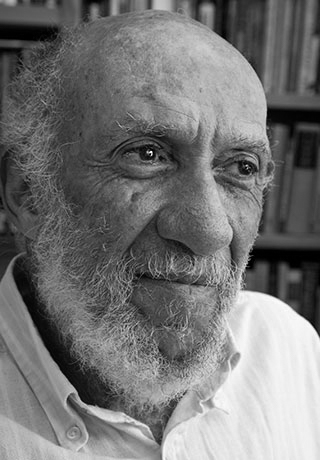

Professor Falk became an adviser to TFF when it was established in 1985.

Share

Leave a Reply

Your email address will not be published. Required fields are marked *

Related Posts

“En dag som berättigar till fest”, utropade den London-baserade al-Quds al-Arabi efter FN:s eldupphörresolution, “eftersom detta är första gången som Israel accepterar ett FN-beslut från en position som besegrad och inte som segrare”. Att ett arabisk-israeliskt krig för en gångs skull slutat med arabisk seger, är en helt dominerade åsikt i arabiska medier. Al-Quds al-Arabi tillåter sig att drömma om att det israeliska nederlaget skall leda till massflykt från Israel. Men i nästa andetag påminner tidningen om att Israel aldrig brukar genomföra sina internationella åtaganden och varnar för att förlorarna, liksom tidigare, kan hämnas genom att provocera fram inbördeskrig i Libanon. Med tanke på de otaliga massmediala vittnesmålen om det libanesiska folkets eniga motståndskraft förefaller risken för inre stridigheter i det sargade landet just nu liten. Men visst kan man urskilja nyansskillnader i libanesiska tidningar. Vänsterorganet al-Safir uppfattar FN-resolutionen som en komplott i syfte att rädda Israel från ännu större...
Lena Petrova of “World Affairs In Context” with more than half a million subscribers on YouTube wanted to explore what a peace researcher like me has to say about, among other things, the First and the Second Cold War and why eethics has disappeared from politics. I am particularly happy about this conversation that also yielded an amazing number of very appreciative comments on YouTube. No doubt, people are longing for alternatives, including peace perspectives.
Jan Oberg, TFF director April 28, 2026 In this third TFF Peace Pulse, I make the important distinction between the violence and the conflict that violence is a symptom of. If you want peace, focus on the underlying conflict because that is the key to resolution, peacemaking, and a better future for the parties. The West is obsessed with violence, just look around you – and 90+ per cent of the public debate is about military issues and other violence – totally wasted for peace. These Peace Pulses will only be published here a few times. You will also not find them on YouTube and Vimeo because both platforms have blocked TFF and me; you know, peace is dangerous these days. Most TFF’s videos since 2007 are now on Rumble.

Recent Articles

“En dag som berättigar till fest”, utropade den London-baserade al-Quds al-Arabi efter FN:s eldupphörresolution, “eftersom detta är första gången som Israel accepterar ett FN-beslut från en position som besegrad och inte som segrare”. Att ett arabisk-israeliskt krig för en gångs skull slutat med arabisk seger, är en helt dominerade åsikt i arabiska medier. Al-Quds al-Arabi tillåter sig att drömma om att det israeliska nederlaget skall leda till massflykt från Israel. Men i nästa andetag påminner tidningen om att Israel aldrig brukar genomföra sina internationella åtaganden och varnar för att förlorarna, liksom tidigare, kan hämnas genom att provocera fram inbördeskrig i Libanon. Med tanke på de otaliga massmediala vittnesmålen om det libanesiska folkets eniga motståndskraft förefaller risken för inre stridigheter i det sargade landet just nu liten. Men visst kan man urskilja nyansskillnader i libanesiska tidningar. Vänsterorganet al-Safir uppfattar FN-resolutionen som en komplott i syfte att rädda Israel från ännu större...
Greenland – the world’s largest island, a continent of its own with only 57.000 inhabitants. I visited it for the first time in May 2005. I flew across the inland ice to Nuuk, the tiny capital with some 14.000 inhabitants. I was overwhelmed by the pride and kindness of everyone I met as well as by the unique natural beauty. Unfortunately, due to weather conditions during my ten-day stay I could get nowhere else but Nuuk. Fortunately, however, among those I met was Gitte Arvegaard, a Danish lawyer and negotiator employed by the local government, Greenland Home Rule. She turned out to be an enthusiastic photographer with a lot of pictures taken during various trips around Greenland. So this Greeland series is the result of our cooperative effort. We both hope you enjoy it and are stimulated to visit Greenland – about which you may read more here. Finally, if you want to...
 Jan Oberg’s storyof how he met Sir Paul Liverpool – where else to meet Paul McCartney? Paul’s old class mate and TFF Associate, Jonathan Power introduced me to Paul McCartney in Liverpool at an informal reception. It was held at what used to be their school, now the Liverpool Institute for Performing Arts and we were there to celebrate that Jonathan had written Amnesty International’s 40th Anniversary book. This happy event for “righting wrongs and writing songs” gave me an opportunity to meet Paul and tell him about TFF and get straight to the matter: would he consider making a donation in support of our work for peace? While I was probably the only one with such a wish that day, I was certainly not the only one who wanted to shake hands and talk with him. In the last minutes before Paul was to leave, Jonathan brought us together and we got about three...

TFF on Substack

Discover more from TFF Transnational Foundation & Jan Oberg.

Most Popular

“En dag som berättigar till fest”, utropade den London-baserade al-Quds al-Arabi efter FN:s eldupphörresolution, “eftersom detta är första gången som Israel accepterar ett FN-beslut från en position som besegrad och inte som segrare”. Att ett arabisk-israeliskt krig för en gångs skull slutat med arabisk seger, är en helt dominerade åsikt i arabiska medier. Al-Quds al-Arabi tillåter sig att drömma om att det israeliska nederlaget skall leda till massflykt från Israel. Men i nästa andetag påminner tidningen om att Israel aldrig brukar genomföra sina internationella åtaganden och varnar för att förlorarna, liksom tidigare, kan hämnas genom att provocera fram inbördeskrig i Libanon. Med tanke på de otaliga massmediala vittnesmålen om det libanesiska folkets eniga motståndskraft förefaller risken för inre stridigheter i det sargade landet just nu liten. Men visst kan man urskilja nyansskillnader i libanesiska tidningar. Vänsterorganet al-Safir uppfattar FN-resolutionen som en komplott i syfte att rädda Israel från ännu större...
Greenland – the world’s largest island, a continent of its own with only 57.000 inhabitants. I visited it for the first time in May 2005. I flew across the inland ice to Nuuk, the tiny capital with some 14.000 inhabitants. I was overwhelmed by the pride and kindness of everyone I met as well as by the unique natural beauty. Unfortunately, due to weather conditions during my ten-day stay I could get nowhere else but Nuuk. Fortunately, however, among those I met was Gitte Arvegaard, a Danish lawyer and negotiator employed by the local government, Greenland Home Rule. She turned out to be an enthusiastic photographer with a lot of pictures taken during various trips around Greenland. So this Greeland series is the result of our cooperative effort. We both hope you enjoy it and are stimulated to visit Greenland – about which you may read more here. Finally, if you want to...
 Jan Oberg’s storyof how he met Sir Paul Liverpool – where else to meet Paul McCartney? Paul’s old class mate and TFF Associate, Jonathan Power introduced me to Paul McCartney in Liverpool at an informal reception. It was held at what used to be their school, now the Liverpool Institute for Performing Arts and we were there to celebrate that Jonathan had written Amnesty International’s 40th Anniversary book. This happy event for “righting wrongs and writing songs” gave me an opportunity to meet Paul and tell him about TFF and get straight to the matter: would he consider making a donation in support of our work for peace? While I was probably the only one with such a wish that day, I was certainly not the only one who wanted to shake hands and talk with him. In the last minutes before Paul was to leave, Jonathan brought us together and we got about three...
Read More
Imagen-thumbnail-The-Transnational-1
“En dag som berättigar till fest”, utropade den London-baserade al-Quds al-Arabi efter FN:s eldupphörresolution, “eftersom detta är första gången som Israel accepterar ett FN-beslut från en position som besegrad och inte som segrare”. Att ett arabisk-israeliskt krig för en gångs skull slutat med arabisk seger, är en helt dominerade åsikt i arabiska medier. Al-Quds al-Arabi tillåter sig att drömma om att det israeliska nederlaget skall leda till massflykt från Israel. Men i nästa andetag påminner tidningen om att Israel aldrig brukar genomföra sina internationella åtaganden och varnar för att förlorarna, liksom tidigare, kan hämnas genom att provocera fram inbördeskrig i Libanon. Med tanke på de otaliga massmediala vittnesmålen om det libanesiska folkets eniga motståndskraft förefaller risken för inre stridigheter i det sargade landet just nu liten. Men visst kan man urskilja nyansskillnader i libanesiska tidningar. Vänsterorganet al-Safir uppfattar FN-resolutionen som en komplott i syfte att rädda Israel från ännu större...
Greenland – the world’s largest island, a continent of its own with only 57.000 inhabitants. I visited it for the first time in May 2005. I flew across the inland ice to Nuuk, the tiny capital with some 14.000 inhabitants. I was overwhelmed by the pride and kindness of everyone I met as well as by the unique natural beauty. Unfortunately, due to weather conditions during my ten-day stay I could get nowhere else but Nuuk. Fortunately, however, among those I met was Gitte Arvegaard, a Danish lawyer and negotiator employed by the local government, Greenland Home Rule. She turned out to be an enthusiastic photographer with a lot of pictures taken during various trips around Greenland. So this Greeland series is the result of our cooperative effort. We both hope you enjoy it and are stimulated to visit Greenland – about which you may read more here. Finally, if you want to...
p_mccartney_poem
 Jan Oberg’s storyof how he met Sir Paul Liverpool – where else to meet Paul McCartney? Paul’s old class mate and TFF Associate, Jonathan Power introduced me to Paul McCartney in Liverpool at an informal reception. It was held at what used to be their school, now the Liverpool Institute for Performing Arts and we were there to celebrate that Jonathan had written Amnesty International’s 40th Anniversary book. This happy event for “righting wrongs and writing songs” gave me an opportunity to meet Paul and tell him about TFF and get straight to the matter: would he consider making a donation in support of our work for peace? While I was probably the only one with such a wish that day, I was certainly not the only one who wanted to shake hands and talk with him. In the last minutes before Paul was to leave, Jonathan brought us together and we got about three...
Logo-Transnational
1942James Paul McCartney is born in Liverpool on June 18th. 1956Paul writes his first song, I Lost My Little Girl. 1957Paul meets John Lennon at St. Peter’s Church Fete, Woolton, Liverpool. He joins his first group, The Quarrymen and performs in his first gig at The New Clubmoor Hall, Liverpool, on October 18th. 1960Formation of The Beatles, who play residencies in Hamburg and at The Cavern in Liverpool. 1961First Beatles recordings issued in Germany, as the backing group for Tony Sheridan. 1962The first Beatles Parlophone recording, Love Me Do, reaches number 17 in the British charts. 1963The birth of Beatlemania. Please Please Me gives the group their first British Number 1. She Loves You cements their success. Please Please Me and With The Beatles albums released. 1964First triumphant American tour. The Beatles perform at the Royal Command Performance and release their first film, A Hard Day’s Night. Their single I...
Logo-Transnational
  Back to the series “Bujumbura, Burundi”
By JONATHAN POWER August 16, 2000 LONDON – Remember the summer of ’98? In the sweltering, torpid heat of a Roman august, charged with exhaust fumes, the international community gave its overwhelming approval to the establishment of an International Criminal Court that will enable those accused of “crimes against humanity” to be tried and, if convicted, sentenced. Only seven nations opposed or abstained from the motion, including Israel, China, India and the U.S.A. where the Pentagon had successfully waged bureaucratic guerrilla war to undermine the initially sympathetic stance of President Bill Clinton. Two years on we can now see what an epochal event that was. In a the stroke of 120 pens it changed the climate on political thuggery. After numerous half-starts and false starts ever since the Nuremberg and Tokyo trials that convicted the war criminals of the Second World War, the world at last had agreed en masse a common...

