
Think and act - locally and globally

johangaltung

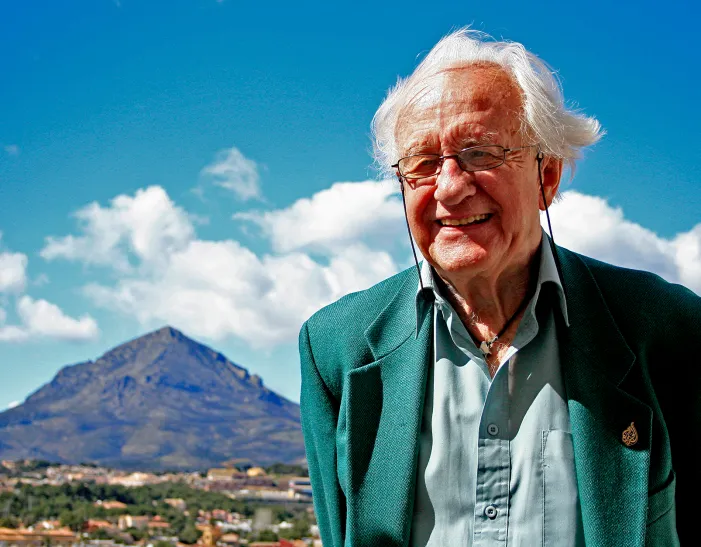
Alfaz del Pi, located between Mediterranean beaches and a couple of majestic mountains, Campana-Aitana (Man and Woman) 1500 meters high. Today this small town generously accommodates 21,500; surrounded by fertile soil, orange and olive trees, vines. Benidorm – the famous tourist resort – and Altea, more for artists, are at hand stretching distance; on the Costa Blanca – white seen from the sea – in Spain.

So far nothing special. But that little town is home to close to one hundred different nations; 57% are foreigners. The English and the Norwegians are the most frequent; the Norwegians arriving already some 45 years ago. Close to half a century of peaceful coexistence; and not only absence of violence but also positive, cooperative peace.

We, a Japanese-Norwegian couple, arrived June 1969. First time in Spain was in 1951, hitchhiking to understand fascism better. Franco had evolved from dictadura, dictatorship, after a brutal civil war, to dictablanda, the softer version. But the basic aspect of dictatorship was there like a nightmare draped over the country: fear, fear, fear; so many listening, so few talking. But some said, if you only come for the beach, stay at home. Bring books; we are isolated, not knowing what happens. Franco will not last forever, we must be prepared.

Books were brought. Customs people hardly knew how to read but quickly identifying more copies than one; hence, one of each. Books were handed over, to the right – in this case left – people, for instance at a conference in Madrid in June 1969. And the books were read.

The summer heat was unbearable. We drove to the coast to visit a friend, officer in the Norwegian army, with years of dialogues behind us. They lived in an “urbanización” that looked like a Scandinavian ghetto, making us exclaim: Never for us! In the evening we had made the downpayment for a house. How come? The beach, the mountains, the roof terrace, a depository for books in transit: Yes!

Alfaz at the time was a tiny village with dirt roads; four women dressed in black were the rush-hour traffic. Flies would fall down, legs up, victims of the afternoon heat. No doubt the influx of foreigners had a dynamizing impact: some money and mores, in exchange for sun and smiles and some mores. And no doubt Alfaz managed this well.

In the shadows of the deep evenings women pulled out the chairs, sitting in the narrow streets for a tertulia, a meeting, handling that new resource, the foreigners, in need of a gardener, a handyman, a painter. The distribution was masterly done. The village grew and grew, very few really rich or poor. Money was invested in huertas, fields, growing vegetables, whatever; shops; services; mini-industries. 300 days of sunshine per year was indeed attractive for people from the foggy North Sea and the stormy Atlantic. 365 days of smiles and charm, friendliness, warmth, that extra glimmer in the eyes, the human climate, proved even more attractive.

Alfaz became more than a summer house for rapid beach access. Alfaz became home. The story repeated itself; coming to visit a friend, parents, whatever; and the downpayment followed. Some made mistakes, underestimating the role of friends and family left behind between fog and storm, and the time needed to build new relations.

Close to half a century without serious incidents; doing what people often do by intuition, building peace. It took time to understand that “in Alfaz behave as the alfazinos do”. Talk Spanish for instance (well, some are still waiting for the Spanish to speak their language). Unfreezing, thawing, smiling. It took less time for Alfaz to pick up some informality and Nordic love mores. And inter-marriages produced ever more bilinguals.

Cooperation spread from the economy to culture. Norwegians took courses, held seminars, studied Spanish history; an institute for the study of Norway is coming; Alfaz transformed, cosmopolitan, polyglot.

And it spread to politics. Norwegians voted, they entered town council and administration; accepted as equals. Norwegians built their own institutions soon to blend with the Spanish, for instance socially for the less privileged. Conflicts, over land and/or money, jealousies were handled or faded out leaving little or no trauma.

Both quickly learned what the world looks like to the other. Food and clothes, music and art in general, serve as great openers to other cultures. National holidays follow. Alfaz respected, even celebrated the Norwegian May 17, that pioneer democratic constitution from 1814; the Norwegians took to fiestas, indeed more frequent, as keys to the Spanish soul. Accompanied by the siesta – by prejudiced eyes seen as Spanish laziness – only to discover how to make two days out of one. Soon the Spanish became more punctual than the Norwegians themselves.

What happened to books? They became summer courses in subjects Spain had missed during the isolation. Like peace and women studies: international courses in Benidorm, with the University of Alicante. Many early participants are today professors all over Spain.

Came 22 July 2011, the monstrous terrorist act; Oslo, Utöya. The mayor of Alfaz, Vicente Arques, immediately expressed the compassion of Alfaz with a country in the deepest distress – how come! – and sorrow. It is easy to celebrate together when the going is good; to share sorrow requires the deep humanity of Alfaz under those friendly skies.

Cooperation for equal benefit, empathy, conflict resolution and trauma reconciliation: key peace tasks anywhere, in the family, at school, at work, in a village-town like Alfaz, as example for a country, for the West-Islam.

And symbolized on 15 June 2013 in a wonderful sculpture by the famous Agustín Ibarrola; against terrorism, in memory of the victims, and for peace, quoting Gandhi, There is no road to Peace; Peace is the Road. Alfaz practices exactly that: think and act, locally and globally.

Homenaje a Alfaz!
Share

Leave a Reply

Your email address will not be published. Required fields are marked *

Related Posts

“En dag som berättigar till fest”, utropade den London-baserade al-Quds al-Arabi efter FN:s eldupphörresolution, “eftersom detta är första gången som Israel accepterar ett FN-beslut från en position som besegrad och inte som segrare”. Att ett arabisk-israeliskt krig för en gångs skull slutat med arabisk seger, är en helt dominerade åsikt i arabiska medier. Al-Quds al-Arabi tillåter sig att drömma om att det israeliska nederlaget skall leda till massflykt från Israel. Men i nästa andetag påminner tidningen om att Israel aldrig brukar genomföra sina internationella åtaganden och varnar för att förlorarna, liksom tidigare, kan hämnas genom att provocera fram inbördeskrig i Libanon. Med tanke på de otaliga massmediala vittnesmålen om det libanesiska folkets eniga motståndskraft förefaller risken för inre stridigheter i det sargade landet just nu liten. Men visst kan man urskilja nyansskillnader i libanesiska tidningar. Vänsterorganet al-Safir uppfattar FN-resolutionen som en komplott i syfte att rädda Israel från ännu större...
Lena Petrova of “World Affairs In Context” with more than half a million subscribers on YouTube wanted to explore what a peace researcher like me has to say about, among other things, the First and the Second Cold War and why eethics has disappeared from politics. I am particularly happy about this conversation that also yielded an amazing number of very appreciative comments on YouTube. No doubt, people are longing for alternatives, including peace perspectives.
Jan Oberg, TFF director April 28, 2026 In this third TFF Peace Pulse, I make the important distinction between the violence and the conflict that violence is a symptom of. If you want peace, focus on the underlying conflict because that is the key to resolution, peacemaking, and a better future for the parties. The West is obsessed with violence, just look around you – and 90+ per cent of the public debate is about military issues and other violence – totally wasted for peace. These Peace Pulses will only be published here a few times. You will also not find them on YouTube and Vimeo because both platforms have blocked TFF and me; you know, peace is dangerous these days. Most TFF’s videos since 2007 are now on Rumble.

Recent Articles

“En dag som berättigar till fest”, utropade den London-baserade al-Quds al-Arabi efter FN:s eldupphörresolution, “eftersom detta är första gången som Israel accepterar ett FN-beslut från en position som besegrad och inte som segrare”. Att ett arabisk-israeliskt krig för en gångs skull slutat med arabisk seger, är en helt dominerade åsikt i arabiska medier. Al-Quds al-Arabi tillåter sig att drömma om att det israeliska nederlaget skall leda till massflykt från Israel. Men i nästa andetag påminner tidningen om att Israel aldrig brukar genomföra sina internationella åtaganden och varnar för att förlorarna, liksom tidigare, kan hämnas genom att provocera fram inbördeskrig i Libanon. Med tanke på de otaliga massmediala vittnesmålen om det libanesiska folkets eniga motståndskraft förefaller risken för inre stridigheter i det sargade landet just nu liten. Men visst kan man urskilja nyansskillnader i libanesiska tidningar. Vänsterorganet al-Safir uppfattar FN-resolutionen som en komplott i syfte att rädda Israel från ännu större...
Greenland – the world’s largest island, a continent of its own with only 57.000 inhabitants. I visited it for the first time in May 2005. I flew across the inland ice to Nuuk, the tiny capital with some 14.000 inhabitants. I was overwhelmed by the pride and kindness of everyone I met as well as by the unique natural beauty. Unfortunately, due to weather conditions during my ten-day stay I could get nowhere else but Nuuk. Fortunately, however, among those I met was Gitte Arvegaard, a Danish lawyer and negotiator employed by the local government, Greenland Home Rule. She turned out to be an enthusiastic photographer with a lot of pictures taken during various trips around Greenland. So this Greeland series is the result of our cooperative effort. We both hope you enjoy it and are stimulated to visit Greenland – about which you may read more here. Finally, if you want to...
 Jan Oberg’s storyof how he met Sir Paul Liverpool – where else to meet Paul McCartney? Paul’s old class mate and TFF Associate, Jonathan Power introduced me to Paul McCartney in Liverpool at an informal reception. It was held at what used to be their school, now the Liverpool Institute for Performing Arts and we were there to celebrate that Jonathan had written Amnesty International’s 40th Anniversary book. This happy event for “righting wrongs and writing songs” gave me an opportunity to meet Paul and tell him about TFF and get straight to the matter: would he consider making a donation in support of our work for peace? While I was probably the only one with such a wish that day, I was certainly not the only one who wanted to shake hands and talk with him. In the last minutes before Paul was to leave, Jonathan brought us together and we got about three...

TFF on Substack

Discover more from TFF Transnational Foundation & Jan Oberg.

Most Popular

“En dag som berättigar till fest”, utropade den London-baserade al-Quds al-Arabi efter FN:s eldupphörresolution, “eftersom detta är första gången som Israel accepterar ett FN-beslut från en position som besegrad och inte som segrare”. Att ett arabisk-israeliskt krig för en gångs skull slutat med arabisk seger, är en helt dominerade åsikt i arabiska medier. Al-Quds al-Arabi tillåter sig att drömma om att det israeliska nederlaget skall leda till massflykt från Israel. Men i nästa andetag påminner tidningen om att Israel aldrig brukar genomföra sina internationella åtaganden och varnar för att förlorarna, liksom tidigare, kan hämnas genom att provocera fram inbördeskrig i Libanon. Med tanke på de otaliga massmediala vittnesmålen om det libanesiska folkets eniga motståndskraft förefaller risken för inre stridigheter i det sargade landet just nu liten. Men visst kan man urskilja nyansskillnader i libanesiska tidningar. Vänsterorganet al-Safir uppfattar FN-resolutionen som en komplott i syfte att rädda Israel från ännu större...
Greenland – the world’s largest island, a continent of its own with only 57.000 inhabitants. I visited it for the first time in May 2005. I flew across the inland ice to Nuuk, the tiny capital with some 14.000 inhabitants. I was overwhelmed by the pride and kindness of everyone I met as well as by the unique natural beauty. Unfortunately, due to weather conditions during my ten-day stay I could get nowhere else but Nuuk. Fortunately, however, among those I met was Gitte Arvegaard, a Danish lawyer and negotiator employed by the local government, Greenland Home Rule. She turned out to be an enthusiastic photographer with a lot of pictures taken during various trips around Greenland. So this Greeland series is the result of our cooperative effort. We both hope you enjoy it and are stimulated to visit Greenland – about which you may read more here. Finally, if you want to...
 Jan Oberg’s storyof how he met Sir Paul Liverpool – where else to meet Paul McCartney? Paul’s old class mate and TFF Associate, Jonathan Power introduced me to Paul McCartney in Liverpool at an informal reception. It was held at what used to be their school, now the Liverpool Institute for Performing Arts and we were there to celebrate that Jonathan had written Amnesty International’s 40th Anniversary book. This happy event for “righting wrongs and writing songs” gave me an opportunity to meet Paul and tell him about TFF and get straight to the matter: would he consider making a donation in support of our work for peace? While I was probably the only one with such a wish that day, I was certainly not the only one who wanted to shake hands and talk with him. In the last minutes before Paul was to leave, Jonathan brought us together and we got about three...
Read More
Imagen-thumbnail-The-Transnational-1
“En dag som berättigar till fest”, utropade den London-baserade al-Quds al-Arabi efter FN:s eldupphörresolution, “eftersom detta är första gången som Israel accepterar ett FN-beslut från en position som besegrad och inte som segrare”. Att ett arabisk-israeliskt krig för en gångs skull slutat med arabisk seger, är en helt dominerade åsikt i arabiska medier. Al-Quds al-Arabi tillåter sig att drömma om att det israeliska nederlaget skall leda till massflykt från Israel. Men i nästa andetag påminner tidningen om att Israel aldrig brukar genomföra sina internationella åtaganden och varnar för att förlorarna, liksom tidigare, kan hämnas genom att provocera fram inbördeskrig i Libanon. Med tanke på de otaliga massmediala vittnesmålen om det libanesiska folkets eniga motståndskraft förefaller risken för inre stridigheter i det sargade landet just nu liten. Men visst kan man urskilja nyansskillnader i libanesiska tidningar. Vänsterorganet al-Safir uppfattar FN-resolutionen som en komplott i syfte att rädda Israel från ännu större...
Greenland – the world’s largest island, a continent of its own with only 57.000 inhabitants. I visited it for the first time in May 2005. I flew across the inland ice to Nuuk, the tiny capital with some 14.000 inhabitants. I was overwhelmed by the pride and kindness of everyone I met as well as by the unique natural beauty. Unfortunately, due to weather conditions during my ten-day stay I could get nowhere else but Nuuk. Fortunately, however, among those I met was Gitte Arvegaard, a Danish lawyer and negotiator employed by the local government, Greenland Home Rule. She turned out to be an enthusiastic photographer with a lot of pictures taken during various trips around Greenland. So this Greeland series is the result of our cooperative effort. We both hope you enjoy it and are stimulated to visit Greenland – about which you may read more here. Finally, if you want to...
p_mccartney_poem
 Jan Oberg’s storyof how he met Sir Paul Liverpool – where else to meet Paul McCartney? Paul’s old class mate and TFF Associate, Jonathan Power introduced me to Paul McCartney in Liverpool at an informal reception. It was held at what used to be their school, now the Liverpool Institute for Performing Arts and we were there to celebrate that Jonathan had written Amnesty International’s 40th Anniversary book. This happy event for “righting wrongs and writing songs” gave me an opportunity to meet Paul and tell him about TFF and get straight to the matter: would he consider making a donation in support of our work for peace? While I was probably the only one with such a wish that day, I was certainly not the only one who wanted to shake hands and talk with him. In the last minutes before Paul was to leave, Jonathan brought us together and we got about three...
Logo-Transnational
1942James Paul McCartney is born in Liverpool on June 18th. 1956Paul writes his first song, I Lost My Little Girl. 1957Paul meets John Lennon at St. Peter’s Church Fete, Woolton, Liverpool. He joins his first group, The Quarrymen and performs in his first gig at The New Clubmoor Hall, Liverpool, on October 18th. 1960Formation of The Beatles, who play residencies in Hamburg and at The Cavern in Liverpool. 1961First Beatles recordings issued in Germany, as the backing group for Tony Sheridan. 1962The first Beatles Parlophone recording, Love Me Do, reaches number 17 in the British charts. 1963The birth of Beatlemania. Please Please Me gives the group their first British Number 1. She Loves You cements their success. Please Please Me and With The Beatles albums released. 1964First triumphant American tour. The Beatles perform at the Royal Command Performance and release their first film, A Hard Day’s Night. Their single I...
Logo-Transnational
  Back to the series “Bujumbura, Burundi”
By JONATHAN POWER August 16, 2000 LONDON – Remember the summer of ’98? In the sweltering, torpid heat of a Roman august, charged with exhaust fumes, the international community gave its overwhelming approval to the establishment of an International Criminal Court that will enable those accused of “crimes against humanity” to be tried and, if convicted, sentenced. Only seven nations opposed or abstained from the motion, including Israel, China, India and the U.S.A. where the Pentagon had successfully waged bureaucratic guerrilla war to undermine the initially sympathetic stance of President Bill Clinton. Two years on we can now see what an epochal event that was. In a the stroke of 120 pens it changed the climate on political thuggery. After numerous half-starts and false starts ever since the Nuremberg and Tokyo trials that convicted the war criminals of the Second World War, the world at last had agreed en masse a common...


