
Blog ethics and politics

During this apprentice period as a blogger I have learned and relearned how difficult it is to reconcile my interest in constructive dialogue on highly contested subject-matters with sustaining a tone of civility. Especially with respect to the Palestine/Israel struggle I have periodically failed, angering especially those who feel that their support of Israel is either inappropriately rejected or ignored. This anger is turned in the direction of personal insults directed either at me or at writers of comments, which induces those at the receiving end to reply in kind, and the result is a loss of civility, which alienates many other readers who tire of such futile and mean-spirited arguments.

By way of clarification, let me acknowledge that I regards two types of interaction as satisfying my goal of ‘constructive dialogue’: conversations between like-minded on matters of shared interest; exchange of views between those who adopt antagonistic positions on an array of concerns ranging from cultural assessment to political analysis. To favor conversations with like-minded means favoring those who share my convictions with respect to the themes addressed in posts, and is viewed as ‘bias’ by those who do not share these convictions. I feel unapologetic about this encouragement of conversation among the like-minded.

Some of my harshest critics complain that I am one-sided or stifle the freedom of expression of those whose comments I exclude on grounds of civility, the avoidance of hate speech, and the rejection of serial submissions of views. It is true that I have decided against an open comments section in which anything goes, and seek to avoid having the debate on attitudes toward Israel dominate the blog, although it is admittedly my own recurring preoccupation and commitment. It is also the case that I feel a need to be protective toward the Palestinians who are massively victimized by their prolonged conditions of displacement, occupation, statelessness, and acute insecurity, a historical circumstance that combines tragedy and injustice.

And I will not hide my solidarity with the struggle of the Palestinians to realize their rights under international law, which has been my overriding commitment during the past five years while having serving in the position of Special Rapporteur for Occupied Palestine on behalf of the UN Human Rights Council. My attempt to be an honest witness has from the outset prompted accusations of bias by defenders of Israel. Such accusations have been substantiated by my detractors through distorted presentations of my views on an array of unrelated issues including 9/11, American foreign policy, the Iranian Revolution.

I mention this personal embattlement only because these personal attacks use as evidence statements from my posts that are taken out of context and given inflammatory interpretations, especially by the NGO, UN Watch. What has been most disturbing for me is the extent to which such a defamatory campaign, broadly centered on allegations that I am an anti-Semitic and a self-hating Jew, has led to calls for my resignation or dismissal by highly placed individuals at the UN or in leading governments. In my view, a toxic political environment has been deliberately generated, which pepper sprays anyone, especially if in a formal position of some influence, who dares to offer strong criticisms of Israel’s behavior or shows clear support for the Palestinian struggle.

Perhaps, in the end, there is no way around monitoring the flow of comments, seeking to make difficult choices as to which seem to inform or usefully challenge and those that are merely arguing from fixed positions or submitting a comment that demeans others. Often comments contain a mixture of what is usefully substantive and what I find destructively mean-spirited, and it necessitates a choice.

One of the difficulties I have found is that there is a genuine disagreement as to the scope of ‘anti-Semitism.’ The maximalist Zionist position, that has proved very influential in North America and Western Europe, is that harsh criticism of Israel, given that Israel is a self-proclaimed Jewish state and a reality shaped by the experience of the Holocaust, is properly classified as a hateful form of ‘anti-Semitism.’ In effect, such a broad view of anti-Semitism, provides an all-purpose shield of impunity, which has allowed Israel to defy international law in the most flagrant ways (2004 World Court Advisory Opinion on the Separation Wall; 2006 attacks on Lebanon; Gaza military operations of 2008-09, 2012—Goldstone Report; Mavi Marmara incident of 2010; settlement expansion) without enduring any serious adverse diplomatic consequences.

I reject this broad conception of anti-Semitism, and limit this term of extreme opprobrium to hatred of Jews as an ethnicity and religion, expressed by opinions and hostile behavior. I recommend reading Jean-Paul Sartre’s excellent essay “Portrait of an Anti-Semite” to obtain a deep psycho-philosophical understanding of the mentality that has led to the persecution of the Jewish people over the centuries. To obscure this core sense of ethnic and religious hatred by merging it with political attitudes that are critical of the behavior of a sovereign state or of some aspects of cultural and religious tradition embodied in the Jewish experience (‘chosen people’; biblical treatment of enemies) is, in my view, intellectually, politically, and morally regressive. In addition, it is harmful to the Palestinian people, unlawfully victimized for more than six decades by Israel’s state policies.

Does such an outlook imply that moral purity is exclusively on the Palestinian side and all wrongdoing attributable to Israel? Of course, not. Yet what is true is that Israel has been the aggressor throughout the struggle, and Palestine the outgunned defender that has constantly lost ground.

I believe it is misleading to create a false symmetry between the two sides based on the claim of pursuing ‘a balanced approach,’ which seems to be the general position of most moderates and liberals. When the reality is so unbalanced, apportioning blame to both sides equally for the persistence of the struggle is profoundly misleading, and unwittingly supportive of the unjust and exploitative status quo.

I have dwelled on the Palestine/Israel agenda because it is what has provoked most of these blog concerns about tone and substance, the constituents of dialogue. I suppose it is the test of my approach, generating objections associated from some about ‘freedom of expression’ and from others about ‘an unhealthy polemical atmosphere.’ In my view, the domain of a blog is a quasi-private space that can set its desired limits on permissible expression that may be far narrower than what should be allowed in public spaces. The blog space may legitimately choose to be one-sided.

Also, the objective is often different. I am not seeking to establish a marketplace of ideas, but a setting designed to encourage an exchange of views, opinions, and proposals in the spirit of civil conversation and dialogue, embedding a commitment of respect for ‘the other.’ And yet I have come to realize that the abstraction is difficult to apply concretely, especially if objectionable views are dogmatically stated and repeated. I will do my best to promote constructive dialogue, but I know that some will be disappointed along the way, especially those who disagree with me on substance, and therefore are put off by conversations among the like-minded.
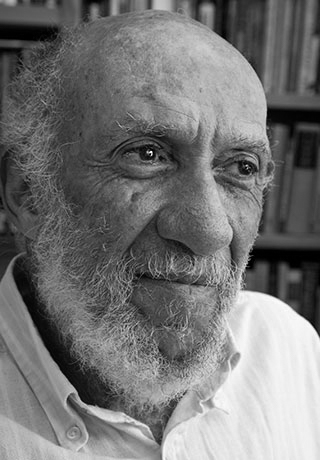

Professor Falk became an adviser to TFF when it was established in 1985.

Share

Leave a Reply

Your email address will not be published. Required fields are marked *

Related Posts

Lena Petrova of “World Affairs In Context” with more than half a million subscribers on YouTube wanted to explore what a peace researcher like me has to say about, among other things, the First and the Second Cold War and why eethics has disappeared from politics. I am particularly happy about this conversation that also yielded an amazing number of very appreciative comments on YouTube. No doubt, people are longing for alternatives, including peace perspectives.
The MIMAC – Military-Industrial-Media-Academic Complex – drives the world’s rampant militarism and wars without end. Here is a short reflection of how it works against all interests of humanity. #5 deals with why there is no real enemy or threat images/analysis. It’s all ex-post constructions. And, btw, theTFF Peace Pulse is now on Rumble.
Jan Oberg, TFF director April 28, 2026 In this third TFF Peace Pulse, I make the important distinction between the violence and the conflict that violence is a symptom of. If you want peace, focus on the underlying conflict because that is the key to resolution, peacemaking, and a better future for the parties. The West is obsessed with violence, just look around you – and 90+ per cent of the public debate is about military issues and other violence – totally wasted for peace. These Peace Pulses will only be published here a few times. You will also not find them on YouTube and Vimeo because both platforms have blocked TFF and me; you know, peace is dangerous these days. Most TFF’s videos since 2007 are now on Rumble.

Recent Articles

Jan Oberg May 15, 2026 Go to this Fox News page and scroll the whole way down: President Donald Trump tells the world that his meeting with President Xi Jinping yielded a lot of very concrete political and economic results – of course, only where the Chinese side, according to him, agreed with him. He does not mention the Taiwan issue, but Secretary of State, Marco Rubio, says that it did not feature prominently in their talks and that the US policy on Taiwan has not changed. Then go to China Daily – or Global Times – and you will see that for the Chinese it is framework, principles, structure of cooperation etc. that matters – all embedded in the overall idea of “constructive bilateral relationship of strategic stability.” Nowhere is any concrete agreement or deal – all that Trump refers to – mentioned. At the general level, this gives you insights into the very different social...
Lena Petrova of “World Affairs In Context” with more than half a million subscribers on YouTube wanted to explore what a peace researcher like me has to say about, among other things, the First and the Second Cold War and why eethics has disappeared from politics. I am particularly happy about this conversation that also yielded an amazing number of very appreciative comments on YouTube. No doubt, people are longing for alternatives, including peace perspectives.
The MIMAC – Military-Industrial-Media-Academic Complex – drives the world’s rampant militarism and wars without end. Here is a short reflection of how it works against all interests of humanity. #5 deals with why there is no real enemy or threat images/analysis. It’s all ex-post constructions. And, btw, theTFF Peace Pulse is now on Rumble.

TFF on Substack

Discover more from TFF Transnational Foundation & Jan Oberg.

Most Popular

Jan Oberg May 15, 2026 Go to this Fox News page and scroll the whole way down: President Donald Trump tells the world that his meeting with President Xi Jinping yielded a lot of very concrete political and economic results – of course, only where the Chinese side, according to him, agreed with him. He does not mention the Taiwan issue, but Secretary of State, Marco Rubio, says that it did not feature prominently in their talks and that the US policy on Taiwan has not changed. Then go to China Daily – or Global Times – and you will see that for the Chinese it is framework, principles, structure of cooperation etc. that matters – all embedded in the overall idea of “constructive bilateral relationship of strategic stability.” Nowhere is any concrete agreement or deal – all that Trump refers to – mentioned. At the general level, this gives you insights into the very different social...
Lena Petrova of “World Affairs In Context” with more than half a million subscribers on YouTube wanted to explore what a peace researcher like me has to say about, among other things, the First and the Second Cold War and why eethics has disappeared from politics. I am particularly happy about this conversation that also yielded an amazing number of very appreciative comments on YouTube. No doubt, people are longing for alternatives, including peace perspectives.
The MIMAC – Military-Industrial-Media-Academic Complex – drives the world’s rampant militarism and wars without end. Here is a short reflection of how it works against all interests of humanity. #5 deals with why there is no real enemy or threat images/analysis. It’s all ex-post constructions. And, btw, theTFF Peace Pulse is now on Rumble.
Read More
Screenshot-2026-05-15-103534
Jan Oberg May 15, 2026 Go to this Fox News page and scroll the whole way down: President Donald Trump tells the world that his meeting with President Xi Jinping yielded a lot of very concrete political and economic results – of course, only where the Chinese side, according to him, agreed with him. He does not mention the Taiwan issue, but Secretary of State, Marco Rubio, says that it did not feature prominently in their talks and that the US policy on Taiwan has not changed. Then go to China Daily – or Global Times – and you will see that for the Chinese it is framework, principles, structure of cooperation etc. that matters – all embedded in the overall idea of “constructive bilateral relationship of strategic stability.” Nowhere is any concrete agreement or deal – all that Trump refers to – mentioned. At the general level, this gives you insights into the very different social...
Screenshot-2026-05-12-104023
Lena Petrova of “World Affairs In Context” with more than half a million subscribers on YouTube wanted to explore what a peace researcher like me has to say about, among other things, the First and the Second Cold War and why eethics has disappeared from politics. I am particularly happy about this conversation that also yielded an amazing number of very appreciative comments on YouTube. No doubt, people are longing for alternatives, including peace perspectives.
Screenshot-2026-04-13-154551 (2)
The MIMAC – Military-Industrial-Media-Academic Complex – drives the world’s rampant militarism and wars without end. Here is a short reflection of how it works against all interests of humanity. #5 deals with why there is no real enemy or threat images/analysis. It’s all ex-post constructions. And, btw, theTFF Peace Pulse is now on Rumble.
Screenshot-2026-04-13-154551 (1)
Jan Oberg, TFF director April 28, 2026 In this third TFF Peace Pulse, I make the important distinction between the violence and the conflict that violence is a symptom of. If you want peace, focus on the underlying conflict because that is the key to resolution, peacemaking, and a better future for the parties. The West is obsessed with violence, just look around you – and 90+ per cent of the public debate is about military issues and other violence – totally wasted for peace. These Peace Pulses will only be published here a few times. You will also not find them on YouTube and Vimeo because both platforms have blocked TFF and me; you know, peace is dangerous these days. Most TFF’s videos since 2007 are now on Rumble.
Screenshot-2026-04-13-154551
In contrast to most, we’ll bring alternatives, solutions, hope and strategies for a better future. Times are dangerous, yes, but that only intensifies the need for constructive thinking and action! Jan Oberg, TFF director April 13, 2026 The new TFF Peace Pulse uses video messages in a new way: Max 3-5-minute-long comments, ideas or perhaps mini-lectures, all about peace – positive peace. We launch them today on April 13, 2026 with a carefully crafted visual aesthetic fitting the content. We hope to publish them regularly from now on. We launch Peace Pulse (PP) – for a number of reasons. The world is in chaos, and there are countless reasons to feel concerned, frustrated, even angry. The atmosphere is saturated with doom and gloom, with negative energy and rear‑mirror thinking, while vision, imagination, alternatives, strategies and genuine future‑mindedness remain in short supply. And without them, we simply can’t save the world. Looking at problems from a hundred angles will...
IMG_5165 (1)
PART II — Publishing Peace in a System That Prioritises Militarism Jan Oberg, TFF director April 10, 2026 How TFF Maintains a Daily Voice in a Digital World Built for Noise This article is part of the series “TFF at 40″ and it invites you to learn about Four Decades of Publishing Peace. It takes a look at how a small, people‑financed peace foundation has communicated across four generations of technology — from wax stencils and fax machines to mass email and Substack — and why TFF continues to publish every single day in a system that rewards noise, conflict, and militarism. ◆ What it means to publish peace every single day in a digital system built for 24/7 news and other noise, confrontation, and militarism. How TFF’s independence, continuity, and global readership defy algorithms, donor cycles, and Western media censorhip — and why the Majority World keeps listening. When the...

