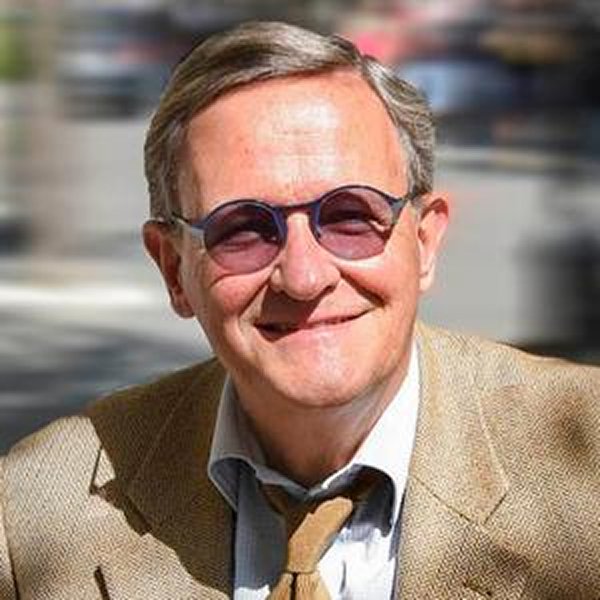
Professor & TFF Board member Biljana Vankovska dismissed from the Global Changes Centre in Macedonia

)

My friend and solidarity colleague, Biljana Vankovska, has been dismissed as director of the Center of the Global Changes Center where she is a full Professor at Ss. Cyril and Methodius University in Skopje, Macedonia, in a chilling encroachment on academic freedom.

The Center was conceived and brought to life by Biljana a year and a half ago and had already built a reputation for academic excellence mainly on the basis of a stimulating conference devoted to “the emerging cooperative multipolar system” and due to her ability to attract world-class scholars to join the Center’s Board and take part in this inaugural event.

As the eloquent explanatory essay below indicates, this action by an educational administrator in her university was based on trumped-up charges. Biljana’s explanation that this punitive action in response to a development that undoubtedly enhanced the academic reputation of this Macedonian rings true—namely, that the government and economic elites in Macedonia were gaining profits and prestige by being a water carrier for NATO and the EU, and her Center did explore a less West-centric model for a more peaceful and equitable world that looked with favour on China and did not despair of a constructive future for Russia.

Whether right or wrong, such issues urgently need the considerations of more inclusive and imaginative approaches to global security and war prevention than are emanating from Western capitals.

On the basis of close friendship and intellectual collaboration, I regard Biljana Vankovska as a woman of honor, a dedicated scholar, and a voice of global conscience that deserves our trust and support.

The Velvet Grip of Western Censorship: The Death of the Global  Changes Center in Macedonia

Biljana Vankovska, professor, TFF Board member

What initially appeared to be a subtle and gradual militarization of academic spaces in Macedonia has now become glaringly evident. The 1.5-year-old Center for Global Changes, established at the Faculty of Philosophy, is seemingly on its deathbed. Was it unsuccessful? Passive? Ineffective? Quite the opposite. Just two months after hosting an extraordinary international conference on the emerging cooperative multipolar system in Skopje, Macedonia’s capital, I have been dismissed as the head of the Center and now face accusations of alleged procedural violations—whatever that might mean. Paradoxically, the decision to remove me was made first, while its justification and final “verdict” are being crafted afterward to legitimize the absurdity.

My position as head of the Center was entirely unpaid, voluntary, and, to be honest, a demanding responsibility for a full professor. One might dismiss this as no great loss—personally, that might hold true. But in a broader context, this situation is emblematic of how a velvet glove can swiftly turn into an iron fist for those who dare to step outside the mainstream and challenge official narratives.

Almost two years ago, as a group of enthusiasts, we believed it was both possible and necessary to open new academic horizons beyond the increasingly restrictive geopolitical narratives that frame NATO and the EU as the ultimate and unquestionable goals for any initiative. The imposition of invisible barriers to global cooperation and the creeping censorship in public discourse and academia have been difficult to accept—especially for my generation, which once enjoyed freedom of thought and internationalism in former Yugoslavia. The same sentiment resonates with progressive younger generations who have grown up amidst the barren landscape of a neoliberal transition.

In the name of so-called Westernization—and under the banner of “our main strategic goals,” as the prevailing narrative puts it—academia in Macedonia has donned an invisible military uniform, embracing a militarized mindset. This shift has proven to be a highly profitable endeavor, securing project grants and facilitating rapid academic promotions. Within the paradigm of the military-industrial-media-academia complex, Macedonia may lack significant contributions to the first two dimensions, but its media and academic sectors tell a different story.

Financially dependent media outlets have aligned themselves with Western donors, willingly assuming the role of “watchdogs” against any perceived “undesirable influence” from countries in the Global South. The rise of “fact-checkers” merely represents a rebranding of censorship mechanisms reminiscent of earlier times. Meanwhile, academia has increasingly focused on militarizing the minds of young people—not to prepare them as soldiers, but as loyal promoters of Western narratives.

At the same time, peace studies—once established with the generous intellectual contributions of Nordic peace researchers such as Johan Galtung, Håkan Wiberg, and Jan Øberg—have gradually been marginalized, deemed “unpopular” in the current academic climate. In a broader context, the proliferation of NGOs and think tanks dedicated to identifying “fake news, disinformation, and malign foreign influence” reflects this shift. Unsurprisingly, these projects overwhelmingly point to Russia and China as the culprits, perpetuating a narrow and ideologically driven agenda.

In retrospect, the decision to establish the Global Changes Center and bring together scholars from across the globe was not only courageous and ambitious but, as perceived by Western power centers, profoundly subversive. The International Board included a distinguished group of thinkers—among them Richard Falk, Zhang Weiwei, Jeffrey Sachs, Mohammad Marandi, Jan Øberg, Alejandro Bendaña, Radhika Desai, Richard Sakwa, and many others.

The conference agenda was equally impressive, featuring scholars from Canada to South Africa, Russia, China, Iran, Germany, and beyond—many of whom participated either in person or virtually. The Thinkers Forum shared a selection of these presentations on its YouTube channel, while the Global Changes Center posted the entire proceedings, offering open access to our discussions, visions, and goals.
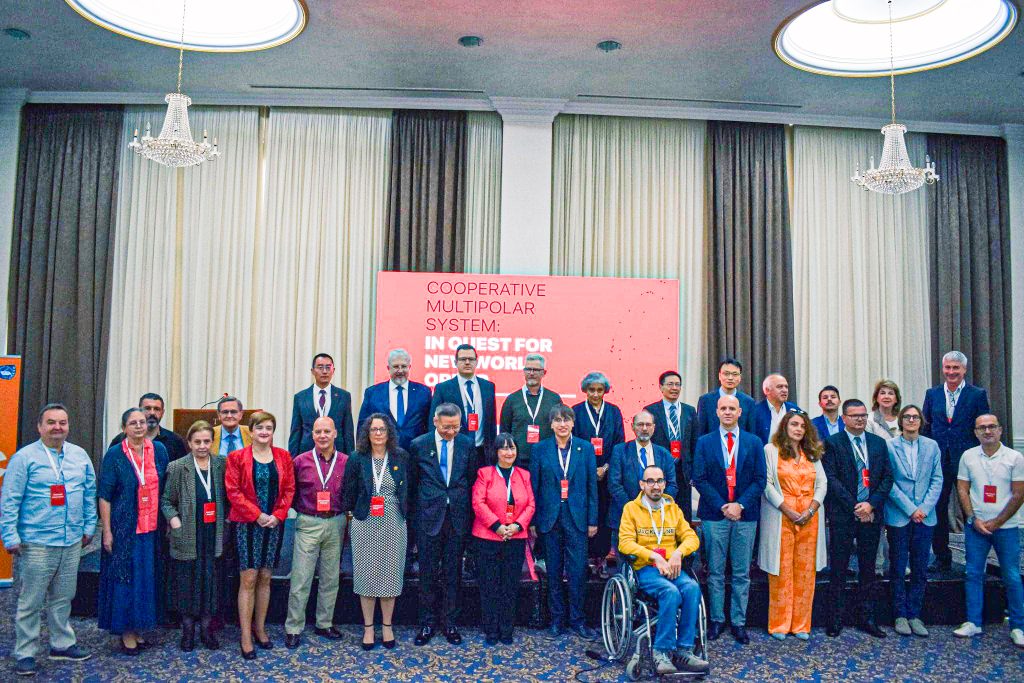
Far from being a routine academic event filled with superficial rhetoric, this was a groundbreaking forum. As Prof. Richard Sakwa remarked, “It was one of the most stimulating and intellectually exciting events I had been to for a long time.” Prof. Zhang Weiwei’s reaction was even more poignant: “Very shocked to hear this, but on the other hand, it’s a testimony to what you’ve done right and to your contribution to the cause of peace and multi-polarity, which are deeply appreciated by all of us. Please count on our support in your continuous intellectual and political endeavor for a better and more peaceful and humane world.”

These endorsements speak to the profound impact and unique value of the Center and its work, highlighting why it has become a target of attempts to suppress alternative narratives and visions of global cooperation.

While I struggle to make sense of the absurdity of being punished for organizing a successful international event in a small and largely overlooked country, the deafening silence from my colleagues at the university speaks volumes. Their fear is palpable, and their silence tells a story of its own. Perhaps my “fault” lies in breaking unwritten rules by fostering unconventional academic connections over the past few months—connections deemed “unpopular” by the prevailing narrative.

My travels to China, twice, and Russia, once, may have been enough to raise eyebrows, but attending and speaking at the Valdai Club likely tipped the scales. It seems the proverbial call for a witch hunt has been issued by Western mentors who seek to enforce rigid boundaries of acceptable academic discourse.

This is not to suggest that I, personally, am of such great significance. Rather, with my background, I make a convenient target—a cautionary tale to deter others from even considering stepping outside the prescribed lines. The message is clear: dissent, or even curiosity about alternative perspectives, will not be tolerated.

In my public response, I send a clear message: you may succeed in shutting down the Center, but the momentum of global changes is unstoppable. The multipolarity conference, a testament to the power of collective will, was made possible through crowdfunding—small yet meaningful contributions from ordinary citizens who instinctively recognize the reality of the West’s decline. These citizens, burdened by the consequences of this decline in their daily lives, yearn for someone to be a voice for the voiceless.

The Political West, in its hubris, is accelerating its own implosion. What we are witnessing now is far worse than the tensions of Cold War I. While I await my final verdict—not just regarding my dismissal but the potential fate of the Center itself—my message to those orchestrating this campaign is resolute. To paraphrase Rosa Luxemburg: I was, I am, I shall be.

Freedom is always the freedom of the dissenter, and I will not be silenced. My commitment to international solidarity with all those oppressed and massacred remains unwavering. At the same time, I will continue working to lay the foundations for a new, more just, and humane world built on the ideals of true human brotherhood. Whether within small or broader networks, it is crucial not to be paralyzed or deterred. The future of humanity is worth any personal effort or sacrifice.

Jan Oberg’s letter of resignation

Dear Professor Oliver Bakreski

Dear Professor Alma Tasevska


Dear Professor Biljana Angelova


Lund, Sweden, December 13, 2024

For the past 35 years, I have travelled to Macedonia, engaging with many individuals, including repeatedly your former President Kiro Gligorov, ministers and party leader, and conducting numerous interviews with Macedonians and Albanians of all walks of life for TFF’s fact-finding efforts.

I started my education in Yugoslavia in 1974 at the Inter-University Centre in Dubrovnik under the direction of Dr. Johan Galtung. Both he and Dr. Hakan Wiberg significantly advanced peace research at your faculty, where I have had the privilege of guest lecturing several times without encountering any censorship.

Despite some censorship during the Tito era, Yugoslavia had a rich intellectual landscape, producing distinguished philosophers and social scientists, e.g. from the (dissident) Praxis Group and notable social studies, particularly in Skopje and Belgrade.

I have had the privilege of knowing Professor Vankovska for nearly 40 years, and she has been a TFF Associate since 1999. She is undoubtedly one of your faculty’s most distinguished scholars, having pioneered peace research across the former Yugoslavia and extended her studies also to military and security affairs. Her hard work has placed your faculty and Macedonia on the global map of peace and future studies.

It is, therefore, shocking to learn of your decision to remove Dr Vankovska from her role as the director of the Global Changes Center, an urgently important initiative given the rapid world order changes (and dangers) that also NATO Macedonia will have to navigate. I know how dedicated to the Centre she has been, brain and heart. The Centre’s recent conference drew participants from around the world who admired the Centre’s work and her visionary efforts.

I see this decision as a violation of every academic principle and as a deplorable example of political interference – even as a decay from Yugoslav standards. 

Given this unjust, unwise and un-academic decision, I must withdraw from any future engagement with your faculty.


Sincerely

Jan Oberg, Dr HC, professor

TFF Research director

https://transnational.sandbox-alot.com/
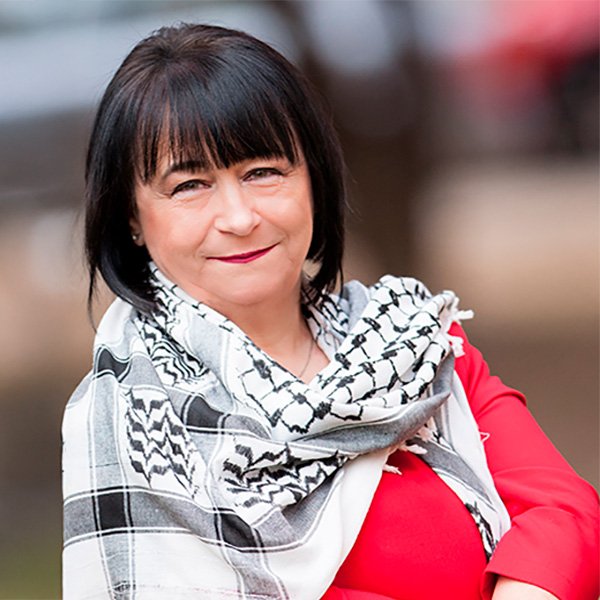
Peace & future researcher + ‌Art Photographer

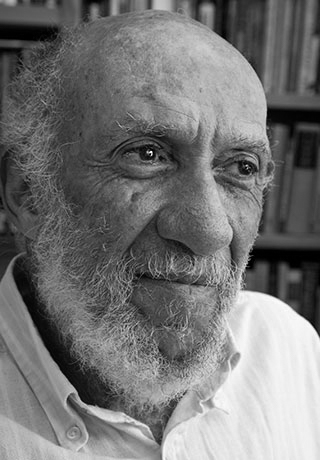
Professor Falk became an adviser to TFF when it was established in 1985.

Share

Leave a Reply

Your email address will not be published. Required fields are marked *

Related Posts

Jan Oberg May 15, 2026 Go to this Fox News page and scroll the whole way down: President Donald Trump tells the world that his meeting with President Xi Jinping yielded a lot of very concrete political and economic results – of course, only where the Chinese side, according to him, agreed with him. He does not mention the Taiwan issue, but Secretary of State, Marco Rubio, says that it did not feature prominently in their talks and that the US policy on Taiwan has not changed. Then go to China Daily – or Global Times – and you will see that for the Chinese it is framework, principles, structure of cooperation etc. that matters – all embedded in the overall idea of “constructive bilateral relationship of strategic stability.” Nowhere is any concrete agreement or deal – all that Trump refers to – mentioned. At the general level, this gives you insights into the very different social...
Lena Petrova of “World Affairs In Context” with more than half a million subscribers on YouTube wanted to explore what a peace researcher like me has to say about, among other things, the First and the Second Cold War and why eethics has disappeared from politics. I am particularly happy about this conversation that also yielded an amazing number of very appreciative comments on YouTube. No doubt, people are longing for alternatives, including peace perspectives.
The MIMAC – Military-Industrial-Media-Academic Complex – drives the world’s rampant militarism and wars without end. Here is a short reflection of how it works against all interests of humanity. #5 deals with why there is no real enemy or threat images/analysis. It’s all ex-post constructions. And, btw, theTFF Peace Pulse is now on Rumble.

Recent Articles

“En dag som berättigar till fest”, utropade den London-baserade al-Quds al-Arabi efter FN:s eldupphörresolution, “eftersom detta är första gången som Israel accepterar ett FN-beslut från en position som besegrad och inte som segrare”. Att ett arabisk-israeliskt krig för en gångs skull slutat med arabisk seger, är en helt dominerade åsikt i arabiska medier. Al-Quds al-Arabi tillåter sig att drömma om att det israeliska nederlaget skall leda till massflykt från Israel. Men i nästa andetag påminner tidningen om att Israel aldrig brukar genomföra sina internationella åtaganden och varnar för att förlorarna, liksom tidigare, kan hämnas genom att provocera fram inbördeskrig i Libanon. Med tanke på de otaliga massmediala vittnesmålen om det libanesiska folkets eniga motståndskraft förefaller risken för inre stridigheter i det sargade landet just nu liten. Men visst kan man urskilja nyansskillnader i libanesiska tidningar. Vänsterorganet al-Safir uppfattar FN-resolutionen som en komplott i syfte att rädda Israel från ännu större...
Greenland – the world’s largest island, a continent of its own with only 57.000 inhabitants. I visited it for the first time in May 2005. I flew across the inland ice to Nuuk, the tiny capital with some 14.000 inhabitants. I was overwhelmed by the pride and kindness of everyone I met as well as by the unique natural beauty. Unfortunately, due to weather conditions during my ten-day stay I could get nowhere else but Nuuk. Fortunately, however, among those I met was Gitte Arvegaard, a Danish lawyer and negotiator employed by the local government, Greenland Home Rule. She turned out to be an enthusiastic photographer with a lot of pictures taken during various trips around Greenland. So this Greeland series is the result of our cooperative effort. We both hope you enjoy it and are stimulated to visit Greenland – about which you may read more here. Finally, if you want to...
 Jan Oberg’s storyof how he met Sir Paul Liverpool – where else to meet Paul McCartney? Paul’s old class mate and TFF Associate, Jonathan Power introduced me to Paul McCartney in Liverpool at an informal reception. It was held at what used to be their school, now the Liverpool Institute for Performing Arts and we were there to celebrate that Jonathan had written Amnesty International’s 40th Anniversary book. This happy event for “righting wrongs and writing songs” gave me an opportunity to meet Paul and tell him about TFF and get straight to the matter: would he consider making a donation in support of our work for peace? While I was probably the only one with such a wish that day, I was certainly not the only one who wanted to shake hands and talk with him. In the last minutes before Paul was to leave, Jonathan brought us together and we got about three...

TFF on Substack

Discover more from TFF Transnational Foundation & Jan Oberg.

Most Popular

“En dag som berättigar till fest”, utropade den London-baserade al-Quds al-Arabi efter FN:s eldupphörresolution, “eftersom detta är första gången som Israel accepterar ett FN-beslut från en position som besegrad och inte som segrare”. Att ett arabisk-israeliskt krig för en gångs skull slutat med arabisk seger, är en helt dominerade åsikt i arabiska medier. Al-Quds al-Arabi tillåter sig att drömma om att det israeliska nederlaget skall leda till massflykt från Israel. Men i nästa andetag påminner tidningen om att Israel aldrig brukar genomföra sina internationella åtaganden och varnar för att förlorarna, liksom tidigare, kan hämnas genom att provocera fram inbördeskrig i Libanon. Med tanke på de otaliga massmediala vittnesmålen om det libanesiska folkets eniga motståndskraft förefaller risken för inre stridigheter i det sargade landet just nu liten. Men visst kan man urskilja nyansskillnader i libanesiska tidningar. Vänsterorganet al-Safir uppfattar FN-resolutionen som en komplott i syfte att rädda Israel från ännu större...
Greenland – the world’s largest island, a continent of its own with only 57.000 inhabitants. I visited it for the first time in May 2005. I flew across the inland ice to Nuuk, the tiny capital with some 14.000 inhabitants. I was overwhelmed by the pride and kindness of everyone I met as well as by the unique natural beauty. Unfortunately, due to weather conditions during my ten-day stay I could get nowhere else but Nuuk. Fortunately, however, among those I met was Gitte Arvegaard, a Danish lawyer and negotiator employed by the local government, Greenland Home Rule. She turned out to be an enthusiastic photographer with a lot of pictures taken during various trips around Greenland. So this Greeland series is the result of our cooperative effort. We both hope you enjoy it and are stimulated to visit Greenland – about which you may read more here. Finally, if you want to...
 Jan Oberg’s storyof how he met Sir Paul Liverpool – where else to meet Paul McCartney? Paul’s old class mate and TFF Associate, Jonathan Power introduced me to Paul McCartney in Liverpool at an informal reception. It was held at what used to be their school, now the Liverpool Institute for Performing Arts and we were there to celebrate that Jonathan had written Amnesty International’s 40th Anniversary book. This happy event for “righting wrongs and writing songs” gave me an opportunity to meet Paul and tell him about TFF and get straight to the matter: would he consider making a donation in support of our work for peace? While I was probably the only one with such a wish that day, I was certainly not the only one who wanted to shake hands and talk with him. In the last minutes before Paul was to leave, Jonathan brought us together and we got about three...
Read More
Imagen-thumbnail-The-Transnational-1
“En dag som berättigar till fest”, utropade den London-baserade al-Quds al-Arabi efter FN:s eldupphörresolution, “eftersom detta är första gången som Israel accepterar ett FN-beslut från en position som besegrad och inte som segrare”. Att ett arabisk-israeliskt krig för en gångs skull slutat med arabisk seger, är en helt dominerade åsikt i arabiska medier. Al-Quds al-Arabi tillåter sig att drömma om att det israeliska nederlaget skall leda till massflykt från Israel. Men i nästa andetag påminner tidningen om att Israel aldrig brukar genomföra sina internationella åtaganden och varnar för att förlorarna, liksom tidigare, kan hämnas genom att provocera fram inbördeskrig i Libanon. Med tanke på de otaliga massmediala vittnesmålen om det libanesiska folkets eniga motståndskraft förefaller risken för inre stridigheter i det sargade landet just nu liten. Men visst kan man urskilja nyansskillnader i libanesiska tidningar. Vänsterorganet al-Safir uppfattar FN-resolutionen som en komplott i syfte att rädda Israel från ännu större...
Greenland – the world’s largest island, a continent of its own with only 57.000 inhabitants. I visited it for the first time in May 2005. I flew across the inland ice to Nuuk, the tiny capital with some 14.000 inhabitants. I was overwhelmed by the pride and kindness of everyone I met as well as by the unique natural beauty. Unfortunately, due to weather conditions during my ten-day stay I could get nowhere else but Nuuk. Fortunately, however, among those I met was Gitte Arvegaard, a Danish lawyer and negotiator employed by the local government, Greenland Home Rule. She turned out to be an enthusiastic photographer with a lot of pictures taken during various trips around Greenland. So this Greeland series is the result of our cooperative effort. We both hope you enjoy it and are stimulated to visit Greenland – about which you may read more here. Finally, if you want to...
p_mccartney_poem
 Jan Oberg’s storyof how he met Sir Paul Liverpool – where else to meet Paul McCartney? Paul’s old class mate and TFF Associate, Jonathan Power introduced me to Paul McCartney in Liverpool at an informal reception. It was held at what used to be their school, now the Liverpool Institute for Performing Arts and we were there to celebrate that Jonathan had written Amnesty International’s 40th Anniversary book. This happy event for “righting wrongs and writing songs” gave me an opportunity to meet Paul and tell him about TFF and get straight to the matter: would he consider making a donation in support of our work for peace? While I was probably the only one with such a wish that day, I was certainly not the only one who wanted to shake hands and talk with him. In the last minutes before Paul was to leave, Jonathan brought us together and we got about three...
Logo-Transnational
1942James Paul McCartney is born in Liverpool on June 18th. 1956Paul writes his first song, I Lost My Little Girl. 1957Paul meets John Lennon at St. Peter’s Church Fete, Woolton, Liverpool. He joins his first group, The Quarrymen and performs in his first gig at The New Clubmoor Hall, Liverpool, on October 18th. 1960Formation of The Beatles, who play residencies in Hamburg and at The Cavern in Liverpool. 1961First Beatles recordings issued in Germany, as the backing group for Tony Sheridan. 1962The first Beatles Parlophone recording, Love Me Do, reaches number 17 in the British charts. 1963The birth of Beatlemania. Please Please Me gives the group their first British Number 1. She Loves You cements their success. Please Please Me and With The Beatles albums released. 1964First triumphant American tour. The Beatles perform at the Royal Command Performance and release their first film, A Hard Day’s Night. Their single I...
Logo-Transnational
  Back to the series “Bujumbura, Burundi”
By JONATHAN POWER August 16, 2000 LONDON – Remember the summer of ’98? In the sweltering, torpid heat of a Roman august, charged with exhaust fumes, the international community gave its overwhelming approval to the establishment of an International Criminal Court that will enable those accused of “crimes against humanity” to be tried and, if convicted, sentenced. Only seven nations opposed or abstained from the motion, including Israel, China, India and the U.S.A. where the Pentagon had successfully waged bureaucratic guerrilla war to undermine the initially sympathetic stance of President Bill Clinton. Two years on we can now see what an epochal event that was. In a the stroke of 120 pens it changed the climate on political thuggery. After numerous half-starts and false starts ever since the Nuremberg and Tokyo trials that convicted the war criminals of the Second World War, the world at last had agreed en masse a common...