
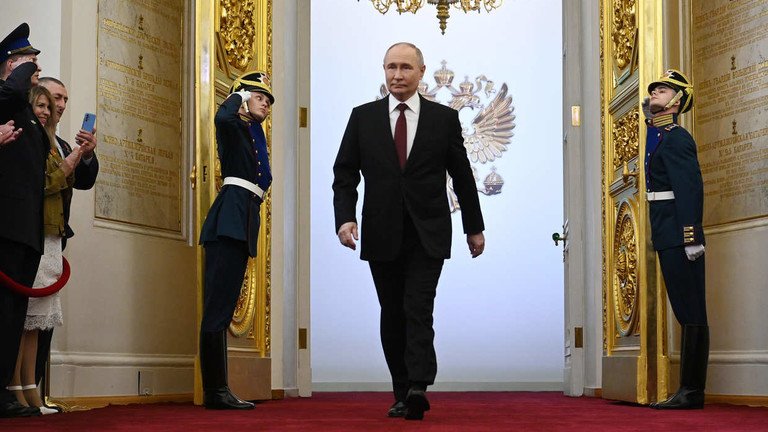
When he first took office, the Russian president was trying to integrate with the West, now the whole ball game has changed
Fyodor Lukyanov
May 30, 2024
The question of how Russia’s foreign policy will be managed during President Vladimir Putin’s new term seems redundant, if not irrelevant. The head of state is a man who has led the country in one form or another for almost a quarter of a century. He is known for his conservatism – not only in the ideological sense, but also in his aversion to sharp turns. Moreover, Russia is engaged in an intensive military campaign against an international coalition, and there is little point in making plans until it is over, and while its prospects are still unclear. The successful completion of this campaign remains a task of incomparable importance.
Nevertheless, it is necessary to reflect on this issue. Firstly, all of the terms of Vladimir Putin’s presidency, while showing a continuity of approach, have been markedly different. Secondly, while the importance of achieving the goals of the military operation is undeniable, victory alone will not miraculously provide answers to all foreign policy challenges. Finally, the world system is changing rapidly for objective reasons, and Moscow will have to respond in any case.
The ceiling of the post-Soviet rebound
The Ukraine conflict marked a turning point for Russia’s international position. The period of compensatory recovery (in stock market terms, it can be called a ‘rebound’), which had been the main feature of the previous two decades, was over. After the extremely difficult 1990s, when it was necessary just to stay among the leading players, since the beginning of the century there has been an increase in opportunities and status as a result of joining the global (Western-centred) system. As the economy stabilised and governance was put in order, Russia became an attractive enough partner for developed countries, which decided that it would be beneficial to cooperate with it and invest in its economy. Thus, Russia not only broadened its economic base, but also intensified its foreign policy, especially in the post-Soviet space.
At the same time, Moscow managed to strengthen internationally but weaken in a region of fundamental importance. These were, oddly enough, components of a single process. On the one hand, the pull of the former Soviet republics into the Euro-Atlantic sphere exacerbated competition with Russia and fuelled conflict. On the other, the fact that Russia’s resources made it an object of the West’s greatest pragmatic interest strengthened its position in relation to its neighbours. The same can be said for other parts of the world where Russian influence grew, from Europe (despite the political constraints) to Africa, East Asia and to a small extent Latin America (the Middle East is a special case where Russia proved valuable as a counterweight).
Economic integration with the Western world (albeit as a slave) brought dividends and helped to improve living standards, but was at odds with the desire of Moscow to assert itself as an increasingly independent geopolitical force. Up to a point, the two directions could be reconciled, but with increasingly loud difficulty. In February 2022, the line was drawn. Russia made a choice in favour of geopolitics and openly opposed the West. To what extent this decision was conscious and calculated, and to what extent it was catalysed by circumstances or even external provocation, we will be able to judge some time in the future. But a further combination of the two vectors has become impossible, and the ceiling of the “rebound” from the Soviet collapse (increasing our role within the liberal international order) has been reached.
Beyond the West
Dependence on the West was at the heart of this course, so the shift was tectonic. For the first time in a long time, the West has completely disappeared from Russian politics. Official relations have been reduced to an exchange of accusations or threats and the gradual denunciation of a legal framework built up over decades. Unofficial relations are not much broader, focusing on the management of remaining but rapidly diminishing shared economic interests.
In none of the likely scenarios is there any prospect of restoring relations even remotely resembling those of the past. The split is deep and enduring. The best option is to anchor the confrontation institutionally, to prevent it from turning into a direct clash and to move towards peaceful coexistence. The question of Russia’s integration into the Western-centred system is no longer on the agenda. Not only because of the deterioration of our relations, but also because the whole system itself is changing irreversibly.
The military crisis in Ukraine began as the culmination of US-Russian security contradictions in Europe, but over the past two years it has taken on a different dimension. The conflict has become a catalyst for a shift in the global balance away from Western dominance. Not to any other particular pattern, but rather to an elastic configuration. In Moscow, this opens up opportunities, but it also means the need to revise some familiar assumptions.
Multipolarity without poles
The new situation has largely wiped out what Russia had achieved in the previous phase through increasingly conflictual but still cooperative economic and, to some extent, cultural-ideological cooperation with the West. Even the countries most closely allied with Moscow, faced with the acute antagonism between Russia and the US/NATO, have become concerned about how to avoid making a choice while maintaining cooperation with everyone. The West’s partners in the global South and East are doing the same.
The emerging international environment, referred to as a multipolar world, does not in fact presuppose ‘polarity’, i.e. the gravitation of regions towards obvious centres. It is clear that the economically and politically strongest states have an attraction that neighbouring countries cannot ignore. But neighbours of major powers do not want to submit to the nearest ‘poles’ and are trying to balance their inevitable influence with other relationships. This does not allow us to expect a structured alternative order to take the place of the dismantled liberal order. And the confrontation between Russia and the West will not be a factor in the emergence of a clear balance of power on a global scale. There is no certainty that even a European order, isolated from the above trends, is possible today.
Bound by a chain
The Ukraine conflict has had a noticeable impact on the international situation. However, in itself it is not the beginning of a new stage, but rather an attempt to put an end to uncertainty in relations. Conflicts over “spheres of influence”, typical of previous eras, did not find a peaceful solution and turned into a violent phase, as has often happened in the past. In those times, the desired outcome of the clash was to define the boundaries of those very spheres. Now, however, the hostilities are taking place in a different international environment – the world is rapidly losing its order. Today’s peculiarities do not call for a ‘grand bargain’ that will wind up the confrontation. It requires clear rules and mechanisms to enforce compliance. Neither is there now.
In modern journalistic terms, victory in “hybrid warfare” is not complete and unconditional, but viscous and ambiguous, implying the continuation of the conflict by various means, not necessarily directly military. This is not to say that there should be no distinction between defeat and victory, but there will be no dot on the i.
This situation is based on the paradox of today’s international system. The conflict, caused by the desire of states to be guided by national interests (and their understanding of this is determined by their own culture), is unfolding in the context of an inextricably interconnected world. The crisis of liberal globalisation won’t lead to the disintegration of the international system into isolated parts. The nature of interaction is changing, but it is not disrupted. And cases in which production and logistics chains suffer as a result of armed conflicts give rise to universal concern and a universal desire to remove obstacles (illustrative examples are the problems of navigation in the Black and Red Seas). This integrity of a diverse world is another obstacle to the division of interests/values. The latter runs counter to development goals, which require the exploitation of all opportunities and the maintenance of continuous communication. The emerging global political economy rejects both a single centre of dominance and a rigid division into blocs.
Lasting power
An important feature of the new world is the decline of ‘soft power’ as it was understood at the end of the last century. This is because non-violent influence has proven its effectiveness. And now everyone is taking steps to neutralise it. Hence the plethora of laws designed to prevent foreign influence. This is combined with widespread efforts to strengthen cultural and value identity, both within the Western community (consolidation on radical-liberal grounds) and outside it. As a result, receptiveness to ideas outside a particular culture is declining. This applies both to the West’s attempts to impose its universalist approach on the world, which are still sluggish, and to the desire of every actor (Russia is no exception) to unite other countries and peoples under its own ideological and political banner.
The active discussion in our country about the need for a state ideology is probably important from the point of view of the state and the cohesion of society, but it has little relevance for international activities – there is simply no demand in the world for transnational ideologies of any kind. This does not exclude the use of some slogans (the fight against colonialism, defence of traditional values, etc ), but they are only tools.
Conflicts are permanent because they pass from one level to another, but they do not end. The main characteristics of a state are its stability and ability to react quickly to changes. The key to success in foreign policy is the internal socio-economic and moral condition of the state. As the experience of the two years of Ukraine conflict has shown, it is not the ideological narrative or the appeal to institutions that makes the biggest impression on the outside world, but the ability to withstand strong external pressure and maintain the potential for development. This can be seen as the new variant of what has been called ‘soft power’. To play with words in the American way, let us call the phenomenon ‘firm power’.
It fits in well with the concept of ‘state-civilisation’ currently accepted at the official level. It is impossible to give a clear definition of this phenomenon, but our general understanding corresponds well to the needs of the time. State-civilisation has a basis in itself, is self-sufficient, does not proclaim isolationism and is, to use a fashionable term, ‘inclusive’, i.e. capable of harmonising different cultural elements. Such a framework, if it can not only be proclaimed but also embodied, also corresponds to ‘volatile’ international circumstances.
Without facets
What does all this mean for Russia’s international activities? It is presumptuous to draw conclusions; the global environment described is characterised by variability. Let us try to outline a few trends.
First, foreign policy is closely linked to the tasks of internal development. This is a trivial statement, it has been said before, but now it should be taken literally: internal development is an absolute priority, without it nothing else will work. In the hierarchy of spheres of state activity, defence policy is becoming more important than foreign policy (due to the polarisation and militarisation of the international environment), and domestic policy is becoming more important than defence policy. But the distinction between them is almost disappearing.
Second, Russia is a country that has an interest in maintaining and strengthening global connectivity. The reason is simple: in the natural development of the world system (without destructive political interference), it is practically impossible to bypass Russia – in terms of resources, logistics and transport. Using Russia’s capabilities will automatically mean developing its potential and strengthening its position.
Related to this is the third point – initiatives on world problems that require a truly common solution. These include problems of ecology, in space, and limiting the technological possibilities of interference in public and private life (as part of the larger issue of the future of artificial intelligence). So far, these problems have been discussed only in the Western ideological paradigm, but their exhaustion is already noticeable. Russia, with its combined natural, intellectual and technological resources, is well placed to offer new approaches.
Fourth, like-minded groups (international coalitions) can be formed around clear objectives that particular countries are interested in achieving. Common institutions lose their effectiveness because of the multidirectional interests of their participants. This applies not only to the structures on which the previous world order was based, but also to new ones such as BRICS or the SCO. They need an applied agenda whose importance is recognised by all members. One thing is clear: overcoming Western monetary and financial hegemony and promoting development which doesn’t rely on Western institutions is a priority. Moving away from this monopoly is good for everyone, even those who get along with the West.
Fifth, the direct neighbourhood is multiplying in importance. All the more so as the old ways of exerting influence associated with the legacy of the past (the inertia of unconditional Russian dominance) are irreversibly disappearing. How to maintain influence within reasonable limits (to be able to pursue one’s interests, but not to get involved in fruitless rivalries with other powers) is the main question of the coming years.
Migration policy will play an almost decisive role in building relations with neighbouring countries. A well-functioning system of attracting people for permanent residence and work, based on clear criteria and as free from corruption as possible, is of fundamental importance for both newcomers and Russians. A rigid but fair migration model will strengthen the civilisational fabric, while its absence will undermine it. More generally, in a world where the mobility of people is increasing for various reasons (climate, inequality, etc.), the ability to regulate migration flows will be the most important condition for sustainability and development. It will also be an instrument of foreign policy.
This raises the conceptual question of the nature of borders. The impossibility of either opening them completely, as liberal globalisation seemed to demand, or closing them completely, as was the case in the twentieth century USSR, is the core dilemma. Both are disastrous for the state. Flexible regulation (we are talking not only about the movement of people, but also of money, information and goods) is an urgent need that will be solved manually for a long time to come.
All of this is aimed at solving the problem of national security in the broadest sense. In the more traditional form, a strong and modern armed force is a necessary guarantee for all the rest. The high level of conflict in the world leaves no other option. Those who predict a growing number – with increasing severity – of interstate conflicts are probably right. But the complexity of today’s international system has an important consequence – war is no longer a way of resolving contradictions, as it was in past centuries. More precisely, a military conflict can ‘open a boil’, but it does not necessarily lead to a cure and is fraught with complications, i.e. new ailments.
There is a need for credible deterrence, which sometimes requires the use of force, but above all to maintain balance. The Ukraine crisis is the result of a glaring imbalance that emerged after the end of the Cold War. Because of its size and potential, Russia has major opportunities for independent development. This is realistic under conditions of lasting peace. And the fight for it is the main task of any state policy.
This article was first published by Profile.ru, translated and edited by the RT team.
The author
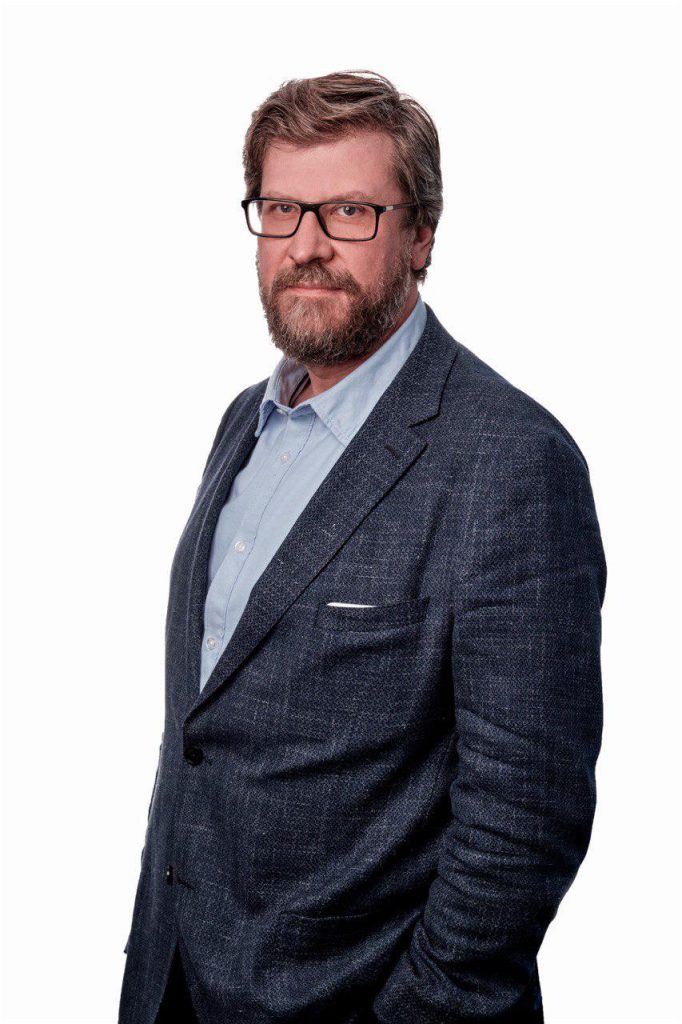
Fyodor Lykyanov is the editor-in-chief of “Russia in Global Affairs”, chairman of the Presidium of the Council on Foreign and Defence Policy, and research director of the Valdai International Discussion Club.


