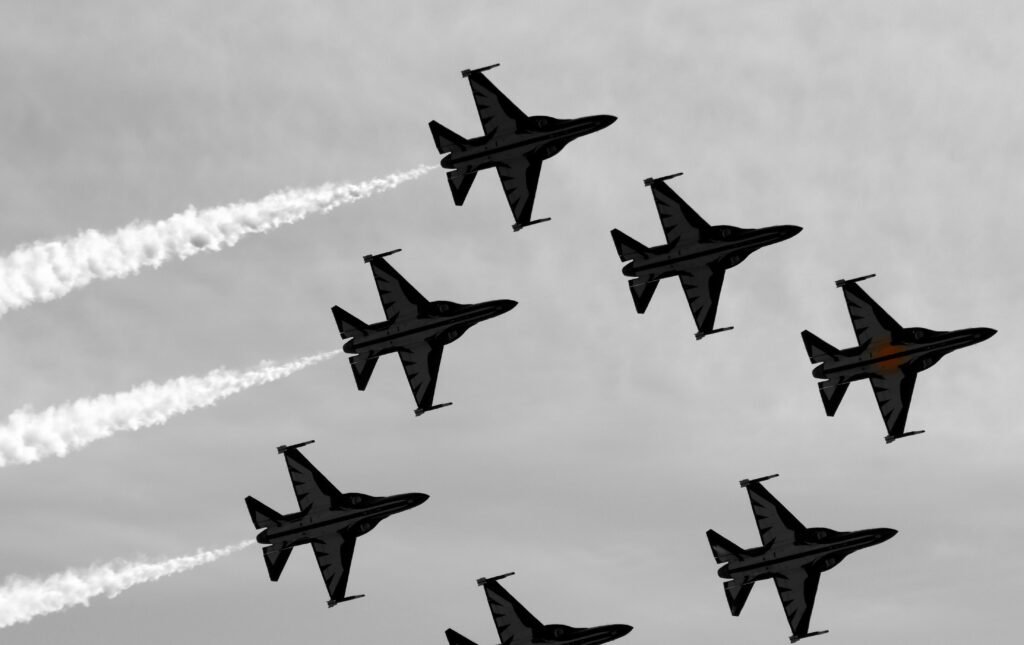
Biden’s illegal bombing of Yemen intensifies the risk of regional war

Marjorie Cohn*

January 24, 2023

The Houthis say their attacks in the Red Sea will continue until there is a ceasefire in Gaza

In response to Israel’s assault on the people of Gaza in early October, Yemen’s Houthi movement, Ansar Allah, began mounting attacks on commercial ships in and around the Red Sea. The Houthis said the attacks were aimed at Israeli-connected or Israel-bound ships and they would continue until there is a ceasefire in Gaza. Meanwhile, the pressure on this vital trade route is impacting the global economy as ships are being redirected to more expensive routes.

On January 11, South Africa presented its case documenting Israel’s genocide in Gaza to the International Court of Justice. The following day, the U.S. and U.K. attacked 28 sites in Yemen. Tomahawk cruise missiles launched from a ballistic missile submarine killed five Yemenis and injured six. Four days later, the U.S. fired another cruise missile into Yemen.

Originally published by Truthout on January 23, 2024

The U.S. and Britain conducted large-scale airstrikes against about 12 sites in Yemen on January 22. These strikes were the eighth in almost two weeks and “signaled that the Biden administration intends to wage a sustained and, at least for now, open-ended campaign against the Iran-backed group that has disrupted traffic in vital international sea lanes,” according to The New York Times.

The U.S.-U.K. bombing campaign in Yemen, with logistical support from Australia, Canada, Bahrain and the Netherlands, is fanning the flames of a developing conflagration in a region already enraged by Israel’s genocide. “Israel’s unrelenting assault on the Gaza Strip is beginning to tip the Middle East into a wider regional conflict,” Murtaza Hussain wrote at The Intercept.

On October 8, the day after the Hamas-led attack on Israel, the United States sent an aircraft carrier to the region, closely followed by two destroyers and an armada of warships from 10 countries.

“With its decision to attack, the Biden administration appears to have opened itself up to a geopolitical checkmate by the Houthis,” Hussain noted. “Escalating the strikes against the rebels will likely bring more shipping disruptions — potentially counterproductive to mitigating economic consequences — and risk a full-blown regional war.”

The United States claimed it launched attacks on Yemen to “degrade Houthi rebels’ ability.” But “years of far more intensive U.S.-backed Saudi bombing have failed to destroy Houthi military capacity, and this campaign will similarly fail to achieve the stated objectives,” Phyllis Bennis wrote at In These Times. “It is not surprising that none of Washington’s current military actions are working to curtail the attacks in the Red Sea. Rather, they are dangerously worsening the already tense situation.”

When a reporter asked Biden outside the White House if the U.S.-U.K. airstrikes in Yemen had been “working,” he replied, “Well, when you say ‘working,’ are they stopping the Houthis? No. Are they going to continue? Yes.”

Moreover, the U.S.-U.K. bombing of Yemen violates both the United Nations Charter and U.S. War Powers Resolution.

U.S. Support for Saudi War in Yemen Contributed to Humanitarian Crisis

Since 2014, Yemen and the Houthis have been engaged in a civil war, which was exacerbated in 2015 by the intervention of Saudi Arabia with weapons and military support from the United States. The Saudis mounted indiscriminate airstrikes, targeting civilian and military targets alike. It had been called the worst humanitarian crisis in the world — until Israel’s genocide surpassed it.

Barack Obama supplied the Saudis with in-flight refueling and tactical intelligence for its bombing campaign. The U.S. backed the interdiction of air and sea delivery of food, medical supplies and replacement parts to the Houthis, and the Saudi-led coalition obstructed the provision of humanitarian aid from UN and NGO sources. This created an artificial famine that largely affected children. Obama also increased arms sales to Saudi Arabia to supply its war on the Houthis.

The United Nations Development Programme estimated that by the end of 2021, 377,000 Yemenis had died as a result of the war, including from lack of access to food, water and health care. More than 150,000 of the deaths were the direct result of armed conflict, which included 15,000 civilian casualties, the majority killed by Saudi-led coalition air strikes.

In January 2021, as he was leaving office, Donald Trump designated the Houthi movement as a “terrorist organization.” Later that year, the Biden administration removed the Houthis from the Foreign Terrorist Organization (FTO) list. But on January 17, the U.S. State Department designated the Houthis as a Specially Designated Global Terrorist group. Although the new designation has less stringent rules than the FTO listing, it subjects the Houthi movement to political and economic sanctions.

The Western media often claims that the Houthis are a proxy for Iran. “The widely held claim that the Houthis act as a proxy for the mullahs’ regime in Teheran is totally false. Historically, there has been virtually no connection between the Houthis and Iran — militarily, politically, economically or ideologically,” Michael Brenner wrote at Scheerpost.

In the current collaboration between Iran and the Houthis, Iran is supplying arms in exchange for the Houthis’ fight against Saudi Arabia. The Houthis, however, “operate with relative political independence,” Hussain noted in The Intercept, quoting Hisham Al-Omeisy, senior adviser on Yemen with the European Institute of Peace, who said, “[The Houthis] have their own mindset, agenda, and ideology.”

Violation of UN Charter

The U.S.-U.K. airstrikes on Yemen violate the UN Charter, which is part of U.S. law under the Supremacy Clause of the Constitution. The Charter requires that international disputes be settled peacefully. It forbids a state from using military force against another state, except in self-defense or with the approval of the Security Council. Neither of those exceptions apply here to legitimize the U.S.-U.K. strikes.

On January 10, the Council passed Resolution 2722, which calls for the Houthis to cease all attacks on merchant and commercial vessels. Although the resolution notes “the right of Member States, in accordance with international law, to defend their vessels from attacks,” it does not authorize the U.S. and the U.K. to bomb Yemen.

Actions in self-defense under Article 51 of the UN Charter can only be undertaken in response to an armed attack by a state against another state. The Houthis do not constitute a state, nor did the U.S.-recognized state of Yemen condone the Houthi attacks. Thus, the Houthis did not mount an “armed attack” on the United States which would trigger the right to Article 51 self-defense.

Violation of the War Powers Resolution

The U.S.-U.K. strikes also violate the U.S. War Powers Resolution. The Constitution makes clear that only Congress has the power to declare war, which it did not do before Biden mounted his bombing campaign in Yemen.

Under the War Powers Resolution (WPR), enacted in the wake of the Vietnam War, the president can introduce U.S. Armed Forces into hostilities or imminent hostilities in only three instances:

First, the president may do so if Congress has declared war, which has not happened since World War II. Second, the president may do so in “a national emergency created by attack upon the United States, its territories or possessions, or its armed forces” – a situation which in this case has not occurred. And third, the president may do so when there is “specific statutory authorization” (in this case there is not).

On January 12, Biden sent a letter to Congress under the WPR. He wrote that the U.S. and U.K. launched “discrete strikes against facilities in Yemen that facilitate Houthi militants’ attacks in the Red Sea region.” Although Biden invoked Security Council Resolution 2722, the resolution does not authorize the U.S.-U.K. airstrikes on Yemen.

Biden also cited the inherent right of self-defense in Article 51 of the UN Charter. Not only is self-defense not applicable because the Houthis are not a state, the U.S.-U.K. strikes aren’t even defensive. Former Congressman Justin Amash tweeted, “we know from the White House’s own statement that the U.S. strikes recently launched were nondefensive. The strikes were warned about well in advance and intended to deter, not to stop an incoming attack.”

Introducing “US armed forces into harm’s way, such as in the Red Sea, and then [using] the foreseeable attacks on the US forces in those circumstances as a basis for then using force without congressional authorization” amounts to “bootstrapping the defense of US forces that you placed in harm’s way as a justification for using military force,” Isabela Dias wrote at Mother Jones.

The WPR requires the president to report to Congress within 48 hours of initiating the use of military force and to cease hostilities unless Congress authorizes continued hostilities within 60 days, which it has not done. Both Democratic and Republican legislators have criticized Biden for launching airstrikes in Yemen without congressional approval.

Although the U.S. began bombing Yemen in October, Biden did not formally advise Congress until January 12.

Ending Israel’s Genocide in Gaza Is Key to Ending the Regional Violence

The key to preventing an all-out regional war is the cessation of Israel’s genocide in Gaza.

The alternative is frightening to contemplate. Continued airstrikes on Yemen will lead to “escalating tensions that strengthen the de facto Houthi blockade and elevate the potential for the conflict to expand into a full-fledged regional war,” Trita Parsi, executive vice president of the Quincy Institute for Responsible Statecraft, wrote in an op-ed in TIME magazine.

Parsi also argued that a ceasefire in Gaza is the best way to stop the attacks in the Red Sea. “A cease-fire is far more likely to curb Houthi and Iraqi militia attacks; reduce tensions on the Israeli-Lebanese border, where regular exchanges of fire have been taking place; secure the release of Israeli hostages held by Hamas; and, most important of all, stop further civilian casualties in Gaza,” he wrote.

“Anger toward the U.S. seems likely to grow in the region, as the Biden administration appears to be putting the global economy over Palestinian lives in its strikes on the Houthis,” Hussain observed in The Intercept.

“The local perception is that when Palestinian blood was being shed the last three months, no one was bothered, but when the economic interests of the West were threatened, they immediately acted,” Yemen expert Hisham Al-Omeisy said. “This message fits right into Houthi rhetoric and is resonating very strongly in the region,”

Oman, a close U.S. ally that mediates between the Houthis and international parties, fears that the U.S.-led airstrikes won’t deter the Houthis but will inflame regional tensions. “It is impossible not to denounce that an allied country resorted to this military action, while meanwhile, Israel is continuing to exceed all bounds in its bombardment, brutal war and siege on Gaza without any consequence,” said Oman’s Foreign Ministry in a statement.

Jordan’s security relationship with Israel has been increasingly strained since the beginning of the current war on the Palestinians in Gaza in October. Ayman al-Safadi, foreign minister of Jordan, accused Israel of “pushing the entire region towards more wars by continuing its aggression against Gaza and trying to open new fronts and drag the West into them.”

On January 4, Safadi announced that his country supports South Africa’s genocide case against Israel in the ICJ and stated that Jordan will file a legal intervention in the case.

“Urgent diplomacy is required [to stop the attacks in the Red Sea]. And ending Israel’s assault on Gaza remains the linchpin of any effort to calm the spreading regional violence,” Phyllis Bennis wrote in In These Times. “There is no military solution to military escalation in the Middle East: diplomacy is needed. And it needs to start with a cease-fire in Gaza now.”

The U.S. government is heightening the risk of regional war by bombing Yemen. Rather than providing military, economic, political and diplomatic support for Israel’s genocide, the Biden administration should push for a ceasefire in Gaza.

……………..

*Professor emerita at Thomas Jefferson School of Law, former president of the National Lawyers Guild, and a member of the national advisory boards of Assange Defense and Veterans For Peace, and the bureau of the International Association of Democratic Lawyers.

Share

Leave a Reply

Your email address will not be published. Required fields are marked *

Related Posts

Jan Oberg, TFF director April 9, 2026 I was recently invited to have a good, long talk about the world – and, of course, about peace too – with Boris Malagurski on his Weight of Chains Channel on YouTube. It was a real joy and seems to have been greatly appreciated by the viewers too. Mr Malagurski and I shall of course be grateful if you share this conversation in your circles – of course, only if you like what you see and hear  And remember that this one – like hundreds of others with TFF Associates – can be enjoyed at our TFF Video Collection.
This is not another geopolitical commentary on the Arctic. It is a visionary peace proposal that can save the region from militarised rivalry and ecological ruin. A blueprint for shared security, sustainable development, and human dignity — benefitting Greenland, the Arctic, and the rest of us. Jan Oberg TFF director Lund, Sweden, February 17, 2026 I. Four Principles for a New Arctic Vision The Arctic is often framed as a cold arena of rivalry — a place where great powers test each other’s resolve. But this worldview is outdated, unimaginative, and ultimately self‑defeating. The Arctic is not a vacuum waiting to be militarised; it is a living region, a climate stabiliser, and a cultural homeland whose future will shape the future of humanity. If we begin from that understanding, a far more rational Arctic order becomes possible — one that is peaceful, cooperative, and centred on the people who actually live there. This vision rests...
By Jan ObergTFF co-founder and director February 11, 2026 PART 3 — ECONOMICS, TRADE & FINANCIAL SOVEREIGNTY A. Trade Measures & Market Signaling Economic pressure can be applied instantly and scaled without violence. Immediate Measures (within a week) Government boycott US goods and services  A very powerful signal which over time will be felt. Targeted tariffs on selected U.S. goods Symbolic but high-visibility sectors send a clear message. Suspend trade facilitation talks A peaceful pause that signals deep concern. Freeze U.S. participation in public procurement – military procurement in particular A nonviolent way to reduce influence. Competition law review of U.S. corporations A legal tool to scrutinise market dominance. Longer-Term Measures EU–Asia–Africa trade corridors Reducing reliance on U.S. markets. European supply chains for critical minerals Strategic autonomy in resource access. European Strategic Trade Authority Monitoring coercive practices globally. Euro-denominated commodity markets Weakening the dollar’s pricing monopoly. The EU must resume contacts and negotiations with Russia, focusing on energy cooperation To...

Recent Articles

The most recent on top Farhang Jahanpour, January 7, 2012 As US and Iran confront each other, where is the diplomacy? Farhang Jahanpour, August 3, 2011 Iran can’t reform itself – the power struggle bewtween Ahmadinejad and Khamenei Farhang Jahanpour, May 17, 2011 Is Iran next? The Supreme Leader versus Ahmadinejad Farhang Jahanpour, March 4, 2011 The revolutions in the Arab world: The need for long-term thinking and humility Farhang Jahanpour, December 15, 2010 The Wikileak files: The banality of politics Farhang Jahanpour, November 18, 2010 This is what ought to be the U.S.’s interests in the Middle East! Farhang Jahanpour – Video on Vimeo, October 6, 2010 Towards a solution in the Middle East Farhang Jahanpour and Susanne Sklar, July 28, 2010 Dialogue on nuclear weapons and culture of peace by TFF Associate and a TFF friend Farhang Jahanpour, July 28, 2010 Iran, Turkey and Israel – New Global...
Lidt om bogen Bogens indhold Bestil bogen her Anmeldelser Siden den kolde krigs afslutning har dansk udenrigs- og sikkerhedspolitik bevæget sig langt ind i en politisk og moralsk blindgyde. Men det tjener hverken os eller verden at Danmark er blevet en krigs- og besættelsesmagt, viser den internationalt respekterede danske freds- og fremtidsforsker, Jan Øberg i denne bog. Tværtimod mindsker det vores og andres sikkerhed og bidrager til at øge, snarere end at mindske, terrortruslen. Forudsigelig fiasko – der udkommer 4. juni 2004 – sætter fokus på det irakiske samfund og Vestens måde at betragte og behandle Irak på. Jan Øberg kombinerer konkret konfliktanalyse med et personligt engagement, og underbygger overbevisende og konsekvent det synspunkt, at Vestens mangelfulde konfliktforståelse og ukyndige konflikthåndtering måtte ende med den ulykkelige krig. Det er en krig, som efter forfatterens opfattelse hverken kan fremme ædle motiver – etablere et demokratisk Irak – eller økonomisk-kulturelle interesser, men...
Burundi – hopp om fred Burundi, var är det nu det ligger? Det är nånting med Hutsier och Tutuer – eller vad de nu heter – som mördar varandra med machete-knivar, nånting med fattigdom, korruption, militärdiktatur, nöd och elände? Det hopplösa, mörka Afrika i ett bananskal, eller hur? Tja. Jag har precis varit där. Det ligger naturligtvis någonting i det. Och det finns en del orsaker till att vi inte ser mycket om landet i massmedia. En av dem är att det inte försiggår något folkmord just nu, ingen naturkatastrofer, ingen kupp. Det finns ingen misslyckad FN-mission, USA och EU har få intressen, Madeleine Halfbright har inte sagt något om det nyss, NATO:s Solana ser inte bombningar i Burundi som viktiga för firandet av alliansens 50-årsdag i april. För en tid sedan då 50 människor mördades strömmade hundratals journalister med CNN i spetsen till Burundi…men för att snabbt försvinna till Kongo...

TFF on Substack

Discover more from TFF Transnational Foundation & Jan Oberg.

Most Popular

The most recent on top Farhang Jahanpour, January 7, 2012 As US and Iran confront each other, where is the diplomacy? Farhang Jahanpour, August 3, 2011 Iran can’t reform itself – the power struggle bewtween Ahmadinejad and Khamenei Farhang Jahanpour, May 17, 2011 Is Iran next? The Supreme Leader versus Ahmadinejad Farhang Jahanpour, March 4, 2011 The revolutions in the Arab world: The need for long-term thinking and humility Farhang Jahanpour, December 15, 2010 The Wikileak files: The banality of politics Farhang Jahanpour, November 18, 2010 This is what ought to be the U.S.’s interests in the Middle East! Farhang Jahanpour – Video on Vimeo, October 6, 2010 Towards a solution in the Middle East Farhang Jahanpour and Susanne Sklar, July 28, 2010 Dialogue on nuclear weapons and culture of peace by TFF Associate and a TFF friend Farhang Jahanpour, July 28, 2010 Iran, Turkey and Israel – New Global...
Lidt om bogen Bogens indhold Bestil bogen her Anmeldelser Siden den kolde krigs afslutning har dansk udenrigs- og sikkerhedspolitik bevæget sig langt ind i en politisk og moralsk blindgyde. Men det tjener hverken os eller verden at Danmark er blevet en krigs- og besættelsesmagt, viser den internationalt respekterede danske freds- og fremtidsforsker, Jan Øberg i denne bog. Tværtimod mindsker det vores og andres sikkerhed og bidrager til at øge, snarere end at mindske, terrortruslen. Forudsigelig fiasko – der udkommer 4. juni 2004 – sætter fokus på det irakiske samfund og Vestens måde at betragte og behandle Irak på. Jan Øberg kombinerer konkret konfliktanalyse med et personligt engagement, og underbygger overbevisende og konsekvent det synspunkt, at Vestens mangelfulde konfliktforståelse og ukyndige konflikthåndtering måtte ende med den ulykkelige krig. Det er en krig, som efter forfatterens opfattelse hverken kan fremme ædle motiver – etablere et demokratisk Irak – eller økonomisk-kulturelle interesser, men...
Burundi – hopp om fred Burundi, var är det nu det ligger? Det är nånting med Hutsier och Tutuer – eller vad de nu heter – som mördar varandra med machete-knivar, nånting med fattigdom, korruption, militärdiktatur, nöd och elände? Det hopplösa, mörka Afrika i ett bananskal, eller hur? Tja. Jag har precis varit där. Det ligger naturligtvis någonting i det. Och det finns en del orsaker till att vi inte ser mycket om landet i massmedia. En av dem är att det inte försiggår något folkmord just nu, ingen naturkatastrofer, ingen kupp. Det finns ingen misslyckad FN-mission, USA och EU har få intressen, Madeleine Halfbright har inte sagt något om det nyss, NATO:s Solana ser inte bombningar i Burundi som viktiga för firandet av alliansens 50-årsdag i april. För en tid sedan då 50 människor mördades strömmade hundratals journalister med CNN i spetsen till Burundi…men för att snabbt försvinna till Kongo...
Read More
The most recent on top Farhang Jahanpour, January 7, 2012 As US and Iran confront each other, where is the diplomacy? Farhang Jahanpour, August 3, 2011 Iran can’t reform itself – the power struggle bewtween Ahmadinejad and Khamenei Farhang Jahanpour, May 17, 2011 Is Iran next? The Supreme Leader versus Ahmadinejad Farhang Jahanpour, March 4, 2011 The revolutions in the Arab world: The need for long-term thinking and humility Farhang Jahanpour, December 15, 2010 The Wikileak files: The banality of politics Farhang Jahanpour, November 18, 2010 This is what ought to be the U.S.’s interests in the Middle East! Farhang Jahanpour – Video on Vimeo, October 6, 2010 Towards a solution in the Middle East Farhang Jahanpour and Susanne Sklar, July 28, 2010 Dialogue on nuclear weapons and culture of peace by TFF Associate and a TFF friend Farhang Jahanpour, July 28, 2010 Iran, Turkey and Israel – New Global...
Lidt om bogen Bogens indhold Bestil bogen her Anmeldelser Siden den kolde krigs afslutning har dansk udenrigs- og sikkerhedspolitik bevæget sig langt ind i en politisk og moralsk blindgyde. Men det tjener hverken os eller verden at Danmark er blevet en krigs- og besættelsesmagt, viser den internationalt respekterede danske freds- og fremtidsforsker, Jan Øberg i denne bog. Tværtimod mindsker det vores og andres sikkerhed og bidrager til at øge, snarere end at mindske, terrortruslen. Forudsigelig fiasko – der udkommer 4. juni 2004 – sætter fokus på det irakiske samfund og Vestens måde at betragte og behandle Irak på. Jan Øberg kombinerer konkret konfliktanalyse med et personligt engagement, og underbygger overbevisende og konsekvent det synspunkt, at Vestens mangelfulde konfliktforståelse og ukyndige konflikthåndtering måtte ende med den ulykkelige krig. Det er en krig, som efter forfatterens opfattelse hverken kan fremme ædle motiver – etablere et demokratisk Irak – eller økonomisk-kulturelle interesser, men...
Burundi – hopp om fred Burundi, var är det nu det ligger? Det är nånting med Hutsier och Tutuer – eller vad de nu heter – som mördar varandra med machete-knivar, nånting med fattigdom, korruption, militärdiktatur, nöd och elände? Det hopplösa, mörka Afrika i ett bananskal, eller hur? Tja. Jag har precis varit där. Det ligger naturligtvis någonting i det. Och det finns en del orsaker till att vi inte ser mycket om landet i massmedia. En av dem är att det inte försiggår något folkmord just nu, ingen naturkatastrofer, ingen kupp. Det finns ingen misslyckad FN-mission, USA och EU har få intressen, Madeleine Halfbright har inte sagt något om det nyss, NATO:s Solana ser inte bombningar i Burundi som viktiga för firandet av alliansens 50-årsdag i april. För en tid sedan då 50 människor mördades strömmade hundratals journalister med CNN i spetsen till Burundi…men för att snabbt försvinna till Kongo...
Mr President ! President Bill Clinton gjorde i tisdags en blixtvisit i Kosovo. I ett tal manade han albanerna att sluta hämnas på den krympande serbiska minoriteten. Han besökte också de amerikanska soldaterna på den nya Bondsteelbasen. Det finns viktiga frågor som borde ha ställts still honom om Balkan och Kosovo och om USA:s ledande roll i bombningarna av Jugoslavien. Det borde vara en självklarhet att oberoende medier i demokratiska länder låter politiska ledare svara på viktiga frågor. Men ställdes verkligen de viktiga frågorna? Här är några frågor som jag skulle ha ställt ˆ om jag vore journalist och hade fått tillfälle att göra en intervju i tisdags. (1) Mr President! Amerikanska plan bombade i våras Jugoslavien och Kosovo med er som överbefälhavare. Aktionen rättfärdigades av uppgifter om ett folkmord planerat av Belgrad. Dessa uppgifter har nu visat sig vara grovt missvisande eller falska. Hur ställer Ni er till detta?...
Burundi – håb forude Burundi, hvor er det nu det ligger? Det er noget med Hutsier og Tutuer – eller hvad de nu hedder – der laver folkemord med machete-knive på hinanden, noget med fattigdom, korruption, militærdiktatur, nød og elendighed? Det håbløse, mørke Afrika i en bananskal, ikke? Tjah. Jeg har lige været der. Der er selvfølgelig noget om snakken. Der er en del årsager til at man ikke hører særligt meget om livet i dette lille land. En af dem er at der ikke foregår noget folkemord for tiden, ingen naturkatastrofer, intet kup. Der er ingen mislykket FN-mission, USA og EU har ingen interesser, Madeleine Halfbright har ikke sagt noget om det, NATO’s Solana ser ikke bombinger i Burundi som afgørende forud for alliancens 50årsdag. For nogen tid siden da et halvt hundrede mennesker var blevet dræbt valfartede hundreder af journalister med CNN i spidsen dertil . . . men...
Rambouillet (Rambo-Yeah) og Rashid Vi skriver fredag den 19. januar. For få dage siden kom jeg hjem fra små tre uger i Skopje, Beograd og Kosovo. Min analyse og min intuition siger mig dét, jeg ikke vil høre: bombningerne nærmer sig. Det var 34. besøg siden 1991. Jeg er delvist uddannet i Dubrovnik, fra 1974. Jeg kan ikke slippe det. Det er altså også mit land, der atter trues af den kulturkreds, jeg tilhører. Radmila og Peca i Beograd, venner siden 1974, intellektuelle der har valgt ikke at forlade landet og netop har sagt nej til et ophold i udlandet. Datteren Anja på 9 skal vokse op hér. "Jeg rejste ned nu," siger jeg, "fordi der enten ville falde bomber eller blive en eller anden slags ‘forhandling’ og jeg vil være hér hvis I blir bombet, for jeg skammer mig over hvad Danmark og andre lande gør." Hun får tårer...