
July 6, 2023
To be out of sync with the contemporary life anywhere at anytime becomes indeed a despairing situation. That was the tragic predicament of the Austrian writer of the inter-war period, Stefan Zweig, who once wrote, “One must be convinced to convince, to have enthusiasm to stimulate the others” — alluding to the rising tide of fascism in Europe in the twenties and thirties which culminated in World War 2.
Zweig couldn’t reconcile his inner contradiction, which ultimately drove him to take his life in faraway Brazil, barely escaping the Nazi hunt of the Jewish bourgeoisie in Vienna to which his wealthy family belonged, after handing over to the publisher his great memoirs The World of Yesterday, which is regarded even today as a most evocative book on the Habsburg Empire.
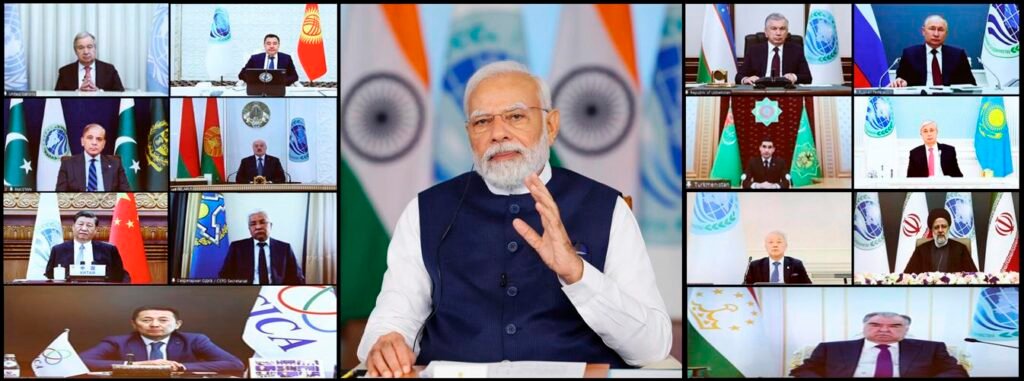
Zweig’s tragedy should not be India’s destiny, as it runs away from the complexities of the current world situation. That is why, the salience of the virtual summit meeting of the Shanghai Cooperation Organisation [SCO] under India’s chairmanship on Tuesday becomes highly disturbing. Where is India’s SCO policy heading?
Originally published on Indian Punchline on July 6, 2023
The opening address by Prime Minister Narendra Modi at the SCO event failed to convince, leave alone stimulate the other member countries — especially Russia and China who invented the “Shanghai spirit” almost three decades ago, which became five years later in 2001 the guideline for the SCO cooperation.
The saddest part is that Modi seems unaware of the Shanghai spirit, although his government fortuitously came to harvest the foreign policy initiative by the previous Manmohan Singh government to seek SCO membership for India. Modi’s speeches on the multilateral platforms have by now come to acquire a familiar trait — aiming barbs through innuendoes at Pakistan and China. They enthrall the anti-Muslim and Sinophobic lobbies within India but will have no use for the SCO collective.
Morality is a complex topic in the world of diplomacy, but its nuances must be grappled with. Good moral judgements actually involve discerning when exceptions need to be made in consideration of a larger enduring result. Has India’s harping on terrorism “in all its manifestations” made any dent into the world community’s understanding of the Kashmir dispute, as reflected in the OIC statements or the occasional articulation by UN officials?
Has China’s Belt and Road Initiative come to a grinding halt due to the self-serving sovereignty question that India rakes up as metaphor to embellish its narrative on the boundary dispute in the Himalayas? The answer is a resounding “no”, again. In fact, the SCO member countries are embracing great connectivity projects that bypass India due to its intractable differences and disputes with China and Pakistan.
SCO and the world order
The SCO summit 2023 took place against the backdrop of momentous happenings in international security. Arguably, the historicity of this year’s SCO summit is largely on account of the epochal developments unfolding today that will largely determine the nature of the world order in the 21st century. The presidents of both Russia and China in their speeches focused on this leitmotif of the contemporary international situation and took perspectives on the SCO’s role in a world in transition.
To quote from Russian President Vladimir Putin’s speech, “We believe it is important that all members of the [SCO] association share their approaches to the situation in global politics, security, the social and economic spheres. At the same time, our organisation is strongly committed to creating a truly just and multipolar world order, an order based on international law and common principles of mutually respectful cooperation between sovereign states with the central, coordinating role of the United Nations. Most importantly, this is the constructive foundation underlying the SCO’s practical activity…”
In his speech, the Chinese President Xi Jinping also called for opposing hegemonism and power politics, making the system of global governance fairer and more equitable, and promoting modernisation of human society through concerted and constant endeavours to advance equal rights, equal opportunities, and fair rules for all. Asserting that the historical trend of peace, development, and win-win cooperation is unstoppable, Xi called for efforts to maintain regional peace and safeguard common security and reminded his audience that sustaining peace and security in the SCO region is a common responsibility.
Both Putin and Xi dilated on the issue at some length. They seem to inhabit the same planet, Planet Earth. In contrast, the Indian statement dismissed this topic rather perfunctorily and curtly in two sentences. Modi said, “The present times mark a crucial phase in global affairs. In a world surrounded by conflicts, tensions and pandemics; food, fuel, and fertiliser crises is a significant challenge for all nations.” Period!
It’s as simple as that! Does India have any views at all on such a “crucial phase in global affairs”? Instead, Modi’s speech took a detour, wandering aimlessly through Venus and Mars — Startups and Innovation; Traditional Medicine; Youth Empowerment; Digital Inclusion; Shared Buddhist Heritage; Emerging Fuels; Decarbonisation in the Transportation Sector; Digital Public Infrastructure and so on — which, ironically, would have made the business of the moribund SAARC (South Asian Association for Regional Cooperation).
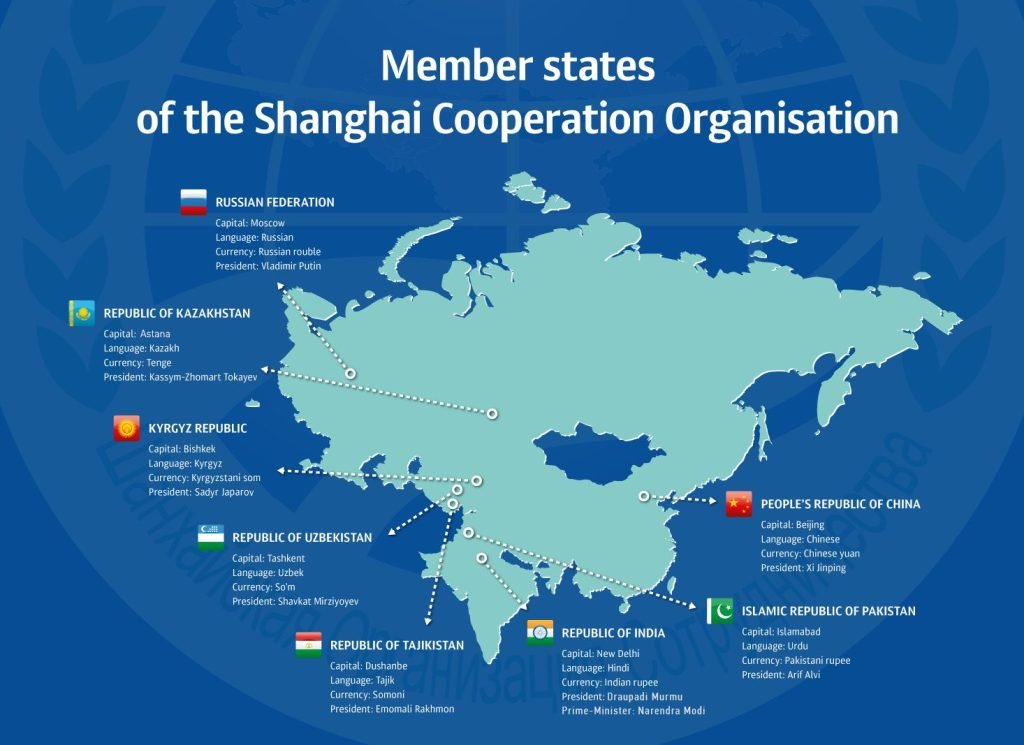
This is becoming hilarious as India pretends that it is not even aware that SCO is quintessentially a security platform. In reality, Delhi seems to be increasingly frustrated that more and more countries from South Asia (e.g. Maldives, Bangladesh, Nepal, Pakistan) are finding SCO to be an alternative to the SAARC, which India is subjecting to slow death.
Equally, the countries of West Asia (Bahrain, Kuwait, UAE, Saudi Arabia, Qatar, Egypt and Türkiye, etc.) are eagerly flocking to the SCO seeking some or any form of lien with the grouping. Delhi cannot stop these processes, while at the same time, it is also in distress that China may be the beneficiary and is unsure how the newfound gravitas in multilateralism in India’s extended neighbourhood might actually erode its self-projection, with Western encouragement, as the number one regional power in its region and the extended region.
Fundamentally, India is running with the hare and hunting with the hounds. It is, of course, a risky and dangerous game that can only aggravate India’s isolation regionally. Certainly, it is the Modi government’s own choice to put all its eggs in the American basket when it comes to the security of the Indian Ocean region. On the other hand, India must also be knowing this to be a contrarian trend in regional politics when the regional states are overwhelmingly moving into the orbit of the SCO and even the US’ closest allies in the Gulf region are shaking off the West’s hegemonic role in regional security and seeking shelter in that unique Russian-Chinese condominium.
Actually, this is a self-invited trauma for India, since it is to be solely attributed to the Modi government’s incomprehensible agenda to tie the country to the American stable, completely contrary to the world trend of the Global South shaking off the western yoke finally and decisively.
At the end of the day, therefore, there aren’t going to be any takers for the rhetorical questions raised in the Indian prime minister’s statement at the SCO summit:
- “We should collectively ponder upon whether we are capable, as an organisation, of fulfilling the aspirations and expectations of our people?”
- “Are we equipped to tackle modern-day challenges?”
- “Is SCO evolving into an organisation that is fully prepared for the future?”
It is a foregone conclusion that none of the SCO member countries — or aspiring regional states — will in the least be interested in taking the cue from India.
SCO rallies the Global South
India’s discontent with the SCO can no longer be hidden. With an eye on President Biden, this is a natural fallout of the Modi government’s lurch toward the American camp. Yet, the most regrettable part is that India’s lackadaisical approach toward the SCO is coinciding with the US plans to insert NATO as the number one security provider in Asia. Unwittingly or otherwise, India’s conduct effectively weakens the SCO’s solidarity when it is needed most, and in turn de facto subserves the US’ so-called Indo-Pacific strategy.
However, the Indian doublespeak is doomed to fail. The writing is there on the wall already with the major states in West Asia moving in tandem in the same direction that Iran took. Thus, whether India likes it or not, the gravitational pull within the SCO is already toward wider use of national currencies for mutual settlements and implementation of the SCO roadmap for the transition to national currencies in mutual trade; coordinated measures to remove regulatory barriers; establishment of necessary payment infrastructure; and the ultimate goal of creating an independent financial system.
Most important, India’s lukewarm attitude notwithstanding, the SCO countries will prioritise the consideration of the entire substantial portfolio of applications from other states that want to cooperate with them in the regional format in one capacity or another. Again, while India soft-pedals the Russian proposal “to transform the regional SCO anti-terrorist structure into a universal centre that would be responsible for responding to the entire range of security threats” — given Delhi’s obsession with bracketing Pakistan with terrorism. But Putin underscored that the matter “requires the most attentive and constructive approach.”
Putin means it. This puts India in a quandary. For, India’s passion to fight terrorism begins and ends with Pakistan. The Modi government is not in the least interested in the US’ innovative uses of terrorism as a geopolitical tool in various parts of the world — the latest instance being the drone attacks on the US’ Independence Day on Moscow and the Moscow Region, which, according to the Russian Foreign Ministry, “would have been impossible without the support provided to the Kiev regime by the United States and its NATO allies, which continue to pour weapons into Ukraine, including drones, train drone operators and provide intelligence information necessary for such crimes, including civilian and military satellite images.”
Russia and China have a special concern in building up the SCO’s resilience to counter the US’ containment strategy against them. It is to be anticipated, therefore, that in the international arena, the SCO and the BRICS are poised to be the two principal vehicles to advance the aspirations of the Global South.
Quite obviously, China and Russia will take lead roles in forging the unity of the Global South. Witness China’s peace and reconciliation initiatives in West Asia or the Russian efforts in Africa and Latin America or in the working of the OPEC Plus . The point is, China and Russia are not tainted as colonial powers historically. On the other hand, by clinging on to the American coattails, India is only weakening its own pretensions as the self-appointed leader of the Global South. The sooner India comes to terms with this geopolitical reality, the better.
So long as India remains an SCO member, the trend is likely to be resistance from other member countries to reducing the regional body to ventilate its grouses against Pakistan and China and vitiate the working of the organisation. Thus, when it comes to the core of the SCO territory, Central Asia, a new China-Central Asia format at the heads of state level has been created recently (with Russian support), which will meet bi-annually — the region being highly vulnerable to the US-sponsored colour revolutions and regime change agenda. It is unlikely that Moscow or Beijing took Delhi into confidence on this major development in Eurasia’s geopolitics.
Again, a similar trend can be expected with regard to the acceleration of the BRI in the SCO landscape, with the decision to extend the China-Pakistan Economic Corridor to Afghanistan, which will at the next stage connect Central Asia. Similarly, it is entirely conceivable that the new Central Asian gas alliance in the making at Russia’s initiative will eventually connect Pakistan, too, by pipeline to the massive Russian gas fields.
The idea seems to be gaining ground in the SCO capitals that India will get the message at some point that it does not pay to be a dog in the manger. The SCO is determined not to meet the tragic fate of the SAARC.
About M. K. Bhadrakumar
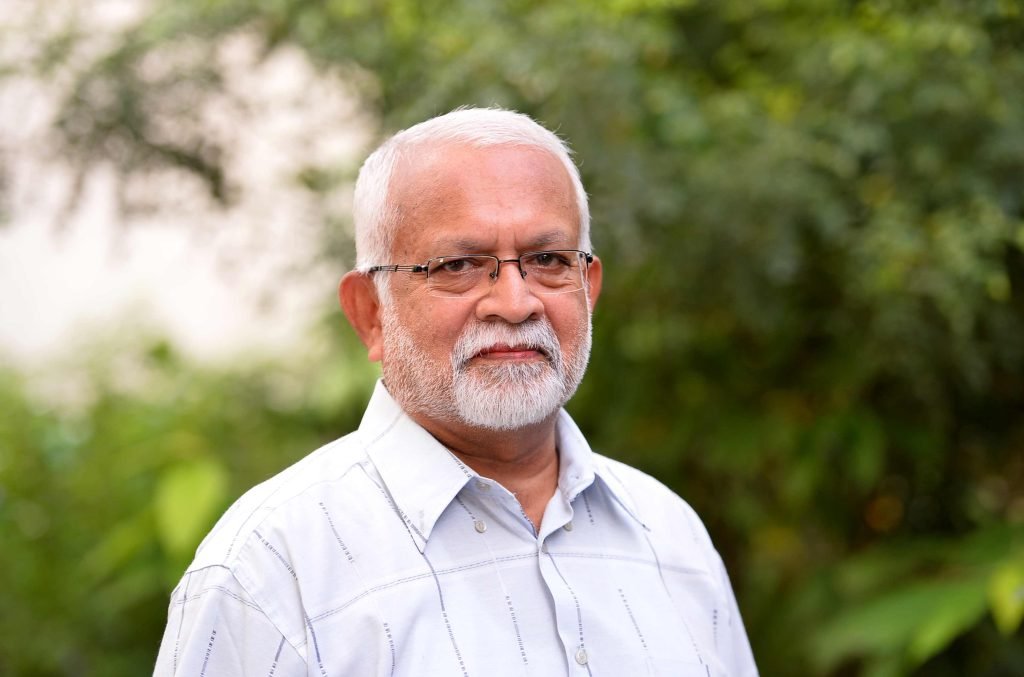
I was a career diplomat by profession. For someone growing up in the 1960s in a remote town at the southern tip of India, diplomacy was an improbable profession. My passion was for the world of literature, writing and politics – roughly in that order. While doing doctoral research on the works of Tennessee Williams, however, friends encouraged me to have a fling at the Civil Services Examination. As it turned out, before I could figure out the momentous import of what was unfolding, fate had pitchforked me into the top ranks of the merit list and ushered me into the Indian Foreign Service.
Roughly half of the 3 decades of my diplomatic career was devoted to assignments on the territories of the former Soviet Union and to Pakistan, Iran and Afghanistan. Other overseas postings included South Korea, Sri Lanka, Germany, and Turkey. I write mainly on Indian foreign policy and the affairs of the Middle East, Eurasia, Central Asia, South Asia and the Asia-Pacific.
Writing must come in a spontaneous rush of thoughts. The exhilarating sense of freedom of an eclectic mind makes all the difference. None of the Indian Punchline blogs has been a pre-meditated act of writing. But then, I will be gravely remiss if I do not acknowledge the two profound influences on my formative years – my late mother who was a deeply religious person of extraordinary spirituality who moulded my inner world and my late father who was a prolific writer, author, and Marxist intellectual and thinker who introduced me at a young age to dialectics as a matchless intellectual tool to analyse the material world and decode politics.
The Indian Punchline may intentionally provoke at times, but there are no mala fide intentions here, no hidden agenda and no attempt to preach. Simply put, the Indian Punchline reflects a humanist’s markings against the backdrop of the ‘Asian Century’. I am underscoring this because we live in difficult times, especially in India, with such acute polarization in discourses – ‘You are either with us or against us’.
Editor’s Note
Acquaint yourself with the SCO at its homepage and on Wikipedia. And read about SAARC on Wikipedia and here. And you may find another critical article about India and Modi here – “Modi Lied To The US Public Once Again – OpEd” in Eurasia Review of July 6, 2023 by Habib Siddiqui.


3 Responses
India is so pretentious as a wannabe world power. Its international relations lack cohesion and consistency. It joined BRICS and SCO, and now it goes against the grain of these organizations. It can’t decide where it wants to go; it is indecisive. India should leave BRICS and SCO, and chart its own course. Isn’t that what Modi wants? The country is mired in ethnic strife, human rights issues, the caste system, and various other problems. It should fix its own problems first before trying to act like a world power.
Good point, many thanks!
A fair representation of India since Modi has come to power. The debate on why India has such attitude while in BRICS and SCO, is spreading in many platforms. Is this because of the 2024 election and the Hindu nationalist vote?