
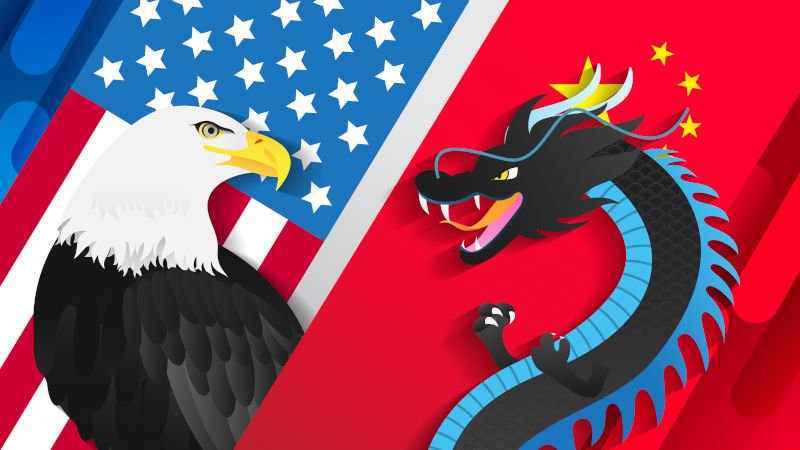
Colin Mackerras: The dangerous one is the U.S.

Colin Mackerras

April 20, 2023

The implication of AUKUS is that China constitutes a danger to Australian security. It borders on official Australian policy that China is an aggressive power bent on domination. But the history of the People’s Republic suggests its military is for defence, not aggression and that the cases where it has used external military force are very few. Under Xi Jinping it may be assertive and keen to extend influence, especially economic, but it shows no signs of political/military aggression. On the contrary, it is the U.S. that constantly uses external military force and is bent on maintaining domination at all costs.

It was less than a year after the birth of the People’s Republic of China (PRC) on 1 October 1949 that the Korean War broke out. Korean history of the first years after World War II is too complex to pursue here. But essentially, no sooner was Korea independent of a defeated Japan in 1945 than a divided country emerged, with the U.S. setting up the Republic of Korea (South Korea) on 15 August 1948 and the Democratic People’s Republic (North Korea) following on 9 September. Under U.S. dominance, it was the South that moved first formally to divide the country.

When the North attacked the South in June 1950, the U.S. got the United Nations to intervene under its own American leadership. China became involved only in October 1950, after the U.S. actively threatened to move north to invade the fledgling PRC. Yet, at U.S. behest, China was condemned for aggression.

Let’s be very clear: the U.S. was the first foreign power to be involved in this war, not China. After a truce was reached in 1953, Chinese troops withdrew fully from the north by 1958, while American troops remain in the south to this day. The dangerous one is the U.S., which assumes its God-given right to control the world, not China. There is no peace treaty covering Korea to this day.

Following the Korean War, China has only rarely been involved in wars outside its own borders. In 1962, it fought a brief border war with India, but it is important to note that the rights and wrongs of this are extremely controversial. Although the Western media reported almost entirely India’s version of events, scholars such as the late Neville Maxwell (1926-2019) and Gregory Clark have shown convincingly that China had a perfectly respectable case.

The most recent time China sent troops to attack another country was in Vietnam in February and March 1979 in response to Vietnam’s invasion of Cambodia. During this very brief war, China made no attempt to take the capital or to change the Vietnamese government. It withdrew unilaterally.

In short, the longest war since 1949 to see Chinese troops fight outside their borders is still the Korean war. It was unfairly condemned of aggression by the first foreign power to participate in the war, with the U.S. version of events sticking for decades because of its world power.

Since the Korean War, the U.S. continues to be involved in numerous wars, Vietnam, Iraq, and Afghanistan, among others, with Australia simply taking part to follow the boss. What’s striking is that the U.S. has lost these wars and ended up withdrawing humiliated. The U.S. has attempted to invent an ideological justification but has frequently been attacked by protests from within its own borders. It has also been involved in proxy wars, some such as the present Ukraine war large in scale.

In contrast to China, the U.S. has hundreds of military bases outside its own borders. It has installed numerous governments in foreign countries, replacing those that don’t conform to the ideology it calls “democracy”.

Many in the West assume that under Xi Jinping, China has become an aggressive nation, even if it was not before. It is true China is much more assertive in world affairs. But I see no sign that China has become aggressive. It shows no sign of wanting to use its armed forces outside its own territory.

As for Taiwan, let’s remember that the international community recognises Taiwan as part of China and Taiwan has no seat by itself in the United Nations. The U.S. may be goading China to retake Taiwan with violence, but has not succeeded up to now. China’s policy is now, and has always been, that it wants to reunify the country by retaking Taiwan, but it wants peaceful reunification, using force only as a last resort.

China extends its influence through trade and investment. We know that its Belt and Road Initiative has expanded China’s economic and to some extent political influence throughout Central Asia, Africa and Latin America, and even the South Pacific. We even hear increasing reports of China’s replacing the U.S. dollar as the reserve currency by trading in the Chinese yuan and other currencies.

Western countries, especially the U.S., express alarm at the increase of Chinese influence and have taken increasingly severe measures to thwart it. However, what the Chinese have not done is establish military bases, overthrow local regimes or even try to spread their ideology to those countries with which they trade.

In this sense, they are far less dangerous than the U.S.

Xi Jinping talks of a common shared future of humanity, not of dominance. Western commentators tend to assume that’s just words, and really he hides deception and conquest in his heart. I don’t see the evidence for that.

What China wants and what seems to me in China’s interests are two things. One is to protect China against external attack. The other is a multipolar world, in which China is one of the important poles. It does not want or aim for a Chinese-dominated unipolar world.

True, it is becoming involved in the Middle East and in peace processes to an unprecedented extent, at the same time as the U.S. is in decline relative to China (and other countries). Personally, I can’t see why it should not. As a great civilisation, it has a right to extensive influence. Influence is quite different from dominance.

The U.S. currently assumes it is number 1. Its main aim is to retain that position. Its policies are geared to that end, to keep China down. What alarms the U.S. is China’s success. How can a country so recently impoverished and backward actually be prosperous enough to enjoy a life expectancy at birth longer than the U.S.? (World Bank data for 2020 have China at 78, and the U.S. at 77).

The way Australia has submitted itself to this dangerous and untrustworthy country, the U.S., is shameful. Our track-record of blindly following allies into wars that don’t concern us is unworthy of the independent country we should be and aspire to be.

This article was originally published by John Mendadue’s Public Policy Journal
“Pearls And Irritations” on April 16, 2023

About the author

Colin Mackerras, professor emeritus at Griffith University, Australia, is one of the world’s finest scholars on China and has developed a special relationship and friendship with China over five decades. More about him on Veronica Mackerras’ homepage for him, “China In My Eyes”.

Share

Leave a Reply

Your email address will not be published. Required fields are marked *

Related Posts

Jan Oberg, TFF director April 9, 2026 I was recently invited to have a good, long talk about the world – and, of course, about peace too – with Boris Malagurski on his Weight of Chains Channel on YouTube. It was a real joy and seems to have been greatly appreciated by the viewers too. Mr Malagurski and I shall of course be grateful if you share this conversation in your circles – of course, only if you like what you see and hear  And remember that this one – like hundreds of others with TFF Associates – can be enjoyed at our TFF Video Collection.
By Jan ObergTFF co-founder and director February 11, 2026 PART 3 — ECONOMICS, TRADE & FINANCIAL SOVEREIGNTY A. Trade Measures & Market Signaling Economic pressure can be applied instantly and scaled without violence. Immediate Measures (within a week) Government boycott US goods and services  A very powerful signal which over time will be felt. Targeted tariffs on selected U.S. goods Symbolic but high-visibility sectors send a clear message. Suspend trade facilitation talks A peaceful pause that signals deep concern. Freeze U.S. participation in public procurement – military procurement in particular A nonviolent way to reduce influence. Competition law review of U.S. corporations A legal tool to scrutinise market dominance. Longer-Term Measures EU–Asia–Africa trade corridors Reducing reliance on U.S. markets. European supply chains for critical minerals Strategic autonomy in resource access. European Strategic Trade Authority Monitoring coercive practices globally. Euro-denominated commodity markets Weakening the dollar’s pricing monopoly. The EU must resume contacts and negotiations with Russia, focusing on energy cooperation To...
PART 2 — Diplomacy, Law and Nonviolent Power By Jan ObergTFF co-founder and director January 26, 2026 This is the second of four TFF-created idea portfolios designed to curb the global reach of the United States and, in both the short and long term, help catalyse a worldwide nonviolent resistance to what many observers describe as the Trump administration’s uniquely confrontational, destructive and world-threatening policies. These portfolios outline what governments and citizens across the world can do through dynamic diplomacy, creative initiatives, and strictly nonviolent means. They are typical TFF works in that we do not only tell what the problem is and how bad it will go – as 90+% of all commentators, experts and scholars do – we tell what we think can be done, inviting you to think of what you think you can do. It seems painfully clear to me that the current political dynamics in Washington increasingly resemble the most dangerous...

Recent Articles

Jan Oberg May 15, 2026 Go to this Fox News page and scroll the whole way down: President Donald Trump tells the world that his meeting with President Xi Jinping yielded a lot of very concrete political and economic results – of course, only where the Chinese side, according to him, agreed with him. He does not mention the Taiwan issue, but Secretary of State, Marco Rubio, says that it did not feature prominently in their talks and that the US policy on Taiwan has not changed. Then go to China Daily – or Global Times – and you will see that for the Chinese it is framework, principles, structure of cooperation etc. that matters – all embedded in the overall idea of “constructive bilateral relationship of strategic stability.” Nowhere is any concrete agreement or deal – all that Trump refers to – mentioned. At the general level, this gives you insights into the very different social...
Lena Petrova of “World Affairs In Context” with more than half a million subscribers on YouTube wanted to explore what a peace researcher like me has to say about, among other things, the First and the Second Cold War and why eethics has disappeared from politics. I am particularly happy about this conversation that also yielded an amazing number of very appreciative comments on YouTube. No doubt, people are longing for alternatives, including peace perspectives.
The MIMAC – Military-Industrial-Media-Academic Complex – drives the world’s rampant militarism and wars without end. Here is a short reflection of how it works against all interests of humanity. #5 deals with why there is no real enemy or threat images/analysis. It’s all ex-post constructions. And, btw, theTFF Peace Pulse is now on Rumble.

TFF on Substack

Discover more from TFF Transnational Foundation & Jan Oberg.

Most Popular

Jan Oberg May 15, 2026 Go to this Fox News page and scroll the whole way down: President Donald Trump tells the world that his meeting with President Xi Jinping yielded a lot of very concrete political and economic results – of course, only where the Chinese side, according to him, agreed with him. He does not mention the Taiwan issue, but Secretary of State, Marco Rubio, says that it did not feature prominently in their talks and that the US policy on Taiwan has not changed. Then go to China Daily – or Global Times – and you will see that for the Chinese it is framework, principles, structure of cooperation etc. that matters – all embedded in the overall idea of “constructive bilateral relationship of strategic stability.” Nowhere is any concrete agreement or deal – all that Trump refers to – mentioned. At the general level, this gives you insights into the very different social...
Lena Petrova of “World Affairs In Context” with more than half a million subscribers on YouTube wanted to explore what a peace researcher like me has to say about, among other things, the First and the Second Cold War and why eethics has disappeared from politics. I am particularly happy about this conversation that also yielded an amazing number of very appreciative comments on YouTube. No doubt, people are longing for alternatives, including peace perspectives.
The MIMAC – Military-Industrial-Media-Academic Complex – drives the world’s rampant militarism and wars without end. Here is a short reflection of how it works against all interests of humanity. #5 deals with why there is no real enemy or threat images/analysis. It’s all ex-post constructions. And, btw, theTFF Peace Pulse is now on Rumble.
Read More
Screenshot-2026-05-15-103534
Jan Oberg May 15, 2026 Go to this Fox News page and scroll the whole way down: President Donald Trump tells the world that his meeting with President Xi Jinping yielded a lot of very concrete political and economic results – of course, only where the Chinese side, according to him, agreed with him. He does not mention the Taiwan issue, but Secretary of State, Marco Rubio, says that it did not feature prominently in their talks and that the US policy on Taiwan has not changed. Then go to China Daily – or Global Times – and you will see that for the Chinese it is framework, principles, structure of cooperation etc. that matters – all embedded in the overall idea of “constructive bilateral relationship of strategic stability.” Nowhere is any concrete agreement or deal – all that Trump refers to – mentioned. At the general level, this gives you insights into the very different social...
Screenshot-2026-05-12-104023
Lena Petrova of “World Affairs In Context” with more than half a million subscribers on YouTube wanted to explore what a peace researcher like me has to say about, among other things, the First and the Second Cold War and why eethics has disappeared from politics. I am particularly happy about this conversation that also yielded an amazing number of very appreciative comments on YouTube. No doubt, people are longing for alternatives, including peace perspectives.
Screenshot-2026-04-13-154551 (2)
The MIMAC – Military-Industrial-Media-Academic Complex – drives the world’s rampant militarism and wars without end. Here is a short reflection of how it works against all interests of humanity. #5 deals with why there is no real enemy or threat images/analysis. It’s all ex-post constructions. And, btw, theTFF Peace Pulse is now on Rumble.
Screenshot-2026-04-13-154551 (1)
Jan Oberg, TFF director April 28, 2026 In this third TFF Peace Pulse, I make the important distinction between the violence and the conflict that violence is a symptom of. If you want peace, focus on the underlying conflict because that is the key to resolution, peacemaking, and a better future for the parties. The West is obsessed with violence, just look around you – and 90+ per cent of the public debate is about military issues and other violence – totally wasted for peace. These Peace Pulses will only be published here a few times. You will also not find them on YouTube and Vimeo because both platforms have blocked TFF and me; you know, peace is dangerous these days. Most TFF’s videos since 2007 are now on Rumble.
Screenshot-2026-04-13-154551
In contrast to most, we’ll bring alternatives, solutions, hope and strategies for a better future. Times are dangerous, yes, but that only intensifies the need for constructive thinking and action! Jan Oberg, TFF director April 13, 2026 The new TFF Peace Pulse uses video messages in a new way: Max 3-5-minute-long comments, ideas or perhaps mini-lectures, all about peace – positive peace. We launch them today on April 13, 2026 with a carefully crafted visual aesthetic fitting the content. We hope to publish them regularly from now on. We launch Peace Pulse (PP) – for a number of reasons. The world is in chaos, and there are countless reasons to feel concerned, frustrated, even angry. The atmosphere is saturated with doom and gloom, with negative energy and rear‑mirror thinking, while vision, imagination, alternatives, strategies and genuine future‑mindedness remain in short supply. And without them, we simply can’t save the world. Looking at problems from a hundred angles will...
IMG_5165 (1)
PART II — Publishing Peace in a System That Prioritises Militarism Jan Oberg, TFF director April 10, 2026 How TFF Maintains a Daily Voice in a Digital World Built for Noise This article is part of the series “TFF at 40″ and it invites you to learn about Four Decades of Publishing Peace. It takes a look at how a small, people‑financed peace foundation has communicated across four generations of technology — from wax stencils and fax machines to mass email and Substack — and why TFF continues to publish every single day in a system that rewards noise, conflict, and militarism. ◆ What it means to publish peace every single day in a digital system built for 24/7 news and other noise, confrontation, and militarism. How TFF’s independence, continuity, and global readership defy algorithms, donor cycles, and Western media censorhip — and why the Majority World keeps listening. When the...

