
Jan Oberg: The Iraq War 20 years ago - No shame. No lessons learned. No arrest order on NATO state leaders.

Writing this, I must admit that my rage and pain build up inside, still twenty years later. Below, see what TFF and I wrote back then and why we were, simply put, making better predictions on a shoestring budget than the US and other NATO decision-makers on multi-billion-dollar budgets.
Like other wars and interventions, this was no “mistake”. It was an unavoidable consequence of Western MIRE – Militarism, Imperialism, Racism and Exceptionalism.
The West has learned nothing. Militarism is now its main cohesive force into its manifest destiny: Decline and fall.

President George W. Bush announcing that he has just started the war on Iraq.
Listen carefully! All the arguments and aims he presents were either false, mistaken or outright lies. And sanctimonious.

TFF’s fact-finding missions and scattered memories

Permit me start out with a quotation from the British Stop The War Coalition’s newsletter:

“A report released this week by the Costs of War Project estimates that between 550,000-580,000 people have been killed since March 2003 in Iraq and Syria and “several times as many may have died due to indirect causes such as preventable diseases.”

It goes on to say that “more than 7 million people from Iraq and Syria are currently refugees, and nearly 8 million people are internally displaced in the two countries.” These devastating statistics tell us more of what we already know: the Iraq War was an utter disaster, and the perpetrators should be brought to justice.

This coming week marks 20 years since the invasion led by George Bush and Tony Blair.”

You should be aware also that the US is still on the ground (the US Embassy in Baghdad is the largest anywhere in the world) – it has a series of military bases in Syria and steals its oil on a daily basis.

More people died in Iraq because of 13 years of sanctions than because of the military death and destruction.

And the costs of this war alone have been close to US$ 2 trillion. And here the estimated costs up to 2050.

And – I predict – the Western mainstream media will do very little about these crimes, the mass killing, this utterly failed war – morally, in terms of international law and in terms of winning the hearts and minds of the Iraqi people.

And they will keep on focusing on the European war in Ukraine and the suffering of those who are white, Christian and victims of Russia’s comparatively small – but yes, inexcusable – war there.

Why? Because it suits NATO, the EU and the declining West in general. And because, by focusing on Ukraine, NATO countries’ war crimes fall into the darkness. Harold Pinter would probably say about it – it didn’t happen; nothing ever happened there.

Is anybody in the political, military and media wars of the West having second thoughts today? Does anybody have the civil moral courage to apologise?

No – those same Military-Industrial-Media-Academic Complex (MIMAC) elites continue to destroy our world, incapable of learning any lessons. And there should be plenty to learn.

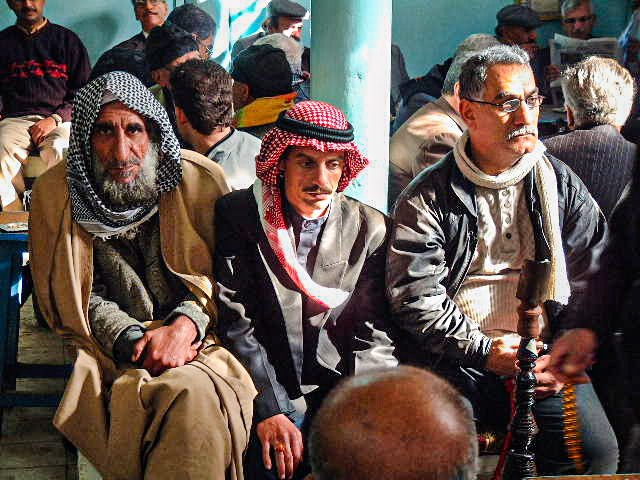
I did fact-finding in Iraq twice, the second time shortly before the US-misled coalition of the willing did its ‘shock and awe.’ My dear colleague, friend and former UN peacekeeper, retired lieutenant colonel Christian Hårleman – who at the time was also the chairman of the TFF Board – and I did 160 interviews with people at all levels, from the #3 man in the system, Tariq Aziz, Baath party member, military, UN staff – over scholars, diplomats, NGO/women’s organisations to the proverbial taxi driver and people in tea houses – in Baghdad, Babylon, Basra and the UN mission at the border with Kuwait. We gave a lecture for high-level militaries and diplomats at the House of Wisdom, Bayt al-Ḥikmah, also known as the Grand Library of Baghdad.

Although everyone we met felt misunderstood, demonised and tense at the prospect of Bush’s and Blair’s bombs soon falling, we – Westerners – were treated everywhere with respect and kindness. For instance, a lady in the reception of our hotel had found that both our birthdays were in January, so we found a beautiful bouquet of flowers in our room that day.

In the spring of 2004, I published my book (in Danish) “Predictable Fiasco. The Conflict With Iraq and Denmark As An Occupation Power” (Tiderne Skifter, Copenhagen, 296 pages). Being in Baghdad for just 24 hours, any fool – such as I – would predict that the US/West would never win the hearts and minds of the Iraqis. No way!

This is not the place to go through all that again.

At writing this, my rage and pain build up inside still twenty years later.

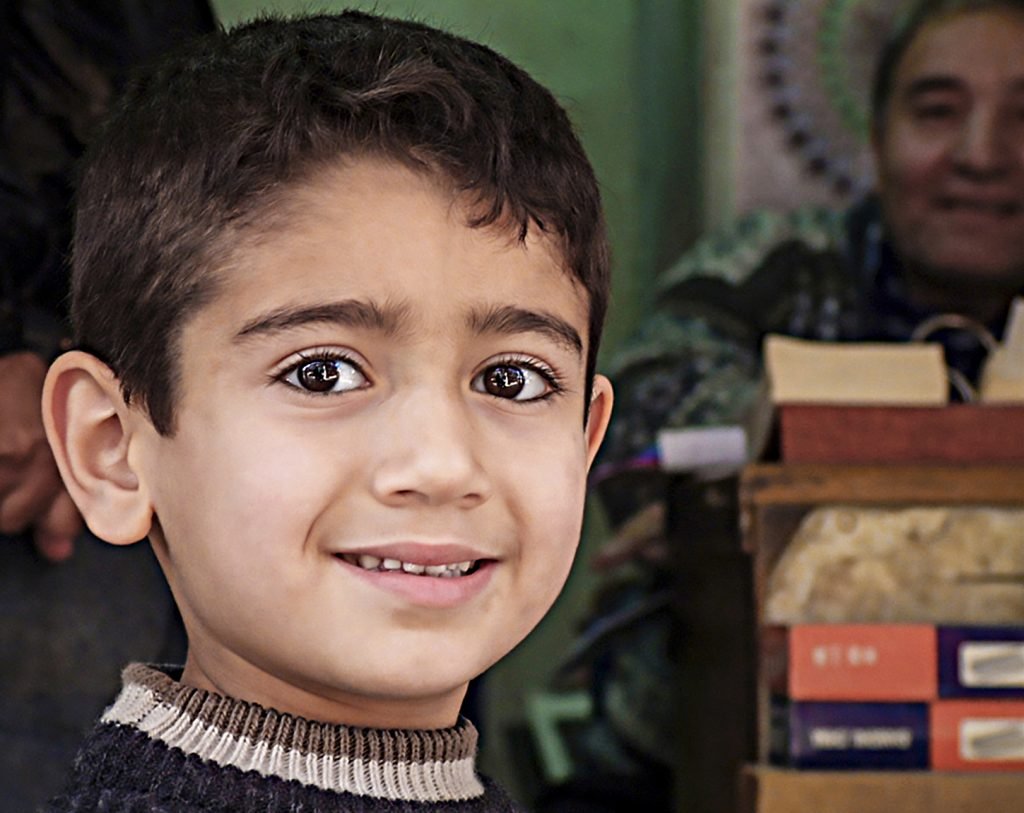
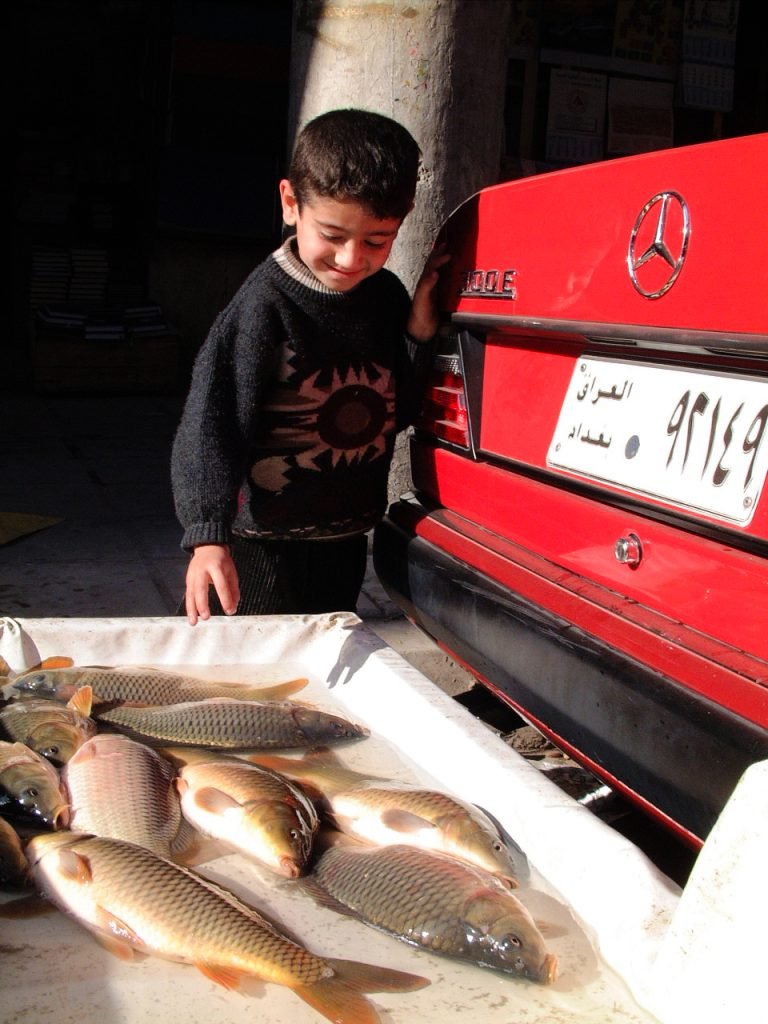
I wonder where this boy is today. If he is. I took these photos of him in the old town’s book bazaar – he would be about 25-16 today. If he is, what is his and his family’s life like today? How did this criminal war shape his childhood? What has it done to his well-being – innocent as he was?
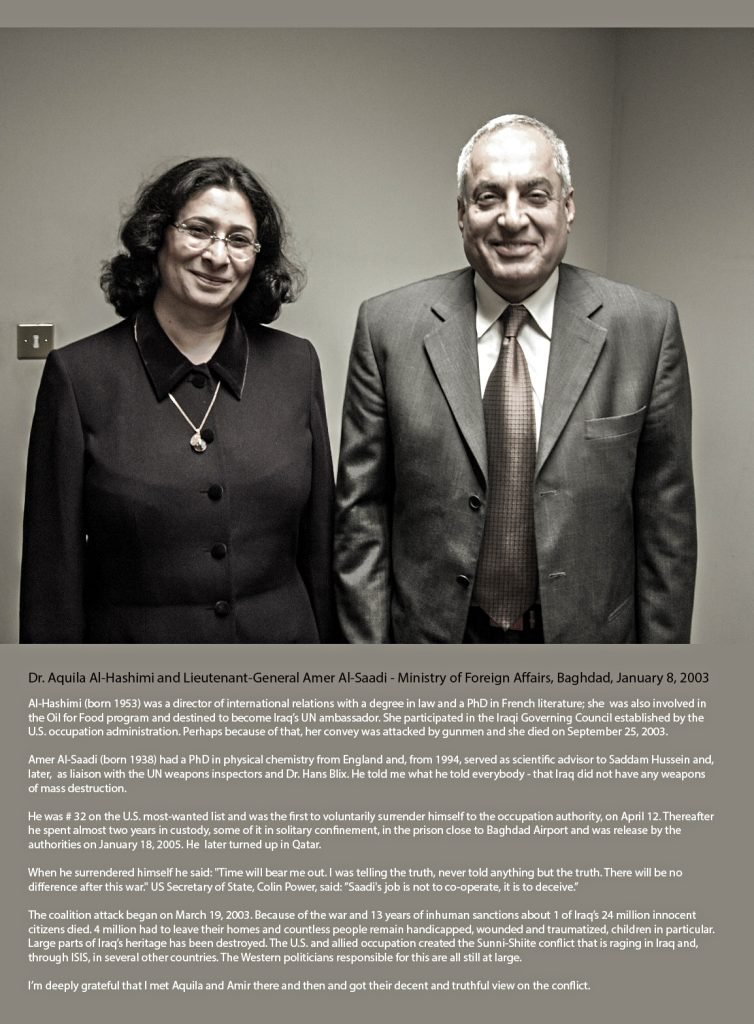
And there were these two extraordinarily decent, competent and kind people with whom we spent hours – Saddam’s weapons expert and liaison with the West on the issue of weapons of mass destruction, Amir al-Saadi and Aquila al-Hashimi who was shortly after killed – as was the legendary CARE worker, Margaret Hassan, who was abducted and murdered, and whom we also interviewed.
A selection of what TFF and the author published twenty years ago

These materials – twenty years back – are found at old homepages and archives. Here most of them are made available at your fingertips:

The 30 photo series: Iraqi faces and surfaces 2002-2003
“With these pictures, I want you to get a sense of the simple fact that Iraq is not only Saddam Hussein, weapons and wars. Iraq is 24 million fellow human beings. It has been a civilisation for some 7,000 years. It has a distinct, rich culture; it has norms, and – above all – it has pride. I have never visited a country with so much kindness and hospitality – a genuine welcoming of the stranger.”

It was obvious from the first weeks that the world was fed by totally one-sided opinion-forming journalism and that the US people who came to Iraq did not have the faintest idea about how to govern it.

TFF Collection Iraq 1, 2, 3 and 4 – December 2002 – January 2005
Some 130 articles by TFF Associates alone – and more by other authors.

TFF from February 2006 – January 2012
About 40 articles between February 2006 and January 2012 (search yourself for “Iraq”)

TFF from 2012 – 2017
Almost 600 articles focused on the Middle East, of which 101 with the hashtag “Iraq”.

Jan Oberg (in Danish) “Predictable Fiasco. The Conflict With Iraq and Denmark As An Occupation Power” (Tiderne Skifter, Copenhagen, 296 pages, only available in secondhand bookshops as the publisher went out of business).

Diagnosis – Prognosis – Solutions

So much about TFF’s Diagnoses and Prognoses. We did not continue the work in Iraq and have not visited Iraq since 2003.

But we did bring forward a series of peace proposals – Treatment/Solution – before the war. It was a 14-point program developed by Hans von Sponeck – who had resigned from the UN after more than 30 years of service, including as UN Assistant Secretary-General and UN Humanitarian Coordinator for Iraq because, as he said, he would not preside over a genocide on the Iraqi people – and myself.

We sent it to what was considered one of the finest and most trustworthy media in the world, International Herald Tribune. That was in December 2002, and it was accepted. Then it was delayed and then rejected. Read it here with an introduction to this bizarre and disgraceful example of the mainstream media manipulations then – and even worse now:

A Road to Peace With Iraq – Europe’s Choice.

In summary, the US/NATO/EU world has learned no lessons from Yugoslavia, Kuwait, Somalia, Afghanistan, Iraq, Libya, and Syria. NATO’s provocative expansion over 30 years right up to the border of Russia indicates the same – while not meant as an endorsement of the Russian invasion of Ukraine.

They’ve all been examples of the MIRE mentioned above – Militarism + Imperialism + Racism + Exceptionalism.

And the media play the same role now as back then – just more uniform, more ignorant of the basic criteria of quality media work – knowledge-based, diversity in perspectives, solid check of sources, independent investigation, aiming at objectivity to the extent humanly possible, serving public education and being critical of power as well as revealing its abuse.

In the field of global affairs, this type of journalism is no longer to be found in the Western mainstream, influential media – something I have dealt with at length in a 50-year perspective here. These media have, compared with 2003, become even more tightly integrated into the MIMAC – the Military-Industrial Media Academic Complex – the elites networking in a murky, criminal society far away from democracy with its checks and balances.

“It is enough that a lie is believed for three days – it has then served its purpose.


Marie de Medici, 1573-1642, queen consort and queen regent of France

Unlike our mainstream adversaries, warmongering propagandists and other destructive forces, TFF has no source of state, corporate or institutional finance whatsoever. Such are the conditions for truly independent peace research in these times. Everything peace has been cancelled. But we are still here – and will be. Thanks to you

TFF and this homepage operate entirely on voluntary support from its readers, and we who produce it are all volunteers. To support TFF, you do not have to agree with every argument or article, only welcome alternative voices, research-based knowledge and dialogue about important matters.

[paypal-donation]

Who said Freudian slip?
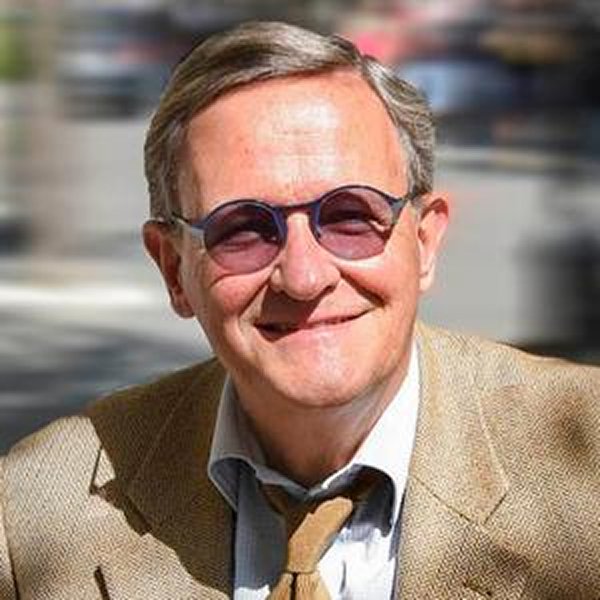
Peace & future researcher + ‌Art Photographer

Share

Leave a Reply

Your email address will not be published. Required fields are marked *

Related Posts

PRESS RELEASE – 6 OCTOBER 2025 LAY DOWN YOUR ARMSPEACE PRIZE FOR 2025 is awarded Francesca Albanese The United Nations Special Rapporteur on the occupied Palestinian territories – as the person who, in accordance with Alfred Nobel’s will, has “done the most or the best work for fraternity between nations and for the abolition or reduction of standing armies as well as for the holding and promotion of peace congresses.” Francesca Albanese has forcefully and unwaveringly worked against Israel’s full-scale war on the occupied Palestinian territories, in particular Israel´s ongoing genocide against the Palestinian people. She has confronted Israel’s systematic war crimes and crimes against humanity in a truly global outreach. Further, she has brought governments, international organisations and people’s groups together to underline the responsibility of the world at large to act and to stop arming, enabling, and profiting from Israel’s ongoing criminal actions. But first of all, Albanese...
Officially, the drones were not identified. By simply thinking critically – which journalists and selected experts no longer do – there may be a good reason for that. And this article will never be mentioned in Denmark… Drones over Denmark. No damage. No trace. No answers. Yet the headlines scream “Russian threat,” and Prime Minister Mette Frederiksen speaks with a certainty that defies logic: “We don’t know they were Russian—but we know Russia is the biggest threat to Europe.” It could be nobody else – unless you make an interest analysis which I did two days ago. This is not security policy. It’s theatre. And the audience is being played. Let’s rewind. These drones—unphotographed, untracked, unclaimed—appear and vanish like ghosts. Airports shut down. Panic spreads. Military budgets swell. And the narrative hardens: Russia is behind it. But what if that’s not just wrong but deliberately misleading? Here’s a hypothesis for...
And why the world, especially the EU, must now declare itself independent of the United States. UN’s 80th anniversary This year, the United Nations celebrates the 80th anniversary of its founding. The UN was formed after the scourge of the Second World War, in which 70 to 85 million people were killed and many countries were destroyed. That war came on the heels of the First World War, which also killed between 15 and 22 million people. After the Second World War, especially after the use of nuclear weapons by the United States, which marked a turning point in the history of warfare that could result in the end of civilisation as we know it, humanity decided to move away from the era of empires and big power politics and usher in a new era of peace, freedom and cooperation. These were the principles enshrined in the UN Charter. The United States...

Recent Articles

Jan Øberg behandler i artiklen en lang række faktorer, som ligger til grund for den måde vores samfund er organiseret på – og derfor også for konflikter. Artiklen introducerer således sammenhængen mellem familien, foreninger, regeringer, NGO’ er, nation, stat, nationalstat og alliancer for på denne måde bedre at kunne forstå konflikter og i sidste ende blive klogere mht. at løse disse. Øberg, der er fortaler for global bevidsthed, hvilket skal ses i lyset af den øgede globalisering, skelner mellem kulturkamp og kulturdialog. Endelig behandles begrebet magt og magtesløshed: giver magt ret til at udøve magt – fordi man mener at have ret? Litteraturliste og arbejdsspørgsmål efter artiklen. Ordene vi bruger om verden I satellitperspektiv kan man godt tale om den menneskelige familie eller menneskeheden. Udtrykket understreger, at der eksisterer – eller burde eksistere – et fællesskab fordi vi alle er mennesker og sammen bebor denne klode og ingen anden. Og...
Kapitel 2: Forskellige sider af Europa og USA…fortsat 2.5 Militære relationer I forbifarten har vi allerede sagt nogle ting om USA’s militære situation. Kig lige en gang til på afsnit 2.3. Nu skal vi uddybe det militære forhold mellem USA og EU. Der er en række ligheder mellem visse europæiske landes og USA’s militær. Næsten alle er med på en eller anden måde i NATO, direkte som medlem – selv Island, der ikke har et forsvar – eller indirekte i Partnerskab for Fred. USA og Canada er med i OSCE (på dansk OSSE), Organisationen for Sikkerhed og Samarbejde i Europa, der tæller over 50 lande. USA samt England og Frankrig er kernevåbenstater og de har styrker til intervention langt borte fra hjemlandet, om end USA’s er tifold større. Alle har også en omfattende våbeneksport og bruger den som et middel til at tjene penge og få loyale venner på, det...
Background Christian Harleman and Jan Oberg conducted a fact-finding mission to Burundi between November 26 and December 6, 2003. (See websites about the country here). The first TFF mission took place in March 1999. Unfortunately, since then it has not been practically possible to implement the co-operation with Burundi’s Ministry of Education and Burundian NGOs that was planned at the time. The 2003 mission had three purposes. First, to do fact-finding in general about the situation and, in particular, the progress under the Arusha Peace Process. Second, to explore the possibilities for co-operation between the government and relevant NGOs on the one hand and TFF on the other, in order to develop and deepen the existing competence in fields such as conflict-understanding, reconciliation and peace-building. Finally, third, to find out whether it would be possible, in co-operation with the Swedish Rescue Services Agency (Statens Räddningsverk), to establish a health care unit that...

TFF on Substack

Discover more from TFF Transnational Foundation & Jan Oberg.

Most Popular

Jan Øberg behandler i artiklen en lang række faktorer, som ligger til grund for den måde vores samfund er organiseret på – og derfor også for konflikter. Artiklen introducerer således sammenhængen mellem familien, foreninger, regeringer, NGO’ er, nation, stat, nationalstat og alliancer for på denne måde bedre at kunne forstå konflikter og i sidste ende blive klogere mht. at løse disse. Øberg, der er fortaler for global bevidsthed, hvilket skal ses i lyset af den øgede globalisering, skelner mellem kulturkamp og kulturdialog. Endelig behandles begrebet magt og magtesløshed: giver magt ret til at udøve magt – fordi man mener at have ret? Litteraturliste og arbejdsspørgsmål efter artiklen. Ordene vi bruger om verden I satellitperspektiv kan man godt tale om den menneskelige familie eller menneskeheden. Udtrykket understreger, at der eksisterer – eller burde eksistere – et fællesskab fordi vi alle er mennesker og sammen bebor denne klode og ingen anden. Og...
Kapitel 2: Forskellige sider af Europa og USA…fortsat 2.5 Militære relationer I forbifarten har vi allerede sagt nogle ting om USA’s militære situation. Kig lige en gang til på afsnit 2.3. Nu skal vi uddybe det militære forhold mellem USA og EU. Der er en række ligheder mellem visse europæiske landes og USA’s militær. Næsten alle er med på en eller anden måde i NATO, direkte som medlem – selv Island, der ikke har et forsvar – eller indirekte i Partnerskab for Fred. USA og Canada er med i OSCE (på dansk OSSE), Organisationen for Sikkerhed og Samarbejde i Europa, der tæller over 50 lande. USA samt England og Frankrig er kernevåbenstater og de har styrker til intervention langt borte fra hjemlandet, om end USA’s er tifold større. Alle har også en omfattende våbeneksport og bruger den som et middel til at tjene penge og få loyale venner på, det...
Background Christian Harleman and Jan Oberg conducted a fact-finding mission to Burundi between November 26 and December 6, 2003. (See websites about the country here). The first TFF mission took place in March 1999. Unfortunately, since then it has not been practically possible to implement the co-operation with Burundi’s Ministry of Education and Burundian NGOs that was planned at the time. The 2003 mission had three purposes. First, to do fact-finding in general about the situation and, in particular, the progress under the Arusha Peace Process. Second, to explore the possibilities for co-operation between the government and relevant NGOs on the one hand and TFF on the other, in order to develop and deepen the existing competence in fields such as conflict-understanding, reconciliation and peace-building. Finally, third, to find out whether it would be possible, in co-operation with the Swedish Rescue Services Agency (Statens Räddningsverk), to establish a health care unit that...
Read More
Imagen-thumbnail-The-Transnational-1
Jan Øberg behandler i artiklen en lang række faktorer, som ligger til grund for den måde vores samfund er organiseret på – og derfor også for konflikter. Artiklen introducerer således sammenhængen mellem familien, foreninger, regeringer, NGO’ er, nation, stat, nationalstat og alliancer for på denne måde bedre at kunne forstå konflikter og i sidste ende blive klogere mht. at løse disse. Øberg, der er fortaler for global bevidsthed, hvilket skal ses i lyset af den øgede globalisering, skelner mellem kulturkamp og kulturdialog. Endelig behandles begrebet magt og magtesløshed: giver magt ret til at udøve magt – fordi man mener at have ret? Litteraturliste og arbejdsspørgsmål efter artiklen. Ordene vi bruger om verden I satellitperspektiv kan man godt tale om den menneskelige familie eller menneskeheden. Udtrykket understreger, at der eksisterer – eller burde eksistere – et fællesskab fordi vi alle er mennesker og sammen bebor denne klode og ingen anden. Og...
Imagen-thumbnail-The-Transnational-1
Kapitel 2: Forskellige sider af Europa og USA…fortsat 2.5 Militære relationer I forbifarten har vi allerede sagt nogle ting om USA’s militære situation. Kig lige en gang til på afsnit 2.3. Nu skal vi uddybe det militære forhold mellem USA og EU. Der er en række ligheder mellem visse europæiske landes og USA’s militær. Næsten alle er med på en eller anden måde i NATO, direkte som medlem – selv Island, der ikke har et forsvar – eller indirekte i Partnerskab for Fred. USA og Canada er med i OSCE (på dansk OSSE), Organisationen for Sikkerhed og Samarbejde i Europa, der tæller over 50 lande. USA samt England og Frankrig er kernevåbenstater og de har styrker til intervention langt borte fra hjemlandet, om end USA’s er tifold større. Alle har også en omfattende våbeneksport og bruger den som et middel til at tjene penge og få loyale venner på, det...
Imagen-thumbnail-The-Transnational-1
Background Christian Harleman and Jan Oberg conducted a fact-finding mission to Burundi between November 26 and December 6, 2003. (See websites about the country here). The first TFF mission took place in March 1999. Unfortunately, since then it has not been practically possible to implement the co-operation with Burundi’s Ministry of Education and Burundian NGOs that was planned at the time. The 2003 mission had three purposes. First, to do fact-finding in general about the situation and, in particular, the progress under the Arusha Peace Process. Second, to explore the possibilities for co-operation between the government and relevant NGOs on the one hand and TFF on the other, in order to develop and deepen the existing competence in fields such as conflict-understanding, reconciliation and peace-building. Finally, third, to find out whether it would be possible, in co-operation with the Swedish Rescue Services Agency (Statens Räddningsverk), to establish a health care unit that...
Imagen-thumbnail-The-Transnational-1
Former UN Under-Secretary-General with special responsibility for peacekeeping operations TFF associate August 20, 2003 YRINGHAM, Mass.- Ralph Bunche was born in Detroit 100 years ago today (August 7, 2003). His passionate determination to get results did not extend to seeking credit for them, so his work is better remembered than he is. Of all his many accomplishments – civil rights pioneer, Nobel Peace Prize laureate, chief drafter of two chapters of the United Nations charter, negotiator of the armistices that ended the first Arab-Israeli war – Bunche said he was proudest of developing what came to be known as peacekeeping. Setting up the United Nations Truce Supervision Organization in Palestine in 1948, Bunche formulated the principles that have governed peacekeeping operations ever since. In the 1956 Suez crisis, working with Secretary General Dag Hammarskjold and Lester Pearson of Canada, he organized the first peacekeeping force, the United Nations Emergency Force...
– nästan 11 månader Till Sofia nästan 11 månader # 1  Till Sofias huvudsida Till alla Privata Foto-Serier
Till Sofias huvudsida