
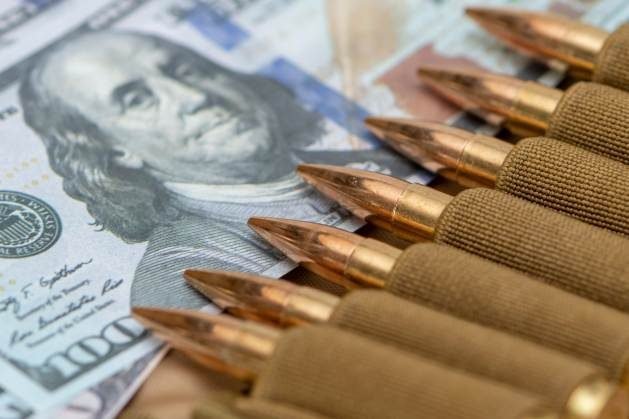
Baher Kamal: Forget About All This Humanitarian Blah Blah (And Buy More Weapons)

The estimated cost of the humanitarian response going into 2023 is US$ 51.5 billion, a 25% increase compared to the beginning of 2022. That is less than one-tenth of the total sales of weapons which reached 592 billion US dollars just in one year: 2021.

Baher Kamal

January 30, 2023

MADRID, Dec 22, 2022 (IPS) – Day after day, international humanitarian organisations launch desperate appeals for funding to continue saving some of the many lives at high risk. When they get a handful of dollars –even just one million– from a rich country, they welcome it as manna from heaven.

Not only the available funding for humanitarian aid is already short, but 2023 will also set another record for humanitarian relief requirements, with 339 million people in need of assistance in 69 countries, an increase of 65 million people compared to the same time last year, the United Nations and partner organisations on 1 December 2022 said.

Originally published at Human Wrongs Watch on December 22, 2022

The estimated cost of the humanitarian response going into 2023 is US$ 51.5 billion, a 25% increase compared to the beginning of 2022. Such highly needed 51.5 billion US dollars amount to less than one-tenth of the total sales of weapons which reached 592 billion US dollars just in one year: 2021

Such highly needed 51.5 billion US dollars amount to less than one-tenth of the total sales of weapons which reached 592 billion US dollars just in one year: 2021.

As if humanitarian aid funding were not already short enough in times when it is more needed than ever, UN Members Try Defunding Budgets for Human Rights Work, warns Louis Charbonneau, United Nations Director at Human Rights Watch.

“United Nations member countries need to overhaul the budgetary approval process for UN human rights work. The current system, overseen by the General Assembly’s Fifth Committee, is inefficient and overly politicised.”

Human rights mechanisms exposed

It unnecessarily exposes UN human rights mechanisms – teams of independent experts established to investigate serious international crimes – to attempts by hostile governments to curtail their resources or defund them, adds Charbonneau.

Russia has repeatedly tried to defund investigations of its ally Syria, just as China has done for Myanmar. China and Russia have also worked hard to chip away at funding and staffing levels for other human rights activities and the Office of the UN High Commissioner for Human Rights, he said.

“It’s not only China and Russia. The United States and some European Union countries joined Israel last year to try to defund the Commission of Inquiry on Israel and Palestine. They may try again.”

Social services dismantled

Even in their own rich countries, politicians go on cutting further the funding of social services such as public health, public education, and other programmes which citizens and taxpayers have voted for them to provide.

Simply, the wave of privatising all social public services now blows strongly from the United States to an overwhelming majority of countries.

Meanwhile, amidst growing social unrest, protests and strikes, politicians seem to have leaned under the heavy pressure of the arms industry, therefore devoting more and more public funds to purchasing weapons.

Arms sales increase for the seventh year

No wonder: sales of arms and military services by the 100 largest companies in the industry reached 592 billion US dollars in 2021, a 1.9% increase compared with 2020 in real terms, according to new data released on 5 December 2022 by the Stockholm International Peace Research Institute (SIPRI).

Such an increase marked the seventh consecutive year of rising global arms sales. It took place despite the fact that many parts of the arms industry were still affected by pandemic-related disruptions in global supply chains in 2021, which included delays in global shipping and shortages of vital components, says SIPRI.

‘We might have expected even greater growth in arms sales in 2021 without persistent supply chain issues,’ said Dr Lucie Béraud-Sudreau, Director of the SIPRI Military Expenditure and Arms Production Programme.

“Both larger and smaller arms companies said that their sales had been affected during the year. Some companies, such as Airbus and General Dynamics, also reported labour shortages.”

Need to replenish weapons sent to Ukraine

According to the Stockholm-based peace research institute, Russia’s invasion of Ukraine in February 2022 has added to supply chain challenges for arms companies, not least because Russia is a major supplier of raw materials used in arms production.

“This could hamper ongoing efforts in the United States and Europe to strengthen their armed forces and to replenish their stockpiles after sending billions of dollars’ worth of ammunition and other equipment to Ukraine.”

So far, the United States has reportedly spent 100 billion dollars on weapons provided to Ukraine.

US companies dominate the Top 100

The arms sales of the 40 US companies in the listing totalled 299 dollars billion in 2021, the research further explains. North America was the only region to see a drop in arms sales compared with 2020. The 0.8 per cent real-term decline was partly due to high inflation in the US economy during 2021.

Since 2018, the top five companies in the Top 100 have all been based in the USA.

A recent wave of mergers and acquisitions in the US arms industry continued in 2021. One of the most significant acquisitions was Peraton’s purchase of Perspecta, a government IT specialist, for 7.1 billion US dollars.

Private equity companies are becoming more active in the arms industry, particularly in the USA. This could affect the transparency of arms sales data, due to less stringent financial reporting requirements compared with public companies, according to the report.

Chinese companies drive rapid growth in Asian arms sales

The combined arms sales of the 21 companies in Asia and Oceania included in the Top 100 reached 136 billion US dollars in 2021—5.8 % more than in 2020, SIPRI reports. The eight Chinese arms companies in the listing had total arms sales of 109 billion dollars, a 6.3% increase.

There has been a wave of consolidation in the Chinese arms industry since the mid-2010s, said Xiao Liang, a researcher with the SIPRI Military Expenditure and Arms Production Programme. In 2021 this saw China’s CSSC becoming the biggest military shipbuilder in the world, with arms sales of 11.1 billion US dollars, after a merger between two existing companies.

Europe, Russian and the Middle East among the top 100

In 2021 there were 27 Top 100 companies headquartered in Europe. Their combined arms sales increased by 4.2% compared with 2020, reaching 123 billion US dollars.

Meanwhile, six Russian companies are included in the Top 100 for 2021. Their arms sales totalled 17.8 billion US dollars—an increase of only 0.4% over 2020. There were signs that stagnation was widespread across the Russian arms industry, reports SIPRI.

And the five Top 100 companies based in the Middle East generated 15.0 billion US dollars in arms sales in 2021. This was a 6.5% increase compared with 2020, the fastest pace of growth of all regions represented in the Top 100.

About the author
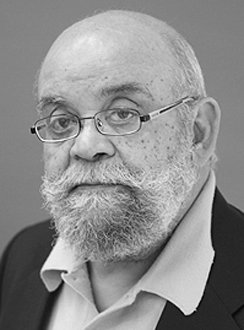
Baher Kamal is Senior Advisor to IPS Director General on Africa & the Middle East. He is an Egyptian-born, Spanish-national, secular journalist, with over 43 years of experience. Since the late 70s, he specialised in all development-related issues, as well as international politics. He also worked as Senior Information Expert for the Euro-Mediterranean Partnership at the European Commission in Brussels, and as the first-ever Information Officer and Spokesperson at UNEP’s Mediterranean Action Plan in Athens.
Kamal speaks Spanish, Arabic, English and Italian – and he is the editor of the essentially important Human Wrongs Watch online magazine.


No data was found

Share

Leave a Reply

Your email address will not be published. Required fields are marked *

Related Posts

PRESS RELEASE – 6 OCTOBER 2025 LAY DOWN YOUR ARMSPEACE PRIZE FOR 2025 is awarded Francesca Albanese The United Nations Special Rapporteur on the occupied Palestinian territories – as the person who, in accordance with Alfred Nobel’s will, has “done the most or the best work for fraternity between nations and for the abolition or reduction of standing armies as well as for the holding and promotion of peace congresses.” Francesca Albanese has forcefully and unwaveringly worked against Israel’s full-scale war on the occupied Palestinian territories, in particular Israel´s ongoing genocide against the Palestinian people. She has confronted Israel’s systematic war crimes and crimes against humanity in a truly global outreach. Further, she has brought governments, international organisations and people’s groups together to underline the responsibility of the world at large to act and to stop arming, enabling, and profiting from Israel’s ongoing criminal actions. But first of all, Albanese...
Officially, the drones were not identified. By simply thinking critically – which journalists and selected experts no longer do – there may be a good reason for that. And this article will never be mentioned in Denmark… Drones over Denmark. No damage. No trace. No answers. Yet the headlines scream “Russian threat,” and Prime Minister Mette Frederiksen speaks with a certainty that defies logic: “We don’t know they were Russian—but we know Russia is the biggest threat to Europe.” It could be nobody else – unless you make an interest analysis which I did two days ago. This is not security policy. It’s theatre. And the audience is being played. Let’s rewind. These drones—unphotographed, untracked, unclaimed—appear and vanish like ghosts. Airports shut down. Panic spreads. Military budgets swell. And the narrative hardens: Russia is behind it. But what if that’s not just wrong but deliberately misleading? Here’s a hypothesis for...
Drones over Nordic airports. No damage. No trace. No answers. Most assume Russia—but what if that’s not so? Why is there so much we are not told? This article explores the strategic ambiguity behind recent drone incursions and asks: Who else might benefit from sending drones into NATO airspace? From Ukraine’s surprising drone supremacy to Russia’s possible signalling, the silence itself may be the loudest message. These are the kinds of questions decent, intelligent investigative journalists and commentators could easily research. Why don’t they? Did you, dear reader, know or think of this? That the most powerful weapon in today’s conflicts might be the one that leaves no trace – and no answers. Just enough fear to justify the next move? Recently, drones have repeatedly appeared over Nordic airports and near some military facilities. They cause no damage – for which reason the designation “hybrid attack” is misleading but serves a purpose. These...

Recent Articles

Jan Øberg behandler i artiklen en lang række faktorer, som ligger til grund for den måde vores samfund er organiseret på – og derfor også for konflikter. Artiklen introducerer således sammenhængen mellem familien, foreninger, regeringer, NGO’ er, nation, stat, nationalstat og alliancer for på denne måde bedre at kunne forstå konflikter og i sidste ende blive klogere mht. at løse disse. Øberg, der er fortaler for global bevidsthed, hvilket skal ses i lyset af den øgede globalisering, skelner mellem kulturkamp og kulturdialog. Endelig behandles begrebet magt og magtesløshed: giver magt ret til at udøve magt – fordi man mener at have ret? Litteraturliste og arbejdsspørgsmål efter artiklen. Ordene vi bruger om verden I satellitperspektiv kan man godt tale om den menneskelige familie eller menneskeheden. Udtrykket understreger, at der eksisterer – eller burde eksistere – et fællesskab fordi vi alle er mennesker og sammen bebor denne klode og ingen anden. Og...
Kapitel 2: Forskellige sider af Europa og USA…fortsat 2.5 Militære relationer I forbifarten har vi allerede sagt nogle ting om USA’s militære situation. Kig lige en gang til på afsnit 2.3. Nu skal vi uddybe det militære forhold mellem USA og EU. Der er en række ligheder mellem visse europæiske landes og USA’s militær. Næsten alle er med på en eller anden måde i NATO, direkte som medlem – selv Island, der ikke har et forsvar – eller indirekte i Partnerskab for Fred. USA og Canada er med i OSCE (på dansk OSSE), Organisationen for Sikkerhed og Samarbejde i Europa, der tæller over 50 lande. USA samt England og Frankrig er kernevåbenstater og de har styrker til intervention langt borte fra hjemlandet, om end USA’s er tifold større. Alle har også en omfattende våbeneksport og bruger den som et middel til at tjene penge og få loyale venner på, det...
Background Christian Harleman and Jan Oberg conducted a fact-finding mission to Burundi between November 26 and December 6, 2003. (See websites about the country here). The first TFF mission took place in March 1999. Unfortunately, since then it has not been practically possible to implement the co-operation with Burundi’s Ministry of Education and Burundian NGOs that was planned at the time. The 2003 mission had three purposes. First, to do fact-finding in general about the situation and, in particular, the progress under the Arusha Peace Process. Second, to explore the possibilities for co-operation between the government and relevant NGOs on the one hand and TFF on the other, in order to develop and deepen the existing competence in fields such as conflict-understanding, reconciliation and peace-building. Finally, third, to find out whether it would be possible, in co-operation with the Swedish Rescue Services Agency (Statens Räddningsverk), to establish a health care unit that...

TFF on Substack

Discover more from TFF Transnational Foundation & Jan Oberg.

Most Popular

Jan Øberg behandler i artiklen en lang række faktorer, som ligger til grund for den måde vores samfund er organiseret på – og derfor også for konflikter. Artiklen introducerer således sammenhængen mellem familien, foreninger, regeringer, NGO’ er, nation, stat, nationalstat og alliancer for på denne måde bedre at kunne forstå konflikter og i sidste ende blive klogere mht. at løse disse. Øberg, der er fortaler for global bevidsthed, hvilket skal ses i lyset af den øgede globalisering, skelner mellem kulturkamp og kulturdialog. Endelig behandles begrebet magt og magtesløshed: giver magt ret til at udøve magt – fordi man mener at have ret? Litteraturliste og arbejdsspørgsmål efter artiklen. Ordene vi bruger om verden I satellitperspektiv kan man godt tale om den menneskelige familie eller menneskeheden. Udtrykket understreger, at der eksisterer – eller burde eksistere – et fællesskab fordi vi alle er mennesker og sammen bebor denne klode og ingen anden. Og...
Kapitel 2: Forskellige sider af Europa og USA…fortsat 2.5 Militære relationer I forbifarten har vi allerede sagt nogle ting om USA’s militære situation. Kig lige en gang til på afsnit 2.3. Nu skal vi uddybe det militære forhold mellem USA og EU. Der er en række ligheder mellem visse europæiske landes og USA’s militær. Næsten alle er med på en eller anden måde i NATO, direkte som medlem – selv Island, der ikke har et forsvar – eller indirekte i Partnerskab for Fred. USA og Canada er med i OSCE (på dansk OSSE), Organisationen for Sikkerhed og Samarbejde i Europa, der tæller over 50 lande. USA samt England og Frankrig er kernevåbenstater og de har styrker til intervention langt borte fra hjemlandet, om end USA’s er tifold større. Alle har også en omfattende våbeneksport og bruger den som et middel til at tjene penge og få loyale venner på, det...
Background Christian Harleman and Jan Oberg conducted a fact-finding mission to Burundi between November 26 and December 6, 2003. (See websites about the country here). The first TFF mission took place in March 1999. Unfortunately, since then it has not been practically possible to implement the co-operation with Burundi’s Ministry of Education and Burundian NGOs that was planned at the time. The 2003 mission had three purposes. First, to do fact-finding in general about the situation and, in particular, the progress under the Arusha Peace Process. Second, to explore the possibilities for co-operation between the government and relevant NGOs on the one hand and TFF on the other, in order to develop and deepen the existing competence in fields such as conflict-understanding, reconciliation and peace-building. Finally, third, to find out whether it would be possible, in co-operation with the Swedish Rescue Services Agency (Statens Räddningsverk), to establish a health care unit that...
Read More
Imagen-thumbnail-The-Transnational-1
Jan Øberg behandler i artiklen en lang række faktorer, som ligger til grund for den måde vores samfund er organiseret på – og derfor også for konflikter. Artiklen introducerer således sammenhængen mellem familien, foreninger, regeringer, NGO’ er, nation, stat, nationalstat og alliancer for på denne måde bedre at kunne forstå konflikter og i sidste ende blive klogere mht. at løse disse. Øberg, der er fortaler for global bevidsthed, hvilket skal ses i lyset af den øgede globalisering, skelner mellem kulturkamp og kulturdialog. Endelig behandles begrebet magt og magtesløshed: giver magt ret til at udøve magt – fordi man mener at have ret? Litteraturliste og arbejdsspørgsmål efter artiklen. Ordene vi bruger om verden I satellitperspektiv kan man godt tale om den menneskelige familie eller menneskeheden. Udtrykket understreger, at der eksisterer – eller burde eksistere – et fællesskab fordi vi alle er mennesker og sammen bebor denne klode og ingen anden. Og...
Imagen-thumbnail-The-Transnational-1
Kapitel 2: Forskellige sider af Europa og USA…fortsat 2.5 Militære relationer I forbifarten har vi allerede sagt nogle ting om USA’s militære situation. Kig lige en gang til på afsnit 2.3. Nu skal vi uddybe det militære forhold mellem USA og EU. Der er en række ligheder mellem visse europæiske landes og USA’s militær. Næsten alle er med på en eller anden måde i NATO, direkte som medlem – selv Island, der ikke har et forsvar – eller indirekte i Partnerskab for Fred. USA og Canada er med i OSCE (på dansk OSSE), Organisationen for Sikkerhed og Samarbejde i Europa, der tæller over 50 lande. USA samt England og Frankrig er kernevåbenstater og de har styrker til intervention langt borte fra hjemlandet, om end USA’s er tifold større. Alle har også en omfattende våbeneksport og bruger den som et middel til at tjene penge og få loyale venner på, det...
Imagen-thumbnail-The-Transnational-1
Background Christian Harleman and Jan Oberg conducted a fact-finding mission to Burundi between November 26 and December 6, 2003. (See websites about the country here). The first TFF mission took place in March 1999. Unfortunately, since then it has not been practically possible to implement the co-operation with Burundi’s Ministry of Education and Burundian NGOs that was planned at the time. The 2003 mission had three purposes. First, to do fact-finding in general about the situation and, in particular, the progress under the Arusha Peace Process. Second, to explore the possibilities for co-operation between the government and relevant NGOs on the one hand and TFF on the other, in order to develop and deepen the existing competence in fields such as conflict-understanding, reconciliation and peace-building. Finally, third, to find out whether it would be possible, in co-operation with the Swedish Rescue Services Agency (Statens Räddningsverk), to establish a health care unit that...
Imagen-thumbnail-The-Transnational-1
Former UN Under-Secretary-General with special responsibility for peacekeeping operations TFF associate August 20, 2003 YRINGHAM, Mass.- Ralph Bunche was born in Detroit 100 years ago today (August 7, 2003). His passionate determination to get results did not extend to seeking credit for them, so his work is better remembered than he is. Of all his many accomplishments – civil rights pioneer, Nobel Peace Prize laureate, chief drafter of two chapters of the United Nations charter, negotiator of the armistices that ended the first Arab-Israeli war – Bunche said he was proudest of developing what came to be known as peacekeeping. Setting up the United Nations Truce Supervision Organization in Palestine in 1948, Bunche formulated the principles that have governed peacekeeping operations ever since. In the 1956 Suez crisis, working with Secretary General Dag Hammarskjold and Lester Pearson of Canada, he organized the first peacekeeping force, the United Nations Emergency Force...
– nästan 11 månader Till Sofia nästan 11 månader # 1  Till Sofias huvudsida Till alla Privata Foto-Serier
Till Sofias huvudsida
