
Li Xing: Why the global democratic alliance is nothing more than a Western fantasy

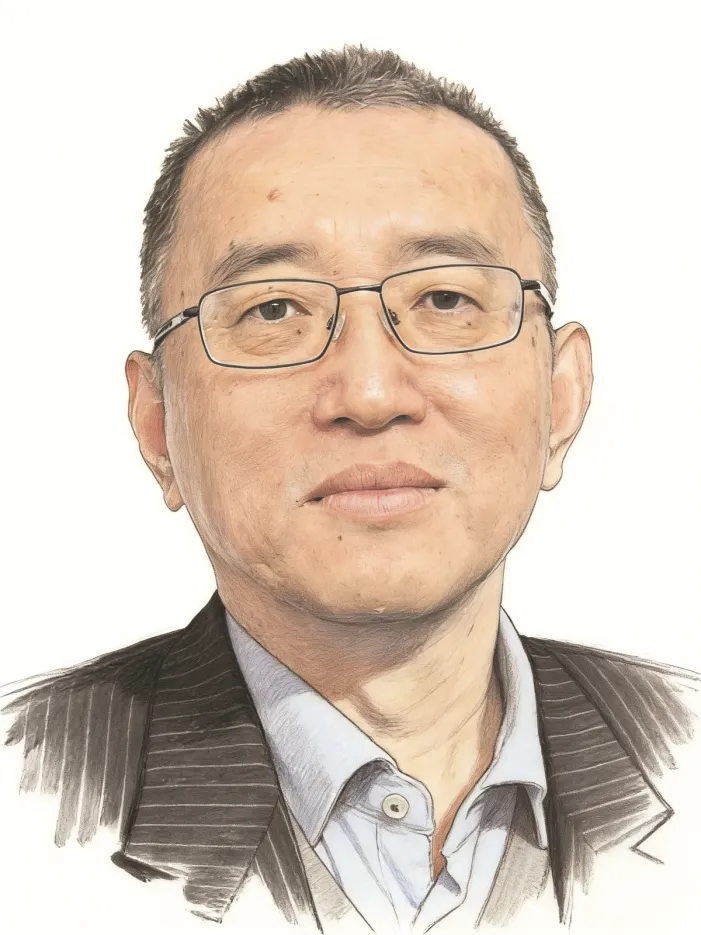
Illustration: Craig Stephens

Li Xing

19 January 2023

– The West likes to argue that market capitalism and political liberalism go hand in hand; in reality, the former has proved far more powerful than the latter

– Having made countries around the world economically interdependent, the West should not expect them to jeopardise their global links by taking political sides

US President Joe Biden has framed the Ukraine war as a battle between “democracy and autocracy”, while also claiming that “the West is now stronger, more united than it has ever been”.

During a recent visit to Taiwan, former Danish leader and Nato secretary general Anders Fogh Rasmussen said that, when combined, the world’s democracies represent 60 per cent of the global economy, providing an overwhelming deterrence to Beijing’s ambitions regarding Taiwan.

The irony is that, if we applied this logic to the Ukraine war, the US and Europe would have already won. In reality, the question is why there is no global democratic alliance on the war, with two of the world’s largest democracies, India and Indonesia, preferring not to take sides or calling for negotiations.

Contrary to Biden and Rasmussen’s postulations, the Ukraine war is widening the global disparity between attitudes to the US, China and Russia. Cambridge University recently released a report that merges data from 30 global surveys spanning 137 countries.

Originally published by South China Morning Post January 12, 2023

It found that, “Among the 1.2 billion people who inhabit the world’s liberal democracies, three-quarters (75 per cent) now hold a negative view of China, and 87 per cent a negative view of Russia. However, for the 6.3 billion people who live in the rest of the world, the picture is reversed. In these societies, 70 per cent feel positively towards China, and 66 per cent positively towards Russia.”

Why is the world so divided over such a simple issue of political correctness in Russia’s invasion of a sovereign state? The answer lies in the contradiction between the West’s two inherent identities which tends to generate double standards when dealing with global affairs.
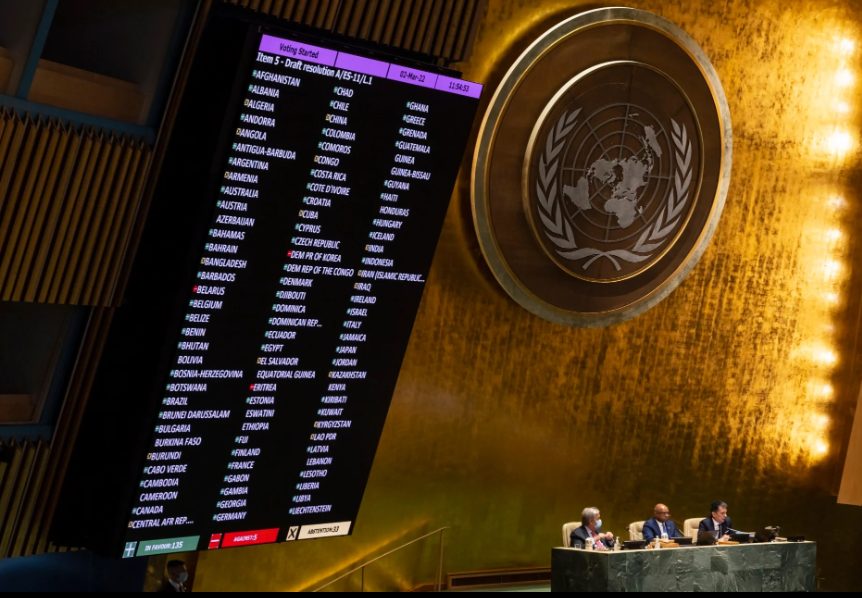
A screen shows results from a vote on a resolution condemning Russia’s invasion of Ukraine, during an emergency session of the United Nations General Assembly in New York, on March 2, 2022. Photo: EPA-EFE

These two identities are “market capitalism” and “political liberalism”. The former refers to the capitalist mode of production, characterised by private ownership, capital accumulation, profit pursuit, surplus value and the like.

The latter is a system of norms and values based on individual civil rights, democracy, secularism, rule of law, and political, economic and religious freedom. Proponents of liberalism argue that the world would be peaceful if every country became a democracy, because “democratic states rarely, if ever, go to war with one another”.

Western ideologists believe there is a positive interconnection between these two systems: the success of the former will lead to the latter, while the achievement of the latter will further facilitate the former.

The West’s victory in the Cold War is heralded as a mark of the global triumph of these two systems. Regarding the first, the victory indicates that Western market capitalism is ubiquitous and powerful.

Economic growth in the form of wealth-seeking and self-enrichment is regarded as a common desire among all people. “High living standards” and “material well-being” are seen not merely as Western values but universal ones.
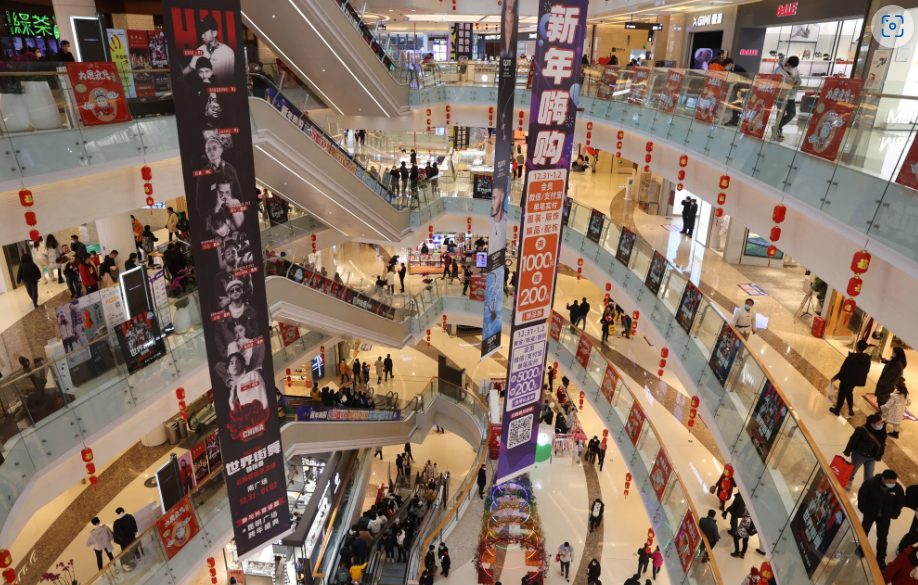
A shopping centre in Kunming, in southwest China’s Yunnan province, on January 1. There is widespread anxiety in the West that an illiberal China is becoming one of the world’s dominant powers. Photo: Xinhua

Since the end of the Cold War, West-driven globalisation has made market capitalism a truly global system, with every individual and state operating according to its dominant mode of functioning. Globalisation has resulted in a complex world structure characterised by interconnection, interdependence and inter-embedded systems.

It has also led to the fragmentation and decentralisation of production chains, as well as the worldwide dispersion and integration of the different segments of these chains. The rise of China’s pivotal position in global manufacturing supply chains, and Russia’s position in the global energy supply chain, are the outcomes of globalisation and global capitalism.

Regarding the second system, the outcome of the Cold War proves Francis Fukuyama’s “end of history” thesis, marking “the end point of mankind’s ideological evolution and the universalisation of Western liberal democracy as the final form of human government”. Liberalism has gone beyond the form of an ideology to become a tool used by the West to maintain and reinforce its status as the global hegemon.

Now, the underlying assumptions of the West’s dual identities are being challenged both by and by the ongoing Russia-Ukraine war. Today, there is widespread anxiety in the West that an illiberal China is becoming one of the world’s dominant powers. The West suffers from “China syndrome”, a set of psychological symptoms characterised by fear, hysteria and demonisation.

This is because China’s economic success and its global rise do not conform to the interaction between the two identities. China is able not only to challenge them, but to offer alternatives with “Chinese characteristics”, making it a “systemic rival”.

When viewing the coverage of the Ukraine war, it becomes clear that major Western media outlets acknowledge the fact that the world is divided over the war, and so is Europe. Some EU countries have only implemented selective sanctions against Russia, while others have resisted joining the sanctions, especially those that are dependent on Russia’s energy supply.

Yes, sanctions hurt Russia, but they also contribute to disruptions in global supply chains, higher global commodity prices and a slowdown in global economic growth. As market capitalism’s law of value becomes the survival mechanism of every society, few countries would risk the loss of the Chinese market and the negative impact of sanctioning Russia for the sake of “defending democracy against autocracy”.

Having lived in the West for decades, I have come to the conclusion that there is nothing wrong with Western identities as such. The problem lies in the contradiction between them, so that whenever a choice has to be made between them, the law of value always takes priority, while liberal values are optional.

Many double-standard policies of the West are a result of this contradiction, which is why the world is divided today.

Originally published by South China Morning Post January 12, 2023

About the author
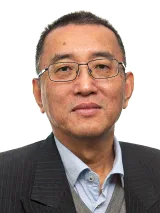
Professor Li Xing is the director of the Research Centre on Development and International Relations, Department of Politics and Society, at Aalborg University, Denmark.

Please help TFF remain truly independent by contributing if you benefited from this article

[paypal-donation]
Professor at Guangdong, China

Share

Leave a Reply

Your email address will not be published. Required fields are marked *

Related Posts

Jan Oberg May 15, 2026 Go to this Fox News page and scroll the whole way down: President Donald Trump tells the world that his meeting with President Xi Jinping yielded a lot of very concrete political and economic results – of course, only where the Chinese side, according to him, agreed with him. He does not mention the Taiwan issue, but Secretary of State, Marco Rubio, says that it did not feature prominently in their talks and that the US policy on Taiwan has not changed. Then go to China Daily – or Global Times – and you will see that for the Chinese it is framework, principles, structure of cooperation etc. that matters – all embedded in the overall idea of “constructive bilateral relationship of strategic stability.” Nowhere is any concrete agreement or deal – all that Trump refers to – mentioned. At the general level, this gives you insights into the very different social...
Jan Oberg, TFF director April 9, 2026 I was recently invited to have a good, long talk about the world – and, of course, about peace too – with Boris Malagurski on his Weight of Chains Channel on YouTube. It was a real joy and seems to have been greatly appreciated by the viewers too. Mr Malagurski and I shall of course be grateful if you share this conversation in your circles – of course, only if you like what you see and hear  And remember that this one – like hundreds of others with TFF Associates – can be enjoyed at our TFF Video Collection.
By Jan ObergTFF co-founder and director February 11, 2026 PART 3 — ECONOMICS, TRADE & FINANCIAL SOVEREIGNTY A. Trade Measures & Market Signaling Economic pressure can be applied instantly and scaled without violence. Immediate Measures (within a week) Government boycott US goods and services  A very powerful signal which over time will be felt. Targeted tariffs on selected U.S. goods Symbolic but high-visibility sectors send a clear message. Suspend trade facilitation talks A peaceful pause that signals deep concern. Freeze U.S. participation in public procurement – military procurement in particular A nonviolent way to reduce influence. Competition law review of U.S. corporations A legal tool to scrutinise market dominance. Longer-Term Measures EU–Asia–Africa trade corridors Reducing reliance on U.S. markets. European supply chains for critical minerals Strategic autonomy in resource access. European Strategic Trade Authority Monitoring coercive practices globally. Euro-denominated commodity markets Weakening the dollar’s pricing monopoly. The EU must resume contacts and negotiations with Russia, focusing on energy cooperation To...

Recent Articles

Jan Oberg May 15, 2026 Go to this Fox News page and scroll the whole way down: President Donald Trump tells the world that his meeting with President Xi Jinping yielded a lot of very concrete political and economic results – of course, only where the Chinese side, according to him, agreed with him. He does not mention the Taiwan issue, but Secretary of State, Marco Rubio, says that it did not feature prominently in their talks and that the US policy on Taiwan has not changed. Then go to China Daily – or Global Times – and you will see that for the Chinese it is framework, principles, structure of cooperation etc. that matters – all embedded in the overall idea of “constructive bilateral relationship of strategic stability.” Nowhere is any concrete agreement or deal – all that Trump refers to – mentioned. At the general level, this gives you insights into the very different social...
Lena Petrova of “World Affairs In Context” with more than half a million subscribers on YouTube wanted to explore what a peace researcher like me has to say about, among other things, the First and the Second Cold War and why eethics has disappeared from politics. I am particularly happy about this conversation that also yielded an amazing number of very appreciative comments on YouTube. No doubt, people are longing for alternatives, including peace perspectives.
The MIMAC – Military-Industrial-Media-Academic Complex – drives the world’s rampant militarism and wars without end. Here is a short reflection of how it works against all interests of humanity. #5 deals with why there is no real enemy or threat images/analysis. It’s all ex-post constructions. And, btw, theTFF Peace Pulse is now on Rumble.

TFF on Substack

Discover more from TFF Transnational Foundation & Jan Oberg.

Most Popular

Jan Oberg May 15, 2026 Go to this Fox News page and scroll the whole way down: President Donald Trump tells the world that his meeting with President Xi Jinping yielded a lot of very concrete political and economic results – of course, only where the Chinese side, according to him, agreed with him. He does not mention the Taiwan issue, but Secretary of State, Marco Rubio, says that it did not feature prominently in their talks and that the US policy on Taiwan has not changed. Then go to China Daily – or Global Times – and you will see that for the Chinese it is framework, principles, structure of cooperation etc. that matters – all embedded in the overall idea of “constructive bilateral relationship of strategic stability.” Nowhere is any concrete agreement or deal – all that Trump refers to – mentioned. At the general level, this gives you insights into the very different social...
Lena Petrova of “World Affairs In Context” with more than half a million subscribers on YouTube wanted to explore what a peace researcher like me has to say about, among other things, the First and the Second Cold War and why eethics has disappeared from politics. I am particularly happy about this conversation that also yielded an amazing number of very appreciative comments on YouTube. No doubt, people are longing for alternatives, including peace perspectives.
The MIMAC – Military-Industrial-Media-Academic Complex – drives the world’s rampant militarism and wars without end. Here is a short reflection of how it works against all interests of humanity. #5 deals with why there is no real enemy or threat images/analysis. It’s all ex-post constructions. And, btw, theTFF Peace Pulse is now on Rumble.
Read More
Screenshot-2026-05-15-103534
Jan Oberg May 15, 2026 Go to this Fox News page and scroll the whole way down: President Donald Trump tells the world that his meeting with President Xi Jinping yielded a lot of very concrete political and economic results – of course, only where the Chinese side, according to him, agreed with him. He does not mention the Taiwan issue, but Secretary of State, Marco Rubio, says that it did not feature prominently in their talks and that the US policy on Taiwan has not changed. Then go to China Daily – or Global Times – and you will see that for the Chinese it is framework, principles, structure of cooperation etc. that matters – all embedded in the overall idea of “constructive bilateral relationship of strategic stability.” Nowhere is any concrete agreement or deal – all that Trump refers to – mentioned. At the general level, this gives you insights into the very different social...
Screenshot-2026-05-12-104023
Lena Petrova of “World Affairs In Context” with more than half a million subscribers on YouTube wanted to explore what a peace researcher like me has to say about, among other things, the First and the Second Cold War and why eethics has disappeared from politics. I am particularly happy about this conversation that also yielded an amazing number of very appreciative comments on YouTube. No doubt, people are longing for alternatives, including peace perspectives.
Screenshot-2026-04-13-154551 (2)
The MIMAC – Military-Industrial-Media-Academic Complex – drives the world’s rampant militarism and wars without end. Here is a short reflection of how it works against all interests of humanity. #5 deals with why there is no real enemy or threat images/analysis. It’s all ex-post constructions. And, btw, theTFF Peace Pulse is now on Rumble.
Screenshot-2026-04-13-154551 (1)
Jan Oberg, TFF director April 28, 2026 In this third TFF Peace Pulse, I make the important distinction between the violence and the conflict that violence is a symptom of. If you want peace, focus on the underlying conflict because that is the key to resolution, peacemaking, and a better future for the parties. The West is obsessed with violence, just look around you – and 90+ per cent of the public debate is about military issues and other violence – totally wasted for peace. These Peace Pulses will only be published here a few times. You will also not find them on YouTube and Vimeo because both platforms have blocked TFF and me; you know, peace is dangerous these days. Most TFF’s videos since 2007 are now on Rumble.
Screenshot-2026-04-13-154551
In contrast to most, we’ll bring alternatives, solutions, hope and strategies for a better future. Times are dangerous, yes, but that only intensifies the need for constructive thinking and action! Jan Oberg, TFF director April 13, 2026 The new TFF Peace Pulse uses video messages in a new way: Max 3-5-minute-long comments, ideas or perhaps mini-lectures, all about peace – positive peace. We launch them today on April 13, 2026 with a carefully crafted visual aesthetic fitting the content. We hope to publish them regularly from now on. We launch Peace Pulse (PP) – for a number of reasons. The world is in chaos, and there are countless reasons to feel concerned, frustrated, even angry. The atmosphere is saturated with doom and gloom, with negative energy and rear‑mirror thinking, while vision, imagination, alternatives, strategies and genuine future‑mindedness remain in short supply. And without them, we simply can’t save the world. Looking at problems from a hundred angles will...
IMG_5165 (1)
PART II — Publishing Peace in a System That Prioritises Militarism Jan Oberg, TFF director April 10, 2026 How TFF Maintains a Daily Voice in a Digital World Built for Noise This article is part of the series “TFF at 40″ and it invites you to learn about Four Decades of Publishing Peace. It takes a look at how a small, people‑financed peace foundation has communicated across four generations of technology — from wax stencils and fax machines to mass email and Substack — and why TFF continues to publish every single day in a system that rewards noise, conflict, and militarism. ◆ What it means to publish peace every single day in a digital system built for 24/7 news and other noise, confrontation, and militarism. How TFF’s independence, continuity, and global readership defy algorithms, donor cycles, and Western media censorhip — and why the Majority World keeps listening. When the...


