Tufts University: The Military Intervention Project (MIP) Research

Tufts University

November 11, 2022

The United States (US) ‘‘spends roughly as much on defense as the rest of the world put together…and remains the only country able to project military power globally.’’[1]

With its extensive defense budget and capabilities, the US remains a military leader in contemporary international politics – but can this military advantage ever become a long-run disadvantage for our foreign policy? According to our data, the US has undertaken over 500 international military interventions since 1776, with nearly 60% undertaken between 1950 and 2017. What’s more, over one-third of these missions occurred after 1999.[2] 

With the end of the Cold War era, we would expect the US to decrease its military interventions abroad, assuming lower threats and interests at stake. But these patterns reveal the opposite – the US has increased its military involvements abroad.

Originally posted on Tufts University’s homepage here

Perhaps as we exclusively focus on maintaining our military might, we elevate the usage of force over other strategies of international policymaking to the detriment of our own interests. As it stands, the US seems to operate without any clear guidelines for when it employs force abroad, and the consequences of such interventions remain blurred and contradictory. [3]

In fact, Monica Toft has labelled the current trend of US military engagements as kinetic diplomacy, diplomacy solely via armed force. As traditional diplomacy withers away, growing in its place are shadowy special operation missions, drone strikes, and/or readily utilized conventional military deployments. As of this year, “while US ambassadors are operating in one-third of the world’s countries, US special operators are active in three-fourths.”[4]

This brings us to the key puzzle: Why has the US increasingly relied on force as a foreign policy choice, despite decreased threats? What are the costs and consequences of this kinetic diplomacy?

The Military Intervention Project (MIP) within the Center for Strategic Studies (CSS) seeks to solve this puzzle of US foreign policy. It is building a new, comprehensive dataset of all US military interventions from 1776 until 2017 to measure the costs, benefits, and unintended consequences of US military involvements abroad. In other words, this dataset will provide strong empirical evidence regarding the trade-offs of US military interventions – a current hot topic in Congress, the media, and in public opinion. MIP will measure the costs and benefits to US national interests, economic growth, international reputation as well as human rights, democratic, and economic outcomes within the target state, and much more.

With recent US military involvements in Iraq, Afghanistan, Libya, and Syria as well as drone programs in Pakistan, Yemen, and beyond, it is imperative to learn more about how these military missions impact US interests and the international community at large. With new international conflicts on the horizon, US leaders, policymakers, and citizens must be aware of the costs and benefits of using military power abroad, in lieu of other statecraft tools. Armed with this knowledge, our government can make better informed decisions and become aware of explicit trade-offs when it comes to ongoing and future US military interventions.

Following the completion of the database and preliminary analysis, we will establish a website that will be illustrative, informative, and interactive to the public. The website will provide a public platform for CSS to present MIP’s cutting-edge research and results with state-of-the-art visualization tools. We will be able to define, measure, and report every US intervention since its founding, along with its corresponding political, economic, and human costs. In addition to this micro-analysis of one intervention, the website will also allow us to demonstrate the historical analysis of all interventions, their contexts, patterns and, more importantly, overall comparative costs.

The study of each intervention as well as the historical account of US military intervention presented on one website would be a powerful and important tool for leaders, policymakers, and general audiences alike.

[1] The Economist. 2007 ‘‘American Power.’’ June 28.

[2] A preliminary list of these conflicts can be found here: Salazar Torreon, Barbara. 2017. “Instances of Use of United States Armed Forces Abroad, 1798-2017.” Congressional Research Service, 12 October.

[3] Haass, Richard. 1994. Intervention: The Use of American Military Force in the Post-Cold War World. Washington, DC: Carnegie Endowment for International Peace.

[4] Toft, Monica. 2018. “The Dangerous Rise of Kinetic Diplomacy.” War on the Rocks, May. 

As shown in the figures below, MIP has almost doubled the universe of cases by expanding the range of definitions of intervention and exploring all sources of documentation, particularly confirming additional interventions via extensive case study research. The Congressional Research Service (CRS) list, which is the most comprehensive archive of US military interventions since 1776, still only holds about a bit over 65% of the MIP case universe, while the Militarized Intrastate Disputes (MID) dataset contains only 50% of the MIP cases. The remaining datasets illustrated offer few cases to MIP due to their post-1945 timeframes. 

Below are preliminary MIP data snapshots of US military intervention trends across years and regions:

Please help TFF remain truly independent by contributing if you benefited from this article

[paypal-donation]

About The Tufts University Center for Strategic Studies
Established in 2017, The Center for Strategic Studies is dedicated to producing policy-relevant research on strategy, international politics, and US foreign policy. CSS serves as a hub for students, faculty, scholars and practitioners to engage with one another in a supportive, collaborative, and collegial environment. Its mission is to educate future scholars and practitioners and generate cutting-edge scholarly analysis that broadens the U.S. foreign policy debate, exploring alternative strategies that: (1) enhance US security, sovereignty, prosperity, and territory; (2) respect the realities and complexities of international conflict; including human territoriality, legitimacy, and the ethnic, cultural, and religious differences of peoples; and (3) question the utility of military intervention given its potential perils and long-term unintended consequences; including but not limited to, the loss of life, civil liberties, and resources.

Editor’s note
As for interventions, see also e.g. Owen Rust’s 8 US Military Interventions of the 20th Century & Why They Happened and WorldBeyondWar’s online map of the 867 US military bases.
Share

Leave a Reply

Your email address will not be published. Required fields are marked *

Related Posts

By Jan ObergTFF co-founder and director February 11, 2026 PART 3 — ECONOMICS, TRADE & FINANCIAL SOVEREIGNTY A. Trade Measures & Market Signaling Economic pressure can be applied instantly and scaled without violence. Immediate Measures (within a week) Government boycott US goods and services  A very powerful signal which over time will be felt. Targeted tariffs on selected U.S. goods Symbolic but high-visibility sectors send a clear message. Suspend trade facilitation talks A peaceful pause that signals deep concern. Freeze U.S. participation in public procurement – military procurement in particular A nonviolent way to reduce influence. Competition law review of U.S. corporations A legal tool to scrutinise market dominance. Longer-Term Measures EU–Asia–Africa trade corridors Reducing reliance on U.S. markets. European supply chains for critical minerals Strategic autonomy in resource access. European Strategic Trade Authority Monitoring coercive practices globally. Euro-denominated commodity markets Weakening the dollar’s pricing monopoly. The EU must resume contacts and negotiations with Russia, focusing on energy cooperation To...
PART 2 — Diplomacy, Law and Nonviolent Power By Jan ObergTFF co-founder and director January 26, 2026 This is the second of four TFF-created idea portfolios designed to curb the global reach of the United States and, in both the short and long term, help catalyse a worldwide nonviolent resistance to what many observers describe as the Trump administration’s uniquely confrontational, destructive and world-threatening policies. These portfolios outline what governments and citizens across the world can do through dynamic diplomacy, creative initiatives, and strictly nonviolent means. They are typical TFF works in that we do not only tell what the problem is and how bad it will go – as 90+% of all commentators, experts and scholars do – we tell what we think can be done, inviting you to think of what you think you can do. It seems painfully clear to me that the current political dynamics in Washington increasingly resemble the most dangerous...
PART 1 — Media, Culture and Information Sovereignty By Jan ObergTFF co-founder and director January 20, 2026 This is the first of four TFF-created idea portfolios designed to curb the global reach of the United States and, in both the short and long term, help catalyse a worldwide nonviolent resistance to what many observers describe as the Trump administration’s uniquely confrontational, destructive and world-threatening policies. These portfolios outline what governments and citizens across the world can do through dynamic diplomacy, creative initiatives, and strictly nonviolent means. They are typical TFF works in that we do not only tell what the problem is and how bad it will go – as 90+% of all commentators, experts and scholars do – we tell what we think can be done, inviting you to think of what you think you can do. It seems painfully clear to me that the current political dynamics in Washington increasingly resemble the most...

Recent Articles

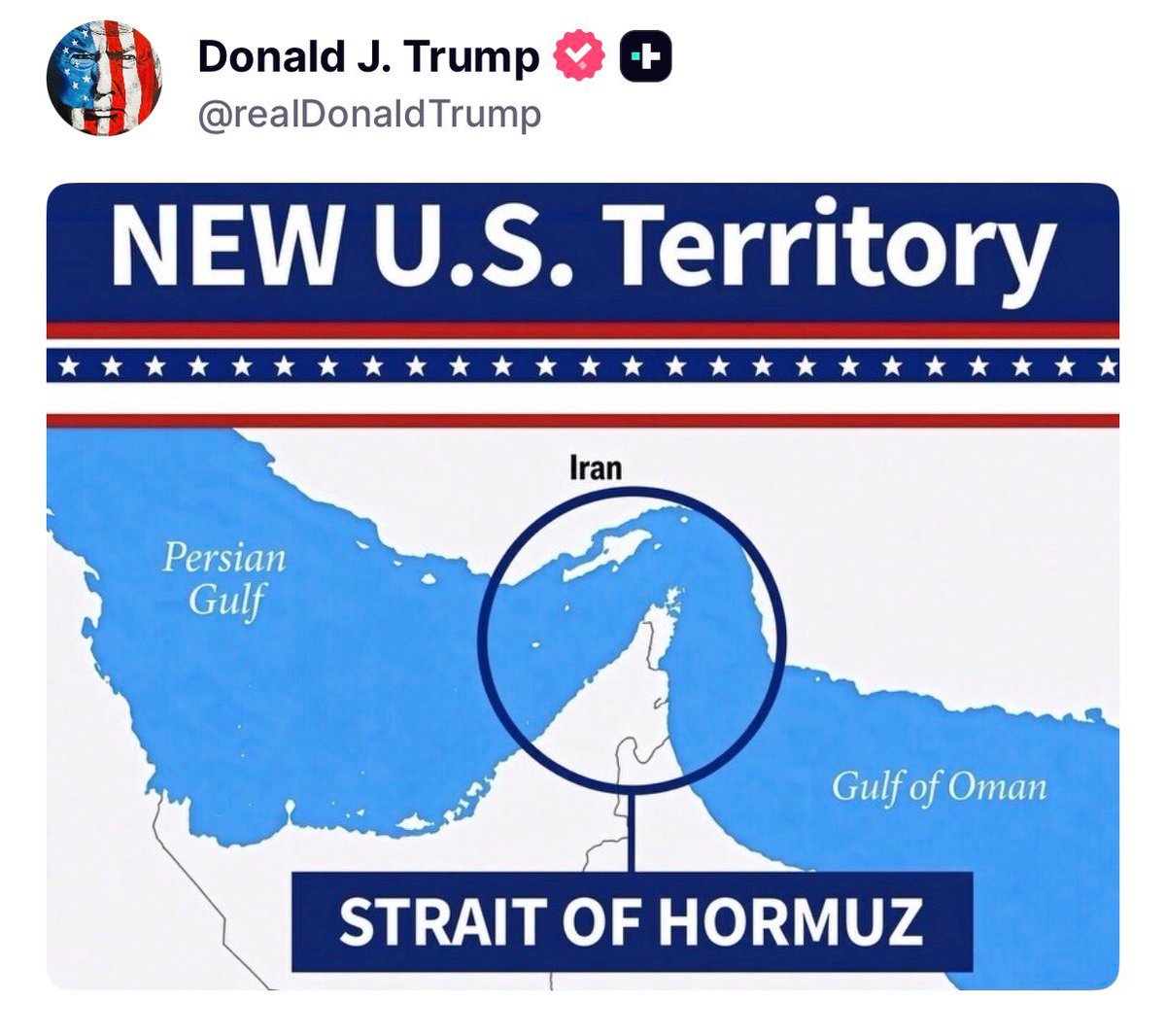
Jan ObergTFF director ☮️ When this morning – August 19, 2026 – I saw the above new US Trump map, I came to think of Frank Zappa, The Mothers of Invention, who said that politics is the entertainment division of the Military-Industrial Complex. That formulation beats many academic analyses – as you will have understood […]
A Civilizational Interpretation of the West’s Body Politic Pascal Lottaz Associate professor at Ritsumeikan University in Kyoto and TFF Board member August 25, 2026 “How do we explain the self-defeating and self-harming policies of Western states? Europe seems to be happily deindustrializing, the US proxy war in Ukraine is killing hundreds of thousands (if not millions) […]
LONDON – Many of the great and the good have dismissed the utility of nuclear weapons as well as finding the idea of their use morally indefensible but still they exist in enormous numbers in the arsenals of the great powers. Secretary of Defence Robert McNamara and Secretary of State Dean Rusk both came to be convinced during their tenure in the Kennedy administration that their use was “unthinkable”. President George H.W. Bush has written that in private he ruled out a nuclear response during the 1991 Gulf War although in public his Administration did not. General Colin Powell, then the chairman of the Joint Chiefs of Staff, in his autobiography recalls chiding his boss, Dick Cheney, for even considering it. Paul Nitze, one of the principal architects of containing the Soviet Union by nuclear deterrence, went even further. He argued in a Washington Post article in 1994 that it...

TFF on Substack

Discover more from TFF Transnational Foundation & Jan Oberg.

Most Popular

Jan ObergTFF director ☮️ When this morning – August 19, 2026 – I saw the above new US Trump map, I came to think of Frank Zappa, The Mothers of Invention, who said that politics is the entertainment division of the Military-Industrial Complex. That formulation beats many academic analyses – as you will have understood […]
A Civilizational Interpretation of the West’s Body Politic Pascal Lottaz Associate professor at Ritsumeikan University in Kyoto and TFF Board member August 25, 2026 “How do we explain the self-defeating and self-harming policies of Western states? Europe seems to be happily deindustrializing, the US proxy war in Ukraine is killing hundreds of thousands (if not millions) […]
LONDON – Many of the great and the good have dismissed the utility of nuclear weapons as well as finding the idea of their use morally indefensible but still they exist in enormous numbers in the arsenals of the great powers. Secretary of Defence Robert McNamara and Secretary of State Dean Rusk both came to be convinced during their tenure in the Kennedy administration that their use was “unthinkable”. President George H.W. Bush has written that in private he ruled out a nuclear response during the 1991 Gulf War although in public his Administration did not. General Colin Powell, then the chairman of the Joint Chiefs of Staff, in his autobiography recalls chiding his boss, Dick Cheney, for even considering it. Paul Nitze, one of the principal architects of containing the Soviet Union by nuclear deterrence, went even further. He argued in a Washington Post article in 1994 that it...
Read More
HQAB7NMWUAA1gSk
Jan ObergTFF director ☮️ When this morning – August 19, 2026 – I saw the above new US Trump map, I came to think of Frank Zappa, The Mothers of Invention, who said that politics is the entertainment division of the Military-Industrial Complex. That formulation beats many academic analyses – as you will have understood […]
21b7244b-c83e-46c1-ba23-556b21b9a0a8_1536x1024
A Civilizational Interpretation of the West’s Body Politic Pascal Lottaz Associate professor at Ritsumeikan University in Kyoto and TFF Board member August 25, 2026 “How do we explain the self-defeating and self-harming policies of Western states? Europe seems to be happily deindustrializing, the US proxy war in Ukraine is killing hundreds of thousands (if not millions) […]
Imagen-thumbnail-The-Transnational-1
LONDON – Many of the great and the good have dismissed the utility of nuclear weapons as well as finding the idea of their use morally indefensible but still they exist in enormous numbers in the arsenals of the great powers. Secretary of Defence Robert McNamara and Secretary of State Dean Rusk both came to be convinced during their tenure in the Kennedy administration that their use was “unthinkable”. President George H.W. Bush has written that in private he ruled out a nuclear response during the 1991 Gulf War although in public his Administration did not. General Colin Powell, then the chairman of the Joint Chiefs of Staff, in his autobiography recalls chiding his boss, Dick Cheney, for even considering it. Paul Nitze, one of the principal architects of containing the Soviet Union by nuclear deterrence, went even further. He argued in a Washington Post article in 1994 that it...
Screenshot-2026-08-22-011310
August 24, 2026 Lena Petrova & Jan Oberg I am truly happy and honoured to have been invited by Lena to her unique channel, World Affairs In Context where she has over 600,000 subscribers. She covers a very wide range of global themes, based not least on her own deep and broad knowledge of economics. I want […]
Logo-Transnational
Greenland – the world’s largest island, a continent of its own with only 57.000 inhabitants. I visited it for the first time in May 2005. I flew across the inland ice to Nuuk, the tiny capital with some 14.000 inhabitants. I was overwhelmed by the pride and kindness of everyone I met as well as by the unique natural beauty. Unfortunately, due to weather conditions during my ten-day stay I could get nowhere else but Nuuk. Fortunately, however, among those I met was Gitte Arvegaard, a Danish lawyer and negotiator employed by the local government, Greenland Home Rule. She turned out to be an enthusiastic photographer with a lot of pictures taken during various trips around Greenland. So this Greeland series is the result of our cooperative effort. We both hope you enjoy it and are stimulated to visit Greenland – about which you may read more here. Finally, if you want to...
p_mccartney_poem
 Jan Oberg’s storyof how he met Sir Paul Liverpool – where else to meet Paul McCartney? Paul’s old class mate and TFF Associate, Jonathan Power introduced me to Paul McCartney in Liverpool at an informal reception. It was held at what used to be their school, now the Liverpool Institute for Performing Arts and we were there to celebrate that Jonathan had written Amnesty International’s 40th Anniversary book. This happy event for “righting wrongs and writing songs” gave me an opportunity to meet Paul and tell him about TFF and get straight to the matter: would he consider making a donation in support of our work for peace? While I was probably the only one with such a wish that day, I was certainly not the only one who wanted to shake hands and talk with him. In the last minutes before Paul was to leave, Jonathan brought us together and we got about three...