
Pepe Escobar: Say hello to Russian gold and Chinese petroyuan

Russia says half its gold assets were frozen – is this for real or a slick play by Moscow? Photo Credit: The Cradle

Pepe Escobar

March 29, 2022

The Russia-led Eurasia Economic Union and China just agreed to design the mechanism for an independent financial and monetary system that would bypass dollar transactions.

Originally posted on The Cradle on March 15, 2022 here

It was a long time coming, but finally some key lineaments of the multipolar world’s new foundations are being revealed.

After a recent video conference meeting, the Eurasian Economic Union (EAEU) and China agreed to design the mechanism for an independent international monetary and financial system. The EAEU consists of Russia, Kazakhstan, Kyrgyzstan, Belarus and Armenia, is establishing free trade deals with other Eurasian nations, and is progressively interconnecting with the Chinese Belt and Road Initiative (BRI).

For all practical purposes, the idea comes from Sergei Glazyev, Russia’s foremost independent economist, a former adviser to President Vladimir Putin and the Minister for Integration and Macroeconomics of the Eurasia Economic Commission, the regulatory body of the EAEU.

Glazyev’s central role in devising the new Russian and Eurasian economic/financial strategy has been examined here. He saw the western financial squeeze on Moscow coming light-years before others.

Quite diplomatically, Glazyev attributed the fruition of the idea to “the common challenges and risks associated with the global economic slowdown and restrictive measures against the EAEU states and China.”

Translation: as China is as much a Eurasian power as Russia, and they need to coordinate their strategies to bypass the US unipolar system.

The Eurasian system will be based on “a new international currency,” most probably with the yuan as reference, calculated as an index of the national currencies of the participating countries, as well as commodity prices. The first draft will be already discussed by the end of the month.

The Eurasian system is bound to become a serious alternative to the US dollar, as the EAEU may attract not only nations that have joined BRI (Kazakhstan, for instance, is a member of both) but also the leading players in the Shanghai Cooperation Organization (SCO) as well as ASEAN. West Asian actors – Iran, Iraq, Syria, Lebanon – will be inevitably interested.

In the medium to long term, the spread of the new system will translate into the weakening of the Bretton Woods system, which even serious US market players/strategists admit is rotten from the inside. The US dollar and imperial hegemony are facing stormy seas.

Show me that frozen gold

Meanwhile, Russia has a serious problem to tackle. This past weekend, Finance Minister Anton Siluanov confirmed that half of Russia’s gold and foreign reserves have been frozen by unilateral sanctions. It boggles the mind that Russian financial experts have placed a great deal of the nation’s wealth where it can be easily accessed – and even confiscated – by the ‘Empire of Lies’ (copyright Putin).

At first, it was not exactly clear what Siluanov had meant. How could the Central Bank’s Elvira Nabiulina and her team let half of foreign reserves and even gold be stored in Western banks and/or vaults? Or is this some sneaky diversionist tactic by Siluanov?

No one is better equipped to answer these questions than the inestimable Michael Hudson, author of the recent revised edition of Super Imperialism: The Economic Strategy of the American Empire.

Hudson was quite frank: “When I first heard the word ‘frozen,’ I thought that this meant that Russia was not going to expend its precious gold reserves on supporting the ruble, trying to fight against a Soros-style raid from the West. But now the word ‘frozen’ seems to have meant that Russia had sent it abroad, outside of its control.”

“It looks like at least as of last June, all Russian gold was kept in Russia itself. At the same time, it would have been natural to have kept securities and bank deposits in the United States and Britain, because that is where most intervention in world foreign exchange markets occurs,” Hudson added.

Essentially, it’s all still up in the air: “My first reading assumed that Russia must be doing something smart. If it was smart to move gold abroad, perhaps it was doing what other central banks do: ‘lend” it to speculators, for an interest payment or fee. Until Russia tells the world where its gold was put, and why, we can’t fathom it. Was it in the Bank of England – even after England confiscated Venezuela’s gold? Was it in the New York Fed – even after the Fed confiscated Afghanistan’s reserves?”

So far, there has been no extra clarification either from Siluanov or Nabiulina. Scenarios swirl about a string of deportations to northern  Siberia for national treason. Hudson adds important elements to the puzzle:

“If [the reserves] are frozen, why is Russia paying interest on its foreign debt falling due? It can direct the “freezer’ to pay, to shift the blame for default. It can talk about Chase Manhattan’s freezing of Iran’s bank account from which Iran sought to pay interest on its dollar-denominated debt. It can insist that any payments by NATO countries be settled in advance by physical gold. Or it can land paratroopers on the Bank of England, and recover gold – sort of like Goldfinger at Fort Knox. What is important is for Russia to explain what happened and how it was attacked, as a warning to other countries.”

As a clincher, Hudson could not but wink at Glazyev: “Maybe Russia should appoint a non-pro-westerner at the Central Bank.”

The petrodollar game-changer

It’s tempting to read into Russian Foreign Minister Sergey Lavrov’s words at the diplomatic summit in Antalya last Thursday as a veiled admission that Moscow may not have been totally prepared for the heavy financial artillery deployed by the Americans:

“We will solve the problem – and the solution will be to no longer depend on our western partners, be it governments or companies that are acting as tools of western political aggression against Russia instead of pursuing the interests of their businesses. We will make sure that we never again find ourselves in a similar situation and that neither some Uncle Sam nor anybody else can make decisions aimed at destroying our economy. We will find a way to eliminate this dependence. We should have done it long ago.”

So, ‘long ago’ starts now. And one of its planks will be the Eurasian financial system. Meanwhile, ‘the market’ (as in, the American speculative casino) has ‘judged’ (according to its self-made oracles) that Russian gold reserves – the ones that stayed in Russia – cannot support the ruble.

That’s not the issue – on several levels. The self-made oracles, brainwashed for decades, believe that the Hegemon dictates what ‘the market’ does. That’s mere propaganda. The crucial fact is that in the new, emerging paradigm, NATO nations amount to at best 15 percent of the world’s population. Russia won’t be forced to practice autarky because it does not need to: most of the world – as we’ve seen represented in the hefty non-sanctioning nation list – is ready to do business with Moscow.

Iran has shown how to do it. Persian Gulf traders confirmed to The Cradle that Iran is selling no less than 3 million barrels of oil a day even now, with no signed JCPOA (Joint Comprehensive Plan of Action agreement, currently under negotiation in Vienna). Oil is re-labeled, smuggled, and transferred from tankers in the dead of night.

Another example: the Indian Oil Corporation (IOC), a huge refiner, just bought 3 million barrels of Russian Urals from trader Vitol for delivery in May. There are no sanctions on Russian oil – at least not yet.

Washington’s reductionist, Mackinderesque plan is to manipulate Ukraine as a disposable pawn to go scorched-earth on Russia, and then hit China. Essentially, divide-and-rule to smash not only one but two peer competitors in Eurasia who are advancing in lockstep as comprehensive strategic partners.

As Hudson sees it: “China is in the cross-hairs, and what happened to Russia is a dress rehearsal for what can happen to China. Best to break sooner than later under these conditions. Because the leverage is highest now.”

All the blather about “crashing Russian markets,” ending foreign investment, destroying the ruble, a “full trade embargo,” expelling Russia from “the community of nations,” and so forth – that’s for the zombified galleries. Iran has been dealing with the same thing for four decades, and survived.

Historical poetic justice, as Lavrov intimated, now happens to rule that Russia and Iran are about to sign a very important agreement, which may likely be an equivalent of the Iran-China strategic partnership. The three main nodes of Eurasia integration are perfecting their interaction on the go, and sooner rather than later, may be utilizing a new, independent monetary and financial system.

But there’s more poetic justice on the way, revolving around the ultimate game-changer. And it came much sooner than we all thought.

Saudi Arabia is considering accepting Chinese yuan – and not US dollars – for selling oil to China. Translation: Beijing told Riyadh this is the new groove. The end of the petrodollar is at hand – and that is the certified nail in the coffin of the indispensable Hegemon.

Meanwhile, there’s a mystery to be solved: where is that frozen Russian gold?

Please help TFF post more quality articles like this and to remain truly independent by contributing if you benefited from this article

NOTE

Read also this very informative analysis by Katharina Buchholz, “Who Holds Russia’s Central Bank Reserves?” You may be surprised.
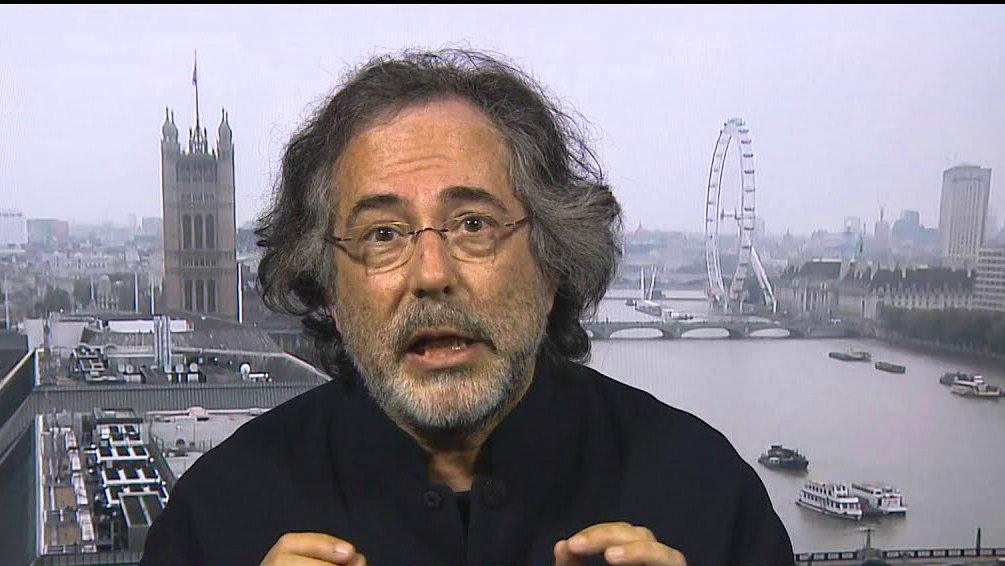
Pepe Escobar

Pepe Escobar is a columnist at The Cradle, editor-at-large at Asia Times and an independent geopolitical analyst focused on Eurasia. Since the mid-1980s he has lived and worked as a foreign correspondent in London, Paris, Milan, Los Angeles, Singapore and Bangkok. He is the author of countless books; his latest one is Raging Twenties. 

Share

Leave a Reply

Your email address will not be published. Required fields are marked *

Related Posts

By Jan ObergTFF co-founder and director February 11, 2026 PART 3 — ECONOMICS, TRADE & FINANCIAL SOVEREIGNTY A. Trade Measures & Market Signaling Economic pressure can be applied instantly and scaled without violence. Immediate Measures (within a week) Government boycott US goods and services  A very powerful signal which over time will be felt. Targeted tariffs on selected U.S. goods Symbolic but high-visibility sectors send a clear message. Suspend trade facilitation talks A peaceful pause that signals deep concern. Freeze U.S. participation in public procurement – military procurement in particular A nonviolent way to reduce influence. Competition law review of U.S. corporations A legal tool to scrutinise market dominance. Longer-Term Measures EU–Asia–Africa trade corridors Reducing reliance on U.S. markets. European supply chains for critical minerals Strategic autonomy in resource access. European Strategic Trade Authority Monitoring coercive practices globally. Euro-denominated commodity markets Weakening the dollar’s pricing monopoly. The EU must resume contacts and negotiations with Russia, focusing on energy cooperation To...
Drones over Nordic airports. No damage. No trace. No answers. Most assume Russia—but what if that’s not so? Why is there so much we are not told? This article explores the strategic ambiguity behind recent drone incursions and asks: Who else might benefit from sending drones into NATO airspace? From Ukraine’s surprising drone supremacy to Russia’s possible signalling, the silence itself may be the loudest message. These are the kinds of questions decent, intelligent investigative journalists and commentators could easily research. Why don’t they? Did you, dear reader, know or think of this? That the most powerful weapon in today’s conflicts might be the one that leaves no trace – and no answers. Just enough fear to justify the next move? Recently, drones have repeatedly appeared over Nordic airports and near some military facilities. They cause no damage – for which reason the designation “hybrid attack” is misleading but serves a purpose. These...
Professor Zhang Weiwei is a highly respected Chinese intellectual and professor at Fudan University in Shanghai. He is the director of its China Institute and also runs a series of conversations with many different people around the world. Here is what came out of their meetings there and in Skopje, Macedonia in October 2024: & As you can see, also at the end of the second one, we both enjoy win-win exchanges like these about world order issues. Zhang Weiwei is known for using videos and social media to reach a large audience in China and worldwide. We suggest you see many more of Zhang Weiwei’s conversations – like recently with Professor Jeffrey Sachs – on the Thinkers’ Forum on YouTube. PSTFF posts hundreds of videos, its own and those of others, in our Video Collections on TFF Substack – including those that appear on YouTube. However, TFF has been cancelled by Google-owned...

Recent Articles

“En dag som berättigar till fest”, utropade den London-baserade al-Quds al-Arabi efter FN:s eldupphörresolution, “eftersom detta är första gången som Israel accepterar ett FN-beslut från en position som besegrad och inte som segrare”. Att ett arabisk-israeliskt krig för en gångs skull slutat med arabisk seger, är en helt dominerade åsikt i arabiska medier. Al-Quds al-Arabi tillåter sig att drömma om att det israeliska nederlaget skall leda till massflykt från Israel. Men i nästa andetag påminner tidningen om att Israel aldrig brukar genomföra sina internationella åtaganden och varnar för att förlorarna, liksom tidigare, kan hämnas genom att provocera fram inbördeskrig i Libanon. Med tanke på de otaliga massmediala vittnesmålen om det libanesiska folkets eniga motståndskraft förefaller risken för inre stridigheter i det sargade landet just nu liten. Men visst kan man urskilja nyansskillnader i libanesiska tidningar. Vänsterorganet al-Safir uppfattar FN-resolutionen som en komplott i syfte att rädda Israel från ännu större...
Greenland – the world’s largest island, a continent of its own with only 57.000 inhabitants. I visited it for the first time in May 2005. I flew across the inland ice to Nuuk, the tiny capital with some 14.000 inhabitants. I was overwhelmed by the pride and kindness of everyone I met as well as by the unique natural beauty. Unfortunately, due to weather conditions during my ten-day stay I could get nowhere else but Nuuk. Fortunately, however, among those I met was Gitte Arvegaard, a Danish lawyer and negotiator employed by the local government, Greenland Home Rule. She turned out to be an enthusiastic photographer with a lot of pictures taken during various trips around Greenland. So this Greeland series is the result of our cooperative effort. We both hope you enjoy it and are stimulated to visit Greenland – about which you may read more here. Finally, if you want to...
 Jan Oberg’s storyof how he met Sir Paul Liverpool – where else to meet Paul McCartney? Paul’s old class mate and TFF Associate, Jonathan Power introduced me to Paul McCartney in Liverpool at an informal reception. It was held at what used to be their school, now the Liverpool Institute for Performing Arts and we were there to celebrate that Jonathan had written Amnesty International’s 40th Anniversary book. This happy event for “righting wrongs and writing songs” gave me an opportunity to meet Paul and tell him about TFF and get straight to the matter: would he consider making a donation in support of our work for peace? While I was probably the only one with such a wish that day, I was certainly not the only one who wanted to shake hands and talk with him. In the last minutes before Paul was to leave, Jonathan brought us together and we got about three...

TFF on Substack

Discover more from TFF Transnational Foundation & Jan Oberg.

Most Popular

“En dag som berättigar till fest”, utropade den London-baserade al-Quds al-Arabi efter FN:s eldupphörresolution, “eftersom detta är första gången som Israel accepterar ett FN-beslut från en position som besegrad och inte som segrare”. Att ett arabisk-israeliskt krig för en gångs skull slutat med arabisk seger, är en helt dominerade åsikt i arabiska medier. Al-Quds al-Arabi tillåter sig att drömma om att det israeliska nederlaget skall leda till massflykt från Israel. Men i nästa andetag påminner tidningen om att Israel aldrig brukar genomföra sina internationella åtaganden och varnar för att förlorarna, liksom tidigare, kan hämnas genom att provocera fram inbördeskrig i Libanon. Med tanke på de otaliga massmediala vittnesmålen om det libanesiska folkets eniga motståndskraft förefaller risken för inre stridigheter i det sargade landet just nu liten. Men visst kan man urskilja nyansskillnader i libanesiska tidningar. Vänsterorganet al-Safir uppfattar FN-resolutionen som en komplott i syfte att rädda Israel från ännu större...
Greenland – the world’s largest island, a continent of its own with only 57.000 inhabitants. I visited it for the first time in May 2005. I flew across the inland ice to Nuuk, the tiny capital with some 14.000 inhabitants. I was overwhelmed by the pride and kindness of everyone I met as well as by the unique natural beauty. Unfortunately, due to weather conditions during my ten-day stay I could get nowhere else but Nuuk. Fortunately, however, among those I met was Gitte Arvegaard, a Danish lawyer and negotiator employed by the local government, Greenland Home Rule. She turned out to be an enthusiastic photographer with a lot of pictures taken during various trips around Greenland. So this Greeland series is the result of our cooperative effort. We both hope you enjoy it and are stimulated to visit Greenland – about which you may read more here. Finally, if you want to...
 Jan Oberg’s storyof how he met Sir Paul Liverpool – where else to meet Paul McCartney? Paul’s old class mate and TFF Associate, Jonathan Power introduced me to Paul McCartney in Liverpool at an informal reception. It was held at what used to be their school, now the Liverpool Institute for Performing Arts and we were there to celebrate that Jonathan had written Amnesty International’s 40th Anniversary book. This happy event for “righting wrongs and writing songs” gave me an opportunity to meet Paul and tell him about TFF and get straight to the matter: would he consider making a donation in support of our work for peace? While I was probably the only one with such a wish that day, I was certainly not the only one who wanted to shake hands and talk with him. In the last minutes before Paul was to leave, Jonathan brought us together and we got about three...
Read More
Imagen-thumbnail-The-Transnational-1
“En dag som berättigar till fest”, utropade den London-baserade al-Quds al-Arabi efter FN:s eldupphörresolution, “eftersom detta är första gången som Israel accepterar ett FN-beslut från en position som besegrad och inte som segrare”. Att ett arabisk-israeliskt krig för en gångs skull slutat med arabisk seger, är en helt dominerade åsikt i arabiska medier. Al-Quds al-Arabi tillåter sig att drömma om att det israeliska nederlaget skall leda till massflykt från Israel. Men i nästa andetag påminner tidningen om att Israel aldrig brukar genomföra sina internationella åtaganden och varnar för att förlorarna, liksom tidigare, kan hämnas genom att provocera fram inbördeskrig i Libanon. Med tanke på de otaliga massmediala vittnesmålen om det libanesiska folkets eniga motståndskraft förefaller risken för inre stridigheter i det sargade landet just nu liten. Men visst kan man urskilja nyansskillnader i libanesiska tidningar. Vänsterorganet al-Safir uppfattar FN-resolutionen som en komplott i syfte att rädda Israel från ännu större...
Greenland – the world’s largest island, a continent of its own with only 57.000 inhabitants. I visited it for the first time in May 2005. I flew across the inland ice to Nuuk, the tiny capital with some 14.000 inhabitants. I was overwhelmed by the pride and kindness of everyone I met as well as by the unique natural beauty. Unfortunately, due to weather conditions during my ten-day stay I could get nowhere else but Nuuk. Fortunately, however, among those I met was Gitte Arvegaard, a Danish lawyer and negotiator employed by the local government, Greenland Home Rule. She turned out to be an enthusiastic photographer with a lot of pictures taken during various trips around Greenland. So this Greeland series is the result of our cooperative effort. We both hope you enjoy it and are stimulated to visit Greenland – about which you may read more here. Finally, if you want to...
p_mccartney_poem
 Jan Oberg’s storyof how he met Sir Paul Liverpool – where else to meet Paul McCartney? Paul’s old class mate and TFF Associate, Jonathan Power introduced me to Paul McCartney in Liverpool at an informal reception. It was held at what used to be their school, now the Liverpool Institute for Performing Arts and we were there to celebrate that Jonathan had written Amnesty International’s 40th Anniversary book. This happy event for “righting wrongs and writing songs” gave me an opportunity to meet Paul and tell him about TFF and get straight to the matter: would he consider making a donation in support of our work for peace? While I was probably the only one with such a wish that day, I was certainly not the only one who wanted to shake hands and talk with him. In the last minutes before Paul was to leave, Jonathan brought us together and we got about three...
Logo-Transnational
1942James Paul McCartney is born in Liverpool on June 18th. 1956Paul writes his first song, I Lost My Little Girl. 1957Paul meets John Lennon at St. Peter’s Church Fete, Woolton, Liverpool. He joins his first group, The Quarrymen and performs in his first gig at The New Clubmoor Hall, Liverpool, on October 18th. 1960Formation of The Beatles, who play residencies in Hamburg and at The Cavern in Liverpool. 1961First Beatles recordings issued in Germany, as the backing group for Tony Sheridan. 1962The first Beatles Parlophone recording, Love Me Do, reaches number 17 in the British charts. 1963The birth of Beatlemania. Please Please Me gives the group their first British Number 1. She Loves You cements their success. Please Please Me and With The Beatles albums released. 1964First triumphant American tour. The Beatles perform at the Royal Command Performance and release their first film, A Hard Day’s Night. Their single I...
Logo-Transnational
  Back to the series “Bujumbura, Burundi”
By JONATHAN POWER August 16, 2000 LONDON – Remember the summer of ’98? In the sweltering, torpid heat of a Roman august, charged with exhaust fumes, the international community gave its overwhelming approval to the establishment of an International Criminal Court that will enable those accused of “crimes against humanity” to be tried and, if convicted, sentenced. Only seven nations opposed or abstained from the motion, including Israel, China, India and the U.S.A. where the Pentagon had successfully waged bureaucratic guerrilla war to undermine the initially sympathetic stance of President Bill Clinton. Two years on we can now see what an epochal event that was. In a the stroke of 120 pens it changed the climate on political thuggery. After numerous half-starts and false starts ever since the Nuremberg and Tokyo trials that convicted the war criminals of the Second World War, the world at last had agreed en masse a common...

