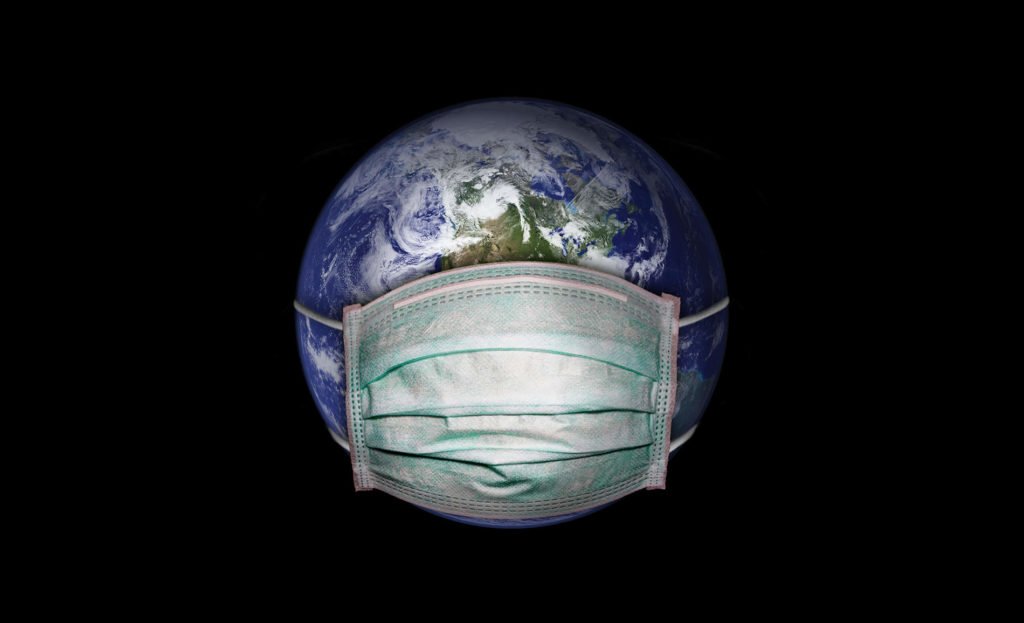
The Corona - An opportunity to replace militarist security with common and human security. Part 1

Part 1

Governments have spent trillions on preparing for military threats created by their own policies. No one prioritised human and societal security. The unique over-reaction to COVID-19 should worry us much more than the virus itself. It can be seen as a panicky attempt to cover-up the failure of an outdated militarist security policy.
#coronaissecuritypolitics

Part 2 of this seriesPart 3Part 4

The Coronavirus is a comparatively small killer

Over the last 3 months, about 40.000+ people have died worldwide because of (or with) the Coronavirus. No other phenomenon in contemporary history has caused so many drastic decisions in democratic and authoritarian governments alike as thi pandemic.

Constitutions, a series of freedoms, including the freedom of movement, and much else have been suspended and new emergency laws passed fast enough to qualify for the Guinness World Records.

Not to diminish this pandemic tragedy in the slightest way, may it be pointed out that those 40.000 Corona-related fatalities worldwide up until today is the same as the number of Venezuelans who have died because of the recent US sanctions on that country?

May it be pointed out that 40 000 is about 10% of the lives lost in the combined civil and international war of aggression since 2011 in the sovereign state and UN member, Syria, on which suffocating sanctions have also been imposed and upheld even in these times of pandemic?

The Iraq War and 13 years of sanctions cost at least about 1 million civilian lives. Other wars – Afghanistan, Pakistan – have claimed at least 875.000 lives.

Further, may it be pointed out that more than 20 000 people worldwide die every day from hunger?

Global maldevelopment, income gaps and the plight of the hundreds of millions of ‘wretched of the Earthnever caused any government, let alone all governments, to introduce any particular measures and certainly nothing as drastic as those we’re now all forced to live with.

Before the Coronavirus, the world issue most talked about was climate change. Our global house was in fire, to allude to Greta Thunberg’s famous statement. Naomi Klein advocated a planetary state of emergency.

There are more reliable facts available about the many environment-related problems and their human and other costs, now and in the future, than most people can ever digest. In spite of the knowledge produced during the last 60-70 years about this global problem, few governments, if any, can be said to have done anything effective to live sustainably. Huge international conferences aimed to move towards solutions have been utter failures.

But in a week or two, that issue disappeared completely. The Coronavirus won the political and the media attention.

And, not to forget, before the Coronavirus, there was increasing tension between NATO and Russia with signs of new Cold War in Europe, and there was an economic war with China. And… well, the attention winner called Corona took it all.

Why this drama surrounding the Corona?

How is it possible that much more urgent issues which cause so much more suffering and so many more deaths – and which existed for decades – have lead to no drastic measures, halted governments, created a turning point – or caused us all to stand with each other and with humanity?

It’s quite possible that we have no real answers yet to questions such as: How did that happen so quickly? What political psychology made it possible? What makes the Coronavirus so special?

But a globally-oriented sociological imagination – to use the classical eminent scholar C. Wright Mills‘ term – may point to some possible explanatory factors. For instance (numbers not indicative of importance):

1) Could it be that the Coronavirus has hit the richer part of the world first – China, Europe and the United States? Had 40 000 people died from some disease in Africa or South America, it’s quite likely that the wealthy of the Earth might not even have heard about it.

The largest number of deaths from war amidst maldevelopment since the Second World War is found in the Democratic Republic of Congo (DRC). It claimed 5,4 million lives between 1998 and 2008. It’s virtually unknown to people outside Africa.

2) Another reason could, of course, be that everything having to do with health means a lot to each of us; it’s something we can all empathise with: Could it hit me and my loved ones one day? In contrast, when wars rage far away from Europe and the US, people usually do not feel threatened by them and neither do they empathise with the victims in the same manner as we have seen during these Corona times.

Although at least some wars could escalate and spread and conventional wars could transform into nuclear exchanges – as official doctrines make likely and everything is planned for it – this does not seem to catch the imagination of more than a tiny minority of outcasts – peace workers.

Of course, wars are sold by governments, alliances and the mainstream media as something serving a noble purpose – saving us from terrorism, spreading democracy, liberating women or making people understand human rights. While that has turned out to be consistently untrue and accompanied by demonization and lies about “the enemy”, nothing noble can be found in an invisible deadly virus.

In parenthesis, it is interesting to observe how the COVID-19 is talked about as a mortal danger and an invisible enemy against which we have to fight a costly war – standing patriotically together.

3) A third reason could be the dynamics of the phenomenon. It starts with a limited number of infected people and deaths at some locality (epidemic) but then spreads across continents and becomes a pandemic. Undoubtedly, this dynamic causes a real and legitimate sense of fear that the world shall experience an exponential growth which at some point becomes uncontrollable and threatens to cause fatalities in the millions.

4) One could also entertain a more cynical hypothesis:

Like when a terror event happens, the Coronavirus pandemic provides a unique opportunity for governments and state authorities – the “Leviathan” – to both tighten the controls over their subjects or citizens and, perhaps more benevolently, to show that they also care so much for them.

Fear does create a heightened willingness to abandon one’s rights and can be (mis)used politically (“fearology”) to suspend democracy and freedom for as long as it is deemed necessary by those very authorities who have cancelled the democratic procedures in the name of managing the threat more efficiently on behalf of the people, i.e. for the common good.

As they say, the road to Hell has often been paved with good intentions – or at least sold to the public as motivated by them.

How often have we not heard, these last few weeks, presidents, prime ministers and other ministers as well as, say, police and defence authorities solemnly declare just how much they care about us citizens and how strongly they want to protect us from the danger?

One dimension of this – cynical, nasty and realistic, as you prefer – is that by locking down, demanding self-isolation and closing shops and restaurants and thereby emptying the streets, all public protests against the (mis)handling of the corona situation as well as against the lockdown of democracy and freedoms can conveniently be prevented.

At least, that is, until people decide to reclaim the public spaces in the thousands and protest, violently or nonviolently.

No people will accept for any longer period of time to be de facto imprisoned in their homes just to avoid a virus that predominantly hits older people. And, you may add, particularly not if the governments cannot provide the basics during such a period and prove that they are in control of the calamity.

The situation is potentially explosive and the more so as time goes by.

Countries that can send precision-guided missiles and even nuclear weapons around the world, fight wars for decades and have troops stationed in faraway lands – and have stored everything needed for that – have now shown us that they are not able to, or rather never cared to, provide their own society and citizens with simple protective measures such as face masks, gloves, hand disinfection, protective clothing, thermometers, testing equipment or sufficient basic health care systems and capacities, nor to protect their own health workers.

5) Finally, there is the groupthink cover-up hypothesis. It can be expressed this way:

Governments have spent trillions on a security paradigm that always had only one answer to every challenge no matter its character: Larger budgets, more weapons, looking strong – having the biggest.

The only thing no government ever took seriously was the ideas of common human, local-to-global security and devising policies that enabled them to meet civilian threats – such as a pandemic – adequately.

As a result, countries that can send precision-guided missiles and even nuclear weapons around the world, fight wars and have troops stationed in faraway lands – and have stored everything needed for that sort of policy – have not been able to, or rather cared to, provide their own society and citizens with simple protective measures such as face masks, gloves, hand disinfection, protective clothing, thermometers, testing equipment or sufficient basic health care systems and capacities, nor to protect their own health workers.

In other words, the official threat analyses were not aimed at telling us what in reality threatened our countries or the world. They were produced to fit the needs of the larger military system – what for years I have called the MIMAC, the Military-Industrial-Media-Academic Complex. It basically implied that you talk only about foreign enemies and their weapons (never about your own activities), and then citizens would feel threatened – and therefore convinced as taxpayers – that “we” need more weapons to feel secure against “them”.

Whether we are threatened by “the other” in reality and according to some decent objective criteria or not is totally unimportant. Whether this way of thinking – or the lack of it – would ever bring about a more peaceful world – who cared as long as it served the greed of the MIMAC elites?

Find a policy more in need of cover-up in these corona times when it has now been revealed to the world that we indeed have no common human security. The government cover-up is simple: Oh, but we care so much for our citizens (at least since we found out that the Coronavirus was a serious thing).

It is a bit late.

These policies must change. There can be no military ‘business as usual’ after the Coronavirus.

This conflict between citizens’ human security and right to peace and governments’ national(istic) military security and the grotesquely huge sums spent on the latter to the detriment of the former is fundamental to the entire global system. We find it in the East and West, the South and the North, although not to the same degree everywhere.

The main military destroyers, of course, have a larger problem to face now than those who are less addicted to military power.

And this civilisational problem pertains to both democracies and more authoritarian political systems – with the exception of the few countries that have decided to have no military such as Iceland and Costa Rica.

The most important lesson to learn

Part 2 of this series will focus on the Corona as what it is apart from being a health issue: It’s a security political problem – a diaster. It proves with abundant clarity that the military-dominated security paradigm and politics pursued by virtually all governments have been wrong in theory and practise all the time. It shows how counterproductive and irresponsible it is – particularly in what we used to call democracies.

That outdated policy has been oriented towards the wrong “enemy” and done unspeakable harm to humanity and to Nature (see examples above).

It must go. A new way of thinking must now emerge, demanded by the people whose security has been so arrogantly ignored.

The Corona pandemic is our best-ever wake-up call.

If you liked this first part, reward TFF with a dollar or five…

[paypal-donation]

#coronaissecuritypolitics – please begin using this hashtag everywhere

Part 2 of this seriesPart 3Part 4

alt="Jan Oberg"

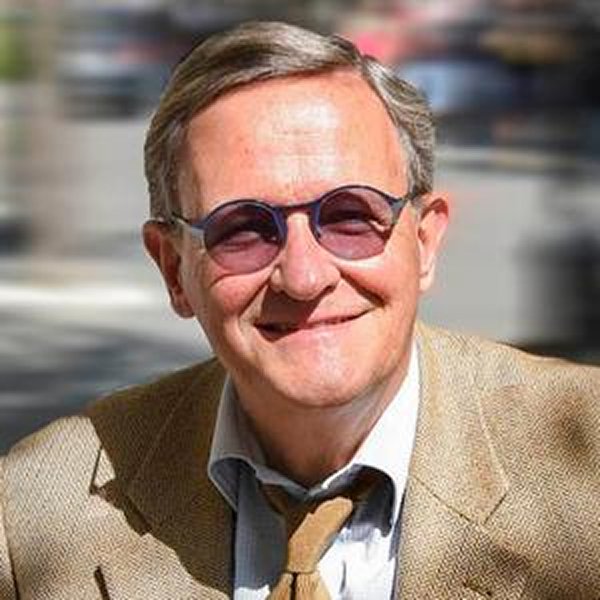
Jan Oberg is co-founder and director of TFF with more than 40 years of experience in public and university teaching in peace studies and on-the-ground experience from numerous conflict zones. He is also an art photographer.
More about him here.

Recommended
Sign the International Peace Bureau’s Appeal “Invest in Healthcare instead of Militarization” here.

Peace & future researcher + ‌Art Photographer

Share

Leave a Reply

Your email address will not be published. Required fields are marked *

Related Posts

Jan Oberg May 15, 2026 Go to this Fox News page and scroll the whole way down: President Donald Trump tells the world that his meeting with President Xi Jinping yielded a lot of very concrete political and economic results – of course, only where the Chinese side, according to him, agreed with him. He does not mention the Taiwan issue, but Secretary of State, Marco Rubio, says that it did not feature prominently in their talks and that the US policy on Taiwan has not changed. Then go to China Daily – or Global Times – and you will see that for the Chinese it is framework, principles, structure of cooperation etc. that matters – all embedded in the overall idea of “constructive bilateral relationship of strategic stability.” Nowhere is any concrete agreement or deal – all that Trump refers to – mentioned. At the general level, this gives you insights into the very different social...
The MIMAC – Military-Industrial-Media-Academic Complex – drives the world’s rampant militarism and wars without end. Here is a short reflection of how it works against all interests of humanity. #5 deals with why there is no real enemy or threat images/analysis. It’s all ex-post constructions. And, btw, theTFF Peace Pulse is now on Rumble.
Jan Oberg, TFF director April 28, 2026 In this third TFF Peace Pulse, I make the important distinction between the violence and the conflict that violence is a symptom of. If you want peace, focus on the underlying conflict because that is the key to resolution, peacemaking, and a better future for the parties. The West is obsessed with violence, just look around you – and 90+ per cent of the public debate is about military issues and other violence – totally wasted for peace. These Peace Pulses will only be published here a few times. You will also not find them on YouTube and Vimeo because both platforms have blocked TFF and me; you know, peace is dangerous these days. Most TFF’s videos since 2007 are now on Rumble.

Recent Articles

“En dag som berättigar till fest”, utropade den London-baserade al-Quds al-Arabi efter FN:s eldupphörresolution, “eftersom detta är första gången som Israel accepterar ett FN-beslut från en position som besegrad och inte som segrare”. Att ett arabisk-israeliskt krig för en gångs skull slutat med arabisk seger, är en helt dominerade åsikt i arabiska medier. Al-Quds al-Arabi tillåter sig att drömma om att det israeliska nederlaget skall leda till massflykt från Israel. Men i nästa andetag påminner tidningen om att Israel aldrig brukar genomföra sina internationella åtaganden och varnar för att förlorarna, liksom tidigare, kan hämnas genom att provocera fram inbördeskrig i Libanon. Med tanke på de otaliga massmediala vittnesmålen om det libanesiska folkets eniga motståndskraft förefaller risken för inre stridigheter i det sargade landet just nu liten. Men visst kan man urskilja nyansskillnader i libanesiska tidningar. Vänsterorganet al-Safir uppfattar FN-resolutionen som en komplott i syfte att rädda Israel från ännu större...
Greenland – the world’s largest island, a continent of its own with only 57.000 inhabitants. I visited it for the first time in May 2005. I flew across the inland ice to Nuuk, the tiny capital with some 14.000 inhabitants. I was overwhelmed by the pride and kindness of everyone I met as well as by the unique natural beauty. Unfortunately, due to weather conditions during my ten-day stay I could get nowhere else but Nuuk. Fortunately, however, among those I met was Gitte Arvegaard, a Danish lawyer and negotiator employed by the local government, Greenland Home Rule. She turned out to be an enthusiastic photographer with a lot of pictures taken during various trips around Greenland. So this Greeland series is the result of our cooperative effort. We both hope you enjoy it and are stimulated to visit Greenland – about which you may read more here. Finally, if you want to...
 Jan Oberg’s storyof how he met Sir Paul Liverpool – where else to meet Paul McCartney? Paul’s old class mate and TFF Associate, Jonathan Power introduced me to Paul McCartney in Liverpool at an informal reception. It was held at what used to be their school, now the Liverpool Institute for Performing Arts and we were there to celebrate that Jonathan had written Amnesty International’s 40th Anniversary book. This happy event for “righting wrongs and writing songs” gave me an opportunity to meet Paul and tell him about TFF and get straight to the matter: would he consider making a donation in support of our work for peace? While I was probably the only one with such a wish that day, I was certainly not the only one who wanted to shake hands and talk with him. In the last minutes before Paul was to leave, Jonathan brought us together and we got about three...

TFF on Substack

Discover more from TFF Transnational Foundation & Jan Oberg.

Most Popular

“En dag som berättigar till fest”, utropade den London-baserade al-Quds al-Arabi efter FN:s eldupphörresolution, “eftersom detta är första gången som Israel accepterar ett FN-beslut från en position som besegrad och inte som segrare”. Att ett arabisk-israeliskt krig för en gångs skull slutat med arabisk seger, är en helt dominerade åsikt i arabiska medier. Al-Quds al-Arabi tillåter sig att drömma om att det israeliska nederlaget skall leda till massflykt från Israel. Men i nästa andetag påminner tidningen om att Israel aldrig brukar genomföra sina internationella åtaganden och varnar för att förlorarna, liksom tidigare, kan hämnas genom att provocera fram inbördeskrig i Libanon. Med tanke på de otaliga massmediala vittnesmålen om det libanesiska folkets eniga motståndskraft förefaller risken för inre stridigheter i det sargade landet just nu liten. Men visst kan man urskilja nyansskillnader i libanesiska tidningar. Vänsterorganet al-Safir uppfattar FN-resolutionen som en komplott i syfte att rädda Israel från ännu större...
Greenland – the world’s largest island, a continent of its own with only 57.000 inhabitants. I visited it for the first time in May 2005. I flew across the inland ice to Nuuk, the tiny capital with some 14.000 inhabitants. I was overwhelmed by the pride and kindness of everyone I met as well as by the unique natural beauty. Unfortunately, due to weather conditions during my ten-day stay I could get nowhere else but Nuuk. Fortunately, however, among those I met was Gitte Arvegaard, a Danish lawyer and negotiator employed by the local government, Greenland Home Rule. She turned out to be an enthusiastic photographer with a lot of pictures taken during various trips around Greenland. So this Greeland series is the result of our cooperative effort. We both hope you enjoy it and are stimulated to visit Greenland – about which you may read more here. Finally, if you want to...
 Jan Oberg’s storyof how he met Sir Paul Liverpool – where else to meet Paul McCartney? Paul’s old class mate and TFF Associate, Jonathan Power introduced me to Paul McCartney in Liverpool at an informal reception. It was held at what used to be their school, now the Liverpool Institute for Performing Arts and we were there to celebrate that Jonathan had written Amnesty International’s 40th Anniversary book. This happy event for “righting wrongs and writing songs” gave me an opportunity to meet Paul and tell him about TFF and get straight to the matter: would he consider making a donation in support of our work for peace? While I was probably the only one with such a wish that day, I was certainly not the only one who wanted to shake hands and talk with him. In the last minutes before Paul was to leave, Jonathan brought us together and we got about three...
Read More
Imagen-thumbnail-The-Transnational-1
“En dag som berättigar till fest”, utropade den London-baserade al-Quds al-Arabi efter FN:s eldupphörresolution, “eftersom detta är första gången som Israel accepterar ett FN-beslut från en position som besegrad och inte som segrare”. Att ett arabisk-israeliskt krig för en gångs skull slutat med arabisk seger, är en helt dominerade åsikt i arabiska medier. Al-Quds al-Arabi tillåter sig att drömma om att det israeliska nederlaget skall leda till massflykt från Israel. Men i nästa andetag påminner tidningen om att Israel aldrig brukar genomföra sina internationella åtaganden och varnar för att förlorarna, liksom tidigare, kan hämnas genom att provocera fram inbördeskrig i Libanon. Med tanke på de otaliga massmediala vittnesmålen om det libanesiska folkets eniga motståndskraft förefaller risken för inre stridigheter i det sargade landet just nu liten. Men visst kan man urskilja nyansskillnader i libanesiska tidningar. Vänsterorganet al-Safir uppfattar FN-resolutionen som en komplott i syfte att rädda Israel från ännu större...
Greenland – the world’s largest island, a continent of its own with only 57.000 inhabitants. I visited it for the first time in May 2005. I flew across the inland ice to Nuuk, the tiny capital with some 14.000 inhabitants. I was overwhelmed by the pride and kindness of everyone I met as well as by the unique natural beauty. Unfortunately, due to weather conditions during my ten-day stay I could get nowhere else but Nuuk. Fortunately, however, among those I met was Gitte Arvegaard, a Danish lawyer and negotiator employed by the local government, Greenland Home Rule. She turned out to be an enthusiastic photographer with a lot of pictures taken during various trips around Greenland. So this Greeland series is the result of our cooperative effort. We both hope you enjoy it and are stimulated to visit Greenland – about which you may read more here. Finally, if you want to...
p_mccartney_poem
 Jan Oberg’s storyof how he met Sir Paul Liverpool – where else to meet Paul McCartney? Paul’s old class mate and TFF Associate, Jonathan Power introduced me to Paul McCartney in Liverpool at an informal reception. It was held at what used to be their school, now the Liverpool Institute for Performing Arts and we were there to celebrate that Jonathan had written Amnesty International’s 40th Anniversary book. This happy event for “righting wrongs and writing songs” gave me an opportunity to meet Paul and tell him about TFF and get straight to the matter: would he consider making a donation in support of our work for peace? While I was probably the only one with such a wish that day, I was certainly not the only one who wanted to shake hands and talk with him. In the last minutes before Paul was to leave, Jonathan brought us together and we got about three...
Logo-Transnational
1942James Paul McCartney is born in Liverpool on June 18th. 1956Paul writes his first song, I Lost My Little Girl. 1957Paul meets John Lennon at St. Peter’s Church Fete, Woolton, Liverpool. He joins his first group, The Quarrymen and performs in his first gig at The New Clubmoor Hall, Liverpool, on October 18th. 1960Formation of The Beatles, who play residencies in Hamburg and at The Cavern in Liverpool. 1961First Beatles recordings issued in Germany, as the backing group for Tony Sheridan. 1962The first Beatles Parlophone recording, Love Me Do, reaches number 17 in the British charts. 1963The birth of Beatlemania. Please Please Me gives the group their first British Number 1. She Loves You cements their success. Please Please Me and With The Beatles albums released. 1964First triumphant American tour. The Beatles perform at the Royal Command Performance and release their first film, A Hard Day’s Night. Their single I...
Logo-Transnational
  Back to the series “Bujumbura, Burundi”
By JONATHAN POWER August 16, 2000 LONDON – Remember the summer of ’98? In the sweltering, torpid heat of a Roman august, charged with exhaust fumes, the international community gave its overwhelming approval to the establishment of an International Criminal Court that will enable those accused of “crimes against humanity” to be tried and, if convicted, sentenced. Only seven nations opposed or abstained from the motion, including Israel, China, India and the U.S.A. where the Pentagon had successfully waged bureaucratic guerrilla war to undermine the initially sympathetic stance of President Bill Clinton. Two years on we can now see what an epochal event that was. In a the stroke of 120 pens it changed the climate on political thuggery. After numerous half-starts and false starts ever since the Nuremberg and Tokyo trials that convicted the war criminals of the Second World War, the world at last had agreed en masse a common...