
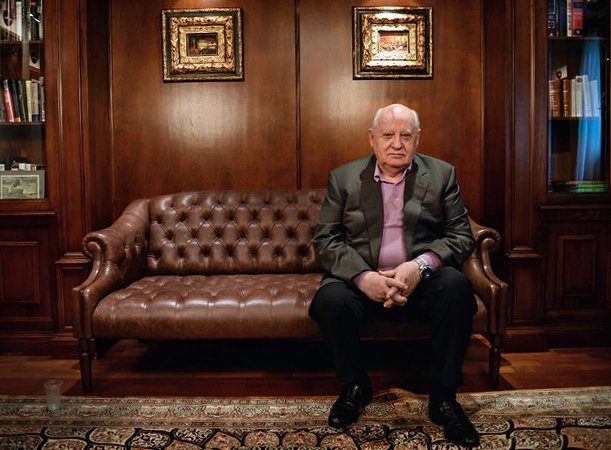
Russia and the U.S. are not condemned to confrontation


By Mikhail Sergeyevich Gorbachev

June 16, 2018

• Russia and the United States are not condemned to confrontation. We must now make up for lost time!

Mikhail Gorbachev’s Address to Participants in the Conference Marking the 30th Anniversary of Ronald Reagan’s Visit and the Moscow Summit.

Originally published at the homepage of the Gorbachev Foundation on June 4, 2018

I welcome all who have gathered to mark the thirtieth anniversary of President Ronald Reagan’s visit to Moscow and the US-Soviet summit. I think it was a truly historic event. It was a kind of summing up of the work we had done, starting in Geneva and then going through Reykjavik and Washington to Moscow.

It was not an easy path. Its first major milestone was the Joint US-Soviet Statement which declared that “a nuclear war cannot be won and must never be fought” and that “the two sides will not seek military superiority.”

This gave ground to the world media to speak of the spirit of Geneva.

But the spirit of Geneva was severely tested. The entry of US Navy ships in our territorial waters, spy scandals, propaganda campaigns in the in the media – all that and a lot more was done in order to push us off track. The negotiations could have turned into unproductive routine. It took Reykjavik to prevent a new deadlock and open up prospects.
I won’t describe all the ups and downs of the historic meeting in Reykjavik.

We came there with constructive proposals, which opened the way to agreements on INF and START, but stumbled on the US President’s commitment to the Strategic Defense Initiative and his attempt to obtain our consent to deployment of missile defenses. Nevertheless, the Reykjavik agreements were a breakthrough toward the first real arms reduction treaties.

Of equal importance was the fact that in Reykjavik Ronald Reagan showed himself to be a proponent of a world without nuclear weapons. That brought us closer together.

The summits in Washington and Moscow pointed to a new level of trust in our relations. It was not an accident that Ronald Reagan, standing next to me in the Kremlin, near the Tsar Cannon, answered the question whether he still considered the Soviet Union an evil empire by saying “No, it was another time, another era.”

Nobody put those words in his mouth. While this was not yet the final line drawn under the Cold War, the acute phase of the confrontation was over. I think this is a unique example of such a turnabout in relations between two major powers.

Why did in happen within such a historically short time? The short answer is: Because both sides had the political will. Without it, it would have been impossible to remove all the barriers and obstacles accumulated during the decades of the Cold War.

• •

I am recalling this not just to mark this meeting’s anniversary but also because I am convinced that the experience of those years is relevant today.

It suggests that even in the most difficult situations we must not panic or succumb to pessimism.

We must, however, be sober and realistic in assessing the current situation in the world and in relations between our countries. Over the past few years I’ve been following with great concern the developments in our relations. The most important gains of our past efforts – trust, the end of the arms race, cooperation and the prospect of partnership – are now in jeopardy.

I don’t want to strike a pose of accuser but let me repeat what I have said on many occasions. The major cause of the current severe problems lies in the incorrect assessment by the West and particularly by the United States of the historic event – the end of the Cold War.

It was our common victory, achieved through dialogue, negotiations and resolution of the most complex security, disarmament and regional issues and by putting bilateral relations back on track. Had it not been so, the Cold War and the arms race could have continued for decades, and who knows what it could have led to!

Instead of recognizing all that, the West declared victory in the Cold War. American leaders stated that it happened thanks to the policy of force. Therefore, they concluded, it is necessary to build up power, to impose their will, to build a unipolar world, an American empire.

We know the consequences – in the Middle East, in the Mediterranean, and in Europe: in Yugoslavia and now in Ukraine. This is happening in a continent where two world wars started! I believe that conflicts and the use of force in Europe are particularly unforgivable. It is the greatest failure of European and global politics.

A comprehensive system of security has not been built in Europe.

We proposed creating a Security Council for Europe, and the idea met with support from Mitterand, Genscher, Scowcroft; nevertheless, it was ignored. Instead, there was the enlargement of NATO, in spite of the position of Russia as well as warnings from many Western politicians and diplomats.

I will not list here all the examples of the United States’ unilateral action. In Russia, they were perceived unambiguously: Our interests are being ignored, and the aim is to push us out of the world arena. That is not the way to talk to Russia.

Those who expected Russia to agree to a secondary role in world affairs and not to defend its interests made a huge mistake, as did those who sought to isolate Russia.

• •

This is the real situation. What is needed now is realistic policy.

The main question today is what needs to be done to start exiting from the current deadlock and move our relations off the ground.

I have made my views known many times, through both Russian and international media, including TIME magazine.

We squandered 2017 and, already, almost a half of this year. We must now make up for lost time.

First of all, I urge that an end should be put to further escalation of sanctions, countermeasures and negative, hostile rhetoric.

A meeting between the President of Russia and the United States should be prepared. It is far from normal that they still have not had full-fledged negotiations.

It is important to define the summit’s agenda, starting with the main priorities. Today, they are the problems of curbing the arms race, strengthening strategic stability and reaffirming the arms reduction agreements – INF and START. A strong impetus from the president is required.

At the same time, dialogue should begin on the entire agenda, including regional and global problems and bilateral relations. The obstacles here are tremendous and it would take a big effort to get them out of the way. And yet, there is no alternative. This is something political leaders should understand, and we must insist on it.

I believe all of us – civil society organizations, experts, academics, businessmen and the media – must stimulate movement in this direction. We need to resume people-to people diplomacy and expand contacts, educational and student exchanges. This is essential, though it might be done in ways different from thirty years ago.

I hope we’ll have the strength and energy to accomplish the enormous work that lies ahead in order to break out of the vicious circle and start moving toward normal relations.

Indeed, we must look beyond that, toward the prospect of cooperation and partnership. We gave serious thought to that prospect, but today some are saying that it is a utopia and that Russia and the United States are condemned to confrontation. My answer is: No, they are not. And I hope that all of you here share that view.

I wish you fruitful deliberations and an interesting discussion that would help learn lessons from the past and formulate new, constructive proposals.

Mikhail Gorbachev



Share

Leave a Reply

Your email address will not be published. Required fields are marked *

Related Posts

Lena Petrova of “World Affairs In Context” with more than half a million subscribers on YouTube wanted to explore what a peace researcher like me has to say about, among other things, the First and the Second Cold War and why eethics has disappeared from politics. I am particularly happy about this conversation that also yielded an amazing number of very appreciative comments on YouTube. No doubt, people are longing for alternatives, including peace perspectives.
Jan Oberg, TFF director April 28, 2026 In this third TFF Peace Pulse, I make the important distinction between the violence and the conflict that violence is a symptom of. If you want peace, focus on the underlying conflict because that is the key to resolution, peacemaking, and a better future for the parties. The West is obsessed with violence, just look around you – and 90+ per cent of the public debate is about military issues and other violence – totally wasted for peace. These Peace Pulses will only be published here a few times. You will also not find them on YouTube and Vimeo because both platforms have blocked TFF and me; you know, peace is dangerous these days. Most TFF’s videos since 2007 are now on Rumble.
In contrast to most, we’ll bring alternatives, solutions, hope and strategies for a better future. Times are dangerous, yes, but that only intensifies the need for constructive thinking and action! Jan Oberg, TFF director April 13, 2026 The new TFF Peace Pulse uses video messages in a new way: Max 3-5-minute-long comments, ideas or perhaps mini-lectures, all about peace – positive peace. We launch them today on April 13, 2026 with a carefully crafted visual aesthetic fitting the content. We hope to publish them regularly from now on. We launch Peace Pulse (PP) – for a number of reasons. The world is in chaos, and there are countless reasons to feel concerned, frustrated, even angry. The atmosphere is saturated with doom and gloom, with negative energy and rear‑mirror thinking, while vision, imagination, alternatives, strategies and genuine future‑mindedness remain in short supply. And without them, we simply can’t save the world. Looking at problems from a hundred angles will...

Recent Articles

“En dag som berättigar till fest”, utropade den London-baserade al-Quds al-Arabi efter FN:s eldupphörresolution, “eftersom detta är första gången som Israel accepterar ett FN-beslut från en position som besegrad och inte som segrare”. Att ett arabisk-israeliskt krig för en gångs skull slutat med arabisk seger, är en helt dominerade åsikt i arabiska medier. Al-Quds al-Arabi tillåter sig att drömma om att det israeliska nederlaget skall leda till massflykt från Israel. Men i nästa andetag påminner tidningen om att Israel aldrig brukar genomföra sina internationella åtaganden och varnar för att förlorarna, liksom tidigare, kan hämnas genom att provocera fram inbördeskrig i Libanon. Med tanke på de otaliga massmediala vittnesmålen om det libanesiska folkets eniga motståndskraft förefaller risken för inre stridigheter i det sargade landet just nu liten. Men visst kan man urskilja nyansskillnader i libanesiska tidningar. Vänsterorganet al-Safir uppfattar FN-resolutionen som en komplott i syfte att rädda Israel från ännu större...
Greenland – the world’s largest island, a continent of its own with only 57.000 inhabitants. I visited it for the first time in May 2005. I flew across the inland ice to Nuuk, the tiny capital with some 14.000 inhabitants. I was overwhelmed by the pride and kindness of everyone I met as well as by the unique natural beauty. Unfortunately, due to weather conditions during my ten-day stay I could get nowhere else but Nuuk. Fortunately, however, among those I met was Gitte Arvegaard, a Danish lawyer and negotiator employed by the local government, Greenland Home Rule. She turned out to be an enthusiastic photographer with a lot of pictures taken during various trips around Greenland. So this Greeland series is the result of our cooperative effort. We both hope you enjoy it and are stimulated to visit Greenland – about which you may read more here. Finally, if you want to...
 Jan Oberg’s storyof how he met Sir Paul Liverpool – where else to meet Paul McCartney? Paul’s old class mate and TFF Associate, Jonathan Power introduced me to Paul McCartney in Liverpool at an informal reception. It was held at what used to be their school, now the Liverpool Institute for Performing Arts and we were there to celebrate that Jonathan had written Amnesty International’s 40th Anniversary book. This happy event for “righting wrongs and writing songs” gave me an opportunity to meet Paul and tell him about TFF and get straight to the matter: would he consider making a donation in support of our work for peace? While I was probably the only one with such a wish that day, I was certainly not the only one who wanted to shake hands and talk with him. In the last minutes before Paul was to leave, Jonathan brought us together and we got about three...

TFF on Substack

Discover more from TFF Transnational Foundation & Jan Oberg.

Most Popular

“En dag som berättigar till fest”, utropade den London-baserade al-Quds al-Arabi efter FN:s eldupphörresolution, “eftersom detta är första gången som Israel accepterar ett FN-beslut från en position som besegrad och inte som segrare”. Att ett arabisk-israeliskt krig för en gångs skull slutat med arabisk seger, är en helt dominerade åsikt i arabiska medier. Al-Quds al-Arabi tillåter sig att drömma om att det israeliska nederlaget skall leda till massflykt från Israel. Men i nästa andetag påminner tidningen om att Israel aldrig brukar genomföra sina internationella åtaganden och varnar för att förlorarna, liksom tidigare, kan hämnas genom att provocera fram inbördeskrig i Libanon. Med tanke på de otaliga massmediala vittnesmålen om det libanesiska folkets eniga motståndskraft förefaller risken för inre stridigheter i det sargade landet just nu liten. Men visst kan man urskilja nyansskillnader i libanesiska tidningar. Vänsterorganet al-Safir uppfattar FN-resolutionen som en komplott i syfte att rädda Israel från ännu större...
Greenland – the world’s largest island, a continent of its own with only 57.000 inhabitants. I visited it for the first time in May 2005. I flew across the inland ice to Nuuk, the tiny capital with some 14.000 inhabitants. I was overwhelmed by the pride and kindness of everyone I met as well as by the unique natural beauty. Unfortunately, due to weather conditions during my ten-day stay I could get nowhere else but Nuuk. Fortunately, however, among those I met was Gitte Arvegaard, a Danish lawyer and negotiator employed by the local government, Greenland Home Rule. She turned out to be an enthusiastic photographer with a lot of pictures taken during various trips around Greenland. So this Greeland series is the result of our cooperative effort. We both hope you enjoy it and are stimulated to visit Greenland – about which you may read more here. Finally, if you want to...
 Jan Oberg’s storyof how he met Sir Paul Liverpool – where else to meet Paul McCartney? Paul’s old class mate and TFF Associate, Jonathan Power introduced me to Paul McCartney in Liverpool at an informal reception. It was held at what used to be their school, now the Liverpool Institute for Performing Arts and we were there to celebrate that Jonathan had written Amnesty International’s 40th Anniversary book. This happy event for “righting wrongs and writing songs” gave me an opportunity to meet Paul and tell him about TFF and get straight to the matter: would he consider making a donation in support of our work for peace? While I was probably the only one with such a wish that day, I was certainly not the only one who wanted to shake hands and talk with him. In the last minutes before Paul was to leave, Jonathan brought us together and we got about three...
Read More
Imagen-thumbnail-The-Transnational-1
“En dag som berättigar till fest”, utropade den London-baserade al-Quds al-Arabi efter FN:s eldupphörresolution, “eftersom detta är första gången som Israel accepterar ett FN-beslut från en position som besegrad och inte som segrare”. Att ett arabisk-israeliskt krig för en gångs skull slutat med arabisk seger, är en helt dominerade åsikt i arabiska medier. Al-Quds al-Arabi tillåter sig att drömma om att det israeliska nederlaget skall leda till massflykt från Israel. Men i nästa andetag påminner tidningen om att Israel aldrig brukar genomföra sina internationella åtaganden och varnar för att förlorarna, liksom tidigare, kan hämnas genom att provocera fram inbördeskrig i Libanon. Med tanke på de otaliga massmediala vittnesmålen om det libanesiska folkets eniga motståndskraft förefaller risken för inre stridigheter i det sargade landet just nu liten. Men visst kan man urskilja nyansskillnader i libanesiska tidningar. Vänsterorganet al-Safir uppfattar FN-resolutionen som en komplott i syfte att rädda Israel från ännu större...
Greenland – the world’s largest island, a continent of its own with only 57.000 inhabitants. I visited it for the first time in May 2005. I flew across the inland ice to Nuuk, the tiny capital with some 14.000 inhabitants. I was overwhelmed by the pride and kindness of everyone I met as well as by the unique natural beauty. Unfortunately, due to weather conditions during my ten-day stay I could get nowhere else but Nuuk. Fortunately, however, among those I met was Gitte Arvegaard, a Danish lawyer and negotiator employed by the local government, Greenland Home Rule. She turned out to be an enthusiastic photographer with a lot of pictures taken during various trips around Greenland. So this Greeland series is the result of our cooperative effort. We both hope you enjoy it and are stimulated to visit Greenland – about which you may read more here. Finally, if you want to...
p_mccartney_poem
 Jan Oberg’s storyof how he met Sir Paul Liverpool – where else to meet Paul McCartney? Paul’s old class mate and TFF Associate, Jonathan Power introduced me to Paul McCartney in Liverpool at an informal reception. It was held at what used to be their school, now the Liverpool Institute for Performing Arts and we were there to celebrate that Jonathan had written Amnesty International’s 40th Anniversary book. This happy event for “righting wrongs and writing songs” gave me an opportunity to meet Paul and tell him about TFF and get straight to the matter: would he consider making a donation in support of our work for peace? While I was probably the only one with such a wish that day, I was certainly not the only one who wanted to shake hands and talk with him. In the last minutes before Paul was to leave, Jonathan brought us together and we got about three...
Logo-Transnational
1942James Paul McCartney is born in Liverpool on June 18th. 1956Paul writes his first song, I Lost My Little Girl. 1957Paul meets John Lennon at St. Peter’s Church Fete, Woolton, Liverpool. He joins his first group, The Quarrymen and performs in his first gig at The New Clubmoor Hall, Liverpool, on October 18th. 1960Formation of The Beatles, who play residencies in Hamburg and at The Cavern in Liverpool. 1961First Beatles recordings issued in Germany, as the backing group for Tony Sheridan. 1962The first Beatles Parlophone recording, Love Me Do, reaches number 17 in the British charts. 1963The birth of Beatlemania. Please Please Me gives the group their first British Number 1. She Loves You cements their success. Please Please Me and With The Beatles albums released. 1964First triumphant American tour. The Beatles perform at the Royal Command Performance and release their first film, A Hard Day’s Night. Their single I...
Logo-Transnational
  Back to the series “Bujumbura, Burundi”
By JONATHAN POWER August 16, 2000 LONDON – Remember the summer of ’98? In the sweltering, torpid heat of a Roman august, charged with exhaust fumes, the international community gave its overwhelming approval to the establishment of an International Criminal Court that will enable those accused of “crimes against humanity” to be tried and, if convicted, sentenced. Only seven nations opposed or abstained from the motion, including Israel, China, India and the U.S.A. where the Pentagon had successfully waged bureaucratic guerrilla war to undermine the initially sympathetic stance of President Bill Clinton. Two years on we can now see what an epochal event that was. In a the stroke of 120 pens it changed the climate on political thuggery. After numerous half-starts and false starts ever since the Nuremberg and Tokyo trials that convicted the war criminals of the Second World War, the world at last had agreed en masse a common...

