
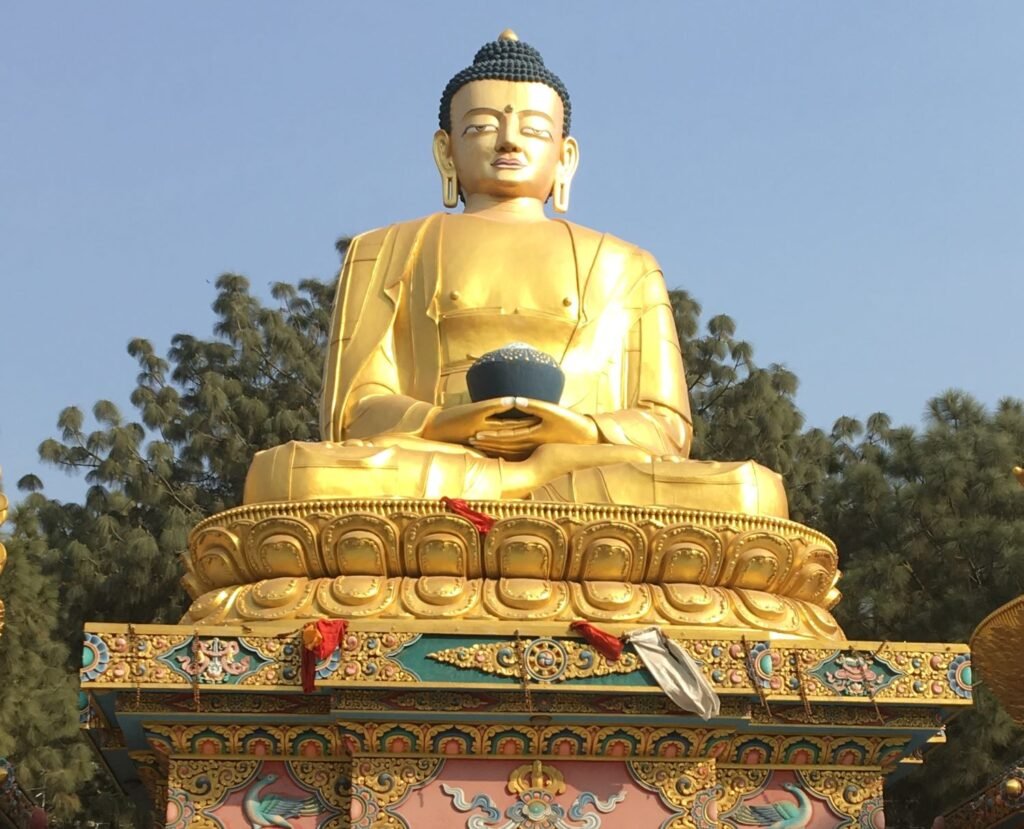
What would the Buddha do?

By David Loy

Maybe every modern generation feels confronted by some crisis that will affect the fate of the world, but unless your head is buried in the sand (or some Buddhist equivalent) it’s impossible to be ignorant of the extraordinary planetary emergency that confronts us today.

The recent IPCC report states clearly that ecological collapse no longer merely threatens — we are well into it. It’s become apparent that civilization as we know it is about to be transformed in some very uncomfortable ways by climate breakdown, mass extinction of species, resource depletion and various types of pollution — perhaps including some kinds we don’t even know about yet.

Originally published at Huffington Post

Although our globalizing economic system is a wholly-owned subsidiary of the biosphere, most of the CEOs who supervise it (as much as anyone controls it) can’t seem to plan much further than the next quarterly report, any more than most politicians can think further than the next election.

Overpopulation and the deprivation of basic necessities for vast numbers of people threaten social breakdown, while the mainstream media — profit-making enterprises whose primary focus is the bottom-line, rather than exposing the truth — distract us with infotainment and assurances that the solution to our problems is more of the same — accelerating consumerism and a growing GNP.

The Cold War has been replaced by a never-ending “war on terror” that means never-ending profits for a bloated military-industrial complex that needs to keep finding enemies.

And the latest Supreme Court decision on campaign finance, opening the floodgates for yet more money to distort the democratic process, reminds us yet again that the system is truly broken. The gap between rich and poor continues to widen.

Such is the critical situation we find ourselves in today, and Buddhists, like everyone else, need to face up to it quickly. If you are not at least dimly aware of these urgent problems, then either you are not paying attention or something is wrong with your ability to see.

I suspect there is a special place in hell (the Buddhist hells as well as the Christian ones) reserved for those who refuse to give up the self-centered indifference that allows them to meditate indefinitely on their cushions while the rest of the world goes to hell.

Our practice needs to extend beyond our sitting cushions and Dharma practice halls, to embrace a broader understanding of what is happening in our world, to our world. Like Kwan Yin, we need to hear and respond to its pain.

Sometimes we think that Buddhist practice means “just seeing, just hearing, just feeling is good! — concepts are bad.” There are times and places when we need to focus on immediate sensory and mental phenomena. Nevertheless, such meditation by itself is not enough.

If our Buddhist practice makes us allergic to all concepts and abstractions, then we should visit the arctic ourselves, to observe the disappearing ice and melting permafrost, and the slums of Mumbai and Nairobi to see how families survive there, and Iraq to learn what “bringing democracy to the Middle East” really means . . . and lots of other places as well.

Those of us who do not have the money or time for such travels need to develop wider awareness in other ways, which do not rely on junk media or political and corporate spin machines.

We must employ our critical faculties to understand the challenges facing us today. Concepts and generalizations are not bad in themselves. Rejecting them entirely is like blaming the victim, for the problem is the ways we misuse them.

Believing that mindfulness means attentiveness only to my immediate surroundings, and placing such limits on our awareness, amounts to another version of the basic problem: our sense of disconnection from each other and from the world we are “in.” Anatta, the Buddhist teaching of “not-self,” means that it is delusive to separate “my own best interests” from those of others. As the law of karma implies, the world is not that kind of zero-sum game.

Two other Buddhist responses attempt to justify focusing solely on one’s own practice and awakening: “I must tend to my own liberation before I can be of service to others” and “From the highest point of view all living beings are ‘empty,’ so we needn’t worry about their fate, or that of the biosphere.” Neither of these answers will do, because both are half-truths at best.

To begin with, we can’t wait until we have overcome all our own suffering before addressing that of others. Events are speeding up, and they are not going to wait for you and me to attain great enlightenment.

If even the Buddha is only halfway there (according to the Zen saying), we need to do what we can according to who we are right now, including where we are in our practice right now.

Moreover, this objection misunderstands how spiritual practice works. We don’t wait until we overcome our self-centeredness before engaging with the world; addressing the suffering of the wider world is how we overcome our self-centeredness.

Contrary to a common way of understanding the bodhisattva path, bodhisattvas don’t defer their own perfect enlightenment in order to help others; helping others is how they perfect their enlightenment. We awaken from our own self-suffering into a world full of suffering, with the realization I am not separate from that world.

But it’s all empty, right? Yes and no. To focus only on shunyata “emptiness” is to misunderstand the basic teaching of Mahayana. Although form is emptiness, emptiness is also form, as the Heart Sutra emphasizes. The point of our practice is not simply to rest serenely in emptiness, but to appreciate that the things of this world (including ourselves) are how it “presences.” Not to cherish the intricate web of life that the earth has miraculously spun is to denigrate the wondrous activity of the essential nature that we share with all other beings.

Awakening is not about attaining another reality or transcendent state of consciousness; it is realizing our essential nonduality with the world (which is also to realize the emptiness of our own self-being), and acting accordingly.

Without healthy societies, the possibilities for fulfilling human activity, including the path to enlightenment, are damaged. Without a healthy biosphere, those possibilities may be destroyed.

What would the Buddha do? Is the answer that we can’t know, because he’s not here? If the Buddha doesn’t live in us and as us, he is dead indeed.

If Buddhists are unable to answer that question, Buddhism is dead—or might as well be. The urgent and inescapable challenge is determining how to apply the most important Buddhist teachings to our present situation. If those teachings do not help us to understand and address the global crises we face today, so much the worse for those teachings.

Of course, I do not think that is what is called for. The most distinctive Buddhist teaching is also the one that gives us the most insight into the collective crises confronting us: the relationship between suffering (in the broadest sense) and the delusive sense of a self that feels disconnected from others.

Such a self is inherently uncomfortable, because always insecure, and the ways it often tries to secure itself (to feel more “real”) tend to make things worse.

This essential truth about the individual self is just as revealing about “collective selves,” which also try to secure themselves by promoting their own group self-interest at the price of other groups.

This gets to the heart of why sexism, racism, nationalism, militarism, and species-ism (our alienation from the other beings of the biosphere) are self-defeating.

If sense of separation is the problem, embracing interdependence must be at the heart of any solution.

Interdependence is not merely an insight to be cultivated on our cushions. A suffering world calls upon us to realize interdependence—to make it real—in the ways we actually live.

If Buddhists do not want to do this or cannot find ways to do this, then Buddhism is not the spiritual path that the world needs today.

Originally published at Huffington Post

If you think this type of deeper thinking about peace is useful and TFF should publish more like this, tell us so in this easy and secure way – thanks!

[paypal-donation]

About the author:

A Zen Buddhist teacher and author, David Loy is a board member of Ecological Buddhism. He co-edited the book A Buddhist Response to the Climate Emergency (2009).
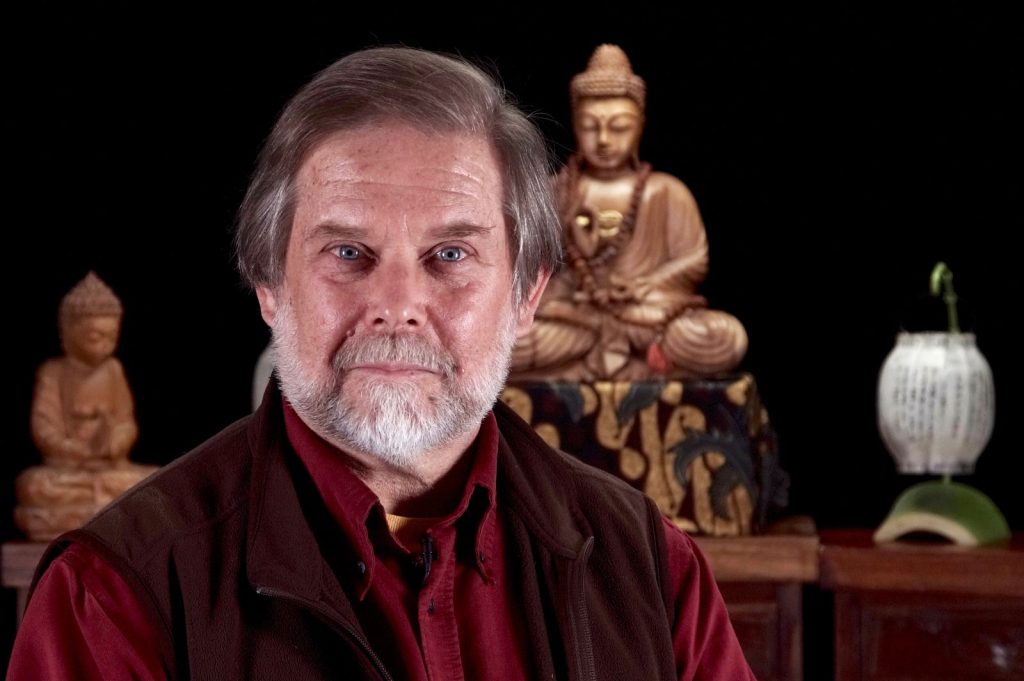
A Zen Buddhist teacher and author, David Loy is a board member of Ecological Buddhism. He co-edited the book A Buddhist Response to the Climate Emergency (2009).
David Loy has been a friend and TFF Associate for decades and you will find much more of his thinking on his personal homepage.

Share

Leave a Reply

Your email address will not be published. Required fields are marked *

Related Posts

Lena Petrova of “World Affairs In Context” with more than half a million subscribers on YouTube wanted to explore what a peace researcher like me has to say about, among other things, the First and the Second Cold War and why eethics has disappeared from politics. I am particularly happy about this conversation that also yielded an amazing number of very appreciative comments on YouTube. No doubt, people are longing for alternatives, including peace perspectives.
The MIMAC – Military-Industrial-Media-Academic Complex – drives the world’s rampant militarism and wars without end. Here is a short reflection of how it works against all interests of humanity. #5 deals with why there is no real enemy or threat images/analysis. It’s all ex-post constructions. And, btw, theTFF Peace Pulse is now on Rumble.
Jan Oberg, TFF director April 28, 2026 In this third TFF Peace Pulse, I make the important distinction between the violence and the conflict that violence is a symptom of. If you want peace, focus on the underlying conflict because that is the key to resolution, peacemaking, and a better future for the parties. The West is obsessed with violence, just look around you – and 90+ per cent of the public debate is about military issues and other violence – totally wasted for peace. These Peace Pulses will only be published here a few times. You will also not find them on YouTube and Vimeo because both platforms have blocked TFF and me; you know, peace is dangerous these days. Most TFF’s videos since 2007 are now on Rumble.

Recent Articles

Jan Oberg May 15, 2026 Go to this Fox News page and scroll the whole way down: President Donald Trump tells the world that his meeting with President Xi Jinping yielded a lot of very concrete political and economic results – of course, only where the Chinese side, according to him, agreed with him. He does not mention the Taiwan issue, but Secretary of State, Marco Rubio, says that it did not feature prominently in their talks and that the US policy on Taiwan has not changed. Then go to China Daily – or Global Times – and you will see that for the Chinese it is framework, principles, structure of cooperation etc. that matters – all embedded in the overall idea of “constructive bilateral relationship of strategic stability.” Nowhere is any concrete agreement or deal – all that Trump refers to – mentioned. At the general level, this gives you insights into the very different social...
Lena Petrova of “World Affairs In Context” with more than half a million subscribers on YouTube wanted to explore what a peace researcher like me has to say about, among other things, the First and the Second Cold War and why eethics has disappeared from politics. I am particularly happy about this conversation that also yielded an amazing number of very appreciative comments on YouTube. No doubt, people are longing for alternatives, including peace perspectives.
The MIMAC – Military-Industrial-Media-Academic Complex – drives the world’s rampant militarism and wars without end. Here is a short reflection of how it works against all interests of humanity. #5 deals with why there is no real enemy or threat images/analysis. It’s all ex-post constructions. And, btw, theTFF Peace Pulse is now on Rumble.

TFF on Substack

Discover more from TFF Transnational Foundation & Jan Oberg.

Most Popular

Jan Oberg May 15, 2026 Go to this Fox News page and scroll the whole way down: President Donald Trump tells the world that his meeting with President Xi Jinping yielded a lot of very concrete political and economic results – of course, only where the Chinese side, according to him, agreed with him. He does not mention the Taiwan issue, but Secretary of State, Marco Rubio, says that it did not feature prominently in their talks and that the US policy on Taiwan has not changed. Then go to China Daily – or Global Times – and you will see that for the Chinese it is framework, principles, structure of cooperation etc. that matters – all embedded in the overall idea of “constructive bilateral relationship of strategic stability.” Nowhere is any concrete agreement or deal – all that Trump refers to – mentioned. At the general level, this gives you insights into the very different social...
Lena Petrova of “World Affairs In Context” with more than half a million subscribers on YouTube wanted to explore what a peace researcher like me has to say about, among other things, the First and the Second Cold War and why eethics has disappeared from politics. I am particularly happy about this conversation that also yielded an amazing number of very appreciative comments on YouTube. No doubt, people are longing for alternatives, including peace perspectives.
The MIMAC – Military-Industrial-Media-Academic Complex – drives the world’s rampant militarism and wars without end. Here is a short reflection of how it works against all interests of humanity. #5 deals with why there is no real enemy or threat images/analysis. It’s all ex-post constructions. And, btw, theTFF Peace Pulse is now on Rumble.
Read More
Screenshot-2026-05-15-103534
Jan Oberg May 15, 2026 Go to this Fox News page and scroll the whole way down: President Donald Trump tells the world that his meeting with President Xi Jinping yielded a lot of very concrete political and economic results – of course, only where the Chinese side, according to him, agreed with him. He does not mention the Taiwan issue, but Secretary of State, Marco Rubio, says that it did not feature prominently in their talks and that the US policy on Taiwan has not changed. Then go to China Daily – or Global Times – and you will see that for the Chinese it is framework, principles, structure of cooperation etc. that matters – all embedded in the overall idea of “constructive bilateral relationship of strategic stability.” Nowhere is any concrete agreement or deal – all that Trump refers to – mentioned. At the general level, this gives you insights into the very different social...
Screenshot-2026-05-12-104023
Lena Petrova of “World Affairs In Context” with more than half a million subscribers on YouTube wanted to explore what a peace researcher like me has to say about, among other things, the First and the Second Cold War and why eethics has disappeared from politics. I am particularly happy about this conversation that also yielded an amazing number of very appreciative comments on YouTube. No doubt, people are longing for alternatives, including peace perspectives.
Screenshot-2026-04-13-154551 (2)
The MIMAC – Military-Industrial-Media-Academic Complex – drives the world’s rampant militarism and wars without end. Here is a short reflection of how it works against all interests of humanity. #5 deals with why there is no real enemy or threat images/analysis. It’s all ex-post constructions. And, btw, theTFF Peace Pulse is now on Rumble.
Screenshot-2026-04-13-154551 (1)
Jan Oberg, TFF director April 28, 2026 In this third TFF Peace Pulse, I make the important distinction between the violence and the conflict that violence is a symptom of. If you want peace, focus on the underlying conflict because that is the key to resolution, peacemaking, and a better future for the parties. The West is obsessed with violence, just look around you – and 90+ per cent of the public debate is about military issues and other violence – totally wasted for peace. These Peace Pulses will only be published here a few times. You will also not find them on YouTube and Vimeo because both platforms have blocked TFF and me; you know, peace is dangerous these days. Most TFF’s videos since 2007 are now on Rumble.
Screenshot-2026-04-13-154551
In contrast to most, we’ll bring alternatives, solutions, hope and strategies for a better future. Times are dangerous, yes, but that only intensifies the need for constructive thinking and action! Jan Oberg, TFF director April 13, 2026 The new TFF Peace Pulse uses video messages in a new way: Max 3-5-minute-long comments, ideas or perhaps mini-lectures, all about peace – positive peace. We launch them today on April 13, 2026 with a carefully crafted visual aesthetic fitting the content. We hope to publish them regularly from now on. We launch Peace Pulse (PP) – for a number of reasons. The world is in chaos, and there are countless reasons to feel concerned, frustrated, even angry. The atmosphere is saturated with doom and gloom, with negative energy and rear‑mirror thinking, while vision, imagination, alternatives, strategies and genuine future‑mindedness remain in short supply. And without them, we simply can’t save the world. Looking at problems from a hundred angles will...
IMG_5165 (1)
PART II — Publishing Peace in a System That Prioritises Militarism Jan Oberg, TFF director April 10, 2026 How TFF Maintains a Daily Voice in a Digital World Built for Noise This article is part of the series “TFF at 40″ and it invites you to learn about Four Decades of Publishing Peace. It takes a look at how a small, people‑financed peace foundation has communicated across four generations of technology — from wax stencils and fax machines to mass email and Substack — and why TFF continues to publish every single day in a system that rewards noise, conflict, and militarism. ◆ What it means to publish peace every single day in a digital system built for 24/7 news and other noise, confrontation, and militarism. How TFF’s independence, continuity, and global readership defy algorithms, donor cycles, and Western media censorhip — and why the Majority World keeps listening. When the...

