War on Iraq: Not the president's decision

It took the public expression of doubts by Brent Scowcroft, a former national security adviser to presidents Gerald Ford and George Bush, to initiate finally a national debate on the merits of preemptive war against Iraq. Before Scowcroft spoke out it was nearly impossible to be heard above the drumbeats of war being orchestrated from the White House. Scowcroft was careful to couch his criticism in ultra-pragmatic terms relating to the dangers of undertaking such a war at this time and its likely diversion of energy from what he rightly depicts as America’s number one security priority, the continuing challenge posed by al-Qaida. Persuasively, also, Scowcroft downplays the regional threat posed by Saddam Hussein, and is highly skeptical about Iraq’s purported links to Sept. 11 or to terrorism generally. Scowcroft relies for political closure on an American call for a renewal of inspections, this time on an unrestricted (anytime, anywhere, no permission required) basis. If refused by Iraq, then Scowcroft appears to accept the logic of preemptive war.

This diminishes greatly the overall force of his argument, and provides the Bush planners with a way to shore up their support, especially in Washington-namely, by insisting on unrestricted inspection arrangements with such a wide ranging intrusion on Iraqi sovereign rights that Baghdad would have no choice but to refuse.

Scowcroft’s doubts have been echoed by other Republican stalwarts, including House Majority Leader Dick Armey.

Most unexpectedly, it is from Armey that we hear for the first time objections to launching a preemptive war against Iraq based on international law. The highly conservative Congressional leader asserted that an attack on Iraq would violate international law and would not be consistent with what we have been as a nation or what we should be as a nation.

This is such an obvious reality that it is an extraordinary commentary on the passivity of the Democratic Party that such a principled concern about Bush’s war talk had to wait upon the words of a leading Republican lawmaker.

Finally, with such rumblings coming from prominent and conservative members of his own party, President Bush could no longer turn a blind eye to doubts and criticisms directed at his plans for preemptive war against Iraq.

He even acknowledged that skepticism was coming from some very intelligent people, promised to consult, and called these dissenting voices part of a healthy debate.

Unilateralist ways

But in the same breath, the president resumed his unconstitutional and unilateralist ways by saying, “But America needs to know, I’ll be making up my mind based upon the latest intelligence and how best to protect our own country plus our friends and allies.”

Doesn’t Bush realize that the U.S. Constitution does not vest war-making powers in the office of the presidency? Doesn’t he realize the founders deliberately, with the greatest care, placed a decision of such gravity in the hands of the Congress?

And even if this condition were to be satisfied, formidable legal obstacles to war would still remain. It would still be constitutionally necessary for the United States to show respect for validly ratified international treaties, including the United Nations Charter.

It does not seem to us possible, given these considerations, to launch a preemptive war against Iraq without violating both the U.S. Constitution and international law.

Although we welcome and agree with the pragmatists who warn about the dire consequences that would likely follow upon initiating war against Iraq, we side with the principled opponents of war against Iraq, relying not only on international law, including the U.N. Charter, but also on the moral and religious guidelines contained in the just war doctrine.

Guilty of aggressive war

From these perspectives, under present conditions, it is clear that if the United States goes ahead and wages war against Iraq it will be guilty of what international lawyers call aggressive war, which was one of the principal charges leveled against surviving Axis leaders at the Nuremberg and Tokyo war crimes tribunals after World War II.

The main argument put forward by the Bush administration for the war is that the United States cannot stand aside while a brutal and expansionist Iraqi regime is acquiring nuclear and other weaponry of mass destruction.

Iraq, their argument continues, would then be in a position to transfer such weaponry to al-Qaida and other terrorist groups, as well as threaten Israel and the Gulf countries, which hold a large share of the world’s oil reserves.

As Scowcroft and others have pointed out, however, Saddam Hussein, for all his evils, has not had a record of cooperating with terrorist groups, much less al-Qaida.

It would be clear to Saddam Hussein that any provocative action would lead to the annihilation of Iraq as well as his personal destruction. Baghdad has been deterred over the course of the last decade, and there is every sound reason to think that deterrence and containment will work in the years ahead.

Unlike Iraq, al-Qaida cannot be deterred by threats of retaliatory force since it has no territorial base. The U.S. government should give its highest priority to guarding against al-Qaida gaining possession of weapons of mass destruction. Unfortunately, in this regard, the United States is failing to provide adequate support to assuring the control of the Russian nuclear arsenal.

Going to war against Iraq would produce the one set of conditions in which Saddam Hussein, faced with certain death and the destruction of his country, would have the greatest incentive to strike back with any means at his disposal. These would include the arming of al-Qaida or the launching of such weapons as Saddam Hussein possesses against U.S. troops and Israel.

Several constructive alternatives to war exist that are both consistent with international law and strongly preferred by America’s most trusted allies, and at the same time address those security concerns about future Iraqi behavior that seem valid.

These include the resumption of responsible weapons inspections under U.N. auspices combined with multilateral diplomacy and a continued reliance on non-nuclear deterrence. By responsible weapons inspections we mean those that an international inspectorate deems necessary to achieve confidence that weapons of mass destruction are not possessed or being developed by Iraq.

This approach is very different from the Scowcroft “anytime, anywhere” image of an acceptable inspection capability, which would almost certainly be rejected by Iraq, thereby reopening the door to the initiation of war that would still be unwarranted, imprudent and illegal.

In contrast, the resumption of responsible inspections could also lead to an improving diplomatic atmosphere, especially if coupled with ending the sanctions that have had such a cruel impact on Iraqi civilian society for more than a decade and the ending of frequent U.S. and British bombing missions in the no-fly zones in northern and southern Iraq. Diplomacy and international inspections successfully addressed comparable concerns about North Korea’s pursuit of a nuclear weapons capability.

Principle and prudence

It is time for the public debate on Iraq policy to raise these issues of principle and prudence, and to recognize that American leadership in the world will be much more respected, and in the end effective, if it does everything in its power to avoid war, and to strengthen the role of international law, including its insistence that international disputes be settled by peaceful means.

It has never been more crucial for American citizens and our friends abroad to raise their voices for peace and to resist the counsels of war.

* * *

This comment was originally contributed to the IHT/Asahi Shimbun.(IHT/Asahi: September 14, 2002)

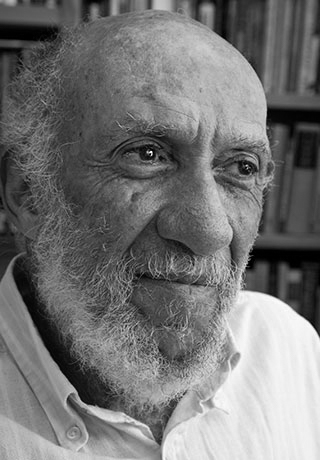
Professor Falk became an adviser to TFF when it was established in 1985.

Share

Leave a Reply

Your email address will not be published. Required fields are marked *

Related Posts

Peace is promoted by constructive proposals and dialogue Four preceding PressInfos have expressed concern over — and criticised — the ongoing, militarisation of the EU. Some will say: but there are no alternatives. We believe that there are always alternatives, that democracies are characterised by alternatives and choice, and that openly discussed alternatives will improve the quality and legitimacy of society’s decision–making. In addition, it is an intellectual and moral challenge to not only criticise but also be constructive. If we only tell people that we think they are wrong, they are not likely to listen. However, if we say: what are your views on this set of ideas and steps? — we may sometimes engage them in dialogue and sow a seed. Most people in power circles live their daily lives in in a time frame and a social space where certain ideas, viewpoints and concepts are just not...
Photos © TFF 2000 Read PressInfo 90 “Lift the Sanctions and Bring More Aid to Yugoslavia” See Pictures from Belgrade © TFF 2000 Please reprint, copy, archive, quote or re-post this item, but please retain the source.
Av FRANK SØHOLM GREVIL 16 augusti 2004  Vi er nu nået til tredje akt i det absurde teaterstykke, der i analogi med de store skueprocesser i Moskva 1936-38 er blevet døbt ‘Grevil-sagen’. Første akt bestod i min anonyme fremlæggelse af egenhændigt nedklassificerede rapporter i Berlingske Tidende i februar og marts. Andet akt udgjordes af min fremtræden med navn og billede i Information i april samt den efterfølgende mediestorm, som uden min direkte medvirken kostede en forsvarsminister taburetten samt en sigtelse for brud på tavshedspligten. Tredje akt bliver en retssag, hvor jeg står tiltalt for at have overtrådt straffelovens bestemmelser om uberettiget videregivelse eller udnyttelse af fortrolige oplysninger. Statsanklageren har ovenikøbet valgt at påberåbe sig særligt skærpende omstændigheder. Da jeg aldrig har modtaget betaling for at stille rapporterne til rådighed eller lade mig interviewe, må det skærpende bestå i, at “videregivelsen eller udnyttelsen er sket under sådanne omstændigheder, at det påfører...

Recent Articles

Jan Oberg May 15, 2026 Go to this Fox News page and scroll the whole way down: President Donald Trump tells the world that his meeting with President Xi Jinping yielded a lot of very concrete political and economic results – of course, only where the Chinese side, according to him, agreed with him. He does not mention the Taiwan issue, but Secretary of State, Marco Rubio, says that it did not feature prominently in their talks and that the US policy on Taiwan has not changed. Then go to China Daily – or Global Times – and you will see that for the Chinese it is framework, principles, structure of cooperation etc. that matters – all embedded in the overall idea of “constructive bilateral relationship of strategic stability.” Nowhere is any concrete agreement or deal – all that Trump refers to – mentioned. At the general level, this gives you insights into the very different social...
Lena Petrova of “World Affairs In Context” with more than half a million subscribers on YouTube wanted to explore what a peace researcher like me has to say about, among other things, the First and the Second Cold War and why eethics has disappeared from politics. I am particularly happy about this conversation that also yielded an amazing number of very appreciative comments on YouTube. No doubt, people are longing for alternatives, including peace perspectives.
The MIMAC – Military-Industrial-Media-Academic Complex – drives the world’s rampant militarism and wars without end. Here is a short reflection of how it works against all interests of humanity. #5 deals with why there is no real enemy or threat images/analysis. It’s all ex-post constructions. And, btw, theTFF Peace Pulse is now on Rumble.

TFF on Substack

Discover more from TFF Transnational Foundation & Jan Oberg.

Most Popular

Jan Oberg May 15, 2026 Go to this Fox News page and scroll the whole way down: President Donald Trump tells the world that his meeting with President Xi Jinping yielded a lot of very concrete political and economic results – of course, only where the Chinese side, according to him, agreed with him. He does not mention the Taiwan issue, but Secretary of State, Marco Rubio, says that it did not feature prominently in their talks and that the US policy on Taiwan has not changed. Then go to China Daily – or Global Times – and you will see that for the Chinese it is framework, principles, structure of cooperation etc. that matters – all embedded in the overall idea of “constructive bilateral relationship of strategic stability.” Nowhere is any concrete agreement or deal – all that Trump refers to – mentioned. At the general level, this gives you insights into the very different social...
Lena Petrova of “World Affairs In Context” with more than half a million subscribers on YouTube wanted to explore what a peace researcher like me has to say about, among other things, the First and the Second Cold War and why eethics has disappeared from politics. I am particularly happy about this conversation that also yielded an amazing number of very appreciative comments on YouTube. No doubt, people are longing for alternatives, including peace perspectives.
The MIMAC – Military-Industrial-Media-Academic Complex – drives the world’s rampant militarism and wars without end. Here is a short reflection of how it works against all interests of humanity. #5 deals with why there is no real enemy or threat images/analysis. It’s all ex-post constructions. And, btw, theTFF Peace Pulse is now on Rumble.
Read More
Screenshot-2026-05-15-103534
Jan Oberg May 15, 2026 Go to this Fox News page and scroll the whole way down: President Donald Trump tells the world that his meeting with President Xi Jinping yielded a lot of very concrete political and economic results – of course, only where the Chinese side, according to him, agreed with him. He does not mention the Taiwan issue, but Secretary of State, Marco Rubio, says that it did not feature prominently in their talks and that the US policy on Taiwan has not changed. Then go to China Daily – or Global Times – and you will see that for the Chinese it is framework, principles, structure of cooperation etc. that matters – all embedded in the overall idea of “constructive bilateral relationship of strategic stability.” Nowhere is any concrete agreement or deal – all that Trump refers to – mentioned. At the general level, this gives you insights into the very different social...
Screenshot-2026-05-12-104023
Lena Petrova of “World Affairs In Context” with more than half a million subscribers on YouTube wanted to explore what a peace researcher like me has to say about, among other things, the First and the Second Cold War and why eethics has disappeared from politics. I am particularly happy about this conversation that also yielded an amazing number of very appreciative comments on YouTube. No doubt, people are longing for alternatives, including peace perspectives.
Screenshot-2026-04-13-154551 (2)
The MIMAC – Military-Industrial-Media-Academic Complex – drives the world’s rampant militarism and wars without end. Here is a short reflection of how it works against all interests of humanity. #5 deals with why there is no real enemy or threat images/analysis. It’s all ex-post constructions. And, btw, theTFF Peace Pulse is now on Rumble.
Screenshot-2026-04-13-154551 (1)
Jan Oberg, TFF director April 28, 2026 In this third TFF Peace Pulse, I make the important distinction between the violence and the conflict that violence is a symptom of. If you want peace, focus on the underlying conflict because that is the key to resolution, peacemaking, and a better future for the parties. The West is obsessed with violence, just look around you – and 90+ per cent of the public debate is about military issues and other violence – totally wasted for peace. These Peace Pulses will only be published here a few times. You will also not find them on YouTube and Vimeo because both platforms have blocked TFF and me; you know, peace is dangerous these days. Most TFF’s videos since 2007 are now on Rumble.
Screenshot-2026-04-13-154551
In contrast to most, we’ll bring alternatives, solutions, hope and strategies for a better future. Times are dangerous, yes, but that only intensifies the need for constructive thinking and action! Jan Oberg, TFF director April 13, 2026 The new TFF Peace Pulse uses video messages in a new way: Max 3-5-minute-long comments, ideas or perhaps mini-lectures, all about peace – positive peace. We launch them today on April 13, 2026 with a carefully crafted visual aesthetic fitting the content. We hope to publish them regularly from now on. We launch Peace Pulse (PP) – for a number of reasons. The world is in chaos, and there are countless reasons to feel concerned, frustrated, even angry. The atmosphere is saturated with doom and gloom, with negative energy and rear‑mirror thinking, while vision, imagination, alternatives, strategies and genuine future‑mindedness remain in short supply. And without them, we simply can’t save the world. Looking at problems from a hundred angles will...
IMG_5165 (1)
PART II — Publishing Peace in a System That Prioritises Militarism Jan Oberg, TFF director April 10, 2026 How TFF Maintains a Daily Voice in a Digital World Built for Noise This article is part of the series “TFF at 40″ and it invites you to learn about Four Decades of Publishing Peace. It takes a look at how a small, people‑financed peace foundation has communicated across four generations of technology — from wax stencils and fax machines to mass email and Substack — and why TFF continues to publish every single day in a system that rewards noise, conflict, and militarism. ◆ What it means to publish peace every single day in a digital system built for 24/7 news and other noise, confrontation, and militarism. How TFF’s independence, continuity, and global readership defy algorithms, donor cycles, and Western media censorhip — and why the Majority World keeps listening. When the...