Vijay Prashad: The World Does Not Want a Global NATO

Fuyuko Matsui, Japan, “Becoming Friends with All the Children of the World,” 2004.

Vijay Prashad

August 4, 2022

The fragility of Europe’s energy supply has once again been on display in recent months. Gas shipments through the Nord Stream 1 pipeline, which runs from Russia to Germany, were reduced to 40 per cent of capacity in June, a cut that Moscow said was due to delays in the servicing of a turbine by the German firm Siemens.

Shortly thereafter, on July 11, the pipeline was taken offline for 10 days for annual routine maintenance. Despite receiving assurances from Moscow that the supply would resume as scheduled, European leaders expressed fear that the shutdown would continue indefinitely in retaliation for sanctions imposed on Russia following the invasion of Ukraine.

Originally published at Consortium News on July 29, 2022

On July 21, the flow of Russian gas into Europe resumed. Klaus Müller, the head Germany’s energy regulator, said that gas flows through Nord Stream 1 were below pre-maintenance levels during the first few hours of resumption, though they have now returned to 40 per cent capacity.

European anxieties related to energy supply are linked to fears amongst the region’s governments of further instability in the Eurozone.

On the same day that Nord Stream 1 resumed operations, Italy’s Mario Draghi resigned as prime minister, the latest in a dramatic series of resignations by heads of government in Bulgaria, Estonia and the United Kingdom. Resistance from Europe to a peace agreement with Russia comes alongside a recognition that trade with Russia is inevitable.

At No Cold War, an international platform seeking to bring sanity to international relations, we have been closely observing the shifting tenor of the war in Ukraine and the U.S.-driven pressure campaign against China.

We have published three previous briefings from this platform in our newsletters; below, you will find briefing No. 4The World Does Not Want a Global NATO, which details the emerging clarity in the Global South regarding the U.S.-European attempt to drive a belligerent agenda around the world.

This new clarity relates not only to the militarisation of the planet, but also to the deepening conflicts in trade and development, as evidenced by the G7’s new initiative, the Partnership for Global Infrastructure and Development, which clearly targets China’s Belt and Road Initiative.

In June, member states of the North Atlantic Treaty Organisation (NATO) gathered in Madrid for their annual summit. At the meeting, NATO adopted a new Strategic Concept, which had last been updated in 2010.

In it, NATO names Russia as its “most significant and direct threat” and singles out China as a “challenge [to] our interests.” In the words of NATO Secretary General Jens Stoltenberg, this guiding document represents a “fundamental shift” for the military alliance, its “biggest overhaul… since the Cold War.”

Monroe Doctrine for the 21st Century?

Although NATO purports to be a “defensive” alliance, this claim is contradicted by its destructive legacy – such as in Serbia (1999), Afghanistan (2001) and Libya (2011) – and its ever-expanding global footprint.

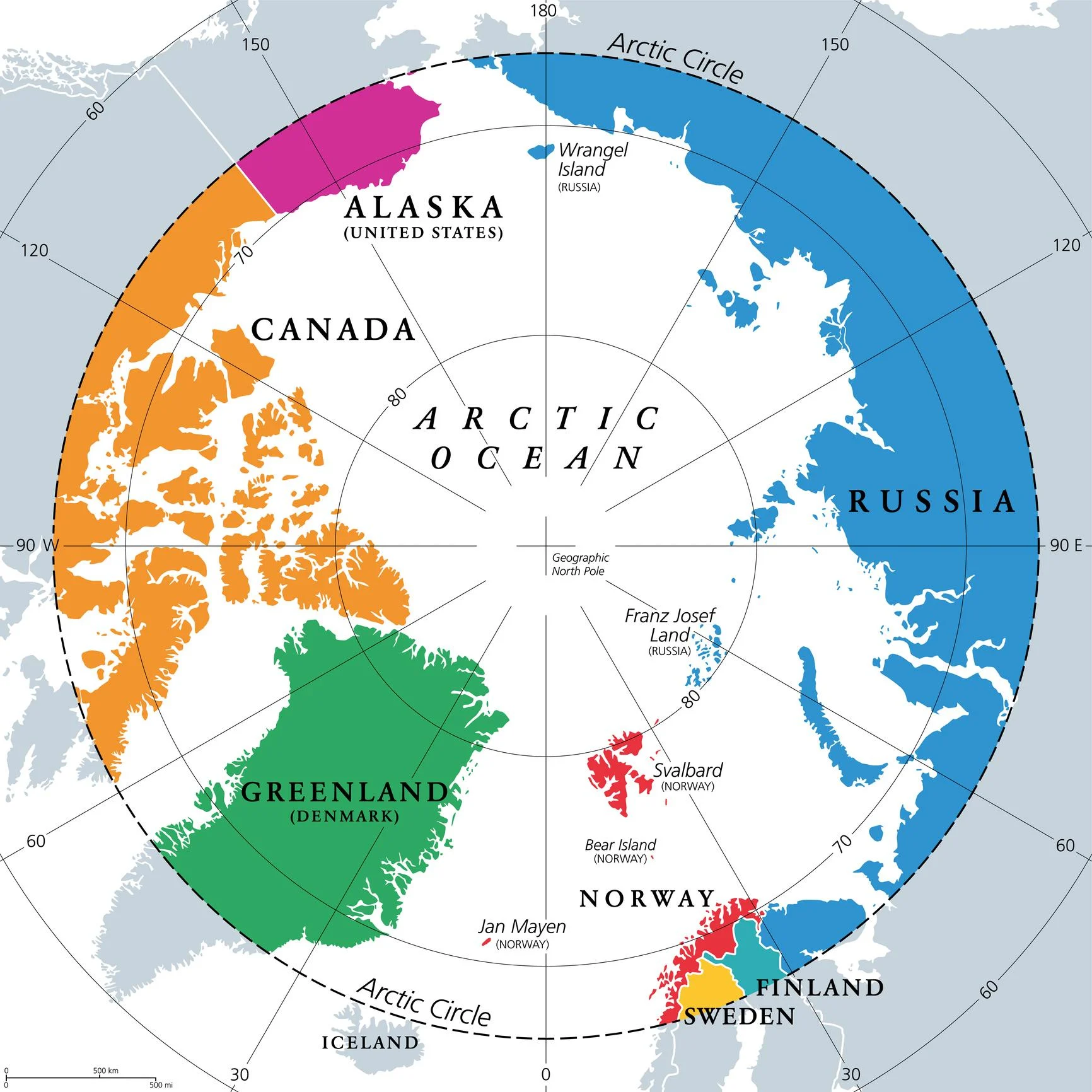
At the summit, NATO made it clear that it intends to continue its global expansion to confront Russia and China. Seemingly oblivious to the immense human suffering produced by the war in Ukraine, NATO declared that its “enlargement has been a historic success… and contributed to peace and stability in the Euro-Atlantic area,” and extended official membership invitations to Finland and Sweden.

However, NATO’s sights extend far beyond the “Euro-Atlantic” to the Global South. Seeking to gain a foothold in Asia, NATO welcomed Japan, South Korea, Australia and New Zealand as summit participants for the first time and stated that “the Indo-Pacific is important for NATO.”

On top of this, echoing the Monroe Doctrine (1823) of two hundred years ago, the Strategic Concept named “Africa and the Middle East” as “NATO’s southern neighbourhood,” and Stoltenberg made an ominous reference to “Russia and China’s increasing influence in [the Alliance’s] southern neighbourhood” as presenting a “challenge.”

Pavel Pepperstein, Russia, “Grandfather and Grandmother Are Long Gone,” 2013.

Most of the World Seeks Peace

Although NATO’s member states may believe that they possess global authority, the overwhelming majority of the world does not. The international response to the war in Ukraine indicates that a stark divide exists between the United States and its closest allies on the one hand and the Global South on the other.

Governments representing 6.7 billion people – 85 per cent of the world’s population – have refused to follow sanctions imposed by the U.S. and its allies against Russia, while countries representing only 15 per cent of the world’s population have followed these measures. According to Reuters, the only non-Western governments to have enacted sanctions on Russia are Japan, South Korea, the Bahamas and Taiwan – all of which host U.S. military bases or personnel.

There is even less support for the push to close airspace to Russian planes spearheaded by the U.S. and European Union. Governments representing only 12 per cent of the world’s population have adopted this policy, while 88 per cent have not.

U.S.-led efforts to politically isolate Russia on the international stage have been unsuccessful. In March, the U.N. General Assembly voted on a nonbinding resolution to condemn Russia’s invasion of Ukraine: 141 countries voted in favour, five countries voted against, 35 countries abstained and 12 countries were absent. However, this tally does not tell the full story.

The countries which either voted against the resolution, abstained, or were absent represent 59 per cent of the world’s population. Following this, the Biden administration’s call for Russia to be excluded from the G20 summit in Indonesia was ignored.

Tadesse Mesfin, Ethiopia, “Pillars of Life: Harmony,” 2018.

Meanwhile, despite intense backing from NATO, efforts to win support for Ukraine in the Global South have been a complete failure. On June 20, after several requests, Ukrainian President Volodymyr Zelensky addressed the African Union; only two heads of state of the continental organisation’s 55 members attended the meeting. Shortly thereafter, Zelensky’s request to address the Latin American trade bloc, Mercosur, was rejected.

It is clear that NATO’s claim to be “a bulwark of the rules-based international order” is not a view which is shared by most of the world. Support for the military alliance’s policies is almost entirely confined to its member countries and a handful of allies which together constitute a small minority of the world’s population.

Most of the world’s population rejects NATO’s policies and global aspirations and does not wish to divide the international community into outdated Cold War blocs.

BahadIr Gokay, Turkey, “Evvel” or “Before,” 2013.

In 1955, 10 years after the U.S. dropped an atom bomb on Hiroshima (Japan), the Turkish poet Nâzim Hikmet wrote a poem in the voice of a 7-year-old girl who died in that terrible act. The poem was later translated into Japanese by Nobuyuki Nakamoto as “Shinda Onnanoko” (“Dead Girl”) and is frequently sung in commemorations of that atrocity.

Given the harshness of war and the escalation of conflict, it is worthwhile to reflect once more on Hikmet’s beautiful, haunting lyrics:

I come and stand at every door
But no one hears my silent tread.
I knock and yet remain unseen
For I am dead, for I am dead.

I’m only seven, although I died
In Hiroshima long ago.
I’m seven now as I was then.
When children die, they do not grow.

My hair was scorched by swirling flame.
My eyes grew dim; my eyes grew blind.
Death came and turned my bones to dust
And that was scattered by the wind.

I need no fruit, I need no rice.
I need no sweets, nor even bread.
I ask for nothing for myself
For I am dead, for I am dead.

All that I ask is that for peace
You fight today, you fight today
So that the children of the world
May live and grow and laugh and play.

Originally published at Consortium News on July 29, 2022

About the author

Vijay Prashad

Vijay Prashad is an Indian historian, editor and journalist. He is a writing fellow and chief correspondent at Globetrotter. He is an editor of LeftWord Books and the director of Tricontinental: Institute for Social Research. He is a senior non-resident fellow at Chongyang Institute for Financial Studies, Renmin University of China. He has written more than 20 books, including The Darker Nations and The Poorer Nations.  His latest books are Struggle Makes Us Human: Learning from Movements for Socialism and, with Noam Chomsky,  The Withdrawal: Iraq, Libya, Afghanistan, and the Fragility of US Power.

This article is from Tricontinental: Institute for Social Research.

Please help TFF remain truly independent by contributing if you benefited from this article
[paypal-donation]

Share

Leave a Reply

Your email address will not be published. Required fields are marked *

Related Posts

PART 2 — Diplomacy, Law and Nonviolent Power By Jan ObergTFF co-founder and director January 26, 2026 This is the second of four TFF-created idea portfolios designed to curb the global reach of the United States and, in both the short and long term, help catalyse a worldwide nonviolent resistance to what many observers describe as the Trump administration’s uniquely confrontational, destructive and world-threatening policies. These portfolios outline what governments and citizens across the world can do through dynamic diplomacy, creative initiatives, and strictly nonviolent means. They are typical TFF works in that we do not only tell what the problem is and how bad it will go – as 90+% of all commentators, experts and scholars do – we tell what we think can be done, inviting you to think of what you think you can do. It seems painfully clear to me that the current political dynamics in Washington increasingly resemble the most dangerous...
Drones over Nordic airports. No damage. No trace. No answers. Most assume Russia—but what if that’s not so? Why is there so much we are not told? This article explores the strategic ambiguity behind recent drone incursions and asks: Who else might benefit from sending drones into NATO airspace? From Ukraine’s surprising drone supremacy to Russia’s possible signalling, the silence itself may be the loudest message. These are the kinds of questions decent, intelligent investigative journalists and commentators could easily research. Why don’t they? Did you, dear reader, know or think of this? That the most powerful weapon in today’s conflicts might be the one that leaves no trace – and no answers. Just enough fear to justify the next move? Recently, drones have repeatedly appeared over Nordic airports and near some military facilities. They cause no damage – for which reason the designation “hybrid attack” is misleading but serves a purpose. These...
Launched on November 17, 2024Updated with new materials regularly TFF Board members Thore Vest. Everywhere, the delegation was met with a sincere wish to develop knowledge, dialogue, cooperative projects, and initiatives based on citizens’ diplomacy – in general, but with the West in particular. For more, see “Report from the Nordic delegation to China’s Xinjiang Province, September 7-15, 2024.” While the delegation was in Xinjiang, various ideas were already being discussed from the local to the top level, i.e., with the governor and party leaders of Xinjiang. The two TFF Associates suggested that TFF set up a special section – in addition to its “China and Silk” – where various quality materials about Xinjiang would regularly be published to promote public education about Xinjiang, particularly its contemporary development – worldwide but in the West in particular. This is now a reality – as can be seen below – but it...

Recent Articles

Jan Oberg May 15, 2026 Go to this Fox News page and scroll the whole way down: President Donald Trump tells the world that his meeting with President Xi Jinping yielded a lot of very concrete political and economic results – of course, only where the Chinese side, according to him, agreed with him. He does not mention the Taiwan issue, but Secretary of State, Marco Rubio, says that it did not feature prominently in their talks and that the US policy on Taiwan has not changed. Then go to China Daily – or Global Times – and you will see that for the Chinese it is framework, principles, structure of cooperation etc. that matters – all embedded in the overall idea of “constructive bilateral relationship of strategic stability.” Nowhere is any concrete agreement or deal – all that Trump refers to – mentioned. At the general level, this gives you insights into the very different social...
Lena Petrova of “World Affairs In Context” with more than half a million subscribers on YouTube wanted to explore what a peace researcher like me has to say about, among other things, the First and the Second Cold War and why eethics has disappeared from politics. I am particularly happy about this conversation that also yielded an amazing number of very appreciative comments on YouTube. No doubt, people are longing for alternatives, including peace perspectives.
The MIMAC – Military-Industrial-Media-Academic Complex – drives the world’s rampant militarism and wars without end. Here is a short reflection of how it works against all interests of humanity. #5 deals with why there is no real enemy or threat images/analysis. It’s all ex-post constructions. And, btw, theTFF Peace Pulse is now on Rumble.

TFF on Substack

Discover more from TFF Transnational Foundation & Jan Oberg.

Most Popular

Jan Oberg May 15, 2026 Go to this Fox News page and scroll the whole way down: President Donald Trump tells the world that his meeting with President Xi Jinping yielded a lot of very concrete political and economic results – of course, only where the Chinese side, according to him, agreed with him. He does not mention the Taiwan issue, but Secretary of State, Marco Rubio, says that it did not feature prominently in their talks and that the US policy on Taiwan has not changed. Then go to China Daily – or Global Times – and you will see that for the Chinese it is framework, principles, structure of cooperation etc. that matters – all embedded in the overall idea of “constructive bilateral relationship of strategic stability.” Nowhere is any concrete agreement or deal – all that Trump refers to – mentioned. At the general level, this gives you insights into the very different social...
Lena Petrova of “World Affairs In Context” with more than half a million subscribers on YouTube wanted to explore what a peace researcher like me has to say about, among other things, the First and the Second Cold War and why eethics has disappeared from politics. I am particularly happy about this conversation that also yielded an amazing number of very appreciative comments on YouTube. No doubt, people are longing for alternatives, including peace perspectives.
The MIMAC – Military-Industrial-Media-Academic Complex – drives the world’s rampant militarism and wars without end. Here is a short reflection of how it works against all interests of humanity. #5 deals with why there is no real enemy or threat images/analysis. It’s all ex-post constructions. And, btw, theTFF Peace Pulse is now on Rumble.
Read More
Screenshot-2026-05-15-103534
Jan Oberg May 15, 2026 Go to this Fox News page and scroll the whole way down: President Donald Trump tells the world that his meeting with President Xi Jinping yielded a lot of very concrete political and economic results – of course, only where the Chinese side, according to him, agreed with him. He does not mention the Taiwan issue, but Secretary of State, Marco Rubio, says that it did not feature prominently in their talks and that the US policy on Taiwan has not changed. Then go to China Daily – or Global Times – and you will see that for the Chinese it is framework, principles, structure of cooperation etc. that matters – all embedded in the overall idea of “constructive bilateral relationship of strategic stability.” Nowhere is any concrete agreement or deal – all that Trump refers to – mentioned. At the general level, this gives you insights into the very different social...
Screenshot-2026-05-12-104023
Lena Petrova of “World Affairs In Context” with more than half a million subscribers on YouTube wanted to explore what a peace researcher like me has to say about, among other things, the First and the Second Cold War and why eethics has disappeared from politics. I am particularly happy about this conversation that also yielded an amazing number of very appreciative comments on YouTube. No doubt, people are longing for alternatives, including peace perspectives.
Screenshot-2026-04-13-154551 (2)
The MIMAC – Military-Industrial-Media-Academic Complex – drives the world’s rampant militarism and wars without end. Here is a short reflection of how it works against all interests of humanity. #5 deals with why there is no real enemy or threat images/analysis. It’s all ex-post constructions. And, btw, theTFF Peace Pulse is now on Rumble.
Screenshot-2026-04-13-154551 (1)
Jan Oberg, TFF director April 28, 2026 In this third TFF Peace Pulse, I make the important distinction between the violence and the conflict that violence is a symptom of. If you want peace, focus on the underlying conflict because that is the key to resolution, peacemaking, and a better future for the parties. The West is obsessed with violence, just look around you – and 90+ per cent of the public debate is about military issues and other violence – totally wasted for peace. These Peace Pulses will only be published here a few times. You will also not find them on YouTube and Vimeo because both platforms have blocked TFF and me; you know, peace is dangerous these days. Most TFF’s videos since 2007 are now on Rumble.
Screenshot-2026-04-13-154551
In contrast to most, we’ll bring alternatives, solutions, hope and strategies for a better future. Times are dangerous, yes, but that only intensifies the need for constructive thinking and action! Jan Oberg, TFF director April 13, 2026 The new TFF Peace Pulse uses video messages in a new way: Max 3-5-minute-long comments, ideas or perhaps mini-lectures, all about peace – positive peace. We launch them today on April 13, 2026 with a carefully crafted visual aesthetic fitting the content. We hope to publish them regularly from now on. We launch Peace Pulse (PP) – for a number of reasons. The world is in chaos, and there are countless reasons to feel concerned, frustrated, even angry. The atmosphere is saturated with doom and gloom, with negative energy and rear‑mirror thinking, while vision, imagination, alternatives, strategies and genuine future‑mindedness remain in short supply. And without them, we simply can’t save the world. Looking at problems from a hundred angles will...
IMG_5165 (1)
PART II — Publishing Peace in a System That Prioritises Militarism Jan Oberg, TFF director April 10, 2026 How TFF Maintains a Daily Voice in a Digital World Built for Noise This article is part of the series “TFF at 40″ and it invites you to learn about Four Decades of Publishing Peace. It takes a look at how a small, people‑financed peace foundation has communicated across four generations of technology — from wax stencils and fax machines to mass email and Substack — and why TFF continues to publish every single day in a system that rewards noise, conflict, and militarism. ◆ What it means to publish peace every single day in a digital system built for 24/7 news and other noise, confrontation, and militarism. How TFF’s independence, continuity, and global readership defy algorithms, donor cycles, and Western media censorhip — and why the Majority World keeps listening. When the...