American Sniper was released on Christmas Day, 2014. It is a movie version of Chris Kyle’s memoir, American Sniper: The Autobiography of the Most Lethal Sniper in U.S. Military History, with 255 kills, 160 officially confirmed by the Department of Defense. The movie set in Iraq is directed by Clint Eastwood, Bradley Cooper plays the part of Chris Kyle, and Sienna Miller is brilliantly cast in the role of his wife, Taya.

American Sniper is a fictionalized movie version of the war stories associated with Chris Kyle’s experience as a Navy SEAL in the Iraq War as recounted in his best-selling memoir. The film can be viewed from a variety of angles, including even as one more indictment of war as hell.

A second line of interpretation focuses on the intense psychological tensions experienced by this single American soldier and his comrades caught up in the horrors of urban warfare in Iraq. A connected theme are the adverse impacts of Kyle’s war service on his family that is made to cope with the complex and contradictory traumas of his absence (confronting his potential death on a distant battlefield) and his alienated presence whenever he returns, a scarred individual who longs to go back to Iraq to resume his assigned role as ‘legendary sniper.’

Multiple scenes in the movie portray Kyle as haunted by his service. In his book, Kyle consistently treats his victims as “savage, despicable.” At one point he makes such statements as “I only wish I had killed more,” “I loved what I did. I still do. If circumstances were different – if my family didn’t need me – I’d be back in a heartbeat. I’m not lying or exaggerating to say it was fun. I had the time of my life being a SEAL.”

The film avoids giving emphasis such to extreme statements, but it does portray this sniper as convinced he was cut out for the combat role given to him, and that he seems more alive and content when active in the killing fields of Iraq than when back home.

Kyle’s own violent death is also metaphorically significant – actual events disclosed by text in the film but not depicted, Kyle was killed by an American soldier wounded in Iraq whom he had helped at a nearby veterans’ hospital where he worked at the advice of a psychiatrist to overcome his own version of PTSD. Such an ending of his life conveys the irony that for Kyle the more dangerous battlefield turned out to be in the neighborhood of his family residence, his assailant not the evil ‘savages’ he mowed down in Iraq but a fellow American veteran who had experienced those very same encounters.

Kyle had survived four tours of duty as a sniper in the midst of the most bloody military operations in Iraq, but these survival skills proved irrelevant to the minefields of innocence that now made the American countryside a dangerous war zone.

From box office success and right-wing praise, American Sniper, is obviously most commonly regarded as a celebration of Chris Kyle as war hero who deserves the thankful praise of the country. From this outlook, Kyle killed enemies of America at great risk and cost to himself, and spared the country a repetition of the 9/11 attacks. It is this self-serving and essentially distorted vindication of the Iraq War that the film presupposes, even to the extent of having Kyle watch on TV as the plane strikes the World Trade Center, with a quick scene shift in the movie to waging war against those presupposed to be the foot soldiers of Al Qaeda in Iraq.

Embedded in this view was a double false narrative that the American mission in Iraq was to carry out a necessary counter-terrorism operation linked to the 9/11 attacks and that the Iraqis being killed in Falluja and elsewhere should be perceived as ‘terrorists’ rather than as fighters against an invasion and occupation of their country by a foreign power that disrespects their religion, culture, and sovereignty.

These narratives dominated my perception of the movie, although those associated with its production deny such lines of interpretation. Clint Eastwood (the director and producer) and Bradley Cooper (who plays Kyle in the film) have publicly questioned employing a political optic in commentary on the film.

They insist, in contrast, that the movie was ‘a character study’ of Kyle and ‘apolitical’ in the sense of not taking a position pro or con the Iraq War. Eastwood has tried to lend credibility to his claim by pointing out that he opposed the Iraq War, and was even skeptical about Afghanistan. Yet whatever he privately feels this is not how most viewers would experience the film, either being enthralled by Kyle’s exploits or appalled by them. Eastwood may have aspired to tell an apolitical story, but if so, he has failed badly.

The Iraq War was a war of aggression undertaken in 2003 despite the rejection of a well-orchestrated (and misleading) American plea to the UN Security Council for authorization. Against such a background, the attack on Iraq and subsequent occupation were widely regarded as international crimes bearing resemblance to the category of aggressive warfare for which German and Japanese leaders were punished for waging after World War II.

In this light, the Iraqi violence associated with the hostile American occupation needs to be portrayed as a unilateral repudiation of the limits set by international law and the UN Charter on recourse to war by the world’s most powerful country. Additionally, American Sniper depicts the doomed efforts of an outgunned society to resist a militarily dominant foreign invader that is imposing its will on the country’s future by force of arms.

Such a viewing is not meant to imply that we need to endorse some of the horrific Iraqi tactics relied upon, but it should remind us that presenting the Iraqis as ‘evil’ and as ‘savages’ functions in the film as an unchallenged display of Islamophobic propaganda, and cannot be credibly explained away as a realistic exploration of a war hero’s temperament and struggle for sanity and survival. American Sniper also presents Kyle’s story in such a way as to avoid any self-criticism directed at the American mission in Iraq.

The movie also lacks redeeming artistic merit. It is relentless and repetitive in portraying battle scenes of intensity intertwined with Kyle’s tormented relationship with his wife and efforts to become a father to their two children during his brief interludes of home leave between military assignments.

We learn nothing about the realities of our world beyond a tired rendering of the embedded post-9/11 polemic on the necessity of foreign wars to keep America safe from evil forces lurking in the Islamic world. This orthodoxy is not even interrogated, much less rejected. And no where in the film is there any acknowledgement that the United States in Iraq was acting in defiance of international law and causing great devastation and suffering to a totally vulnerable foreign country, as well as producing a massive displacement of the civilian population. Leaving behind a devastated country and widespread chaos.

The Iraqi experience of such carnage in their own country is treated as irrelevant, and is reminiscent of Vietnam War films that were mostly devoted to explorations of the victimization of the young Americans caught up in an experience of war that they could neither understand nor win, while overlooking almost altogether the massive suffering being inflicted on a foreign people in a distant land. That is, even most anti-war portrayals of these American wars accept the dehumanization of the foreign others.

For me the most significant impressions resulting from American Sniper’s narrative of the Iraq War are as follows:

– the striking imbalance between the sophisticated military technology at the disposal of the United States versus the primitive weaponry in the possession of the Iraqi adversaries, creating an overwhelming impression that the Iraq War was more ‘a hunt’ than ‘a war;’ such an impression is somehow deepened by a scene in the film in which Kyle is teaching his very young son to hunt for deer;

– the failure to make any effort at all to understand the experience of this war from the perspective of the Iraqis, creating the absurd impression that the only victims deserving empathy were Americans like Kyle who had endured the torments of warfare and suffered its admittedly disorienting consequences; the emotions of remorse as associated with the harm done to Iraq and Iraqis is no where to be found in the film.

What may be disturbing is the radical subjectivity of likely audience responses. In America, great popularity of mostly uncritical commentary on American Sniper, reinforcing the regressive national mood of glamorizing bloody military exploits as the most admirable expression of true patriotism.

Elsewhere in the world the perception is likely to be quite opposite: American Sniper inducing anti-American attitudes either out of fear or resentment or both, solidifying the global image of the United States as a cruel geopolitical bully.

That is, American Sniper is wildly pro-American for most domestic viewers, and severely anti-American for most foreign viewers. This gap in subjectivities exhibits the degree to which Americans are living in a bubble of their own devising.
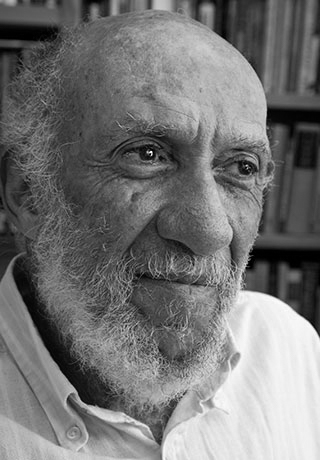
Professor Falk became an adviser to TFF when it was established in 1985.

Related Posts

The agreement is catastrophic both because of what it says and what it doesn’t mention. It reduces further the major asset of security policies: Freedom of action. Jan Oberg TFF director September 25, 2026 A couple of hours before the agreement was signed on September 22, 2026, I published the following 13 hypotheses about what it would most likely contain on TFF Substack (in English). I was wrong on only the first point. Contrary to what Trump had written on his Truth Social platform, it does not appear to come into force immediately. In fact, it turned out to be worse than even I had anticipated. After these hypotheses now come a number of reflections in light of what the agreement actually contains, and does not contain, as well as the way in which it has generally been presented by major media outlets and by the public-service broadcaster DR. My...
Photos © TFF 2000 Read PressInfo 90 “Lift the Sanctions and Bring More Aid to Yugoslavia” See Pictures from Belgrade © TFF 2000 Please reprint, copy, archive, quote or re-post this item, but please retain the source.
By Jan ObergTFF co-founder and director February 11, 2026 PART 3 — ECONOMICS, TRADE & FINANCIAL SOVEREIGNTY A. Trade Measures & Market Signaling Economic pressure can be applied instantly and scaled without violence. Immediate Measures (within a week) Government boycott US goods and services  A very powerful signal which over time will be felt. Targeted tariffs on selected U.S. goods Symbolic but high-visibility sectors send a clear message. Suspend trade facilitation talks A peaceful pause that signals deep concern. Freeze U.S. participation in public procurement – military procurement in particular A nonviolent way to reduce influence. Competition law review of U.S. corporations A legal tool to scrutinise market dominance. Longer-Term Measures EU–Asia–Africa trade corridors Reducing reliance on U.S. markets. European supply chains for critical minerals Strategic autonomy in resource access. European Strategic Trade Authority Monitoring coercive practices globally. Euro-denominated commodity markets Weakening the dollar’s pricing monopoly. The EU must resume contacts and negotiations with Russia, focusing on energy cooperation To...

Recent Articles

Tony Robinson October 4, 2026 Violence is easy to recognise when someone is being beaten, shot or killed. It becomes more difficult when nobody is holding a weapon. Poverty, discrimination, exploitation and repression can restrict a human life just as effectively, although they do so in very different ways and with very different consequences. Simply adding more categories to an ever-growing list of forms of violence does not really solve the problem. The more interesting question is what all these different situations have in common and why it makes sense to describe them using the same word. Human beings do not simply react to what happens around them. They remember the past, imagine things that do not yet exist, make plans and undertake projects. Workers organise because they imagine different working conditions; people migrate because they imagine another life somewhere else; social movements emerge because people refuse to accept the...
It’s a matter of principles, courage, vision and pulling together – while the militarist world is falling apart… Peter Langille October 3, 2026 “Here, then, is the problem which we present to you, stark and dreadful and inescapable: Shall we put an end to the human race; or shall mankind renounce war?”The Bertrand Russell—Albert Einstein Manifesto, July 9, 1955 ⁕ The forecast for what’s ahead is worrisome. The sharp rise in armed conflicts over the past three years is adding to what was already the highest level in over seventy years. Genocides, which should be prevented are supported. A shared climate emergency that jeopardises survival is ignored. Diverse polls now suggest that people are war-weary, worried and interested in a more effective United Nations. And, there are viable policy options for a more secure world! Yet governments are doubling-down, betting on more war and investing heavily. If current trends persist,...
Johan Galtung 1930-2024October 2015 Published here on October 3, 2026 Let us focus on Civilization for conflict analysis and remedies. Major forms of disorder use violence; war is state organized violence. The most belligerent states are the United States of America and Israel, both with civilization roots. National Evangelism, the US Protestant Christian civilization– more national than evangelical–justifies US warfare as exceptionalism of a people chosen by God, with a manifest destiny to run the world. Orthodox Judaism justifies Israeli warfare to conquer and expand from Nile to Euphrates as a religious right and duty to the Eternal One. The third most belligerent country, the UK, no longer believes it is God-chosen but chosen by the USA; not quite the same but something. But the root cause of global disorder lies in the Occident–with Islam–seeing itself as the single, universal civilization valid for all at all times, all others being...

TFF on Substack

Discover and subscribe to more peace materials on TFF Substack

Most Popular

Tony Robinson October 4, 2026 Violence is easy to recognise when someone is being beaten, shot or killed. It becomes more difficult when nobody is holding a weapon. Poverty, discrimination, exploitation and repression can restrict a human life just as effectively, although they do so in very different ways and with very different consequences. Simply adding more categories to an ever-growing list of forms of violence does not really solve the problem. The more interesting question is what all these different situations have in common and why it makes sense to describe them using the same word. Human beings do not simply react to what happens around them. They remember the past, imagine things that do not yet exist, make plans and undertake projects. Workers organise because they imagine different working conditions; people migrate because they imagine another life somewhere else; social movements emerge because people refuse to accept the...
It’s a matter of principles, courage, vision and pulling together – while the militarist world is falling apart… Peter Langille October 3, 2026 “Here, then, is the problem which we present to you, stark and dreadful and inescapable: Shall we put an end to the human race; or shall mankind renounce war?”The Bertrand Russell—Albert Einstein Manifesto, July 9, 1955 ⁕ The forecast for what’s ahead is worrisome. The sharp rise in armed conflicts over the past three years is adding to what was already the highest level in over seventy years. Genocides, which should be prevented are supported. A shared climate emergency that jeopardises survival is ignored. Diverse polls now suggest that people are war-weary, worried and interested in a more effective United Nations. And, there are viable policy options for a more secure world! Yet governments are doubling-down, betting on more war and investing heavily. If current trends persist,...
Johan Galtung 1930-2024October 2015 Published here on October 3, 2026 Let us focus on Civilization for conflict analysis and remedies. Major forms of disorder use violence; war is state organized violence. The most belligerent states are the United States of America and Israel, both with civilization roots. National Evangelism, the US Protestant Christian civilization– more national than evangelical–justifies US warfare as exceptionalism of a people chosen by God, with a manifest destiny to run the world. Orthodox Judaism justifies Israeli warfare to conquer and expand from Nile to Euphrates as a religious right and duty to the Eternal One. The third most belligerent country, the UK, no longer believes it is God-chosen but chosen by the USA; not quite the same but something. But the root cause of global disorder lies in the Occident–with Islam–seeing itself as the single, universal civilization valid for all at all times, all others being...
Read More
Living-Peace-Sign-Budapest-copy
Tony Robinson October 4, 2026 Violence is easy to recognise when someone is being beaten, shot or killed. It becomes more difficult when nobody is holding a weapon. Poverty, discrimination, exploitation and repression can restrict a human life just as effectively, although they do so in very different ways and with very different consequences. Simply adding more categories to an ever-growing list of forms of violence does not really solve the problem. The more interesting question is what all these different situations have in common and why it makes sense to describe them using the same word. Human beings do not simply react to what happens around them. They remember the past, imagine things that do not yet exist, make plans and undertake projects. Workers organise because they imagine different working conditions; people migrate because they imagine another life somewhere else; social movements emerge because people refuse to accept the...
b54a1f10-8c65-4f0b-9dd5-4abc0a7d04cc_2659x2659
It’s a matter of principles, courage, vision and pulling together – while the militarist world is falling apart… Peter Langille October 3, 2026 “Here, then, is the problem which we present to you, stark and dreadful and inescapable: Shall we put an end to the human race; or shall mankind renounce war?”The Bertrand Russell—Albert Einstein Manifesto, July 9, 1955 ⁕ The forecast for what’s ahead is worrisome. The sharp rise in armed conflicts over the past three years is adding to what was already the highest level in over seventy years. Genocides, which should be prevented are supported. A shared climate emergency that jeopardises survival is ignored. Diverse polls now suggest that people are war-weary, worried and interested in a more effective United Nations. And, there are viable policy options for a more secure world! Yet governments are doubling-down, betting on more war and investing heavily. If current trends persist,...
010
Johan Galtung 1930-2024October 2015 Published here on October 3, 2026 Let us focus on Civilization for conflict analysis and remedies. Major forms of disorder use violence; war is state organized violence. The most belligerent states are the United States of America and Israel, both with civilization roots. National Evangelism, the US Protestant Christian civilization– more national than evangelical–justifies US warfare as exceptionalism of a people chosen by God, with a manifest destiny to run the world. Orthodox Judaism justifies Israeli warfare to conquer and expand from Nile to Euphrates as a religious right and duty to the Eternal One. The third most belligerent country, the UK, no longer believes it is God-chosen but chosen by the USA; not quite the same but something. But the root cause of global disorder lies in the Occident–with Islam–seeing itself as the single, universal civilization valid for all at all times, all others being...
Screenshot 2026-10-02 011738
Jan ObergPhD, director, The Transnational Foundation for Peace and Future Research, TFFLund, Sweden October 2, 2026 This is my full original manuscript. The Chinese Academy of Social Science, CASS, makes two publications out if it. 1. China’s Five-year plan emphasized the capabilities of basic research and original innovation. It is regarded as the goal of the future social development, which, as required, should be significantly enhanced. Can you comment on the importance of original innovation in research and academic study? I believe it is easier to define “original innovation” in the natural sciences than in social sciences. The breaking points of what constitutes something new, or innovative, are not quite as sharp in the latter. But in both fields it is about opening up something that was closed, unseen, unexplored before – making manifest what was earlier latent. Innovations come in many forms and shapes – naming something that was not...
arctic-circle-map
The agreement is catastrophic both because of what it says and what it doesn’t mention. It reduces further the major asset of security policies: Freedom of action. Jan Oberg TFF director September 25, 2026 A couple of hours before the agreement was signed on September 22, 2026, I published the following 13 hypotheses about what it would most likely contain on TFF Substack (in English). I was wrong on only the first point. Contrary to what Trump had written on his Truth Social platform, it does not appear to come into force immediately. In fact, it turned out to be worse than even I had anticipated. After these hypotheses now come a number of reflections in light of what the agreement actually contains, and does not contain, as well as the way in which it has generally been presented by major media outlets and by the public-service broadcaster DR. My...
girl-5894831_1280
Below are TFF-related media mentions, comments, videos and social media posts published elsewhere but not on this homepage. We happen to catch and list only a fraction. Regarding video comments and debates, we recommend that you go to the TFF Video Channel on Substack where many of them are reproduced. Jan Oberg is a contributor to China Daily – 52 million daily clicks – and Global Times, CGTN and CCTV (the national television), China Investment, Xinhua News Agency and several others. Articles and videos on these media very often multiply into countless Chinese (and Western media) that re-post them from these main media. Thanks to The China Academy, his analyses, interviews and comments are frequently posted on YouTube channels such as Thinkers Forum and Wave Media. These videos are often re-posted on Bilibili (China’s YouTube), the China Content Center on TikTok, and on the Chinese edition of TikTok, Douyin.com. This means reaching hundreds of millions of viewers worldwide over a year. While there are too many to catch on all these...