USA - Where are you heading?

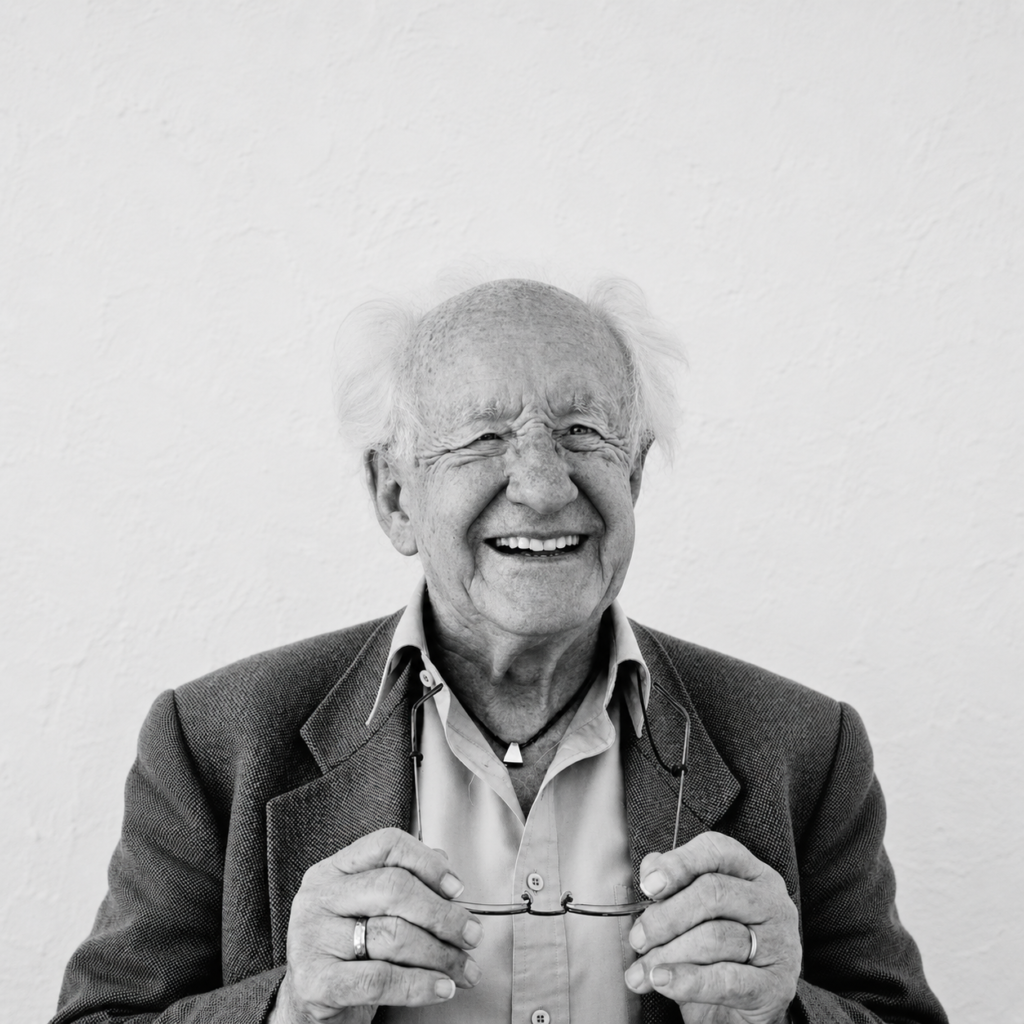
johangaltung

“Pentagon Study Declares American Empire Is ‘Collapsing,’” is the title of an essay by Nafeez Ahmed, analyzing the study.

Sounds interesting. His subtitle: “Report demands massive expansion of military-industrial complex to maintain global ‘access to resources’”. Sounds familiar.

Using excerpts from the Pentagon study made by Nafeez Ahmed, and deeply grateful to him, here are our comments.

Based on some work in the field – The Decline and Fall of the US Empire; And Then What?, TRANSCEND University Press, 2010 [i] – Pentagon is a key institution in the USA, next to the White House-Congress-Wall Street. How it sees its own role in the USA and in the world is of primary importance to understand where USA is heading.

However, imperialism is multi-headed, military power is only one of its articulations. Also needed for a study of the US empire are economic, political and cultural power.

The title indicates a Pentagon overestimating its own importance.

“The U.S.-backed international order established after World War 2 is “fraying” and may even be “collapsing”, leading the United States to lose its position of “primacy” in world affairs.”

Comment: The key word is “primacy”. It means more than “domination”: the guiding light, the source of ideas and ideals, total leadership. But the “fraying” and “collapsing” started long time ago: in June 1953, not winning the Korean War 1950-53, only an armistice; in April 1975, not winning the Vietnam War, losing. And now not winning any wars against Muslims. But they refer to something beyond winning, to prevailing. “Primacy”.

“The solution proposed to protect U.S. power in this new “post-primacy” environment is, however, more of the same: more surveillance, more propaganda (“strategic manipulation of perceptions”) and more military expansionism.”

Comment: Total inability, to react to new situations in new ways, to see itself not only as effect of outside causes, but also as a cause.

That mental state is “autism”, as opposed to “reciprocity”; “we are each other’s cause and effect”. According to Piaget, developing from one to the other should have been accomplished by the age of 5.

The spying-propaganda-belligerence approach is honest, however.

“U.S. power is declining, international order is unraveling and the authority of governments everywhere is crumbling. Having lost its status of “pre-eminence” the U.S. inhabits a dangerous, unpredictable post-primacy world whose defining feature is resistance to authority”.

Comment: This is a key point: “resistance to authority” “everywhere”. There is some truth in it.

The ethos of our era is equality-diversity, horizontality-individualism, not inequality-similarity, verticality-collectivism. At the individual level due to the human rights focus on “everybody” and diverse rights? At the state level due to the end of Cold War bloc submission to superpowers, yielding to multi-polarity?

But the whole statement is wrong. New political parties cut the ideological cake differently, but elected government authority is generally respected. And there is a multipolar international order by and large working, except for Israel and USA “inhabiting” a dangerous, but not unpredictable, “unraveling” world of their own making.

“Danger comes not just from great power rivals like Russia and China portrayed as rapidly growing threats to American interests, but also from the increasing risk of “Arab Spring”-style events. They will erupt not just in the Middle East but all over the world, potentially undermining trust in incumbent governments for the foreseeable future.”

Comment: There is an intellectual breakthrough seeing a world system not only as big and small states but as something inside. Obvious, all 22 Arab states had been colonized and neo-colonized.

And there is much more to come from the 35 non-Arab Muslim states, 34 of them colonized (not Iran, only intervened).

Had this been thought some decades ago, they would not have been surprised. They think as badly as they act.

“The report calls for the U.S. government to invest in more surveillance, better propaganda through “strategic manipulation” of public opinion, and “wider and more flexible” U.S. military”.

Comment: Thanks for telling what to expect: the old, more in the open.

As to surveillance: having no arms-weapons and preparing nonviolence helps, but they are against more than that: different ideas, ideals, images.

As to “better propaganda”: do not waste time on US media like CNN–started as a State Department channel–and their many copycats; go for Al Jazeera, Russia Today, CCTV, France 24, NYT, BBC; but with care. And the interminable wealth of facts and insights on YouTube. So far.

As to U.S. military: they only know how to kill, destroy and tend to become stronger being bombed. They should have ideas and ideals instead.

And thus it continues, on and on.

We note in passing a nostalgia for Cold War clarity; but no reflection on betraying the agreement, treating USSR-Russia as a beaten enemy.

We notice their inability to see China and North Korea as carriers of ideas–win-win bilateralism, strong self-reliance. They think it may get worse, “the greater Middle East will mutate, metastasize, and manifest differently over time”, “with physical, virtual and psychological violence” (not US structural violence as something they resist).

Yes, they will, given this Report, with a distinction between inconvenient, perilous, toxic facts. “The problem is challenging the empire, not its actual behavior”. Toxic.

“Access to “strategic regions, markets and resources”? OK, known as trade. But some of them process their resources themselves and supply their own markets, easily and competitively.

Go to war to stop them? Really?

If USA wants to go further down, follow all this stupid advice.

Alternative: do the opposite.

Declare the end of the empire and explore cooperation for mutual and equal benefit with all. Make them friends, not military “allies”.

To the USA: You are so innovative; you have so incredibly much to offer. The world looks forward to a better report.

NOTE:

[i]. The first written prediction of the decline and fall was in 1974 in connection with a study of the decline and fall of the Roman Empire, exploring similarities and difference, included as part III of the 2010 book.

Originally published at Transcend Media Service, TMS, here.
Share

Leave a Reply

Your email address will not be published. Required fields are marked *

Related Posts

A donors’ conference, co-sponsered by the Burundian government, the Belgian government and UNDP will be held in Brussels January 12-13, 2004. This PressInfo offers a perspective on its urgency. See also TFF’s new Burundi Forum. Imagine for a moment that politics is about goodness and generosity. Where could a few million dollars of government aid and a few civil society organisations – guaranteed – win the hearts of extremely poor millions who want peace and already work hard to achieve it after 10 years of war and genocide? The answer is Burundi, the heart-shaped country in the heart of Africa. Burundi makes a good story from Africa. But what does the world know about Burundi, its problems and struggles? Burundi’s tough reality Here are the basic facts. Burundi’s population is about 7 million and it is number 171 out of the 175 countries on the UNDP’s human development index. Their life...
Peace is promoted by constructive proposals and dialogue Four preceding PressInfos have expressed concern over — and criticised — the ongoing, militarisation of the EU. Some will say: but there are no alternatives. We believe that there are always alternatives, that democracies are characterised by alternatives and choice, and that openly discussed alternatives will improve the quality and legitimacy of society’s decision–making. In addition, it is an intellectual and moral challenge to not only criticise but also be constructive. If we only tell people that we think they are wrong, they are not likely to listen. However, if we say: what are your views on this set of ideas and steps? — we may sometimes engage them in dialogue and sow a seed. Most people in power circles live their daily lives in in a time frame and a social space where certain ideas, viewpoints and concepts are just not...
Photos © TFF 2000 Read PressInfo 90 “Lift the Sanctions and Bring More Aid to Yugoslavia” See Pictures from Belgrade © TFF 2000 Please reprint, copy, archive, quote or re-post this item, but please retain the source.

Recent Articles

Greenland – the world’s largest island, a continent of its own with only 57.000 inhabitants. I visited it for the first time in May 2005. I flew across the inland ice to Nuuk, the tiny capital with some 14.000 inhabitants. I was overwhelmed by the pride and kindness of everyone I met as well as by the unique natural beauty. Unfortunately, due to weather conditions during my ten-day stay I could get nowhere else but Nuuk. Fortunately, however, among those I met was Gitte Arvegaard, a Danish lawyer and negotiator employed by the local government, Greenland Home Rule. She turned out to be an enthusiastic photographer with a lot of pictures taken during various trips around Greenland. So this Greeland series is the result of our cooperative effort. We both hope you enjoy it and are stimulated to visit Greenland – about which you may read more here. Finally, if you want to...
 Jan Oberg’s storyof how he met Sir Paul Liverpool – where else to meet Paul McCartney? Paul’s old class mate and TFF Associate, Jonathan Power introduced me to Paul McCartney in Liverpool at an informal reception. It was held at what used to be their school, now the Liverpool Institute for Performing Arts and we were there to celebrate that Jonathan had written Amnesty International’s 40th Anniversary book. This happy event for “righting wrongs and writing songs” gave me an opportunity to meet Paul and tell him about TFF and get straight to the matter: would he consider making a donation in support of our work for peace? While I was probably the only one with such a wish that day, I was certainly not the only one who wanted to shake hands and talk with him. In the last minutes before Paul was to leave, Jonathan brought us together and we got about three...
1942James Paul McCartney is born in Liverpool on June 18th. 1956Paul writes his first song, I Lost My Little Girl. 1957Paul meets John Lennon at St. Peter’s Church Fete, Woolton, Liverpool. He joins his first group, The Quarrymen and performs in his first gig at The New Clubmoor Hall, Liverpool, on October 18th. 1960Formation of The Beatles, who play residencies in Hamburg and at The Cavern in Liverpool. 1961First Beatles recordings issued in Germany, as the backing group for Tony Sheridan. 1962The first Beatles Parlophone recording, Love Me Do, reaches number 17 in the British charts. 1963The birth of Beatlemania. Please Please Me gives the group their first British Number 1. She Loves You cements their success. Please Please Me and With The Beatles albums released. 1964First triumphant American tour. The Beatles perform at the Royal Command Performance and release their first film, A Hard Day’s Night. Their single I...

TFF on Substack

Discover more from TFF Transnational Foundation & Jan Oberg.

Most Popular

Greenland – the world’s largest island, a continent of its own with only 57.000 inhabitants. I visited it for the first time in May 2005. I flew across the inland ice to Nuuk, the tiny capital with some 14.000 inhabitants. I was overwhelmed by the pride and kindness of everyone I met as well as by the unique natural beauty. Unfortunately, due to weather conditions during my ten-day stay I could get nowhere else but Nuuk. Fortunately, however, among those I met was Gitte Arvegaard, a Danish lawyer and negotiator employed by the local government, Greenland Home Rule. She turned out to be an enthusiastic photographer with a lot of pictures taken during various trips around Greenland. So this Greeland series is the result of our cooperative effort. We both hope you enjoy it and are stimulated to visit Greenland – about which you may read more here. Finally, if you want to...
 Jan Oberg’s storyof how he met Sir Paul Liverpool – where else to meet Paul McCartney? Paul’s old class mate and TFF Associate, Jonathan Power introduced me to Paul McCartney in Liverpool at an informal reception. It was held at what used to be their school, now the Liverpool Institute for Performing Arts and we were there to celebrate that Jonathan had written Amnesty International’s 40th Anniversary book. This happy event for “righting wrongs and writing songs” gave me an opportunity to meet Paul and tell him about TFF and get straight to the matter: would he consider making a donation in support of our work for peace? While I was probably the only one with such a wish that day, I was certainly not the only one who wanted to shake hands and talk with him. In the last minutes before Paul was to leave, Jonathan brought us together and we got about three...
1942James Paul McCartney is born in Liverpool on June 18th. 1956Paul writes his first song, I Lost My Little Girl. 1957Paul meets John Lennon at St. Peter’s Church Fete, Woolton, Liverpool. He joins his first group, The Quarrymen and performs in his first gig at The New Clubmoor Hall, Liverpool, on October 18th. 1960Formation of The Beatles, who play residencies in Hamburg and at The Cavern in Liverpool. 1961First Beatles recordings issued in Germany, as the backing group for Tony Sheridan. 1962The first Beatles Parlophone recording, Love Me Do, reaches number 17 in the British charts. 1963The birth of Beatlemania. Please Please Me gives the group their first British Number 1. She Loves You cements their success. Please Please Me and With The Beatles albums released. 1964First triumphant American tour. The Beatles perform at the Royal Command Performance and release their first film, A Hard Day’s Night. Their single I...
Read More
Greenland – the world’s largest island, a continent of its own with only 57.000 inhabitants. I visited it for the first time in May 2005. I flew across the inland ice to Nuuk, the tiny capital with some 14.000 inhabitants. I was overwhelmed by the pride and kindness of everyone I met as well as by the unique natural beauty. Unfortunately, due to weather conditions during my ten-day stay I could get nowhere else but Nuuk. Fortunately, however, among those I met was Gitte Arvegaard, a Danish lawyer and negotiator employed by the local government, Greenland Home Rule. She turned out to be an enthusiastic photographer with a lot of pictures taken during various trips around Greenland. So this Greeland series is the result of our cooperative effort. We both hope you enjoy it and are stimulated to visit Greenland – about which you may read more here. Finally, if you want to...
p_mccartney_poem
 Jan Oberg’s storyof how he met Sir Paul Liverpool – where else to meet Paul McCartney? Paul’s old class mate and TFF Associate, Jonathan Power introduced me to Paul McCartney in Liverpool at an informal reception. It was held at what used to be their school, now the Liverpool Institute for Performing Arts and we were there to celebrate that Jonathan had written Amnesty International’s 40th Anniversary book. This happy event for “righting wrongs and writing songs” gave me an opportunity to meet Paul and tell him about TFF and get straight to the matter: would he consider making a donation in support of our work for peace? While I was probably the only one with such a wish that day, I was certainly not the only one who wanted to shake hands and talk with him. In the last minutes before Paul was to leave, Jonathan brought us together and we got about three...
Logo-Transnational
1942James Paul McCartney is born in Liverpool on June 18th. 1956Paul writes his first song, I Lost My Little Girl. 1957Paul meets John Lennon at St. Peter’s Church Fete, Woolton, Liverpool. He joins his first group, The Quarrymen and performs in his first gig at The New Clubmoor Hall, Liverpool, on October 18th. 1960Formation of The Beatles, who play residencies in Hamburg and at The Cavern in Liverpool. 1961First Beatles recordings issued in Germany, as the backing group for Tony Sheridan. 1962The first Beatles Parlophone recording, Love Me Do, reaches number 17 in the British charts. 1963The birth of Beatlemania. Please Please Me gives the group their first British Number 1. She Loves You cements their success. Please Please Me and With The Beatles albums released. 1964First triumphant American tour. The Beatles perform at the Royal Command Performance and release their first film, A Hard Day’s Night. Their single I...
Logo-Transnational
  Back to the series “Bujumbura, Burundi”
By JONATHAN POWER August 16, 2000 LONDON – Remember the summer of ’98? In the sweltering, torpid heat of a Roman august, charged with exhaust fumes, the international community gave its overwhelming approval to the establishment of an International Criminal Court that will enable those accused of “crimes against humanity” to be tried and, if convicted, sentenced. Only seven nations opposed or abstained from the motion, including Israel, China, India and the U.S.A. where the Pentagon had successfully waged bureaucratic guerrilla war to undermine the initially sympathetic stance of President Bill Clinton. Two years on we can now see what an epochal event that was. In a the stroke of 120 pens it changed the climate on political thuggery. After numerous half-starts and false starts ever since the Nuremberg and Tokyo trials that convicted the war criminals of the Second World War, the world at last had agreed en masse a common...
By Jonathan Power April 8th 2004 LONDON – There is a widely held opinion abroad that Brazil never had the chance of profoundly changing for the better- shedding its widespread poverty and dire income distribution- until Lula (President Luiz Inácio da Silva) came along last year. This is not entirely false, but neither is it entirely true. Brazil has long made a kind of progress- in the last century it was second only to Taiwan as the fastest growing economy in the world- but it has been appallingly uneven. Part of the story of contemporary Brazil is clear to the eye in this small village of 7,000 people in the arid north east, along with the Amazon the poorest part of this vast country. Twenty five years or so ago I used to come to Pilõezinhos regularly when I had a close friend living here, Valéria Rezende, a radical, grass roots-stirring...