
The Middle East: A complex re-alignment

By Conn M. Hallinan

November 27, 2019

The fallout from the September attack on Saudi Arabia’s Aramco oil facilities is continuing to reverberate throughout the Middle East, sidelining old enmities – sometimes for new ones – and re-drawing traditional alliances. While Turkey’s recent invasion of northern Syria is grabbing the headlines, the bigger story may be that major regional players are contemplating some historic re-alignments.

Originally posted on Counterpunch on November 8, 2019, here

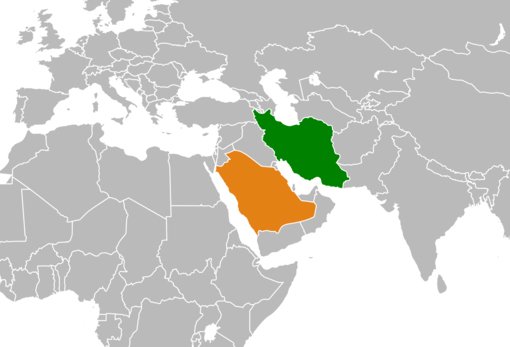
After years of bitter rivalry, the Saudis and the Iranians are considering how they can dial down their mutual animosity. The formerly powerful Gulf Cooperation Council (GCC) of the Persian Gulf monarchs is atomizing because Saudi Arabia is losing its grip. And Washington’s former domination of the region appears to be in decline.

Some of these developments are long-standing, pre-dating the cruise missile and drone assault that knocked out 50 per cent of Saudi Arabia’s oil production. But the double shock – Turkey’s lunge into Syria and the September missile attack – is accelerating these changes.

Pakistani Prime Minister, Imran Khan, recently flew to Iran and then on to Saudi Arabia to lobby for détente between Teheran and Riyadh and to head off any possibility of hostilities between the two countries. “What should never happen is a war,” Khan said, “because this will not just affect the whole region…this will cause poverty in the world. Oil prices will go up.”

According to Khan, both sides have agreed to talk, although the Yemen War is a stumbling block. But there are straws in the wind on that front, too. A partial ceasefire seems to be holding, and there are back-channel talks going on between the Houthis and the Saudis.

The Saudi intervention in Yemen’s civil war was supposed to last three months, but it has dragged on for over four years. The United Arab Emirates (UAE) was to supply the ground troops and the Saudis the airpower. But the Saudi-UAE alliance has made little progress against the battle-hardened Houthis, who have been strengthened by defections from the regular Yemeni army.

Air wars without supporting ground troops are almost always a failure, and they are very expensive. The drain on the Saudi treasury is significant, and the country’s wealth is not bottomless.

Crown Prince Mohammed bin Salman is trying to shift the Saudi economy from its over-reliance on petroleum, but he needs outside money to do that and he is not getting it. The Yemen War – which, according to the United Nations is the worst humanitarian disaster on the planet – and the Prince’s involvement with the murder and dismemberment of Saudi journalist Jamal Khashoggi, has spooked many investors.

Without outside investment, the Saudi’s have to use their oil revenues, but the price per barrel is below what the Kingdom needs to fulfil its budget goals, and world demand is falling off. The Chinese economy is slowing – the trade war with the US has had an impact – and European growth is sluggish. There is a whiff of recession in the air, and that’s bad news for oil producers.

Riyadh is also losing allies. The UAE is negotiating with the Houthis and withdrawing their troops, in part because the Abu Dhabi has different goals in Yemen than Saudi Arabia, and because in any dustup with Iran, the UAE would be ground zero. US generals are fond of calling the UAE “little Sparta” because of its well-trained army, but the operational word for Abu Dhabi is “little”: the Emirate’s army can muster 20,000 troops, Iran can field more than 800,000 soldiers.

Saudi Arabia’s goals in Yemen are to support the government-in-exile of President Rabho Mansour Hadi, control its southern border and challenge Iran’s support of the Houthis. The UAE, on the other hand, is less concerned with the Houthis but quite focused on backing the anti-Hadi Southern Transitional Council, which is trying to re-create south Yemen as a separate country. North and south Yemen were merged in 1990, largely as a result of Saudi pressure, and it has never been a comfortable marriage.

Riyadh has also lost its grip on the Gulf Cooperation Council. Oman, Kuwait, and Qatar continue to trade with Iran in spite of efforts by the Saudis to isolate Teheran.

Rapidly changing and bewildering political sociometry
– added by The Transnational from CIDOB Barcelona’s twitter account

The UAE and Saudi Arabia recently hosted Russian President Vladimir Putin, who pressed for the 22-member Arab League to re-admit Syria. GCC member Bahrain has already re-established diplomatic relations with Damascus. Putin is pushing for a multilateral security umbrella for the Middle East, which includes China.

“While Russia is a reliable ally, the US is not,” Middle East scholar Mark Katz told the South Asia Journal. And while many in the region have no love for Syria’s Assad, “they respect Vladimir Putin for sticking by Russia’s ally.”

The Arab League – with the exception of Qatar – denounced the Turkish invasion and called for a withdrawal of Ankara’s troops. Qatar is currently being blockaded by Saudi Arabia and the UAE for pursuing an independent foreign policy and backing a different horse in the Libyan civil war. Turkey is Qatar’s main ally.

Russia’s 10-point agreement with Turkey on Syria has generally gone down well with Arab League members, largely because the Turks agreed to respect Damascus’s sovereignty and eventually withdraw all troops. Of course, “eventually” is a shifty word, especially because Turkey’s goals are hardly clear.

Turkish President Recep Tayyip Erdogan wants to drive the Syrian Kurds away from the Turkish border and move millions of Syrian refugees into a strip of land some 19 miles deep and 275 miles wide. The Kurds may move out, but the Russian and Syrian military – filling in the vacuum left by President Trump’s withdrawal of American forces – have blocked the Turks from holding more than the border and one deep enclave, certainly not one big enough to house millions of refugees.

Erdogan’s invasion is popular at home – nationalism plays well with the Turkish population and most Turks are unhappy with the Syrian refugees – but for how long? The Turkish economy is in trouble and invasions cost a lot of money. Ankara is using proxies for much of the fighting, but without lots of Turkish support, those proxies are no match for the Kurds – let alone the Syrian and Russian military.

That would mainly mean airpower, and Turkish airpower is restrained by the threat of Syrian anti-aircraft and Russian fighters, not to mention the fact that the Americans still control the airspace. The Russians have deployed their latest fifth-generation stealth fighter, the SU-57, and a number of MiG-29s and SU-27s, not planes the Turks would wish to tangle with. The Russians also have their new mobile S-400 anti-aircraft system, and the Syrians have the older, but still effective, S-300s.

In short, things could get really messy if Turkey decided to push their proxies or their army into areas occupied by Russian or Syrian troops. There are reports of clashes in Syria’s northeast and casualties among the Kurds and Syrian Army, but a serious attempt to push the Russians and the Syrians out seems questionable.

The goal of resettling refugees is unlikely to go anywhere. It will cost some $53 billion to build an infrastructure and move two million refugees into Syria, money that Turkey doesn’t have. The European Union has made it clear it won’t offer a nickel, and the UN can’t step in because the invasion is a violation of international law.

When those facts sink in, Erdogan might find that Turkish nationalism will not be enough to support his Syrian adventure if it turns into an occupation.

The Middle East that is emerging from the current crisis may be very different than the one that existed before those cruise missiles and drones tipped over the chessboard.

The Yemen War might finally end. Iran may, at least partly, break out of the political and economic blockade that Saudi Arabia, the US and Israel has imposed on it. Syria’s civil war will recede.  

And the Americans, who have dominated the Middle East since 1945, will become simply one of several international players in the region, along with China, Russia, India and the European Union.

Conn M. Hallinan is a columnist for Foreign Policy In Focus, “A Think Tank Without Walls, and an independent journalist. He holds a PhD in Anthropology from the University of California, Berkeley. He oversaw the journalism program at the University of California at Santa Cruz for 23 years and won the UCSC Alumni Association’s Distinguished Teaching Award, as well as UCSC’s Innovations in Teaching Award, and Excellence in Teaching Award.  He was also a college provost at UCSC, and retired in 2004.
He is a winner of a Project Censored “Real News Award” and lives in Berkeley, California. Conn Hallinan can be read at dispatchesfromtheedgeblog.wordpress.com


Share

Leave a Reply

Your email address will not be published. Required fields are marked *

Related Posts

Jan Oberg May 15, 2026 Go to this Fox News page and scroll the whole way down: President Donald Trump tells the world that his meeting with President Xi Jinping yielded a lot of very concrete political and economic results – of course, only where the Chinese side, according to him, agreed with him. He does not mention the Taiwan issue, but Secretary of State, Marco Rubio, says that it did not feature prominently in their talks and that the US policy on Taiwan has not changed. Then go to China Daily – or Global Times – and you will see that for the Chinese it is framework, principles, structure of cooperation etc. that matters – all embedded in the overall idea of “constructive bilateral relationship of strategic stability.” Nowhere is any concrete agreement or deal – all that Trump refers to – mentioned. At the general level, this gives you insights into the very different social...
Lena Petrova of “World Affairs In Context” with more than half a million subscribers on YouTube wanted to explore what a peace researcher like me has to say about, among other things, the First and the Second Cold War and why eethics has disappeared from politics. I am particularly happy about this conversation that also yielded an amazing number of very appreciative comments on YouTube. No doubt, people are longing for alternatives, including peace perspectives.
The MIMAC – Military-Industrial-Media-Academic Complex – drives the world’s rampant militarism and wars without end. Here is a short reflection of how it works against all interests of humanity. #5 deals with why there is no real enemy or threat images/analysis. It’s all ex-post constructions. And, btw, theTFF Peace Pulse is now on Rumble.

Recent Articles

Jan Oberg May 15, 2026 Go to this Fox News page and scroll the whole way down: President Donald Trump tells the world that his meeting with President Xi Jinping yielded a lot of very concrete political and economic results – of course, only where the Chinese side, according to him, agreed with him. He does not mention the Taiwan issue, but Secretary of State, Marco Rubio, says that it did not feature prominently in their talks and that the US policy on Taiwan has not changed. Then go to China Daily – or Global Times – and you will see that for the Chinese it is framework, principles, structure of cooperation etc. that matters – all embedded in the overall idea of “constructive bilateral relationship of strategic stability.” Nowhere is any concrete agreement or deal – all that Trump refers to – mentioned. At the general level, this gives you insights into the very different social...
Lena Petrova of “World Affairs In Context” with more than half a million subscribers on YouTube wanted to explore what a peace researcher like me has to say about, among other things, the First and the Second Cold War and why eethics has disappeared from politics. I am particularly happy about this conversation that also yielded an amazing number of very appreciative comments on YouTube. No doubt, people are longing for alternatives, including peace perspectives.
The MIMAC – Military-Industrial-Media-Academic Complex – drives the world’s rampant militarism and wars without end. Here is a short reflection of how it works against all interests of humanity. #5 deals with why there is no real enemy or threat images/analysis. It’s all ex-post constructions. And, btw, theTFF Peace Pulse is now on Rumble.

TFF on Substack

Discover more from TFF Transnational Foundation & Jan Oberg.

Most Popular

Jan Oberg May 15, 2026 Go to this Fox News page and scroll the whole way down: President Donald Trump tells the world that his meeting with President Xi Jinping yielded a lot of very concrete political and economic results – of course, only where the Chinese side, according to him, agreed with him. He does not mention the Taiwan issue, but Secretary of State, Marco Rubio, says that it did not feature prominently in their talks and that the US policy on Taiwan has not changed. Then go to China Daily – or Global Times – and you will see that for the Chinese it is framework, principles, structure of cooperation etc. that matters – all embedded in the overall idea of “constructive bilateral relationship of strategic stability.” Nowhere is any concrete agreement or deal – all that Trump refers to – mentioned. At the general level, this gives you insights into the very different social...
Lena Petrova of “World Affairs In Context” with more than half a million subscribers on YouTube wanted to explore what a peace researcher like me has to say about, among other things, the First and the Second Cold War and why eethics has disappeared from politics. I am particularly happy about this conversation that also yielded an amazing number of very appreciative comments on YouTube. No doubt, people are longing for alternatives, including peace perspectives.
The MIMAC – Military-Industrial-Media-Academic Complex – drives the world’s rampant militarism and wars without end. Here is a short reflection of how it works against all interests of humanity. #5 deals with why there is no real enemy or threat images/analysis. It’s all ex-post constructions. And, btw, theTFF Peace Pulse is now on Rumble.
Read More
Screenshot-2026-05-15-103534
Jan Oberg May 15, 2026 Go to this Fox News page and scroll the whole way down: President Donald Trump tells the world that his meeting with President Xi Jinping yielded a lot of very concrete political and economic results – of course, only where the Chinese side, according to him, agreed with him. He does not mention the Taiwan issue, but Secretary of State, Marco Rubio, says that it did not feature prominently in their talks and that the US policy on Taiwan has not changed. Then go to China Daily – or Global Times – and you will see that for the Chinese it is framework, principles, structure of cooperation etc. that matters – all embedded in the overall idea of “constructive bilateral relationship of strategic stability.” Nowhere is any concrete agreement or deal – all that Trump refers to – mentioned. At the general level, this gives you insights into the very different social...
Screenshot-2026-05-12-104023
Lena Petrova of “World Affairs In Context” with more than half a million subscribers on YouTube wanted to explore what a peace researcher like me has to say about, among other things, the First and the Second Cold War and why eethics has disappeared from politics. I am particularly happy about this conversation that also yielded an amazing number of very appreciative comments on YouTube. No doubt, people are longing for alternatives, including peace perspectives.
Screenshot-2026-04-13-154551 (2)
The MIMAC – Military-Industrial-Media-Academic Complex – drives the world’s rampant militarism and wars without end. Here is a short reflection of how it works against all interests of humanity. #5 deals with why there is no real enemy or threat images/analysis. It’s all ex-post constructions. And, btw, theTFF Peace Pulse is now on Rumble.
Screenshot-2026-04-13-154551 (1)
Jan Oberg, TFF director April 28, 2026 In this third TFF Peace Pulse, I make the important distinction between the violence and the conflict that violence is a symptom of. If you want peace, focus on the underlying conflict because that is the key to resolution, peacemaking, and a better future for the parties. The West is obsessed with violence, just look around you – and 90+ per cent of the public debate is about military issues and other violence – totally wasted for peace. These Peace Pulses will only be published here a few times. You will also not find them on YouTube and Vimeo because both platforms have blocked TFF and me; you know, peace is dangerous these days. Most TFF’s videos since 2007 are now on Rumble.
Screenshot-2026-04-13-154551
In contrast to most, we’ll bring alternatives, solutions, hope and strategies for a better future. Times are dangerous, yes, but that only intensifies the need for constructive thinking and action! Jan Oberg, TFF director April 13, 2026 The new TFF Peace Pulse uses video messages in a new way: Max 3-5-minute-long comments, ideas or perhaps mini-lectures, all about peace – positive peace. We launch them today on April 13, 2026 with a carefully crafted visual aesthetic fitting the content. We hope to publish them regularly from now on. We launch Peace Pulse (PP) – for a number of reasons. The world is in chaos, and there are countless reasons to feel concerned, frustrated, even angry. The atmosphere is saturated with doom and gloom, with negative energy and rear‑mirror thinking, while vision, imagination, alternatives, strategies and genuine future‑mindedness remain in short supply. And without them, we simply can’t save the world. Looking at problems from a hundred angles will...
IMG_5165 (1)
PART II — Publishing Peace in a System That Prioritises Militarism Jan Oberg, TFF director April 10, 2026 How TFF Maintains a Daily Voice in a Digital World Built for Noise This article is part of the series “TFF at 40″ and it invites you to learn about Four Decades of Publishing Peace. It takes a look at how a small, people‑financed peace foundation has communicated across four generations of technology — from wax stencils and fax machines to mass email and Substack — and why TFF continues to publish every single day in a system that rewards noise, conflict, and militarism. ◆ What it means to publish peace every single day in a digital system built for 24/7 news and other noise, confrontation, and militarism. How TFF’s independence, continuity, and global readership defy algorithms, donor cycles, and Western media censorhip — and why the Majority World keeps listening. When the...
