

President Bush and Russian President Yeltsin announce the end of the cold war during a press conference at Camp David, February 1, 1992. Source: Bush Library on Twitter @Bush41Library.
Svetlana Savranskaya and Tom Blanton
February 7, 2023
Russian President Proposed Far-Reaching Nuclear Reductions, Bush Not So Sure
U.S. ambassador on Yeltsin: Russians “want a tsar with a common touch”
Russian leaders sensitive to Ukrainian concerns but saw Ukraine as the “main destabilizing factor”
Washington D.C., January 30, 2023 – The George H.W. Bush administration was reluctant to embrace the “relations of deep mutual trust and alliance” proposed by the newly independent Russian Federation and its leader, Boris Yeltsin, in early 1992, according to declassified U.S. documents published today by the National Security Archive.
The Bush administration’s cautious management of U.S.-Soviet relations at the end of the Soviet Union in 1991 had focused primarily on command and control of the remaining Soviet nuclear weapons that were scattered over 15 republics, plus encouragement of radical economic reforms in Russia, without much in the way of U.S. economic aid – just exhortations.
Originally published at National Security Archive on January 30, 2023
The documents show Yeltsin was eager for new and dramatic arms control arrangements that would exceed whatever former Soviet leader Mikhail Gorbachev had offered in his “arms race in reverse” in the late 1980s, and that Yeltsin sought American backing for Russia to take the Soviet Union’s place in a bipolar world. But the 1990s were the years of the American “unipolar moment” in geopolitics, and tragic years for Russia, where rule by decree replaced any parliamentary democracy, the economy collapsed twice into depression, and the legacy was a return to authoritarianism. Yeltsin describes his economic troubles candidly and warns his American counterparts that if there is no aid to the countries of the commonwealth, “there would be a reversal.”
The subject of relations with Ukraine comes up in almost all of the conversations. Yeltsin is committed to resolving disputes amicably and describes his relationship with President Leonid Kravchuk as “very good.” The Russian president understands the domestic pressures Kravchuk faces from nationalist groups in the parliament. While trying to be sensitive to the Ukrainian concerns, the Russian leaders believe that Ukraine is “our main destabilizing factor.”
Yegor Gaidar believes that Russian-Ukrainian issues will take a long time to be fully resolved but assures Bush that there would be no “Yugoslav-type case in Russian-Ukrainian relations.” Ukraine, Kazakhstan, and Belarus agreed to send Soviet nuclear weapons back to Russia for dismantlement and signed the Lisbon protocol making them parties to the START I Treaty as non-nuclear states in May 1992.
Declassified as the result of Freedom of Information Act requests by the National Security Archive, these documents represent early highlights from a forthcoming reference collection covering the entire 1990s, US-Russian Relations from the End of the Soviet Union to the Rise of Vladimir Putin, to be published by ProQuest in the award-winning Digital National Security Archive series.
Today’s publication includes transcripts from the first two summit meetings between Yeltsin and Bush in 1992, highest-level messages from U.S. Secretary of State James Baker, insightful communiqués from the U.S. embassy in Moscow, and candid conversations with the lead reformer on Yeltsin’s economic team, Yegor Gaidar.
Among other revelations, the documents show Yeltsin offering to remove MIRV warheads (which allow a single missile to hit multiple targets) from all Russian ballistic missiles – a top priority for American arms controllers for two decades – only to face resistance from the U.S. Defense Department and the Joint Chiefs of Staff because the resulting total numbers of U.S. warheads would be fewer than their excessive list of targets required. The American de-MIRVing proposal only extended to land-based missiles, the bulk of the Russian strategic arsenal, and not to submarine-based missiles where the U.S. had a large advantage.
In his memoir, Secretary of State James Baker memorably upbraids his colleagues Dick Cheney (the defense secretary) and Colin Powell (chairman of the Joint Chiefs), “They have offered us what we want, and what no one else has ever come close to: zero MIRVed ICBMs, and without eliminating MIRVed SLBMs. We can’t let this slip through our fingers because we think we need a higher total number. That is not sustainable with the public or with Congress.”[1]
The two Bush-Yeltsin transcripts show the Russian President on top of his brief, even delving into nuclear arcana. But cables from the U.S. Embassy Moscow illuminate ongoing concerns with Yeltsin, who canceled a scheduled speech apparently because he “had to be treated over the past weekend for a massive hangover,” which was “a fairly routine problem for Yeltsin.”
Another Embassy cable concludes, “[b]y background and temperament, Yeltsin seems curiously unsuited to the job of leading an autocratic society towards a democratic future,” but “[t]he Russian people do not want another Lenin at their head; they want a tsar with a common touch.”
Left unsaid in the documents is the American political context for these conversations. Bush faced a difficult re-election campaign in 1992, including primary opposition from his own party in the spring, and ultimately a third-party challenge as well – all accusing him of spending too much time on foreign affairs. The U.S. economy entered an economic recession and Bush faced a budget deficit that reinforced his reluctance to provide any significant aid to Russia.
The overwhelming public approval for Bush’s success in the short Gulf War of 1991 had long dissipated. By August 1992, Bush insisted on bringing a reluctant Baker back as campaign manager, only to lose to Bill Clinton in November. Yet to Bush’s and Baker’s credit, they persisted in negotiating the START II nuclear weapon reductions and saw the treaty signed before Bush left office in January 1993.
THE DOCUMENTS
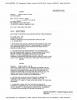
Document 1
Jan 17, 1992
Source: Department of State, National Security Archive FOIA
Thomas Pickering reports on his meeting with Russian representative to the United Nations Yuli Vorontsov in New York. Vorontsov asked him to pass an urgent message from President Yeltsin, who was requesting “early consultations” before President Bush’s State of the Union speech. Yeltsin did not want to be caught by surprise by Bush’s new arms control proposals on the eve of his visit to the United States. Yeltsin also asked for U.S. help in dealing with President Nazarbayev’s recent statement that Kazakhstan wanted to join the NPT as a nuclear weapons state. Vorontsov also commented on the “turmoil in Moscow” and “enormous impact of […] 29 fold price increases on the average citizen” as a result of price liberalization.
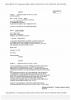
Document 2
Letter from Yeltsin to Bush. (Unofficial Embassy Translation)
Jan 27, 1992
Source: Department of State, National Security Archive FOIA
Here is Yeltsin picking up the torch from Gorbachev in renouncing “fetters of totalitarianism and militarized ideology” and striving for partnership with the United States in building a new world order based on common human values. In response to Bush’s letter of January 22, where Bush follows on his presidential nuclear initiative of September 1991, Yeltsin enthusiastically accepts the idea of radical cuts in nuclear weapons and puts forward proposals that go significantly further than the American ones, such as eliminating all MIRVed nuclear warheads, including submarine-based ones, reducing sea-based tactical weapons by one-third, removing nuclear weapons from front-line aviation units and detargeting strategic offensive weapons.
In the end, he even expresses his conviction that “the world will be freed from the burden of nuclear weapons by our common efforts.” But Bush has already made it clear to Gorbachev that he was not a nuclear abolitionist like his predecessor. It is striking to read in this document–like a sentiment from a foregone era–that Yeltsin believes that Russia and the United States will develop “relations of deep mutual trust and alliance.”
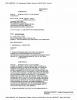
Document 3
Cable from U.S. Ambassador to Moscow Strauss. Subject: The Mysterious Yel’tsin Speech that Never Was
Jan 28, 1992
Source: Department of State, National Security Archive FOIA
As Secretary of State James Baker was heading to Moscow, rumors circulated about Yeltsin’s poor health and even death because he failed to deliver a major arms control speech on January 27 and did not attend the opening of multilateral talks on the Middle East. Georgy Mamedov tells U.S. diplomats that Yeltsin canceled the speech because he did not want to “upstage” President Bush’s State of the Union. However, another source of information close to Yeltsin’s personal physician reported that “the Russian President had to be treated over the past weekend for a massive hangover,” which, according to the source, is a “fairly routine problem for Yeltsin.” Another reason could be Yeltsin’s need to consult with military leaders before making arms control proposals, because the Russian military were tired of political games and “feel a stronger sense of loyalty to their own military hierarchy”–meaning the CIS commander Evgeny Shaposhnikov–than to any politicians.
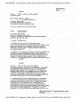
Document 4
Jan 29, 1992
Source: Department of State, National Security Archive FOIA
Andrey Kozyrev and James Baker review the main issues of the bilateral agenda that the presidents would discuss at their upcoming meeting and the recent conference on coordinating assistance to the former Soviet republics in Moscow. Baker praises the results of the conference and the commitment of Japan to host the next one. He notes “very interesting disarmament proposals” in Yeltsin’s letter to Bush and expresses relief that Russia does not intend to discuss these proposals in the framework of five-power talks in the UNSC context. To Baker’s concern about arms sales to Iran and Libya, Kozyrev replies that the “government was under great pressure” from the Russian defense industry because “arms are one of the few commodities that Russia can sell,” and suggests that Russia sells arms to the U.S. “NATO allies.” Baker expresses concern about the “brain drain” of Russian scientists to “countries where their activities would not be in anyone’s interest.”
Document 5
Feb 26, 1992
Source: Department of State, National Security Archive FOIA
Baker and Yeltsin go over security and economic issues in this detailed two-hour conversation. Yeltsin had just announced his arms reductions proposals that were similar to Bush’s State of the Union proposals but went further in the unilateral measures Russia committed to undertake. In this conversation, Yeltsin suggests even more radical steps, like stopping all strategic nuclear submarine patrols (which Russia did soon thereafter) and creating a joint global system of anti-ballistic missile protection. An intriguing part of the discussion touches on tactical nuclear weapons. Yeltsin says he would share new information “on the location and numbers of tactical nuclear weapons” with Bush at Camp David. He received this information during his January 28 visit to the Black Sea Fleet. Several of the statements the Russian president makes in regards to tactical nuclear weapons contradict the information the U.S. side had at the time.
Yeltsin also raises the problem of the disposition of Plutonium 239 and Uranium 238 produced from the dismantling of nuclear warheads. He suggests creating a downgraded mix that could be used for civilian power stations—this idea would later lead to the Megatons to Megawatts project. He asks for U.S. help in building a secure storage facility for the warheads and mentions the $400 million earmarked through the Nunn-Lugar program, money he says could help him deal with the “brain drain” problem in “finding an honorable use for the talents of [Russian] nuclear scientists.
Yeltsin makes a stunning but ultimately unfulfilled pledge to Baker on biological weapons. According to Baker’s memoirs, “Yeltsin told me that in the past we had been deceived on the existence of a Soviet biological weapons program. ‘It will be dismantled within a month,’ Yeltsin promised, after which international inspectors would be allowed full access to the site.”
Addressing nuclear weapons outside Russia, Yeltsin expresses concern about the position of Kazakhstan President Nursultan Nazarbayev, who, according to Yeltsin, “doubted that it will prove technically feasible to dismantle and store the nuclear warheads presently on strategic weapons deployed in Kazakhstan.” Talking about command and control of nuclear forces in the Commonwealth of Independent States, Yeltsin describes the consultative procedure where only he and the CIS Defense Minister had access to the nuclear “button;” the presidents of Ukraine, Belarus and Kazakhstan only had access to a special phone line for consultations. But just in case, Yeltsin confidentially suggests a perfectly Russian way to deal with the problem: that “during maintenance of missiles in the other three republics, a minor component could be switched which would have a practical effect of disabling the system.”
In his memoirs, Baker described a “different Yeltsin,” not “vague and rather glib,” as he sounded in the past, but well prepared, energetic and speaking “at great length, with no notes, about highly technical issues.” In a letter Baker wrote to Bush on the evening after the meeting, he asked the President to show Yeltsin at Camp David “that he established the same kind of close personal relationship with [Bush] that Gorbachev had.”[2]
Document 6
Feb 26, 1992
Source: Department of State, National Security Archive FOIA
Evgeny Shaposhnikov, who was the last defense minister of the USSR and the first and only Commander in Chief of the Joint Armed Forces of the CIS, impresses Baker in this conversation by his “extraordinary respect for democratic process.” Baker and Shaposhnikov discuss the nuclear arms control proposals advanced recently by presidents Bush and Yeltsin. Shaposhnikov is committed to deep arms reductions but also explains to his counterpart the need for sensitivity in arriving at balanced reductions and reciprocity and hints that the military were growing impatient with the political leadership. Shaposhnikov himself was the subject of sharp criticism just recently at an all-army conference of almost five thousand officers in Moscow, where he was accused of betraying the army’s interests and had to leave the room. Discussing Yeltsin’s proposals to completely ban MIRVed warheads, Baker mentions that it would be very costly to do. Shaposhnikov stresses the “need to maintain parity with the U.S. emphasizing sea forces and Russia forces on land.” He believes that even if the current Bush proposals are implemented, the U.S. would still have “too many” warheads on submarines. The rest of the conversation covers division of military assets in the CIS and rules for arms transfers.
Document 7
Jan 30, 1992
Source: Department of State, National Security Archive FOIA
On the eve of Yeltsin’s visit to Washington, U.S. Ambassador Robert Strauss offers a perceptive assessment of the Russian leader. He emphasizes Yeltsin’s impressive popularity even as his economic reform is producing real hardships. Strauss concludes that “Yeltsin’s popular mandate is real,” and that he “see[s] no credible substitutes” to the current leader. The cable notes the lack of communication between the president and the parliament resulting in “a degree of resentment in the parliament of the dominating—and often domineering—figure of the Russian president,” but not real organized opposition. Moscow is not the real center of everything any longer. To the contrary, “[m]ost reformers in Russia and other parts of the former Soviet Union are looking abroad rather than to Moscow for guidance, for models, for partnerships,” and so the fate of reform will be decided in the provinces.
The ambassador notes that the only force in Russia capable of removing Yeltsin and reversing the reform is the Army—”Yeltsin’s most difficult domestic challenge is the future of the armed forces.” The Russian president is keenly aware of the “deeply dissatisfied officer corps” lamenting the “loss of empire and mission.” Some of his nationalist and militant statements were directed at precisely this audience. The cable mentions the artificial nature and the fragility of the Commonwealth of Independent States, which in the ambassador’s opinion, “is not a successor union to the former USSR; it is little more than a legal framework.”
The cable offers an unusually candid portrait of Yeltsin’s personality, describing it as “cyclonic,” as someone who is “at his best when standing on a tank,” not dealing with daily governing tasks. While calling for the U.S. to fully support Yeltsin, the reformer, Strauss concludes that “[b]y background and temperament, Yeltsin seems curiously unsuited to the job of leading an autocratic society toward a democratic future, but he seems determined that the job be done and be done by none other than himself.” And yet, he is most likely to succeed because, as the cable states, “[t]he Russian people do not want another Lenin at their head; they want a tsar with a common touch. In Yeltsin they have one.”
Document 8
Memorandum of Conversation. Subject: Meeting with Boris Yeltsin, President of Russia.
Feb 1, 1992
Source: George H.W. Bush Presidential Library, National Security Archive FOIA
Yeltsin comes to Camp David for his first visit to the United States as President of Russia after attending the U.N. General Assembly meeting in New York. In the one-on-one conversation with Bush earlier in the morning, Yeltsin addressed strategic issues and made some far-reaching proposals that he develops in the plenary. The first part of the conversation deals with Russian economic reform, which was headed by a team of young economists led by Yegor Gaidar. Yeltsin notes that “there has been no major social unrest, but there have been hard times.” He expresses his firm commitment to democracy and market reform, but says that the United States “must provide aid” to the Commonwealth or there would be a reversal.
The main part of the conversation deals with the reduction of nuclear weapons, non-proliferation and preventing brain drain of Russian nuclear scientists. Yeltsin is on top of his brief, is very well prepared and shows off his expertise in the details of nuclear issues, even asking at one point, “Do I sound like an expert?” He is also somewhat frustrated by the slowness of the emerging cooperation. His proposals, such as the total de-MIRV-ing of all ballistic missiles, are not reciprocated by Bush. The U.S. president is happy to eliminate MIRVed land-based missiles (the key component of the Russian strategic triad), which the U.S. sees as destabilizing, but not SLBMs (the key component of the U.S. strategic triad). Yeltsin also proposes building a joint global missile defense system, which could utilize Russian advantages in space research and technology and employ some Russian scientists. The U.S. is not


