ByThe 13 NGO members of the TFF Amahoro Coalition in Burundi
This is the story about a dream we work to make come true together.
We urge you who reads this to help us establish an open center for peace and reconciliation – a center for information, education and public debate, a library and Internet learning center in one. An open center for civil society organisations to co-operate and build strength together.
It shall become a place for every Burundian to get engaged and trained to help solidify peace, democracy and reconciliation. It shall make a strong civil society contribution to once and for all put hatred, etnic cleansing and war behind.
Up till now, the peace process in Burundi is one of the most promising but least known in the world. Few governments pay any attention. Thus, we need people-to-people goodwill and a helping hand. But first – our dream!
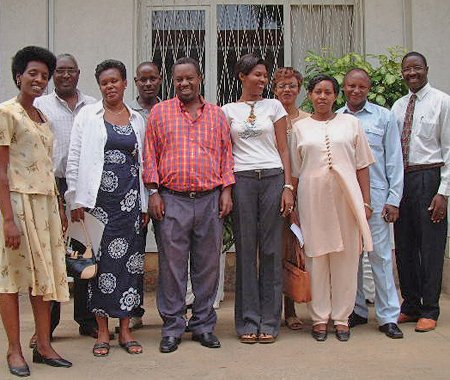
Some of the members of the TFF Amahoro Coalition Bujumbura in 2005
Context and justification
Burundi is moving from a forty-year old ethnic conflict towards peace. This violent period has taken some 300.000 lives, wounded many and destroyed uncountable souls and human trust. Over the last few years, the country’s peace process has been solidified beyond the expectations of many in the international community. It is clear that the people of Burundi want to move forward to permanent peace.
With the new democratically elected government in place, one would expect a keen attention from different parties of the Burundian and international community to secure an efficient prevention of future violence. It can only come about – as is rightly stated in the Governments new program – through more security, peace education, democratization, socio-economic development and reconciliation.
It is in this particular context, that we – the TFF Amahoro Coalition consisting of 13 Burundian civil society organisations, CSO, supported by the Transnational Foundation for Peace and Future Research based in Sweden – come together in the wish to establish an Amahoro Coalition Open Centre in Bujumbura. The centre would be made mainly with a library with books on peace, peace-building, non-violence, human rights etc in English and French., with a computer room, an NGO coordination unit and a larger auditorium for public debate. The centre would seek regional co-operation and will focus strongly on reaching the Burundian countryside.
We represent fields such as youth, women, political analysis, academia, media, human rights and teachers throughout the country.
We believe that neither our government nor the international organisations working to help our country can succeed without a vibrant civil society. Our Coalition is enthusiastic about the possibility to co-operate with others who share our values and the ideas in establishing this open peace centre.
We recognise the importance of synergy – that we can support peace in Burundi more effectively if we work with education, capacity-building, projects and public outreach together and approach the challenges to peace in our country in an integrated manner. The Centre described below is our first major attempt to achieve such synergy.
Main objective
To consolidate Burundi peace process through training, education and public outreach.
Specific objectives
– To provide a learning community to the population in general and to the youth in particular in the field of peace, conflict resolution and reconciliation;
– To train and educate people in the Burundian community on the concepts of peace, conflict resolution and reconciliation;
– To provide a coordination space for the activities of the NGOs members of the Amahoro Coalition as well as future members;
– To provide an all-country Peace Data Base of projects and activities by locals and internationals in the fields of peace, conflict-resolution, forgiveness, reconciliation etc.
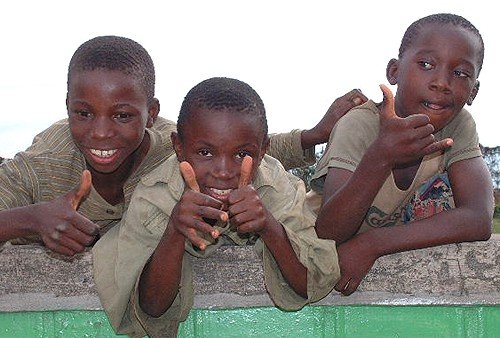
They have all the energy, they need the opportunity to learn…also about peace @ Oberg 2005
Expected outcomes
The community in general and the youth in particular are offered learning opportunities, a library and various teaching materials and methods;
– The Burundian community is trained in the field of peace, conflict resolution and reconciliation;
– An NGO Coordination space where the membership organisations coordinate their activities and present their reports, surveys, annual reports, etc. is available;
– An all-country Peace Data Base of projects and activities by locals and internationals in the fields of peace, conflict-resolution, forgiveness, reconciliation, etc is available.
– A series of activities – public meetings, concerts, debates, art exhibitions that will stimulate everybody’s curiosity about peace and strengthen public dialogue.
– Through its activities stimulate the establishment of similar Centres in the regions.
Target groups
– NGOs members of the Amahoro Coalition and future members of the Coalition;
– The Burundian society community
Activities to carry out
1. Training courses and seminars;
2. Computer courses and Internet education for young people supported by the reading space and library;
3. Public debates and press conferences with politicians, business people, bashingantahe… on different topics related to the life of the nation;
4. Setting up an all-country Peace Data Base of projects and activities by locals and internationals in the fields of peace, conflict-resolution, forgiveness, reconciliation, etc;
5. Organisation of art exhibitions, concerts and other peace-culture activities;
6. Regional and international communication, networking with similar Centres and initiatives abroad;
7. Initiating income-generating activities and reduce dependence on international support.
Future self-financing activities
– Renting out seminar rooms and the Auditorium against a fee;
– Café and handicraft sales;
– A percentage of art sales and other cultural activities going to the Centre;
– Fees for use of computers and reading in the library;
– Fund-raising events such as dinners, business presentations, cultural events;
– Giving courses and consultative services against a fee;
– Doing research- and other projects the overhead of which would go to the Centre;
– Annual membership fees paid by the core 13 CSO/NGOs as well as new members;
– Extended use of voluntary people so operating costs are held reasonably low although there will have to be some employed staff;
– Favourable pricing arrangement with companies delivering coffee, soft drinks etc. so the Centre’s sales profit will be high.
Fund-raising philosophy
The Centre would come about through many smaller contributions from many sources to reduce its vulnerability. The donors could be governments and their aid organizations, international organisations, the business community, banks, wealthy Burundian and other citizens. Coalition members would also donate materials, time and volunteers.
Project duration
Unlimited.
Evaluation
The first evaluation by an external consultant would be conducted after 12 months to analyse the progress of the project, its strategies and suggest improvements if there is a need to do so.
Support Appeal
We therefore hereby urge other Burundians and the international community – UN Civil Affairs, UNDP, embassies and donor organisations – to come together and provide both some seed money and secure the first couple of years of the centre’s operation.
We want to ask you this !
– Can you suggest new activities or additional ideas that will make it better?
– Will you guide us to people and organisations who could help us with funds?
Please write your thoughts and ideas, your pledge to help us and how you think someone else could help to
and/or to
Thank you for your interest in our Amahoro Coalition Open Center idea and, thus, Burundi’s peaceful development !
For the Amahoro Coalition:
1. Charles Ndayiziga, coordinateur, CENAP, Centre d’Alerte et de Prévention des Conflits
2. Alexis Sinduhije, directeur, RPA, Radio Publique Africaine
3. Jean Marie Vianney Kavumbugu, President Ligue Iteka
4. Christophe Sebudandi, Président OAG, Observatoire de l’Action Gouvernementale
5. Joseph Ntiruhungwa, Président et fondateur APDH, Association Pour La Paix et les Droits de L’Homme,
6. David Niyonzima, Président THARS, Trauma Healing and Reconciliation Services
7. Vincent Nkeshimana,president Maison de la Presse
8. Patricia Ntahorubuze, coordinatrice AFJ, Association de Femmes Juristes
9. Eulalie Nibizi, presidente Syndicat des Travailleurs de l’Enseignement du Burundi(STEB)
10. Gregoire Njejimana,Recteur Universite Lumiere du Burundi
11. Sinarinzi Mamert, CAP, Compagnie des Apôtres de la Paix
12. Pie Ntakarutimana, FORSC, Forum pour le Renforcement de la Societe Civile
TFF Director Jan Oberg Transnational Foundation for Peace and Future Research / Vegagatan 25 – S – 224 57 Lund – Sweden Phone +46 46 14 59 09 Fax + 46 46 14 45 12 Email tff@transnational.live Public not-for-profit charity
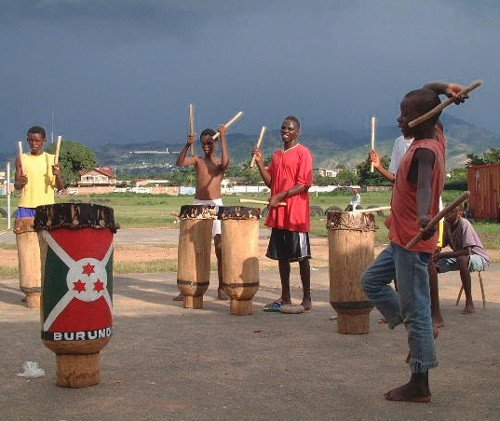
Creatively making the best out of small resources @ Oberg 2005
Read much more about Burundi, the Amahoro Coalition, TFF’s work there, analyses, appeals – and see more photos from this exciting country:The TFF Burundi Forum….
A propos de Centre Ouvert de la Coalition Amahoro (Paix)
Contexte et justification
Le Burundi sort d’un conflit cyclique qui dure plus de quatre décennies. Cette période violente a emporté plus de 300.000 vies humaines, en a blessé une multitude et a détruit des âmes innombrables.
Au cours de ces dernières années, le processus de paix a été solidifié au delà des attentes de plus d’un au sein de la communauté natinale et internationale. Il est clair que le peuple burundais a envie de progresser vers une paix durable.
Avec le nouveau gouvernement démocratiquement élu, les différentes composantes de la société Burundaise et de la communauté internationale devraient contribuer à une prévention efficace d’une violence future. Ceci ne pourrait être possible- que comme il est bien mentionné dans le nouveau programme du Gouvernement- à travers plus de sécurité, éducation à la paix, démocratisation, développement socio-économique et réconciliation.
C’est dans ce contexte assez particulier que nous, membres de la Coalition TFF Amahoro formée de 13 organisations de la société civile Burundaise, appuyés par la Fondation Transnationale sur la Paix et la Recherche pour l’Avenir (Transnational Foundation for Peace and Future Research, TFF) basée en Suède, nous mettons ensemble dans le but d’ouvrir un Centre Ouvert pour la Coalition Amahoro à Bujumbura. Le Centre serait principalement constitué d’une bibliothèque contenant des livres sur la paix, la construction de la paix, la non-violence, les droits de la personne humaine etc en Anglais et en Français, avec une salle d’ordinateurs, une unité de coordination des ONGs et un grand auditorium pour les débats publics.
Le Centre cherchera à se lier et à coopérer avec des centres similaires dans la Sous-région. Il fournira un effort particulier pour atteindre les provinces du pays.
Nous représentons des domaines assez variés tels que la jeunesse, les femmes, analyses politiques, université, media, droits humains et enseignants à travers tout le pays.
Nous croyons que ni notre gouvernement, ni les organisations internationales qui soutiennent notre pays ne sauraient réussir sans société civile active. Notre coalition est prête à coopérer avec tous ceux qui partageraient nos valeurs et idées concernant l’établissement de ce Centre Ouvert pour la paix.
Nous reconnaissons l’importance de la synergie et sommes convaincus que nous pouvons appuyer plus efficacement la paix au Burundi si nous centrons nos efforts sur l’éducation, le renforcement des capacités, sur les projets et assistance collective et abordons les défis de la paix dans notre pays de manière intégrée. Le Centre Ouvert Amahoro est notre premier essai pour aboutir à une telle synergie en vue de contribuer à la consolidation de la paix au Burundi.
Objectif principal
Consolider le processus de paix Burundais à travers l’éducation et la formation de la population.
Objectifs spécifiques
– Offrir un espace d’apprentissage à la communauté en général et la jeunesse en particulier dans le domaine de la paix, résolution des conflits et réconciliation;
– Former et éduquer la Communauté Burundaise sur les principes de paix, résolution des conflits et réconciliation, Droits de l’Homme…
– Offrir un espace de coordination des activités des ONGs membres actuels et futurs de la Coalition;
– Créer une base de données de tout le pays sur les projets et activités menées par les internationaux et les nationaux dans le domaine de la paix, résolution des conflits, pardon, réconciliation etc.
Résultats attendus
– Le public en général et la jeunesse en particulier sont offerts des opportunités d’apprentissage, une bibliothèque, des outils et méthodes d’enseignement variés;
– La communauté burundaise est formée en matière de la paix, résolution des conflits et réconciliation;
– Un espace de coordination des ONGs où les organisations coordonne leurs activités et présentent leurs rapports, études et rapports annuels est disponible;
– Une base de données de tout le pays sur les projets et activités menées par les internationaux et les nationaux dans le domaine de la paix, résolution des conflits, pardon, réconciliation etc. est disponible;
– Une série d’activités- réunions publiques, concerts, débats, expositions artistiques qui vont attirer la curiosité de tout le monde sur paix et renforcer le dialogue public, ont lieu;
– Un besoin de créer des centres similaires naît à travers les activités menées par le Centre Amahoro à Bujumbura.
Public Cible
– Les ONGs membres actuels et futurs de la coalition Amahoro;
– La communauté Burundaise
Activités prévues
1. Organisation des cours de formation et séminaires ;
2. Organisation des cours d’informatique et internet pour les jeunes appuyée par l’espace de lecture et la bibliothèque;
3. Organisation des débats publics et conférences de presse avec les politiciens, hommes d’affaires, bashingantahe… sur des thèmes variés intéressant la vie de la nation;
4. Recherche de données pour établir un état des lieux des projets et activités réalisés par les nationaux et internationaux dans le domaine de la paix, résolution des conflits, pardon , réconciliation,…
5. Mise en place d’un bureau d’écoute et de Counselling avec des facilitateurs/ médiateurs formés ;
6. Organisation des expositions des oeuvres d’art, concerts et autres activités sur la paix et la culture ;
7. Communication régionale et internationale, réseautage avec les centres similaires et initiatives étrangères ;
8. Initiation des activités génératrices de revenus pour réduire une dépendance au financement international.
Stratégies d’auto-financement progressif
– Frais provenant de la location des salles de conférence et l’auditorium
– Frais provenant du Cafétaria et du commerce d’objets d’arts ;
– Un pourcentage des frais sur les objets vendus et autres activités culturelles qui se passent dans le Centre ;
– Frais provenant de l’utilisation des ordinateurs et de la bibliothèque ;
– Frais provenant des activités de fundraising comme les dinners, événements culturels, concerts… ;
– Frais de cours et services de consultation;
– Frais de recherches et autres projets ;
– Cotisations annuelles par les 13 organisations et par les nouveaux membres ;
– Utilisation des volontaires pour que les coûts d’opérations soient réduits;
– Arrangement favorable sur les prix du café, des limonades avec les compagnies qui les délivrent pour que le profit du centre sur les produits vendus soit élevé.
Philosophie de Fundraising
Le centre serait établi à travers plusieurs contributions provenant de différentes sources pour réduire sa vulnérabilité. Les bailleurs pourraient être les gouvernements, les organisations internationales, la communauté des affaires, les banques, les riches burundais et autres citoyens. Egalement, les members de la coalition pourraient offrir quelques matériels, leur temps ainsi que des volontaires.
Durée du projet
Indéterminée
Evaluation
Une première évaluation par un consultant externe serait organisée après une durée de 12 mois pour analyser la progression du projet, les stratégies du projet et proposer un redressement en cas de besoin.
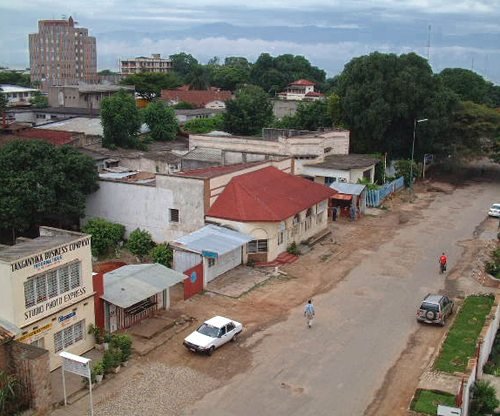
Rue de l’Industri, Bujumbura @ Oberg 2005
Quelques questions
– Pouvez-vous suggérer d’autres activités ou idées qui le rendraient meilleur?
– Allez-vous nous orienter vers des personnes ou organisations susceptibles de nous financer?
Merci de votre intérêt pour notre Centre Ouvert de la Coalition Amahoro, et ainsi pour le développement paisible du Burundi!
Please write your thoughts and ideas, your pledge to help us and how you think someone else could help to
and/or to
Pour la Coalition Amahoro:
1. Charles Ndayiziga, coordinateur, CENAP, Centre d’Alerte et de Prévention des Conflits
2. Alexis Sinduhije, directeur, RPA, Radio Publique Africaine
3. Jean Marie Vianney Kavumbugu, President Ligue Iteka
4. Christophe Sebudandi, Président OAG, Observatoire de l’Action Gouvernementale
5. Joseph Ntiruhungwa, Président et fondateur APDH, Association Pour La Paix et les Droits de L’Homme,
6. David Niyonzima, Président THARS, Trauma Healing and Reconciliation Services
7. Vincent Nkeshimana,president Maison de la Presse
8. Patricia Ntahorubuze, coordinatrice AFJ, Association de Femmes Juristes
9. Eulalie Nibizi, presidente Syndicat des Travailleurs de l’Enseignement du Burundi(STEB)
10. Gregoire Njejimana,Recteur Universite Lumiere du Burundi
11. Sinarinzi Mamert CAP, Compagnie des Apôtres de la Paix
12. Pie Ntakarutimana, FORSC, Forum pour le Renforcement de la Societe Civile
13. Emmanuel Bulamatari, Génies en Herbes.
Et,
En partenariat avec,
Directeur de TFF Jan Oberg Transnational Foundation for Peace and Future Research / Vegagatan 25, S – 224 57 Lund, Sweden Phone +46 46 14 59 09 Fax + 46 46 14 45 12 Email tff@transnational.live Public not-for-profit charity
LONDON – So far so good, at least on the wider level. While internally Iraq seems on the edge of chaos, the much heralded clash of civilizations between the Muslim and Judaeo-Christian worlds has yet to become apparent. We have anger and despair aplenty in the Arab and Muslim worlds. But very little rushing to the standard and there was no great pilgrimage of warriors to join the fight, as happened when the Soviet Union invaded Afghanistan twenty years ago, and then, having driven the Red Army out, were left to ferment in that mountainous redoubt. With the armaments supplied by the CIA the mujahidin were transformed into Al Qaeda that became, for a relatively brief moment as these things go, ‘the greatest threat to the homeland that America has ever known.’ Nevertheless a ‘Cold War’ between much of the Muslim world and the West is certainly in full swing. Winston...
The Challenge of Nuclear Weaponsin the Twenty-first CenturyA Path Forward The peoples and governments of the world face an urgent challenge relating to weaponry of mass destruction and particularly to nuclear weaponry. At the crossroads of technology, terrorism, geopolitical ambition, and policies of preemption are new and potent dangers for humanity. Despite ending the nuclear standoff of the Cold War era, nuclear weaponry is again menacing the peoples of the world with catastrophic possibilities. We recognize the need for any government to pursue its security interests in accordance with international law; and further, we recognize that distinctive threats to these interests now exist as a result of an active international terrorist network having declared war on the United States and its allies. Nonetheless, we reject the assessment of the current US administration that upgrading a reliance on nuclear weapons is in any sense justified as a response. We find it...
Johan Galtung 1930-2024October 2015 Published here on October 3, 2026 Let us focus on Civilization for conflict analysis and remedies. Major forms of disorder use violence; war is state organized violence. The most belligerent states are the United States of America and Israel, both with civilization roots. National Evangelism, the US Protestant Christian civilization– more national than evangelical–justifies US warfare as exceptionalism of a people chosen by God, with a manifest destiny to run the world. Orthodox Judaism justifies Israeli warfare to conquer and expand from Nile to Euphrates as a religious right and duty to the Eternal One. The third most belligerent country, the UK, no longer believes it is God-chosen but chosen by the USA; not quite the same but something. But the root cause of global disorder lies in the Occident–with Islam–seeing itself as the single, universal civilization valid for all at all times, all others being...
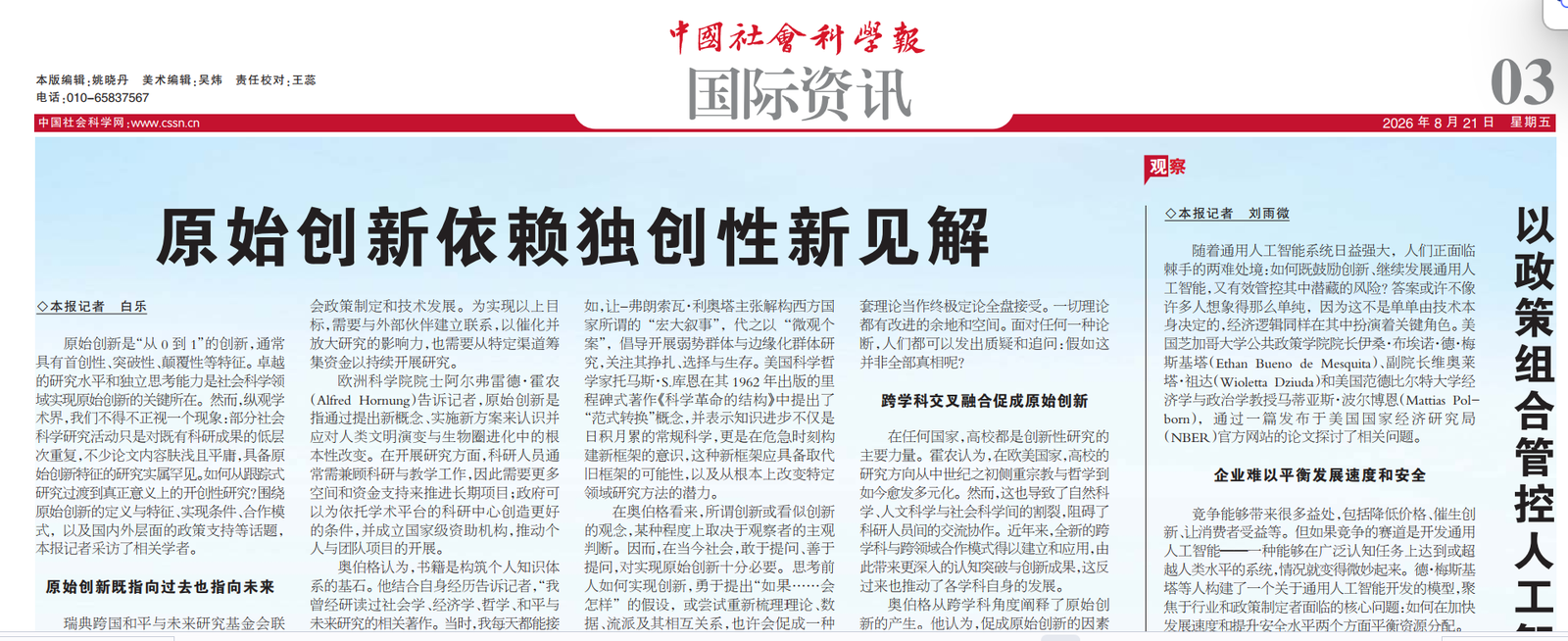
Jan ObergPhD, director, The Transnational Foundation for Peace and Future Research, TFFLund, Sweden October 2, 2026 This is my full original manuscript. The Chinese Academy of Social Science, CASS, makes two publications out if it. 1. China’s Five-year plan emphasized the capabilities of basic research and original innovation. It is regarded as the goal of the future social development, which, as required, should be significantly enhanced. Can you comment on the importance of original innovation in research and academic study? I believe it is easier to define “original innovation” in the natural sciences than in social sciences. The breaking points of what constitutes something new, or innovative, are not quite as sharp in the latter. But in both fields it is about opening up something that was closed, unseen, unexplored before – making manifest what was earlier latent. Innovations come in many forms and shapes – naming something that was not...
The agreement is catastrophic both because of what it says and what it doesn’t mention. It reduces further the major asset of security policies: Freedom of action. Jan Oberg TFF director September 25, 2026 A couple of hours before the agreement was signed on September 22, 2026, I published the following 13 hypotheses about what it would most likely contain on TFF Substack (in English). I was wrong on only the first point. Contrary to what Trump had written on his Truth Social platform, it does not appear to come into force immediately. In fact, it turned out to be worse than even I had anticipated. After these hypotheses now come a number of reflections in light of what the agreement actually contains, and does not contain, as well as the way in which it has generally been presented by major media outlets and by the public-service broadcaster DR. My...
TFF on Substack
Discover more from TFF Transnational Foundation & Jan Oberg.
Johan Galtung 1930-2024October 2015 Published here on October 3, 2026 Let us focus on Civilization for conflict analysis and remedies. Major forms of disorder use violence; war is state organized violence. The most belligerent states are the United States of America and Israel, both with civilization roots. National Evangelism, the US Protestant Christian civilization– more national than evangelical–justifies US warfare as exceptionalism of a people chosen by God, with a manifest destiny to run the world. Orthodox Judaism justifies Israeli warfare to conquer and expand from Nile to Euphrates as a religious right and duty to the Eternal One. The third most belligerent country, the UK, no longer believes it is God-chosen but chosen by the USA; not quite the same but something. But the root cause of global disorder lies in the Occident–with Islam–seeing itself as the single, universal civilization valid for all at all times, all others being...
Jan ObergPhD, director, The Transnational Foundation for Peace and Future Research, TFFLund, Sweden October 2, 2026 This is my full original manuscript. The Chinese Academy of Social Science, CASS, makes two publications out if it. 1. China’s Five-year plan emphasized the capabilities of basic research and original innovation. It is regarded as the goal of the future social development, which, as required, should be significantly enhanced. Can you comment on the importance of original innovation in research and academic study? I believe it is easier to define “original innovation” in the natural sciences than in social sciences. The breaking points of what constitutes something new, or innovative, are not quite as sharp in the latter. But in both fields it is about opening up something that was closed, unseen, unexplored before – making manifest what was earlier latent. Innovations come in many forms and shapes – naming something that was not...
The agreement is catastrophic both because of what it says and what it doesn’t mention. It reduces further the major asset of security policies: Freedom of action. Jan Oberg TFF director September 25, 2026 A couple of hours before the agreement was signed on September 22, 2026, I published the following 13 hypotheses about what it would most likely contain on TFF Substack (in English). I was wrong on only the first point. Contrary to what Trump had written on his Truth Social platform, it does not appear to come into force immediately. In fact, it turned out to be worse than even I had anticipated. After these hypotheses now come a number of reflections in light of what the agreement actually contains, and does not contain, as well as the way in which it has generally been presented by major media outlets and by the public-service broadcaster DR. My...
Johan Galtung 1930-2024October 2015 Published here on October 3, 2026 Let us focus on Civilization for conflict analysis and remedies. Major forms of disorder use violence; war is state organized violence. The most belligerent states are the United States of America and Israel, both with civilization roots. National Evangelism, the US Protestant Christian civilization– more national than evangelical–justifies US warfare as exceptionalism of a people chosen by God, with a manifest destiny to run the world. Orthodox Judaism justifies Israeli warfare to conquer and expand from Nile to Euphrates as a religious right and duty to the Eternal One. The third most belligerent country, the UK, no longer believes it is God-chosen but chosen by the USA; not quite the same but something. But the root cause of global disorder lies in the Occident–with Islam–seeing itself as the single, universal civilization valid for all at all times, all others being...
Jan ObergPhD, director, The Transnational Foundation for Peace and Future Research, TFFLund, Sweden October 2, 2026 This is my full original manuscript. The Chinese Academy of Social Science, CASS, makes two publications out if it. 1. China’s Five-year plan emphasized the capabilities of basic research and original innovation. It is regarded as the goal of the future social development, which, as required, should be significantly enhanced. Can you comment on the importance of original innovation in research and academic study? I believe it is easier to define “original innovation” in the natural sciences than in social sciences. The breaking points of what constitutes something new, or innovative, are not quite as sharp in the latter. But in both fields it is about opening up something that was closed, unseen, unexplored before – making manifest what was earlier latent. Innovations come in many forms and shapes – naming something that was not...
The agreement is catastrophic both because of what it says and what it doesn’t mention. It reduces further the major asset of security policies: Freedom of action. Jan Oberg TFF director September 25, 2026 A couple of hours before the agreement was signed on September 22, 2026, I published the following 13 hypotheses about what it would most likely contain on TFF Substack (in English). I was wrong on only the first point. Contrary to what Trump had written on his Truth Social platform, it does not appear to come into force immediately. In fact, it turned out to be worse than even I had anticipated. After these hypotheses now come a number of reflections in light of what the agreement actually contains, and does not contain, as well as the way in which it has generally been presented by major media outlets and by the public-service broadcaster DR. My...
LONDON – It was the late president of France, Charles de Gaulle, who famously said, “Brazil has a great future, and it always will have.” With the first round of the Brazilian election over with the favourite to win, President Luiz Inacio Lula da Silva, coming under increasing scrutiny for corruption – the seemingly eternal Brazilian political disease – many observers seriously wonder if Brazil can ever unlock its enormous potential. Brazil has long lived out its personal fantasy of the archetypal relaxed, tolerant and gregarious country with Copacabana beach, the samba, the carnival and a great deal of sexual freedom, but all this has come at a price – the lack of discipline in both personal and public morality. The ingrained privileges of those who have already made it, together with the manipulative corruption of the established political class, make it difficult for Brazil to engage in the economic...
Below are TFF-related media mentions, comments, videos and social media posts published elsewhere but not on this homepage. We happen to catch and list only a fraction. Regarding video comments and debates, we recommend that you go to the TFF Video Channel on Substack where many of them are reproduced. Jan Oberg is a contributor to China Daily – 52 million daily clicks – and Global Times, CGTN and CCTV (the national television), China Investment, Xinhua News Agency and several others. Articles and videos on these media very often multiply into countless Chinese (and Western media) that re-post them from these main media. Thanks to The China Academy, his analyses, interviews and comments are frequently posted on YouTube channels such as Thinkers Forum and Wave Media. These videos are often re-posted on Bilibili (China’s YouTube), the China Content Center on TikTok, and on the Chinese edition of TikTok, Douyin.com. This means reaching hundreds of millions of viewers worldwide over a year. While there are too many to catch on all these...
How Oxford University Press allowed a personality‑driven narrative to masquerade as scholarship. Jan Oberg, dr hc, TFF director This article has also been published on TFF Substack where more readers react and withdraw their interviews from the project. A Special Issue in a scholarly journal is not an ordinary publication. It is a collective, curated […]