
TFF at 40 # 3 – A Record of Predictive Analyses That Time Confirmed

To celebrate TFF’s 40th Anniversary, we have re-published – on TFF Substack – two earlier articles that were published here on The Transnational. They are:

TFF at 40 #1 – Peace research at Lund University closed down in 1989: Why and how?
And why I lived happily ever after. This is a piece of Nordic academic history deserving to be shared – from 2017.

TFF at 40 #2 – TFF’s first few years – from 2017.

This is the third

Christina Spännar & Jan Oberg

Founders

December 31, 2025

One measure of good social science is its ability to anticipate the consequences of policies, trends and events. It is not unlike the work of a good doctor: diagnosis, prognosis, and treatment must be grounded in careful observation. If the diagnosis is flawed, the prognosis falters — and the patient’s chances of recovery diminish.

Over the past forty years, TFF’s board, founders, and 150 Associates have offered analyses and predictions across a wide range of international issues. These appeared in articles, comments, social media posts, videos and countless media interviews and debates around the world.

Many of these predictions, though far from all, proved remarkably accurate. In case after case, our assessments aligned more closely with later developments than those produced by governments, alliances, and their well-funded intelligence services, ministries, research institutes and think tanks.

The examples below are not ranked by importance or chronology. They simply illustrate a pattern. After the list, we reflect briefly on why TFF’s approach — modest in resources but rich in competencies, experience and independence — has often led to clearer diagnoses and more reliable prognoses than much larger and more expensive institutions.

Examples of TFF Predictions That Time Confirmed

TFF predicted, with considerable accuracy, that:

the 2003 invasion of Iraq would become a comprehensive and predictable failure — politically, strategically, and humanly (2002–2004);

NATO’s 1999 bombing of Serbia would not resolve the conflict but instead block the path to a negotiated settlement that might have enabled a stable coexistence between Kosovo and Serbia  as well as between Serb and Albanians— an assessment grounded in e.g. our four years of goodwill mediation in this particular conflict (1999);

NATO would proceed with bombing in Yugoslavia without a UN mandate, despite international law and its own Treaty provisions, setting the Alliance on a long trajectory of non-legal policies and political overreach that would later shape the road to the war in Ukraine (1999);

with the dissolution of the Soviet Union and the Warsaw Pact, NATO’s original purposes had disappeared, and the Alliance should therefore be closed and replaced with a new, inclusive European peace and security architecture (1990);

the Dayton Accords, shaped by narrow and self-serving U.S. perceptions of Bosnia-Herzegovina’s complexity, could not produce a sustainable peace and would instead freeze the conflict in place (1995);

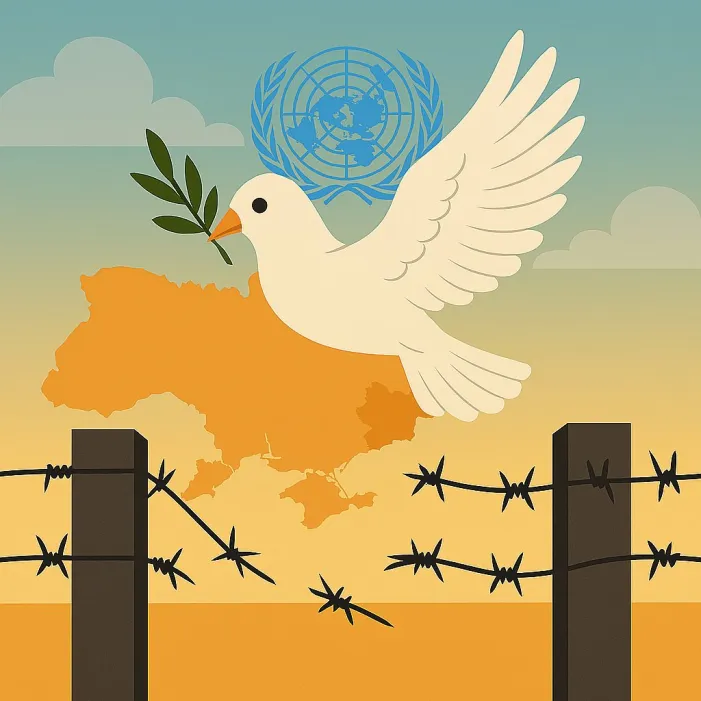
Russia’s 2022 invasion/Limited Military Operation would have devastating consequences, and NATO governments would frame the event as proof of a continent-wide Russian threat while denying their own role in the preceding dynamics (2022);

arming Ukraine to fight on NATO’s behalf, rather than seeking a negotiated settlement, would prolong the suffering and fail to address the underlying conflict — a pattern seen in earlier proxy dynamics (2022);

the Western West would follow the trajectory of the Eastern West — a long, structural decline driven by hubris, overextension, militarism and the erosion of legitimacy (1981).

TFF also predicted, with notable consistency, that:

China would become increasingly central to the future world order, and understanding China on its own premises — rather than treating it primarily as a threat — would be essential for constructive global coexistence. Persistent Western antagonism, we argued, would be self-defeating, while China would simply continue its trajectory (2018 onwards);

China would not seek to build a new unipolar empire, nor attempt to reshape the world in its own image. We maintained that the United States would be the last global empire in the classical sense, and that China’s rise would follow a different logic (2018 onwards);

the UN’s role in Yugoslavia would later be judged as a failure, not because the UN mission itself was inadequate, but because member states — particularly the US and key NATO countries — withheld clear mandates, sufficient funding, and competent troop contributions. This tendency to undermine the UN was reinforced by the deeply problematic “Agenda for Peace” framework of the 1990s;

Denmark’s co-production purchase of F-16s in the mid-1970s would help create a Danish militaryindustrial complex, the fighter aircraft would prove irrelevant for the defence of Denmark itself, and be used primarily for expeditionary bombing missions abroad — a trajectory we advised against from the outset (1975 to today’s single-minded armament policies of this small country);

Ukraine would not be able to win a war against Russia, even with extensive NATO support — a conclusion that required no military expertise, only sober analysis of capabilities, history, geography, and political will (2022 to today);

deploying UN peacekeepers in Croatia’s Krajina region and in Eastern and Western Slavonia would be the only viable path to preventing further escalation — a proposal TFF publicly advanced before others, and which was fully supported by former Secretary of State, Cyrus Vance and his team, which incidentally worked on this idea at the same time (autumn 1991);

the conflicts in Yugoslavia could not be reduced to “Serbs, Serbia, and Milošević as the sole cause”, and that applying this simplistic post-Cold War template — treating Croatia and Slovenia as Baltic-style democracy-loving victims and Serbia as an aggressive Russia-like dictatorship — would lead Western governments into misdiagnosis, escalation, and unnecessary suffering (1991–2000);

the near-total absence of deep Yugoslavia expertise in Western governments would result in misguided interventions and, ultimately, systematic peace prevention;

recognising Croatia and Slovenia as independent states outside Yugoslavia would make war in Bosnia-Herzegovina unavoidable. When the EU proceeded with this ill-considered recognition — driven in part by Germany’s historical ties to Croatia — the Bosnian war broke out only months later (1990–1992).

TFF further predicted that:

the United States would enter a period of structural decline, with the possibility of a major political and institutional crisis around the mid-2020s. While the final outcome remains open, the long-term trend was already visible — even if saying so publicly was treated as heresy in mainstream Western discourse (2010 to today);

a second Trump presidency would revive U.S. interest in Greenland, and that Denmark should prepare for renewed pressure — something it did not do, having systematically avoided confronting the darker sides of U.S. foreign policy since the late 1940s. Whether our further prediction — that Washington will actually attempt to associate Greenland to the U.S. in violation of international law and basic decency toward an ally — will materialise remains to be seen (2018);

the EU’s institutional design, principles, and policies lacked the capacity to create peace, either within its own borders or internationally, despite the Lisbon Treaty’s declaration that peace is its highest goal (2006 & 2011);

successful integration of asylum seekers in Sweden was entirely possible, even as political attitudes in Sweden and Europe hardened against refugees. TFF’s integration project with young Afghan boys demonstrated this clearly; today, these individuals are well-integrated members of Swedish society (2010–2015);

Israel’s actions following Hamas’ attack on October 7, 2023, would amount to — and should be recognised as — genocide (December 2023);

massive Western sanctions on Iran would trap the Iranian population in a “second cage,” adding external punishment to internal repression, and would do nothing to improve relations between Iran and the West or to foster meaningful change inside Iran (2012 to today);

Iran would eventually be attacked militarily regardless of its behaviour, and that the narrative of Iran seeking nuclear weapons was largely constructed by Israel — a theme promoted by Prime Minister Netanyahu since the 1990s (2016–2017);

Iran would not seek to become a nuclear weapons power, unless provoked by Israel and other Western countries’ policies (2010);

December 12, 2016, would mark the end of the Western regimechange effort in Syria, exactly four years after it began, because that was the day Syrian government forces — with Russian support — liberated Eastern Aleppo after 4.5 years of al-Nusra control. This turning point, though crucial, was almost entirely absent from Western media coverage (2016);

the so-called White Helmets in Syria would eventually be exposed as a US/UK-staged humanitarian narrative, functioning in practice as an auxiliary to terror groups rather than as a predominantly humanitarian organisation (2016);

the accusations of genocide against Uyghurs in Xinjiang would be revealed as a politically orchestrated U.S. propaganda campaign, particularly under the Trump–Pompeo leadership. TFF documented how this narrative was constructed, financed, and disseminated (2021);

the post-9/11 “Global War on Terror” — focused on killing terrorists rather than addressing the root causes of terrorism — would fail and produce immense suffering. We opposed the attack on Afghanistan from the outset, arguing that it would deepen, not resolve, the problem (2001 onwards).’

Others could be mentioned at the micro level in time and space.

Why TFF’s Predictions Often Proved More Accurate

In broader terms, TFF has consistently argued that far better outcomes could be achieved through non-violent conflict resolution, and that the use of violence should be the absolute last resort. Throughout our work, we demonstrated that credible, civilian alternatives to war existed. Yet because governments chose not to pursue these options — despite the UN Charter, international law, and basic common sense — we cannot empirically prove that these peaceful alternatives would have produced better results than the wars that were actually waged.

What we can say is that the violent paths chosen have repeatedly failed – and that we predicted it, often way before other experts and government decision-makers.

Over forty years, as the examples above illustrate, TFF has offered analyses and predictions that proved far more accurate than the official narratives about the likely consequences of Western policies — narratives that often promised stability, democracy, security and even peace if only certain leaders and governments were removed and Western values implemented.

Reality unfolded differently. But “when will they ever learn”?

We produced this work on a people-financed shoestring budget of roughly USD 20,000 per year, supported by an entirely volunteer circle of Associates.

Put simply, security politics is not primarily about money or weapons. It is about genuine intelligence, analytical depth, field experience, professional competence, and the freedom to investigate and publish without political or financial pressure. On funds to which no strings are attached.

Being financed by citizens — not governments — as TFF is has always been our only real guarantee of independence, of freedom of thought. Today, it remains an oasis in a landscape dominated by state-funded, commissioned and mostly militarism-friendly research that, with few exceptions, bears little resemblance to truly free inquiry or education.

Furthermore, TFF has never deviated from the wisdom embedded in the Gandhi-inspired Article 1 of the UN Charter that states that peace shall be brought about by peaceful means. The foundation has remained committed to true peace research – meaning a) the exploration of how to reduce all kinds of violence and b) convert the saved resources to secure development and develop security, and realise individual and societal potentials for to benefit the global good. from the early 1990s, TFF pioneered the idea of doing conflict analysis and mediation based not only on books with theories and concepts but on going to theatres of conflict and violence.

The wars conducted by the US, NATO, and the EU over these decades have been systematic failures — militarily, politically, morally, and legally. They have not produced peace, trust, or stability. They have violated international law and deepened global insecurity. Instead of increasing the chances of peace, they have diminished them – in defiance of their own stated view that what they do is and should be seen even by adversaries as ‘defensive.’ NATO has not been defensive since 1999.

The world could have been in a far better place today had the last forty years been guided by the best available knowledge about peaceful coexistence, development, justice and peace-making. Instead, the unipolar leadership chose to exploit the temporary weaknesses of others, overextend itself, and militarise its policies to the point of exhaustion, moral decay and final demise.

TFF warned of this trajectory in several reports around 1989–1990 and later, noting the growing risk that the – happy – end of the First Cold War would be followed by a Second, by systematic confrontation and peacelessness.

Tragically, and completely unnecessarily, that is where we find ourselves today. The good news is that the rest of the world is growing stronger and no longer accepts that ill-managed unipolarity. The Rest has visions of a better world, and we promote it whenever we can; the West has no visions. We are indeed living in interesting times and TFF will be around to see and influence that exciting new world order as much as we can.

Share

Leave a Reply

Your email address will not be published. Required fields are marked *

Related Posts

Jan Oberg February 19, 2026 What a thrill to be interviewed by former British diplomat Ian Proud! Don’t waste a minute: acquaint yourself with him here on his homepage, which he elegantly calls “Proud Diplomat.” Notice also his book, A Misfit In Moscow. Ian is, of course, also on Substack, where he calls himself The Peace Monger, and recently he set up his own PeaceMonger Channel on YouTube. For once, I was not interviewed as if I were a military geopolitical expert, where I normally have to twist the whole thing in the direction of peace. No, we both had a focus on peace – why it has been disappeared by research, politics and the media, but also what can be done to shape a more peaceful future for us all. One idea we came up with was that of connecting people through citizens diplomacy – in an era where more or less authoritarian leaders meet frequently and confirm each other as members...
This is not another geopolitical commentary on the Arctic. It is a visionary peace proposal that can save the region from militarised rivalry and ecological ruin. A blueprint for shared security, sustainable development, and human dignity — benefitting Greenland, the Arctic, and the rest of us. Jan Oberg TFF director Lund, Sweden, February 17, 2026 I. Four Principles for a New Arctic Vision The Arctic is often framed as a cold arena of rivalry — a place where great powers test each other’s resolve. But this worldview is outdated, unimaginative, and ultimately self‑defeating. The Arctic is not a vacuum waiting to be militarised; it is a living region, a climate stabiliser, and a cultural homeland whose future will shape the future of humanity. If we begin from that understanding, a far more rational Arctic order becomes possible — one that is peaceful, cooperative, and centred on the people who actually live there. This vision rests...
PressInfo # 141, December 21, 2001It’s time to prepare reconciliation between Albanians and Serbs PressInfo # 140, December 14, 2001Ibrahim Rugova’s decade-long leadership in Kosovo/a PressInfo # 139, 11. december, 2001En god nyhet: Jugoslaviens Sannings- och försoningskommission PressInfo # 139, 11. december, 2001Gode nyheder: Jugoslaviens Sandheds- og Forsoningskommission PressInfo # 139, December 11, 2001Good news: Yugoslavia’s Truth and Reconciliation Commission PressInfo # 138, November 8, 2001TFF co-founder PhD with thesis about young people with roots in other cultures PressInfo # 138, November 8, 2001TFF:s medstiftare doktor på avhandling om unga med ursprung i andra kulturer PressInfo # 137, October 17, 2001A new Marshall Plan: Advancing human security and controlling terrorism PressInfo # 136, October 15, 2001The UN and Annan really deserve it PressInfo # 135, October 10, 2001Preventing a terrorist mushroom cloud PressInfo # 134, 17 oktober, 2001Sverige og 11. september PressInfo # 134, October 9, 2001Sweden and September 11...

Recent Articles

Jan Oberg February 19, 2026 What a thrill to be interviewed by former British diplomat Ian Proud! Don’t waste a minute: acquaint yourself with him here on his homepage, which he elegantly calls “Proud Diplomat.” Notice also his book, A Misfit In Moscow. Ian is, of course, also on Substack, where he calls himself The Peace Monger, and recently he set up his own PeaceMonger Channel on YouTube. For once, I was not interviewed as if I were a military geopolitical expert, where I normally have to twist the whole thing in the direction of peace. No, we both had a focus on peace – why it has been disappeared by research, politics and the media, but also what can be done to shape a more peaceful future for us all. One idea we came up with was that of connecting people through citizens diplomacy – in an era where more or less authoritarian leaders meet frequently and confirm each other as members...
This is not another geopolitical commentary on the Arctic. It is a visionary peace proposal that can save the region from militarised rivalry and ecological ruin. A blueprint for shared security, sustainable development, and human dignity — benefitting Greenland, the Arctic, and the rest of us. Jan Oberg TFF director Lund, Sweden, February 17, 2026 I. Four Principles for a New Arctic Vision The Arctic is often framed as a cold arena of rivalry — a place where great powers test each other’s resolve. But this worldview is outdated, unimaginative, and ultimately self‑defeating. The Arctic is not a vacuum waiting to be militarised; it is a living region, a climate stabiliser, and a cultural homeland whose future will shape the future of humanity. If we begin from that understanding, a far more rational Arctic order becomes possible — one that is peaceful, cooperative, and centred on the people who actually live there. This vision rests...
PressInfo # 141, December 21, 2001It’s time to prepare reconciliation between Albanians and Serbs PressInfo # 140, December 14, 2001Ibrahim Rugova’s decade-long leadership in Kosovo/a PressInfo # 139, 11. december, 2001En god nyhet: Jugoslaviens Sannings- och försoningskommission PressInfo # 139, 11. december, 2001Gode nyheder: Jugoslaviens Sandheds- og Forsoningskommission PressInfo # 139, December 11, 2001Good news: Yugoslavia’s Truth and Reconciliation Commission PressInfo # 138, November 8, 2001TFF co-founder PhD with thesis about young people with roots in other cultures PressInfo # 138, November 8, 2001TFF:s medstiftare doktor på avhandling om unga med ursprung i andra kulturer PressInfo # 137, October 17, 2001A new Marshall Plan: Advancing human security and controlling terrorism PressInfo # 136, October 15, 2001The UN and Annan really deserve it PressInfo # 135, October 10, 2001Preventing a terrorist mushroom cloud PressInfo # 134, 17 oktober, 2001Sverige og 11. september PressInfo # 134, October 9, 2001Sweden and September 11...

TFF on Substack

Discover more from TFF Transnational Foundation & Jan Oberg.

Most Popular

Jan Oberg February 19, 2026 What a thrill to be interviewed by former British diplomat Ian Proud! Don’t waste a minute: acquaint yourself with him here on his homepage, which he elegantly calls “Proud Diplomat.” Notice also his book, A Misfit In Moscow. Ian is, of course, also on Substack, where he calls himself The Peace Monger, and recently he set up his own PeaceMonger Channel on YouTube. For once, I was not interviewed as if I were a military geopolitical expert, where I normally have to twist the whole thing in the direction of peace. No, we both had a focus on peace – why it has been disappeared by research, politics and the media, but also what can be done to shape a more peaceful future for us all. One idea we came up with was that of connecting people through citizens diplomacy – in an era where more or less authoritarian leaders meet frequently and confirm each other as members...
This is not another geopolitical commentary on the Arctic. It is a visionary peace proposal that can save the region from militarised rivalry and ecological ruin. A blueprint for shared security, sustainable development, and human dignity — benefitting Greenland, the Arctic, and the rest of us. Jan Oberg TFF director Lund, Sweden, February 17, 2026 I. Four Principles for a New Arctic Vision The Arctic is often framed as a cold arena of rivalry — a place where great powers test each other’s resolve. But this worldview is outdated, unimaginative, and ultimately self‑defeating. The Arctic is not a vacuum waiting to be militarised; it is a living region, a climate stabiliser, and a cultural homeland whose future will shape the future of humanity. If we begin from that understanding, a far more rational Arctic order becomes possible — one that is peaceful, cooperative, and centred on the people who actually live there. This vision rests...
PressInfo # 141, December 21, 2001It’s time to prepare reconciliation between Albanians and Serbs PressInfo # 140, December 14, 2001Ibrahim Rugova’s decade-long leadership in Kosovo/a PressInfo # 139, 11. december, 2001En god nyhet: Jugoslaviens Sannings- och försoningskommission PressInfo # 139, 11. december, 2001Gode nyheder: Jugoslaviens Sandheds- og Forsoningskommission PressInfo # 139, December 11, 2001Good news: Yugoslavia’s Truth and Reconciliation Commission PressInfo # 138, November 8, 2001TFF co-founder PhD with thesis about young people with roots in other cultures PressInfo # 138, November 8, 2001TFF:s medstiftare doktor på avhandling om unga med ursprung i andra kulturer PressInfo # 137, October 17, 2001A new Marshall Plan: Advancing human security and controlling terrorism PressInfo # 136, October 15, 2001The UN and Annan really deserve it PressInfo # 135, October 10, 2001Preventing a terrorist mushroom cloud PressInfo # 134, 17 oktober, 2001Sverige og 11. september PressInfo # 134, October 9, 2001Sweden and September 11...
Read More
Jan Oberg February 19, 2026 What a thrill to be interviewed by former British diplomat Ian Proud! Don’t waste a minute: acquaint yourself with him here on his homepage, which he elegantly calls “Proud Diplomat.” Notice also his book, A Misfit In Moscow. Ian is, of course, also on Substack, where he calls himself The Peace Monger, and recently he set up his own PeaceMonger Channel on YouTube. For once, I was not interviewed as if I were a military geopolitical expert, where I normally have to twist the whole thing in the direction of peace. No, we both had a focus on peace – why it has been disappeared by research, politics and the media, but also what can be done to shape a more peaceful future for us all. One idea we came up with was that of connecting people through citizens diplomacy – in an era where more or less authoritarian leaders meet frequently and confirm each other as members...
Arctic_North_Pole_Map
This is not another geopolitical commentary on the Arctic. It is a visionary peace proposal that can save the region from militarised rivalry and ecological ruin. A blueprint for shared security, sustainable development, and human dignity — benefitting Greenland, the Arctic, and the rest of us. Jan Oberg TFF director Lund, Sweden, February 17, 2026 I. Four Principles for a New Arctic Vision The Arctic is often framed as a cold arena of rivalry — a place where great powers test each other’s resolve. But this worldview is outdated, unimaginative, and ultimately self‑defeating. The Arctic is not a vacuum waiting to be militarised; it is a living region, a climate stabiliser, and a cultural homeland whose future will shape the future of humanity. If we begin from that understanding, a far more rational Arctic order becomes possible — one that is peaceful, cooperative, and centred on the people who actually live there. This vision rests...
Imagen-thumbnail-The-Transnational-1
PressInfo # 141, December 21, 2001It’s time to prepare reconciliation between Albanians and Serbs PressInfo # 140, December 14, 2001Ibrahim Rugova’s decade-long leadership in Kosovo/a PressInfo # 139, 11. december, 2001En god nyhet: Jugoslaviens Sannings- och försoningskommission PressInfo # 139, 11. december, 2001Gode nyheder: Jugoslaviens Sandheds- og Forsoningskommission PressInfo # 139, December 11, 2001Good news: Yugoslavia’s Truth and Reconciliation Commission PressInfo # 138, November 8, 2001TFF co-founder PhD with thesis about young people with roots in other cultures PressInfo # 138, November 8, 2001TFF:s medstiftare doktor på avhandling om unga med ursprung i andra kulturer PressInfo # 137, October 17, 2001A new Marshall Plan: Advancing human security and controlling terrorism PressInfo # 136, October 15, 2001The UN and Annan really deserve it PressInfo # 135, October 10, 2001Preventing a terrorist mushroom cloud PressInfo # 134, 17 oktober, 2001Sverige og 11. september PressInfo # 134, October 9, 2001Sweden and September 11...
Imagen-thumbnail-The-Transnational-1
Peace is promoted by constructive proposals and dialogue Four preceding PressInfos have expressed concern over — and criticised — the ongoing, militarisation of the EU. Some will say: but there are no alternatives. We believe that there are always alternatives, that democracies are characterised by alternatives and choice, and that openly discussed alternatives will improve the quality and legitimacy of society’s decision–making. In addition, it is an intellectual and moral challenge to not only criticise but also be constructive. If we only tell people that we think they are wrong, they are not likely to listen. However, if we say: what are your views on this set of ideas and steps? — we may sometimes engage them in dialogue and sow a seed. Most people in power circles live their daily lives in in a time frame and a social space where certain ideas, viewpoints and concepts are just not...
Imagen-thumbnail-The-Transnational-1
Photos © TFF 2000 Read PressInfo 90 “Lift the Sanctions and Bring More Aid to Yugoslavia” See Pictures from Belgrade © TFF 2000 Please reprint, copy, archive, quote or re-post this item, but please retain the source.
Imagen-thumbnail-The-Transnational-1
Av FRANK SØHOLM GREVIL 16 augusti 2004  Vi er nu nået til tredje akt i det absurde teaterstykke, der i analogi med de store skueprocesser i Moskva 1936-38 er blevet døbt ‘Grevil-sagen’. Første akt bestod i min anonyme fremlæggelse af egenhændigt nedklassificerede rapporter i Berlingske Tidende i februar og marts. Andet akt udgjordes af min fremtræden med navn og billede i Information i april samt den efterfølgende mediestorm, som uden min direkte medvirken kostede en forsvarsminister taburetten samt en sigtelse for brud på tavshedspligten. Tredje akt bliver en retssag, hvor jeg står tiltalt for at have overtrådt straffelovens bestemmelser om uberettiget videregivelse eller udnyttelse af fortrolige oplysninger. Statsanklageren har ovenikøbet valgt at påberåbe sig særligt skærpende omstændigheder. Da jeg aldrig har modtaget betaling for at stille rapporterne til rådighed eller lade mig interviewe, må det skærpende bestå i, at “videregivelsen eller udnyttelsen er sket under sådanne omstændigheder, at det påfører...


