Sweden: the Shrinking of a Third Way Pioneer

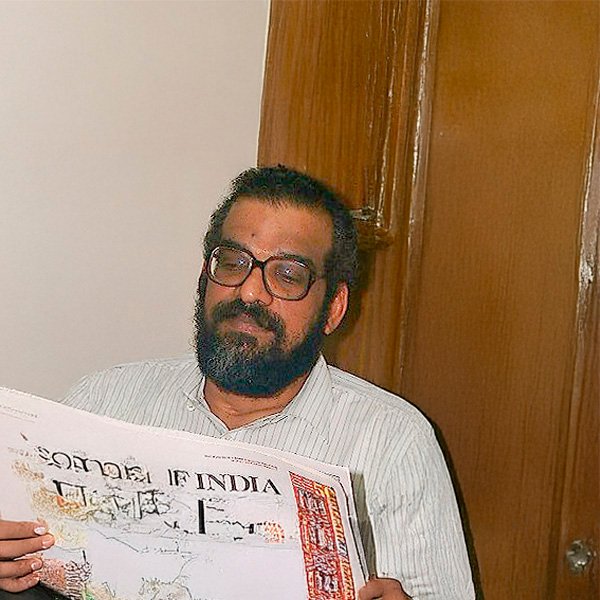
By Shastri Ramachandaran, Editor, Times of India

Stockholm  

March 26, 2002

STOCKHOLM: Has Sweden lost its way? Or is it merely stuck at the crossroads?

This is the dilemma of a pioneer. Having opted out of the beaten course, the path-breaker must for ever be conscientious about progress in a chosen direction. It calls for sustained vision to remain steadfast in a self-elected mission.

Unfortunately, Sweden, once perceived as a moral superpower that outshone the nuclear powers in their battle armour has lost its reference points: the twin routes of unbridled capitalism and Stalinist socialism between which it charted a promising new way. The Third Way, born of the visionary-activism of Olof Palme, one of the tallest social democrats and celebrated ‘Third Worlder’, was a beacon of hope for many in the South, and also sections in the North, who were unwilling to hitch their wagon to the Cold Warriors. But with the end of the Cold War, in the absence of two divergent routes leading from Washington-NATO and Moscow-COMECON, Sweden seems to have lost its way.

Where and how can there be a Third Way when there are no two other ways? is the despairing question I was repeatedly confronted with by representatives of official Sweden during my eight-day sojourn from Malmo and Lund through Kalmar to Stockholm. Was it a justification, or an apology, for Sweden being reduced to a virtual fellow-traveller of the US, EU and NATO in a unipolar world? One answer is that such a trap is the consequence of predicating a Third Way on the existence of two others, and not as a genuine alternative founded on its own logic and purpose. Because there is nothing in the globalised world of today that is more needed than an alternative vision and direction.

If our story begins with Palme, what did Sweden stand for in his time: A model and humane welfare state with a vibrant civil society striving to internationalise these values. The pillars of this internationalism, dedicated to peace with development and democracy for all, were non-alignment, neutrality, respect for the UN, its mandate and sovereignty of small states and disarmament. If Swedish policy, once proudly independent, is tested against any of these today, the results are disheartening. The official viewpoints I came across are rationalisations for departure from the principles Palme, although the emotional loyalty to his legacy is undiminished among influential figures like foreign minister Anna Lindh.

Lindh is admittedly upset at criticism of her government having jettisoned the policies of Palme because Sweden is part of the US campaign against terrorism. “What Palme did was remarkable during the time of Cold War when US and USSR did not care for smaller states and supported military regimes and dictatorships”, she said in her office in Stockholm. She asserted that it is not Swedish policy but the world that has changed. “We are still independent when it comes to defending developing countries, human rights and criticising the US, as on National Missile Defence”.

Lindh is uncomfortable with Sweden playing superpower, moral or of any other kind. “This is self-glorification and not good, because the EU can be a power, not Sweden which can be just a voice”, and yet she admits that “Sweden is diminished”, hinting at aspirations of engaging in concerns that are not to the fore today.

She is more forthright in “describing Bush’s language as terrible” but is relieved that his “action has not been terrible so far (till Oct 5, before the war began against Afghanistan).

Recalling issues on which Sweden has criticised the US, particularly on the inefficacy of sanctions that only hurt people already suffering under an oppressive political leadership, Lindh takes care to distance herself from statements of prime minister Goran Persson.

Quizzed about Persson’s description of the September 11 attack as an “attack on democracy”, Lindh is evidently uncomfortable with the “West versus Rest” implication in it. China, Cuba and Singapore, for example, may not be formal democracies in the Western sense, but can they be cast as ‘the other’ in this war? She differs and says she would go further: Terrorism has no political or ideological colours and should not be cast in racial or religions terms or connected to forms of governance.

The second point on which she distances herself from the prime minister, with her characteristic charm and subtlety, is Sweden’s role in the Middle East conflict. Asked about Swedish policy becoming pro-Israel and anti-PLO, Lindh says that this is the accusation of Sten Andersson, a former foreign minister and initiator of the Stockholm Process, against the prime minister. Her own position, she states, is unwavering: for a Palestinian state, for removal of Israeli settlements on West Bank, vacation of occupied territories on the West Bank and Gaza Strip, and for an end to extra-territorial executions and attacks.

Of course, Lindh is emphatic that if one thing has not changed with the end of the Cold War it is the injustices and inequalities between the North and South. Yet there is little debate on this dimension that is conspicuously absent in present-day Swedish diplomatic activism. The focus is clearly on the European Union, the so-called Partnership for Peace with NATO and the nuances of Swedish engagement with Washington. There is little of the North-South imbalances which stirred Swedes passionately at one time.

In conversations with defence minister Bjorn von Sydow, Lars Danielsson, state secretary for international and EU affairs in the prime minister’s office and Sven-Olof Petersson, director-general of political affairs in the foreign ministry, all talk is about Sweden’s role in the continental concert called EU. There is much they have to say about the initiatives when Sweden was in the chair from January to June 2001: enhancement of EU’s crisis management capability, giving shape to the military-diplomatic relationship, working towards the Rapid Intervention Force, moves for greater openness and transparency and so on. The sole mention of anything in the southern hemisphere, apart from the Israeli-Palestinian conflict, is the Swedish prime minister’s bid to promote the reconciliation process between North and South Koreas.

As Sydow was candid enough to confess “There are no Swedish tunes” here.

Clearly Sweden’s new internationalism is ‘Westward Ho’ and not the beacon it once was for the Southern nations. Another commonplace country in any commonplace Western grouping; acquiescient and eager to get on with the way the current flows in the Northern hemisphere. No longer troubled by the need to find alternatives, not hindered by new thinking for the new problems and inequalities created by globalisation.

Yet the very fact that some in the establishment are uneasy enough to be apologetic or at least appear different, and that there is a churning within the Social Democratic Party which is vocal in its criticism, holds out hope. Hope of forcing more debate on the direction of Swedish policies and making the government heed the many voices in the party and the country clamouring for Sweden to recover its ‘model’ role in world affairs.
Share

Leave a Reply

Your email address will not be published. Required fields are marked *

Related Posts

Peace is promoted by constructive proposals and dialogue Four preceding PressInfos have expressed concern over — and criticised — the ongoing, militarisation of the EU. Some will say: but there are no alternatives. We believe that there are always alternatives, that democracies are characterised by alternatives and choice, and that openly discussed alternatives will improve the quality and legitimacy of society’s decision–making. In addition, it is an intellectual and moral challenge to not only criticise but also be constructive. If we only tell people that we think they are wrong, they are not likely to listen. However, if we say: what are your views on this set of ideas and steps? — we may sometimes engage them in dialogue and sow a seed. Most people in power circles live their daily lives in in a time frame and a social space where certain ideas, viewpoints and concepts are just not...
Photos © TFF 2000 Read PressInfo 90 “Lift the Sanctions and Bring More Aid to Yugoslavia” See Pictures from Belgrade © TFF 2000 Please reprint, copy, archive, quote or re-post this item, but please retain the source.
Av FRANK SØHOLM GREVIL 16 augusti 2004  Vi er nu nået til tredje akt i det absurde teaterstykke, der i analogi med de store skueprocesser i Moskva 1936-38 er blevet døbt ‘Grevil-sagen’. Første akt bestod i min anonyme fremlæggelse af egenhændigt nedklassificerede rapporter i Berlingske Tidende i februar og marts. Andet akt udgjordes af min fremtræden med navn og billede i Information i april samt den efterfølgende mediestorm, som uden min direkte medvirken kostede en forsvarsminister taburetten samt en sigtelse for brud på tavshedspligten. Tredje akt bliver en retssag, hvor jeg står tiltalt for at have overtrådt straffelovens bestemmelser om uberettiget videregivelse eller udnyttelse af fortrolige oplysninger. Statsanklageren har ovenikøbet valgt at påberåbe sig særligt skærpende omstændigheder. Da jeg aldrig har modtaget betaling for at stille rapporterne til rådighed eller lade mig interviewe, må det skærpende bestå i, at “videregivelsen eller udnyttelsen er sket under sådanne omstændigheder, at det påfører...

Recent Articles

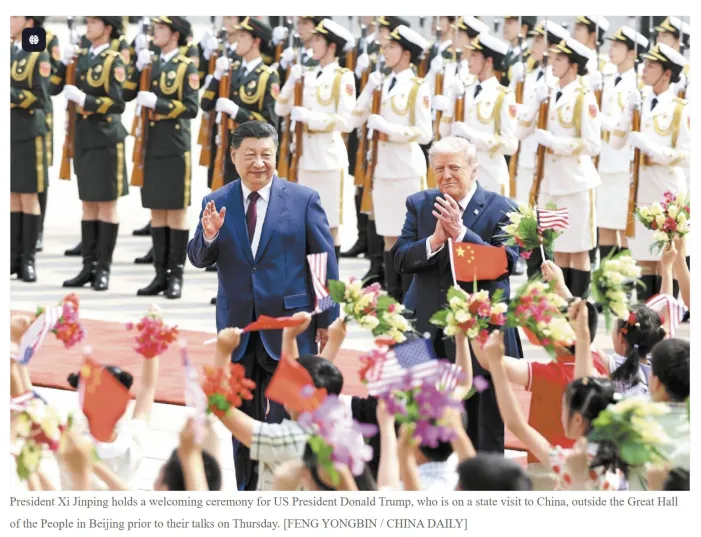
Jan Oberg May 15, 2026 Go to this Fox News page and scroll the whole way down: President Donald Trump tells the world that his meeting with President Xi Jinping yielded a lot of very concrete political and economic results – of course, only where the Chinese side, according to him, agreed with him. He does not mention the Taiwan issue, but Secretary of State, Marco Rubio, says that it did not feature prominently in their talks and that the US policy on Taiwan has not changed. Then go to China Daily – or Global Times – and you will see that for the Chinese it is framework, principles, structure of cooperation etc. that matters – all embedded in the overall idea of “constructive bilateral relationship of strategic stability.” Nowhere is any concrete agreement or deal – all that Trump refers to – mentioned. At the general level, this gives you insights into the very different social...
Lena Petrova of “World Affairs In Context” with more than half a million subscribers on YouTube wanted to explore what a peace researcher like me has to say about, among other things, the First and the Second Cold War and why eethics has disappeared from politics. I am particularly happy about this conversation that also yielded an amazing number of very appreciative comments on YouTube. No doubt, people are longing for alternatives, including peace perspectives.
The MIMAC – Military-Industrial-Media-Academic Complex – drives the world’s rampant militarism and wars without end. Here is a short reflection of how it works against all interests of humanity. #5 deals with why there is no real enemy or threat images/analysis. It’s all ex-post constructions. And, btw, theTFF Peace Pulse is now on Rumble.

TFF on Substack

Discover more from TFF Transnational Foundation & Jan Oberg.

Most Popular

Jan Oberg May 15, 2026 Go to this Fox News page and scroll the whole way down: President Donald Trump tells the world that his meeting with President Xi Jinping yielded a lot of very concrete political and economic results – of course, only where the Chinese side, according to him, agreed with him. He does not mention the Taiwan issue, but Secretary of State, Marco Rubio, says that it did not feature prominently in their talks and that the US policy on Taiwan has not changed. Then go to China Daily – or Global Times – and you will see that for the Chinese it is framework, principles, structure of cooperation etc. that matters – all embedded in the overall idea of “constructive bilateral relationship of strategic stability.” Nowhere is any concrete agreement or deal – all that Trump refers to – mentioned. At the general level, this gives you insights into the very different social...
Lena Petrova of “World Affairs In Context” with more than half a million subscribers on YouTube wanted to explore what a peace researcher like me has to say about, among other things, the First and the Second Cold War and why eethics has disappeared from politics. I am particularly happy about this conversation that also yielded an amazing number of very appreciative comments on YouTube. No doubt, people are longing for alternatives, including peace perspectives.
The MIMAC – Military-Industrial-Media-Academic Complex – drives the world’s rampant militarism and wars without end. Here is a short reflection of how it works against all interests of humanity. #5 deals with why there is no real enemy or threat images/analysis. It’s all ex-post constructions. And, btw, theTFF Peace Pulse is now on Rumble.
Read More
Screenshot-2026-05-15-103534
Jan Oberg May 15, 2026 Go to this Fox News page and scroll the whole way down: President Donald Trump tells the world that his meeting with President Xi Jinping yielded a lot of very concrete political and economic results – of course, only where the Chinese side, according to him, agreed with him. He does not mention the Taiwan issue, but Secretary of State, Marco Rubio, says that it did not feature prominently in their talks and that the US policy on Taiwan has not changed. Then go to China Daily – or Global Times – and you will see that for the Chinese it is framework, principles, structure of cooperation etc. that matters – all embedded in the overall idea of “constructive bilateral relationship of strategic stability.” Nowhere is any concrete agreement or deal – all that Trump refers to – mentioned. At the general level, this gives you insights into the very different social...
Screenshot-2026-05-12-104023
Lena Petrova of “World Affairs In Context” with more than half a million subscribers on YouTube wanted to explore what a peace researcher like me has to say about, among other things, the First and the Second Cold War and why eethics has disappeared from politics. I am particularly happy about this conversation that also yielded an amazing number of very appreciative comments on YouTube. No doubt, people are longing for alternatives, including peace perspectives.
Screenshot-2026-04-13-154551 (2)
The MIMAC – Military-Industrial-Media-Academic Complex – drives the world’s rampant militarism and wars without end. Here is a short reflection of how it works against all interests of humanity. #5 deals with why there is no real enemy or threat images/analysis. It’s all ex-post constructions. And, btw, theTFF Peace Pulse is now on Rumble.
Screenshot-2026-04-13-154551 (1)
Jan Oberg, TFF director April 28, 2026 In this third TFF Peace Pulse, I make the important distinction between the violence and the conflict that violence is a symptom of. If you want peace, focus on the underlying conflict because that is the key to resolution, peacemaking, and a better future for the parties. The West is obsessed with violence, just look around you – and 90+ per cent of the public debate is about military issues and other violence – totally wasted for peace. These Peace Pulses will only be published here a few times. You will also not find them on YouTube and Vimeo because both platforms have blocked TFF and me; you know, peace is dangerous these days. Most TFF’s videos since 2007 are now on Rumble.
Screenshot-2026-04-13-154551
In contrast to most, we’ll bring alternatives, solutions, hope and strategies for a better future. Times are dangerous, yes, but that only intensifies the need for constructive thinking and action! Jan Oberg, TFF director April 13, 2026 The new TFF Peace Pulse uses video messages in a new way: Max 3-5-minute-long comments, ideas or perhaps mini-lectures, all about peace – positive peace. We launch them today on April 13, 2026 with a carefully crafted visual aesthetic fitting the content. We hope to publish them regularly from now on. We launch Peace Pulse (PP) – for a number of reasons. The world is in chaos, and there are countless reasons to feel concerned, frustrated, even angry. The atmosphere is saturated with doom and gloom, with negative energy and rear‑mirror thinking, while vision, imagination, alternatives, strategies and genuine future‑mindedness remain in short supply. And without them, we simply can’t save the world. Looking at problems from a hundred angles will...
IMG_5165 (1)
PART II — Publishing Peace in a System That Prioritises Militarism Jan Oberg, TFF director April 10, 2026 How TFF Maintains a Daily Voice in a Digital World Built for Noise This article is part of the series “TFF at 40″ and it invites you to learn about Four Decades of Publishing Peace. It takes a look at how a small, people‑financed peace foundation has communicated across four generations of technology — from wax stencils and fax machines to mass email and Substack — and why TFF continues to publish every single day in a system that rewards noise, conflict, and militarism. ◆ What it means to publish peace every single day in a digital system built for 24/7 news and other noise, confrontation, and militarism. How TFF’s independence, continuity, and global readership defy algorithms, donor cycles, and Western media censorhip — and why the Majority World keeps listening. When the...