
Seven Roads to Happiness

johangaltung

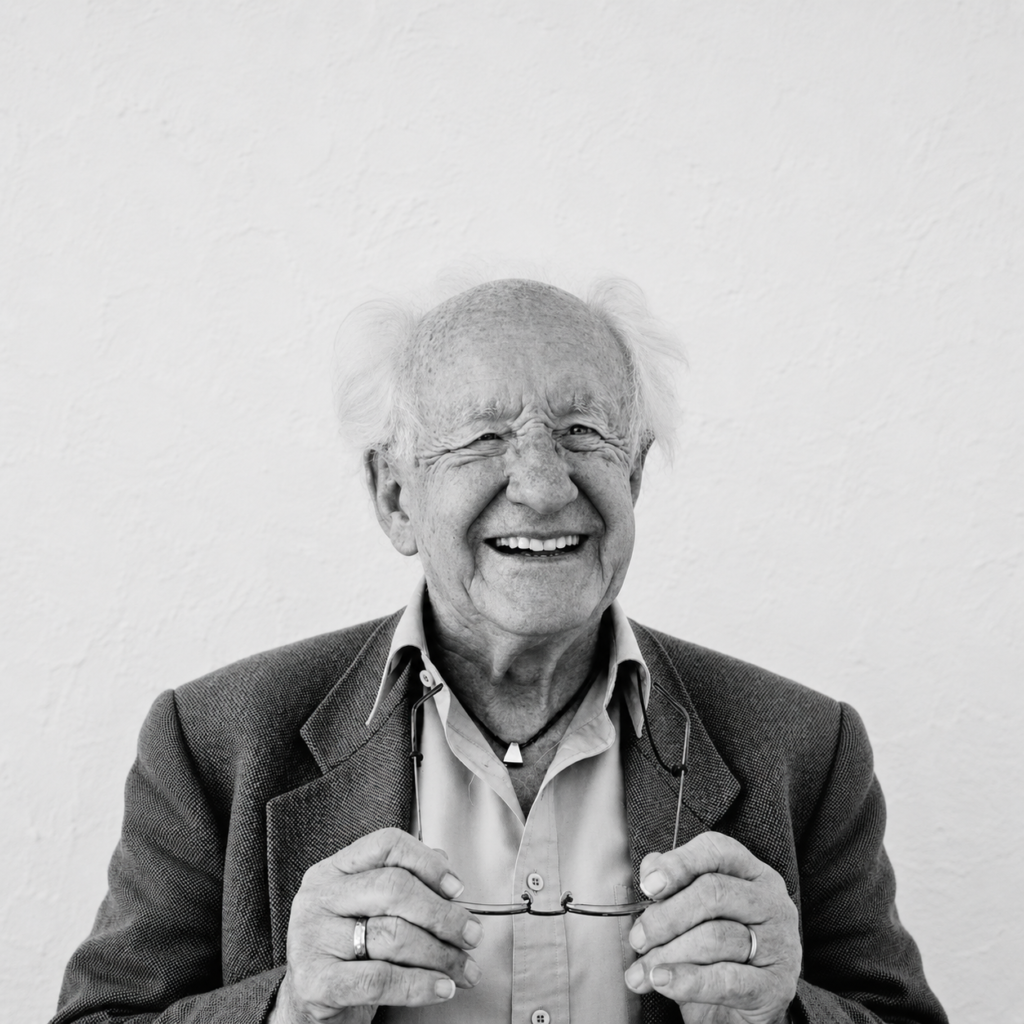
… Would be the title in English of a book this author just published in Norwegian, Syv veier til lykke (Oslo: Kolofon 2014); with excellent photos by Aase Marie Faldalen. And, very befitting for a book with that title: the book quickly made it to the Top 10 on a best-seller list, of course as No. 7. There will be translations but have a peek here and now.

Why does a peace researcher, concerned with peace theory and practice, write a “how-to” book about happiness, well-being? Maybe because happiness is to the mind what health is to the body and peace to the relations between us? Maybe because the underlying logic is the same: there are positive and negative factors, sanogens and pathogens for health, paxogens and bellogens for peace; strengthen, increase the former, weaken, decrease the latter. The ratio between the positive and the negative, from zero to infinity, captures that.

For health: balance between the parts of the body and the mind, the “physical” and the “mental” in the World Health Organization’s definition of health, and expand that equity with empathy to others–WHO’s “social”. But watch the chronic traces of the diseases of the past, and prevent and cure acute diseases–trauma and contagion form without, structural within.

For peace: equitable, cooperative behavior and empathic attitudes for harmony; but watch unreconciled trauma from the violence of the past and possible violence from unsolved present and future conflicts.

And happiness, well-being–not ecstasy–a steady sense of joy at being alive? We would argue that much of it is co-happiness, with partners, friends and others. A term in Norwegian would be “samlykke” (like in samliv, -eie, -leie) – possibly a neologism.

Roads nos. 4-7: build equitable partnerships – like in networks and cooperatives rather than companies – understand how your partners understand themselves – good themes for equitable dialogues! – reconcile the traumas of the past, and learn to be good at solving conflicts.

But not all happiness is co-happiness; much is inside yourself, alone. Roads nos. 1-3:

Negative pleasures: enjoy the problems you do not have.
Positive pleasures: enjoy even more those you have.
Compete with yourself, not others – set goals for self-improvement.

For these, as for all the roads, the key word is consciousness.

Happiness does not come by itself automatically as a gift if all external conditions are positive–like a developed, peaceful society.

Happiness is a state of mind, like health is a state of the body, and peace is a state of human relations. They require work, attention and consciousness not only to work better and be more attentive, but simply to feel the happiness, that sense of well-being.

Much too many, much too much of the time, deprive themselves of happiness by being unaware, their senses only being triggered by unhappiness, by some sense of ill-being. They should be, to remove the causes, but that brings you only to some zero point, not to happiness.

The classic No. 1 road is for handicapped: enjoy all the parts of body that function! This author, for instance, has a handicap known as aging; the legs are not as strong as they used to, making conscious pleasure of the strength of the arms, and the mind, even stronger. It applies to us all, handicapped or not. Some people say, “poor man’s comfort; well, maybe, in that case the poor knew more about happiness than the rich, always worrying about what may happen to their riches.

The same applies, indeed, to the positive pleasures. A rather basic one: to enjoy the gift of being alive – consciously, thanking whomever; stretching in the morning, feeling the juices of life, curling the toes. Or just a glass of water, not merely quenching the thirst or watering the body, but feeling those golden drops, maybe one by one, enjoying, en-joy. Sex indeed, but also relieving oneself, blessing each time, sleeping, restoring the body – miracles all.

Many of them are related to basic human needs; some, by no means all, enshrined, canonized as basic human rights. Non-negotiable.

The second chapter of the book is actually about the sources of the seven roads, like the humanism just mentioned. Buddhism with its focus on self-improvement – compete with yourself, do not participate in a process producing a world of winners and losers, particularly the latter – and nonviolence.

Daoism with its focus on the good also in the bad (and vice versa) and on harmony as emotional resonance, suffering the suffering of the partner, enjoying the joy.

And all the others, like the Christianity of the Christ, with its conscience and consciousness and Samaritan work; and the ever important message from the nature as civilization: diversity and symbiosis, equitable symbiosis for mutual and equal benefit; not the food chain, so similar to the human civilization chain with civilizations seeing themselves as superior destroying others down the chain.

The message of the book is simple: do these seven, consciously, work – not too hard – and you will be amply rewarded. So will those around you. A happy person has an emotional surplus to share with others rather than complaining about deficits–like a healthy person not always talking about real or imagined diseases – like a peaceful person not always concerned with victory and domination and the security paranoia that others may win and dominate.

Life is too precious to be wasted on unhappiness and ill-being when there are simple ways out–the hypothesis of the book–with some effort.

The book has a chapter on how the world’s leading philosophers conceive of happiness, and what a major social science study in Norway found as correlates of happiness. Interesting in themselves, but no substitute for being a subject of happiness, the producer, not waiting for definitions and correlations to seep in, doing their jobs.

So, dear reader: try it out – and then write a better book!

First published at Transcend Media Service here.
Share

Leave a Reply

Your email address will not be published. Required fields are marked *

Related Posts

Jan Oberg, TFF director April 28, 2026 In this third TFF Peace Pulse, I make the important distinction between the violence and the conflict that violence is a symptom of. If you want peace, focus on the underlying conflict because that is the key to resolution, peacemaking, and a better future for the parties. The West is obsessed with violence, just look around you – and 90+ per cent of the public debate is about military issues and other violence – totally wasted for peace. These Peace Pulses will only be published here a few times. You will also not find them on YouTube and Vimeo because both platforms have blocked TFF and me; you know, peace is dangerous these days. Most TFF’s videos since 2007 are now on Rumble.
In contrast to most, we’ll bring alternatives, solutions, hope and strategies for a better future. Times are dangerous, yes, but that only intensifies the need for constructive thinking and action! Jan Oberg, TFF director April 13, 2026 The new TFF Peace Pulse uses video messages in a new way: Max 3-5-minute-long comments, ideas or perhaps mini-lectures, all about peace – positive peace. We launch them today on April 13, 2026 with a carefully crafted visual aesthetic fitting the content. We hope to publish them regularly from now on. We launch Peace Pulse (PP) – for a number of reasons. The world is in chaos, and there are countless reasons to feel concerned, frustrated, even angry. The atmosphere is saturated with doom and gloom, with negative energy and rear‑mirror thinking, while vision, imagination, alternatives, strategies and genuine future‑mindedness remain in short supply. And without them, we simply can’t save the world. Looking at problems from a hundred angles will...
PART II — Publishing Peace in a System That Prioritises Militarism Jan Oberg, TFF director April 10, 2026 How TFF Maintains a Daily Voice in a Digital World Built for Noise This article is part of the series “TFF at 40″ and it invites you to learn about Four Decades of Publishing Peace. It takes a look at how a small, people‑financed peace foundation has communicated across four generations of technology — from wax stencils and fax machines to mass email and Substack — and why TFF continues to publish every single day in a system that rewards noise, conflict, and militarism. ◆ What it means to publish peace every single day in a digital system built for 24/7 news and other noise, confrontation, and militarism. How TFF’s independence, continuity, and global readership defy algorithms, donor cycles, and Western media censorhip — and why the Majority World keeps listening. When the...

Recent Articles

Jan Oberg May 15, 2026 Go to this Fox News page and scroll the whole way down: President Donald Trump tells the world that his meeting with President Xi Jinping yielded a lot of very concrete political and economic results – of course, only where the Chinese side, according to him, agreed with him. He does not mention the Taiwan issue, but Secretary of State, Marco Rubio, says that it did not feature prominently in their talks and that the US policy on Taiwan has not changed. Then go to China Daily – or Global Times – and you will see that for the Chinese it is framework, principles, structure of cooperation etc. that matters – all embedded in the overall idea of “constructive bilateral relationship of strategic stability.” Nowhere is any concrete agreement or deal – all that Trump refers to – mentioned. At the general level, this gives you insights into the very different social...
Lena Petrova of “World Affairs In Context” with more than half a million subscribers on YouTube wanted to explore what a peace researcher like me has to say about, among other things, the First and the Second Cold War and why eethics has disappeared from politics. I am particularly happy about this conversation that also yielded an amazing number of very appreciative comments on YouTube. No doubt, people are longing for alternatives, including peace perspectives.
The MIMAC – Military-Industrial-Media-Academic Complex – drives the world’s rampant militarism and wars without end. Here is a short reflection of how it works against all interests of humanity. #5 deals with why there is no real enemy or threat images/analysis. It’s all ex-post constructions. And, btw, theTFF Peace Pulse is now on Rumble.

TFF on Substack

Discover more from TFF Transnational Foundation & Jan Oberg.

Most Popular

Jan Oberg May 15, 2026 Go to this Fox News page and scroll the whole way down: President Donald Trump tells the world that his meeting with President Xi Jinping yielded a lot of very concrete political and economic results – of course, only where the Chinese side, according to him, agreed with him. He does not mention the Taiwan issue, but Secretary of State, Marco Rubio, says that it did not feature prominently in their talks and that the US policy on Taiwan has not changed. Then go to China Daily – or Global Times – and you will see that for the Chinese it is framework, principles, structure of cooperation etc. that matters – all embedded in the overall idea of “constructive bilateral relationship of strategic stability.” Nowhere is any concrete agreement or deal – all that Trump refers to – mentioned. At the general level, this gives you insights into the very different social...
Lena Petrova of “World Affairs In Context” with more than half a million subscribers on YouTube wanted to explore what a peace researcher like me has to say about, among other things, the First and the Second Cold War and why eethics has disappeared from politics. I am particularly happy about this conversation that also yielded an amazing number of very appreciative comments on YouTube. No doubt, people are longing for alternatives, including peace perspectives.
The MIMAC – Military-Industrial-Media-Academic Complex – drives the world’s rampant militarism and wars without end. Here is a short reflection of how it works against all interests of humanity. #5 deals with why there is no real enemy or threat images/analysis. It’s all ex-post constructions. And, btw, theTFF Peace Pulse is now on Rumble.
Read More
Screenshot-2026-05-15-103534
Jan Oberg May 15, 2026 Go to this Fox News page and scroll the whole way down: President Donald Trump tells the world that his meeting with President Xi Jinping yielded a lot of very concrete political and economic results – of course, only where the Chinese side, according to him, agreed with him. He does not mention the Taiwan issue, but Secretary of State, Marco Rubio, says that it did not feature prominently in their talks and that the US policy on Taiwan has not changed. Then go to China Daily – or Global Times – and you will see that for the Chinese it is framework, principles, structure of cooperation etc. that matters – all embedded in the overall idea of “constructive bilateral relationship of strategic stability.” Nowhere is any concrete agreement or deal – all that Trump refers to – mentioned. At the general level, this gives you insights into the very different social...
Screenshot-2026-05-12-104023
Lena Petrova of “World Affairs In Context” with more than half a million subscribers on YouTube wanted to explore what a peace researcher like me has to say about, among other things, the First and the Second Cold War and why eethics has disappeared from politics. I am particularly happy about this conversation that also yielded an amazing number of very appreciative comments on YouTube. No doubt, people are longing for alternatives, including peace perspectives.
Screenshot-2026-04-13-154551 (2)
The MIMAC – Military-Industrial-Media-Academic Complex – drives the world’s rampant militarism and wars without end. Here is a short reflection of how it works against all interests of humanity. #5 deals with why there is no real enemy or threat images/analysis. It’s all ex-post constructions. And, btw, theTFF Peace Pulse is now on Rumble.
Screenshot-2026-04-13-154551 (1)
Jan Oberg, TFF director April 28, 2026 In this third TFF Peace Pulse, I make the important distinction between the violence and the conflict that violence is a symptom of. If you want peace, focus on the underlying conflict because that is the key to resolution, peacemaking, and a better future for the parties. The West is obsessed with violence, just look around you – and 90+ per cent of the public debate is about military issues and other violence – totally wasted for peace. These Peace Pulses will only be published here a few times. You will also not find them on YouTube and Vimeo because both platforms have blocked TFF and me; you know, peace is dangerous these days. Most TFF’s videos since 2007 are now on Rumble.
Screenshot-2026-04-13-154551
In contrast to most, we’ll bring alternatives, solutions, hope and strategies for a better future. Times are dangerous, yes, but that only intensifies the need for constructive thinking and action! Jan Oberg, TFF director April 13, 2026 The new TFF Peace Pulse uses video messages in a new way: Max 3-5-minute-long comments, ideas or perhaps mini-lectures, all about peace – positive peace. We launch them today on April 13, 2026 with a carefully crafted visual aesthetic fitting the content. We hope to publish them regularly from now on. We launch Peace Pulse (PP) – for a number of reasons. The world is in chaos, and there are countless reasons to feel concerned, frustrated, even angry. The atmosphere is saturated with doom and gloom, with negative energy and rear‑mirror thinking, while vision, imagination, alternatives, strategies and genuine future‑mindedness remain in short supply. And without them, we simply can’t save the world. Looking at problems from a hundred angles will...
IMG_5165 (1)
PART II — Publishing Peace in a System That Prioritises Militarism Jan Oberg, TFF director April 10, 2026 How TFF Maintains a Daily Voice in a Digital World Built for Noise This article is part of the series “TFF at 40″ and it invites you to learn about Four Decades of Publishing Peace. It takes a look at how a small, people‑financed peace foundation has communicated across four generations of technology — from wax stencils and fax machines to mass email and Substack — and why TFF continues to publish every single day in a system that rewards noise, conflict, and militarism. ◆ What it means to publish peace every single day in a digital system built for 24/7 news and other noise, confrontation, and militarism. How TFF’s independence, continuity, and global readership defy algorithms, donor cycles, and Western media censorhip — and why the Majority World keeps listening. When the...


